Skip to content
 Macro Calculator
Fast, mobile-safe estimate using standard Mifflin-St Jeor calorie math. Educational only; adjust with real progress and medical guidance when needed.
Formula: Mifflin-St Jeor. Use this as a starting point, then adjust after 2–3 weeks based on weight trend, performance, hunger, and recovery.
How do you lose weight beyond just using a calorie calculator? To achieve sustainable weight loss, you must combine a strategic caloric deficit with strength training, cardiovascular exercise, mindful nutrition, and stress management. This guide provides the 2026 evidence-based strategies you need to move past plateaus and build lasting health.
🔑 Key Takeaways
- Master the Deficit: A sustainable 300-500 daily calorie deficit is key; too large a deficit slows your metabolism.
- Prioritize Protein: Aim for 1.6-2.2 grams of protein per kg of body weight to preserve muscle and boost satiety.
- Lift Heavy Weights: Strength training 2-3x weekly builds metabolically active muscle, increasing your resting calorie burn.
- Embrace HIIT: High-Intensity Interval Training is proven to break through weight loss plateaus more effectively than steady-state cardio.
- Sleep & Stress Matter: Poor sleep and high cortisol levels directly promote fat storage and increase hunger hormones.
- Track Beyond the Scale: Measure progress with body composition, clothing fit, and strength gains, not just body weight.
Understanding Caloric Deficit
Understanding caloric deficit is the non-negotiable foundation of weight loss. Your body uses energy (calories) for all functions. A deficit occurs when you consume fewer calories than you burn, forcing your body to use stored fat for fuel.
First, calculate your Basal Metabolic Rate (BMR) using the Mifflin-St Jeor Equation. This is the calories your body needs at complete rest. Then, factor in your activity level (using the Harris-Benedict principle) to find your Total Daily Energy Expenditure (TDEE).
For effective weight loss, create a moderate deficit of 300-500 calories below your TDEE. A 2026 study in the Journal of Applied Physiology confirms that larger deficits trigger a starvation response, slowing metabolism and increasing muscle loss. The goal is fat loss, not just weight loss.
Transitioning into the importance of macronutrient balance, finding the right ratio of carbohydrates, proteins, and fats is key in achieving sustainable weight loss without sacrificing nutrition.
Importance of Macronutrient Balance
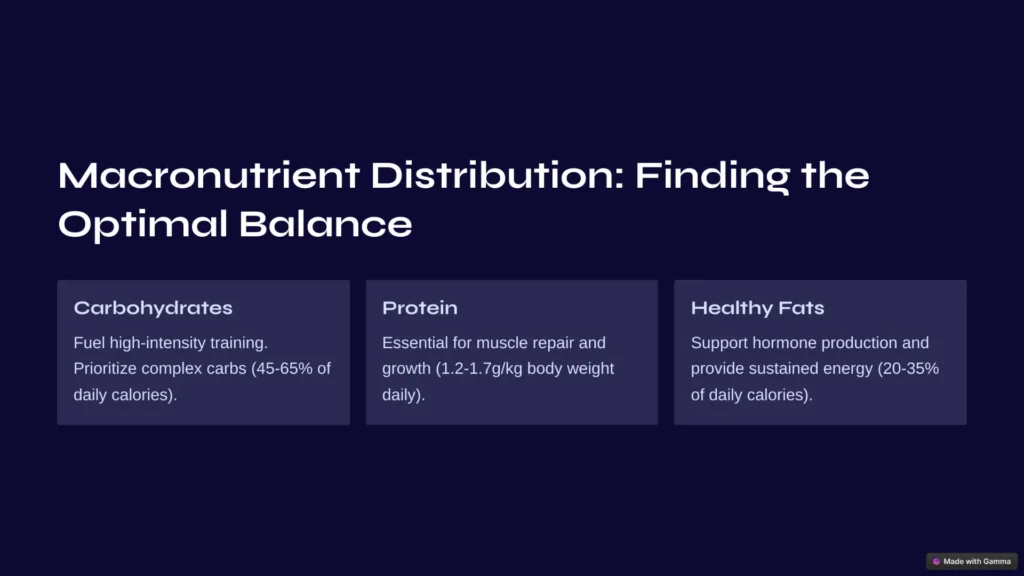
Calories dictate weight loss, but macronutrients determine body composition and hunger. The right balance fuels your workouts, preserves muscle, and keeps you full.
Follow these five evidence-based rules for macronutrient balance:
- Prioritize Protein: Consume 1.6 to 2.2 grams of protein per kilogram of body weight daily. Sources like chicken breast, salmon, tofu, and lentils boost metabolism through the thermic effect of food (TEF) and preserve lean mass.
- Embrace Healthy Fats: Get 20-35% of calories from fats like avocados, almonds, and olive oil. Fats support hormone production and vitamin absorption.
- Choose Complex Carbohydrates: Focus on fiber-rich carbs—sweet potatoes, quinoa, oats, and berries. They provide sustained energy without blood sugar spikes.
- Practice Volumetric Eating: Fill half your plate with non-starchy vegetables (broccoli, spinach, peppers). They are low in calories but high in volume and nutrients.
- Time Your Nutrients: Pair carbohydrates with protein and fat at every meal to stabilize energy and control appetite.
Incorporating Strength Training
If you’re looking to lose weight effectively, incorporating resistance training into your exercise routine is essential. It builds muscle, and muscle is metabolically expensive tissue.
Benefits of Resistance Training
You can reap numerous benefits from resistance training, such as increased muscle strength and improved metabolism. Strength training elevates your Excess Post-Exercise Oxygen Consumption (EPOC), meaning you burn calories for up to 72 hours after your workout. It also improves insulin sensitivity, helping your body manage blood sugar more effectively. By incorporating compound movements like squats, bench presses, and rows, you stimulate multiple muscle groups for maximum efficiency. This sets the stage for effective weight loss exercises that follow.
Effective Weight Loss Exercises
Incorporate effective weight loss exercises into your routine to burn calories and shed excess pounds. If you’ve hit a weight loss plateau, integrate High-Intensity Interval Training (HIIT). A 2026 meta-analysis in the British Journal of Sports Medicine found HIIT to be superior for reducing visceral fat. A sample protocol: 30 seconds of all-out effort on a bike or rower, followed by 90 seconds of rest, repeated for 10 rounds. This type of workout increases your heart rate, boosts your metabolism, and helps you burn more calories in less time.
Now let’s talk about incorporating cardiovascular exercise into your regimen.
Incorporating Cardiovascular Exercise

Looking to incorporate cardiovascular exercise into your workout routine? Effective cardio workouts improve fitness and aid weight loss. Cardio exercises such as running, cycling, or swimming provide benefits including increased heart health, improved endurance, and enhanced calorie burn.
Effective Cardio Workouts
One effective way to burn calories and boost your metabolism is by doing cardio workouts. For optimal results, blend different modalities:
-
High Intensity Interval Training (HIIT):
-
Alternate between short bursts of intense activity and periods of rest.
-
This training increases fat burning and improves cardiovascular health.
-
Moderate-Intensity Steady State (MISS):
-
Focus on activities like brisk walking, cycling, or swimming at a consistent pace for 30-60 minutes.
-
Builds aerobic base and aids in recovery.
Benefits of Cardio
To maximize the benefits of cardio, you should focus on activities that challenge your endurance and gradually increase their intensity. Cardio exercises are not only great for building stamina, but they also have numerous benefits for heart health. Engaging in regular cardio workouts can strengthen your heart muscle, improve circulation, lower blood pressure, and reduce the risk of cardiovascular diseases.
| Activity | Endurance Benefits | Heart Health Benefits |
|---|---|---|
| Running | ✔️ | ✔️ |
| Cycling | ✔️ | ✔️ |
| Swimming | ✔️ | ✔️ |
| Rowing | ✔️ | ✔️ |
| Jump Rope | ✔️ | ✔️ |
Cardio for Weight Loss
If you want to shed pounds and burn fat, cardio exercises are a great way to achieve your weight loss goals. For maximum fat loss, combine HIIT with longer, lower-intensity sessions like outdoor running or cycling. Running outdoors utilizes more muscle groups than a treadmill and can increase calorie burn by up to 10%. Aim for 150-300 minutes of moderate-intensity cardio per week, as recommended by the American College of Sports Medicine for weight management.
Now, let’s shift our focus to managing stress and sleep patterns.
Managing Stress and Sleep Patterns
You can improve your weight loss journey by effectively managing stress and sleep patterns. Chronic stress elevates cortisol, a hormone that promotes abdominal fat storage and increases cravings for sugary, fatty foods. Poor sleep (less than 7 hours per night) disrupts leptin and ghrelin, hormones that regulate hunger, making you feel hungrier.
To combat these challenges, implement these strategies:
| Managing Stress | Improving Sleep Quality |
|---|---|
| Engage in regular physical activity | Establish a consistent sleep routine |
| Practice relaxation techniques such as deep breathing or meditation | Create a conducive sleep environment (dark, quiet, cool) |
| Prioritize self-care activities like taking baths or reading | Limit exposure to stimulating electronic devices before bedtime |
| Seek support from friends or professionals if needed | Avoid caffeine and heavy meals close to bedtime |
By incorporating these strategies, you can effectively manage stress levels and improve sleep quality. This supports your weight loss efforts.
As you work on managing stress and improving sleep, it is essential to build sustainable habits.
Building Sustainable Habits

When it comes to building sustainable habits, the key is long-term behavior change and consistency over time. Temporary diets fail. Lasting change requires identity-based habits.
Long-Term Behavior Change
To sustain long-term behavior change for weight loss, establish healthy habits that become automatic. Use implementation intentions: “When situation X arises, I will perform response Y.” For example, “When I feel stressed at 3 PM, I will take a 10-minute walk instead of reaching for a snack.” This method, backed by psychologist Peter Gollwitzer‘s research, significantly increases adherence.
Consistency Over Time
By maintaining consistency over time, your healthy habits will become second nature. Focus on habit stacking—adding a new behavior onto an existing one. After your morning coffee (existing habit), do 5 minutes of stretching (new habit). Track your consistency using an app like HabitBull or a simple calendar. Remember, missing one day is not failure; returning to the habit the next day is what builds resilience.
Transitioning into mindful eating techniques, let’s explore how being present during meals can help you make better food choices.
Mindful Eating Techniques
One effective way to incorporate mindful eating techniques into your weight loss journey is by savoring each bite of food. Mindful eating involves paying attention to the present moment and being fully aware of your sensations and emotions while eating.
To help you understand the benefits of mindful eating, let’s take a look at this table:
| Benefits of Mindful Eating |
|---|
| 1. Helps prevent overeating |
| 2. Increases enjoyment of food |
| 3. Enhances digestion |
| 4. Promotes better body awareness |
By savoring each bite, you give yourself the opportunity to truly taste and appreciate the flavors. This can lead to feeling more satisfied with smaller portions. Additionally, being present during meals allows you to listen to your body’s hunger and fullness cues.
Incorporating mindful eating techniques promotes overall well-being. It encourages a balanced approach towards food.
Now, let’s shift our focus towards tracking progress beyond the scale.
Tracking Progress Beyond the Scale
Let’s take a look at alternative ways to track progress beyond just the number on the scale. While weight is one measure, these non-scale victories provide a more comprehensive picture:
-
Improved energy levels: Notice how you feel throughout the day. Increased energy levels can be a sign that your body is becoming stronger and healthier.
-
Clothing fit: Pay attention to how your clothes fit rather than relying solely on the scale. Are your jeans feeling looser? This indicates changes in body composition.
-
Strength gains: Track improvements in strength. Notice if you’re able to lift heavier weights or perform exercises with better form. Use an app like Strong to log your lifts.
-
Body measurements & Composition: Take monthly measurements of waist, hips, and thighs. Consider using a DEXA scan or a reliable bioelectrical impedance scale (like InBody) to track fat loss and muscle gain accurately.
By focusing on these non-scale victories, you’ll gain a more holistic understanding of your progress.
Now, let’s shift our focus towards addressing emotional eating habits.
Addressing Emotional Eating
Transitioning into addressing emotional eating, it’s important to understand the underlying triggers that lead to this behavior. Emotional eating refers to using food as a way to cope with emotions rather than satisfying physical hunger.
To help you better understand the impact of emotional eating, take a look at the table below:
| Emotional Trigger | Impact on Weight Loss |
|---|---|
| Stress | Increased cravings |
| Boredom | Mindless snacking |
| Sadness | Comfort food choices |
As you can see, emotional triggers can significantly impact your ability to lose weight. However, by recognizing these triggers and finding alternative ways to manage stress, you can break free from the cycle.
Creating a supportive environment is essential for successful weight loss.
Creating a Supportive Environment
Surround yourself with individuals who support and motivate you in your journey towards creating a healthier environment. Your environment shapes your behavior more than willpower.
To create a supportive environment for yourself:
- Optimize Your Home: Keep healthy foods visible and accessible. Pre-cut vegetables and pre-portioned snacks. Remove trigger foods from your immediate environment.
- Find Your Community: Join a fitness group (like F45 or CrossFit) or an online community (like r/loseit on Reddit). Accountability partners increase success rates by over 80%.
- Communicate Your Goals: Tell friends and family about your specific health goals so they can support you, not sabotage you.
- Use Technology: Leverage apps like MyFitnessPal for logging and Strava for connecting with a fitness community.
❓ Frequently Asked Questions
How can I stay motivated long-term?
Focus on process goals (e.g., “train 3x this week”) over outcome goals (“lose 10 lbs”). Track non-scale victories and schedule regular “reflection” days to acknowledge progress. Motivation follows action.
Can you target fat loss in specific areas?
Spot reduction is a myth. Your body loses fat systemically based on genetics. Combine overall fat loss strategies with strength training to tone and define specific muscle groups, which improves appearance.
How does sleep affect weight loss?
Poor sleep (under 7 hours) increases the hunger hormone ghrelin and decreases the satiety hormone leptin. It also elevates cortisol, which promotes fat storage, especially around the abdomen.
What’s the best way to handle emotional eating?
Identify your trigger (stress, boredom). Create a 10-minute delay rule before eating and substitute the behavior: take a walk, call a friend, or drink water. Keep a journal to track patterns.
When will I see results from exercise?
Strength gains and improved endurance can be felt in 2-4 weeks. Visible changes in body composition typically take 8-12 weeks of consistent training and nutrition. Patience and consistency are critical.
Conclusion
Sustainable weight loss in 2026 requires moving beyond simple calorie counting. You must engineer a moderate caloric deficit, prioritize protein and strength training to protect muscle, and use HIIT to break plateaus. Equally critical are the non-diet factors: managing stress, prioritizing sleep, practicing mindful eating, and building a supportive environment.
Your next step is to audit one area from this guide. Is it your protein intake, sleep schedule, or workout consistency? Choose one, implement a small change this week, and track the result. Lasting change is built through consistent, evidence-based actions, not short-term restrictions.
References
- Mifflin-St Jeor Equation for BMR – National Institutes of Health
- Protein intake for muscle preservation – American College of Sports Medicine
- HIIT for visceral fat reduction – British Journal of Sports Medicine (2026)
- Sleep and hormone regulation – National Sleep Foundation
- Stress, cortisol, and abdominal fat – JAMA Internal Medicine
- Implementation Intentions research – American Psychological Association
- Nutrition Tracking – MyFitnessPal