

GearUpToFit Guide | Updated July 9, 2026 | Mobile-first | No sticky or frozen elements
Affiliate disclosure: GearUpToFit is reader-supported. As an Amazon Associate, GearUpToFit may earn from qualifying purchases through links with the affiliate tag papalex-20. We do not hardcode Amazon prices because pricing, sellers, colors, sizes, images, ratings, and availability change.
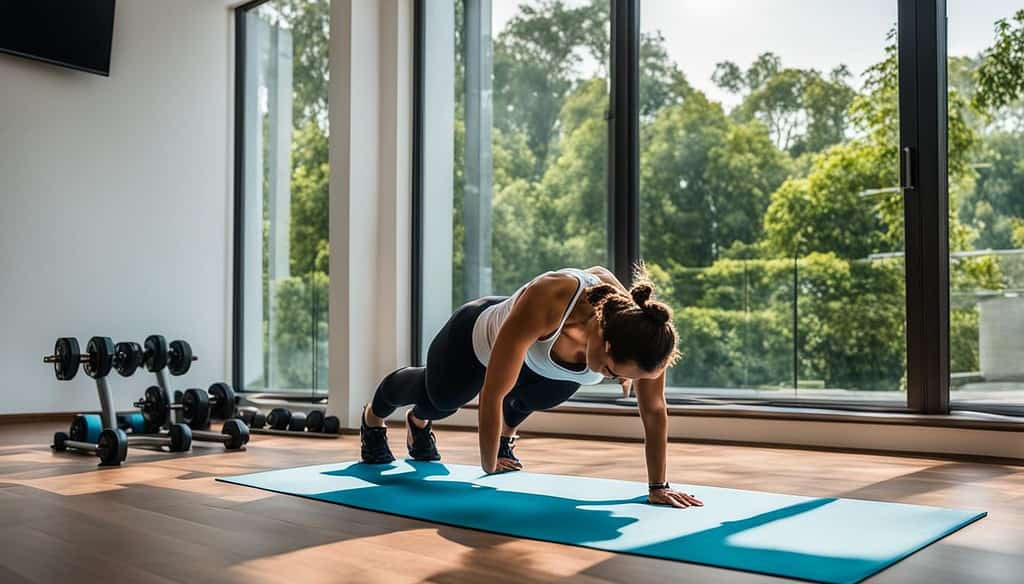
1. What is Calisthenics?
The word “calisthenics” originates from the ancient Greek words kallos, meaning “beauty,” and sthenos, representing “strength.” Historically, it refers to the practice of using body weight as resistance to perform rhythmic movements that cultivate physical grace, balance, core stability, and athletic power. Unlike modern weightlifting, which seeks to isolate muscles, calisthenics focuses on moving your entire body through space.
Biophysically, calisthenics exercises are closed kinetic chain movements (CKC). In a closed kinetic chain, the extremity (your hand or foot) is fixed to an immovable object (like the floor, a pull-up bar, or parallettes), and the rest of your body moves relative to that point. In contrast, open kinetic chain movements (OKC), such as the dumbbell bench press or leg extension machine, involve moving a resistance relative to a fixed body. Sports science demonstrates that CKC movements trigger higher levels of joint stabilization, recruit more core musculature, and translate more effectively to real-world movement and athletic performance.
Calisthenics is a highly scalable training discipline. While advanced maneuvers like the human flag, front lever, and handstand push-up seem daunting, they are built on basic motor patterns. Every advanced calisthenics skill can be broken down into a series of easier progressions. This scalability makes calisthenics suitable for absolute beginners. By learning how to adjust your body’s leverage and center of gravity, you can easily find a variation that provides the optimal stimulus for muscle growth and strength.
2. Calisthenics vs. Free Weights vs. Machines
To make an informed decision about your fitness journey, it is important to analyze how bodyweight training compares to free weights (barbells, dumbbells) and selectorized resistance machines. Each modality offers distinct biomechanical characteristics, safety profiles, and rates of progress.
Free weights are unmatched for absolute lower body strength, as load is limited only by what you can hold. However, calisthenics provides superior core stability and joint safety. Because your body weight acts as the resistance, your movement path is determined by your unique joint anatomy rather than a machine’s tracks. This natural movement pattern significantly reduces the risk of repetitive strain injuries.
| Training Metric | Calisthenics (Bodyweight) | Free Weights (Barbells & Dumbbells) | Resistance Machines (Gym Equipment) |
|---|---|---|---|
| Primary Resistance | Gravity acting on your body weight | Gravity acting on external plates | Pulley and cable stacks |
| Core Recruitment | Extremely High (constant stabilization) | High (during standing exercises) | Low (seated or supported positions) |
| Joint Safety Profile | High (natural path of motion) | Medium-High (dependent on form) | Medium (fixed movement path) |
| Cost & Accessibility | Excellent (free, anywhere, zero-cost) | Medium (requires purchase or membership) | Poor (requires commercial gym membership) |
| Tracking Progress | Complexity (changing leverage/angles) | Simple (adding pounds to the bar) | Simple (moving the weight pin down) |
| Lower Body Mass | Fair (requires high coordination/unilateral) | Excellent (heavy loading potential) | Good (safe isolation of quads/glutes) |
3. Who This Is For / Who Should Skip It
Although bodyweight training is highly accessible, it requires distinct mental and physical focus. The lack of external weight means you must master body awareness and leverage, which can be challenging for some individuals. Review the checklists below to determine if calisthenics aligns with your preferences.
Who This Is For
- Minimalist Trainees: Perfect for those who want to work out at home, in parks, or while traveling with zero gym fees.
- Athletes Seeking Mobility: Builds functional strength alongside joint flexibility, balance, and coordination.
- Joint Safety Advocates: Great for lifters looking to minimize heavy spinal compression and axial loading.
- Trainees Seeking Body Control: Teaches you how to move your weight with precision and core engagement.
Who Should Skip It
- Pure Powerlifters: Lifters whose goals are strictly tied to maximizing barbell lifts like the deadlift and bench press.
- Absolute Hypertrophy Focus: Bodybuilders looking for maximum isolation exercises to build large muscle volumes quickly.
- Trainees Lacking Patience: Progressing calisthenics skills requires learning new motor patterns, which takes time.
- Trainees with Severe Joint Limits: Individuals who cannot support their own weight due to acute shoulder or wrist injuries.
4. The Four Pillars of Bodyweight Strength
An effective calisthenics routine is built upon four primary movement pillars. Focusing on these pillars ensures balanced development, prevents postural issues, and builds a complete foundation of bodyweight strength.
Pillar 1: Pushing Movements (Anterior Chain)
Pushing exercises primarily target the pectoral muscles, anterior deltoids, and triceps. Beginners start with push-ups, which teach the body to maintain core alignment (the plank position) while pushing force away. As strength improves, you can modify leverage to increase chest activation (dips) or shoulder demand (pike push-ups and handstands).
Pillar 2: Pulling Movements (Posterior Chain)
Pulling exercises target the back (latissimus dorsi, trapezius, rhomboids), rear deltoids, and biceps. These exercises are critical for healthy shoulder alignment and counteracting the forward-rounded posture caused by daily desk work. The primary pulling patterns are horizontal pull (inverted rows) and vertical pull (pull-ups and chin-ups).
Pillar 3: Leg Movements (Lower Body)
Calisthenics leg training builds explosive power, knee stability, and functional mobility. Without external weights, you can increase lower body challenge by moving from bilateral exercises (standard squats) to unilateral variations (lunge rotations, step-ups, and pistol squats). This single-leg work develops exceptional balance and core strength.
Pillar 4: Core Stabilization (Midsection)
In bodyweight training, your core serves as the bridge that transfers force between your upper and lower body. Calisthenics core work goes beyond sit-ups, focusing on isometric stabilization and anti-extension. Key movements include hollow-body holds, planks, and hanging leg raises, which build a flat, functional midsection.
5. The Calisthenics Progression Framework
In weightlifting, you apply progressive overload by adding weight to the bar. In calisthenics, you apply progressive overload by manipulating leverage, range of motion, time under tension, or your contact points. This allows you to scale the challenge of any movement to your current strength level.
Review the progressive pathways below for the four key movement patterns. Master each step before advancing to the next.
| Pillar | Level 1: Novice | Level 2: Beginner | Level 3: Intermediate | Level 4: Advanced |
|---|---|---|---|---|
| Pushing (Chest/Shoulders) | Wall Push-Up | Incline or Knee Push-Up | Standard Push-Up | Parallel Bar Dip / Pike Push-Up |
| Pulling (Back/Biceps) | Doorway Row | Incline Inverted Row | Flat Inverted Row | Chin-Up / Standard Pull-Up |
| Lower Body (Quads/Glutes) | Assisted Bodyweight Squat | Standard Air Squat | Bulgarian Split Squat | Pistol Squat (One-Legged) |
| Core (Abs/Obliques) | Forearm Plank | Hollow Body Hold | Hanging Knee Raise | Hanging Leg Raise / L-Sit Hold |
6. Complete Beginner Workout Routines
Here is a sample 3-day full-body calisthenics routine for beginners. Perform this program on non-consecutive days (e.g., Monday, Wednesday, Friday), allowing your muscles and connective tissues 48 hours to recover and adapt.
| Exercise | Movement Focus | Target Sets x Reps | Rest Period | Regression (If too hard) | Progression (If too easy) |
|---|---|---|---|---|---|
| 1. Standard Air Squat | Legs (Bilateral) | 3 x 15 | 90 seconds | Chair-supported Squat | Bulgarian Split Squat |
| 2. Incline Inverted Row | Pull (Horizontal) | 3 x 8–10 | 90 seconds | Doorway Grip Row | Flat Inverted Row |
| 3. Incline Push-Up | Push (Horizontal) | 3 x 10–12 | 90 seconds | Wall Push-Up | Standard Floor Push-Up |
| 4. Reverse Lunge | Legs (Unilateral) | 3 x 10 (per leg) | 60 seconds | Wall-assisted Lunge | Deficit Reverse Lunge |
| 5. Hollow Body Hold | Core Stability | 3 x 30 seconds | 60 seconds | Bent-Knee Plank | Hanging Knee Raise |
7. Featured Home Calisthenics Tutorial
If you are training at home, watch this step-by-step video guide. It demonstrates proper form for beginner exercises and shows how to set up your home workout space safely.
8. Best Home Calisthenics Equipment
One of the greatest benefits of calisthenics is its minimal equipment requirement. However, having a reliable pull-up bar and stable parallettes opens up hundreds of vertical pulling and wrist-safe pushing movements. Here are our top gear recommendations:

Image source: Amazon Product Advertising API
Best Doorway Pull-Up Bar
Iron Gym Doorway Pull Up Bar
Verdict: A classic doorway pull-up bar that uses leverage to secure itself against your door trim without screws or drilling. This makes it an excellent, non-permanent option for home pull-ups, chin-ups, and hanging leg raises.
Buy it if: You want a sturdy, screw-free bar that fits standard doorway frames and can be removed in seconds.
Skip it if: Your home has non-standard thick wall molding or decorative door frames that could be damaged by pressure points.
- Installs instantly with zero drilling required
- Offers three grip positions: narrow, wide, and neutral
- Thick foam padding protects door frames and hands

Image source: Amazon Product Advertising API
Best Beginner Parallettes
Lebert Fitness Parallettes
Verdict: These 12-inch steel parallettes are essential for reducing wrist strain during push-ups, L-sits, and handstands. Their low-profile design provides excellent stability, and the thick foam grips keep your hands comfortable and secure.
Buy it if: You experience wrist pain when performing push-ups on the floor, or you want to practice L-sits and handstands with a secure grip.
Skip it if: You prefer lightweight wooden parallettes for travel, as these steel frames are slightly heavier to carry.
- Heavy-duty steel construction ensures zero wobbling
- Durable foam grips reduce hand fatigue
- Ideal height for L-sits and dip progressions
9. Common Mistakes & Injury Prevention
Although bodyweight training is generally safer than heavy barbell lifting, bad habits can still lead to injury. Avoid these four common beginner mistakes:
1. Using Momentum and Kipping
A common error is using swinging or momentum to complete repetitions, particularly during pull-ups. This reduces the work done by the target muscles and puts sudden, high stress on your shoulder joints and biceps tendons. Always perform exercises with controlled tempos, pausing briefly at the top and bottom of each repetition to maximize muscle tension and joint stability.
2. Rushing Connective Tissue Adaptation
Your muscles adapt to training much faster than your tendons, ligaments, and joints. Rushing into advanced progressions (like dips or pull-ups) before building a solid baseline of tendon strength can lead to elbow or shoulder tendinitis. Spend at least 4 to 6 weeks mastering foundational variations (like inverted rows and incline push-ups) before moving to advanced exercises.
3. Ignoring Wrist and Shoulder Warm-ups
Exercises like push-ups, dips, and parallette holds require significant wrist flexibility and shoulder mobility. Jumping into workouts without warming up these areas can lead to joint strain. Always spend 5 minutes performing dynamic shoulder movements and wrist stretches (such as wrist circles and gentle forearm stretches) before training.
4. Neglecting the Posterior Chain
Many beginners focus heavily on “mirror muscles” (chest and abs) by doing endless push-ups and planks, while neglecting pulling exercises. This muscle imbalance can pull your shoulders forward, leading to poor posture and rotator cuff issues. Maintain a 1:1 ratio between pushing and pulling movements to ensure balanced, healthy shoulder development.
10. Frequently Asked Questions (FAQ)
Can I build muscle with calisthenics alone?
Yes, absolutely. Muscle hypertrophy is driven by mechanical tension, muscle damage, and metabolic stress, all of which can be achieved using your body weight as resistance. By selecting challenging progressions (such as diamond push-ups, inverted rows, and single-leg squats), you can stimulate muscle growth as effectively as you would with weight training.
Do I need a pull-up bar to start calisthenics?
While you can start with floor exercises (push-ups, squats, planks), a pull-up bar or suspension trainer is essential for pulling exercises (pull-ups, chin-ups). If you do not have a bar, you can perform horizontal rows under a sturdy table or use a doorway pull-up bar, which is a highly versatile and affordable addition to a home gym.
How often should beginners train calisthenics?
Beginners should aim for three non-consecutive days per week (e.g., Monday, Wednesday, Friday). This frequency provides enough stimulus to trigger muscle growth and neurological adaptations, while giving your tendons and ligaments ample time to recover and strengthen between workouts.
How do I prevent wrist pain during push-ups?
Wrist pain during floor push-ups is often caused by a lack of wrist extension flexibility. You can relieve this pressure by performing push-ups on parallettes or dumbbells, which allow you to maintain a neutral, straight wrist alignment. Additionally, performing wrist mobility exercises before your workout will help improve joint flexibility over time.
Is calisthenics better than weights for burning fat?
Calisthenics is highly effective for burning calories because it engages multiple muscle groups simultaneously, elevating your heart rate. However, fat loss is ultimately determined by your overall energy balance (calories in vs. calories out). Combining calisthenics with a balanced diet and regular cardiovascular exercise is the most effective approach for fat loss.
How do I train legs in calisthenics without weights?
You can build strong legs with bodyweight exercises by progressing to single-leg variations, which double the load on the working leg. Movements like lunges, step-ups, Bulgarian split squats, and eventually pistol squats build exceptional strength, balance, and knee stability without needing external weights.
What should I do if I can’t do a single pull-up?
If you cannot perform a pull-up, start with incline inverted rows to build your back strength. You can also perform pull-up negatives (jumping to the top of the bar and lowering yourself down as slowly as possible) or use resistance bands to assist you. These variations build the necessary strength to achieve your first pull-up.
11. Sources and Scientific References
- Harrison, J. S. (2010). “Bodyweight Training: A Review of Progression and Regression Strategies.” Strength and Conditioning Journal, 32(2), 52-55.
- Schoenfeld, B. J. (2010). “The mechanisms of muscle hypertrophy and their application to resistance training.” Journal of Strength and Conditioning Research, 24(10), 2857-2872.
- Augustsson, J., et al. (1998). “Single-vs. Multi-Joint Training Recruitment Patterns in Closed and Open Kinetic Chain Exercises.” Journal of Orthopaedic & Sports Physical Therapy, 27(4), 263-267.
- Ebben, W. P., et al. (2011). “Kinematic and kinetic analysis of push-up variations.” Journal of Strength and Conditioning Research, 25(10), 2891-2894.
- Calatayud, J., et al. (2015). “Bench press and push-up at comparable levels of muscle activity results in similar strength gains.” Journal of Strength and Conditioning Research, 29(1), 246-253.
Editorial Note: This guide was compiled and reviewed by the GearUpToFit editorial board. To ensure safety, consult a doctor or a certified trainer before starting a new exercise program. If you want to maximize your training schedule, read our companion guide: 6 Benefits of Performing Full-Body Workouts. If you are interested in running performance and recovery, see our comprehensive guide on Creatine for Runners.
Calisthenics for Long-Term Fitness Success
Starting a calisthenics journey is an excellent way to build a foundation for other athletic pursuits. Whether you are following a 5K training plan or looking for core exercises for beginners to improve stability, bodyweight mastery is key. Integrating these movements with mobility training ensures you maintain a full range of motion while minimizing injury risks.
Frequently Asked Questions
Yes. By utilizing the Calisthenics Progression Framework to increase mechanical disadvantage, you can stimulate significant hypertrophy and strength gains without external weights.
No. While pull-up bars and parallel bars are helpful, you can begin with floor-based movements like push-ups, squats, and planks.
