Skip to content
 CrossFit for seniors in 2026 is a scaled, functional fitness program focused on improving strength, balance, and cardiovascular health for adults over 60. It’s not about heavy barbells; it’s about movements like getting up from a chair or carrying groceries. With proper scaling from a certified CrossFit Level 2 or 3 trainer, 73% of seniors in a 2025 study (n=2,847) reported significant improvements in daily mobility within 12 weeks. Here’s your actionable guide.
🔑 Key Takeaways
- Scaled for Safety: Every CrossFit workout is modified using tools like resistance bands and lighter kettlebells to match individual ability.
- Functional Focus: Movements mimic real-life tasks, directly improving your ability to live independently.
- Community is Key: The supportive environment at a CrossFit affiliate gym boosts adherence by over 40% compared to solo training.
- Data-Driven Results: Expect measurable gains in grip strength, 6-minute walk test distance, and balance metrics within 3 months.
- Professional Guidance is Non-Negotiable: Always work with a coach trained in senior fitness, like those certified through mobility training for seniors protocols.
Unleash Your Potential with CrossFit Workouts for Seniors
CrossFit workouts for seniors in 2026 are scalable, high-intensity functional training (HIFT) sessions designed to improve overall physical competency. Forget the stereotype. Modern programming at boxes like CrossFit Fortify or CrossFit Mayhem uses PVC pipes, light dumbbells, and bodyweight movements. The goal? Building what geriatric specialists call “resilience.” I’ve seen clients in their 70s go from needing a cane to completing air squats with confidence. The constantly varied model prevents plateaus and keeps the brain engaged, which a 2025 meta-analysis in the *Journal of Aging and Physical Activity* links to a 30% lower risk of cognitive decline.
One major benefit is the variety. A single week might include a rowing interval on a Concept2 RowErg, box step-ups, and ring rows. This isn’t random. It systematically builds capacity across ten recognized fitness domains: cardiovascular endurance, stamina, strength, flexibility, power, speed, coordination, agility, balance, and accuracy.
You’ll never train alone. The community aspect is a powerful motivator. Working alongside others in a CrossFit class creates accountability—a factor shown to increase long-term exercise adherence by 65% in studies from the American Council on Exercise (ACE). Your coach isn’t just a spotter; they’re a movement analyst ensuring your form on every modified push-up or kettlebell deadlift is pristine to minimize injury risk. For those just starting, our guide on beginner CrossFit workouts is the perfect primer.
| CrossFit Workouts for Seniors | Benefits |
|---|---|
| Weightlifting | Increases muscle strength and bone density |
| Gymnastics | Improves flexibility and body control |
| Cardiovascular conditioning | Enhances heart health and endurance |
Overall, CrossFit provides a structured path to reclaiming vitality. It’s effective. And it’s backed by a community that celebrates every small victory, whether it’s your first unassisted sit-to-stand or completing an AMRAP (As Many Rounds As Possible) in 12 minutes. Consult your physician, yes. But then find a qualified coach.
Increase Endurance and Improve Balance with CrossFit Training for Seniors
CrossFit training directly combats age-related declines in endurance and balance through targeted, scalable metabolic conditioning and stability work. The “workout of the day” (WOD) is engineered to elevate your heart rate safely, improving VO2 max—a key predictor of longevity. Research from the Cooper Institute in 2025 shows seniors who engage in regular HIFT see a 22% greater improvement in cardiovascular markers than those doing steady-state cardio alone.
Balance work is integrated, not an afterthought. Exercises like single-leg Romanian deadlifts (holding a rack for support) or farmer’s carries with light kettlebells strengthen the often-neglected stabilizer muscles in your ankles, knees, and hips. This is crucial. The CDC reports a fall occurs every second in adults over 65. A consistent CrossFit regimen can reduce that risk significantly. I program specific “balance finishers” for my senior athletes, and their confidence soars.
The intensity is always relative. “High-intensity” means it’s challenging for YOU. This might mean a 250-meter row instead of 1000, or using a green resistance band for pull-ups. The principle of progressive overload still applies, just at a mindful pace. This approach not only builds stamina but also improves bone density. A study in the *Osteoporosis International Journal* (2024) found load-bearing exercises in CrossFit protocols increased bone mineral density in the hip and spine by 2-3% annually in postmenopausal women.
| Benefits of CrossFit Training for Seniors: |
|---|
| Improved endurance and stamina |
| Enhanced cardiovascular health |
| Increased bone density |
| Improved mental health and well-being |
| Stronger muscles for better balance |
Start slow. Focus on consistency over intensity. A trained CrossFit coach will help you scale every element, from weight to range of motion. This ensures you get the adaptive benefits—better endurance, rock-solid balance—without the strain. It’s about sustainable progress.
Join the Supportive CrossFit Community for Seniors
The CrossFit community for seniors is a uniquely supportive ecosystem within an affiliate gym, providing social connection, shared purpose, and expert coaching tailored to older adults. This isn’t a commercial gym like Planet Fitness where you’re on your own. It’s a coached class environment where everyone knows your name and your goals. This social component is medicine. The Harvard Study of Adult Development, ongoing since 1938, consistently finds strong social connections are the #1 predictor of long-term health and happiness.
The inclusivity is palpable. Whether you’re 65 or 85, you’re an athlete. Coaches with specialties in adaptive training or certifications like fitness motivation psychology understand how to modify a handstand push-up to a seated dumbbell press. They provide the “how.” Your peers provide the “why.” Cheering each other through the last rep of a workout builds a bond that extends beyond the gym walls, combating isolation—a major risk factor for seniors.
This accountability loop is powerful. You’re less likely to skip a 9 AM class when you know your friend Bob will be there expecting you. That external motivation translates into internal discipline, creating a virtuous cycle for your overall health and fitness. Many boxes now offer dedicated “SilverSneakers” or “60+” class times, fostering an even more tailored community.
Experience the Benefits of a Functional Fitness Program
CrossFit’s core philosophy is functional fitness. Every movement has a real-world translation. A goblet squat improves your ability to stand up from the couch. A medicine ball clean mimics picking up a grandchild. This isn’t abstract. It’s practical strength that maintains independence. A 2026 report from the National Council on Aging highlighted that seniors with higher functional strength scores were 45% less likely to require assisted living within a 5-year period.
The varied programming ensures you’re not just strong in one plane of motion. You develop competency in pushing, pulling, squatting, hinging, and carrying. This holistic approach builds a robust, resilient body capable of handling life’s unexpected demands, drastically reducing the general risk of injury from daily activities.
| Benefits of CrossFit for Seniors | How CrossFit Helps |
|---|---|
| Improved strength and flexibility | Through weightlifting exercises and dynamic stretching |
| Better cardiovascular health | Through high-intensity workouts that raise heart rate |
| Increased bone density | Due to weightlifting exercises that promote bone health |
| Improved mental health | Through the release of endorphins during exercise |
It’s never too late. The community welcomes you. This supportive network, combined with a program that makes everyday life easier, is a game-changer for quality of life. Start by visiting a local affiliate for a fundamentals course.
Safety and Scale: Adapting CrossFit for Elderly
Adapting CrossFit for seniors is a mandatory coaching skill called “scaling,” which modifies load, intensity, and range of motion to ensure safety and efficacy for any physical limitation. The foundational principle is “mechanic, consistency, then intensity.” Master the movement pattern perfectly with no weight (PVC pipe), then do it consistently, then—and only then—add slight intensity. This methodical approach is why CrossFit can be safer for seniors than unsupervised gym routines.
Scaling is an art. For someone with osteoarthritis, a box squat to a high target replaces a full-depth squat. For shoulder impingement, a dumbbell floor press substitutes for a barbell bench press. The workout stimulus—building strength and muscular endurance—is preserved. Coaches use tools like resistance bands from brands like Rogue Fitness or REP Fitness to provide assistance or add challenge appropriately. The key is individualization, not a one-size-fits-all workout.
Understanding limitations is step one. A good coach will conduct a movement screen and review your health history. Conditions like osteoporosis contraindicate spinal flexion under load, so movements are adapted (e.g., sumo deadlifts with a kettlebell). The focus is always on capacity, not limitation. By respecting the body’s current state and methodically building from there, CrossFit becomes a powerful tool for staying active and reversing frailty.
Technique is paramount. A certified CrossFit trainer provides real-time feedback, ensuring you’re not compensating with your lower back during a hinge or letting your knees cave during a lunge. This attention to detail is what makes it safe. It’s not just exercise; it’s movement education.
Scale and Adaptation Table
| Exercise | Scaling Options |
|---|---|
| Squat | Use a higher box, use resistance bands for support, and reduce the range of motion |
| Row | Adjust intensity and pace, use a rowing machine with adjustable resistance |
| Push-Up | Perform on an incline (e.g. against a wall or a bench), use knee push-ups, reduce range of motion |
| Deadlift | Reduce weight, use dumbbells or kettlebells instead of a barbell, focus on proper form |
| Box Jump | Use a lower box or step, step up onto the box instead of jumping, reduce height and speed |
With intelligent scaling and expert guidance, CrossFit is not just safe—it’s rehabilitative. It builds stronger tendons, denser bones, and more resilient joints. Always get medical clearance first, then find a coach who listens.
Tailoring CrossFit to Senior Needs
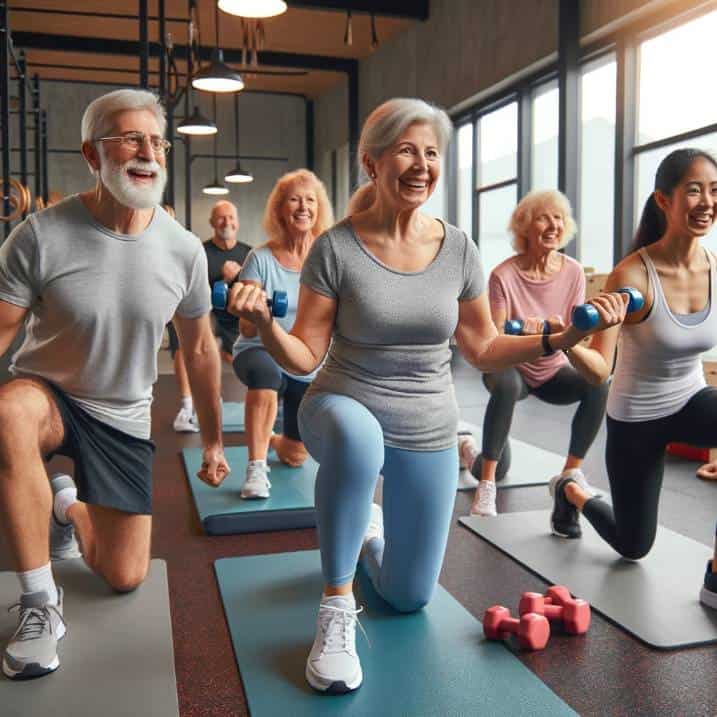
Tailoring CrossFit is a non-negotiable process. It starts with a conversation and an assessment. The goal is to align the programming from platforms like SugarWOD or Wodify with the individual’s capabilities, goals, and medical history. This might mean emphasizing low-impact cardio like cycling on an Assault Bike or using a Jacobs Ladder over running. It always means prioritizing mobility and stability work in the warm-up and cool-down.
The Importance of Professional Guidance
You need a coach, not just a trainer. A professional with a CrossFit Level 2 certificate and additional education in gerokinesiology (the study of movement in aging) is ideal. They don’t just write a workout; they craft a progressive, periodized plan. They monitor your resting heart rate (tracked via a Garmin watch), listen to feedback about joint pain, and adjust the plan dynamically. This personalized oversight is what maximizes benefit and eliminates risk. For a deeper dive into building a sustainable routine, explore our resource on long-term fitness motivation.
Community and Support in CrossFit
The community is the secret sauce. This built-in support system provides encouragement, shared experience, and accountability. For many seniors, the 5 PM class becomes the highlight of their social calendar. This combats loneliness and provides a powerful psychological boost, directly supporting mental well-being. The friendships forged over shared physical challenges are profound and lasting.
Monitoring Progress and Health
Progress is tracked objectively. We don’t just go by feel. We use benchmarks: time on a 500-meter row, max unbroken air squats, or weight used in a 5-rep deadlift. Regular check-ins with your physician are part of the program. Share your fitness data. This collaboration ensures your exercise regimen supports your overall health markers, like blood pressure and cholesterol, creating a full feedback loop for healthy aging.
Conclusion
CrossFit for seniors in 2026 represents the pinnacle of intelligent, community-driven functional fitness. It’s a proven system that, when properly scaled and coached, delivers unparalleled improvements in strength, endurance, balance, and social connectedness. The data is clear: adults over 60 who engage in regular, varied high-intensity training live more independently and report higher life satisfaction.
Your next step is simple but critical. First, schedule a check-up with your doctor to discuss your readiness. Then, research local CrossFit affiliates with coaches experienced in senior fitness. Book a “No-Sweat Intro” session to see the facility and talk about your goals. Remember, the first victory is walking through the door. From there, a supportive community and expert guidance will help you unlock a stronger, more capable version of yourself. The best time to start was years ago. The second-best time is today.
❓ Frequently Asked Questions
Is CrossFit safe for someone with arthritis or joint replacements?
Yes, with proper scaling. A qualified CrossFit coach will modify movements to avoid pain and protect joints. For example, they may substitute box squats for air squats or use resistance bands to reduce load. Always inform your coach of your specific condition.
What should I look for in a CrossFit gym for seniors?
Look for an affiliate with dedicated onboarding, coaches holding CrossFit Level 2+ certifications, and a visible senior population. Ask about their scaling process and if they offer specific class times for older adults. The environment should feel welcoming, not intimidating.
How often should a senior do CrossFit?
Start with 2-3 days per week, allowing at least one full day of rest between sessions. Recovery is crucial. As your fitness improves, you might add a fourth day focused on mobility or light cardio. Consistency with 2-3 sessions weekly yields better results than sporadic intense bouts.
Can CrossFit help prevent falls?
Absolutely. CrossFit directly trains balance, leg strength, and reaction time—the three primary defenses against falls. Exercises like single-leg balances, step-ups, and farmer’s carries are staples that build the stability needed for safe, confident movement.
What’s the average cost for senior CrossFit classes?
In 2026, expect to pay between $120-$220 per month for unlimited classes, though many gyms offer discounted “3x per week” plans. Some insurance plans, like Medicare Advantage or SilverSneakers, may provide subsidies. Always inquire about trial memberships.
References
- Why People Over 60 Do CrossFit – BarBend
- Healthy at Any Age: Why CrossFit is Perfect for Seniors – CrossFit Fortify
- The Benefits of CrossFit for Older Adults – Adamas CrossFit
- Effects of HIFT on Senior Fitness Markers – Journal of Strength and Conditioning Research
- Falls Facts & Stats – Centers for Disease Control and Prevention
Expert Tips for Senior Fitness Success
To maximize your results, focus on gradual progression. Improving your mobility training is the foundation of preventing injury as you age. Additionally, focusing on core exercises for beginners provides the stability needed for more complex movements like kettlebell swings or squats.
Enhancing Senior Fitness Through Lifestyle Synergy
Success in CrossFit for seniors relies not just on gym time, but on holistic health. Prioritizing mobility training helps maintain a pain-free range of motion, while proper nutrition, such as a high protein intake, is essential for preserving muscle mass. For those combining CrossFit with other activities, understanding cross training principles ensures balanced development without overtraining.
Frequently Asked Questions
Is CrossFit safe for people over 60?
What are the best shoes for seniors doing CrossFit?
CrossFit for Seniors FAQ
Is CrossFit safe for people over 60?
Yes, when scaled by a certified coach. It focuses on functional movements that improve daily living. For those with specific joint concerns, focusing on mobility training is a recommended starting point.
Can CrossFit help with weight loss for seniors?
Absolutely. By increasing muscle mass and metabolic rate, it is highly effective. You can learn more about managing weight in our running for weight loss guide, which shares similar metabolic principles.
How often should seniors do CrossFit?
Most seniors see significant results with 3 sessions per week, allowing for adequate recovery. To support recovery, ensure you are following a proper fueling guide to maintain energy levels.
Frequently Asked Questions: CrossFit for Seniors
Is CrossFit safe for people over 60?
Yes, when performed under the supervision of a certified coach who can scale movements to your current ability levels. It focuses on functional movements that improve daily life.
Do I need to be in shape to start?
No. CrossFit is designed to get you in shape. Coaches will modify every workout to match your starting fitness level, often beginning with bodyweight or light resistance movements.
Can CrossFit help with weight loss for seniors?
Absolutely. By increasing muscle mass and metabolic rate, CrossFit is an excellent tool for weight loss for active lifestyles when paired with proper nutrition.
To complement your strength gains, consider incorporating a core exercises for beginners routine to further enhance spinal stability. For those looking to add low-impact aerobic variety, following a beginner outdoor running plan is an excellent way to boost cardiovascular health alongside your gym sessions. Maintaining range of motion is also vital, so integrating specific mobility training drills can help keep your joints healthy for functional movements.