Skip to content
 The best multivitamin for women is not the one with the longest label. It is the one that matches your age, diet, menstrual status, iron needs, pregnancy plans, training load, medication profile, and real nutrient gaps.

Quick answer: Most women should look for a multivitamin with sensible doses of vitamin D, B vitamins, folate or folic acid, iodine, zinc, and—only when appropriate—iron. Women who menstruate may benefit from iron-containing formulas, while many women over 50 do better with iron-free options unless bloodwork shows otherwise.
A women’s multivitamin is not a fat-loss pill, energy shortcut, hormone cure, detox product, or replacement for food. The best use is simple: it can act as a nutritional safety net when your diet, lifestyle, age, menstrual cycle, training, or food restrictions make it harder to meet micronutrient needs consistently.
Key Takeaways
- Choose by life stage: women 18–50, women over 50, pregnant women, vegan women, and active women often need different nutrient strategies.
- Do not guess with iron: iron may help menstruating women with low intake or heavy periods, but it is not ideal for everyone.
- Pregnancy changes the decision: if pregnant, trying to conceive, or breastfeeding, use clinician-guided prenatal nutrition rather than a standard multi.
- Third-party testing matters: look for quality signals such as USP, NSF, Informed Choice, ConsumerLab, or transparent contaminant testing.
- Avoid megadoses: more is not better, especially with vitamin A, vitamin D, iron, zinc, niacin, selenium, and folic acid.
Best Multivitamins for Women: Comparison Table
| Rank | Product | Best for | Why it stands out | Main watch-out |
|---|---|---|---|---|
| 9.4 | Nature Made Multi For Her with Iron & Calcium | Best overall value | Simple one-tablet formula with 23 key nutrients, iron, calcium, folic acid, and vitamin D. | Contains iron, which is not ideal for everyone. |
| 9.3 | Ritual Essential for Women 18+ | Best transparency | Focused formula with traceability, vegan DHA, vitamin D3, B12, folate, magnesium, and iron. | Premium price and fewer total nutrients than broad-spectrum formulas. |
| 9.1 | Garden of Life Vitamin Code Women | Best whole-food style | Capsule formula with iron, folate, probiotics, enzymes, and whole-food style blends. | Higher capsule count than one-daily products. |
| 9.0 | MegaFood Women’s One Daily | Best one-daily tablet | Convenient daily tablet with vitamin C, vitamin D, iron, and B vitamins. | Contains iron; not best for women avoiding iron. |
| 8.8 | SmartyPants Women’s Multivitamin Gummies | Best gummy | Easy-to-take gummy with omega-3 DHA/EPA, methylfolate, CoQ10, vitamin D3, B vitamins, and zinc. | Gummies usually have weaker mineral coverage than tablets/capsules. |
| 8.8 | Thorne Women’s Multi 50+ | Best premium 50+ | Comprehensive capsule formula designed for women over 50. | Premium price and higher capsule burden. |
| 8.6 | Nature Made Multi 50+ For Her No Iron | Best budget iron-free 50+ | Simple iron-free option for women over 50 who want a daily multivitamin. | Not appropriate if labs show low iron or ferritin. |
Best Multivitamins for Women: Product Boxes
These picks are organized by real use case, not hype. Choose based on your age, menstrual status, diet quality, iron needs, pill tolerance, and budget.
We prioritized useful nutrients for women: vitamin D, B vitamins, folate, iodine, zinc, and iron only when appropriate.
Preference went to transparent labels, credible brands, direct product pages, and clear Supplement Facts positioning.
We considered serving size, format, convenience, value, availability, and whether the product makes sense for consistent use.

ASIN: B06ZZCCPHY
Nature Made Multi For Her with Iron & Calcium
A practical daily multivitamin for women who want a simple formula with calcium, folic acid, iron, vitamin D, and 23 key nutrients.
- Best for women who menstruate and want a strong value option.
- Includes 18 mg iron, which may support women of reproductive age.
- Large bottle can reduce cost per serving.
ASIN: B09W35DHLH
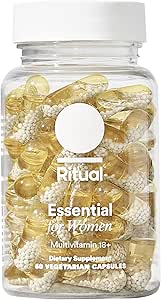
Ritual Essential for Women 18+
A premium choice for women who prefer traceable ingredients and a focused formula rather than a crowded “everything” multivitamin.
- Includes vitamin D3, vegan omega-3 DHA, B12, iron, magnesium, boron, folate, and vitamin E.
- Good for users who value clean formulation and traceability.
- Delayed-release capsule design may improve tolerance for some users.

ASIN: B00280M13Y
Garden of Life Vitamin Code Women
A whole-food style women’s multivitamin with iron, folate, probiotics, digestive enzymes, and fruit-and-vegetable style blends.
- Best for women who prefer capsule formulas with added digestive-support ingredients.
- Includes folate rather than folic acid according to the Amazon product title.
- Good fit for users who dislike basic tablet formulas.

ASIN: B00014HFV2
MegaFood Women’s One Daily
A practical one-tablet daily multivitamin for women who want vitamin C, vitamin D, iron, B vitamins, and a simple serving size.
- Best for women who want fewer pills.
- Convenient 90-serving bottle.
- Good for daily consistency if tablets are easy for you to swallow.

ASIN: B0DCZX7XSJ
SmartyPants Women’s Multivitamin Gummies
A convenient gummy multivitamin for women who struggle with tablets or capsules and want a formula with omega-3 DHA/EPA, methylfolate, CoQ10, vitamin D3, B vitamins, and zinc.
- Best for users who prioritize taste and consistency.
- Includes omega-3 DHA/EPA and CoQ10.
- Useful if pill swallowing is the main barrier to taking a multi.
ASIN: B0877WJHN7
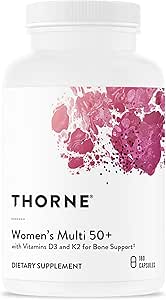
Thorne Women’s Multi 50+
A premium multivitamin for women over 50 who want a more comprehensive capsule formula with nutrients positioned for heart, brain, bone, immune, and daily wellness support.
- Best for women 50+ who want a premium formula.
- Includes vitamins A, B6, B12, C, D, E, K, zinc, and more according to the Amazon listing.
- Good fit when formulation depth matters more than lowest price.

ASIN: B001G7QU50
Nature Made Multi 50+ For Her No Iron
A budget-friendly iron-free option for women over 50 who want a simple daily multivitamin from a widely available brand.
- Best for postmenopausal women who do not need supplemental iron.
- Simple daily tablet format.
- More affordable than many premium 50+ formulas.
How We Chose the Best Women’s Multivitamins
We did not choose products by marketing hype, celebrity endorsements, or the longest ingredient list. A high-quality multivitamin should be practical, transparent, well-dosed, and appropriate for a specific type of user.
We prioritized vitamin D, folate or folic acid, B12, iodine, zinc, and iron when appropriate.
We avoided “more is always better” logic because excessive intake can become a problem.
We separated picks for women who need iron, women over 50, gummy users, and women who want premium transparency.
A multivitamin with 70 ingredients is not automatically better than one with 20. Overly complex formulas can hide unnecessary herbs, underdosed blends, stimulants, or megadoses that make the product less appropriate for daily use.
Who Should Consider a Women’s Multivitamin?
A multivitamin may be helpful if you regularly miss meals, follow a vegan or vegetarian diet, eat a limited range of foods, avoid dairy, have heavy periods, train heavily, get little sun exposure, are over 50, or have been told by a clinician that your vitamin D, B12, iron, or folate levels are low.
It may also be useful during busy periods when your nutrition is inconsistent. For a stronger food-first strategy, pair supplementation with our calorie-controlled meal planner and our guide to getting the nutrients your body needs.
Best Multivitamin for Women Over 40, Over 50 and Active Women
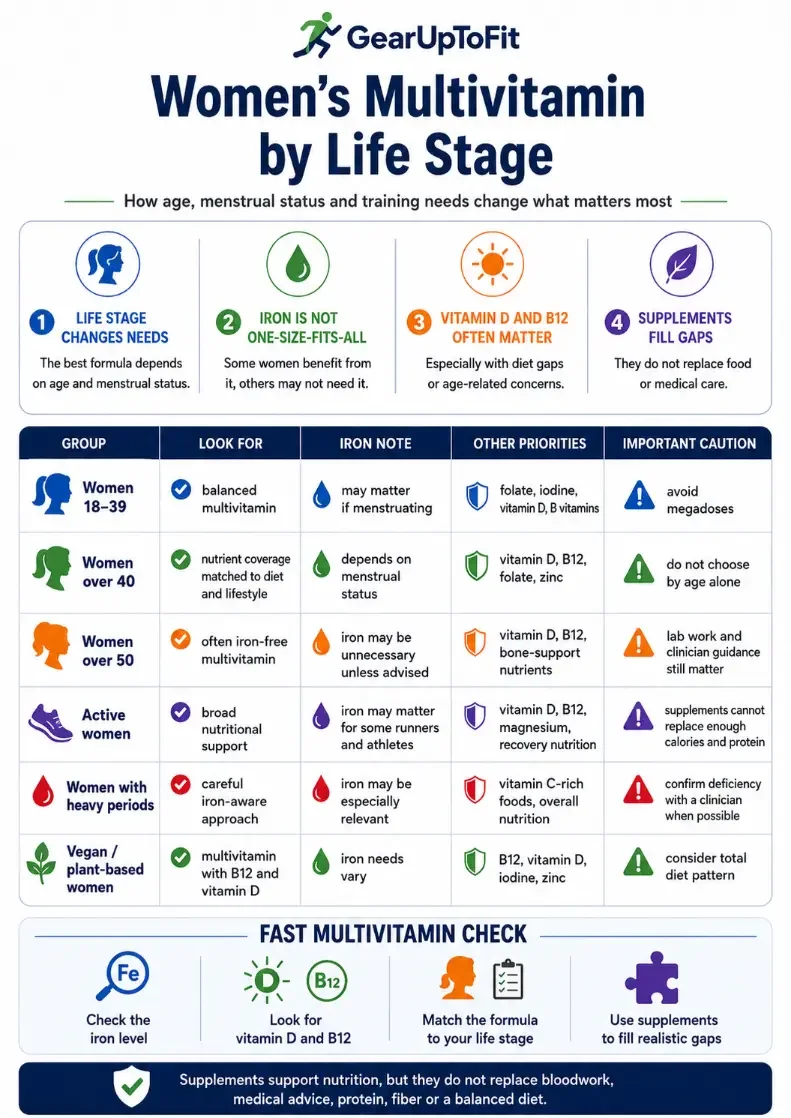
The best multivitamin for women over 40 depends on whether you still menstruate, how much iron you get from food, your vitamin D and B12 status, training load, diet pattern, and whether you are approaching or past menopause. A woman who has heavy periods may need a different formula than a postmenopausal woman who is better served by an iron-free multivitamin unless bloodwork shows otherwise.
| Search intent | Usually look for | Important caution |
|---|---|---|
| Best multivitamin for women over 40 | Vitamin D, B vitamins, B12, folate, iodine, zinc and sensible dosing | Choose by labs, diet and menstrual status, not age alone. |
| Best multivitamin for women over 50 without iron | Iron-free formula, vitamin D, B12 and bone-support nutrient strategy | Do not avoid iron if a clinician has confirmed deficiency. |
| Best multivitamin for active women with iron | Iron only when appropriate, plus vitamin D, B12, folate and zinc | Iron should not be guessed; consider ferritin and clinician guidance. |
A women’s multivitamin with vitamin D and B12 may be useful for some diets, while women with heavy periods should discuss iron status with a clinician instead of guessing from symptoms. Active readers can also estimate food targets with our protein calculator for active people.
Safety note: a multivitamin should fill realistic nutrient gaps. It should not replace food, protein, fiber, sleep, strength training, hydration, bloodwork, or medical care.
Who Should Be Careful With Multivitamins?
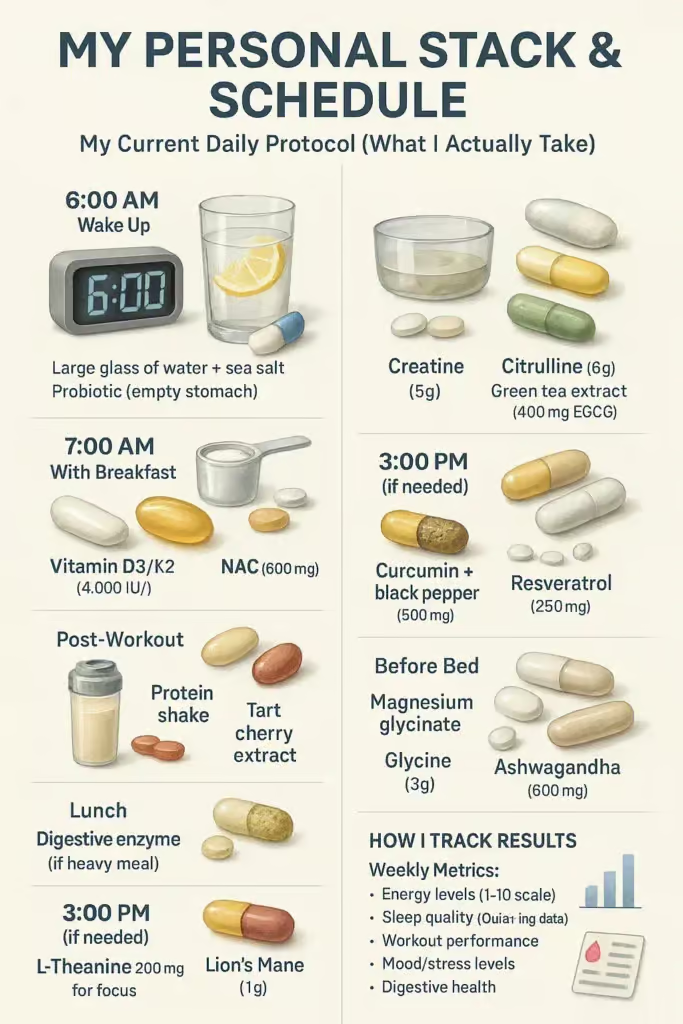
Talk with a healthcare professional before taking a multivitamin if you are pregnant, trying to conceive, breastfeeding, taking blood thinners, taking thyroid medication, taking antibiotics, managing kidney disease, managing hemochromatosis, undergoing cancer treatment, or already using several supplements.
This matters because some nutrients interact with medication or can become harmful at high intakes. Iron is helpful for some women but unnecessary or risky for others. Vitamin K can interfere with warfarin. Calcium, magnesium, iron, and zinc can reduce absorption of certain medications if taken too close together.
What to Look for in a Women’s Multivitamin
1. Vitamin D
Vitamin D supports calcium absorption and bone health. It is especially relevant for women who get little sun exposure, wear sun-protective clothing, live in northern climates, have darker skin, or spend most of the day indoors. For a deeper breakdown, read our vitamin D and omega-3 guide.
2. Folate or folic acid
Folate is important for cell growth and red blood cell formation. Women who could become pregnant should pay special attention to folic acid intake. If you are pregnant or planning pregnancy, choose a prenatal vitamin and get personalized guidance from an OB-GYN or qualified clinician.
3. Iron
Iron helps support oxygen transport through red blood cells. Women with heavy menstrual bleeding, endurance athletes, vegetarians, and vegans may be more likely to need iron, but iron should not be treated casually. Too much iron can be harmful, and postmenopausal women often need iron-free formulas unless a clinician recommends otherwise.
4. Calcium and magnesium
Most multivitamins do not contain a full day’s calcium because calcium is bulky. If your diet is low in dairy, fortified foods, calcium-set tofu, sardines, leafy greens, or calcium-rich foods, you may need a separate strategy. Start with our calcium supplement guide for women.
5. Vitamin B12
B12 is especially important for vegans, vegetarians, older adults, and people taking certain medications such as metformin or long-term acid reducers. If you suspect deficiency, testing is more useful than guessing.
6. Iodine and zinc
Iodine supports thyroid hormone production, and zinc supports immune function and normal metabolism. These nutrients are useful in many women’s formulas, but high-dose zinc can interfere with copper balance over time.
7. Third-party testing
Supplements are regulated differently from medications, so quality verification matters. Look for credible testing signals such as USP Verified, NSF, Informed Choice, ConsumerLab, Clean Label Project, or transparent contaminant testing. Testing does not prove a product is perfect for you, but it can support label accuracy and purity.
Should Women Take Iron in a Multivitamin?
Some women benefit from iron. Others should avoid it. Women with heavy periods, low ferritin, iron-deficiency anemia, vegan diets, vegetarian diets, or high-volume endurance training may need more attention to iron intake.
However, women over 50 and postmenopausal women often need less iron than menstruating women. If you already eat plenty of iron-rich foods or have iron overload risk, an iron-free formula may be safer.
| User type | Iron-containing multi? | Best approach |
|---|---|---|
| Menstruating woman with heavy periods | May be useful | Consider bloodwork for ferritin, hemoglobin, and iron status. |
| Vegan or vegetarian woman | May be useful | Check iron, B12, iodine, vitamin D, and omega-3 strategy. |
| Postmenopausal woman | Often not needed | Consider iron-free formulas unless labs show low iron. |
| Pregnant or trying to conceive | Use prenatal guidance | Ask a clinician about prenatal vitamin, iron, folic acid, iodine, choline, and DHA. |
If you suspect low iron, symptoms such as fatigue, dizziness, shortness of breath during exercise, restless legs, brittle nails, or unusually heavy periods deserve medical evaluation, not guesswork. For deeper context, read our iron supplement guide for women.
Best Multivitamin for Women Over 50
Women over 50 often need a different formula than women in their 20s, 30s, and 40s. After menopause, iron needs usually decrease, while vitamin D, calcium strategy, B12, magnesium, and bone-supportive habits become more important.
This is why many women over 50 should consider an iron-free or low-iron formula unless bloodwork shows otherwise. Good options include Thorne Women’s Multi 50+ for a premium capsule formula and Nature Made Multi 50+ For Her No Iron for a budget-friendly daily tablet.
For a deeper age-specific guide, read our full breakdown of the best multivitamins for women over 50.
Best Multivitamin for Active Women and Runners
Active women should not automatically buy the strongest formula. Training increases the importance of total energy intake, protein, carbohydrates, hydration, electrolytes, iron status, vitamin D, magnesium, and recovery.
A multivitamin can help cover gaps, but it cannot replace adequate calories or a well-built training diet. If you run, lift, cycle, or train hard several times per week, start with food quality and recovery first. Then use supplementation strategically.
Our essential nutrients for athletes guide explains how vitamins and minerals fit into performance nutrition.
Folate vs. Folic Acid vs. Methylfolate
Folate is the natural umbrella term for vitamin B9 forms found in foods and the body. Folic acid is the synthetic form used in many fortified foods and supplements. Methylfolate is an active supplemental form used in some premium formulas.
For women who may become pregnant, folic acid is especially important because it has strong evidence for helping reduce the risk of neural tube defects. If pregnancy is possible, ask your clinician whether you need a standard prenatal vitamin, folic acid, methylfolate, iron, iodine, choline, DHA, or a more targeted plan.
Are Gummy Multivitamins Good for Women?
Gummy multivitamins can be helpful if you struggle with tablets or capsules. The tradeoff is that gummies often contain added sugar, may omit iron, and can provide lower or less complete mineral coverage.
They are better than taking nothing if they improve consistency, but they are not automatically equal to a well-formulated capsule or tablet. If you choose gummies, check the Supplement Facts carefully. Look for vitamin D, B12, folate, iodine, zinc, and a reasonable added-sugar profile.
How to Take a Women’s Multivitamin
- Take it with a meal. This improves tolerance and helps absorb fat-soluble vitamins A, D, E, and K.
- Do not double dose. If you forget a day, resume normally.
- Separate from some medications. Minerals like calcium, magnesium, iron, and zinc can interfere with absorption of certain drugs.
- Avoid stacking. Do not combine multiple multivitamins, hair-skin-nail formulas, greens powders, and high-dose single nutrients without checking totals.
- Store properly. Keep vitamins away from heat, humidity, and direct sunlight.
Food-First Nutrient Checklist for Women
A multivitamin works best when your diet already has a strong base. Build meals around protein, fiber-rich carbohydrates, healthy fats, colorful plants, and mineral-rich foods.
Lean red meat, poultry, seafood, lentils, beans, tofu, pumpkin seeds, and fortified grains.
Citrus, kiwi, peppers, berries, broccoli, and potatoes. Vitamin C also helps non-heme iron absorption.
Yogurt, milk, fortified plant milk, calcium-set tofu, sardines, and leafy greens.
Sun exposure, fortified foods, fatty fish, and supplements if needed.
Animal foods, fortified foods, or supplements for vegan diets.
Nuts, seeds, legumes, whole grains, dark chocolate, and leafy greens.
For more nutrition depth, read our complete guide to essential vitamins and our evidence-based sports supplements guide.
Common Mistakes When Buying Women’s Multivitamins
Mistake 1: Choosing the longest ingredient list
More ingredients do not guarantee better results. A clean formula with the right nutrients at useful doses is usually better than a crowded formula full of tiny proprietary blends.
Mistake 2: Ignoring iron status
Iron is one of the biggest differences between women’s multivitamins. Choose based on menstrual status, diet, age, symptoms, and bloodwork—not marketing.
Mistake 3: Assuming “natural” means safer
Natural ingredients can still cause side effects or interactions. Herbs, green tea extracts, high-dose antioxidants, and specialty blends should be treated with the same caution as isolated vitamins and minerals.
Mistake 4: Forgetting total daily intake
Fortified foods, protein powders, greens powders, energy drinks, and separate supplements can push your total intake higher than expected. Check labels together, especially for vitamin A, vitamin D, iron, zinc, niacin, selenium, and folic acid.
FAQ: Best Multivitamins for Women
What is the best multivitamin for women?
The best multivitamin depends on your age, diet, menstrual status, pregnancy plans, medications, and nutrient gaps. Nature Made Multi For Her is a strong value option, Ritual Essential for Women 18+ is excellent for transparency, Garden of Life Vitamin Code Women fits whole-food style preferences, MegaFood Women’s One Daily is a convenient one-daily choice, and Thorne Women’s Multi 50+ is a premium option for women over 50.
Should women take a multivitamin every day?
Some women benefit from daily use, especially if their diet is inconsistent or restricted. Others may not need one if they already meet nutrient needs through food. If you take one daily, avoid stacking it with other high-dose supplements unless advised by a clinician.
Are multivitamins good for weight loss?
Multivitamins do not directly cause fat loss. They may support general nutrition if you are dieting, but sustainable weight loss still comes from calorie control, adequate protein, resistance training, daily movement, sleep, and consistency. Use our BMI, BMR, WHR, and TDEE calculator to build a more precise plan.
Should I take a prenatal vitamin instead?
If you are pregnant, trying to conceive, or breastfeeding, a prenatal vitamin is usually more appropriate than a standard women’s multivitamin. Ask your OB-GYN or clinician about folic acid or folate, iron, iodine, choline, DHA, and vitamin D.
Is iron good in a women’s multivitamin?
Iron can be helpful for menstruating women with low intake, heavy periods, or low iron markers. It is not automatically needed for women over 50 or anyone at risk of iron overload. Bloodwork is the best way to personalize iron intake.
What is the best time to take a multivitamin?
Take it with the meal you tolerate best. Breakfast or lunch works well for many people. If it causes nausea, try taking it with a larger meal or switching forms.
Are gummy multivitamins as good as tablets?
Not always. Gummies can improve consistency because they are easier to take, but they often have less complete mineral coverage and may contain added sugar. Check the label carefully.
Bottom Line
A women’s multivitamin can be helpful when it fills real gaps. The best choice is not the product with the loudest claims—it is the formula that fits your age, diet, iron needs, pregnancy status, budget, and safety profile.
For most women, start with a nutrient-dense diet, then choose a multivitamin with sensible doses, transparent labeling, and third-party testing when possible. If you have symptoms, medical conditions, abnormal labs, or take medication, personalize the decision with a qualified healthcare professional.
Sources and Useful References
- NIH Office of Dietary Supplements: Multivitamin/mineral supplements
- NIH Office of Dietary Supplements: Iron
- CDC: Folic acid intake and sources
- FDA: Dietary supplements
- Nature Made Multi For Her on Amazon
- Ritual Essential for Women 18+ on Amazon
- Garden of Life Vitamin Code Women on Amazon
- MegaFood Women’s One Daily on Amazon
- SmartyPants Women’s Multivitamin Gummies on Amazon
- Thorne Women’s Multi 50+ on Amazon
- Nature Made Multi 50+ For Her No Iron on Amazon