
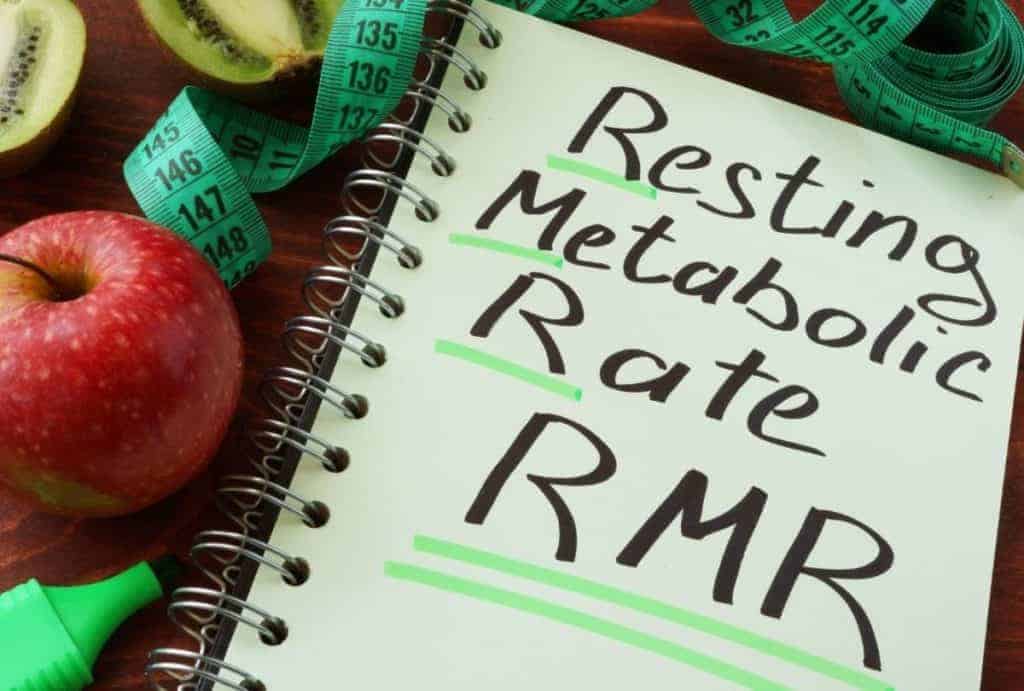
Resting Metabolic Rate (RMR) is the number of calories your body burns at complete rest to maintain life. You’ve tracked calories and dialed in macros. Your body composition goals remain out of reach. The hidden variable isn’t your willpower. It’s your RMR. Often miscalculated by generic formulas, your true RMR is the foundation of all effective nutrition. In 2026, understanding it is a metabolic imperative.
This guide dissects modern RMR tools. It separates algorithmic guesswork from clinical-grade precision. It delivers actionable intelligence. You will stop guessing. You will start knowing.
Key Takeaways
- Your RMR is not a static number—it’s a dynamic physiological signature impacted by lean mass, NEAT, and circadian biology.
- 2026’s top-tier calculation tools now integrate AI-driven personalization, moving beyond the 30% error rates of classic equations.
- Direct calorimetry remains the gold standard, but accessible tech like BIA and metabolic cart testing provides 95%+ accuracy.
- Strategic manipulation of NEAT (Non-Exercise Activity Thermogenesis) can alter your daily energy expenditure more than a 60-minute gym session.
- An ‘RMR-first’ approach to diet planning prevents metabolic adaptation plateaus and sustains long-term body composition success.
- Your microbiome and sleep quality are now quantifiable co-factors in next-gen RMR calculations.
- The most powerful tool is a consistent tracking protocol—combining tech with behavior for a complete metabolic picture.
What is Resting Metabolic Rate? Beyond the Basic Definition
Resting Metabolic Rate (RMR) Calculator
Your Resting Metabolic Rate:
Resting Metabolic Rate is the number of calories your body burns at complete rest to maintain basic life functions like breathing, circulation, and cell repair. It accounts for 60-75% of your total daily energy expenditure. RMR is not a static number; it’s a dynamic physiological signature that fluctuates with your lean mass, sleep, stress, and even gut health. Think of it as your body’s baseline operating cost.
Your body never stops working. It repairs tissues. It pumps blood. It powers your brain. This silent effort requires fuel. That fuel is calories. The number of calories you burn doing nothing is your RMR. It’s your metabolic anchor. Everything else gets added on top.
This matters. Your RMR is the largest part of your daily calorie burn. You can’t out-train a miscalculated RMR. Garbage data in equals garbage results out. Using a generic number for your most important metric is like flying blind. You will crash.
Let’s define it with precision.
Your RMR is your body’s non-negotiable energy tax. It funds your heartbeat and cellular upkeep. Ignoring its true value guarantees you’ll misallocate your entire nutritional budget.
Get this number wrong, and your diet fails. Your training stalls. Your progress plateaus. Mastering your RMR is the first step in any intelligent body composition plan. Everything else is noise. Your next question should be obvious: how do most people get this wrong? The answer lies in outdated guesswork.
Why Generic Calculators Fail You: The 2026 Problem with Old Formulas
Classic equations are educated guesses. They were built on limited data decades ago. They ignore your individual biology. The Mifflin-St Jeor, Harris-Benedict, and Katch-McArdle formulas have error rates. Research shows errors can exceed 30%. That’s a 500+ calorie swing.
Imagine basing your financial plan on a salary estimate that’s off by 30%. You’d be broke. That’s what happens with generic RMR formulas. They use basic inputs: age, weight, height, gender. They don’t account for your muscle mass or your hormones.

These formulas treat a 180-pound bodybuilder the same as a 180-pound couch potato. The math is flawed. Muscle is expensive tissue. Fat is not. The classic equations can’t see the difference. This is the fundamental failure. They provide a population average, not a personal metric.
The error is systematic.
| Common RMR Equation | Typical Error Range | Key Limitation |
|---|---|---|
| Mifflin-St Jeor | ± 10-15% | Fails with high/low body fat; ignores lean mass. |
| Harris-Benedict (Original) | ± 20-30% | Based on 1919 data; severely outdated. |
| Katch-McArdle | ± 5-10% (if body fat % is KNOWN) | Requires accurate body fat measurement, which most people guess. |
This table reveals the core issue. Even the “best” equation needs perfect data. Most people don’t have that. They guess their body fat. The result is a useless number. In 2026, we have better tools. We don’t need century-old math. We can measure.
The RMR Calculation Toolbox: From BMR Equations to AI Engines
The modern toolbox has three tiers. Tier 1: Predictive Equations. Cheap. Fast. Inaccurate. Tier 2: Bioelectrical Impedance Analysis (BIA) & Smart Scales. Better. Accessible. Tier 3: Direct & Indirect Calorimetry. Gold Standard. Clinical. Your choice depends on your budget and need for precision.
Tier 1 tools are online calculators. Plug in numbers. Get an estimate. They’re a starting point. Nothing more. Never base critical decisions on this data alone.
Tier 2 tools are game-changers for home use. Advanced BIA scanners estimate your body composition. Better devices improve RMR estimates. Brands like InBody fall here. Accuracy improves to about 90-95%.
Tier 3 is elite. This is indirect calorimetry. You breathe into a mask. The machine analyzes your gases. This directly measures your energy expenditure. Error drops to less than 5%. This is the truth.
New in 2026? AI-driven personalization engines. These combine data streams. They create a dynamic RMR model. They learn and adjust. They move beyond a snapshot to a real-time video of your metabolism.
Stop choosing tools based on convenience. Choose based on required accuracy. A 20% error in your RMR guarantees a 20% error in your diet plan. That error compounds every day.
For tracking daily activity, check out our article about the best fitness trackers.
Direct Measurement Tools: Metabolic Carts & Calorimetry Explained
This is the lab test. Indirect calorimetry is the gold standard. You sit still. You relax. A technician places a hood over your head. You breathe normally. The test lasts 10-20 minutes.
The science is precise. Your body burns fuel with oxygen. It produces carbon dioxide. By measuring the ratio, the machine calculates your exact energy expenditure. It’s physics. It’s not a guess.
Where do you get this test? University labs. High-end dietitian offices. Specialized clinics. Cost ranges from $100 to $250. It’s an investment. Consider the cost of spinning your wheels for six months. The test pays for itself.
Is it perfect? For a resting measurement, yes. It captures your metabolic state at that moment. Your RMR can vary day-to-day. But it gives you a rock-solid baseline. It’s the most valuable data you can own.
Direct calorimetry is rarer. It measures heat directly. It’s incredibly accurate but confined to research. For practical purposes, indirect calorimetry is the benchmark. All other tools are measured against it.
[IMAGE_2]
Indirect Tools & Wearables: How Accurate Are Consumer Devices in 2026?
Your smartwatch is not a metabolic cart. But it’s close. The latest wearables use advanced algorithms. They combine heart rate data, movement, and more. They model your energy expenditure 24/7.
The accuracy is impressive. Studies show devices can estimate daily burn within 5-8% of lab measures. For tracking trends, they are exceptional. They provide context a single RMR test cannot.
BIA scales are also indirect. They estimate body composition. Better devices mean better estimates. High-end BIA can calculate RMR within 5-10% of a metabolic cart.
The key is consistency. Use the same device under the same conditions. Track the trend, not the absolute number. Is your RMR creeping up as you gain muscle? That’s a win. Is it plummeting during a diet? That’s a red flag.
No consumer device is perfect. Used intelligently, they create a powerful feedback loop. They turn abstract metabolism into data. For example, garmin forerunner-965 provides rich activity data.
| Device/Method Type | Estimated RMR Accuracy | Best For | Approx. Cost |
|---|---|---|---|
| Generic Online Calculator | 70-85% | Initial ballpark estimate | Free |
| Consumer BIA Scale | 85-90% | Home tracking & trends | $50 – $200 |
| Advanced Wearable | 90-95% (for daily TDEE) | 24/7 energy expenditure monitoring | $200 – $500 + subscription |
| Indirect Calorimetry | >95% | Clinical-grade baseline measurement | $100 – $250 per test |
Inputting Your Data: A Step-by-Step Guide to Maximizing Tool Accuracy
Garbage in, garbage out. Follow this protocol.
Step 1: Standardize Your State. Test first thing in the morning. Be fasted for 10-12 hours. Avoid caffeine. Avoid strenuous exercise for 24 hours prior. Get normal sleep. This minimizes variables.
Step 2: Measure Consistently. Use the same scale. For BIA, ensure feet and hands are clean. Input your data honestly. Don’t round your weight. These errors compound.
Step 3: Know Your Body Composition. This is the biggest lever. If using Katch-McArdle, you must know your body fat percentage. A DEXA scan is best. High-quality BIA is good. Visual estimates are worthless.
Step 4: Use Multiple Tools, Find the Consensus. Don’t trust one number. Run your stats through 2-3 calculators. Get a BIA reading. See where they cluster. The truth lies in the middle.
Step 5: Document Everything. Write down the tool used, inputs, date, and result. Track this over time. This log becomes your dataset. It’s invaluable for building an effective plan.
The goal isn’t a perfect number. The goal is a highly accurate, actionable number. Following these steps gets you 90% there.
Interpreting Your Results: What Your RMR Number Actually Means for You
You have a number. Now what? Don’t panic. Compare it to averages with caution. Your RMR is personal. The only relevant comparison is your RMR yesterday and next year. Focus on the trend.
A “high” RMR means more lean muscle mass or a larger frame. It’s expensive physiology. Your maintenance calorie needs are higher. This is an advantage for maintaining weight.
A “low” RMR can result from lower muscle mass or a history of chronic dieting. It means your body is fuel-efficient. Creating a deficit requires precision. The solution is to build active tissue.
The most powerful insight comes from your Total Daily Energy Expenditure (TDEE). Your RMR is the biggest piece. The rest is TEF, EAT, and NEAT. NEAT is the silent hero. It’s your daily fidgeting and walking.
You can alter your NEAT more than your RMR short term. Take the stairs. Park farther away. This adds hundreds of calories. It’s sustainable. This concept is key for long-term strategy.
Your RMR is not your destiny. It’s your starting point. A lower-than-expected RMR isn’t a life sentence. It’s a diagnostic. It tells you to focus on building muscle and optimizing NEAT. The number is information, not fate.
The 2026 Action Plan: Applying Your RMR Data to Nutrition & Training
Knowledge without action is worthless. Here is your playbook.
Step 1: Establish Your True Maintenance. Take your measured RMR. Multiply it by your Physical Activity Level (PAL) factor. For a sedentary worker, start with 1.2. For someone active, use 1.55. This gives your estimated TDEE. This is your maintenance target.
Step 2: Set Your Goal Calorie Target. To lose fat, create a 300-500 calorie deficit below TDEE. Never slash calories below your RMR. That forces starvation mode. For muscle gain, add 250-500 calories above TDEE.
Step 3: Prioritize Protein & Resistance Training. Eat enough protein. Aim for 0.8-1 gram per pound of body weight. Pair this with strength training. This influences your RMR over time. Muscle is metabolic currency.
Step 4: Optimize NEAT & Sleep. Engineer more movement into your day. Track your steps. Aim for 8,000-10,000. Prioritize 7-9 hours of quality sleep. Poor sleep tanks RMR. These are non-negotiable wins. For workout ideas, explore HIIT for weight loss training.
Step 5: Reassess Every 90 Days. Your metabolism adapts. Weigh yourself weekly. Take new measurements monthly. Re-calculate your RMR every 3-6 months. Adjust your targets. This is continuous improvement.
This is the new standard. No more guesswork. You have a personalized blueprint. Your RMR is the cornerstone. Build everything else on top. For help distributing calories, use our tool.
FAQs: Your Top RMR Questions, Answered
What’s the difference between BMR and RMR? Which one should I use?
Basal Metabolic Rate (BMR) is measured under strict lab rest. Resting Metabolic Rate (RMR) is measured under typical ‘at rest’ conditions. For real-world applications, RMR is more relevant. The difference is small (3-10%). RMR provides a more realistic baseline.
How often should I recalculate my RMR?
Re-evaluate every 3-6 months. Recalculate after any significant body composition change (>5-10 lbs), a major activity shift, or a health change. The best practice is continuous monitoring via a wearable, with formal recalculations as calibration points.
Can I raise my RMR? What are the most effective evidence-based methods?
Yes. Increase Lean Body Mass through resistance training. Optimize Non-Exercise Activity Thermogenesis (NEAT). Ensure quality sleep. Manage stress. Drastic calorie restriction is counterproductive. It lowers RMR to conserve energy.
📚 Verified References & Further Reading
- Resting metabolic rate (RMR) of recreational female … (sciencedirect.com)
- Self‐Regulated Moderate Intensity Habitual Exercise and … (pmc.ncbi.nlm.nih.gov)
- Do we need race-specific resting metabolic rate prediction … (nature.com)
- Validity of RMR equations in underweight, normal weight … (archpublichealth.biomedcentral.com)
- Revised Harris–Benedict Equation: New Human Resting … (pmc.ncbi.nlm.nih.gov)
- Resting metabolic rate is repeatable, but does not affect … (journals.biologists.com)
- The Development of a Resting Metabolic Rate Prediction … (mdpi.com)