
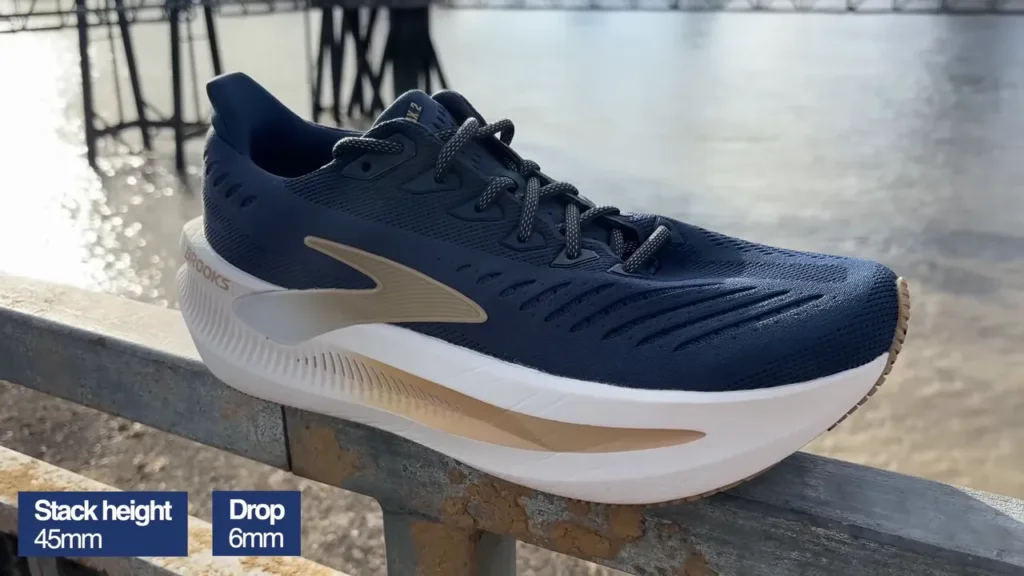
The Brooks Glycerin Max 2 arrives as Brooks’s most cushioned offering, promising plush comfort and stability for long miles. I put this shoe through its paces over several runs to see whether the tweaks in version 2 actually improve the ride or simply make an already heavy shoe feel more dated. The short answer: it still does exactly what a max stack shoe should do—wrap your feet in comfort and protect them for long efforts—but it also adds weight and loses some of the liveliness I wanted to see.
Overview: What the Brooks Glycerin Max 2 aims to be
The Brooks Glycerin Max 2 is designed as a long-run, highly cushioned daily trainer. With a 45 mm heel stack and a 6 mm drop, it targets runners who want maximum comfort for easy-paced mileage, road ultras, and recovery runs. Brooks kept the DNA-tuned midsole foam but reshaped the midsole and refined the upper, aiming for a cleaner fit and slightly more stability.

Brooks Women’s Glycerin Max Neutral Running & Walking Shoe
What changed from version 1?
Brooks made several modest changes from the previous model. The most noticeable are:
- Slight increase in weight: My UK size 12 sample came in at 390 grams, up from 375 grams on the previous version.
- Wider outsole base: A broader footprint for extra stability.
- Refined upper: Triple jacquard mesh with slightly less heel collar padding and a different mesh pattern at the forefoot.
- Updated outsole pattern: Same sticky rubber compound but a new tread layout for traction.
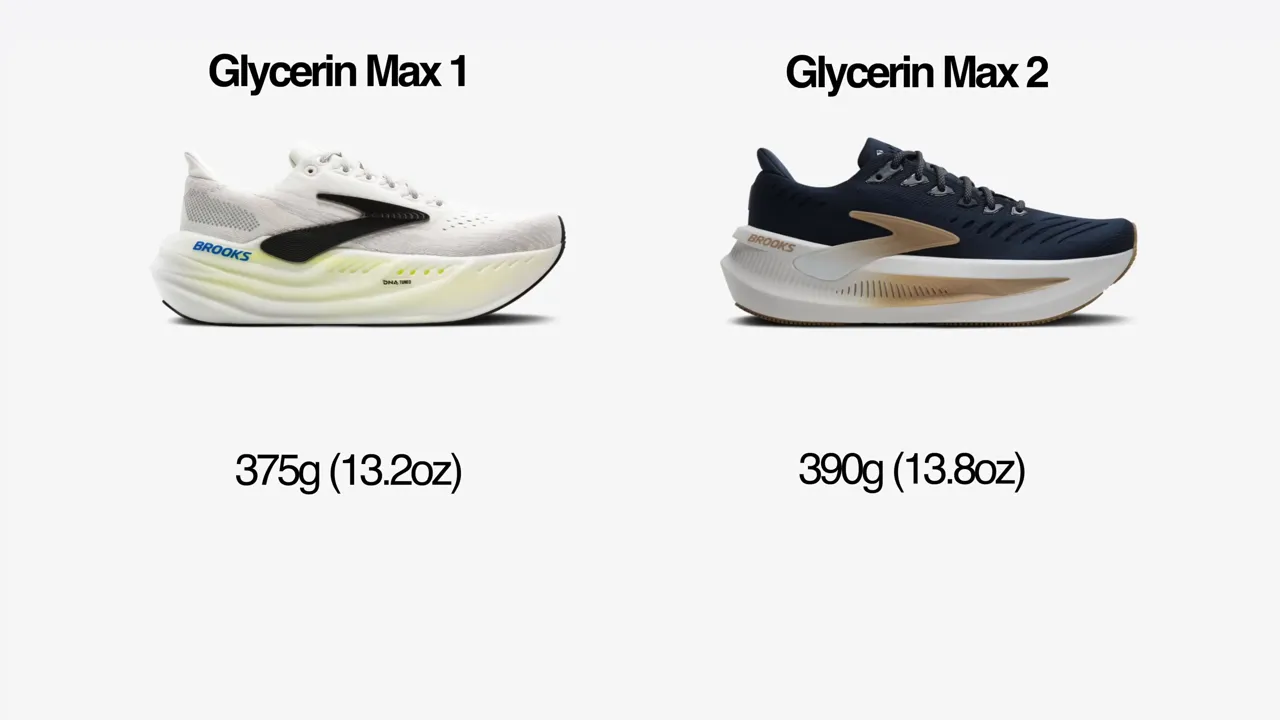
Price, stack height, drop, and the DNA-tuned foam remain unchanged. There is still no plate, and Brooks kept the shoe deliberately soft at the rear with a slightly firmer forefoot density in the midsole.
Specs and key figures
- Purpose: Max-cushion daily trainer for long, easy miles
- Price: £180 (UK launch price)
- Heel stack: 45 mm
- Drop: 6 mm
- Weight: 390 g (UK size 12 in my sample)
- Upper: Triple jacquard mesh
- Midsole: Nitrogen-infused DNA-tuned foam (variable density)
- Plate: None
- Outsole: Sticky rubber compound with exposed foam segments
- Widths: Only standard width offered, but the shoe runs wide in the forefoot
How it feels on the run
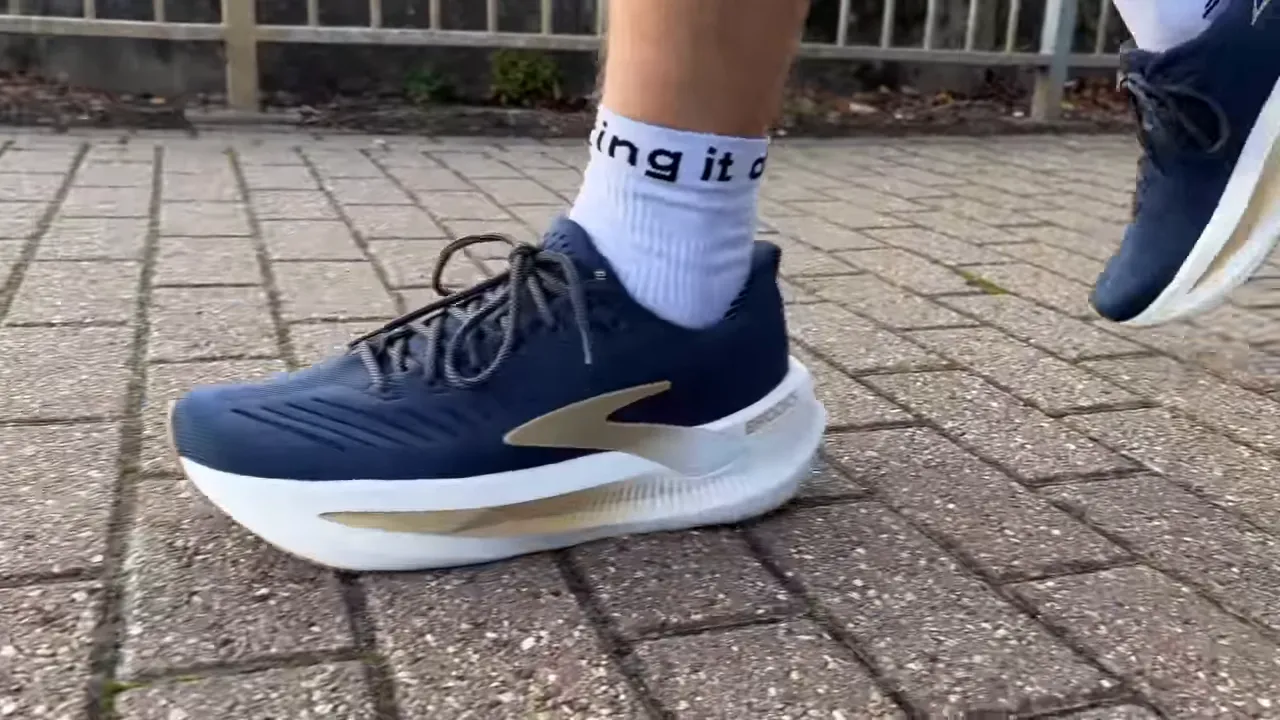
My first impression was comfort. The Brooks Glycerin Max 2 excels where it needs to. The heel is well-padded, the tongue plush, and the upper sits nicely on top of the foot. For steady paced miles—recovery days, long slow runs, and road ultras—the shoe does its job exceptionally well. The rocker geometry at the forefoot helps you roll through the gait cycle smoothly, and that is noticeable when fatigue sets in late in a long effort.
That said, the shoe feels heavy. At just under 400 grams in my size, every step reminded me of the weight. Where version 1 felt manageable, the Max 2 leans into a brick-like sensation during quicker efforts. The midsole is on the firmer side of plush. It absorbs impact without bottoming out, but it does not give a lively or springy experience. If you want pop and responsiveness, this is not the shoe for that.
Five things I liked
- Comfort: The Glycerin Max 2 is supremely comfortable for long durations. The plush heel and tongue make it easy to wear for hours.
- Stability: The wider base and the way the foot sinks into the foam provide confidence on tired legs and in corners.
- Grip: The sticky rubber outsole is reassuring in wet, winter conditions and on cold roads.
- Build quality: Brooks continues to produce well-made shoes. The materials and construction feel premium.
- Good for heavier runners: Plenty of foam to absorb impact without feeling mushy or bottoming out.

Five things I didn’t like
- Weight: At 390 g in my size, it’s heavier than many modern max shoes and heavier than its predecessor.
- Firm-ish feel: It lacks the lively energy return you see in newer foams. Picking up the pace feels lethargic.
- Price: £180 is a lot, especially when competitors offer more exciting rides for less.
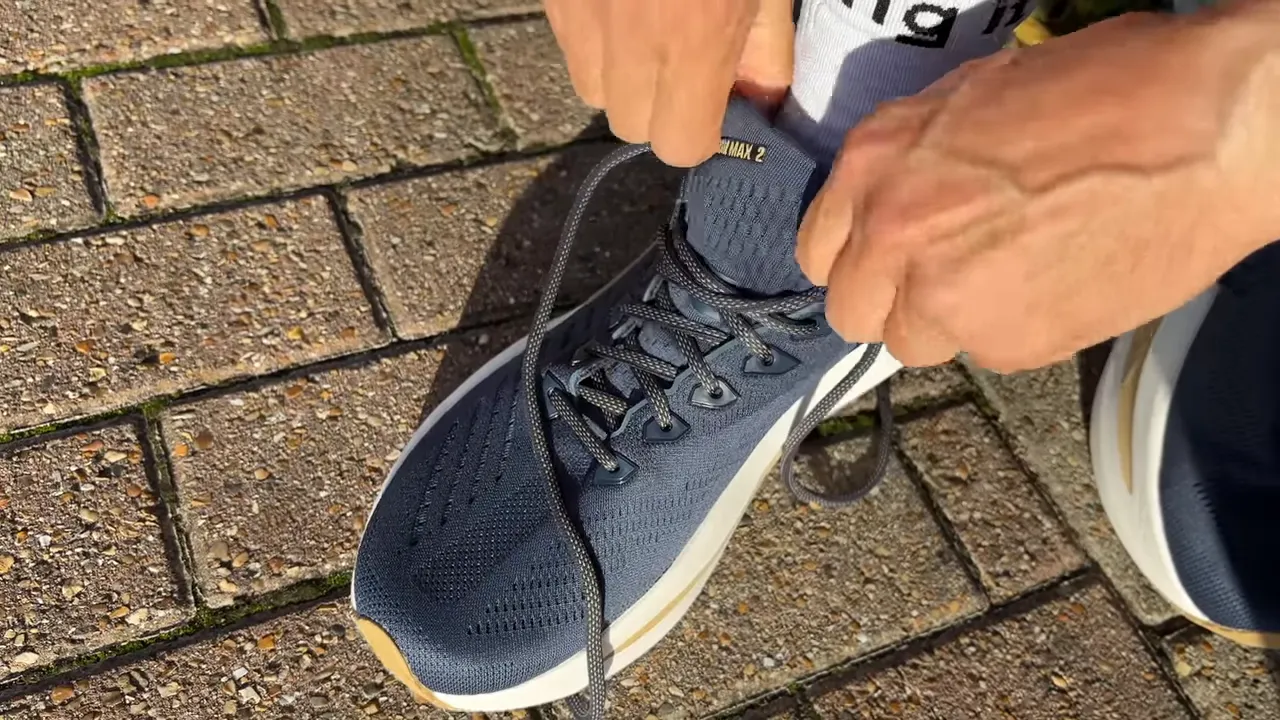
- Oddly long laces: A small gripe but noticeable—laces felt excessively long and plush.
- Styling: I preferred the look of the first version. The new launch colorways are safer and feel less exciting.
Comparisons: Where it sits versus the competition
Context matters. When I compare the Brooks Glycerin Max 2 against a few popular rivals, the decision gets clearer.

PUMA Men’s Magmax Nitro Running Shoes
Puma MagMax Nitro
The Puma MagMax is significantly lighter and more responsive. It retains a firm character but delivers a fun, engaging run with more immediate feedback. It is also cheaper—often available around £120 on sale—so if you want something lighter and snappier, the MagMax is a stronger value proposition.

ASICS Men’s NOVABLAST 5 Running Shoes
Asics Megablast
The Asics Megablast uses newer, livelier foams and is noticeably lighter. It offers a more versatile ride where you can legitimately push the pace or race short distances if you want. It costs more in many cases, but performance-wise it feels like a step forward compared to what the Glycerin Max 2 wants to be.
Nike Vomero Plus
The Nike Vomero Plus is another lighter, more responsive option. It delivers better energy return at faster paces and sits at a lower price point in many markets. The trade-off is slightly less stability, so if you prioritize steadiness in corners at the end of long runs, the Glycerin Max 2 still has the edge.

Who the Brooks Glycerin Max 2 is for
The Brooks Glycerin Max 2 is a niche but clear offering. It suits:
- Runners who prioritize pure cushioning and comfort for long, slow efforts.
- Heavier runners who need impact protection without a mushy feel.
- Anyone wanting a dependable training shoe for high-mileage weeks and road ultras.
- Runners who value stability and traction in wet or winter conditions.
It is not ideal for:
- Runners who want a lively, responsive shoe for tempo runs, fast marathon pace sessions, or shorter races.
- Those on a tighter budget who can get more versatile performance elsewhere.
- People who prefer lightweight trainers for daily workouts.
Recommendation and final thoughts
I respect what Brooks set out to do with the Glycerin Max 2: make a supremely comfortable, stable max-stack trainer. In those areas it largely succeeds. The cushioning is plush without being flabby, the build quality is excellent, and the outsole gives confidence in poor conditions.
Where I struggle is with direction. The shoe added weight compared to version 1 and didn’t gain responsiveness or a clearer identity. In 2025 the landscape is crowded with lightweight, lively max-stack options that use more reactive foams. For many runners, those alternatives will feel like a better value and a fresher experience.
If you already own the original Glycerin Max and liked it, I would not rush to upgrade. Version 1 is easier to live with and often available at a discount. If you are new to Brooks and want the most cushioned, stable offering in their lineup and are comfortable with the price and weight, the Glycerin Max 2 will fulfill that brief. Otherwise, explore the competition: you might find a lighter, more engaging shoe that better matches a modern training shoe profile.

FAQ
Is the Brooks Glycerin Max 2 good for marathon training?
Yes, the Brooks Glycerin Max 2 is well suited for marathon training if your primary sessions are long runs, recovery runs, and easy-paced mileage. Its cushion and stability will protect your legs over high weekly volumes. It is less suitable as a race day shoe if you want responsiveness and speed.
How much does the Brooks Glycerin Max 2 weigh?
My UK size 12 sample weighed 390 grams. Expect the shoe to be on the heavier side compared with many modern max trainers.
Does the Brooks Glycerin Max 2 have a carbon or nylon plate?
No. The Glycerin Max 2 does not include any plate. It relies on Brooks’s nitrogen-infused DNA-tuned foam and rocker geometry to drive a smooth transition.
Are there wide fit options for the Brooks Glycerin Max 2?
Brooks did not offer multiple widths for this model at launch. The shoe runs relatively wide in the forefoot, so it should be comfortable for many, but those with particularly narrow feet may experience some bunching.
How does the Brooks Glycerin Max 2 compare to the Asics Megablast?
The Asics Megablast is generally lighter and feels more responsive with a livelier foam. The Glycerin Max 2 is more cushioned and stable, but the Megablast offers broader pace capability and a more modern foam feel.
What is the best use case for the Brooks Glycerin Max 2?
The best use case is long, comfortable miles—think marathon build weeks, long slow runs, recovery days, and road ultras where comfort and stability outweigh the need for speed.
Quick pros and cons
- Pros: Outstanding comfort, stable platform, strong grip, durable construction, good for heavier runners.
- Cons: Heavy for its category, firmer and less lively than some rivals, pricey, odd long laces, less exciting styling.
The Brooks Glycerin Max 2 does what it promises: a plush, dependable ride for long miles. It just arrives at a moment when many runners will be drawn toward lighter, livelier max-stack alternatives. If ultimate comfort and stability are your top priorities, this shoe remains a solid, dependable choice. If you want speed, snap, or the most modern foam technology, look elsewhere.