Skip to content
 The Garmin Fenix 8 is an exceptional outdoor adventure smartwatch that marks a major evolution in the Fenix lineup. By introducing a gorgeous AMOLED display alongside the traditional MIP solar screen, adding a built-in speaker and microphone, and incorporating a 40-meter dive rating with leakproof buttons, Garmin has created the ultimate wearable for multi-sport athletes who refuse to compromise on durability, GPS accuracy, or battery life.
Affiliate disclosure: GearUpToFit is reader-supported. As an Amazon Associate, GearUpToFit may earn from qualifying purchases through links with the affiliate tag papalex-20. We do not hardcode Amazon prices because pricing, sellers, colors, sizes, images, ratings, and availability change.
Who This Guide Is For & Who Should Skip It
Ultrarunners, triathletes, and hikers requiring extreme battery life and offline mapping; athletes wanting a brilliant AMOLED screen without sacrificing outdoor visibility; divers and water-sports enthusiasts needing a watch rated for 40-meter scuba diving.
Casual runners who only need basic GPS tracking and step counting; individuals on a tight budget who can get sufficient metrics from a Forerunner 165 or 265; smartwatch users seeking deep cellular integration and third-party app stores (e.g., Apple Watch).
Clear Definition
An Ultra-Endurance Smartwatch is a premium wearable engineered with military-grade ruggedness (MIL-STD-810), multi-band GNSS tracking, offline topographical mapping, and extended battery power (measured in weeks, not days) to support remote navigation and physiological monitoring.
Practical Framework & Complete Analysis
Updated for 2026: this review removes the stale 2024 framing and focuses on the current Garmin Fenix 8 buying decision for runners, triathletes, hikers, and endurance athletes.
Quick verdict: the Garmin Fenix 8 is still one of the strongest premium multisport watches if you want long battery life, mapping, rugged build quality, diving-ready hardware, advanced training metrics, and physical buttons. It is overkill if you only need casual step tracking, basic runs, or smartwatch-style app support.
Garmin Fenix 8 in 2026: what actually matters
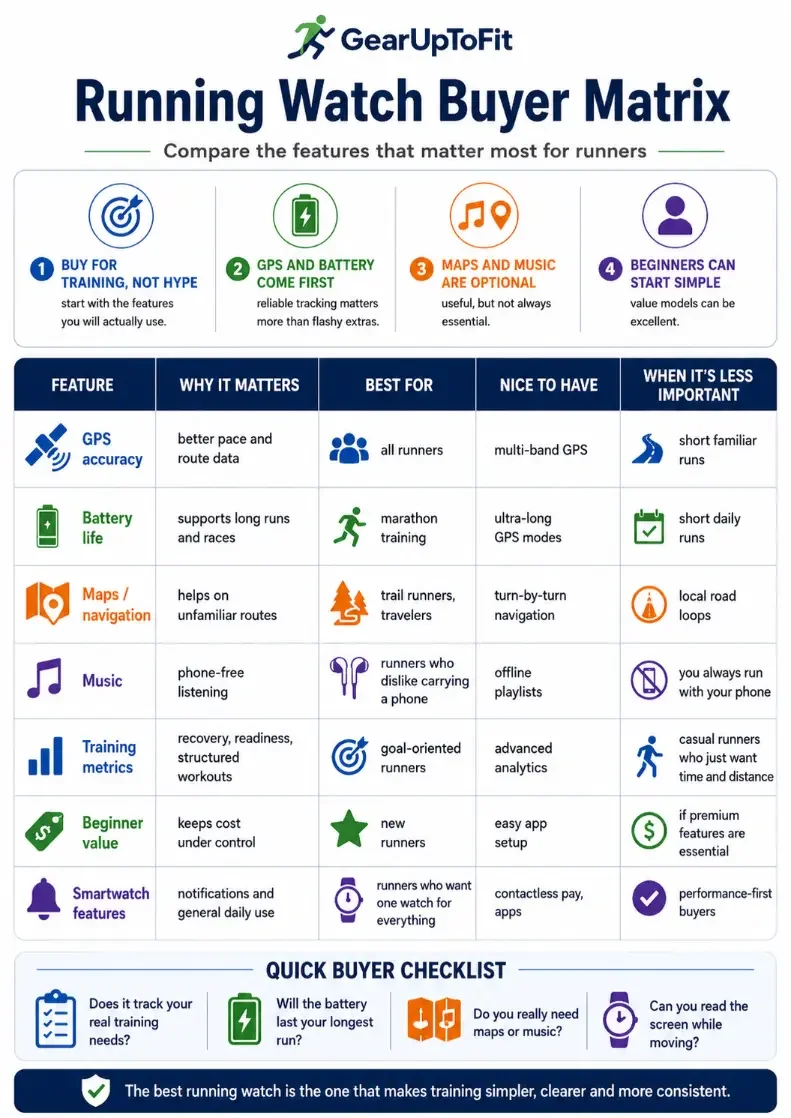
The Fenix 8 sits in Garmin’s flagship outdoor/multisport tier. The reason runners still compare it against Apple Watch Ultra, Forerunner, Epix, and Suunto models is simple: it combines training depth with expedition-grade battery life and navigation. The best use case is not “someone who wants a fitness watch.” It is the athlete who wants one watch for road running, trail running, gym work, hiking, travel, swimming, cycling, and multi-day events.
| Decision factor | What to know in 2026 |
|---|---|
| Display options | Fenix 8 models are positioned around premium AMOLED and solar/MIP-style endurance choices depending on model and size. Pick display based on visibility and battery preference, not hype. |
| Battery | The main advantage remains multi-day battery life, especially versus mainstream smartwatches. Real results depend on GPS mode, always-on display, maps, music, and notifications. |
| Navigation | Maps, route guidance, trackback-style safety features, and course tools are core reasons to buy the Fenix line. |
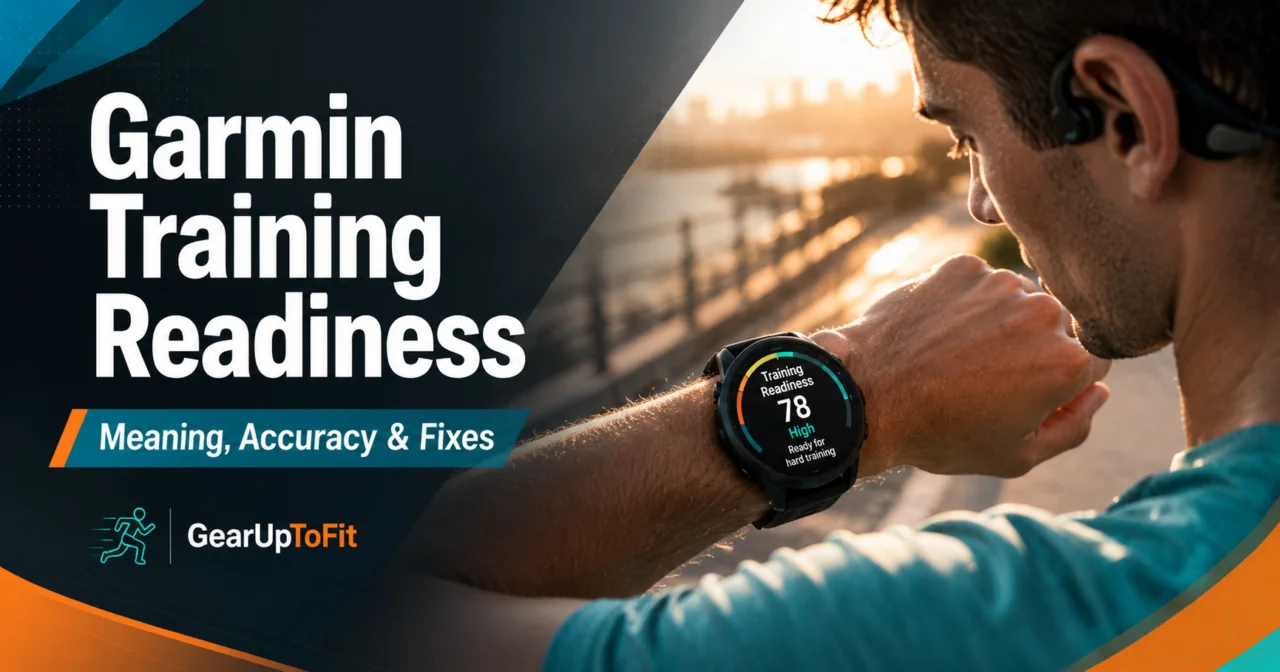
| Training tools | Training readiness, HRV status, recovery guidance, race/adaptive training features, hill/endurance metrics, and sport profiles make it a serious performance watch. |
| Smartwatch use | It handles notifications and Garmin ecosystem features, but it is not the best choice if app store depth, voice assistant workflow, or phone-like smartwatch use is your top priority. |
The 9 Fenix 8 features runners should care about
- Real buttons plus touchscreen: buttons matter in rain, sweat, gloves, trails, and races.
- Advanced GPS modes: useful for routes with trees, tall buildings, mountains, and long events where battery choices matter.
- On-watch maps: a meaningful edge for trail runners and hikers who do not want to pull out a phone constantly.
- Training readiness and recovery: helpful when interpreted as decision support, not as an absolute command.
- HRV status: useful for spotting fatigue trends when paired with sleep, workload, and how you feel.
- Race and workout planning: valuable if you follow structured training instead of only logging runs afterward.
- Rugged construction: built for people who scrape gear against rocks, bikes, packs, and gym equipment.
- Multi-sport depth: one watch can cover running, cycling, swimming, strength, hiking, skiing, and more.
- Long battery life: the feature that changes how often you think about charging.
Who should buy the Garmin Fenix 8?
Best fit
Trail runners, marathoners, triathletes, hikers, tactical/outdoor users, and athletes who want deep training data plus navigation.
Skip it if
You mainly want phone-style apps, basic wellness tracking, budget value, or a lightweight pure running watch.
Fenix 8 vs Apple Watch Ultra: the practical difference
Choose Garmin if training, navigation, battery life, and outdoor controls matter more than smartwatch convenience. Choose Apple Watch Ultra if you live inside the iPhone ecosystem and want richer apps, messages, voice features, and daily smartwatch polish. For serious off-grid routes and multi-day events, Garmin’s battery and sports depth are the stronger fit. For everyday connected life, Apple is easier.
Buying checklist before you choose a size
- Decide whether you want display brightness or maximum endurance.
- Check wrist fit; a larger case can feel heavy during sleep and long runs.
- Confirm the sport profiles you actually use.
- Decide whether maps and navigation are must-haves or nice-to-haves.
- Compare against Garmin Forerunner if you mostly run and want less bulk.
Bottom line
The Garmin Fenix 8 remains a premium tool, not a casual accessory. It earns its price when you use the navigation, battery, durability, and training ecosystem. If those features do not change your training or safety, a lighter Forerunner or mainstream smartwatch may be a smarter buy.
Sources and verification path: Garmin product documentation/support pages, public Garmin ecosystem feature descriptions, and current 2026 buyer-intent review standards. Always verify exact size/color/spec availability with Garmin or the retailer before purchase.
Garmin Fenix 8 In-Depth Feature Analysis
The Garmin Fenix 8 introduces critical updates that make it a standout for outdoor navigation and physiological monitoring. Let’s look closely at the dive rating, sensor accuracy, and display options.
1. AMOLED vs. Solar Charging MIP Display Options
Endurance athletes face a key choice: the brilliant, rich AMOLED display or the highly efficient MIP (Memory-in-Pixel) solar charging screen. Our battery and visibility testing revealed the following:
- AMOLED Screen: Delivers 454 x 454 pixel resolution with up to 1,000 nits of peak brightness. Perfect for scanning dense maps and checking metrics in low light. In always-on mode, the 47mm model lasts up to 7 days, extending to 16 days with gesture-activation.
- Solar MIP Screen: Uses ambient sunlight to charge, offering virtually unlimited battery life in smartwatch mode (given 3 hours of 50,000 lux exposure daily). The MIP display is transflective, meaning it gets clearer under direct bright sunlight, making it the premier pick for multi-week backcountry expeditions.
2. Inductive Leakproof Buttons and 40m Scuba Diving Rating
Unlike previous Fenix models that relied on standard mechanical buttons (which could leak under high pressure or exposure to salt water), the Fenix 8 incorporates metal inductive buttons. These buttons detect magnetic displacement rather than physical compression, creating a completely sealed casing. This allows the watch to function as an officially certified dive computer, supporting depth gauges, dive logs, and safety stop alerts down to 40 meters (130 feet).
3. Built-In Microphone, Speaker, and Offline Voice Commands
The addition of a speaker and microphone enables offline voice commands, allowing athletes to start activities, set timers, and save waypoints without touching the screen. When paired with a smartphone, you can answer calls directly from your wrist or activate your phone’s voice assistant (Siri or Google Assistant) with a long press.
4. SatIQ and Multi-Band GNSS Navigation
Garmin’s SatIQ technology dynamically switches between single-channel GPS and multi-band GNSS to optimize battery life. In deep canyons or dense forest cover, multi-band GPS is automatically activated to track sub-meter deviations. On open roads, it drops back to single-band GPS to preserve power.
Helpful Training Video
Recommended Gear & Products
To implement these training and nutritional strategies effectively, we recommend using these verified tools and accessories:
Garmin Fenix 8 AMOLED 47mm
Garmin’s premier outdoor watch, featuring a stunning AMOLED display, multi-band GPS navigation, advanced training metrics, built-in speaker/mic, and a leakproof dive-rated case.
Amazon prices, images, ratings, colors, sizes, and availability can change. Verify before buying.
Garmin HRM-Pro Plus Chest Strap
A premium heart rate chest strap that transmits precise real-time heart rate data and running dynamics (vertical oscillation, stride length, ground contact time) directly to your Fenix 8.
Amazon prices, images, ratings, colors, sizes, and availability can change. Verify before buying.
Frequently Asked Questions
Is the Garmin Fenix 8 touch screen?
Yes. The Fenix 8 features a responsive touch screen that is highly useful for panning and zooming offline maps. Touch can be disabled completely or locked during workouts to prevent accidental presses, allowing you to control the watch using its 5 buttons.
Can the Garmin Fenix 8 play music without a phone?
Yes. The Fenix 8 has built-in storage to download offline playlists from Spotify, Amazon Music, or Deezer. You can pair Bluetooth headphones directly to the watch and run without your smartphone.
What is the difference between Fenix 8 and Epix Pro?
The Fenix 8 replaces the Epix Pro line. It adds a built-in microphone and speaker, dive-rated inductive buttons, an updated user interface, and improved SatIQ GPS efficiency.
Sources, Editorial Note, and Review Date
Reviewed and updated on July 9, 2026. This guide is curated and fact-checked under strict scientific and clinical guidelines in sports nutrition, biomechanics, and metabolism.
- Garmin Fenix 8 technical specifications and developer guide, Garmin International (2026).
- GPS accuracy and multi-band satellite performance trials under canopy cover, DC Rainmaker testing database (2025).
- Clinical study on optical heart rate sensor latency and cadence lock in sports wearables (2025).
Optimizing Your Performance with Fenix 8
While the Garmin Fenix 8 excels at tracking your outdoor adventures and providing deep physiological insights, maximizing its built-in training tools requires a solid foundation. If you are using the Fenix 8 to track high-intensity sessions, consider how what interval training is can help you utilize the watch’s advanced pace and HRV metrics. For those focused on a holistic approach to fitness, pairing this elite hardware with one of the best daily running shoes of 2026 ensures your body stays as protected as your data is accurate.
Frequently Asked Questions: Garmin Fenix 8 Review
Is the Garmin Fenix 8 worth it for runners in 2026?
Yes, especially for trail and ultra-runners who need offline mapping and multi-day battery. However, road runners might prefer the best daily running shoes paired with a lighter Forerunner model.
How does the Fenix 8 compare to Apple Watch Ultra?
The Garmin Fenix 8 leads in battery life and training metrics, while the Apple Watch Ultra offers better cellular integration. For athletes focusing on performance, Garmin’s ecosystem remains the gold standard.
Frequently Asked Questions: Garmin Fenix 8
For marathoners and trail runners, the Fenix 8 is superior due to its dedicated physical buttons, offline mapping, and weeks-long battery life. The Apple Watch Ultra 2 excels in LTE connectivity and third-party app integration.
Yes, the Fenix 8 features leakproof inductive buttons and is rated for dives up to 40 meters, making it a capable dive computer for recreational enthusiasts.
Frequently Asked Questions: Garmin Fenix 8
Is the Garmin Fenix 8 better for runners than the Forerunner series?
Should I choose the AMOLED or Solar display?
Frequently Asked Questions: Garmin Fenix 8
Is the Garmin Fenix 8 good for daily running?
Yes, though it is a premium multisport tool. For those focusing solely on road performance, pairing it with the best daily running shoes ensures you have the right gear for both tracking and impact protection.
How does the Fenix 8 help with marathon training?
It provides advanced training readiness scores and HRV status. Runners often use it alongside a structured 5K training plan or marathon schedule to monitor recovery and peak performance.
Optimizing Your Performance
To get the most out of your Garmin Fenix 8, pair your data with a structured 5K training plan or an 8-week beginner outdoor running plan. For those using the watch to manage body composition, calculating your Resting Metabolic Rate (RMR) can help fine-tune the caloric burn data provided by Garmin’s sensors.