
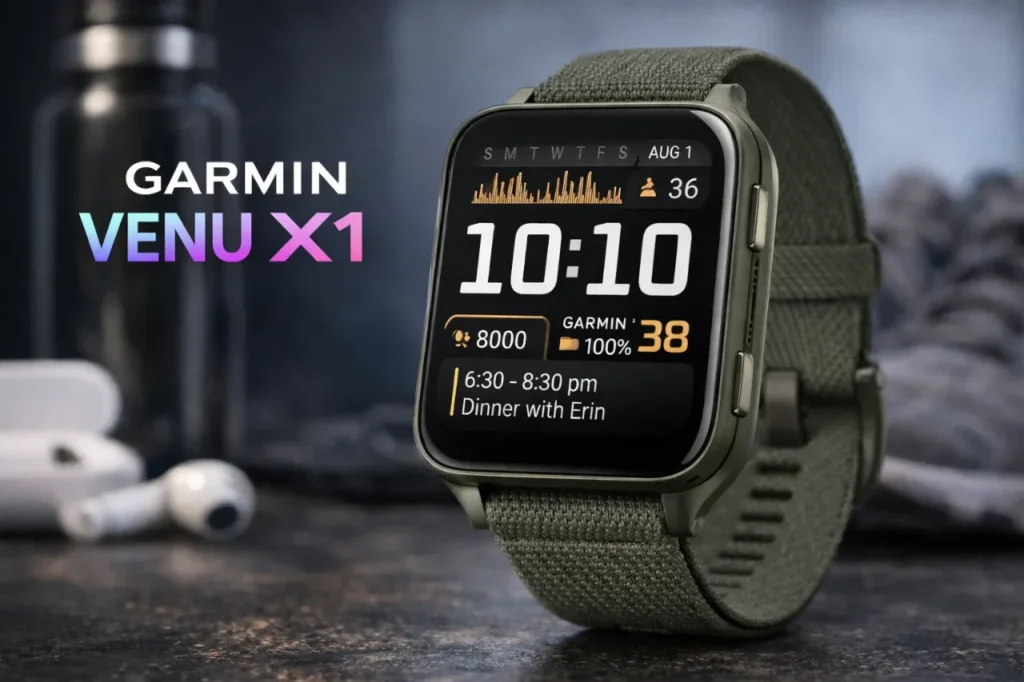
The Garmin venu x1 is Garmin’s most surprising watch in years: a square, two inch display wrapped in an unbelievably thin 8 millimeter body.
I spent time poking through the hardware, menus, and sport features to understand where this watch sits in Garmin’s lineup and what it delivers for athletes and everyday users. Below I break down the specs, explain the big trade-offs, and give a practical verdict on who should consider the Garmin venu x1.
Quick summary
The Garmin venu x1 blends features from Garmin’s premium multisport lines with the more consumer-oriented Venue family. It packs topoactive offline maps, climb profiles, robust training metrics, and a massive, bright two inch AMOLED display into a titanium case with sapphire glass. At the same time, it omits some hardware and software pieces you might expect at this price, like ECG and multi-band GPS.

Garmin Venu X1
A stunning ultra-thin sports smartwatch that blends premium materials, advanced training metrics, topoactive offline maps, and an ultra-bright 2″ AMOLED display into a sleek, comfortable package.
- 2.0″ bright AMOLED display — easy to read outdoors
- Topoactive offline maps + turn-by-turn routing
- Titanium & sapphire glass premium build
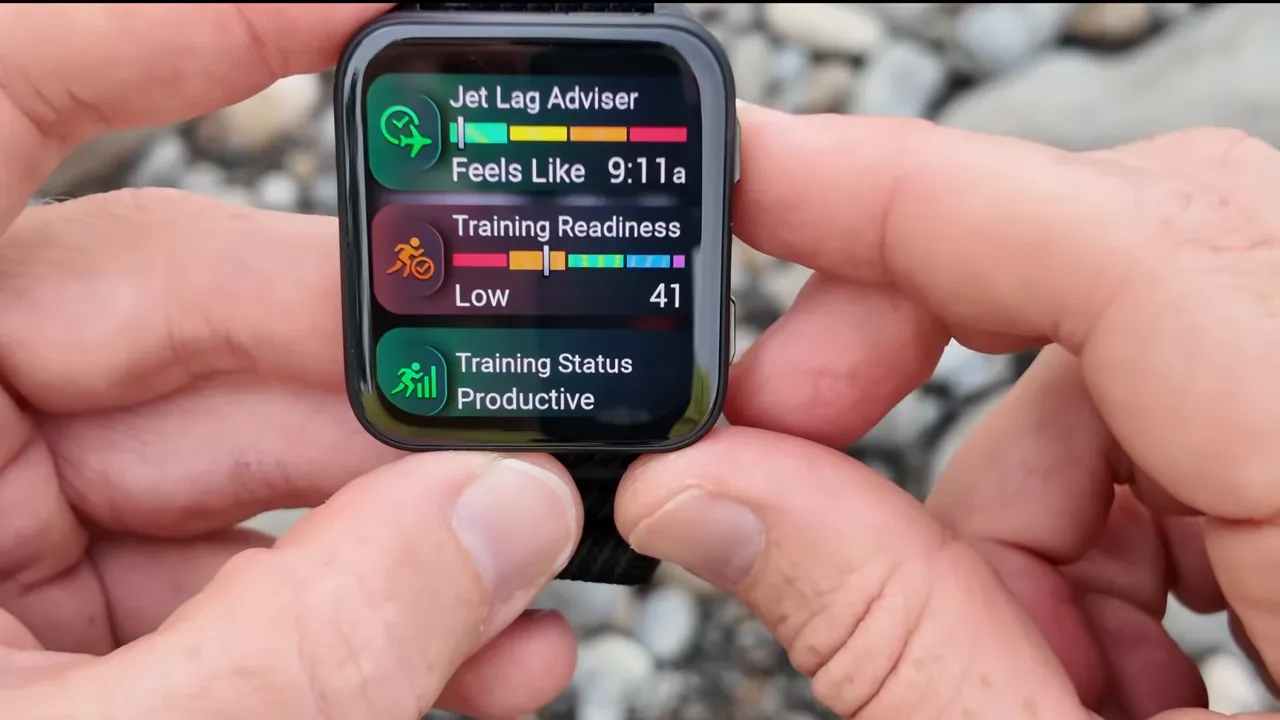
- Training readiness & status metrics included
What I like most about the Garmin venu x1
- Huge, bright display—great for maps, turn-by-turn cues, and readable in sunlight.
- Incredibly thin design—at 8 millimeters it feels much less bulky than other big sports watches.
- Offline topoactive maps and routing—fully routable maps with turn-by-turn guidance and round-trip routing.
- Comprehensive training suite—training readiness, training status, race planning, and many Phoenix/Forerunner-derived coaching tools.
- Titanium case and sapphire—premium materials that feel like a step up from plastic-bodied alternatives.
What I don’t like about the Garmin venu x1
- No ECG hardware—no future enablement either, a surprising omission at this price point.
- No multi-band GPS—an odd choice given Garmin’s other high-end models include dual-frequency positioning.
- Battery smaller than Venue 3—thinness and the very bright display reduce endurance versus similarly sized watches.
- Two-button control only—I miss physical buttons for quick control in sport situations.
Design and build
The Garmin venu x1 feels like a bridge between consumer-chic and premium sports gear. The case is titanium with a sapphire front, and the watch is astonishingly slender at about 8 millimeters. That thinness is the headline: the watch sits less bulky on the wrist than most big outdoor watches, including the Apple Watch Ultra 2 and Garmin’s own Venue 3. If you like the look of a large screen without the thickness, the Garmin venu x1 nails it.
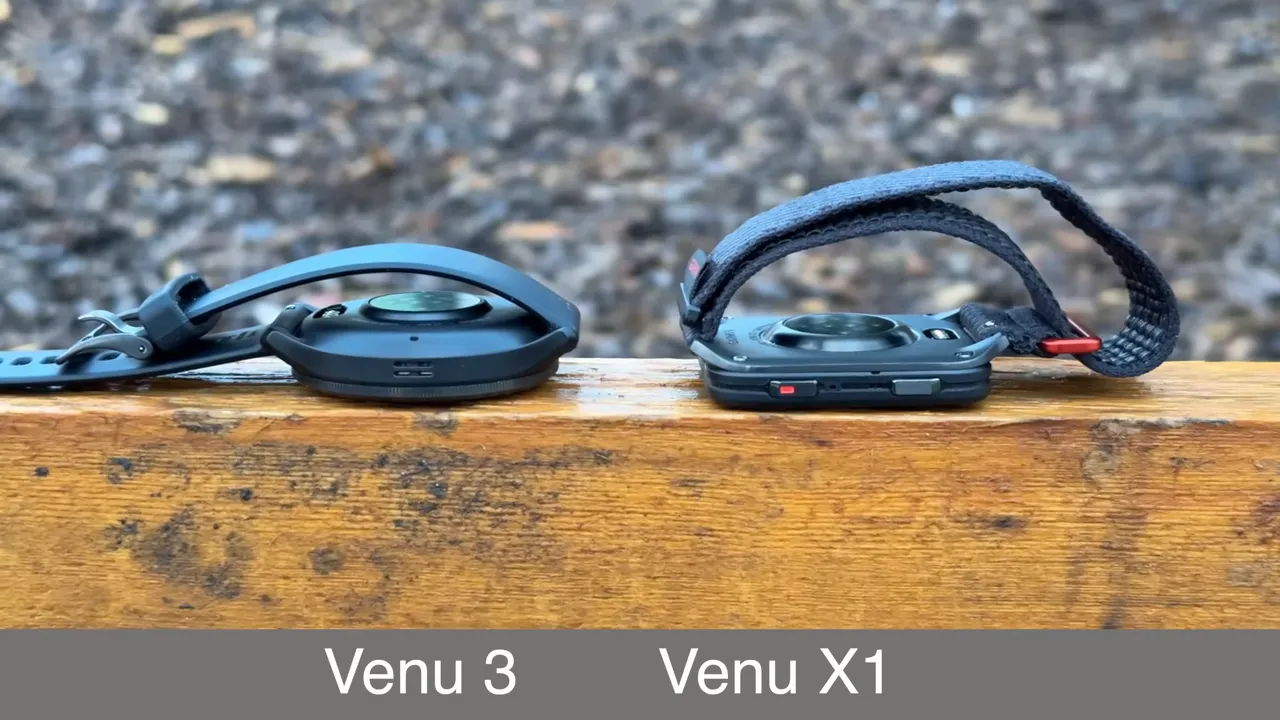
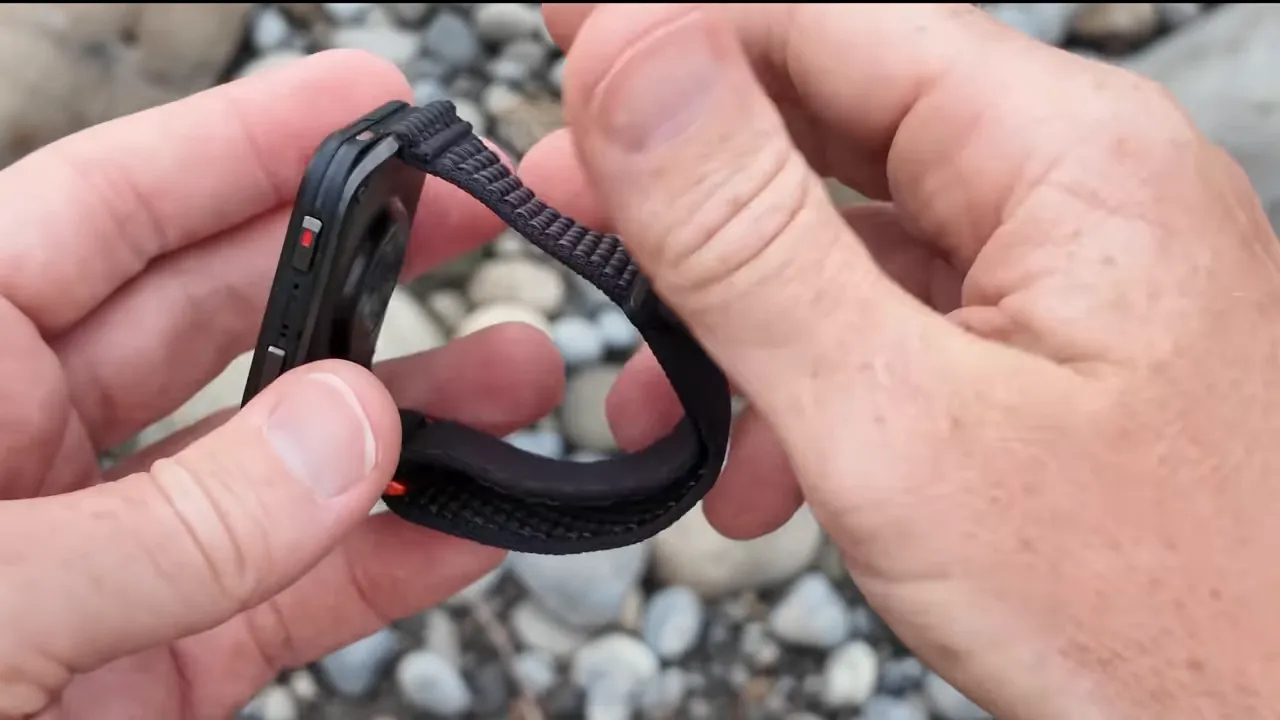
The default band is a nylon strap with Velcro. I like it for comfort and adjustability, but fabric bands get wet and stay wet when swimming or showering. Swapping bands is straightforward thanks to a standard quick-release attachment.
Display
The display is the marquee spec: a two inch AMOLED that is very bright. Garmin doesn’t publish nit values, but it feels substantially brighter than the Venue 3. In practical terms this means maps, text, and data fields are easy to read outdoors. The trade-off is power: the brighter display and thin body lead to reduced battery capacity compared to Garmin’s thicker models.
Sensors and health
On the back sits Garmin’s Gen 5 optical heart rate sensor for continuous heart rate and advanced metrics. The watch supports heart rate broadcasting and standard sensor connections such as ANT+ and Bluetooth Smart where applicable.
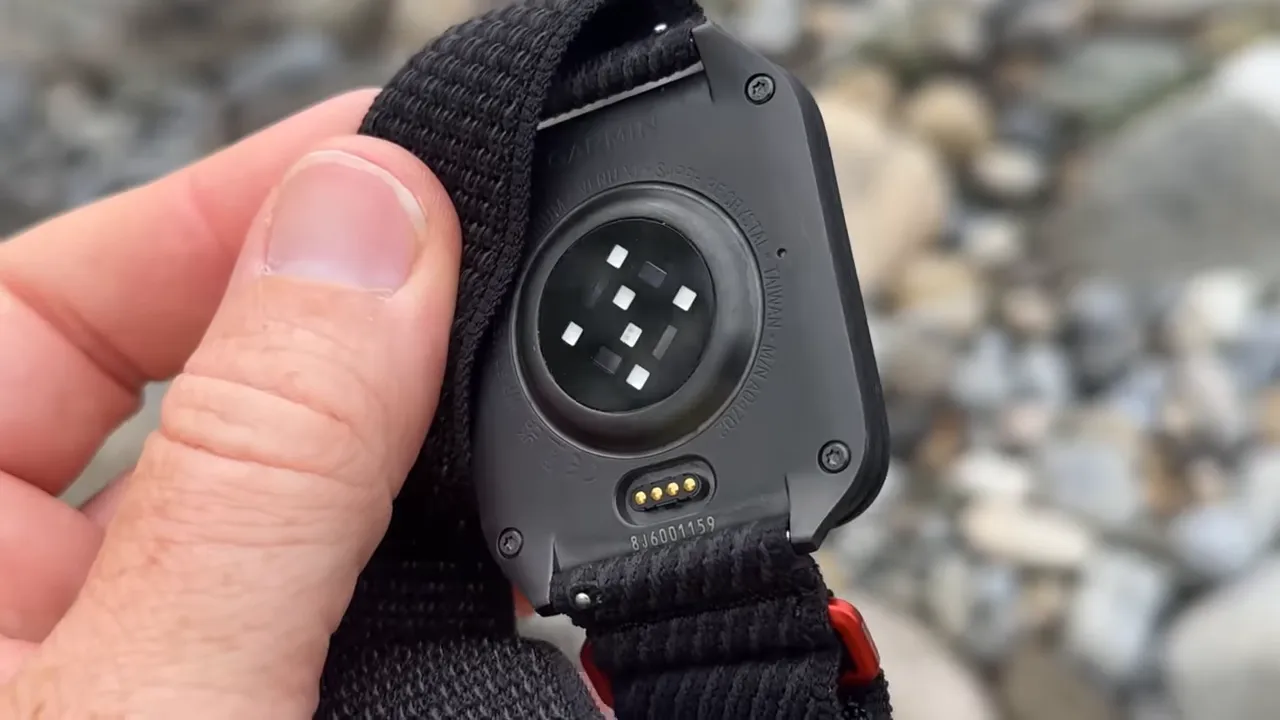
One major health-related omission is ECG. Garmin confirms there is no ECG hardware inside this watch, which means ECG functionality will never be available. For a watch priced to compete with premium multisport models, that is a significant gap.
Navigation and mapping
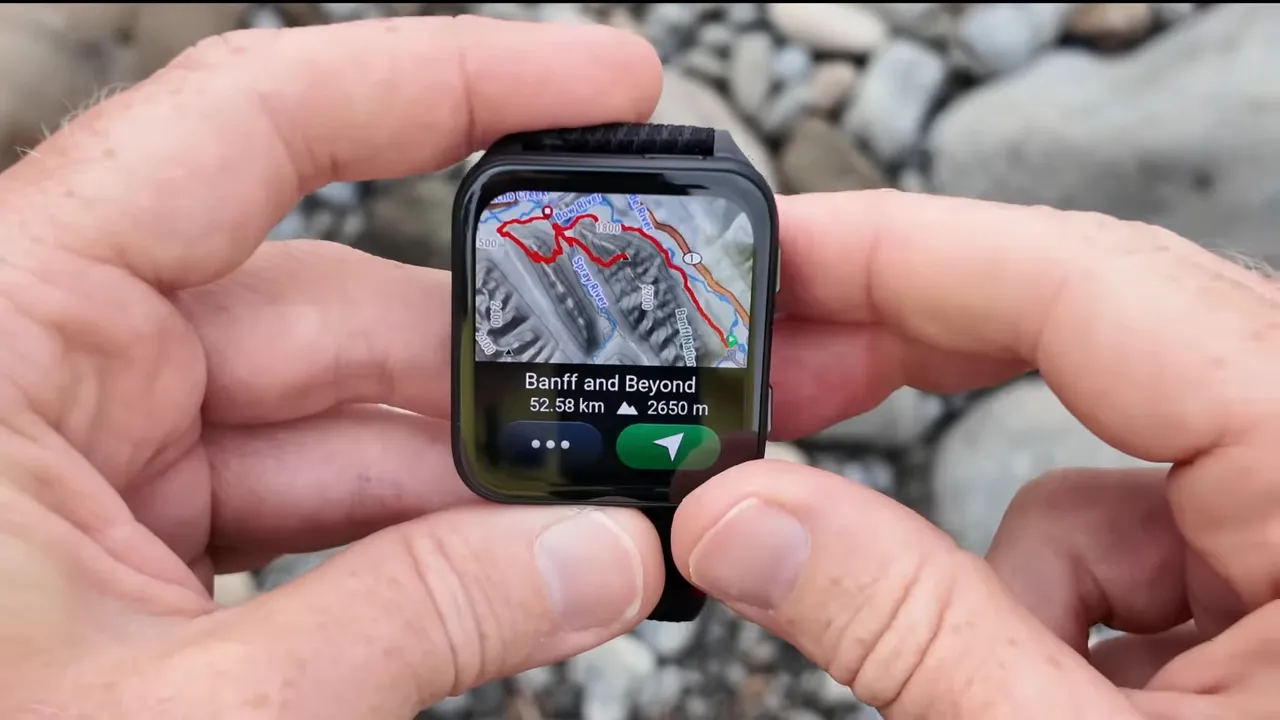
Navigation is one of the Garmin venu x1’s strongest areas. It includes full offline topoactive maps—same class of maps you find on higher-end Phoenix units—and they are fully routable. You can:
- Create or follow round-trip routes
- Tap an arbitrary point and route to it
- Load courses and follow turn-by-turn guidance
Routing cues are audible via connected Bluetooth headphones or directly through the watch speaker. The watch has a speaker and microphone, enabling voice commands and voice notes. Voice notes are handy for recording quick thoughts during a run or ride to review later.
Climb Pro and route details
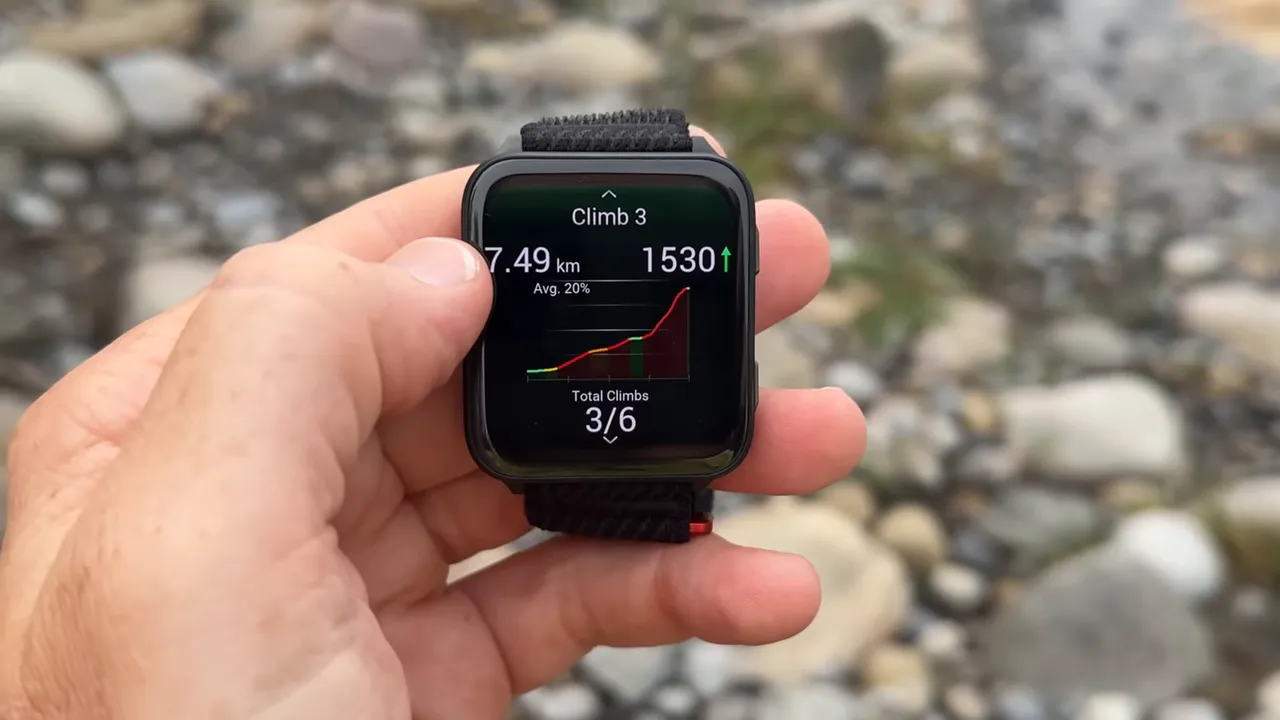
Climb Pro is on board and works the same as the higher-end watches: it parses climbs and descents from routes and shows live information about upcoming elevation gain and distance remaining. This is particularly useful on long mountain rides or hikes where knowing the remaining climb can change pacing and fueling.
Sports and training features
The Garmin venu x1 borrows heavily from Garmin’s performance-focused models. Training Readiness and Training Status are present, giving dynamic insight into whether you should push hard or recover. The watch evaluates training load, recent recovery, sleep, and stress to produce a readiness score that updates through the day.
Race planning tools are included. You can schedule a race, follow a training plan, and see predicted finish times. Note the Garmin venu x1 provides an immediate estimated finish time based on current fitness. It does not project future fitness-based predictions over months the same way some Forerunner models do, which is a nuanced difference to be aware of.
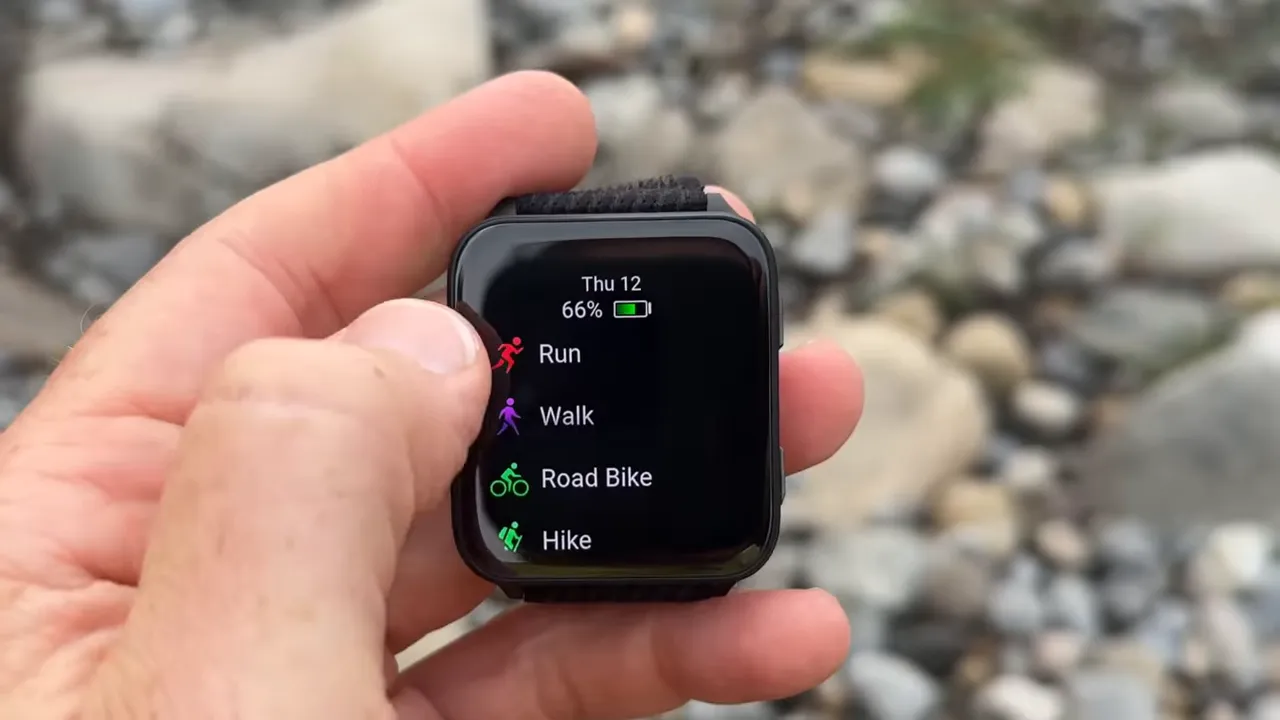
There are about 100 sport profiles available, a huge step up from previous Venue models. Most typical activities are supported, including running, cycling, open water swim, kayaking, and paddle boarding. The watch intentionally omits those activities that require a higher waterproofing rating, such as high-speed water sports like water skiing, because the Garmin venu x1 is rated to 50 meters rather than the 100 meters found on some Phoenix models.
Structured workouts and power
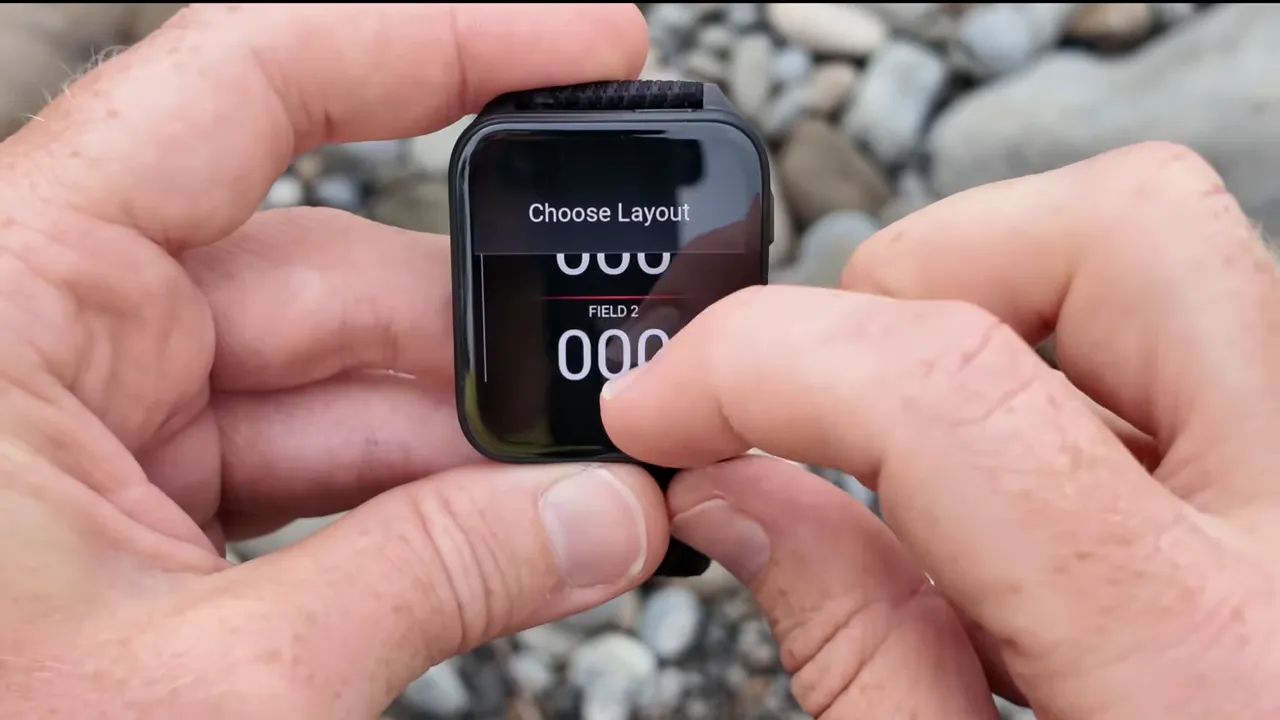
Structured workouts, custom training intervals, and course import work just like Garmin’s other sport watches. You can load workouts, follow Strava live segments, and configure multiple data fields per screen—up to eight in some setups—so athletes can monitor power, pace, heart rate, and more at a glance.
User interface and day-to-day features
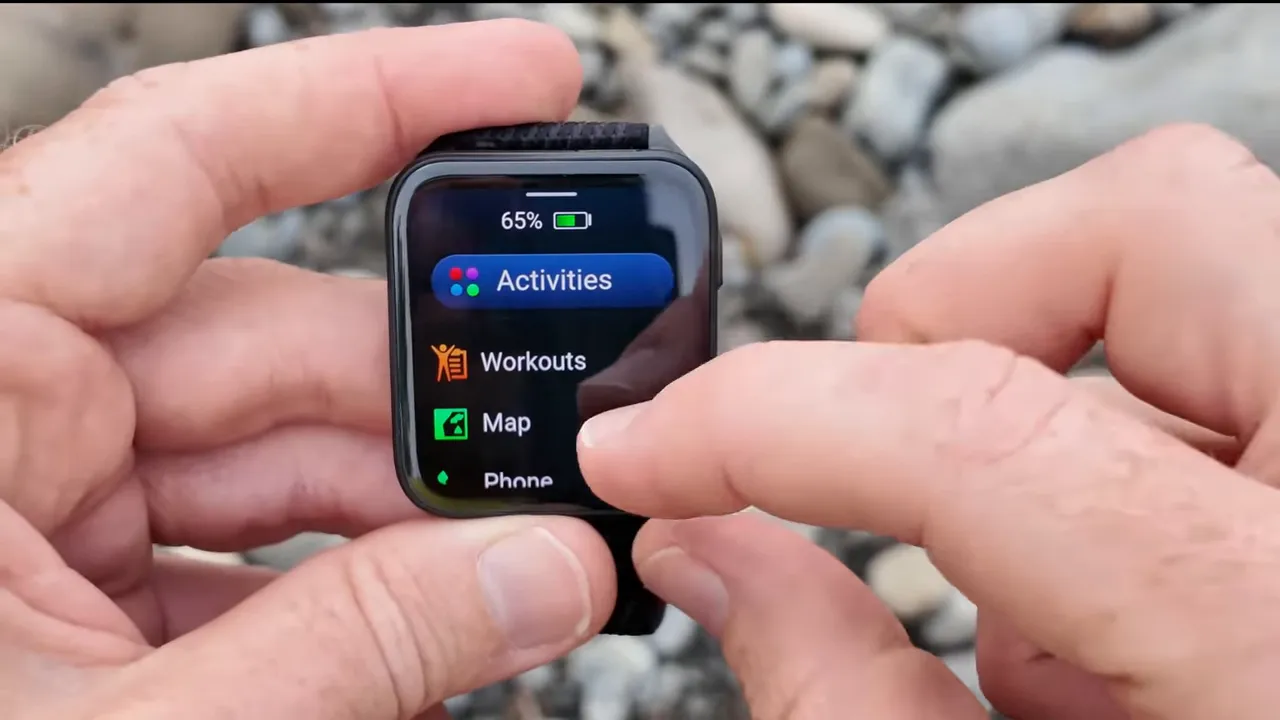
The Garmin venu x1 uses a two-button setup plus a touch display. The large touchscreen is convenient for maps and menus, but I missed additional physical buttons when navigating mid-activity. Widgets and data glances are fully customizable. Focus modes allow you to create profiles similar to phone focus modes for sleep and activity, tailoring which alerts and sensors are active.
There are a number of convenience features too: flashlight with multiple white brightness levels and a red mode, onboard music with Spotify/Amazon/YouTube Music support, and Garmin Share which allows two watches to exchange courses wirelessly without a phone at a trailhead.
Battery and performance
Battery life is the inevitable trade-off for the ultra-thin design and brighter screen. With the always-on dim display enabled you should expect around two days. With the display in gesture mode and conservative usage you’ll see longer, but battery life is not the Garmin venue 3-level endurance you might expect from a thicker device.
GPS accuracy is an important topic. The Garmin venu x1 does not include dual-frequency multi-band GPS. Garmin’s latest GPS implementations have historically been excellent even without multi-band, but I will be testing GPS and optical heart rate performance in detail. If you demand the absolute best positional accuracy in difficult environments, that omission is worth noting.
Pricing and where it fits
The Garmin venu x1 ships at a premium price of $799. That puts it squarely between the Forerunner and the Phoenix lines in price and feature set. It shares many software features with the Forerunner 970 and Phoenix 8, yet it consciously omits some hardware (ECG, multi-band GPS) and high-waterproofing profiles present on high-end Phoenix models.
At $799, the Garmin venu x1 competes with watches aimed at people who want a large display and strong sports features, but who also want a less bulky design than a traditional multisport watch. If you prioritize maps, a bright screen, and training metrics over ECG and the last word in repositioning tech, this could be compelling.
Who should buy the Garmin venu x1?
- Runners and cyclists who want topoactive offline maps and turn-by-turn routing on their wrist.
- Athletes who value a very large, bright display but dislike bulky watch thickness.
- Users who want advanced training features like training readiness, training status, and race planning without stepping up to a Phoenix 8 for the bulkier build.
Who should not buy it
- Those who need ECG functionality for medical monitoring.
- Users who want the highest waterproofing for high-speed water sports.
- People who prioritize maximum battery life above all else.
Pros vs Cons Table (Quick Scan)
| Pros (What Garmin Nailed) | Cons (Big Trade-Offs) |
|---|---|
| Massive, bright 2-inch AMOLED | No ECG hardware |
| Ultra-thin titanium body | No multi-band GPS |
| Offline topo maps + routing | Battery endurance reduced |
| ClimbPro included | Only 2 buttons |
| Training readiness + training status | Premium price at $799 |
| Premium sapphire glass | Not a true “Fenix replacement” |
Verdict
The Garmin venu x1 is an interesting and well-executed hybrid. It takes many of the best software features from Garmin’s high-end sport watches and packages them into a slimmer, visually striking device. The two inch display and mapping capabilities make it a unique option for people who want rich navigation and on-wrist guidance without the bulk.
That said, the omission of ECG and multi-band GPS at this price is hard to ignore. Garmin made conscious trade-offs to achieve this thinness and display brightness. If those omissions don’t matter to your use case, the Garmin venu x1 presents a compelling combination of design and sports functionality. If they do matter, you might be better off leaning toward a Phoenix 8 or Forerunner model.
Garmin Venu X1 vs Venu 3 vs Fenix 8 vs Apple Watch Ultra 2 (Comparison Table)
This is the table that makes your review look like a serious pro review.
| Feature | Garmin Venu X1 | Garmin Venu 3 | Garmin Fenix 8 | Apple Watch Ultra 2 |
|---|---|---|---|---|
| Display Size | ⭐ 2.0-inch AMOLED | Smaller AMOLED | AMOLED / MIP options (varies) | Bright OLED |
| Thickness | ⭐ Ultra-thin (~8mm) | Thicker | Much thicker (rugged build) | Thick |
| Case Material | Titanium | Mostly polymer/metal mix | Premium rugged metal | Titanium |
| Sapphire Glass | ⭐ Yes | Depends on version | Yes (higher trims) | Yes |
| Offline Maps | ⭐ Yes | ❌ No topo maps | ⭐ Yes | ❌ No true offline topo maps |
| Turn-by-turn Routing | ⭐ Yes | Limited | ⭐ Yes | Limited / app-based |
| ClimbPro | ⭐ Yes | ❌ No | ⭐ Yes | ❌ No |
| Training Readiness | ⭐ Yes | Partial | ⭐ Yes | ❌ No (different ecosystem) |
| Training Status | ⭐ Yes | Partial | ⭐ Yes | ❌ No |
| ECG | ❌ No | Yes (some regions/models) | Yes (varies) | ⭐ Yes |
| Multi-band GPS | ❌ No | ❌ No | ⭐ Yes | ⭐ Yes |
| Battery Life | Moderate | Better than X1 | ⭐ Best | Weak vs Garmin |
| Waterproofing | 50m | 50m | ⭐ 100m | ⭐ 100m |
| Buttons | 2 buttons | 3 buttons | ⭐ Full 5-button | Crown + button |
| Speaker/Mic | ⭐ Yes | Yes | Yes (some models) | ⭐ Yes |
| Best For | Maps + big screen + slim design | Everyday smartwatch fitness | Hardcore outdoor + endurance | Smartwatch + Apple ecosystem |
FAQ
Is the Garmin venu x1 waterproof?
The Garmin venu x1 is rated to 50 meters. It supports open water swimming, kayaking, and paddle boarding. It does not support higher-speed water sports like water skiing, which require higher-impact waterproofing.
Does the Garmin venu x1 have ECG capability?
No. The Garmin venu x1 does not include ECG hardware and ECG will not be supported in the future on this watch.
Does the Garmin venu x1 have offline maps?
Yes. The Garmin venu x1 includes topoactive offline maps that are fully routable. You can create round-trip routes, load courses, and get turn-by-turn guidance.
What sensors does the Garmin venu x1 include?
The watch includes Garmin’s Gen 5 optical heart rate sensor, standard motion sensors for activity and workout tracking, and supports external sensors via ANT+ and Bluetooth Smart where applicable. It does not include multi-band GPS or ECG hardware.
How long does the battery last on the Garmin venu x1?
Battery life varies with display usage. With always-on display enabled expect around two days. Using gesture-based display or lower brightness will extend battery life, but the thin body and bright screen limit endurance versus thicker Garmin models.
How does Garmin venu x1 compare to the Venue 3 and Phoenix 8?
The Garmin venu x1 sits between the Venue 3 and Phoenix 8: it offers a much larger, brighter screen and many Phoenix-like software features such as offline topoactive maps, climb pro, and advanced training metrics. It is thinner than both but omits some Phoenix hardware features like 100 meter waterproofing, ECG, and multi-band GPS.
Can I store and play music on the Garmin venu x1?
Yes. The Garmin venu x1 supports music services including Spotify, Amazon Music, and YouTube Music, as well as local MP3 storage for offline playback.
Is the Garmin venu x1 good for serious athletes?
Yes, for many athletes. It has advanced training metrics, race planning, and extensive sport profiles. Serious athletes who require ECG, multi-band GPS, or the highest waterproofing may prefer other models, but for most runners, cyclists, and multisport athletes, the Garmin venu x1 offers a compelling mix of functionality and a large readable display.
Specs at a glance
- Display: 2.0 inch AMOLED, very bright
- Thickness: ~8 mm
- Case: Titanium with sapphire glass
- Water resistance: 50 meters
- Sensors: Gen 5 optical heart rate, GPS (single-frequency), ANT+/Bluetooth Smart support
- Maps: Offline topoactive maps, routable, round-trip routing
- Audio: Speaker and microphone for voice commands and notes
- Price: $799 US
If your priorities include a huge, highly readable screen, full offline maps, and a slimmer wrist presence, the Garmin venu x1 is a fresh take on Garmin’s product family. If you need ECG, multi-band GPS, or top-tier waterproofing, look to other models in Garmin’s lineup.