Skip to content
 GearUpToFit Guide | Updated July 9, 2026 | Mobile-first | No sticky or frozen elements
Affiliate disclosure: GearUpToFit is reader-supported. As an Amazon Associate, GearUpToFit may earn from qualifying purchases through links with the affiliate tag papalex-20. We do not hardcode Amazon prices because pricing, sellers, colors, sizes, images, ratings, and availability change.

Who this is for / Who should skip it
Who this is for
- Complete beginners looking to build cardiovascular endurance from scratch.
- Treadmill joggers wanting to transition safely to harder outdoor surfaces.
- Former runners returning after a multi-year hiatus looking for a structured restart.
- Fitness enthusiasts looking to cross-train or add cardio to their strength routines.
Who should skip it
- Experienced runners preparing for speed-focused races or advanced marathons.
- Individuals with acute joint injuries, bone stress injuries, or severe knee osteoarthritis.
- Anyone without medical clearance who has uncontrolled cardiovascular conditions.
- Runners looking to train exclusively for indoor track sprints or vertical climbing.
What is Outdoor Running? A Clear Definition
Outdoor running is any form of running performed on natural or paved environments outside the controlled environment of a treadmill. This includes running on concrete city sidewalks, asphalt roads, synthetic running tracks, packed dirt trails, and grass paths. While it shares basic biomechanics with treadmill running, running outdoors introduces unique variables that alter the physiological demand: air resistance, temperature fluctuations, uneven terrain, lateral stabilization requirements, and variations in ground hardness.
Biomedically, running outdoors forces your body to adapt to variable impact forces. Asphalt and concrete absorb far less shock than a spring-loaded treadmill belt, requiring greater joint, tendon, and muscular resilience. Furthermore, because there is no belt pulling under you, your glutes and hamstrings must actively engage to propel your body forward. This makes outdoor running a superior tool for building structural strength, improving balance, and burning slightly more calories per mile, but it also necessitates a more cautious, deliberate entry framework to prevent overuse injuries.
Comparison Table: Choosing Your Training Methodology
Before embarking on your outdoor running journey, it is vital to understand the primary coaching methodologies available for beginners. The table below compares the four most popular frameworks based on physiological adaptation and ease of execution.
| Methodology | Training Structure | Primary Benefits | Main Drawbacks | Best For |
|---|---|---|---|---|
| Galloway Run-Walk Method | Strict intervals of running and walking (e.g., 1 min run, 1 min walk) throughout the entire session. | Minimizes joint fatigue, lowers heart rate spike, and significantly reduces injury risk. | Can feel tedious to runners who want to jog continuously without stopping. | Absolute beginners, runners prone to shin splints, and those building initial joint strength. |
| Continuous Slow Running | Running at a single, unbroken, easy pace without walking breaks, starting from short durations. | Builds mental grit and teaches continuous breathing regulation. | Higher initial risk of early muscular exhaustion and poor form breakdown. | Individuals with a strong baseline fitness (e.g., cyclists, swimmers) entering running. |
| Heart Rate Zone 2 Training | Maintaining a heart rate under ~70% of maximum, using walking breaks to lower spikes. | Maximizes mitochondrial development and optimizes fat oxidation. | Requires a chest strap heart rate monitor; can feel frustratingly slow. | Data-driven beginners and runners experiencing chronic post-workout exhaustion. |
| Distance-Based Training | Focusing on hitting a specific mile or kilometer target, regardless of how long it takes. | Provides clear milestone goals (e.g., running 1 mile, then 2 miles). | Encourages overexertion to “finish faster,” leading to biomechanical breakdown. | Beginners preparing for a virtual or in-person race with strict distance goals. |
The Practical Framework for Beginner Outdoor Running
To successfully transition to running outdoors without burning out or getting injured, you must respect the physical adaptations happening inside your body. Cardio-respiratory fitness (heart and lung efficiency) develops rapidly—often within two to three weeks. However, musculoskeletal durability (the strength of bones, tendons, ligaments, and cartilage) takes months to adapt. This mismatch is the primary cause of beginner running injuries; your lungs feel great, so you run further, but your tendons are not yet strong enough to handle the repetitive pounding, leading to shin splints or patellar tendonitis.
The GearUpToFit beginner framework operates on three primary rules designed to mitigate this risk:
- The Conversational Pace Rule: Run at an effort level where you can speak a full sentence aloud without gasping. If you cannot talk, you are running too fast. This ensures you remain in your aerobic zone, reducing lactate accumulation and minimizing recovery time.
- The 10% Volume Limit: Never increase your total weekly running time or distance by more than 10% compared to the previous week. This gives your connective tissues sufficient time to remodel and strengthen.
- Frequency Over Intensity: Three short runs per week are infinitely better than one long, exhausting run. Consistency builds the neuromuscular patterns necessary for efficient movement.
The 8-Week Progressive Outdoor Running Schedule
This 8-week schedule is designed to transition you from short walk-run intervals to running 30 minutes continuously outdoors. Perform these workouts three times a week (e.g., Monday, Wednesday, Saturday) with at least one full rest day between running days. Each session must start with a 5-minute brisk walk to warm up and end with a 5-minute slow walk to cool down.
| Week | Workout Structure (Repeat 3x/week) | Total Run Time | Weekly Focus | Recovery Check |
|---|---|---|---|---|
| Week 1 | Warmup walk + Alternated 1 min jog / 1.5 min walk for 20 mins + Cooldown walk. | 8 minutes | Establish a slow conversational pace. Avoid rushing the jog. | Zero joint pain; light muscle soreness in calves is normal. |
| Week 2 | Warmup walk + Alternated 1.5 min jog / 2 min walk for 21 mins + Cooldown walk. | 9 minutes | Focus on deep, rhythmic belly breathing. Keep shoulders relaxed. | Ensure you get 7-8 hours of sleep on running days. |
| Week 3 | Warmup walk + Alternated 2 min jog / 2 min walk for 24 mins + Cooldown walk. | 12 minutes | Maintain consistent cadence on slight outdoor inclines. | Self-massage calves and shins if tightness occurs. |
| Week 4 | Warmup walk + Alternated 3 min jog / 1.5 min walk for 22.5 mins + Cooldown walk. | 15 minutes | Adapting to longer jog intervals. Do not run faster than Week 1. | Hydrate with water and electrolytes within 30 mins post-run. |
| Week 5 | Warmup walk + Alternated 5 min jog / 2 min walk for 21 mins + Cooldown walk. | 15 minutes | First significant mental challenge. Focus on a steady rhythm. | Perform dynamic stretching before starting the warmup walk. |
| Week 6 | Warmup walk + Alternated 8 min jog / 3 min walk for 22 mins + Cooldown walk. | 16 minutes | Testing sustained aerobic capacity. Rest days are non-negotiable. | Pay attention to knee tracking—don’t let knees cave in. |
| Week 7 | Warmup walk + Alternated 10 min jog / 3 min walk / 10 min jog + Cooldown walk. | 20 minutes | Simulating continuous race efforts. Prioritize flat routes. | Check shoe tread wear. Ensure socks are dry and anti-chafe is applied. |
| Week 8 | Warmup walk + 30 min continuous jog + Cooldown walk. | 30 minutes | Milestone run. Celebrate the continuous 30-minute mark. | Celebrate, rest for 48 hours, and plan your first Couch to 5K! |
The Core Biomechanics: Running Form Checklist
Running outdoors requires your body to manage variable impact forces. Good form acts as your natural shock absorption system. Focus on one element of this checklist during each of your weekly runs:
- Tall Posture: Keep your head up, looking 10 to 15 feet ahead of you rather than down at your feet. Imagine a string pulling the crown of your head toward the sky. Keep your chest open and shoulders rolled back and relaxed—do not let them hunch up toward your ears.
- Cadence and Stride: Keep your feet landing directly underneath your body (hip-width center of mass) rather than reaching out in front of you. Reaching forward (overstriding) acts as a brake, sending massive shockwaves straight up your shins and knees. Aim for short, quick, light steps.
- Foot Strike: Do not worry about landing on your midfoot or forefoot if it feels unnatural. The key is landing with a slightly bent knee to absorb shock. Avoid landing heavily on a locked, straight leg. Try to run quietly; loud slaps mean your muscles are not absorbing force properly.
- Arm Swing: Keep your elbows bent at roughly 90 degrees. Let them swing naturally forward and backward from the shoulder joint. Avoid letting your hands cross the centerline of your chest, as this causes lateral rotation in your torso and hips, wasting energy and stressing your lower back.
Essential Outdoor Running Gear: Verified Verdicts
While running is a low-barrier sport, the right gear makes outdoor sessions safer and more comfortable by preventing dehydration, phone drops, and painful blisters. We have reviewed and recommended the top gear essentials below for beginners heading outdoors.

Image source: Amazon Product Advertising API
Best Hydration Pick
Waterfly Hydration Belt
Verdict: A reliable, budget-friendly waist pack that solves the hydration challenge for outdoor runners by securing a bottle at a stable 45-degree angle alongside ample pocket space.
Buy it if: You run in hot climates, need convenient access to water without holding a bottle, and want separate pockets for a large smartphone and keys.
Skip it if: You are looking for a hydration vest for trail ultramarathons, or prefer carrying handheld bottles.
- Secure 45-degree bottle sleeve prevents bounce during jogging intervals.
- Comfortable padded backing prevents friction and chafing on the waist.
- Dual zippered compartments keep electronics dry and safe from scratches.
Amazon listings change frequently. Check colors, sizes, and local shipping policies prior to completing your purchase.

Image source: Amazon Product Advertising API
Best Premium Running Socks
Balega Hidden Comfort Socks
Verdict: The industry standard for plush running socks, providing a protective moisture-wicking cushion that stops friction blisters before they start.
Buy it if: You suffer from heel slipping, hot spots, or toe blisters, and want a luxurious, durable sock that survives hundreds of wash cycles.
Skip it if: You prefer thin, paper-like socks or require medical-grade ankle compression.
- Seamless construction prevents friction across the toes.
- Deep heel pocket ensures the sock never slips below your shoe collar.
- High-volume cushioning absorbs additional road vibration.
Verify size charts on the Amazon listing to ensure a snug, wrinkle-free fit that avoids fabric bunching.
11 Beginner Run Tips: Visual Guide
Watching experienced coaches explain real-world running dynamics is a great way to build confidence before heading out. This video features crucial form checks, pace advice, and mental tricks to make your first outdoor intervals feel manageable.
Troubleshooting and Injury Prevention
Starting an outdoor program places new demands on your body. Understanding how to troubleshoot common issues keeps you on track:
1. Shin Splints (Medial Tibial Stress Syndrome)
If you feel a dull ache along your shin bones during or after a run, your lower leg muscles are taking too much impact. This is caused by overstriding, running on concrete, or advancing your mileage too fast. Solution: Immediately shorten your stride and increase your cadence (take more steps per minute). Try running on softer surfaces like packed dirt or asphalt instead of concrete. Do not skip rest days.
2. Side Stitches (Exercise-Related Transient Abdominal Pain)
A sharp pain under your ribs is typically a spasm of the diaphragm, often caused by shallow breathing or running too soon after eating. Solution: Slow down to a walk. Inhale deeply through your nose, expanding your belly, and exhale fully through pursed lips. Rhythmic breathing (inhaling for three steps, exhaling for two steps) helps synchronize your diaphragm movements with stride impacts.
3. Muscle Soreness vs. Sharp Pain
Expect mild soreness (Delayed Onset Muscle Soreness, or DOMS) in your calves, quadriceps, and glutes 24 to 48 hours after your runs. This is normal muscular rebuilding. However, sharp, localized, or throbbing pain in joints, tendons, or bones that worsens during a run or makes you limp is a warning sign. Solution: Stop running immediately, apply ice, and rest until the pain subsides. Consult a physician if pain persists beyond three days.
Frequently Asked Questions
Is running on roads worse for joints than running on a treadmill?
Road running does place higher peak impact forces on your joints because asphalt is harder than a treadmill belt. However, road running also builds stronger bones and connective tissues over time because it requires active stabilization and shock absorption. The key is starting slowly using a walk-run plan to allow your body to build this natural protection.
What should I do if I can’t complete a running interval?
Do not panic or feel discouraged. If a run interval feels too hard, slow your pace down to a very slow jog. If you still cannot finish, walk the remainder of the interval. Repeat that week’s schedule again next week rather than moving to the next level. Pacing is a personal journey, not a race.
Should I stretch before or after running outdoors?
Never perform static (holding still) stretches on cold muscles before a run, as this increases injury risk. Instead, start with a 5-minute brisk walk and optional dynamic movements (e.g., leg swings, gentle high-knees). Save static stretches (e.g., calf, hamstring, and quad stretches) for after your run when your muscles are fully warm.
How do I breathe properly while running?
Focus on deep belly breathing rather than shallow chest breathing. Breathe in through both your nose and mouth to maximize oxygen intake. If you find yourself gasping, slow your running pace down. Try to coordinate your breath with your footfalls, such as breathing in for three steps and out for two steps.
Can I run every day if I feel fine?
As a beginner, no. Your bones and tendons require 48 hours to recover and rebuild after the impact of running. Even if your lungs and muscles feel energetic, running consecutive days too early in your training increases the risk of stress fractures and tendonitis. Limit running to three non-consecutive days per week.
Sources, Editorial Standards, and Review Date
Reviewed and rewritten on July 9, 2026. This guide is built in accordance with GearUpToFit’s rigorous editorial standards, prioritizing scientific consensus, reader safety, and clear, evidence-based training methodologies. We do not make medical claims; always consult a healthcare provider before beginning any new exercise regimen.
- GearUpToFit testing standards
- GearUpToFit editorial policy
- GearUpToFit affiliate disclosure
- Runner’s World 2026 training shoe awards
- American College of Sports Medicine (ACSM) guidelines on exercise progression and injury prevention.
Continue Your Fitness Journey: Internal Links
Related resource: If weight management is one of your goals, begin with a gradual plan and use the tools in our Weight Loss Hub to support training and recovery.
Ultimate Beginner Running Plan 2026: 8-Week Step-by-Step Guide
Guide Overview
Starting an outdoor running journey requires more than just shoes; it needs a structured approach to prevent injury. This 8-week plan utilizes the run-walk method to build aerobic capacity and joint durability safely.
- Goal: 30 minutes of continuous running.
- Method: Conversational pace & 10% volume rule.
- Frequency: 3 sessions per week.
Beginner Outdoor Running: Frequently Asked Questions
How should a beginner start running outside?
Beginners should start with a structured run-walk method, alternating short jogging intervals with walking recovery. Focus on a conversational pace and follow the 10% rule to increase volume safely.
Is running outside harder than a treadmill?
Yes, outdoor running requires more effort due to air resistance, uneven terrain, and the need for your glutes and hamstrings to propel you forward rather than a moving belt.
What gear do I need for my first outdoor run?
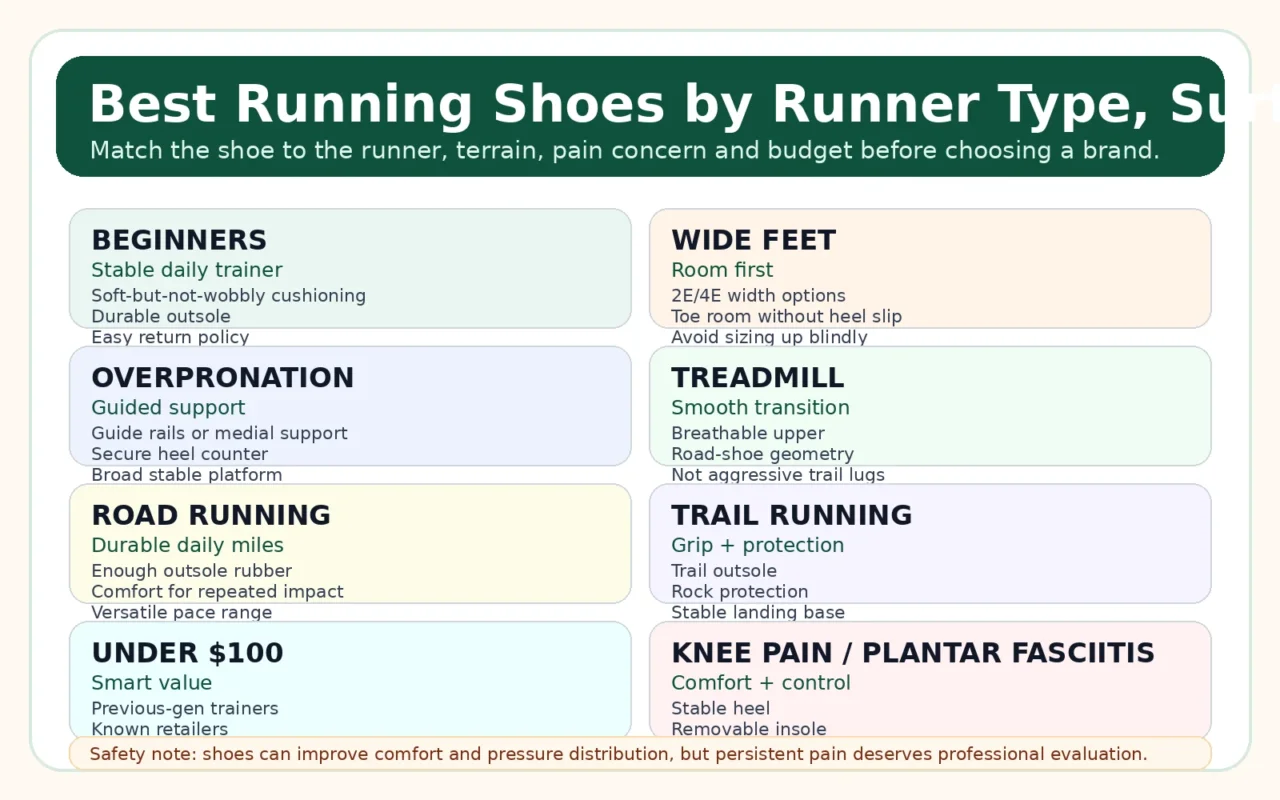
The most important gear is a pair of quality daily running shoes tailored to your feet. We also recommend moisture-wicking clothes and a basic fitness tracker.
Maximize Your Training Progress
While this plan focuses on your running intervals, building a strong foundation is key to long-term success. Incorporating core exercises for beginners will improve your stability and posture during outdoor runs. Furthermore, if you find that weather or schedule constraints make outdoor training difficult, following a 5K training plan can help bridge the gap between walking and continuous running.
Enhance Your Training
To support your journey, consider incorporating core exercises for beginners to improve stability. If outdoor conditions aren’t ideal, you can maintain progress on the best treadmill for home running. For recovery and injury prevention, our guide on cross-training for runners offers essential tips for building long-term durability.
Enhance Your Progress
To support your transition to outdoor running, consider integrating specific routines and gear. Incorporating core exercises for beginners helps maintain stable posture on uneven terrain. For those interested in tracking their progress with precision, our guide to the best fitness tracking watches highlights tools to monitor heart rate and pace. If you are starting your journey with weight management in mind, explore our running for weight loss guide for specialized scheduling tips.