

Training path: If you want to connect this fueling advice to race distance, hydration, recovery, and weight-loss context, start with the Running Nutrition Guide.
You wouldn’t drive a Formula 1 car across the country on an empty tank. You wouldn’t try to build a skyscraper without a blueprint. Yet, that is exactly what you are doing if you try to run long without a plan.


Here is the brutal truth: Running performance isn’t just about miles. It is about biology.
If you want to stop hitting the wall, stop feeling like garbage at mile 18, and start finishing strong, you need to understand how to fuel your body. This fueling guide for runners is the missing link in your training plan. We are going to cut through the marketing noise. We will talk about real food, hydration, and exactly what your body needs to survive the marathon journey.
Why is this article worth reading?Because most runners get this wrong. They guess. They eat too little. They drink too much water and not enough salt. They crash. They burn out. You are about to learn the simple math behind staying energized, avoiding the bonk, and keeping your body moving when your brain wants to quit.
This is your guide to fueling. Read it. Apply it. Run faster.
Key Takeaways
If you remember nothing else, remember this bullet point summary:
-
Fuel Early: Don’t wait until you are hungry. Start taking in nutrition within the first 45 minutes.
-
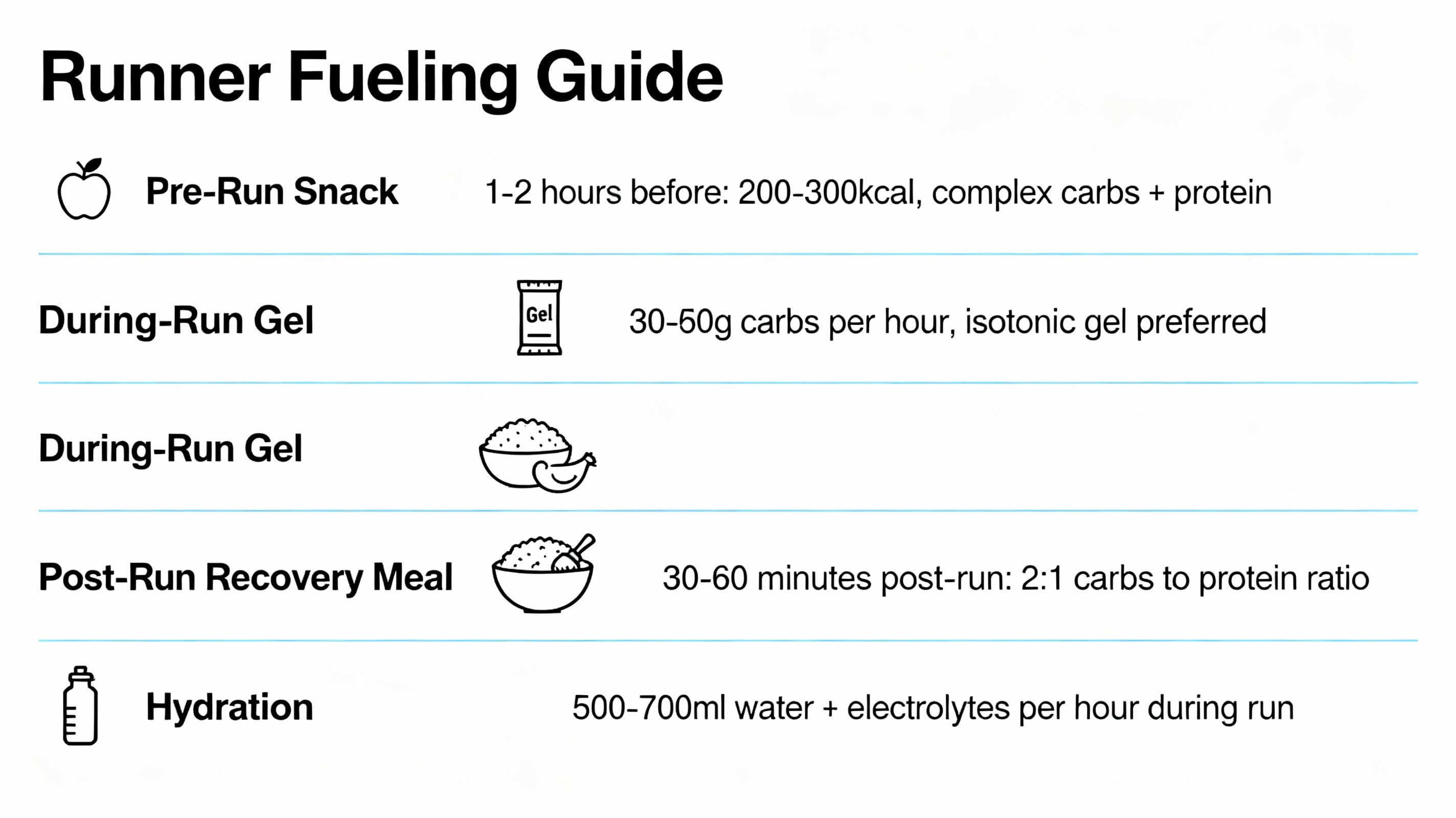
The Math: Aim for 30 to 60 grams of carbs per hour for any run over 90 minutes.
-
Hydrate Smart: Water kills performance if you don’t add electrolytes.
-
Test Everything: Never try a new gel, drink, or breakfast on race day.
-
Recover Fast: Protein and carbs within 30 minutes of finishing.
-
Listen to Your Body: If you feel weak, you are under-fueled. If you feel sick, check your sugar source.
Running a marathon is hard. Eating shouldn’t be. Stick to the basics, fuel your body, and you will cross that finish line with a smile on your face.
Why is a Proper Fueling Strategy Critical for Every Runner?
If you are training for a marathon, you cannot wing your nutrition. You just can’t. A proper fueling strategy is the difference between a personal best and a DNF (Did Not Finish).
Here is the physiology: When you run for less than 60 minutes, your body has enough stored energy to get by. You can lace up, run, and come home without eating a thing. But once you cross that threshold—once you get into the “long run” territory—everything changes. Your system starts looking for resources that aren’t there.
This is where many runners fail. They think they can “tough it out.” They think fueling is only for elite runners. Wrong. Every runner needs energy. If you ignore this, you risk running injury, extreme fatigue, hormonal imbalances, and poor recovery. You need to give your body the tools it needs to perform. It is not complicated, but it is non-negotiable.
If you are serious about performance, you need to look at the big picture. You need a baseline. You should check out this comprehensive nutrition plan for an athlete to ensure your daily foundation is solid before you even worry about race day.
What Happens to Glycogen Stores When You Run Long?
To understand fueling, you don’t need a Ph.D. in biology. You just need to know about one thing: Glycogen.
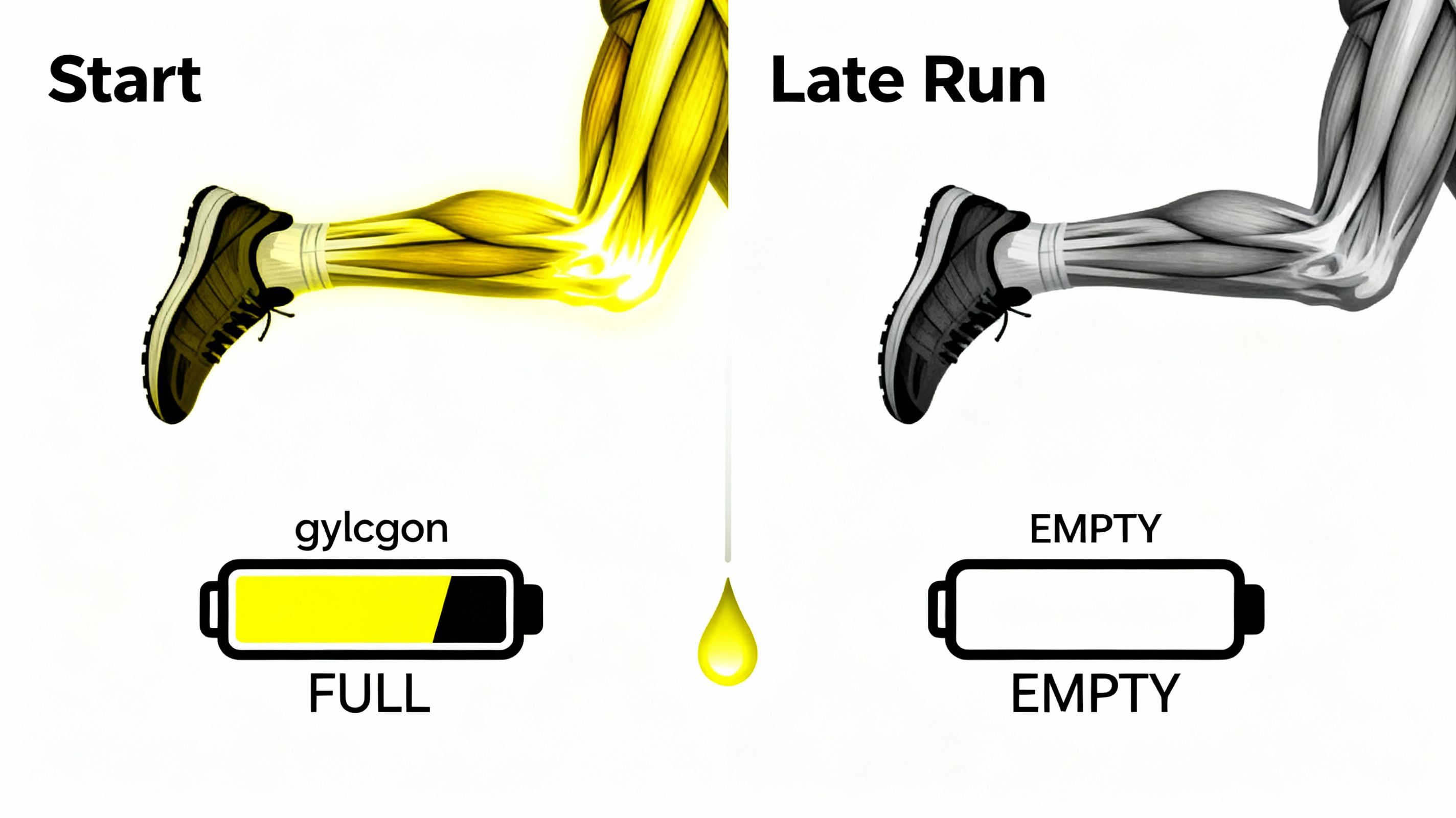
Glycogen is the form of sugar stored in your liver and muscles. It is your premium gas. It is high-octane fuel. When you start running, your body burns this stash rapidly.
The problem? You only have so much glycogen. It is a finite resource. For most people, depending on body size and intensity, these stores last about 90 minutes to two hours. Once that glycogen is depleted, your tank is empty. You hit the wall. Your brain fogs up. Your legs feel like lead bricks. This happens because the sugar that circulates in your bloodstream drops to dangerous levels.
You must replenish it before it runs out. You are racing against a clock that starts ticking the moment you start moving. To truly grasp why this molecule matters so much, you need to understand what is the role of glycogen. If you master your glycogen, you master the marathon.
Carbs vs. Fat: What is the Primary Fuel Source for Your Body?
There is a lot of debate in the running community about fats versus carbs. Let’s simplify the process.
At high intensities—like race pace—your body uses carbohydrate as its primary fuel.
It is fast energy. It is efficient. It breaks down instantly to power muscle contractions. Healthy fats are great for low-intensity movement (like walking or sitting), but they burn too slowly when your heart rate spikes. If you want to keep running fast, you need carbs.
Fat and protein take too long to digest. If you eat a steak or a handful of nuts mid-run, your body has to divert blood away from your legs to your stomach to digest it. That causes cramps. That causes nausea. You need quick energy that hits your system instantly. That means simple sugars.
Do not fear the carb. Embrace it. This is exactly why carbs are good for runners fueling your runs—they are the rocket fuel you need for speed.
How Many Grams of Carbs Per Hour Does a Marathoner Actually Need?
Stop guessing. Start measuring. The science is clear on this.
If you are going for a long run or race that lasts over an hour, you need to start taking in calories. The golden rule? You need 30 to 60 grams of carbohydrates per hour.
Some elite athletes push this up to 90 grams, or even 120 grams if they have trained their guts. But for someone training for a first marathon, 30 to 60 is the sweet spot.
-
Take less? You run out of energy and bonk.
-
Take more? You might get GI distress (runner’s trots).
It differs from person to person, but the range is standard. You need to do the math on your gels and chews. If a gel has 22g of carbs, you need at least two per hour.
For a specific breakdown of how to structure this during your longest efforts, look at our guide on long run nutrition.
The Hourly Fueling Matrix
| Duration of Run | Fuel Needed? | Carbs Per Hour | Recommended Source | Strategy |
| Under 60 mins | No | 0g | Water | Just run. |
| 60 – 90 mins | Optional | 30g | Sports Drink / Half Gel | Rinse mouth with carbs or sip drink. |
| 90 mins – 2 hrs | YES | 30-60g | Gels / Chews | Start fueling at 45 mins. |
| 2+ hours | CRITICAL | 60g+ | Gels / Real Food | Strict schedule every 20-30 mins. |
Gels, Chews, or Real Food: Which Fuel Source is Best for You?
You have options. You don’t have to suffer through products you hate.
-
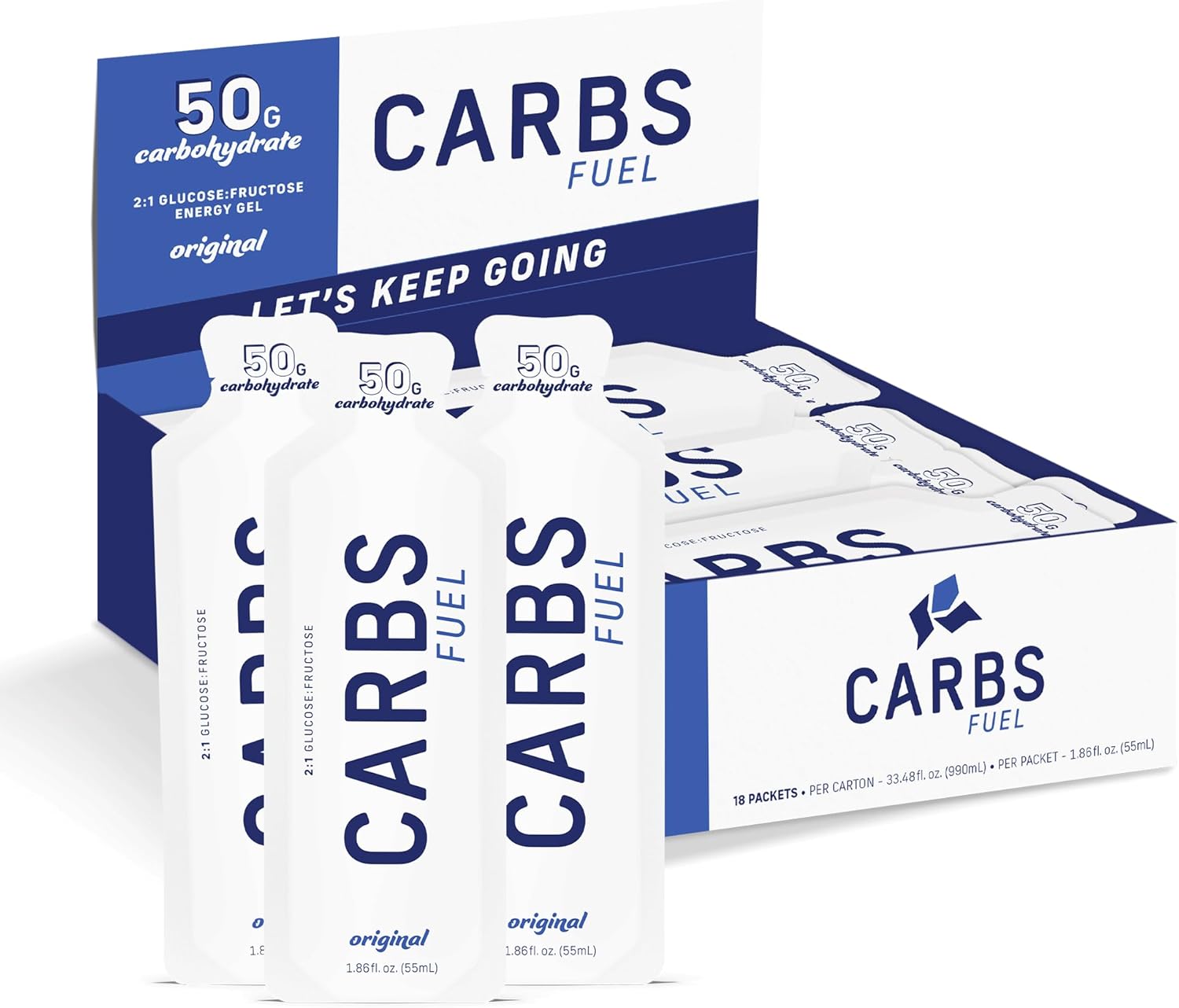
Energy Gel: The most popular choice. It’s gooey, sweet, and designed to hit your bloodstream fast. Easy to carry.
-
Chews: Basically gummy bears for athletes. Good if you like to chew, but can be hard to breathe and eat at the same time.
-
Real Food: Some runners swear by raisins, pretzels, or mashed potatoes in a baggie.
The form of sugar doesn’t matter as much as the digestibility. If you can chew it and swallow it while breathing hard, it works. Simple carbs are the goal. You have to figure out what works for your gut. Do not wait until race day to try a new gel. That is a recipe for disaster.
Hydration and Electrolytes: Do You Need to Hydrate with More Than Water?
Water is not enough.
Read that again. When you sweat, you don’t just lose water. You lose salt (sodium). If you just drink water, you dilute your blood sodium levels. This can lead to a condition called hyponatremia, which can be fatal.
You need to hydrate with electrolytes. Products like Nuun, Gatorade, or salt pills provide the sodium and potassium your body needs to fire muscle signals. If you cramp up, it is often a hydration issue, not a fitness issue.
Listen to your body.
-
Is your shirt covered in white dust? That’s salt.
-
Does your sweat sting your eyes? That’s salt.
You need to replace it. Understanding the importance of hydration is key to avoiding the medical tent. If you want a deep dive into the ratio of fluid to fuel, read about nutrition and hydration in running performance.
How Do You Train Your Gut to Handle 30 to 60 Grams of Carbs?
You train your legs to run 26.2 miles. You must also train your stomach to eat while running.
Your stomach is a muscle. If you suddenly dump 60 grams of carbohydrates into your system on race day without practice, you will probably throw up. The blood is in your legs, not your stomach. Digestion shuts down.
You have to practice.Start fueling on your training runs. Start with a small amount—maybe 30 grams every hour. See how your body reacts. Then, gradually increase the dosage. Teach your body to digest while under stress. This is part of your marathon training.
If you are following a structured half marathon training guide, make sure “nutrition practice” is written on your calendar just like “tempo run” or “long run.”
What Should Your Running Diet Look Like Before Race Day?
The days leading up to your event are crucial. You want to top off those glycogen stores. This is the famous “carbo-loading.”
But it doesn’t mean eating five pizzas.
You want to increase your calories from carbohydrates without massively increasing fat or protein. Think rice, pasta, potatoes, and oats. You want simple, easy-to-digest food.
-
The Goal: Glycogen saturation.
-
The Risk: Eating too much fiber (fiber makes you poop during the race).
Avoid high fiber foods the night before to prevent GI distress. You want your gut empty but your muscles full. About 30 to 45 minutes before the gun goes off, eat a small snack. Half a banana or a slice of toast is perfect.
If you are stuck on what to eat, check out these 10 pre-workout meals that will help you perform like a beast.
Post-Run Nutrition: How Can You Speed Up Muscle Repair?
The workout isn’t over when you stop running. It’s over when you eat.
The “anabolic window” is the period within 30 minutes after you finish a long run. This is when your body is screaming for nutrients. Your muscles are like a dry sponge, ready to soak up everything.
You need a mix of carbohydrates and protein.
-
Carbs: Refill the glycogen tank (liver and muscles).
-
Protein: Initiate muscle repair and stop muscle breakdown.
It doesn’t have to be fancy. Chocolate milk is surprisingly effective. A protein shake with a banana works. Just get it in fast. If you wait two hours, you miss the prime window for recovery. You will be sorer the next day.
Read our nutrition tips for post-workout recovery to get your strategy right. Also, if you struggle to eat solid food after a hard run, consider using one of the best protein powders for muscle gain to hit your macros easily.
Recovery Timing Table
| Timing | Nutrient Focus | Example Food |
| 0-30 Mins Post-Run | High Carb / Moderate Protein | Protein Shake, Choc Milk, Bagel + Egg |
| 2 Hours Post-Run | Balanced Meal | Chicken, Rice, Veggies |
| Hydration | Electrolytes + Water | Drink until urine is pale yellow |
How Does Fueling Differ from Person to Person?
There is no single magic number. Biology is individual.
-
Body Size: A 200-pound runner burns significantly more energy per mile than a 110-pound runner.
-
Gender: Men and women metabolize fat and carbs slightly differently.
-
Pace: A fast runner might need more carbs per hour because they are working at a higher percentage of their VO2 max.
You have to experiment. Use the guidelines as a starting point—start fueling with 30g/hour—and adjust.
-
Feel dizzy? You need more carbs.
-
Feel bloated? You need less, or you need to switch from maltodextrin to glucose/fructose mixes.
-
Cramping? More sodium.
A registered dietitian can help you dial this in if you are struggling. But mostly, it comes down to trial and error during your training runs.
References & Helpful Resources
-
The Science of Carbohydrate Loading – A deep dive into how to prep for race day.
-
Hydration Strategies for Athletes – Official guidelines from the American College of Sports Medicine.
-
Runner’s World Nutrition Guide – Extensive articles on runner-specific diets.
-
Gatorade Sports Science Institute – Research on hydration and sports performance.
-
International Society of Sports Nutrition Position Stand – Nutrient timing.
FAQ
What will I learn?
This guide covers The Ultimate Fueling Guide for Runners: How to Hydrate, Fuel Your Body, and Crus.
Related resource: Runners pursuing body-composition goals still need adequate fueling; use our Weight Loss Hub for sustainable calorie-planning and nutrition resources.
The Ultimate Fueling Guide for Runners: How to Hydrate and Fuel
Training path: If you want to connect this fueling advice to race distance, hydration, recovery, and weight-loss context, start with the Weight Loss for Active People guide. You wouldn’t drive a Formula 1 car across the country on an empty tank.
Frequently Asked Questions
For runs over 90 minutes, runners should aim for 30 to 60 grams of carbohydrates per hour to maintain energy levels and prevent glycogen depletion.
No, long-distance runners need electrolytes (sodium, potassium, magnesium) to prevent hyponatremia and maintain muscle function during intense sweat loss.
