
GearUpToFit Review
Saucony Ride 19 Review: The Do-It-All Daily Trainer for Easy Runs, Long Runs, and Light Faster Miles
A complete Saucony Ride 19 review covering PWRRUN+ cushioning, fit, ride, Ride 19 vs Ride 18, Ghost 18, Pegasus 42, Novablast 6, and whether it is the best daily trainer for you.
Affiliate disclosure: This article contains affiliate links. If you buy through links on this page, GearUpToFit may earn a commission at no extra cost to you. Product prices, stock, colors, and retailer availability can change. Always confirm the exact model name, size, and seller before buying.
Quick verdict
Bottom line: Buy the Ride 19 if you want a simple, comfortable, durable neutral trainer that works for most road miles without feeling overbuilt.
Do not buy it if: Skip it if you want a plated speed trainer, maximal bounce, or a firm stability shoe with pronation-control hardware.
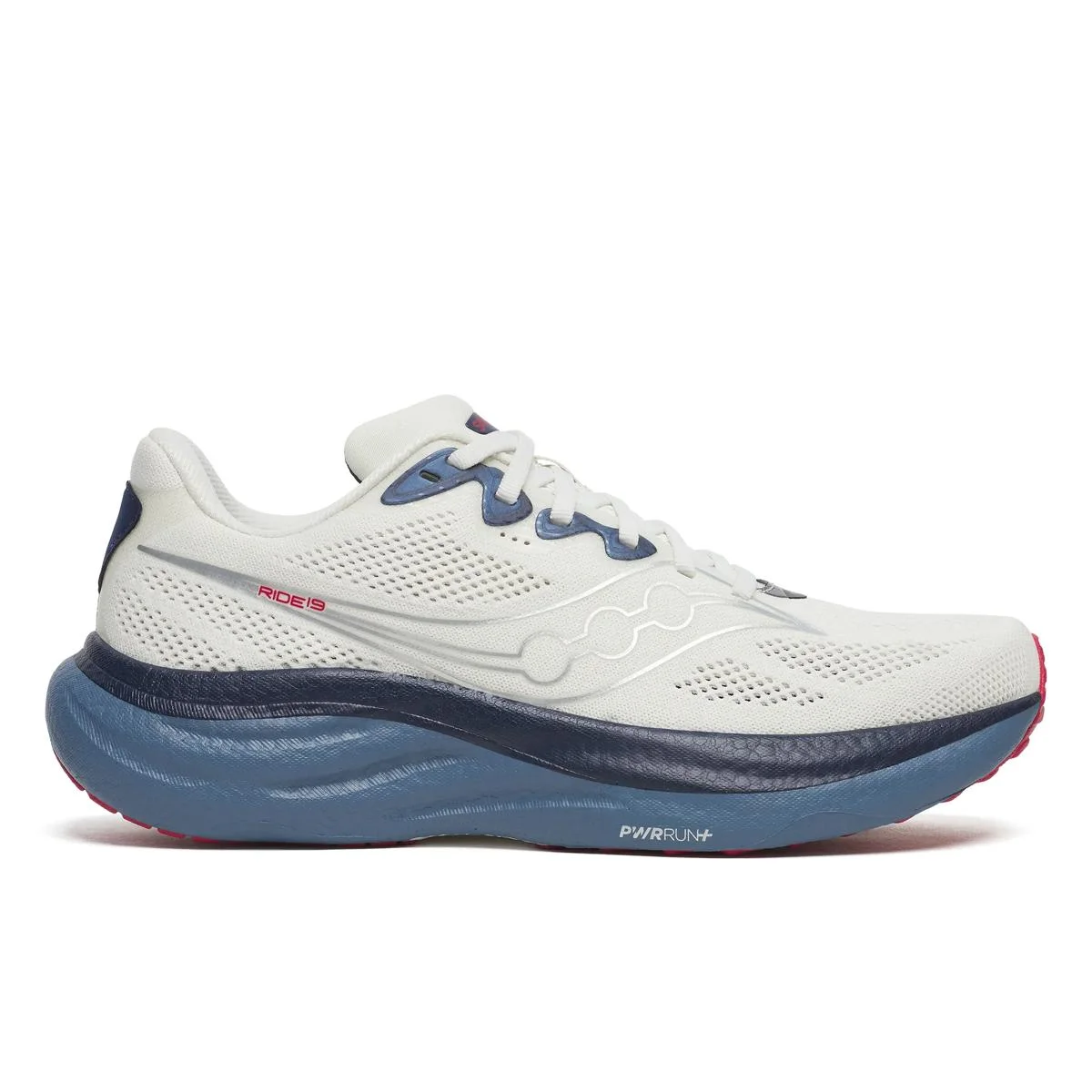
Affiliate product box
Saucony Ride 19
Buy the Ride 19 if you want a simple, comfortable, durable neutral trainer that works for most road miles without feeling overbuilt.
- Category: Neutral road daily trainer
- Best for: Easy miles, long steady runs, faster-paced daily training, one-shoe rotations
- Drop: 8 mm reported in current reviews and retail product data
- Weight: varies by size; current retail/review data places men’s weight roughly in the mid-to-high 200 g range
- Midsole: Reformulated PWRRUN+ cushioning
- Upper: Adaptive engineered mesh with roomy forefoot feel and secure midfoot hold
- Outsole: Durable road rubber with flex grooves for smoother transitions
Price note: $145 list price on Saucony US product page at time of research.
Saucony Ride 19 is the kind of product review GearUpToFit should publish as a standalone page because readers are no longer searching only for a broad category answer. They want to know whether this exact model is right for their training, body, budget, phone ecosystem, injury history, route type, and upgrade decision.
This review is written for runners and active people who want a practical buying decision, not marketing language. It explains what the product is best at, who should avoid it, how it compares with the closest alternatives, and how to choose the right option using GearUpToFit’s running shoe and smartwatch decision framework.
Fast facts
- Saucony describes Ride 19 as softer, lighter, and more responsive, built for easy miles, long steady runs, and faster-paced training.
- The official product page listed the men’s Ride 19 at $145 and in stock during research.
- Current independent coverage positions Ride 19 as a versatile 2026 do-it-all road trainer.
Specifications
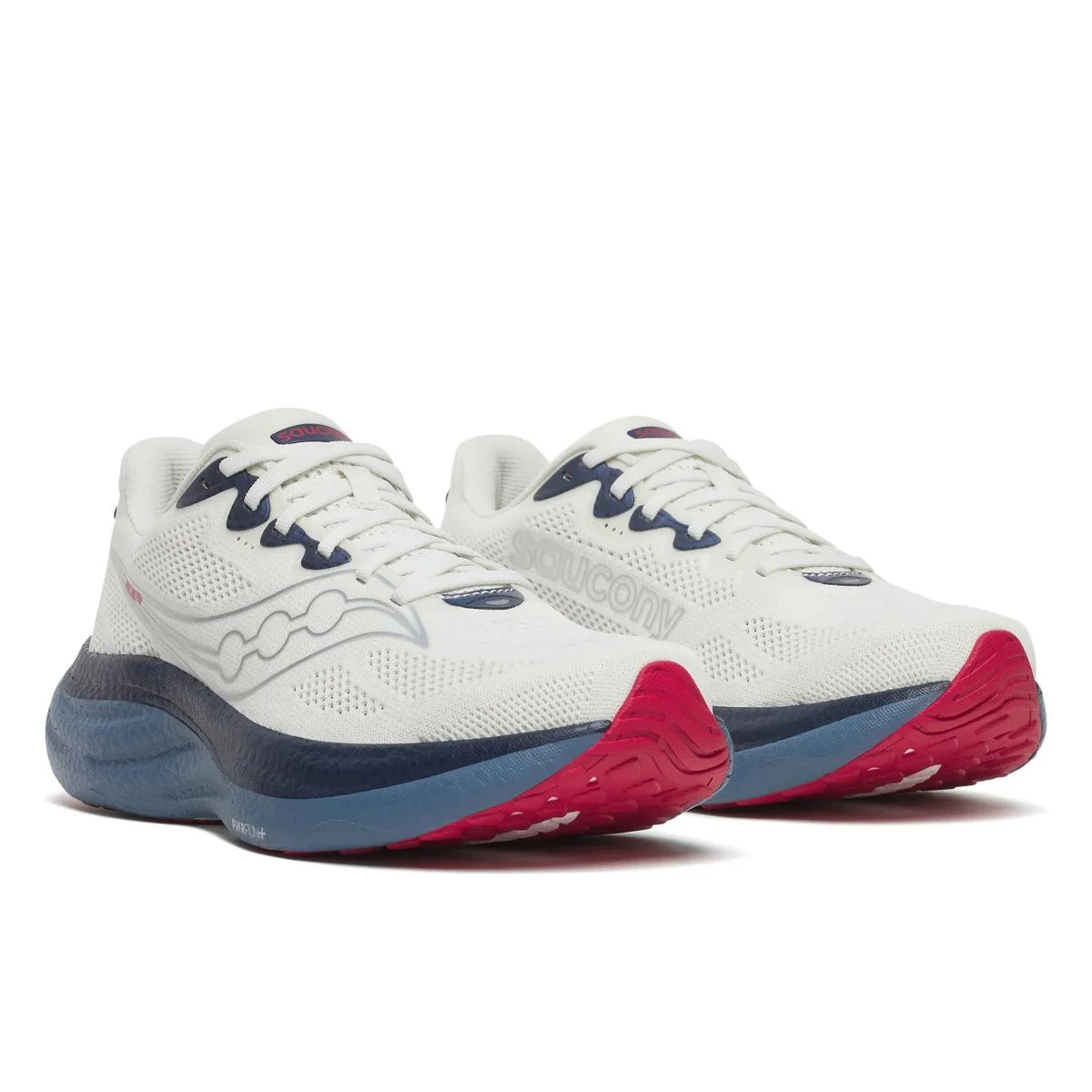
| Category | Neutral road daily trainer |
|---|---|
| Best for | Easy miles, long steady runs, faster-paced daily training, one-shoe rotations |
| Drop | 8 mm reported in current reviews and retail product data |
| Weight | varies by size; current retail/review data places men’s weight roughly in the mid-to-high 200 g range |
| Midsole | Reformulated PWRRUN+ cushioning |
| Upper | Adaptive engineered mesh with roomy forefoot feel and secure midfoot hold |
| Outsole | Durable road rubber with flex grooves for smoother transitions |
Who should buy Saucony Ride 19?
Buy the Ride 19 if you want a simple, comfortable, durable neutral trainer that works for most road miles without feeling overbuilt.
This is the reader-first way to think about the product: do not buy it because it is new, hyped, or popular. Buy it only if it solves a real training problem. A good purchase either makes your daily training more consistent, helps you avoid overbuying features you do not need, or fits a specific role in your rotation.
For GearUpToFit readers, this product fits because a safer and more current replacement for a Ride 18 review because Ride 19 now targets the latest-model daily trainer audience. It gives you a clear internal linking opportunity from broad buying guides to a specific model review with commercial intent.
Who should skip it?
Skip it if you want a plated speed trainer, maximal bounce, or a firm stability shoe with pronation-control hardware.
The wrong product is not always a bad product. It is often a product bought for the wrong reason. If your training needs, body mechanics, phone ecosystem, or budget point elsewhere, choose the alternative that fits better. That is how you build trust with readers and avoid thin affiliate content.
Saucony Ride 19 ride feel: what it should feel like underfoot
The main buying question is not whether Saucony Ride 19 is a famous shoe. The question is whether the ride matches your weekly mileage and training pattern. A good daily trainer should be comfortable at the start of the run, predictable when fatigue builds, stable enough through corners, and durable enough that the shoe does not feel dead after a few weeks of normal road mileage.
For most runners, Saucony Ride 19 should be evaluated through four checkpoints: landing softness, transition smoothness, toe-off response, and stability under tired form. Softness alone is not enough. A shoe can feel plush while walking around the house and still feel sloppy at mile eight. A shoe can also feel exciting for short accelerations but too harsh or unstable for daily use. The right question is whether the platform gives you a repeatable rhythm across easy miles, long runs, treadmill sessions, and moderate pace changes.
Saucony describes Ride 19 as softer, lighter, and more responsive, built for easy miles, long steady runs, and faster-paced training. That matters because the midsole is where most runners will feel the difference from older or cheaper trainers. The best use case is not sprinting. It is making normal training feel smoother, more efficient, and less punishing without forcing you into a race-day shoe.
Upper, fit, lockdown, and sizing advice
Fit is where many running-shoe reviews become too shallow. The right size is not only about length. You need to check heel hold, midfoot lockdown, toe-box volume, lace pressure, tongue movement, and how the upper behaves after the first 20 to 40 minutes when the foot warms up and swells.
Saucony Ride 19 should work best for runners who want a secure daily-training fit without a race-tight upper. For normal-width feet, start true to size. If you are between sizes, have a wide forefoot, wear thicker socks, or regularly run beyond 60 minutes, prioritize toe-box comfort over a snug showroom feel. If your heel slips, try a runner’s knot before sizing down, because sizing down can reduce forefoot comfort and create toenail pressure on downhill routes.
Use this simple fit test before keeping the shoe: stand up in your running socks, leave a thumb’s width in front of the longest toe, jog for two minutes, then check whether the heel lifts, the tongue slides, or the forefoot feels pinched. If the shoe passes those three checks, it is much more likely to work for actual training rather than only for a quick try-on.
Best uses: easy runs, long runs, treadmill, walking, and speed work
The best version of this shoe is the one that matches the majority of your training week. If you run three to five times per week, your daily trainer has to absorb the boring miles. It should also be comfortable enough for walking warmups, cooldowns, errands, and travel days. That is where Saucony Ride 19 can earn its place in a rotation.
For easy runs, focus on comfort and consistency. For long runs, focus on whether the shoe still feels stable when your cadence drops and your hips fatigue. For treadmill runs, check whether the outsole feels smooth at constant pace. For walking, check whether the heel bevel and forefoot rocker feel natural rather than forcing you forward. For faster workouts, be realistic: a daily trainer can handle strides and progression runs, but it does not replace a dedicated racing shoe if your goal is maximum speed.
The safest recommendation is to use Saucony Ride 19 for daily road training first. Add tempo or workout use only if the shoe feels controlled at your pace. Runners with one-shoe rotations should value versatility. Runners with two or three shoes should decide whether this model fills the easy-day, long-run, or uptempo-daily slot.
Saucony Ride 19 vs the closest alternatives
Comparison searches are where this review can win traffic. Readers do not only ask whether Saucony Ride 19 is good. They ask whether it is better than the shoe they already own, cheaper than the model they are considering, safer for beginners, better for walking, or more useful for marathon training.
- Saucony Ride 19 vs Ride 18
- Saucony Ride 19 vs Brooks Ghost 18
- Saucony Ride 19 vs Nike Pegasus 42
- Saucony Ride 19 vs ASICS Novablast 6
Choose Saucony Ride 19 when its comfort profile, price, and training role match your actual mileage. Choose an alternative when you need a different feel: a firmer platform, more stability, a lower drop, a lighter tempo design, a more aggressive rocker, or a softer recovery shoe. The point is not to crown one universal winner. The point is to match shoe geometry to the runner.
Durability, outsole grip, and when to replace it
Durability depends on body weight, pace, surface, weather, rotation, and stride pattern. Two runners can use the same shoe and get very different lifespans. A forefoot striker who runs on rough pavement may wear rubber faster than a heel striker on smooth asphalt. A heavier runner may compress foam faster than a lighter runner. A treadmill user may see less outsole abrasion but still feel midsole fatigue over time.
Watch for three replacement signs: the midsole feels uneven, the outsole is smooth in high-impact zones, or your normal aches appear earlier in a run. Do not wait until the shoe is visually destroyed. Running-shoe foam can lose protective feel before the upper looks bad.
To extend life, rotate with another trainer if you run four or more days per week, loosen the laces before taking the shoes off, dry them away from direct heat, and avoid using your main running pair as an all-day work shoe if you are trying to preserve mileage.
How to decide in 60 seconds
- Define the job. Decide whether this product is for easy training, speed work, race day, walking, health tracking, navigation, music, or daily smart features.
- Check compatibility. For shoes, check gait, foot shape, width, drop preference, and weekly mileage. For watches, check phone ecosystem, app preferences, battery expectations, and training depth.
- Compare only against the nearest alternatives. Do not compare a beginner daily trainer with a carbon racing shoe or a lifestyle smartwatch with a dedicated endurance watch unless the buying decision truly overlaps.
- Buy from a retailer with returns. Fit and comfort are personal. A generous return policy is part of the value.
Editorial evaluation method
This review uses verified product-page information, current launch and hands-on coverage, and GearUpToFit’s runner-focused buying framework. It does not pretend to include lab data that was not available. Claims about specifications, launch positioning, battery life, materials, and official features are based on the sources linked below. Real-world fit, long-term durability, GPS accuracy, and foam aging should be updated after hands-on testing, reader feedback, and verified retailer data.
For maximum trust, update this page after 30, 60, and 100 miles of use for shoes or after two weeks of daily wear for watches. Add your own photos, screenshots, route data, outsole wear images, and comparison notes. That is the fastest way to turn a strong product review into a genuinely defensible GearUpToFit asset.
FAQ
Is Saucony Ride 19 good for beginners?
Yes, Saucony Ride 19 can work for beginners if the fit feels secure and the shoe matches a neutral running gait. Beginners should prioritize comfort, stable transitions, and enough toe room over aggressive speed features.
Can you use Saucony Ride 19 for walking?
Yes, many daily trainers can be used for walking if the rocker and heel geometry feel natural. If you mainly walk, check heel comfort, arch feel, and all-day upper pressure before buying.
Is Saucony Ride 19 good for marathon training?
Saucony Ride 19 can be useful in a marathon build when it fits the right role. Use it for easy miles and long runs if it is a daily trainer; use it for workouts if it is a speed trainer. Most marathon runners benefit from rotating at least two shoes.
Does Saucony Ride 19 need a break-in period?
Most modern running shoes should feel good quickly, but the upper and midsole can settle after the first few runs. Do not keep a shoe that causes sharp pain, numbness, or persistent heel slip.
What runners should avoid Saucony Ride 19?
Skip it if you want a plated speed trainer, maximal bounce, or a firm stability shoe with pronation-control hardware.
Final recommendation
Saucony Ride 19 is worth considering if its strengths match your actual use case. It should not be treated as a universal best choice. It is strongest for the reader described in the quick verdict, weakest for the reader described in the skip section, and most valuable when internally linked from the right GearUpToFit hub pages.
Check Amazon availabilityView official product page
Sources checked
- https://www.saucony.com/en/ride-19/60823M.html
- https://www.techradar.com/health-fitness/exercise-equipment/the-ultimate-do-it-all-shoe-if-youre-not-wearing-saucony-ride-19-running-shoes-in-2026-youre-missing-out
