Skip to content
 We reviewed Apple’s 1,254-person accuracy study, DC Rainmaker’s GPS testing, and multiple independent battery tests — so you don’t have to. Here’s the honest bottom line:
The Apple Watch Series 12 is the first Series upgrade in years that changes what the watch can tell you, not just how fast it feels. The rebuilt Health Sensing System, the new Readiness score, the S11 chip, and real-world battery life that embarrasses Apple’s own 24-hour rating make this a confident buy at the same $399 as last year.
- Best for: iPhone runners who want one watch for training, sleep, health alerts, safety, and everyday life — especially anyone still on a Series 10 or older.
- Skip it if: your Series 11 still holds a charge (this is real but incremental for you), you run ultras, or you’re on Android.
- Biggest strength: the sensor overhaul. Background heart rate every 5 seconds, HRV up to 24x more often, and the most serious accuracy study Apple has ever published for a wearable.
- Biggest weakness: it’s still a 24-hour-rated watch with single-frequency GPS. Superb on roads; not the tool for 100-milers or deep backcountry.
- Upgrading? Series 8, 9, or 10 → yes, without hesitation. Series 11 → only if the battery is fading or the health features genuinely excite you.
- The Series 12’s rebuilt Health Sensing System reads background heart rate every 5 seconds (60× more often than Series 11) and HRV up to 24× more often.
- Apple’s 1,254-person accuracy study (Polar H10 reference) found it beat the Garmin Forerunner 970, Pixel Watch 4, Galaxy Watch 8, Whoop 5.0, and others in 139 of 159 comparisons.
- Real-world battery life beats the 24-hour rating by a wide margin — 51 hours in Macworld’s drain test, ~30 hours at CNET with always-on display.
- Still iPhone-only, still single-frequency GPS, still not an ultra watch — but at $399 with no subscription, it’s the default pick for iPhone runners.
Watch: DC Rainmaker’s in-depth video review
Prefer to watch? In this Apple Watch Series 12 review, DC Rainmaker — the most rigorous independent tester in wearables — puts the new sensors, GPS accuracy, and Readiness score through his full testing protocol. It’s the ideal companion to the written analysis in this review, especially the heart-rate accuracy section below.
Video: DC Rainmaker’s full in-depth review — GPS and heart-rate testing, Readiness deep-dive, and his upgrade verdict.
Our scores
Numbers are opinions; these are ours, after weighing every independent test against Apple’s claims:
Apple Watch Series 12 at a glance
Key specifications for runners
| Specification | Apple Watch Series 12 |
|---|---|
| Case sizes | 42mm / 46mm (aluminum, titanium); 43mm / 47mm (ceramic) |
| Case weight (no band) | 42mm: 32.2g aluminum GPS, 31.5g aluminum cellular, 36.5g titanium, 41.7–42.8g ceramic; 46mm: 39.5g / 38.6g / 44.9g / 51.3–52.9g |
| Thickness | 9.7mm (aluminum/titanium); 9.85mm (ceramic) |
| Display | Always-On Retina, wide-angle OLED, LTPO3; 2000 nits peak, 1 nit minimum; 374×446 px (42mm), 416×496 px (46mm) |
| Cover glass | Ceramic Shield 2 (aluminum); sapphire crystal (titanium, ceramic) |
| Chip / storage | S11 SiP, 64-bit dual-core, 4-core Neural Engine; 64GB |
| GPS | Precision L1 GPS (GPS, GLONASS, Galileo, QZSS, BeiDou) — single-frequency |
| Battery (rated) | Up to 24h normal; up to 38h Low Power Mode; up to 10h workout tracking |
| Charging | ~80% in 30 min; 15 min ≈ 12h normal use; 5 min ≈ 10h sleep tracking (fastest with included charger) |
| Water/dust | 50m (ISO 22810), depth gauge to 6m; IP6X dust resistance |
| Connectivity | 5G (RedCap) + LTE on cellular models; Wi-Fi 4; Bluetooth 5.3; 2nd-gen Ultra Wideband |
| Heart sensing | Always-on optical heart sensor + 2nd-gen electrical heart sensor; background HR every 5s; HRV as often as every 5 min |
| Health apps/alerts | ECG, Blood Oxygen, Heart Rate, Vitals, Readiness, sleep score, sleep apnea notifications, hypertension notifications, irregular rhythm, high/low HR notifications, cycle tracking, medications |
| Running tools | Pacer, Race Route, automatic track detection, custom workouts, running power, cadence, stride length, ground contact time, vertical oscillation, HR zones, training load, VO2 max, multisport |
| Safety | Emergency SOS, international emergency calling, fall detection, crash detection, Check In, backtrack |
| OS / compatibility | watchOS 27; requires iPhone 11 or later with iOS 27+ |
Sources: Apple’s technical specifications page and Series 12 product page. Weights via Apple’s tech specs as reported by MacRumors, iClarified, and The Mac Observer.
What’s new vs the Series 11
Last year’s Apple Watch Series 11 was a polish job — a good watch, but nobody’s pulse quickened. The Series 12 is the overhaul. Almost everything that matters happened underneath the glass, where you can’t see it but your training data can feel it.
1. Health Sensing System: the headline upgrade
Apple ripped out the sensor stack and started over: a new always-on optical heart sensor with a bigger LED array and new photodiodes, plus a second-generation electrical heart sensor with a much larger electrode array for better ECG contact. The numbers that matter for your training log: background heart-rate readings every 5 seconds — 60 times more frequent than the Series 11 — and HRV readings as often as every 5 minutes, 24 times more often, now split into Recovery HRV and overall HRV.
Apple calls it “the most accurate heart rate sensing in a wearable,” and for once the receipt is substantial: a July–August 2026 study across five sites in the US and Malaysia, with 1,254 participants contributing usable paired measurements against a Polar H10 chest-strap reference. The comparison field wasn’t soft, either — Garmin Forerunner 970, Pixel Watch 4, Huawei Watch 5, Galaxy Watch 8, Whoop 5.0, and Oura Ring 5. Apple’s result: the Series 12 came out ahead in 139 of 159 comparisons at 99% confidence. Two honest asterisks: it’s a manufacturer-funded study, and the Pixel Watch 4 (not the newer 5) was the Google representative. The full accuracy breakdown is further down.
2. Readiness score: Apple finally answers “should I train today?”
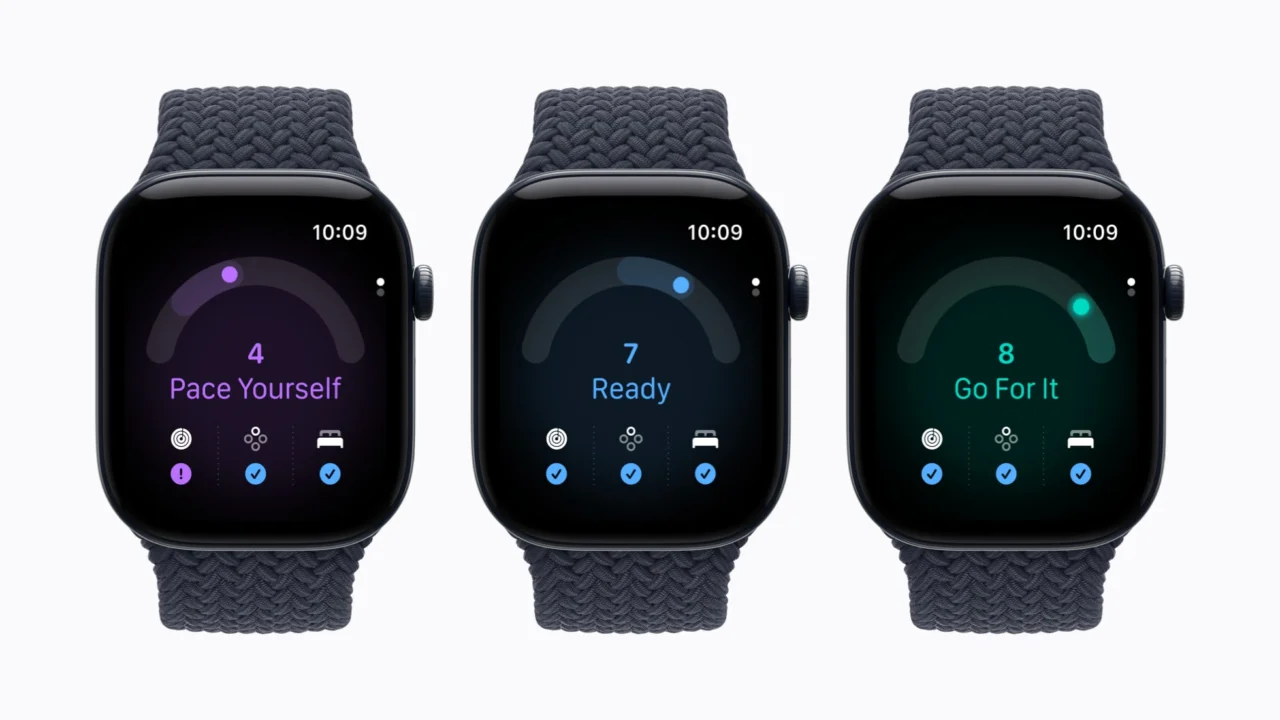
The new Readiness app gives you a daily 0–10 score with one of four verdicts — Recover, Pace Yourself, Ready, or Go For It — built from recent activity, training load, vitals, and sleep. It updates through the day, so a hard morning session changes what it tells you in the evening. Yes, Garmin and Oura got here years ago. But for the huge number of runners whose “recovery tracking” is currently a vague feeling and a glance at yesterday’s mileage, having it built into the watch they already wear is a bigger deal than the spec sheet suggests. One patience note: it needs roughly a week of wear data before it starts scoring, so don’t judge it on day two.
3. S11 chip: the first real speed jump in three generations
Reviewers keep reaching for the same word: finally. The S11 is the first meaningful performance upgrade since the S9 era, and you feel it in everyday navigation — but it matters most for Siri AI, which 9to5Mac found sluggish on older hardware and genuinely usable on the Series 12. The chip also handles on-device Audio Intelligence through a hardware-isolated Secure Exclave, which is Apple’s answer to the obvious privacy question (more on that below).
4. Battery: same rating, much better reality
Apple’s headline number didn’t move — up to 24 hours normal use, 38 hours in Low Power Mode. But the real-world tests keep beating the rating by embarrassing margins: Macworld’s full drain test hit 51 hours (against 46–49 hours on its own Series 11 tests), and CNET recorded about 30 hours with the always-on display active. The always-on heart monitoring everyone assumed would tank battery life appears to cost almost nothing, thanks to the S11’s efficiency. Try the estimator further down to see what that means for your routine.
5. Faster charging (with one catch)
Up to 80% in about 30 minutes, 15 minutes for up to 12 hours of normal use, 5 minutes for up to 10 hours of sleep tracking. The catch, found by MacRumors: you need the charger that ships in the box to get the fastest rate. Your old puck won’t do it. Don’t lose the new one.
6. Ceramic returns; tougher glass for everyone else
Polished ceramic cases are back for the first time since the Series 5 (2019), in pearl white and night blue. Aluminum models graduate from Ion-X glass to Ceramic Shield 2, which Apple claims is 60% tougher — the first durability upgrade the base model has had in years. Titanium and ceramic keep sapphire crystal.
7. Audio Intelligence: useful and genuinely debatable
Live Rewind (double-click the Digital Crown to read the last 15 seconds of conversation as text), Siri Recap (text summaries of recent chats), and Sound Recognition (alerts for sirens, alarms, a baby crying). Apple says no audio is recorded or stored — everything happens on-device and is deleted immediately. Reviewers at CNET, The Verge, and TechSpot still raised eyebrows, and testing turned up false Sound Recognition alerts and the occasional confidently wrong Siri answer. These features arrive in beta, in English first. Our advice: review the settings on day one and switch off anything you won’t use.
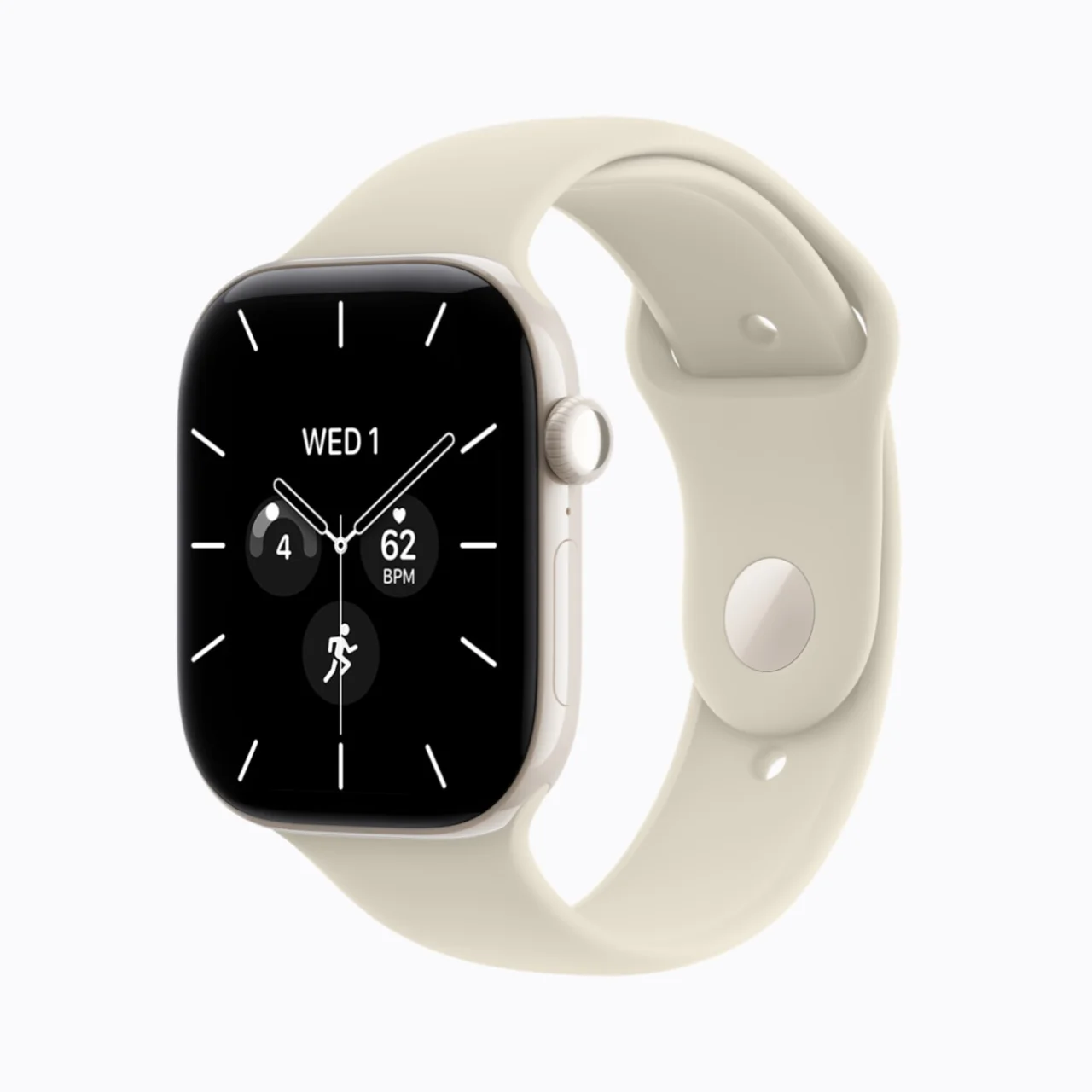
Design, display, and comfort
Set a Series 12 next to a Series 11 and you’ll squint. The design language hasn’t moved — one reviewer noted the bezels are even a touch thicker. What changed is what the watch is made of and how well it survives you: Ceramic Shield 2 on aluminum, sapphire on titanium and ceramic, and a third case material back in the lineup.
The display is still one of the best reasons to run with an Apple Watch: Always-On Retina with wide-angle OLED, 2000-nit peak brightness for midday glanceability, and a 1-nit minimum that won’t light up a dark bedroom at 3 a.m. New watch-face complications put live heart rate, daily steps, and your Readiness score on the face itself — small thing, big difference on a run when you don’t want to swipe.
Weight is where your material choice actually matters on the run. Case weights without a band, per Apple’s figures:
| Material | 42/43mm | 46/47mm | Cover glass |
|---|---|---|---|
| Aluminum GPS | 32.2g | 39.5g | Ceramic Shield 2 |
| Aluminum Cellular | 31.5g | 38.6g | Ceramic Shield 2 |
| Titanium | 36.5g | 44.9g | Sapphire |
| Ceramic (pearl white) | 41.7g | 51.3g | Sapphire |
| Ceramic (night blue) | 42.8g | 52.9g | Sapphire |
Two things worth knowing before you order: the ceramic cases are physically larger (43/47mm and 0.15mm thicker — the first time Apple has sold different dimensions under one nominal size) and up to 34% heavier than aluminum. If this watch will live on your wrist through daily runs and sleep, aluminum is the comfort pick, full stop. Ceramic is the jewelry pick — buy it because you love looking at it, not because it’ll make you faster.
Good news for upgraders: your band collection survives. Apple kept the fit ranges unchanged (130–200mm on the smaller case, 140–245mm on the larger), and even the slightly larger ceramic case takes the same bands. That drawer of sport bands carries straight over.
Running features: everything a road runner needs, honestly labeled
Let’s be specific about what you actually get, because “great for runners” is doing a lot of vague work in most launch coverage: Pacer with time and distance goals, Race Route (race your own best times on favorite routes), automatic track detection for precise oval metrics, custom workouts with warmup and recovery intervals, wrist-based running power, cadence, stride length, ground contact time, vertical oscillation, customizable heart-rate zones, training load, VO2 max estimates, and multisport mode for triathletes. Customizable Workout Views let you stack pace, distance, heart rate, and zones on one screen, and the enhanced Workout Buddy now coaches without your iPhone nearby.
Here’s the honest label: this is a superb road running toolkit. It is not a Garmin-class navigation or ultrarunning instrument. No full-color offline topo mapping in the Garmin sense (you do get offline maps with custom routes, backtrack, and US topo maps), no multi-day battery, no action button. For 5K-to-marathon road training, that gap almost never matters. For ultras and backcountry, it absolutely does — and pretending otherwise would be doing you a disservice.
One thing we’d do on day one: set proper heart-rate zones instead of running on Apple’s defaults. It takes five minutes with our heart rate zone calculator (Karvonen, LTHR, or classic 5-zone), and it’s the difference between “zone 2” meaning something and it meaning nothing.
GPS accuracy: good on roads, with documented limits
Single-frequency (L1) GPS across GPS, GLONASS, Galileo, QZSS, and BeiDou constellations. Dual-frequency (L1+L5) stays exclusive to the Ultra line — a real, spec-sheet-level difference, and the main reason a track-obsessed runner might look upmarket.
The most rigorous independent GPS testing comes from DC Rainmaker’s in-depth review, and his verdict on a repeated loop was refreshingly un-hyped: “not great, but also not terrible.” Rounded corners, a track that cut through bushes — especially early in runs and next to a large wall. Step counting, on the other hand, was excellent: hand-counted against roughly 5,000 steps, the watch was spot-on or slightly high, median difference about five steps per 1,000.
What that means for your actual routes:
- Road running and track: fine. Automatic track detection fixes the one place GPS watches have traditionally embarrassed themselves.
- Urban canyons and tree cover: expect the usual L1 wobble on corners. If your daily route threads downtown high-rises, a dual-frequency watch (Ultra 4, Garmin) draws cleaner lines.
- Start clean: give the watch 30–60 seconds of open sky before intervals or a race start. Early-run drift is where most GPS error lives.
- Treadmill: calibrate with outdoor runs first. Wrist-based indoor estimates get markedly better after calibration — most “my treadmill pace is wrong” complaints are really “I never calibrated” complaints.
Heart-rate accuracy: the strongest evidence Apple has ever shipped
This is the section the Series 12 exists to win, so let’s separate the three layers of evidence instead of mashing them into one hype paragraph.
Layer 1 — Apple’s own study. 1,254 participants, Polar H10 chest strap as the reference, activities ranging from outdoor running and HIIT to desk work and cooking, with explicit cadence-lock analysis (the classic failure where an optical sensor mistakes your stride rhythm for your heart rate). Result: the Series 12 beat the Garmin Forerunner 970, Pixel Watch 4, Huawei Watch 5, Galaxy Watch 8, Whoop 5.0, and Oura Ring 5 in 139 of 159 comparisons at 99% confidence. The caveat, stated plainly: Apple paid for the study, and the competitor list deserves the asterisk Android Authority noted — the Pixel Watch 4 stood in for Google, not the newer 5.
Layer 2 — independent testers. The most systematic independent heart rate accuracy test comes from Rob ter Horst of The Quantified Scientist — a post-doctoral scientist specializing in biological data analysis — who compared the Series 12 against a Polar H10 chest strap across indoor cycling, running, and weightlifting. His correlations: a near-perfect ~1.0 for cycling, 0.98 for running, and 0.97 for weightlifting — the lifting result placing it ahead of 85% of the devices he’s ever tested. CNET’s three-mile run had the Series 12 tracking closely with a Polar H10 as well, and TechSpot logged minor inaccuracies — the dissenting data point, worth keeping in mind. Two honest caveats on ter Horst’s data: it’s one person over one day of testing, and against his longer-term Series 11 data the 12 was broadly similar, with the 11 slightly better for running — he notes Apple may still be tuning the new sensor’s algorithms.
Layer 3 — DC Rainmaker’s technical nuance. This is the detail most reviews skip, and it’s the most important one: during workouts, the sensor updates on average every 5 seconds. It can sample every second — or go quiet for up to ~20 seconds — depending on whether Apple’s algorithm trusts the signal enough to plot the point. Low-confidence data gets thrown out rather than guessed. That’s the right engineering call (we’d rather have gaps than fiction), but it means “every 5 seconds” describes background sensing, not a guaranteed workout sampling rate.
The HRV gap nobody mentions: analyst the5krunner flagged the most important unanswered question in Apple’s paper — the study validates heart-rate accuracy in beats per minute, not HRV accuracy, which requires precise beat-to-beat timing in milliseconds (where tiny detection errors become large HRV errors). Since the Readiness score leans heavily on overnight HRV, that’s the gap that matters most. It doesn’t invalidate the heart-rate results — they’re genuinely strong — but it’s why we’d call Readiness “promising” rather than “proven” until independent HRV validation lands.
What this means for your training: for zone-based easy runs, tempo work, and trend tracking, the Series 12’s heart-rate data is now genuinely trustworthy — the best Apple has ever shipped.
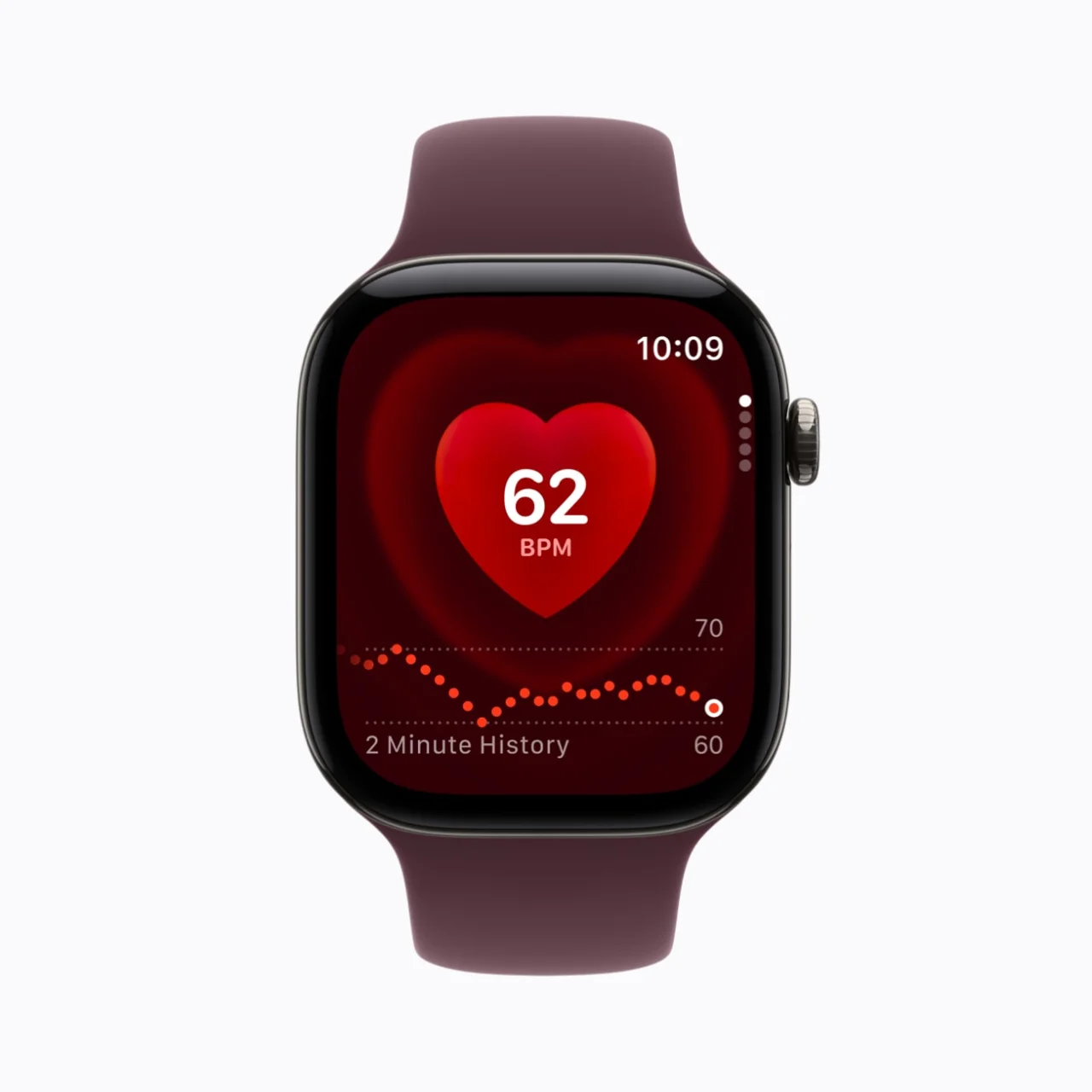
For interval sessions where second-by-second accuracy decides the workout, the old rule survives: pair a Bluetooth chest strap when the numbers truly matter. The watch pairs with third-party HRM straps, so you don’t have to choose.

Readiness score: useful, with a learning curve
The 0–10 Readiness score pulls from recent activity, training load, vitals, sleep, and that far richer HRV stream (Recovery HRV and overall HRV are now separate readings). Four verdicts — Recover, Pace Yourself, Ready, Go For It — that update through the day as you train.
Two things to know going in. First, it needs about a week of your data before it starts scoring — day-one buyers, don’t judge it on day two. Second, this is Apple’s first-generation take on something Garmin, Whoop, and Oura have refined for years. Early impressions are positive but thin; it’s the feature most worth revisiting after a month of real wear. If you already live by Garmin’s Training Readiness, expect a simpler, friendlier version of the same idea — not a deeper one.
Battery life for runners: the rating vs. the reality
Apple’s official numbers — up to 24 hours normal use, 38 hours Low Power Mode, 10 hours of workout tracking — are the numbers to plan around. But the real-world story keeps beating the spec sheet:
- Macworld’s full drain test: 51 hours. Two full days, two full nights, into the morning of day three. That beat its own Series 11 tests (46 and 49 hours).
- CNET: about 30 hours with the always-on display active — comfortably ahead of its Series 11.
In practice: a marathon — even a 5–6 hour one with music and cellular — sits comfortably inside the battery budget. A 50K or 100K ultra does not; that’s Ultra 4 or Garmin territory. And the 15-minute charge delivering up to 12 hours of normal use genuinely changes the daily logistics: charge while you shower, and the battery anxiety that defined the 18-hour Apple Watch era is effectively over. Just remember MacRumors’ catch — you need the charger in the box for the fastest rate.
Instead of guessing, model your own routine:
Estimate only — real life varies with signal, temperature, and watch face. Anchored to Apple’s 24-hour normal-use rating; extra GPS workout hours deduct at Apple’s 10-hour workout-tracking rate; Low Power Mode scales by Apple’s 38-hour figure. Cross-checked against Macworld’s 51-hour and CNET’s ~30-hour independent drain tests.
Health features: alerts, not diagnoses
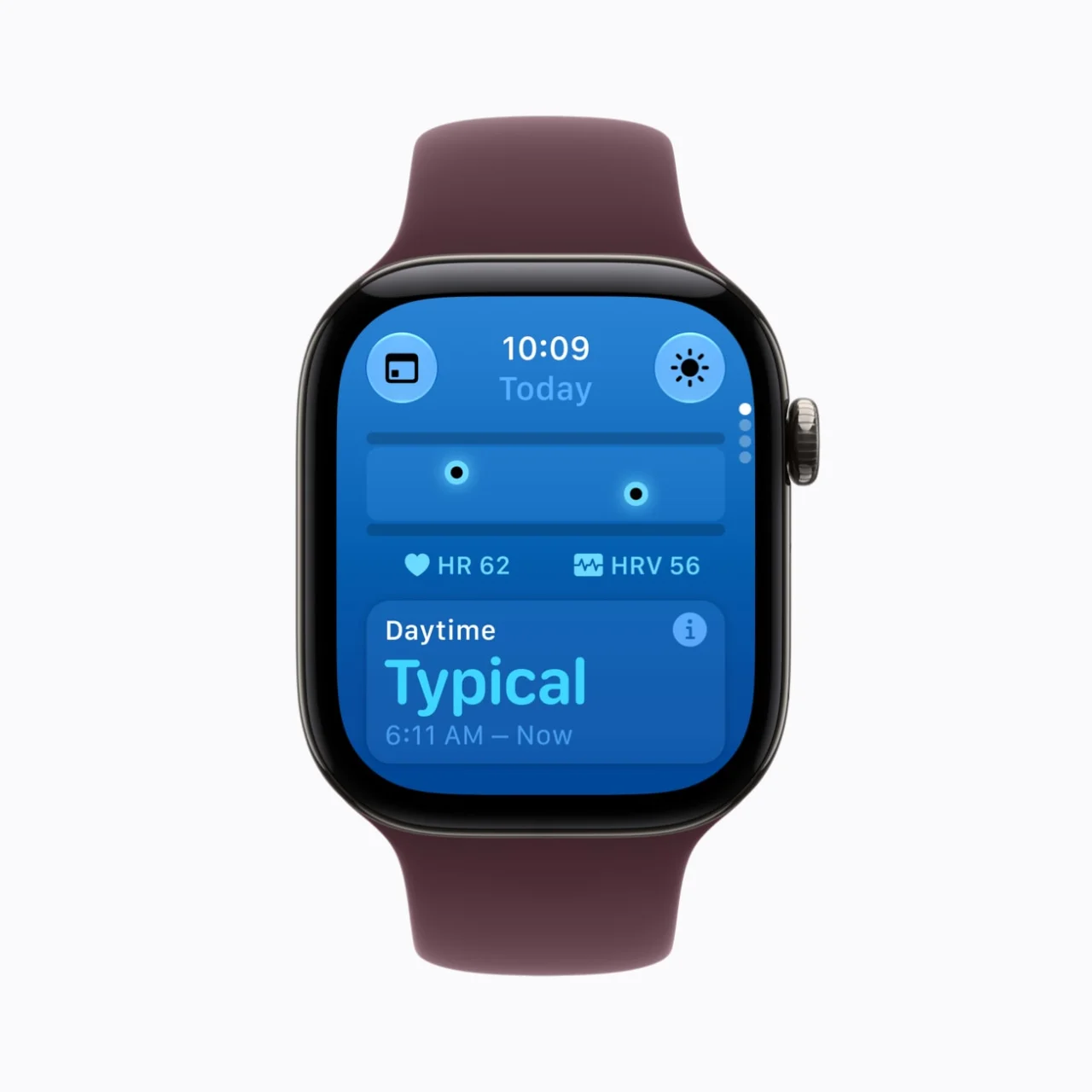
The Series 12 carries Apple's full health stack: ECG app, Blood Oxygen app, high and low heart-rate notifications, irregular rhythm notifications, sleep stages with a sleep score, sleep apnea notifications, hypertension notifications, wrist temperature sensing, cycle tracking, and the Vitals app (overnight heart rate, respiratory rate, wrist temperature, blood oxygen, sleep duration, HRV).
The distinction that matters: these are pattern alerts, not medical instruments. Hypertension notifications track trends over weeks — the watch will never give you systolic/diastolic numbers; a cuff does that. Sleep apnea notifications flag breathing-disturbance patterns; they don't diagnose apnea. The ECG app is FDA-cleared for AFib screening, which is meaningful — but "FDA-cleared feature" and "medical device" are not the same thing. If the watch flags something, or you have symptoms, talk to a clinician. (And the honest answer to "do cardiologists recommend the Apple Watch": many use its data as a conversation starter with patients; none will tell you it replaces clinical testing.)
What is genuinely new: the density of the data feeding these features. HRV measured up to 24x more often and background heart rate every 5 seconds means trend detection starts from a far richer signal — which is exactly why the hypertension and recovery features are more credible on this generation than on any previous one.
Your first week with the Series 12
Reviews tell you what the watch is. Here is what owning it actually feels like, day by day:
Smart features, Siri AI, and the privacy question
The S11 makes the watch feel fast in the way reviewers kept noticing — and it finally makes Siri usable on the wrist. Siri AI is more conversational, and Audio Intelligence adds the genuinely useful (Sound Recognition pinging you about a siren on a run) next to the genuinely debatable (Live Rewind transcribing the last 15 seconds of a conversation; Siri Recap summarizing your chats).
Apple's privacy architecture is the right one on paper: all audio processing happens on-device in the Secure Exclave, raw audio is neither stored nor sent to the cloud, and Live Rewind plays an audible chime with an on-screen animation so people nearby know transcription is running. Reviewers are still split — The Verge's review centered on exactly this tension — and CNET and TechSpot both logged false Sound Recognition alerts in testing. Our take: the on-device design is reassuring, but ambient-listening features still deserve a settings review on day one. Turn off what you won't use; keep the siren alerts if you run with traffic.
Elsewhere: 5G on cellular models (RedCap) for phone-free calls, texts, and music; Emergency SOS, fall and crash detection; Check In for solo runs (seriously underrated if you run alone at odd hours); Apple Pay; precision finding for your iPhone; and a new single-tap (index finger + thumb) gesture for the Smart Stack. The enhanced Workout Buddy coaching now works without your iPhone nearby.
watchOS 27 and the redesigned Health app
The watch ships on watchOS 27, which also rolls out to Series 9 and later — so older-watch owners get the software, just not the new sensors. The redesigned iPhone Health app lands later in 2026 with an Insights tab, a Health Age metric (which factors are adding or subtracting years, built from VO2 max, HRV, and sleep, with optional blood-work data), and a Longevity tab. Audio Intelligence features arrive in beta, in English first. Buying at launch? Think of the Health app redesign as a free upgrade coming in a few months, not a launch-day feature.
Pros and cons
Who should buy it — find yourself
You train 5K to marathon on roads and want one watch for workouts, sleep, safety, and life. Pacer, Race Route, track detection, and running power are all here — and the battery covers your longest run. This is your watch.
You're on a Series 8, 9, or 10 and wondering if it's time. The sensor overhaul, S11 speed, Readiness, and charging add up to the biggest generational jump in years. Upgrade with confidence.
You want the densest, most accurate wrist health data available — sleep, HRV trends, ECG, alerts — without a Whoop-style subscription. Nothing else at $399 touches this sensor stack. Buy it.
Early mornings, late nights, unfamiliar routes. Fall and crash detection, Emergency SOS, Check In, and 5G cellular make this the safest watch Apple has made. Worth it for peace of mind alone.
Who should skip it
- Series 11 owners whose battery still lasts the day — your watch just got watchOS 27, and the sensor upgrade alone hasn't been shown to justify $399 yet.
- Ultra runners and multi-day adventurers — 24 rated hours won't cover a 100-miler. The Ultra 4 or a Garmin is the honest answer.
- Android users — Apple Watch requires an iPhone, full stop.
- Data-first training nerds who live in Training Status, race predictors, and deep analytics — Garmin's ecosystem remains deeper (see our Forerunner 970 review).
- Budget buyers — the $249 SE 3 covers the essentials, and Series 11 prices will keep falling.
What the experts say
The voices worth hearing, unfiltered:
Should you buy it? Take the 30-second quiz
Three questions. One honest answer — tuned for runners.
Apple Watch Series 12 vs Series 11
The question most buyers actually ask. Spec-to-spec first, then the advice that matters:
| Series 12 (2026) | Series 11 (2025) | |
|---|---|---|
| Chip | S11 | S10 |
| Heart sensing | New optical + 2nd-gen electrical; background HR every 5s; HRV every 5 min | Previous-gen sensors; ~5-min background HR |
| Readiness score | Yes (0–10, four verdicts) | No |
| Battery (rated) | 24h / 38h Low Power | 24h / 38h Low Power |
| Battery (tested) | ~51h (Macworld drain test) | ~46–49h (Macworld drain tests) |
| Charging | 80% in ~30 min; 15 min ≈ 12h (needs included charger) | Fast charging (previous rate) |
| Glass (aluminum) | Ceramic Shield 2 (60% tougher) | Ion-X |
| Materials | Aluminum, titanium, ceramic | Aluminum, titanium |
| Audio Intelligence | Live Rewind, Siri Recap, Sound Recognition | No |
| Display | 2000 nits, LTPO3 | 2000 nits |
| GPS | Precision L1 | L1 |
| Price (launch) | From $399 | From $399 |
Upgrade advice by what's on your wrist now: Series 8 or older → upgrade confidently, this is a different watch. Series 9 or 10 → strong yes; the health sensing and speed are a real step up. Series 11 → wait, unless your battery is degraded or you specifically want Readiness and the new sensors. New to Apple Watch → buy the 12; there's no reason to pay near-full price for an 11 now. Our full Apple Watch Series 11 review has the detailed predecessor breakdown.
Upgrade advisor: is the 12 worth it coming from your watch?
Tap what is on your wrist right now. You will get an honest answer — including when the answer is “ don’t buy it.”
Apple Watch Series 12 vs Apple Watch Ultra 4
Apple's own lineup is the Series 12's toughest competition. The Ultra 4 launched alongside it at $799 with the same S11 chip and Health Sensing System:
| Series 12 | Ultra 4 | |
|---|---|---|
| Price | From $399 | From $799 |
| Case | 42/46mm (43/47mm ceramic) | 49mm titanium |
| Weight | 31.5–52.9g by material | ~63g |
| Battery (rated) | 24h / 38h Low Power / 10h workout | 50h / 84h Low Power / 45h GPS (Max Extended) |
| GPS | Single-frequency L1 | Precision dual-frequency |
| Water resistance | 50m, depth gauge 6m | 100m, deeper dive rating |
| Satellite | No | Emergency SOS, messages, Find My via satellite |
| Health sensors | Same Health Sensing System | Same Health Sensing System |
| Display | 2000 nits peak | Larger, brighter (Ultra line) |
The call: same sensors, same chip, same Readiness. The $400 gap buys battery (50 vs 24 rated hours), dual-frequency GPS, satellite safety, 100m water resistance, and a bigger rugged case. For road runners, the Series 12 is the better value — you get the entire health upgrade for half the price. For ultra, trail, or backcountry, the Ultra 4 is the only Apple Watch that belongs. For the Ultra line's track record, see our Apple Watch Ultra 3 review.
Apple Watch Series 12 vs Garmin Forerunner 970
The cross-ecosystem decision, and the one we get asked about most. Our Garmin Forerunner 970 review rates it the most complete runner-first watch you can buy; the Series 12 is the most complete smartwatch that also runs well.
| Apple Watch Series 12 | Garmin Forerunner 970 | |
|---|---|---|
| Price class | From $399 | Premium (~$750 class) |
| Battery | 24h rated (~30–51h tested) | 15 days smartwatch / 26h GPS |
| GPS | L1 single-frequency | Multi-band + SatIQ |
| Maps | Offline maps, backtrack; no full topo suite | Full-color maps, turn-by-turn, ClimbPro |
| Training analytics | Training load, Readiness (new) | Training Readiness, HRV Status, race predictor, stamina — deeper |
| Heart-rate sensing | New Health Sensing System (1,254-person study) | Elevate 5 (strong, less studied publicly) |
| Smart features | Best in class: apps, 5G, Apple Pay, Siri AI | Useful but thinner app ecosystem |
| Phone | iPhone only | iPhone + Android |
| Subscriptions | None for health features | None |
The call: iPhone runner who wants one watch for everything → Series 12, and it's not close on value. Runner who plans training around data, races trails, or needs multi-day battery → Forerunner 970. If you're still torn, compare both against the field in our best smartwatches for runners guide — or run your profile through the Watch Match tool and let it decide for you.
What about Android runners?
Short answer: the Series 12 is not an option — Apple Watch requires an iPhone for setup and daily use, no exceptions, no workarounds. Android runners should look at the Galaxy Watch 8 or the Pixel Watch 5 (our Galaxy Watch 8 Classic review covers Samsung's latest). If you're platform-agnostic, a Garmin like the Forerunner 170 Music works with either phone.
Day-one setup: 7 settings that make it a better running watch
Most Series 12 reviews stop at the spec sheet. This is the part that actually improves your running — do these in the first 20 minutes:
- Set real heart-rate zones. Apple's defaults are generic age-based guesses. Five minutes with our heart rate zone calculator (Karvonen, LTHR, or classic 5-zone) and every zone alert on every run starts meaning something.
- Customize your Workout Views. Stack pace, distance, heart rate, and zone on a single screen so you stop swiping mid-interval. Put the metric you race by first.
- Turn on automatic track detection. It's the single biggest GPS-accuracy upgrade available to you, and it's a toggle, not a purchase.
- Enable backtrack before you need it. If you run unfamiliar routes, set it up at home — not when you're already lost.
- Audit Audio Intelligence. Keep Sound Recognition's siren alerts if you run in traffic; switch off Live Rewind and Siri Recap if the idea of ambient transcription bothers you. Your call, but make it deliberately.
- Pair your Bluetooth chest strap for interval days. The new optical sensor is excellent; physics still favors a strap when seconds matter.
- Give Readiness its week. Wear the watch day and night for 7 days before judging the score. Early verdicts on an uncalibrated algorithm are just noise.
5 mistakes to avoid
- Buying cellular without a carrier plan. The cellular model does nothing extra until you pay a carrier every month. No plan? Buy GPS and pocket the difference.
- Judging Readiness on day two. It needs a week of data. The score you see on day two is a guess wearing a lab coat.
- Charging with your old puck and wondering why it's slow. The fastest rate needs the charger in the box. Label it.
- Picking ceramic for daily training. It's up to 34% heavier and larger — gorgeous on the wrist, less gorgeous at mile 18.
- Skipping zone setup. A $399 watch with wrong zones is a very expensive pedometer. See setting #1 above.
Value and buying advice
From $399 — the same launch price as the Series 11 — the Series 12 is one of the easiest value calls in the smartwatch market right now: a sensor overhaul, a real chip upgrade, and better real-world battery for zero price increase. (Launch-week street pricing already dipped to $390 at some retailers, per CNN Underscored.) Expert scores cluster at 8–9/10 (WIRED 9, PCMag 9.0, Engadget 9.1, The Independent 9.0, The Verge 8.0).
Which configuration:
- Size: 42mm for smaller wrists and sleep comfort; 46mm for readability on the run. If you can try both in a store, do — case choice can't be swapped after ordering.
- GPS vs Cellular: buy cellular only if you run phone-free and will pay the carrier plan. Otherwise GPS is the same training watch for less.
- Material: aluminum is the runner's pick — lightest, cheapest, now with tougher Ceramic Shield 2. Titanium is actually heavier than aluminum at the same size (36.5g vs 32.2g at 42mm); you buy it for the finish and sapphire, not the weight. Ceramic is the luxury pick.
- Timing: launch-week buyers pay full price; Apple Watches historically see the first meaningful discounts around the holidays. If you can wait two months, you'll likely save $30–50.
- In the box: the watch, your chosen band, and a 1m Apple Watch Magnetic Fast Charger to USB-C cable — the exact cable you need for the fastest charging rate. Don't lose it.

And once the watch is sorted, remember the part of the equation most runners under-invest in: the right shoes matter more than the right watch. Run your feet through our RunMatch shoe finder, or plan the training the watch will track with our 8-week 5K plan and race time predictor. Browse all GearUpToFit gear reviews for the rest of your kit.
The true cost: what $399 really means per day
Sticker shock is about framing. Move the slider to how long you will keep the watch:
Decision table
| Your situation | Buy the Series 12? | Why |
|---|---|---|
| iPhone runner, Series 10 or older | Yes | Sensor overhaul + S11 + Readiness + charging = the biggest generational jump in years. |
| iPhone runner, Series 11, battery fine | Wait | Real but incremental; your watch gets watchOS 27 too. |
| First Apple Watch | Yes | No reason to buy the 11 at near-full price. |
| Marathon training (road) | Yes | Battery covers it; Pacer, Race Route, track detection, power all included. |
| Ultrarunning / multi-day | No | 24 rated hours. Ultra 4 or Garmin instead. |
| Android user | No | iPhone required. Look at Galaxy/Pixel/Garmin. |
| Data-first training nerd | Maybe | Great sensors, but Garmin's analytics remain deeper. |
| Budget-conscious | Consider SE 3 / discounted 11 | $249 SE 3 covers essentials; Series 11 prices will fall. |
Bottom line
Here's what it comes down to: the Apple Watch Series 12 is the first Series in years that earns its new number. The Health Sensing System is a genuine overhaul backed by an unusually serious accuracy study. The S11 fixes the sluggishness that had crept into recent generations. Readiness finally answers "should I train today?" And real-world battery life now stretches so far past the 24-hour rating that the rating feels like modesty.
The honest limits haven't moved: iPhone-only, single-frequency GPS, one-day-rated battery. But at the same $399 as last year, with no subscription and the most complete smartwatch experience you can put on your wrist, it's the default recommendation for iPhone runners who want one watch for training, health, safety, and daily life.
Buy it if you're on a Series 10 or older, if this is your first Apple Watch, or if health data is your thing. Wait if your Series 11 still holds a charge. And if you run ultras — you already knew this wasn't your watch before you started reading this Apple Watch Series 12 review.
Myth vs. fact
Four things the internet gets wrong about the Series 12:
Frequently asked questions
Is the Apple Watch Series 12 worth it?
For iPhone users on a Series 10 or older — yes, confidently. You get a rebuilt health sensor system, the first real chip upgrade in three generations, a new Readiness score, and better real-world battery at the same $399 starting price. For Series 11 owners, it's a harder sell: the upgrade is real but incremental, and independent testing hasn't yet shown the new sensors alone justify the jump.
Should I buy the Series 12 or the Series 11?
Buy the 12 at full price; buy the 11 only at a meaningful discount. The 12 adds the Health Sensing System (60x more frequent background heart-rate readings), Readiness score, S11 chip, faster charging, Ceramic Shield 2, and Audio Intelligence — for the same $399 launch price the 11 debuted at. See our Series 11 review for the full predecessor picture.
Is the Apple Watch Series 12 good for running?
Yes — for road running from 5K to marathon. It has Pacer, Race Route, automatic track detection, custom workouts, wrist-based running power, cadence/stride/ground-contact metrics, HR zones, and training load. Independent GPS testing (DC Rainmaker) found it decent but not class-leading — fine on roads, wobblier than dual-frequency watches in urban canyons and heavy tree cover. For ultras, its 24-hour rated battery is the limiting factor, not the features.
Can the Series 12 replace my Garmin?
It depends what you use the Garmin for. Road training up to the marathon, daily health tracking, and smart features? The Series 12 replaces it and does more. Multi-day battery, full topo maps, deep training analytics (Training Status, race predictor, stamina), or ultrarunning? Keep the Garmin — the Forerunner 970 remains the deeper training instrument. Our best smartwatches for runners guide compares the full field.
How is the Apple Watch Series 12 battery life in real use?
Better than Apple's 24-hour rating suggests. Macworld's full drain test reached 51 hours; CNET recorded about 30 hours with the always-on display on. Apple also rates up to 38 hours in Low Power Mode and up to 10 hours of workout tracking. A 15-minute charge adds up to 12 hours of normal use — but you need the charger included in the box for the fastest rate. Use the estimator above to model your own routine.
Will the Series 12 battery survive my marathon?
Almost certainly yes. Even a 5–6 hour marathon with music streaming and cellular sits well inside the 10-hour workout-tracking rating — and real-world tests show the rating is conservative. Where it gets tight is 50K+ ultras; that's when you want the Ultra 4 or a Garmin. Set the estimator's workout slider to your expected race time to check your margin.
How accurate is the Series 12 heart-rate sensor?
Apple's 1,254-person study (Polar H10 chest strap reference) found it more accurate than the Garmin Forerunner 970, Pixel Watch 4, Huawei Watch 5, Galaxy Watch 8, Whoop 5.0, and Oura Ring 5 in 139 of 159 comparisons. Independent testers broadly agree for steady-state training — CNET matched it closely to a chest strap on a 3-mile run. DC Rainmaker adds the nuance: workout sampling averages every 5 seconds but can gap up to ~20 seconds when signal confidence is low. For intervals where seconds matter, pair a Bluetooth chest strap.
How do I set up heart-rate zones on the Series 12?
Don't use Apple's age-based defaults. Calculate your personal zones with our heart rate zone calculator (Karvonen HRR is the best starting point for most runners), then enter them in the Watch app under Workout → Heart Rate Zones. It takes five minutes and transforms every zone-based workout.
Does the Apple Watch Series 12 measure blood pressure?
No. Like the Series 11, it offers hypertension notifications — trend-based alerts over weeks, not live systolic/diastolic numbers. For actual readings, use a validated upper-arm cuff.
Does the Apple Watch Series 12 work with Android?
No. It requires an iPhone 11 or later with iOS 27 or later for setup and daily use — no exceptions, no workarounds.
What is the Readiness score and how long until it works?
A daily 0–10 score (Recover / Pace Yourself / Ready / Go For It) based on recent activity, training load, vitals, and sleep, updating through the day. It needs roughly a week of wear data before it starts scoring — don't judge it on day two.
Is the ceramic Apple Watch Series 12 worth it?
It's the beautiful option, not the practical one: ceramic cases are larger (43/47mm), up to 34% heavier than aluminum (up to 52.9g), and cost more — for identical sensors, chip, and battery. Runners should default to aluminum; buy ceramic because you love how it looks.
What are the biggest complaints about the Series 12?
The honest list: still a 24-hour rated battery; iPhone-only; nearly identical design with slightly thicker bezels; Audio Intelligence raises privacy questions (with false Sound Recognition alerts in some tests); no live blood-pressure readings; and Series 11 owners get an incremental upgrade. None are deal-breakers at $399 — but they're why people hesitate, and why some switch to Garmin.
Why are people getting rid of their Apple Watch?
The common reasons: battery expectations (it needs daily charging, unlike a Garmin), upgrade fatigue when the yearly changes feel small, switching to Garmin or Coros for multi-day battery and deeper training analytics, and privacy discomfort with ambient-listening features. The Series 12 answers the battery complaint better than any previous generation — but if you bought an Apple Watch expecting a Garmin, the mismatch was never about the hardware generation.
Should I buy the Series 12 or the cheaper Apple Watch SE 3?
It depends what you're buying. The $249 SE 3 covers the essentials — heart rate, GPS, sleep tracking, crash detection — and it's the smart buy if you just want a solid smartwatch. The Series 12 is for people who want the new Health Sensing System, the Readiness score, the faster S11 chip, and the best display. If those phrases don't excite you, save the $150.
Do cardiologists recommend the Apple Watch?
Many cardiologists use Apple Watch data — ECG readings, heart-rate trends, irregular rhythm notifications — as a conversation starter with patients, and the ECG app is FDA-cleared for AFib screening. But no cardiologist will tell you it replaces clinical testing: it's a pattern-alert device, not a medical instrument. If the watch flags something, or you have symptoms, see a clinician.
References & further reading
Every key claim in this review traces to one of these sources — Apple's own specification pages or independent publications that tested the watch.
- Apple — Apple Watch Series 12 product page (feature claims, battery ratings, materials, pricing)
- Apple — Series 12 Technical Specifications (chip, sensors, display, GPS, charging, compatibility)
- DC Rainmaker — Apple Watch Series 12 In-Depth Review (GPS/HR accuracy testing, sensor sampling nuance)
- Wareable — Apple's heart-rate accuracy study explained (study methodology, competitor comparisons)
- Macworld — 51-hour real-world battery test
- CNN Underscored — Apple Watch Series 12 review (~30h tested battery, launch pricing)
- 9to5Mac — Three favorite Series 12 features (S11 speed, Siri AI, health complications)
- 9to5Mac — Why I upgraded from Series 10 to Series 12 (thicker bezels, Readiness, Health app)
- MacRumors — Series 12 hands-on (charger requirement, Readiness warmup period)
- MacRumors — Ceramic models are bigger and heavier (dimensions and weights from Apple tech specs)
- The Mac Observer — Series 12 weight by material and size
- The Mac Observer — Series 12 and Ultra 4 FAQ (pricing, sizes, battery, satellite)
- iClarified — Aluminum vs Titanium vs Ceramic (materials comparison table)
- 9to5Mac — The Quantified Scientist tests the Series 12 heart-rate sensor (independent Polar H10 comparison: ~1.0 cycling, 0.98 running, 0.97 weightlifting)
- the5krunner — Apple Watch Series 12 heart rate white paper: the good, the gaps, the questions (critical analysis: HRV accuracy gap, tattoo exclusion, study independence)
- TechSpot — Series 12 review roundup (expert scores; testing cons)
- iPhone in Canada — Series 12 review (upgrade advice by model owned)
For training plans, shoe advice, and calculators to go with your new watch, visit the GearUpToFit running hub.