Skip to content
 Garmin Running Dynamics
Updated 2026
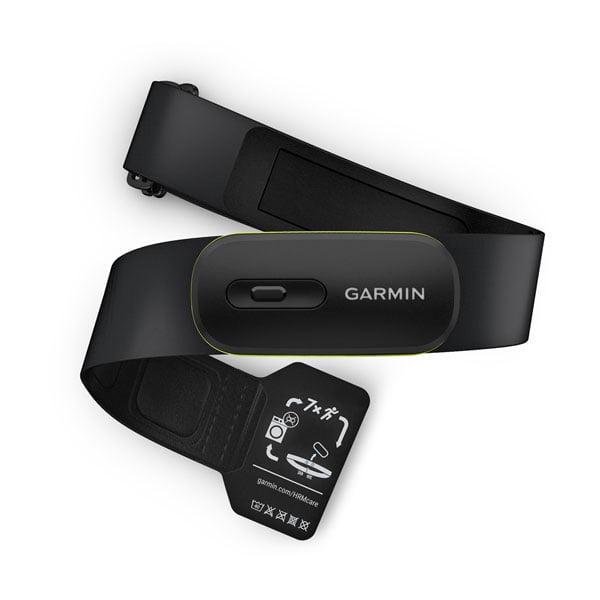
The Garmin HRM 600 is not just another heart-rate strap. It is Garmin’s most complete chest-based performance monitor for athletes who want reliable heart-rate data, HRV transmission, running dynamics, Step Speed Loss, swim heart-rate storage, and watch-free activity recording in one premium accessory.
Quick Answer: Should You Buy the Garmin HRM 600?
Yes, buy the Garmin HRM 600 if you train seriously inside the Garmin ecosystem. It is the best Garmin chest strap for runners and multisport athletes who want heart rate, HRV, running dynamics, Step Speed Loss, swim heart-rate storage, and workout capture when wearing a watch is inconvenient.
Skip it if you only need basic heart-rate broadcasting. If your goal is simply to send heart rate to Zwift, Peloton, a treadmill, or a phone app, the Garmin HRM-Dual or Polar H10 can be the smarter value.
Editorial score
Garmin runners
Up to 2 months
5 ATM
The simple buying rule is this: choose HRM 600 when Garmin-specific data matters; choose a cheaper strap when you only need a heart-rate number.
Best Garmin HRM 600 Amazon Product Boxes
The HRM 600 comes in two strap sizes. The module and core feature set are the same; the sizing is what determines comfort, signal stability, and whether the electrodes sit securely against your skin.

Garmin HRM 600 XS-S
Choose XS-S if your chest circumference is around 23.5–33.5 inches and you want the newest Garmin chest-strap metrics in a smaller fit range.
Garmin HRM 600 M-XL
Choose M-XL if your chest circumference is around 31.5–47 inches. This is the mainstream adult size for many runners, cyclists, and multisport athletes.
Garmin HRM 600 Review Verdict
The Garmin HRM 600 is the heart-rate monitor I would buy for a Garmin-first athlete who cares about training zones, HRV workflows, advanced running metrics, and complete Garmin Connect data. It is especially compelling if you own a newer high-end Garmin watch that supports HRM 600-specific features.
Compared with wrist-based optical heart rate, a quality chest strap is still the safer choice for hard intervals, sprint work, cold-weather runs, indoor cycling, gym sessions with wrist flexion, and race efforts where delayed wrist readings can affect pacing decisions. Wrist sensors are excellent for daily wellness trends; chest straps are still better when precision during effort matters most.
What I Like
- More dependable heart-rate data during high-intensity efforts than wrist-only sensors.
- Real-time heart rate and HRV data for compatible Garmin devices and apps.
- Running dynamics, including stride length, vertical oscillation, ground contact time balance, and Step Speed Loss on supported watches.
- Watch-free recording for sports where wearing a watch is uncomfortable or impractical.
- Swim heart-rate storage and post-activity syncing with compatible Garmin devices.
- Detachable module makes strap washing easier.
- Rechargeable battery removes coin-cell replacements.
- ANT+ and Bluetooth Low Energy support broad compatibility.
What Could Be Better
- Premium price is hard to justify for basic heart-rate broadcasting only.
- The best features require compatible Garmin devices.
- Some athletes will prefer the long-life CR2032 battery in HRM-Pro Plus or HRM-Dual.
- The proprietary charging connector is one more cable to manage.
- Chest straps require moisture, fit, and cleaning discipline to perform well.
- Non-Garmin users will not get full value from Garmin-specific metrics.
Garmin HRM 600 Specs
HRM 600 is designed around a detachable rechargeable module, two strap sizes, real-time heart-rate and HRV transmission, Garmin running dynamics, swim storage, and stand-alone activity recording.
| Feature | Garmin HRM 600 Details | Why It Matters |
|---|---|---|
| Product type | Premium chest-strap heart-rate monitor | Better suited than wrist-only sensors for intervals, tempo work, cycling, gym work, and race pacing. |
| Heart-rate data | Real-time heart rate and HRV data to compatible devices and apps | Useful for training zones, recovery workflows, HRV-aware tools, and structured workouts. |
| Running dynamics | Stride length, vertical oscillation, ground contact time balance, Step Speed Loss on compatible watches | Turns the strap into a form-feedback tool, not just a heart-rate transmitter. |
| Step Speed Loss | Shows how much speed is lost when your foot contacts the ground | Helps evaluate braking, fatigue, and running mechanics across similar sessions. |
| Watch-free recording | Records selected activities without wearing a watch and syncs to Garmin Connect | Helpful for basketball, soccer, martial arts, team sports, and workouts where watches are awkward. |
| Swim use | Stores heart-rate data during swimming and forwards it after the workout on compatible Garmin devices | Important because live underwater transmission can be unreliable. |
| Battery | Rechargeable lithium-ion; up to 2 months at 1 hour per day | No coin-cell swaps, but you must remember to charge it. |
| Water rating | 5 ATM | Suitable for swimming and multisport use when used according to Garmin guidance. |
| Connectivity | ANT+ and Bluetooth Low Energy | Works with Garmin watches, Edge cycling computers, compatible apps, fitness equipment, and smart trainers. |
| Sizes | XS-S and M-XL | Correct strap size improves comfort and signal quality. |
Heart-Rate Accuracy and HRV: Why a Chest Strap Still Matters
The biggest reason to buy HRM 600 is not that it shows heart rate. Many watches already do that. The reason is that chest-based measurement is usually more stable during the exact workouts where wrist sensors can struggle: hard intervals, changing intensity, cold starts, gripping handlebars, strength training, and races.
Wrist sensors can lag when your intensity changes quickly. A chest strap sits closer to the heart’s electrical signal, so it can be a stronger choice when training zones, threshold work, and pacing decisions need cleaner input.
Running Dynamics and Step Speed Loss Explained
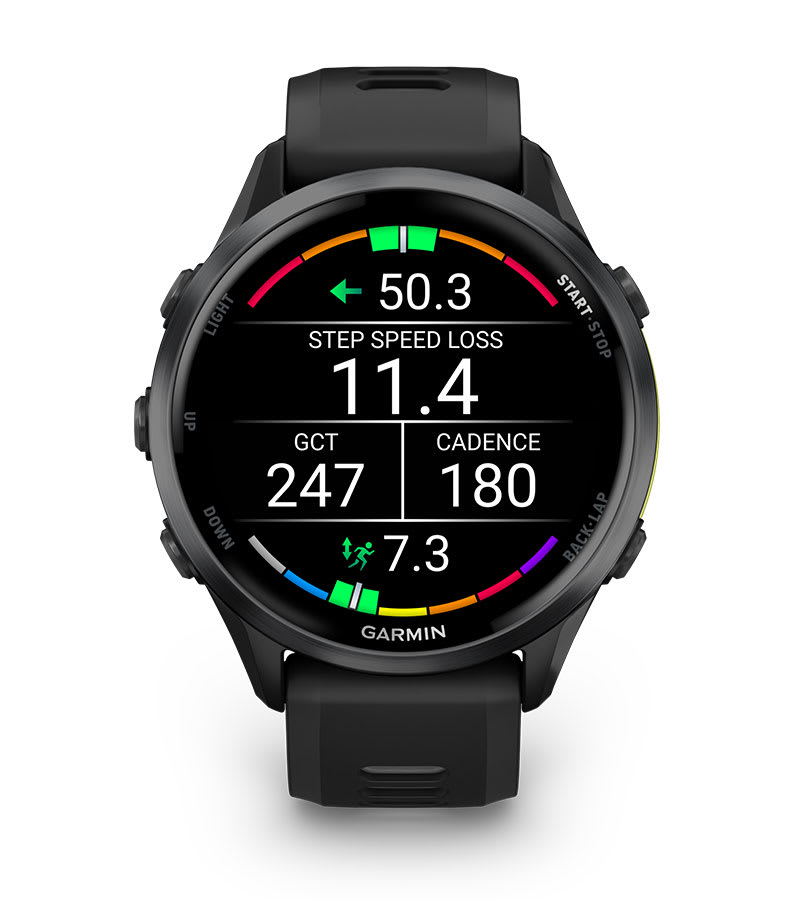
HRM 600 becomes far more valuable when paired with a compatible Garmin watch. It can unlock advanced running dynamics such as stride length, vertical oscillation, ground contact time balance, and Step Speed Loss. These metrics help you evaluate how your form changes as pace, fatigue, shoes, terrain, and workout type change.

What Is Step Speed Loss?
Step Speed Loss estimates how much speed you lose when your foot contacts the ground while running. Lower is typically better because it suggests you need less propulsive work to regain speed after ground contact.
How to Use Step Speed Loss Without Overthinking It
- Track trends, not single runs. Terrain, fatigue, shoes, pace, and weather can all affect the number.
- Compare similar sessions. A flat easy run should not be compared directly with a hilly tempo run.
- Use it with cadence and ground contact time. One running metric rarely tells the whole story.
- Make small changes. If you are adjusting cadence, use our running cadence guide and avoid forcing a dramatic stride change overnight.
Step Speed Loss does not make you faster by itself. It gives you feedback. The training still comes from consistent running, smart progression, strength work, recovery, and appropriate pacing.
Watch-Free Activity Recording: The Underrated HRM 600 Feature
One of the most useful HRM 600 upgrades is activity recording when you cannot or do not want to wear a watch. That matters for basketball, soccer, football, rugby, martial arts, boxing, volleyball, hockey, and certain gym sessions where a watch can be uncomfortable, unsafe, restricted, or distracting.
Team Sports
Record heart rate and workout effort when wrist devices are impractical or not allowed.
Martial Arts
Keep training-load data without wearing a bulky device on your wrist.
Gym Work
Capture sessions where wrist flexion, gripping, and sweat can make optical readings less dependable.
This feature is a major reason HRM 600 is more than a simple heart-rate strap. It helps keep your Garmin Connect history more complete across activities that are not watch-friendly.
Swimming, Treadmill, Cycling, and Gym Performance
Swimming
HRM 600 can store heart-rate data during swim activities and sync it after the workout with compatible Garmin devices. This matters because underwater live heart-rate transmission is not as straightforward as above-water broadcasting.
Treadmill and Indoor Track
HRM 600 can send pace and distance to compatible Garmin watches for indoor sessions. That is useful when GPS is unavailable and treadmill pace does not match your actual effort.
Cycling and Smart Trainers
ANT+ and Bluetooth Low Energy support make the strap useful with Garmin Edge computers, smart trainers, and many cycling apps.
Strength Training
Wrist-based optical sensors can struggle during gripping, pressing, pulling, and rapid wrist movement. A chest strap often gives cleaner heart-rate continuity during mixed gym sessions.
Fit, Comfort, Charging, and Strap Care
Chest-strap accuracy depends on contact. HRM 600 should sit just below the chest muscles with the Garmin logo facing outward. Wet the electrodes before training, especially in dry weather or before you start sweating.
Fit Checklist
- Choose XS-S for smaller chest measurements.
- Choose M-XL for the mainstream adult size range.
- Wear it snug enough to stay flat during intervals.
- Do not tighten it so much that breathing feels restricted.
- Moisten the electrodes before workouts.
Care Checklist
- Remove the module before washing.
- Rinse sweat residue after hard sessions.
- Let the strap dry fully before storage.
- Charge periodically instead of waiting for race morning.
- Keep firmware updated through Garmin Connect when available.
Garmin HRM 600 vs HRM-Pro Plus vs HRM-Dual vs Polar H10
The best heart-rate monitor depends on whether you want Garmin’s newest metrics, universal app compatibility, long coin-cell battery life, or the lowest practical price.
| Model | Best For | Battery | Water Rating | Advanced Garmin Metrics | My Take |
|---|---|---|---|---|---|
| Garmin HRM 600 | Serious Garmin athletes, Step Speed Loss, watch-free recording, swim storage | Rechargeable; up to 2 months at 1 hr/day | 5 ATM | Yes, including HRM 600-specific Step Speed Loss on supported watches | Best premium Garmin strap overall. |
| Garmin HRM-Pro Plus | Garmin runners who want running dynamics and prefer a coin-cell battery | CR2032; up to 1 year at 1 hr/day | 5 ATM | Yes, but not the newest HRM 600-specific Step Speed Loss feature | Still excellent if discounted. |
| Garmin HRM-Dual | Basic ANT+/Bluetooth heart-rate broadcasting | CR2032; up to 3.5 years at 1 hr/day | 1 ATM | No | Best Garmin budget pick for simple HR. |
| Polar H10 | Universal chest-strap accuracy across many apps and platforms | CR2025; about 400 hours | Waterproof design with Bluetooth, ANT+, and 5 kHz support | No Garmin running dynamics | Best non-Garmin alternative. |
Garmin HRM 600
Buy this if you want Garmin’s most advanced chest strap for running dynamics, HRV data, swim storage, and watch-free activity recording.

Garmin HRM-Pro Plus
Buy this if you want a proven Garmin strap with running dynamics and a replaceable CR2032 battery instead of a rechargeable module.

Garmin HRM-Dual
Buy this if you only need reliable heart-rate broadcasting to Garmin, Zwift, gym equipment, cycling computers, or fitness apps.

Polar H10
Buy this if you want a widely compatible chest strap and do not need Garmin running dynamics or Step Speed Loss.
Garmin Forerunner 970
Pair HRM 600 with a premium Garmin running watch if you want deeper running-dynamics workflows, training metrics, and race-prep tools.
Garmin Watch + HRM 600 Pairing
If you are upgrading your full setup, buy the watch for GPS, maps, training guidance, and recovery tools; buy HRM 600 for cleaner effort data and advanced strap-based metrics.
Best Pairings: What to Use With Garmin HRM 600
HRM 600 gives the most value when it is part of a complete training system. The strap captures better effort data; the watch and calculators help you interpret and apply it.
Best for Serious Runners
Pair HRM 600 with a premium Garmin running watch if you want advanced running dynamics, structured workouts, race-day pacing, and better post-run analysis.
Start here: Best Smartwatches for Runners.
Best for Easy-Run Control
Use HRM 600 to keep easy runs honest. A reliable chest strap makes Zone 2 pacing more practical because it reduces wrist-sensor lag during changing conditions.
Calculate targets: Zone 2 Running Calculator.
Best for Form Experiments
Use HRM 600 running dynamics with cadence work, shoe comparisons, tempo runs, and fatigue checks. Do not chase one metric; look for repeatable trends.
Improve rhythm: Running Cadence Guide.
Who Should Buy the Garmin HRM 600?
- Performance runners: You train with zones, intervals, threshold sessions, race workouts, and form metrics.
- Garmin watch owners: You want the strap that best complements newer Garmin training and running-dynamics features.
- Triathletes: You need running dynamics, swim heart-rate storage, and reliable data across disciplines.
- Team-sport athletes: You want workout capture when wearing a watch is impractical.
- Cyclists: You want reliable HR on Edge computers, smart trainers, fitness equipment, and apps.
- Data-driven athletes: You care about trends, load, HRV, recovery, pace, distance, and Garmin Connect completeness.
Who Should Skip It?
- Budget shoppers: HRM-Dual is enough for basic heart-rate broadcasting.
- Non-Garmin users: Polar H10 may offer better value if you do not need Garmin-specific analytics.
- Casual exercisers: A wrist-based Garmin watch or fitness tracker may already be enough.
- Coin-cell loyalists: HRM-Pro Plus or Polar H10 may better match your battery preference.
For more affordable wearable options, read our guide to the best budget smartwatches for fitness tracking. For weight-loss-focused tracking, see our guide to the best fitness trackers for weight loss.
How to Set Up the Garmin HRM 600
- Charge it first. Do not start your first workout with an unknown battery level.
- Moisten the strap electrodes. This improves contact before you sweat.
- Wear it snugly. Place it below the chest muscles with the Garmin logo facing outward.
- Wake the module. Use the button and LED status to confirm it is active.
- Pair it correctly. Use Garmin Connect or your Garmin watch sensor menu instead of only your phone’s Bluetooth settings.
- Start the right activity. Use your watch for normal workouts or Garmin Connect for supported watch-free recording.
- Clean it after training. Remove the module, rinse the strap, and follow Garmin’s care guidance.
Troubleshooting Dropouts
- Wet the electrodes before starting.
- Tighten the strap slightly if it moves during harder efforts.
- Clean salt and sweat residue from the strap.
- Make sure the module is charged.
- Pair through the correct Garmin menu.
- Keep firmware updated in Garmin Connect.
Final Verdict: The Best Garmin Strap for Serious Athletes
Garmin HRM 600 is the best Garmin heart-rate strap to buy if you want the fullest Garmin training experience. It is not cheap, and it is not necessary for everyone. But it combines the most valuable Garmin strap features in one product: chest-based heart rate, HRV transmission, running dynamics, Step Speed Loss, watch-free activity recording, swim heart-rate storage, detachable washable strap design, and rechargeable battery life.
The most important buying question is simple: Will you use the advanced Garmin features? If yes, HRM 600 is the right strap. If no, save money with HRM-Dual or consider Polar H10.
Garmin HRM 600 FAQ
Is the Garmin HRM 600 worth it?
Yes, if you are a serious Garmin athlete who wants chest-strap heart-rate accuracy, HRV data, running dynamics, Step Speed Loss, swim storage, and watch-free activity recording. It is not worth paying premium money if you only need basic heart-rate broadcasting.
Which Garmin HRM 600 size should I buy?
Choose XS-S for a chest size around 23.5–33.5 inches. Choose M-XL for a chest size around 31.5–47 inches. The strap should be snug, stable, and comfortable without restricting breathing.
What is the correct Garmin HRM 600 Amazon link?
The XS-S Amazon ASIN is B0F7Z6N7BR and the M-XL Amazon ASIN is B0F7ZGDDCX. This review uses affiliate links with the GearUpToFit tag papalex-20.
Does the Garmin HRM 600 work with non-Garmin devices?
It can transmit heart-rate data over ANT+ and Bluetooth Low Energy, so basic compatibility is broad. However, advanced Garmin features such as Step Speed Loss and Garmin-specific running dynamics require compatible Garmin devices.
Does HRM 600 measure Step Speed Loss?
Yes. Step Speed Loss is one of the headline HRM 600 features, but you need a compatible Garmin watch to view and use it.
Can Garmin HRM 600 record without a watch?
Yes. HRM 600 can record selected activities when a watch is not practical and sync data to Garmin Connect.
Can you swim with the Garmin HRM 600?
Yes. HRM 600 has a 5 ATM water rating and can store heart-rate data during swim activities, then forward it to a compatible Garmin smartwatch after saving the activity.
Is Garmin HRM 600 better than HRM-Pro Plus?
HRM 600 is better if you want Step Speed Loss, a rechargeable battery, a detachable module, and expanded watch-free recording. HRM-Pro Plus may be better if you prefer a CR2032 battery and find it at a lower price.
Is Garmin HRM 600 better than Polar H10?
For Garmin-specific training metrics, yes. For universal app compatibility and value outside Garmin, Polar H10 remains a strong alternative.
How long does Garmin HRM 600 battery last?
Garmin rates HRM 600 for up to 2 months when used 1 hour per day. Real-world battery life depends on use frequency, temperature, storage, and connection behavior.
Editorial Sources and Verification
This review was fact-checked against official manufacturer documentation and product pages where possible.
Build a free personalized fitness plan with workouts, calories, macros, and weekly progression based on your goal.