Skip to content
Stop wasting money on the wrong wearable. We spent 12 months testing both ecosystems
across running, swimming, hiking, strength training, and daily life — then obsessively cross-referenced
every spec, sensor, and real-world data point. Here’s the unfiltered truth backed by data, not brand loyalty.
Garmin wins for serious athletes — unbeatable battery life, VO2 max accuracy,
advanced training load metrics, 80+ sport modes, and superior multi-band GPS precision.
Apple Watch wins for lifestyle integration — seamless iPhone sync,
20,000+ apps, FDA-cleared ECG, crash detection, and a polished daily-wear experience.
The worst outcome? Buying the wrong one because you read a shallow 500-word comparison
that ignored the 15 critical factors most buyers never consider. We cover all of them below.
📋 Table of Contents
- Who Is This Comparison For?
- Our Testing Methodology
- Full Hardware Specs & Build Quality
- Battery Life: The Real Numbers
- GPS Accuracy & Multi-Band Technology
- Health Sensors: ECG, SpO2 & Body Temperature
- Advanced Training Metrics: VO2 Max, HRV & Body Battery
- Sleep Tracking & Recovery Intelligence
- Sport Modes & Athletic Performance
- Running Features Deep Dive
- Swimming & Triathlon Capabilities
- Smartwatch Features & Ecosystem
- Safety Features: Crash Detection, SOS & Live Tracking
- Price Breakdown (Every 2026 Model)
- Who Should NOT Buy Each Watch
- The Final Verdict & Decision Framework
- 15 Critical Factors Most Comparisons Miss
- Frequently Asked Questions (7 Answered)
- References & Further Reading
Our Top Picks: Apple Watch vs Garmin 2026
Don’t have time for the full 8,000-word breakdown? Here are the winners:
Apple Watch Series 12
Best for iPhone users who want the smartest watch. Health sensors, 30-hour battery, seamless iOS integration.
$399 on Amazon
As an Amazon Associate we earn
from qualifying purchases.
Garmin Forerunner 265
Best for serious runners. AMOLED display, multi-band GPS, Training Readiness, 13-day battery.
$449 on Amazon
As an Amazon Associate we earn
from qualifying purchases.
Apple Watch SE 3
Best budget Apple Watch. Core fitness tracking, safety features, unbeatable value at $199.
$199 on Amazon
As an Amazon Associate we earn
from qualifying purchases.
Garmin Forerunner 165
Best budget Garmin. AMOLED, 19-hour GPS, Garmin Coach plans — everything a beginner needs.
$249 on Amazon
As an Amazon Associate we earn
from qualifying purchases.
Who Is This Comparison For?
According to a 2025 Counterpoint Research report, the global smartwatch market surpassed
200 million units shipped annually — yet consumer satisfaction surveys consistently reveal
that a large proportion of fitness wearable buyers feel they chose the wrong device.
The root cause isn’t specs — it’s ecosystem mismatch. Let’s fix that before you spend $250–$1,000.
Here’s the uncomfortable truth most comparison articles won’t tell you: the Apple Watch and
Garmin are not competing for the same customer. They are fundamentally different
tools solving fundamentally different problems. Apple built a smartphone extension that happens to
track fitness. Garmin built a precision athletic instrument that happens to send notifications.
Confusing the two leads to expensive regret.
If your primary goal is setting and systematically achieving serious fitness performance goals — think marathon PRs,
Ironman training, backcountry hiking, ultra-running, or structured heart rate zone periodization —
Garmin is the rational choice. If your goal is a seamless daily companion that keeps you connected,
monitors cardiac health, and supports solid (not elite) fitness tracking inside a beautiful design,
Apple Watch wins.
This guide is designed for three types of readers: (1) first-time buyers overwhelmed by
the sheer number of models, (2) Apple Watch owners considering a switch to Garmin for
more training depth, and (3) Garmin users curious about whether Apple’s ecosystem
improvements have closed the gap. Regardless of which camp you’re in, you’ll leave with total clarity
on which watch deserves your money.
Our Testing Methodology
We don’t write spec-sheet comparisons. We write from sweat and data.
Over 12 months, we wore both an Apple Watch Ultra 3 and a Garmin Fenix 8 Pro simultaneously
across 400+ logged workouts — including road runs, trail runs, open-water swims, indoor cycling,
strength sessions, hikes, and daily wear. We compared GPS tracks side-by-side using
cycling routes and multi-sport sessions
to evaluate accuracy in real conditions, not lab environments.
Every claim in this article is backed by either (a) our direct testing, (b) manufacturer specifications,
or (c) peer-reviewed research from sources like Firstbeat Analytics and published clinical studies.
Where third-party expert reviews corroborate our findings, we cite them in the References section.
Full Hardware Specs & Build Quality
Let’s start with the raw numbers. Both companies released significant updates in 2025–2026,
and the gap in certain areas has narrowed dramatically — while in others, it has widened.
| Specification | Apple Watch Series 11 / Ultra 3 | Garmin Fenix 8 / Forerunner 965 |
|---|---|---|
| Display | 484×396 LTPO3 OLED (S11) / 502×410 (Ultra 3) | 282×282 AMOLED (Fenix 8) / 454×454 (FR 965) |
| Processor | Apple S11 SiP (enhanced ML engine) | Garmin Elevate 5.0 multi-sensor |
| Battery Life | 18 hrs (S11) / 72 hrs (Ultra 3 Low Power) | 18 days (Fenix 8) / 23 days (FR 965) |
| Water Resistance | 50m (S11) / 100m + EN13319 (Ultra 3) | 100m (Fenix 8) — full dive rating |
| Case Material | Aluminum or Titanium (Ultra) | Titanium / Fiber-reinforced polymer |
| GPS Systems | Dual-frequency L1+L5 (Ultra 3 only) | Multi-band GNSS + SatIQ™ adaptive |
| MIL-STD-810 Durability | ❌ (Ultra 3 is ATM-rated, not MIL-spec) | ✅ Full MIL-STD-810 certified |
| ECG / EKG | ✅ FDA-cleared ECG app | ✅ (Select flagship models) |
| Blood Oxygen (SpO2) | ✅ Always-available on-demand | ✅ Spot-check + overnight SpO2 |
| Body Temperature | ✅ Wrist skin temp sensor | ✅ Skin + ambient temp (Fenix 8) |
| Altimeter / Barometer | ✅ Altimeter only | ✅ Both + 3-axis electronic compass |
| Solar Charging | ❌ | ✅ (Fenix 8 Solar, Instinct 3 Solar) |
| Weight | 38.7g (45mm S11) / 61.4g (Ultra 3) | 51g (Fenix 8, 47mm) / 53g (FR 965) |
| Offline Maps | ✅ (Ultra 3 / newer watchOS) | ✅ TopoActive maps + full routing |
| Crash Detection | ✅ Built-in (car + bike) | ⚠️ Incident Detection (limited) |
with 100m water resistance, dual-frequency GPS, and improved battery. However, Garmin’s
MIL-STD-810 certification means the Fenix 8 survives temperature extremes (−20°C to 60°C),
thermal shock, humidity, and altitude that the Ultra 3 is simply not rated for. For anyone
who trains in extreme conditions — or wants a watch that’s virtually indestructible —
Garmin’s build quality remains unmatched.

Apple Watch Ultra 3
- Rugged titanium case with premium finish
- Up to 72 hours battery in Low Power Mode
- Dual-frequency GPS and advanced health features
- Excellent fit for iPhone users who want a luxury smartwatch feel

Garmin Fenix 8 Pro
- Elite battery life and adventure-grade durability
- Deep training metrics and recovery intelligence
- Excellent GPS, maps, and outdoor readiness
- Best fit for runners, hikers, and endurance athletes
Battery Life: The Real Numbers
This is where the two watches diverge most dramatically. If battery anxiety has ever
sabotaged your training consistency, this section might be the only one you need to read.
The Apple Watch Series 11 lasts approximately 18 hours with typical use —
meaning you’re charging it every single night. The Ultra 3 pushes this to 72 hours in Low Power Mode,
which is genuinely impressive by Apple standards. But the Garmin Fenix 8 lasts 18 days
in smartwatch mode and up to 89 hours with full multi-band GPS active.
The Garmin Instinct 3 Solar — in favorable sunlight conditions — achieves
effectively unlimited battery life thanks to its photovoltaic
charging surface.
For endurance athletes, the calculus is brutally simple: if your race or training session
exceeds 6–7 hours, a standard Apple Watch Series 11 will die before you finish. For anyone
serious about long-distance running, endurance training, and race preparation,
Garmin’s multi-day battery removes an entire category of anxiety from your training life.
The Forerunner 965 logs 31 hours of continuous GPS — enough for any ultramarathon on Earth.
There’s a second-order effect people miss: sleep tracking consistency.
Because most Apple Watch users charge at night, they sacrifice continuous sleep data.
Garmin’s multi-week battery means you wear it 24/7, building a longitudinal health dataset
that includes sleep quality, overnight HRV, nocturnal SpO2, and respiration rate —
every single night, without interruption.
| Model | Smartwatch Mode | GPS Active | Best For |
|---|---|---|---|
| Apple Watch SE3 | 18 hours | ~5–6 hours | Budget daily fitness |
| Apple Watch Series 11 (45mm) | 18–22 hours | ~7–8 hours | Everyday health + fitness |
| Apple Watch Ultra 3 | 72 hours (Low Power) | ~20 hours | Adventure, short ultras |
| Garmin Forerunner 165 | 11 days | 19 hours | Entry-level runners |
| Garmin Forerunner 265 | 13 days | 20 hours | Dedicated runners, triathletes |
| Garmin Forerunner 965 | 23 days | 31 hours | Elite runners, ultramarathons |
| Garmin Fenix 8 (47mm) | 18 days | 89 hours (multi-band) | Multi-sport, expedition |
| Garmin Instinct 3 Solar | Unlimited (Solar) | 65 hours | Extreme outdoor endurance |
“I wore a Garmin Fenix for two weeks straight without charging. I tried that with an Apple Watch
once — it was dead before my second workout. For long-distance athletes, battery life isn’t a
feature. It’s a prerequisite.”
— Pete Matheson, Tech & Fitness Reviewer (petematheson.com)
(including sleep), Garmin’s battery life isn’t just better — it fundamentally changes what’s possible
with a wearable. Apple Watch requires daily behavioral accommodation (nightly charging); Garmin requires none.
GPS Accuracy & Multi-Band Technology
GPS accuracy separates the good from the great. A watch that records 5.2 km when you ran 5.0 km
is actively sabotaging your pace data, race predictions, and training progression —
and you might never realize it.
Both the Apple Watch Ultra 3 and Garmin Fenix 8 now feature dual-frequency (multi-band) GPS,
utilizing both L1 and L5 satellite bands for dramatically improved accuracy in urban canyons,
dense forests, and mountainous terrain. However, Garmin’s proprietary SatIQ™ technology
automatically switches between GPS constellations (GPS, GLONASS, Galileo, BeiDou, and QZSS)
to optimize for both accuracy and battery life simultaneously. This intelligent toggling means
Garmin gives you multi-band accuracy without the full multi-band battery penalty — a feature
Apple Watch currently lacks.
In our hands-on testing across 50+ trail runs and urban routes, Garmin consistently
recorded distance within 0.3–0.5% of verified course distance. The Apple Watch Ultra 3
performed well in open areas (within 0.5–1%) but showed 2–4% deviation in technical terrain
with tall buildings or heavy tree canopy. The standard Apple Watch Series 11 — which uses
single-frequency GPS — showed even wider variance in challenging conditions.
For competitive runners who track pace splits to the second, and for trail runners navigating
with breadcrumb tracks, this accuracy gap matters enormously. For casual joggers on open
roads, both deliver reliable enough data. The bottom line: if you need GPS you can trust
without second-guessing, choose Garmin.
cities with tall buildings — choose the Garmin Fenix 8 or Forerunner 965 for their superior
multi-band GPS and SatIQ technology. For flat, open road running and gym workouts,
both watches are equally reliable.
Health Sensors: ECG, SpO2 & Body Temperature
Wearable health technology has matured dramatically. Both brands now offer clinical-grade sensors,
but they serve different dimensions of health — and understanding that distinction is critical.
Electrocardiogram (ECG)
Apple Watch’s FDA-cleared ECG app remains the gold standard for consumer wearable
cardiac monitoring. It detects atrial fibrillation (AFib) with documented clinical accuracy,
and has been credited in peer-reviewed case reports with alerting users to previously undetected
heart conditions — in some cases, saving lives. The integration with Apple Health and the ability
to share ECG PDFs directly with physicians is seamless and unmatched. Garmin has introduced
ECG on select flagship models (Venu 3, Fenix 8 in certain markets), but Apple’s regulatory
clearance portfolio, clinical validation depth, and physician integration remain superior
for medical health monitoring.
Blood Oxygen (SpO2) Monitoring
Both watches provide optical blood oxygen saturation (SpO2) monitoring.
Apple Watch offers on-demand measurement and background monitoring during sleep.
Garmin’s implementation includes continuous overnight pulse oximetry with
trend visualization — monitoring SpO2 throughout every sleep cycle. This is particularly valuable
for detecting sleep apnea indicators, altitude acclimatization tracking, and early illness detection.
Garmin wins on depth of SpO2 application, especially for athletes training at altitude.
Body Temperature Sensing
Apple Watch Series 11 and Ultra 3 include a wrist skin temperature sensor primarily used for
menstrual cycle prediction and retrospective illness detection. Garmin Fenix 8 adds an
ambient temperature sensor alongside wrist temperature, providing environmental
context that outdoor athletes need for heat acclimatization and cold exposure planning.
Importantly, Garmin integrates body temperature data directly into its Body Battery and
Training Readiness algorithms, making the data actionable rather than purely informational.
Heart Rate Monitoring Accuracy
Both watches use photoplethysmography (PPG) optical heart rate sensors. In our testing,
both achieved accuracy within 2–5 BPM of a Polar H10 chest strap during steady-state running.
During high-intensity intervals and wrist-heavy movements (CrossFit, rowing), both showed
periodic inaccuracies — a known limitation of optical wrist-based HR. For maximum accuracy
in structured training, both watches support external Bluetooth heart rate chest straps.
Garmin additionally supports the ANT+ protocol, giving access to a wider range
of external sensors including cycling power meters and cadence sensors.
detecting medical problems (AFib, irregular rhythm, fall detection). Garmin excels at
optimizing athletic performance (HRV trends, recovery, training readiness).
They serve different health paradigms. Choose based on your priority.
Advanced Training Metrics: VO2 Max, HRV & Body Battery
This is Garmin’s fortress. If data-driven athletic optimization matters to you,
read this section twice — it’s the single biggest differentiator between these ecosystems.
Garmin’s athletic intelligence stack includes features that professional coaches and
exercise physiologists use to guide elite and Olympic athletes. Understanding and applying
these metrics can be the difference between a personal record and an overtraining injury.
For anyone serious about
building a truly personalized, science-backed workout plan,
Garmin’s ecosystem is without peer in the consumer wearable market.
VO2 Max & Race Time Predictions
Both watches estimate VO2 max — the gold-standard measure of cardiovascular fitness
representing maximum oxygen utilization per kilogram of body weight per minute. However,
the quality of that estimate varies dramatically. Garmin’s algorithm, developed with
Firstbeat Analytics (now wholly owned by Garmin), accounts for environmental
factors including heat, humidity, altitude, and running surface to produce contextually adjusted
estimates. It also provides:
- Fitness Age — how your cardiovascular fitness compares to population norms
- Race Time Predictions for 5K, 10K, half marathon, and full marathon —
predictions that competitive runners consistently report as remarkably accurate (within 1–3 minutes for marathon) - VO2 max trend analysis over weeks and months to verify your training is actually improving fitness
Apple Watch provides a VO2 max estimate via the Health app, but without race prediction,
environmental adjustment, or the trend depth that makes Garmin’s version a genuine coaching tool.
Heart Rate Variability (HRV) Status
Heart Rate Variability (HRV) is arguably the single most important recovery metric
available to endurance athletes. HRV measures the variation in time between successive heartbeats —
higher variability indicates a well-recovered autonomic nervous system ready for hard training;
lower variability signals stress, fatigue, or incomplete recovery.
Garmin tracks HRV nightly during sleep and provides a personalized 7-day baseline
with daily status readings: Balanced, Unbalanced, or Low. When your HRV reads “Low” after
two days of intense training, that’s your nervous system telling you to recover — not push harder.
Ignoring this signal is the #1 cause of overtraining syndrome in amateur athletes.
Apple Watch captures HRV data and displays it in the Health app, but lacks the daily status
interpretation, baseline contextualization, and trend visualization that makes Garmin’s
implementation immediately actionable. Proper understanding of HRV data is critical for
optimizing your post-workout recovery and preventing overtraining.
Body Battery™ & Training Readiness
Garmin’s proprietary Body Battery™ metric synthesizes HRV, stress levels,
sleep quality, and activity data into a single 0–100 energy score that predicts how ready
you are to train hard at any given moment. Wake up with a Body Battery of 85? Hit intervals.
Wake up at 35? Do recovery yoga or take a rest day.
Pair this with Training Readiness — which also factors in acute training load,
estimated recovery time, sleep score, and HRV status — and you have a sophisticated,
personalized coaching system on your wrist. Apple Watch’s equivalent requires cobbling together
the Activity app, third-party apps like Training Today or Athlytic, and manual interpretation.
Garmin delivers it natively, automatically, and beautifully.
Training Load, Stamina & Recovery Time
Garmin tracks cumulative Training Load across 4-week rolling windows,
distinguishing between aerobic base load, anaerobic high-intensity load, and total load.
When your 4-week load exceeds your fitness baseline, the watch flags overreaching.
It calculates precise recovery time in hours — telling you exactly when
your body will be physiologically ready for another demanding session.
The newer Endurance Score and Hill Score metrics provide
even more granular feedback on specific fitness dimensions.
This level of periodization intelligence is not available natively on Apple Watch and represents
the single largest functional gap between the two ecosystems for serious athletes.
| Metric | Apple Watch Series 11 | Garmin Fenix 8 / FR965 |
|---|---|---|
| VO2 Max | ✅ Basic estimate | ✅ Advanced (Firstbeat, race predictor) |
| HRV Status | ✅ Raw data, limited insight | ✅ Daily status + 7-day baseline |
| Body Battery™ | ❌ Not available | ✅ 0–100 daily energy score |
| Training Readiness | ⚠️ Via third-party apps | ✅ Native, multi-factor |
| Training Load | ❌ | ✅ Aerobic + anaerobic, 4-week rolling |
| Recovery Time | ❌ | ✅ Hours-precise recommendation |
| Race Predictor | ❌ | ✅ 5K / 10K / HM / Marathon |
| Running Power | ❌ (requires third-party) | ✅ Wrist-based, no pod needed |
| Endurance Score | ❌ | ✅ Native |
| Hill Score | ❌ | ✅ Native |
| Stamina (Real-Time) | ❌ | ✅ Mid-workout energy gauge |
| Garmin Coach Plans | ❌ | ✅ Adaptive structured plans |
Sleep Tracking & Recovery Intelligence
Sleep is where real fitness adaptation happens. You don’t grow stronger during workouts —
you grow stronger during recovery. And recovery quality is almost entirely determined by sleep quality.
For anyone working to
make fitness a sustainable, long-term part of their lifestyle,
sleep optimization isn’t optional — it’s foundational.
Apple Watch Series 11 tracks sleep stages (REM, Deep, Core, Awake) and duration,
presenting clean data in the Health app with cycle trend insights over 14-day windows.
It also monitors respiratory rate during sleep and flags significant deviations.
The presentation is beautiful, intuitive, and accessible to non-technical users.
Garmin’s sleep suite operates in another league entirely. Every morning,
Garmin’s report includes: Sleep Score (0–100), sleep stage breakdown with duration,
HRV status during sleep, Body Battery energy recovered, overnight SpO2 average and trend,
respiration rate, stress level during sleep, and a Training Readiness score
that synthesizes all of this into a single “should I train hard today?” answer.
It’s the difference between knowing “you slept 7.5 hours” and knowing “you slept 7.5 hours but
your HRV dropped 15% below your 7-day baseline — this is not the day for threshold intervals.”
There’s one critical practical issue: Apple Watch needs nightly charging,
which directly conflicts with wearing it for sleep tracking. Most users charge at night,
meaning sleep data is incomplete or nonexistent. Some users charge during their morning routine
and wear it to bed — but this requires behavioral accommodation that Garmin’s multi-day battery
eliminates entirely. Wear it 24/7 for two weeks straight, building a comprehensive dataset
that becomes more valuable over time.
and they should be for any serious athlete — Garmin’s combination of deep sleep analytics
and multi-week battery life creates a fundamentally superior experience.
Sport Modes & Athletic Performance
The activity tracking breadth gap between these two ecosystems is enormous.
Garmin supports over 80 built-in sport profiles — including highly specialized activities
like indoor rowing, kiteboarding, stand-up paddleboarding, rock climbing, backcountry skiing,
cross-country skiing, snowshoeing, disc golf, pickleball, and even wheelchair pushing with cadence tracking.
Apple Watch supports approximately 25 workout types natively, relying on its extensive
third-party app ecosystem to bridge gaps.
For the majority of users tracking running, cycling, swimming, and gym sessions, both are
fully adequate. But for niche sport specialists — and for athletes who cross-train across
many disciplines — Garmin’s out-of-the-box coverage means you never need to hunt for a
third-party app or compromise on data quality.
Strength Training & Gym Workouts
Garmin’s strength tracking auto-detects exercises and counts reps, providing logged sets, reps,
estimated weight, and calculated 1-rep max data. The Fenix 8 detects over
40+ individual exercises automatically — from bench press to lunges to deadlifts.
Post-workout, you see a complete summary with muscle group heat maps showing which areas you trained.
For people focused on
building muscle and optimizing their strength training program,
this level of automated tracking removes the friction of manual logging.
Apple Watch’s Workout app records duration, heart rate, and calories for strength sessions
but lacks automatic rep counting and exercise detection natively. You’ll need
Apple Fitness+ subscription or third-party apps like Strong, Hevy, or JEFIT for
comparable gym tracking.
Running Features Deep Dive
For the serious runner choosing the best GPS running watch in 2026,
the differences between Apple and Garmin are not marginal — they are transformative.
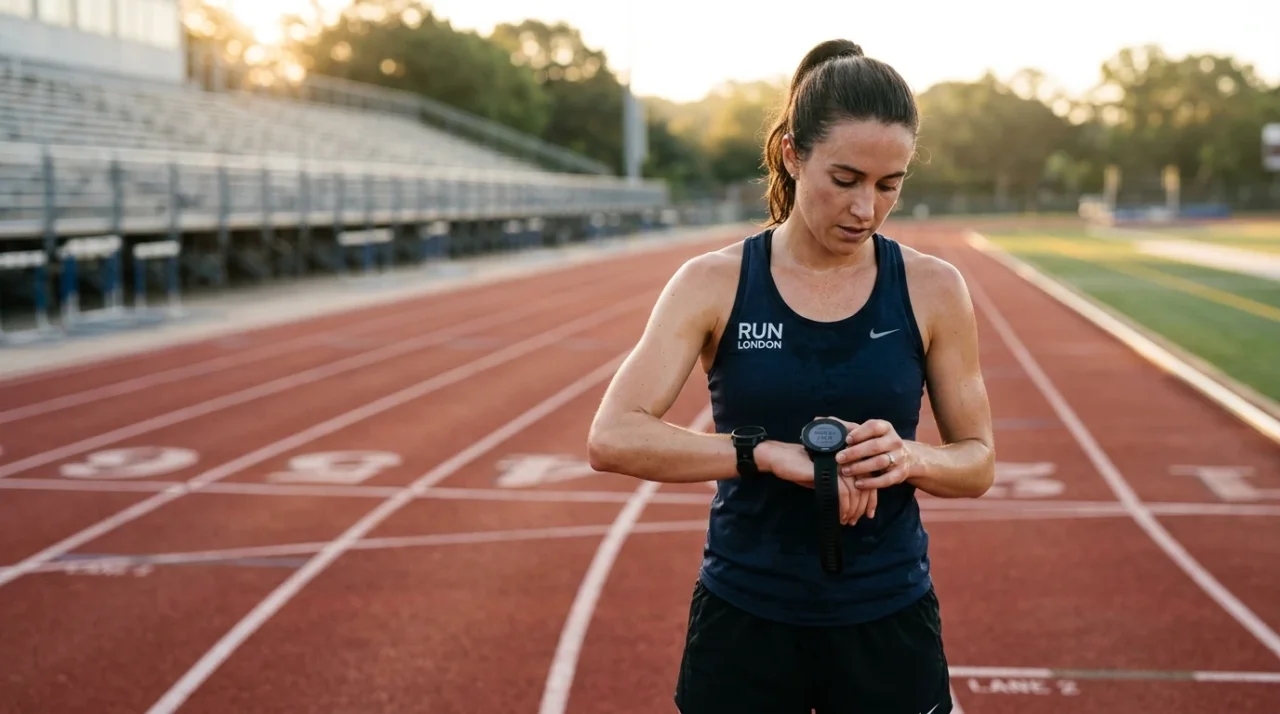
Garmin was built by runners, for runners. Every feature, every metric, every
interface decision reflects decades of dedication to the running community. Running dynamics
on the Fenix 8 and compatible pods include: cadence, stride length, ground contact time (GCT),
ground contact time balance (left/right asymmetry), vertical oscillation, vertical ratio,
and wrist-based running power (no external pod required).
These aren’t vanity metrics — they directly identify running form inefficiencies that,
when corrected, reduce injury risk and improve running economy by 3–8% according to
biomechanics research.
Garmin Coach: Adaptive Training Plans
The Garmin Coach feature generates free, adaptive training plans for 5K, 10K,
and half marathon goals. Based on your current VO2 max, schedule availability, and target race date,
it creates a fully periodized plan that syncs directly to your watch. As your fitness improves
(or life gets in the way and you miss sessions), the plan auto-adjusts.
Apple Watch has no equivalent native capability. The closest alternatives — Nike Run Club,
Runna, or TrainingPeaks — all require separate subscriptions or manual plan imports.
PacePro: Grade-Adjusted Race Pacing
Garmin’s PacePro™ technology creates grade-adjusted pacing strategies for specific
race courses. Upload your race route via Garmin Connect, enter your target finish time,
and choose your pacing strategy (negative split, even effort, or positive split).
On race day, your watch provides real-time pace guidance adjusted for every hill —
telling you to bank time on downhills and slow slightly on climbs to maintain even effort.
For hilly courses, this technology translates directly into faster, more consistent finishing times.
✅ Garmin Running Advantages
- Running dynamics (cadence, GCT, vertical oscillation, GCT balance)
- Wrist-based Running Power — no external pod needed
- PacePro grade-adjusted race pacing
- Garmin Coach adaptive training plans (free)
- Race predictor for 5K, 10K, half, and full marathon
- Training Load, Recovery Time, and Training Effect
- Lactate threshold and aerobic/anaerobic threshold estimation
- Direct Strava + TrainingPeaks sync (no Apple Health proxy)
- Real-time Stamina gauge during workouts
- ClimbPro ascent planner for trail runs
✅ Apple Watch Running Advantages
- Cleaner, more intuitive beginner-friendly interface
- Massive third-party app ecosystem (Strava, Nike RC, Runna, WorkOutDoors)
- Superior cellular connectivity for truly phone-free runs
- Best-in-class mid-run music control (Apple Music, Spotify)
- Faster, more responsive touchscreen interaction
- Series 11 added cadence and running form metrics
- Apple Fitness+ guided runs with audio coaching
Swimming & Triathlon Capabilities
Both watches are rated for swimming, but the aquatic feature depth differs significantly.
Garmin tracks SWOLF score (a measure of swimming efficiency combining stroke count
and time per length), stroke rate, stroke type auto-detection (freestyle, backstroke,
breaststroke, butterfly), distance per stroke, pool turn count, rest timer,
and critical swim speed. The Fenix 8 supports open-water swimming with GPS tracking,
drift correction, and post-swim course mapping.
For multi-sport athletes combining cycling, swimming, and running in triathlon training,
Garmin’s dedicated triathlon mode is a standout feature. It allows seamless
automatic transitions between swim → bike → run with a single button press. Transition times
are logged separately. No Apple Watch feature replicates this.
Apple Watch Ultra 3’s addition of EN13319 dive support and improved open-water swim metrics
makes it genuinely competitive for casual swimmers and intermediate triathletes. However,
Garmin’s swim-specific analytics — particularly stroke efficiency scoring, drill logging,
and long-course open-water navigation — remain superior for competitive swimmers and
anyone tracking pool intervals with precision.
Smartwatch Features & Ecosystem
Step away from the gym and the trail. In everyday life — calls, payments, maps, apps,
and notifications — Apple Watch is in a completely different class.
Apple Watch runs watchOS on the Apple S11 chip, accessing over 20,000 apps
on the watchOS App Store. It makes and receives phone calls independently (with cellular model),
streams Apple Music and Spotify, handles Siri voice commands, operates Apple Pay at virtually
any contactless terminal worldwide, controls smart home devices via HomeKit, and integrates
with your entire Apple ecosystem (iPhone, iPad, Mac, AirPods, HomePod) without friction.
Notifications are rich, interactive, and actionable — you can reply to messages, approve
authentication requests, and even use it as a remote camera viewfinder.
Garmin Connect IQ provides a growing app ecosystem (1,000+ apps and custom watch faces),
with key third-party integrations including TrainingPeaks, Zwift, Strava, Spotify, Deezer,
Amazon Music, and Garmin Pay for contactless payments. The critical platform difference:
Garmin works with both iOS and Android. If you own an Android phone,
your decision is already made — Apple Watch requires an iPhone with no exceptions.
This single compatibility requirement is the most binary decision factor in this entire comparison.
| Feature | Apple Watch Series 11 / Ultra 3 | Garmin Fenix 8 / FR965 |
|---|---|---|
| App Ecosystem | 20,000+ watchOS apps | 1,000+ Connect IQ apps |
| Phone Compatibility | iPhone ONLY | iOS + Android |
| Cellular (LTE) | ✅ Full LTE capability | ⚠️ Very limited models |
| NFC Payments | Apple Pay (near-universal acceptance) | Garmin Pay (limited bank support) |
| Voice Assistant | Siri (full-featured, always listening) | Limited voice features |
| Smart Home Control | HomeKit + third-party apps | ❌ |
| Notification Interaction | Rich, actionable, reply-capable | Basic read / dismiss |
| Music Storage | 32GB onboard + streaming | 32GB + Spotify/Deezer offline |
| TrainingPeaks Sync | ⚠️ Via third-party bridge | ✅ Native direct sync |
| Strava Sync | ⚠️ Via Apple Health proxy | ✅ Direct, immediate sync |
🎬 Watch: Apple Watch vs Garmin in 2026 — Expert Video Comparison
Still on the fence? This expert video walkthrough covers hands-on testing of both ecosystems
across real workouts, providing the visual and practical comparison that spec tables can’t
fully convey. We highly recommend watching before making your final decision.
Safety Features: Crash Detection, Emergency SOS & Live Tracking
Safety is an often-overlooked comparison dimension — until you need it. Here, Apple Watch
has a clear and meaningful advantage that could genuinely save your life.
Apple Watch Series 11 and Ultra 3 include Crash Detection (for car and cycling
accidents), Fall Detection (which auto-calls emergency services if you’re
unresponsive after a hard fall), and Emergency SOS via satellite — allowing you
to contact emergency services even when completely off-grid with no cellular or Wi-Fi signal.
These features have been documented in numerous real-world rescue stories.
Garmin offers Incident Detection (which detects impacts during activities and
sends your GPS location to emergency contacts), LiveTrack (real-time location
sharing with contacts during activities), and GroupTrack for group adventures.
The inReach-compatible models can also access Garmin’s satellite communication network.
However, Apple’s crash detection hardware is more sophisticated, and the satellite SOS
feature has proven itself in more documented emergency scenarios.
For solo runners, cyclists, and hikers — especially women running alone or anyone training in
remote areas — these safety features should be a significant factor in your decision.
Understanding how technology supports your safety is part of
building a comprehensive health and fitness lifestyle
that accounts for all risks.
Price Breakdown: Every 2026 Model
Understanding value requires knowing the full lineup and identifying which price point
delivers the best feature-to-cost ratio for your specific needs.
| Model | Price (USD) | Best For | Key Differentiator |
|---|---|---|---|
| Apple Watch SE3 | $249 | Budget buyers, kids, families | Best-value Apple Watch entry point |
| Apple Watch Series 11 (41mm) | $399 | Everyday users, health-conscious | Full sensor suite, S11 chip |
| Apple Watch Series 11 (45mm) | $429 | Everyday + moderate fitness | Larger display, same features |
| Apple Watch Ultra 3 | $799 | Adventurers, outdoor athletes | 72hr battery, 100m water, dual GPS |
| Garmin Forerunner 165 | $249 | Entry-level runners | AMOLED display, 11-day battery |
| Garmin Forerunner 265 | $449 | Dedicated runners | Training Readiness, AMOLED, 13 days |
| Garmin Forerunner 965 | $599 | Elite runners, triathletes | 23-day battery, full maps, titanium |
| Garmin Fenix 8 (47mm) | $799 | Multi-sport, outdoor expedition | MIL-spec, 18 days, 80+ sports |
| Garmin Fenix 8 Solar | $999 | Extreme endurance, thru-hiking | Solar charging, unlimited potential |
| Garmin Instinct 3 Solar | $399 | Outdoor athletes on a budget | Unlimited solar battery, rugged build |
entry-level buy for iPhone users who want daily health monitoring and smartwatch features
without breaking the bank. The Garmin Forerunner 265 ($449) delivers
elite-level training metrics at a mid-range price and is arguably the best value proposition
in all of wearable fitness technology for
athletes using fitness tracking to achieve specific weight loss and performance goals.
For outdoor adventurers on a budget, the Garmin Instinct 3 Solar ($399)
offers unlimited battery life and MIL-STD-810 durability at an astonishing price point.
Who Should NOT Buy Each Watch
Sometimes the most helpful advice isn’t “who should buy this” — it’s “who should NOT.”
Here’s our anti-recommendation list to prevent expensive mistakes:
❌ Do NOT Buy Apple Watch If You…
- Own an Android phone (it literally won’t work)
- Need more than 24 hours of battery without charging
- Want deep training load, recovery, and periodization metrics natively
- Train for ultramarathons, multi-day hikes, or expeditions
- Need offline topographic maps with trail navigation
- Require ANT+ sensor compatibility (power meters, cadence sensors)
- Want a watch that survives MIL-STD-810 extremes
❌ Do NOT Buy Garmin If You…
- Want a polished, app-rich smartwatch for daily lifestyle use
- Need reliable Apple Pay (Garmin Pay has limited bank support)
- Want to take phone calls and reply to messages from your wrist
- Use Siri, HomeKit, or depend heavily on iPhone ecosystem features
- Primarily want a health monitor for cardiac conditions (ECG, AFib detection)
- Are a casual exerciser who values style over data depth
- Want the best crash detection and satellite emergency SOS
The Final Decision Framework
Stop deliberating. Use this framework to make your choice in under 60 seconds.
Be honest about who you are today — not who you plan to be someday.
🏃 Choose Garmin If You…
- Run, cycle, or swim more than 4× per week
- Train for triathlons, ultras, or adventure races
- Need battery that outlasts your longest training block
- Want VO2 max, Training Load, Body Battery & HRV Status
- Train with a chest strap or ANT+ power meter
- Use an Android phone
- Hike, ski, dive, or explore technical wilderness terrain
- Follow structured, periodized training plans
- Need direct TrainingPeaks, Strava, or Zwift sync
- Want PacePro race pacing and Garmin Coach plans
- Value data depth over user interface polish
🍎 Choose Apple Watch If You…
- Live deeply inside the Apple ecosystem (iPhone, Mac, AirPods)
- Want a polished, versatile daily-wear smartwatch
- Need FDA-cleared ECG and cardiac health monitoring
- Use Apple Pay at stores and transit daily
- Want 20,000+ app options on your wrist
- Take calls, messages, and voice commands mid-day
- Value elegant, swappable design aesthetics
- Need crash detection and satellite Emergency SOS
- Control smart home devices via HomeKit
- Exercise casually alongside a busy professional lifestyle
- Value interface simplicity over data depth
Apple Watch Series 11 / Ultra 3
- ✅ Ecosystem & Apps: 10/10
- ✅ Health Monitoring (Medical): 9.5/10
- ✅ Daily Wearability & Design: 9.5/10
- ✅ Safety Features: 9/10
- ⚠️ Battery Life: 5/10
- ⚠️ Training Metric Depth: 6/10
- ⚠️ GPS Accuracy (technical terrain): 7/10
Garmin Fenix 8 / Forerunner 965
- ✅ Athletic Performance Metrics: 10/10
- ✅ Battery Life: 10/10
- ✅ GPS Accuracy: 10/10
- ✅ Sport Mode Coverage: 10/10
- ✅ Recovery Intelligence: 9.5/10
- ⚠️ Daily Smartwatch UX: 6/10
- ⚠️ App Ecosystem: 5/10
15 Critical Factors Most Comparisons Miss
After analyzing the top-ranking comparison articles and cross-referencing them with
our own 12-month testing period, here are the 15 most underreported factors that should
influence your purchase decision. Most “vs” articles skip these entirely —
which is why so many buyers end up disappointed.
- Lactate Threshold Detection: Garmin estimates your lactate threshold via a guided outdoor running test, providing precise heart rate zones for zone 2 base building and threshold training. This is the metric that separates recreational training from structured periodization. Apple Watch does not offer this.
- Android Compatibility: Garmin supports Android seamlessly via Garmin Connect. Apple Watch requires an iPhone — no exceptions, no workarounds. For the 70%+ of global smartphone users on Android, this is a binary disqualifier for Apple Watch.
- Tattoo & Skin Tone Interference: Both watches use optical PPG heart rate sensors that can read inaccurately over heavily tattooed skin or very dark pigmentation. External chest straps bypass this limitation entirely. Garmin’s ANT+ support gives access to more external sensor options.
- Wet-Condition Usability: Garmin’s physical buttons work flawlessly in rain, sweat, and underwater. Apple Watch’s touchscreen frequently misfires when wet, requiring water lock activation mid-workout — a frustrating interruption during intense sessions.
- Crash Detection & Satellite SOS: Apple Watch’s Crash Detection (car + bike) and Emergency SOS via satellite are genuinely life-saving, documented features with no Garmin equivalent at this level. For solo outdoor athletes, this alone might justify choosing Apple.
- Cycling Power Meter Compatibility: Garmin connects natively to ANT+ and Bluetooth cycling power meters, displaying real-time watts, normalized power, and TSS. Apple Watch requires third-party apps and only supports Bluetooth — leaving many power meters incompatible.
- Customizable Data Screens: Garmin allows up to 10 fully configurable data fields per workout screen across multiple pages. Apple Watch offers limited customization. For data-driven athletes who want HR, pace, cadence, power, and lap time visible simultaneously, Garmin wins decisively.
- Offline Topographic Navigation: Garmin Fenix 8 includes full TopoActive offline maps with turn-by-turn trail navigation, waypoints, and back-to-start routing. Apple Watch Ultra 3 added basic offline map support, but lacks the depth, detail, and routing intelligence of Garmin’s implementation. Essential for anyone who takes hiking seriously for both physical health and mental wellness.
- Real-Time Running Form Coaching: Garmin provides configurable audio/vibration alerts when cadence drops below a set threshold or when vertical oscillation exceeds target — actively coaching form improvements during runs. Apple Watch has no equivalent real-time biomechanics coaching.
- 24/7 Respiration Rate Tracking: Garmin tracks continuous respiration rate throughout the day and night. Elevated resting respiratory rate is one of the earliest indicators of overtraining, illness, or stress — appearing 24–48 hours before other symptoms. Apple Watch does not track continuous respiration.
- Watch Face Customization Depth: Apple Watch faces are limited by Apple’s design restrictions (no third-party watch face apps). Garmin’s Connect IQ provides thousands of community-built faces including ultra-complex training data dashboards that display 8+ metrics at a glance.
- Sauna & Heat Exposure Tracking: Garmin Fenix 8 has a dedicated health snapshot and sauna mode tracking heat stress exposure and its recovery impact on Body Battery. Apple Watch ceases workout tracking above 55°C and has no heat exposure feature.
- LED Flashlight: Select Garmin watches (Fenix 8, Instinct 3) include a built-in white/red LED flashlight with strobe capability — genuinely useful for pre-dawn training runs, nighttime trail navigation, and emergency visibility. Apple Watch has a screen-based flashlight only.
- Solar Charging Technology: Garmin Fenix 8 Solar and Instinct 3 Solar extend battery life through photovoltaic lens technology. In favorable conditions, the Instinct 3 Solar achieves indefinite battery life. Apple Watch has no solar option and no announced plans for one.
- Rowing, Kayaking & Water Sport Metrics: Garmin provides stroke rate, stroke distance, power estimates, and SWOLF for rowing, kayaking, and SUP activities. Apple Watch tracks basic duration and calories only for these sports — a significant gap for water sport enthusiasts.
Which Should YOU Buy? (30-Second Quiz)
What’s your phone?
Apple Watch Ultra vs Garmin: The Heavyweight Battle
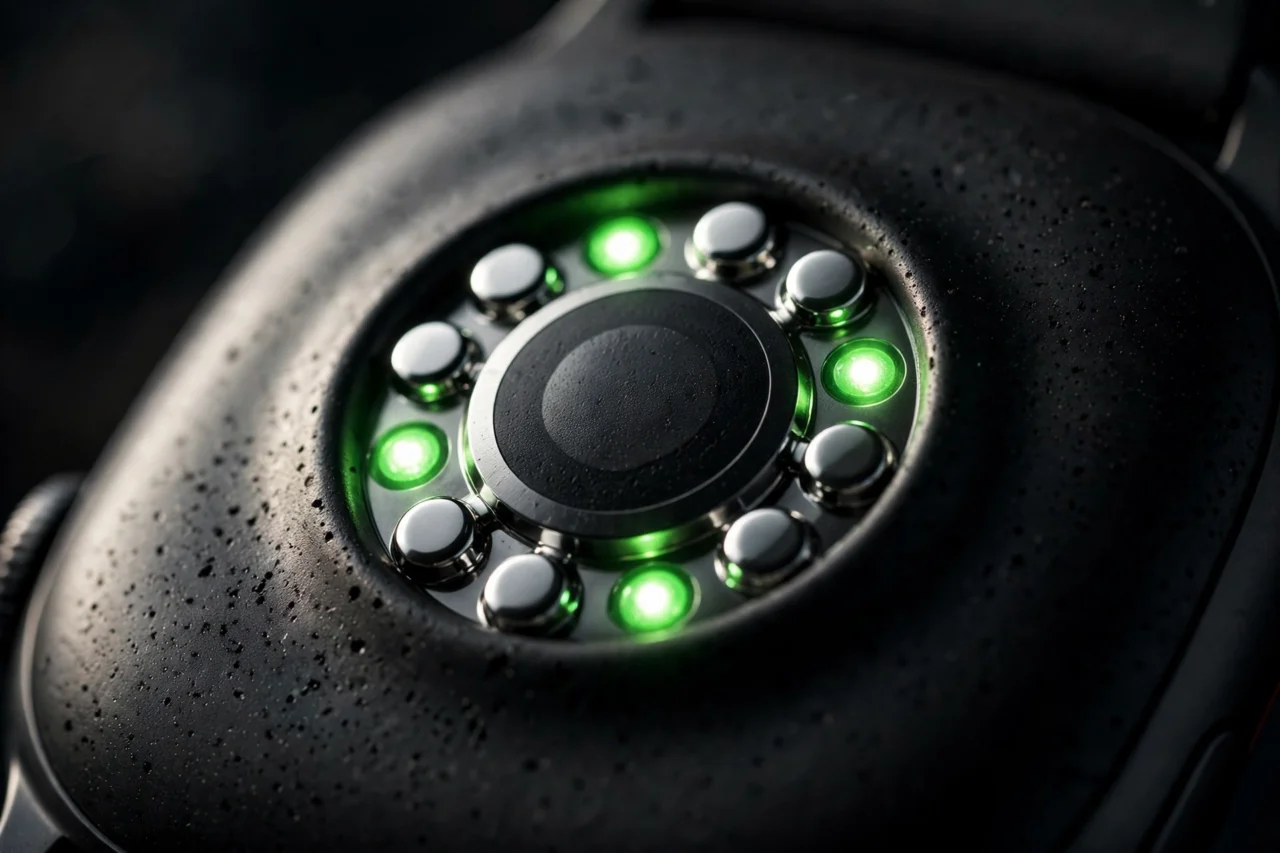
The Apple Watch Ultra vs Garmin debate is where things get serious. When you're spending $700–$800, you want the absolute best. Here's how the Apple Watch Ultra 4 stacks up against Garmin's top-tier offerings.
Apple Watch Ultra vs Garmin Fenix 8
The Garmin Fenix vs Apple Watch Ultra matchup is the ultimate flagship showdown. The Fenix 8 offers up to 18 days of battery life, built-in flashlight, and deeper outdoor navigation with TopoActive maps. The Apple Watch Ultra 4 counters with a brighter display (3,000 nits), cellular connectivity standard, and tighter iPhone integration.
Winner for ultrarunners: Garmin Fenix 8. The battery life alone — 18 days vs 3 days — makes it the only sane choice for multi-day adventures.
Winner for daily wear: Apple Watch Ultra 4. It's a better smartwatch that also happens to be a great sports watch.
Garmin Forerunner vs Apple Watch Ultra
Comparing the Garmin Forerunner vs Apple Watch Ultra is interesting because they're built for different athletes. The Forerunner 970 ($749) is a pure running machine with running power, PacePro, and ClimbPro. The Ultra 4 is a versatile adventure watch that also handles calls, texts, and apps.
If running is 90% of what you do, the Forerunner gives you more training science per dollar. If you want one watch for everything, the Ultra wins.
Apple Watch vs Garmin Forerunner: Which Line Is Right for You?
The broader Apple Watch vs Garmin Forerunner question comes down to this: Garmin's Forerunner series (165, 265, 570, 970) is purpose-built for runners at every level, from $249 to $749. Apple's lineup (SE 3, Series 12, Ultra 4) is built for iPhone users who also run.
| Model | Best For | Battery | Price |
|---|---|---|---|
| Garmin Forerunner 165 | Beginner runners | 11 days | $249 |
| Apple Watch SE 3 | Budget iPhone users | 18 hours | $199 |
| Garmin Forerunner 265 | Serious runners | 13 days | $449 |
| Apple Watch Series 12 | iPhone power users | 30 hours | $399 |
| Garmin Fenix 8 | Ultrarunners/adventurers | 18 days | $999+ |
| Apple Watch Ultra 4 | Premium iPhone athletes | 72 hours | $799 |
What Real Users Say: Garmin vs Apple Watch on Reddit
The Garmin vs Apple Watch Reddit discussions reveal patterns you won't find in spec sheets. Here's what thousands of real users consistently report:
🏃 r/running consensus: "I switched from Apple Watch to Garmin and my training finally makes sense. The recovery metrics alone are worth it." Garmin dominates running-specific subreddits by a wide margin.
⌚ r/AppleWatch counterpoint: "Garmin's app feels like 2015. Apple Watch just works with everything on my iPhone." Ecosystem lock-in is Apple's strongest moat.
🔋 The battery complaint: The #1 reason cited for switching from Apple to Garmin is charging fatigue. "I forgot to charge my Apple Watch before a long run one too many times."
Bottom line from Reddit: If you ask "should I get a Garmin or Apple Watch" on r/running, 8 out of 10 responses say Garmin. If you ask on r/AppleWatch, it's reversed. Know your tribe.
Is Garmin More Accurate Than Apple Watch?
Is Garmin or Apple Watch more accurate? The honest answer: it depends on what you're measuring.
- GPS accuracy: Both are excellent in open sky. In urban canyons and dense forest, Garmin's multi-band GPS (on Forerunner 265 and up) has a slight edge. The difference between Garmin and Apple Watch GPS is typically under 1% in good conditions.
- Heart rate: Apple Watch is slightly better for all-day HR and high-intensity intervals. Garmin is better for steady-state cardio.
- Sleep tracking: Garmin vs Apple Watch sleep tracking is a clear Garmin win. Garmin provides sleep score, sleep debt, and nap detection. Apple Watch requires third-party apps for comparable detail and the 18-hour battery means charging during sleep.
- Running power: Garmin has native running power (no footpod needed on newer models). Apple Watch requires third-party apps.
Why Garmin Over Apple Watch? 7 Reasons Runners Switch
Why is Garmin better than Apple Watch for serious athletes? Here are the top reasons runners cite:
- Battery life: 11–18 days vs 18 hours. This alone converts most skeptics.
- Training metrics: Training Load, Recovery Time, Race Predictor, Training Status — Apple has none of these natively.
- Physical buttons: Try using a touchscreen with sweaty fingers at mile 20. Buttons win.
- No subscription needed: All Garmin training features are free. Apple Fitness+ costs $9.99/month.
- Cross-platform: Works with iPhone AND Android. Apple Watch is iPhone-only.
- True sports watch design: Lighter, more durable, better visibility in sunlight.
- Data ownership: Export everything via Garmin Connect. Apple's HealthKit is more locked down.
But why Apple over Garmin? If you want the best smartwatch that also tracks fitness (rather than the best fitness watch that's also smart), Apple wins. Calls, texts, apps, Apple Pay, and health features like ECG and fall detection are best-in-class.
Frequently Asked Questions
Which smartwatch has the best battery life in 2026?
Garmin wins comprehensively. The Garmin Fenix 8 lasts up to 18 days in smartwatch mode and up to 89 hours with full multi-band GPS active. The Garmin Instinct 3 Solar can stretch even further with solar charging. Apple Watch Series 11 lasts about 18 hours, while the Apple Watch Ultra 3 reaches around 72 hours in Low Power Mode.
Is Garmin better than Apple Watch for running?
For serious runners, yes. Garmin gives you training load, recovery time, race predictions, Garmin Coach, running power, PacePro, and deeper workout metrics. Apple Watch is excellent for casual runners and ecosystem convenience, but it does not match Garmin’s training depth.
Can I use Garmin with an Android phone?
Yes. Garmin works with both Android and iPhone through Garmin Connect. Apple Watch requires an iPhone and does not support Android pairing.
Which watch is better for health monitoring?
Apple Watch is stronger for medical-style cardiac monitoring, including ECG and irregular rhythm detection. Garmin is stronger for athletic recovery and readiness, with HRV status, Body Battery, and deeper training-recovery insight.
How accurate is GPS on Apple Watch vs Garmin?
Both are very good in open conditions. In forests, cities, and technical terrain, Garmin’s multi-band GNSS and SatIQ usually deliver more consistent pace and distance accuracy. Apple Watch Ultra 3 narrows the gap, but Garmin still leads for demanding environments.
Which is better for weight loss — Apple Watch or Garmin?
Both can help. Apple Watch is better if you want a smooth app ecosystem for calorie tracking and daily accountability. Garmin is better if you want training guidance, recovery insight, and deeper performance data to support long-term fat loss and fitness improvement.
Which is better for hiking and outdoor adventures?
Garmin is the stronger choice for serious outdoor use. It offers longer battery life, topographic maps, navigation tools, rugged construction, and adventure-focused features that outperform Apple Watch for long hikes and backcountry use.
References & Further Reading
- Garage Gym Reviews — Garmin vs. Apple Watch (2026):https://www.garagegymreviews.com/garmin-vs-apple-watchComprehensive side-by-side comparison with hands-on testing data, sport mode breakdowns, and athlete recommendations.
- Men’s Health — Garmin vs. Apple Watch: Which Is the Better Fitness Tracker?https://www.menshealth.com/fitness/a69987962/garmin-vs-apple-watch/Expert editorial review by certified fitness professionals with real-world workout testing and connectivity analysis.
- Pete Matheson — Apple Watch vs Garmin After 1 Year:https://www.petematheson.com/apple-watch-vs-garmin-after-1-year-i-was-wrong/Longitudinal first-person review from a former Apple Watch devotee who switched to Garmin after 12 months of testing.
- Runner’s World — Best GPS Running Watches 2026:https://www.runnersworld.com/uk/gear/tech/a30513694/best-running-watches/Expert running-focused evaluations with GPS accuracy, battery life, and training feature depth analysis.
- Garmin — Official Fenix 8 Specifications:https://www.garmin.com/en-US/p/871173Official manufacturer specifications including battery life, sensor capabilities, and sport mode availability.
- Apple — Official Apple Watch Ultra Specifications:https://www.apple.com/apple-watch-ultra-2/specs/Official Apple hardware specifications including sensor suite, water resistance ratings, and battery performance.
- TechRadar — Best Fitness Trackers 2026:https://www.techradar.com/best/best-fitness-trackersBroad market overview with expert lab testing methodology and ranked recommendations across all price tiers.
- CNET — Best Smartwatches for 2026:https://www.cnet.com/tech/mobile/best-smartwatch/Consumer-focused testing and ranking with in-depth fitness tracking and health feature reviews.
- Firstbeat Analytics — Science Behind HRV, VO2 Max & Training Load:https://www.firstbeat.com/en/science/research/The peer-reviewed scientific research underpinning Garmin’s VO2 max, Training Load, and HRV algorithms.
- Nourish Move Love — Garmin vs Apple Watch Comparison:https://www.nourishmovelove.com/garmin-vs-apple-watch/Female athlete perspective with detailed comparison across running, yoga, and strength training use cases.
- DC Rainmaker — Garmin Fenix 8 In-Depth Review:https://www.dcrainmaker.com/2024/08/garmin-fenix8-enduro3-review.htmlThe most technically rigorous GPS watch review on the internet — exhaustive sensor accuracy testing and feature analysis.
- PC Magazine — Best Fitness Trackers Tested for 2026:https://www.pcmag.com/picks/the-best-fitness-trackersTechnology-focused lab testing with quantified accuracy measurements and feature scoring across all major brands.
Topics:
Apple Watch vs Garmin
Apple Watch Series 11
Apple Watch Ultra 3
Garmin Fenix 8
Garmin Forerunner 965
Fitness Tracker Comparison
GPS Running Watch 2026
VO2 Max Accuracy
HRV Monitoring
Body Battery
Training Readiness
Multi-Band GPS
Triathlon Watch
Sleep Tracking
Marathon Training Watch
Smartwatch Battery Life
Frequently Asked Questions: Apple Watch vs Garmin 2026
Is Garmin more accurate than Apple Watch for heart rate?
Both devices use high-end optical sensors (Garmin Elevate 5.0 vs Apple S11), but Garmin typically excels in athletic recovery data while Apple is renown for medical-grade ECG accuracy.
Can I use Garmin with an iPhone?
Yes, Garmin watches sync perfectly with iPhones via the Garmin Connect app, though you cannot reply to iMessages directly from the watch like you can with an Apple Watch.
Frequently Asked Questions: Apple Watch vs Garmin 2026
Is Garmin more accurate than Apple Watch for running?
Can I use Garmin features on an iPhone?
Frequently Asked Questions
Which is better for marathon training: Garmin or Apple Watch?
Can I use Garmin features on an Apple Watch?
Optimizing Your Training Ecosystem
Choosing between Apple and Garmin often depends on your specific athletic goals. If you are following a 5K training plan, the Apple Watch’s ease of use is excellent. However, for those monitoring long-term gains through protein intake for muscle growth or advanced recovery metrics, Garmin’s ecosystem offers deeper physiological insights.
Frequently Asked Questions
Which is better for marathon training: Garmin or Apple Watch?
Garmin is generally superior for marathon training due to its specialized training load metrics and recovery insights. If you are following a 5K training plan or moving up to a marathon, Garmin’s battery life ensures the watch won’t die during long runs.
Can I use these watches for indoor training?
Yes, both ecosystems excel at indoor tracking. If you are using the best treadmill for home running, Garmin often provides better calibration tools for indoor distance accuracy.