Skip to content
 GearUpToFit Guide | Updated July 9, 2026 | Mobile-first | No sticky or frozen elements
Affiliate disclosure: GearUpToFit is reader-supported. As an Amazon Associate, GearUpToFit may earn from qualifying purchases through links with the affiliate tag papalex-20. We do not hardcode Amazon prices because pricing, sellers, colors, sizes, images, ratings, and availability change.
1. What Is a Full-Body Workout?
A full-body workout is a training methodology where you stimulate all of the body’s major muscle groups—including the chest, back, shoulders, quadriceps, hamstrings, glutes, and core—within a single exercise session. Unlike split routines that isolate specific regions (such as “chest and triceps” or “legs”), a full-body session utilizes compound, multi-joint movements to recruit maximum muscle mass simultaneously.
From an evolutionary perspective, the human body functions as an interconnected kinetic chain rather than a collection of isolated parts. When you perform a squat, an overhead press, or a pull-up, your nervous system coordinates dozens of muscles to stabilize joints, transfer force, and maintain equilibrium. Full-body routines capitalize on this natural biomechanical organization, promoting functional strength that carries over directly to daily life and sports performance.
In practice, a full-body workout is structured around primary movement patterns rather than individual muscles. These patterns include the knee flex (e.g., squats), hip hinge (e.g., deadlifts), horizontal push (e.g., bench presses), horizontal pull (e.g., barbell rows), vertical push (e.g., overhead press), and vertical pull (e.g., chin-ups). By selecting one exercise from each category, you construct a comprehensive workout that stimulates the entire skeletal musculature in under an hour.
Furthermore, this approach addresses the body’s natural adaptation mechanisms. When training with weights or bodyweight, physical growth is dictated by the systemic stress applied to the muscles. Rather than draining your systemic reserves by forcing a single body part to endure 20 sets in a single day, full-body training distributes this volume, maintaining joint integrity and allowing for higher qualitative performance per set. Every repetition is completed with greater focus, precision, and velocity, which directly influences motor unit recruitment and neural drive.
2. Full-Body Workouts vs. Split Routines
To understand why full-body workouts are so effective, it is essential to contrast them with split routines. Split routines became popular during the golden era of bodybuilding, where athletes sought to maximize local muscle volume by training only one or two body parts per session. While splits are highly effective for advanced bodybuilders who require extreme isolation to force growth in specific muscle fibers, they present distinct drawbacks for the general fitness enthusiast or home trainee.
The primary variable of interest is training frequency. In a traditional “Bro Split,” you train each muscle group once per week with high volume (e.g., 20 sets of chest on Monday). In contrast, a 3-day full-body routine distributes that volume across three sessions (e.g., 6 sets of chest on Monday, Wednesday, and Friday). This high-frequency approach aligns with the physiological constraints of Muscle Protein Synthesis (MPS), which typically peaks 24 to 48 hours post-exercise and then returns to baseline. By training each muscle group every 48 to 72 hours, full-body routines prevent the muscle from entering a catabolic state, keeping MPS elevated throughout the entire week.
Additionally, split routines often cause extreme localized soreness (Delayed Onset Muscle Soreness, or DOMS), which can impair performance in subsequent sessions and disrupt daily living activities. Spreading the volume across multiple sessions minimizes the severity of DOMS. This allows you to maintain a higher level of physical activity outside the gym, boosting your Non-Exercise Activity Thermogenesis (NEAT), which is a key contributor to fat loss and weight management.
| Attribute | Full-Body Workout (3 Days/Week) | Upper/Lower Split (4 Days/Week) | Push/Pull/Legs (PPL) (6 Days/Week) | Traditional Bro Split (5 Days/Week) |
|---|---|---|---|---|
| Frequency per Muscle | 3 times per week | 2 times per week | 2 times per week | 1 time per week |
| Average Session Length | 60–75 minutes | 45–60 minutes | 60–75 minutes | 60–90 minutes |
| Weekly Time Commitment | Low (3 hours total) | Medium (3.5–4 hours total) | High (6–7.5 hours total) | Medium-High (5–7.5 hours) |
| Fatigue Distribution | Systemic (spread across whole body) | Regional (focused on upper or lower) | Localized (focused on pushing or pulling) | High Localized (extreme soreness) |
| Ideal for Home Gyms | Excellent (minimal equipment required) | Good (requires variety of lifts) | Fair (requires substantial equipment) | Poor (requires heavy isolation machines) |
| Hypertrophy Potential | High (optimized MPS frequency) | High (balanced frequency & volume) | Very High (highest weekly volume) | Medium (infrequent stimulus) |
3. Who This Is For / Who Should Skip It
While full-body training is a highly adaptable and scientifically validated protocol, it is not a one-size-fits-all solution. Depending on your training age, athletic goals, schedule constraints, and injury history, a split routine may be more appropriate. Use the comparative matrix below to determine if a full-body layout aligns with your specific physiological needs.
Who This Is For
- Trainees with Tight Schedules: If you can only dedicate three days per week to the gym, full-body workouts ensure no muscle group is neglected.
- Beginners and Intermediates: Those in their first 0–3 years of training benefit from frequent exposure to compound lifts to build motor patterns.
- Fat Loss and Conditioning Seekers: The systemic nature of training the entire body triggers a high caloric burn during and after the session.
- Athletes and Field Players: Promotes natural, coordinated movements that translate to real-world running, jumping, and throwing.
Who Should Skip It
- Advanced Bodybuilders: Competitors requiring more than 15–20 working sets per muscle group weekly to spark new hypertrophy.
- Trainees with Low Systemic Tolerance: Lifters who experience deep central nervous system (CNS) fatigue from heavy squatting and pressing in a single day.
- Daily Training Lovers: Fitness enthusiasts who prefer working out 5 to 6 days a week as a daily mental escape or habit.
- Trainees in Active Joint Rehabilitation: Individuals who need highly specialized, isolated movements to heal a specific joint issue.
4. 6 Core Scientific Benefits of Full-Body Workouts
Benefit 1: Maximizing Time Efficiency and Schedule Flexibility
The most immediate practical benefit of a full-body routine is its unparalleled time efficiency. In modern society, dedicating 5 to 6 days a week to structured exercise is often unsustainable due to professional, familial, and personal commitments. When life becomes hectic, split routines suffer; if you miss “Leg Day” on a 5-day split, that muscle group is left unstimulated for a full two weeks.
A 3-day full-body routine resolves this issue. By training on non-consecutive days (e.g., Monday, Wednesday, Friday), you only need to commit to three weekly sessions. If a meeting runs late on Wednesday, you can shift your workout to Thursday and train Saturday instead. Because every workout targets your entire body, no muscle group falls behind. You achieve a balanced stimulus with minimal gym visits, freeing up time for active recovery, outdoor hobbies, or simply resting.
Furthermore, reducing your commitments to three days per week decreases the psychological friction of training. Knowing that you only have three sessions instead of five or six makes it much easier to maintain long-term compliance. In strength training, consistency over years is far more valuable than short bursts of daily training that end in burnout.
Benefit 2: Higher Caloric Expenditure and Enhanced Fat Loss
When it comes to fat loss, energy expenditure is the primary driver of progress. Full-body workouts are superior for calorie burning because they emphasize compound movements that recruit massive quantities of muscle tissue simultaneously. For example, a barbell squat requires coordination and force production from the quadriceps, glutes, hamstrings, calves, spinal erectors, and core.
This massive muscular recruitment requires a proportional delivery of oxygen and nutrients, elevating your heart rate and energy expenditure. Furthermore, intense compound training induces a state of metabolic stress that triggers Excess Post-Exercise Oxygen Consumption (EPOC). Commonly referred to as the “afterburn effect,” EPOC represents the energy your body expends to restore oxygen levels, clear lactate, repair muscle fibers, and return body temperature to homeostatic baselines. This elevation in metabolic rate persists for up to 36 hours post-workout, accelerating fat loss far more effectively than isolated isolation work.
From an endocrinological perspective, full-body sessions stimulate a robust hormonal response. The engagement of large muscle groups triggers the release of growth hormone and testosterone in higher concentrations than workouts restricted to small muscle groups (such as arms). These hormones are critical for mobilizing fatty acids and protecting lean muscle mass while you are in a caloric deficit, ensuring that the weight you lose comes from adipose tissue rather than functional muscle.
Benefit 3: Optimizing Muscle Protein Synthesis (MPS)
To build muscle, the rate of Muscle Protein Synthesis (MPS) must exceed the rate of Muscle Protein Breakdown (MPB). Resistance training serves as the primary trigger for MPS, turning on the molecular pathways (such as mTOR) that rebuild muscle tissue. However, this anabolic spike is temporary. Research shows that MPS remains elevated for only 24 to 48 hours in trained individuals before dropping back to baseline.
If you train your chest only once per week (as in a Bro Split), your chest muscles are in an anabolic growth state for 2 days, followed by 5 days of physiological stagnation. By transitioning to a full-body layout trained three times per week, you re-stimulate MPS every 48 hours. This maintains an anabolic environment for the target muscle throughout the entire week, leading to superior muscle hypertrophy over time when weekly volume is equated.
In addition, training with a higher frequency allows for better quality of volume. In a single session dedicated to one muscle (e.g., 18 sets of chest), the last 6 to 8 sets are performed under extreme local fatigue. The weight you can lift decreases, and the recruitment of high-threshold motor units drops. Spreading those 18 sets over three separate workouts (6 sets per session) allows you to perform every set with maximal strength and focus. This “hypertrophy efficiency” yields a stronger mechanical tension stimulus per set.
Benefit 4: Comprehensive Cardiovascular and Metabolic Conditioning
A common criticism of resistance training is that it does not provide the same cardiovascular benefits as steady-state cardio. While this is true for highly isolated bodybuilding work, it does not apply to full-body sessions. Training your upper body immediately followed by your lower body creates a phenomenon known as “peripheral heart action” or “blood shunting.”
During a compound upper-body lift (like an overhead press), your cardiovascular system must pool oxygenated blood in your shoulders, upper back, and arms. If you follow this with a lower-body lift (like a lunge), your heart must rapidly redirect that blood down to your quadriceps and glutes. This constant shunting of blood back and forth forces your heart, blood vessels, and respiratory system to work at an elevated rate. The result is a robust cardiovascular conditioning stimulus that improves VO2 max, enhances capillary density, and boosts metabolic health, all while building raw muscle strength.
This conditioning effect also improves insulin sensitivity. Contracting large muscle masses forces GLUT4 glucose transporters to move to the cell membrane, allowing skeletal muscle to absorb circulating glucose without relying on insulin. This helps regulate blood sugar levels, reduces systemic inflammation, and lowers the risk of metabolic syndrome.
Benefit 5: Balanced Structural Development and Reduced Overuse Injury Risk
Overuse injuries are common in gym-goers who follow repetitive split routines. Performing 15 to 20 sets of chest press variations in a single workout can overload the anterior shoulder joints and rotator cuff tendons, leading to chronic impingement, tendinitis, and structural imbalances.
Full-body training mitigates this risk by spreading weekly volume across three sessions. Instead of performing 15 sets of chest presses in one day, you perform 5 sets per session. This lower daily volume prevents the local tissue from crossing the threshold into destructive inflammation. Additionally, structuring workouts around balanced movement patterns guarantees that you train opposing muscle groups (such as pushing and pulling) in equal proportions. This leads to symmetrical joint forces, improved posture, and a lower risk of muscle strains.
By ensuring that your agonist and antagonist muscles are stimulated in the same session, you avoid the structural imbalances common in split trainees (who often prioritize mirrors muscles like the chest and biceps while neglecting the posterior chain). Balanced development of the upper back and lower body stabilizers protects the spine and shoulders from alignment issues.
Benefit 6: Neuromuscular Coordination and Functional Movement Patterns
Strength is as much a neurological skill as it is a physical attribute. To lift a heavy weight, your brain must send electrical signals to your muscle fibers, coordinating motor unit recruitment and firing rates. The more frequently you practice a movement pattern, the more efficient these neurological pathways become.
By training the entire body three times a week, you practice primary movement patterns (squatting, hinging, pressing, pulling) with high frequency. This rapid repetition accelerates motor learning, allowing beginners to master exercise technique quickly and intermediate lifters to break through strength plateaus. Since these compound movements mimic natural physical tasks, the strength you build translates directly to daily activities like carrying groceries, lifting heavy boxes, or running.
This neurological adaptation is also crucial for preventing age-related muscle loss (sarcopenia) and preserving balance. By training the nervous system to coordinate complex multi-joint movements, you build functional stability and joint awareness. This reduces the risk of falls and keeps your body moving smoothly as you age.
5. Step-by-Step Programming Framework
To build an effective full-body workout, you must follow a structured framework. Randomly selecting exercises will lead to early fatigue and muscle imbalances. Use the following five-step programming system to design a balanced routine:
- Knee Dominant (Squats, Lunges, Split Squats)
- Hip Dominant (Deadlifts, Romanian Deadlifts, Hip Thrusts)
- Horizontal Push (Bench Press, Push-Ups)
- Horizontal Pull (Barbell Rows, Cable Rows)
- Vertical Push (Overhead Press, Dumbbell Shoulder Press)
- Vertical Pull (Pull-Ups, Lat Pulldowns)
The GearUpToFit 3-Day Full-Body Routine
Below is a sample 3-day full-body program. Perform this workout on non-consecutive days (e.g., Monday, Wednesday, Friday), allowing at least 48 hours of recovery between sessions.
| Day / Exercise | Movement Pattern | Sets x Reps | Rest Period | Key Form Cue |
|---|---|---|---|---|
| Day A: Squat Focus | ||||
| 1. Barbell Back Squat | Knee Dominant | 3 x 6–8 | 3 minutes | Keep chest high, push knees out, descend to parallel. |
| 2. Dumbbell Flat Bench Press | Horizontal Push | 3 x 8–10 | 2 minutes | Retract scapula, tuck elbows at 45 degrees, drive feet down. |
| 3. Pull-Up or Lat Pulldown | Vertical Pull | 3 x 8–10 | 2 minutes | Pull chest to bar, depress shoulders, squeeze lats. |
| 4. Romanian Deadlift (RDL) | Hip Dominant | 3 x 10–12 | 2 minutes | Hinge hips backward, keep spine neutral, feel hamstring stretch. |
| 5. Planks | Core Stability | 3 x 60 sec | 1 minute | Squeeze glutes, pull belly button in, keep straight line. |
| Day B: Hinge Focus | ||||
| 1. Conventional Deadlift | Hip Dominant | 3 x 5 | 3 minutes | Brace core, pack lats, push floor away with legs. |
| 2. Standing Overhead Press (OHP) | Vertical Push | 3 x 6–8 | 2.5 minutes | Squeeze glutes, press straight up, lock out overhead. |
| 3. Chest-Supported Dumbbell Row | Horizontal Pull | 3 x 10–12 | 1.5 minutes | Pull elbows past torso, control eccentric phase. |
| 4. Bulgarian Split Squat | Knee Dominant (Unilateral) | 3 x 10–12 (per leg) | 1.5 minutes | Drive through front heel, keep torso upright, maintain balance. |
| 5. Hanging Leg Raises | Core flexion | 3 x 12–15 | 1 minute | Avoid swinging, control lower, lift toes to bar height. |
| Day C: Single-Leg & Pull Focus | ||||
| 1. Barbell Hip Thrust | Hip Dominant | 3 x 8–10 | 2.5 minutes | Drive through heels, tuck chin, squeeze glutes at the top. |
| 2. Incline Dumbbell Press | Horizontal/Incline Push | 3 x 8–10 | 2 minutes | Set bench to 30 degrees, press dumbbells in a slight arch. |
| 3. Barbell Bent-Over Row | Horizontal Pull | 3 x 8–10 | 2 minutes | Hinge at hips, pull bar to lower chest, keep spine flat. |
| 4. Dumbbell Goblet Squat | Knee Dominant | 3 x 12–15 | 1.5 minutes | Hold weight close to chest, sit back, keep elbows inside knees. |
| 5. Ab Wheel Rollout | Core (Anti-Extension) | 3 x 10–12 | 1 minute | Do not hyperextend lower back, roll out under control, squeeze core. |
6. Featured Full-Body Video Tutorial
If you are a beginner or looking to integrate a high-intensity interval training (HIIT) protocol into your full-body schedule, watch the guided video routine below. This 25-minute follow-along session is designed to burn calories and build cardiovascular stamina using basic bodyweight movements.
7. Best Equipment for Full-Body Workouts
To perform full-body workouts effectively at home, you do not need a gym full of bulky machines. A high-quality adjustable dumbbell set and a robust adjustable bench are the two most versatile tools you can own. They allow you to perform hundreds of compound exercises in a compact footprint. Below are our top gear recommendations:
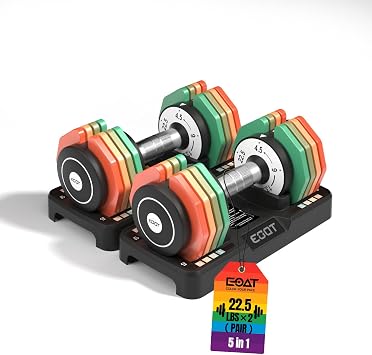
Image source: Amazon Product Advertising API
Best Adjustable Dumbbells
Bowflex SelectTech 552 Adjustable Dumbbells
Verdict: The gold standard for home strength training. These dumbbells replace 15 pairs of traditional weights, adjusting from 5 to 52.5 lbs with a simple turn of a dial. This allows you to perform heavy squats and light lateral raises with the same compact set.
Buy it if: You want a space-saving home gym setup, value quick weight adjustments, and plan to perform progressive overload on compound lifts.
Skip it if: You are an advanced lifter requiring more than 52.5 lbs per hand, or you tend to drop your weights between sets (dial gears are plastic).
- Replaces 30 individual dumbbells to save floor space
- Ergonomic textured handle grip secures hand placement
- Extremely smooth selector dial mechanism

Image source: Amazon Product Advertising API
Best Home Gym Bench
FLYBIRD Adjustable Bench
Verdict: An exceptionally sturdy, heavy-duty adjustable bench built from thick alloy steel. Supporting up to 800 lbs, it offers 7 backrest and 3 seat positions, making it ideal for flat, incline, and decline bench presses.
Buy it if: You need a stable workout platform that folds completely flat to save space, and you lift heavy weights at home.
Skip it if: You are over 6’2″, as some tall lifters find the backrest slightly short for head support during flat presses.
- Folds to save 80% space when not in use
- Dense foam padding with high-grade carbon fiber leather
- Fast and secure pin adjustment locks into place
8. Troubleshooting & Common Mistakes
Although full-body training is highly efficient, it is easy to make programming errors that lead to injury or systemic fatigue. Watch out for these four common pitfalls:
1. Over-Programming & Session Duration
A common mistake is attempting to perform too many exercises per session. If you try to do 3 chest exercises, 3 back exercises, 3 leg exercises, and arm isolation in one day, your workout will exceed two hours. This leads to excessive cortisol release, glycogen depletion, and “junk volume”—sets performed in a fatigued state that yield minimal muscle growth while dramatically increasing recovery requirements. Limit your workouts to 5 or 6 compound movements, aiming to finish in 60 to 75 minutes.
2. Neglecting Systemic Recovery
Because full-body workouts stimulate your entire neuromuscular system, you cannot train on consecutive days. Doing a heavy full-body routine on Monday followed by another on Tuesday does not allow your muscles, connective tissues, or nervous system to recover. Always place at least one full day of rest (or light active recovery like walking) between sessions. If you are still deeply sore, take an extra rest day.
3. Training to Absolute Failure
In split training, you can push a set of bicep curls to absolute failure because the systemic fatigue is low. However, in a full-body workout containing heavy squats, overhead presses, and rows, training to failure on early sets will exhaust your central nervous system. This degrades your technique on subsequent exercises, increasing your risk of injury. Keep most sets at 1 to 2 reps in reserve (RIR), reserving absolute failure only for the final set of accessory movements.
4. Inadequate Warm-Up
Because full-body workouts engage both the upper and lower extremities, a brief jog is not an adequate warm-up. You must prepare all primary joints (hips, knees, shoulders, thoracic spine) for movement. Spend 5 to 10 minutes performing dynamic mobility work, such as hip openers, arm circles, world’s greatest stretches, and empty-barbell warmup sets.
9. Frequently Asked Questions (FAQ)
Can I build muscle with a full-body routine?
Yes, absolutely. Research has consistently demonstrated that when weekly training volume is matched, full-body routines produce equal or superior muscle hypertrophy compared to split routines. The key drivers of hypertrophy are total weekly volume and progressive overload, both of which are easily achieved with a 3-day full-body program.
How many days a week should I perform full-body workouts?
The optimal frequency is three days per week, with at least 48 hours of rest between sessions. Common schedules include Monday-Wednesday-Friday or Tuesday-Thursday-Saturday. Two days per week can also work well for maintenance or beginners, while four or more days is not recommended due to systemic recovery demands.
Can I perform full-body workouts on consecutive days?
No. Training the entire body on consecutive days (e.g., Monday and Tuesday) does not allow your muscle fibers and central nervous system to recover. Connective tissues require time to repair, and training them while fatigued significantly increases your injury risk. Always space sessions with at least one day of rest.
Is full-body training suitable for absolute beginners?
Yes. In fact, full-body routines are the preferred method for beginners. They allow you to practice foundational movements (squats, hinges, presses, pulls) multiple times per week, accelerating technique mastery and motor unit coordination.
How does full-body training compare to split routines for fat loss?
Full-body routines are generally superior for fat loss. Because they engage multiple large muscle groups in a single session, they burn more calories per workout than isolated splits. They also trigger a greater “afterburn effect” (EPOC), keeping your metabolic rate elevated for hours post-exercise.
How should I adjust my nutrition when doing full-body workouts?
Since full-body workouts are systemically demanding, your nutrition must prioritize muscle recovery and glycogen replenishment. Ensure you consume 0.8 to 1.0 grams of protein per pound of body weight daily. If your goal is hypertrophy, eat in a slight caloric surplus (250–500 calories above maintenance). If your goal is fat loss, maintain a moderate caloric deficit while keeping protein high. Carbohydrates should be consumed before and after your sessions to fuel performance and accelerate muscle recovery.
What should I do on my rest days?
On your non-training days, focus on active recovery. Low-intensity activities like walking, cycling, yoga, or swimming promote blood flow to fatigued muscles without imposing further stress on your joints or central nervous system. Avoid high-intensity activities that compete with your recovery resources, and prioritize getting at least 7 to 9 hours of quality sleep.
10. Sources and Scientific References
- Schoenfeld, B. J., et al. (2015). “Influence of Resistance Training Frequency on Muscular Hypertrophy: A Systematic Review and Meta-Analysis.” Journal of Strength and Conditioning Research, 29(11), 3222-3229.
- ACSM (2018). “American College of Sports Medicine Guidelines for Exercise Testing and Prescription.” 10th Edition. Wolters Kluwer.
- Damas, F., et al. (2016). “Resistance training-induced changes in integrated myofibrillar protein synthesis are related to hypertrophy only after attenuation of muscle damage.” Journal of Physiology, 594(18), 5209-5222.
- La Scala Teixeira, C. V., et al. (2018). “Is reconstructive bodybuilding split frequency training superior to whole-body training for muscle hypertrophy? A review.” Journal of Sports Medicine and Physical Fitness, 58(7), 1012-1021.
- Westcott, W. L. (2012). “Resistance training is medicine: effects of strength training on health.” Current Sports Medicine Reports, 11(4), 209-216.
Editorial Note: This guide was compiled and reviewed by the GearUpToFit editorial team. For optimal safety, consult a qualified physician or certified personal trainer before embarking on any new high-intensity exercise program. If you are looking to combine your full-body routine with bodyweight progressions, read our complete companion guide: Calisthenics for Beginners. If you are a runner looking to optimize recovery, check out our guide on Creatine for Runners.
Frequently Asked Questions
How many days a week should I do full-body workouts?
For most people, performing full-body routines three times per week (e.g., Monday, Wednesday, Friday) provides the optimal balance between high frequency for muscle growth and recovery time.
Are full-body workouts better than split routines?
Full-body workouts are often superior for time efficiency and metabolic health, whereas split routines allow for higher local volume preferred by advanced bodybuilders.
Frequently Asked Questions
Are full-body workouts better for fat loss?
Yes, because they engage more muscle mass per session, leading to higher caloric expenditure and a greater metabolic demand than isolated split routines.
How many days a week should I do a full-body workout?
Three non-consecutive days per week is ideal to allow for adequate recovery while keeping muscle protein synthesis elevated.
Optimizing Your Results
To maximize the impact of your full-body routine, ensure your nutrition supports recovery. Calculating your Resting Metabolic Rate (RMR) can help you tailor your caloric intake, while prioritizing protein intake for muscle growth ensures your muscles have the building blocks they need to repair after systemic stimulation. If your goal is primarily functional strength, consider incorporating calisthenics for beginners into your sessions to master bodyweight control.
Optimizing Your Results
To maximize the benefits of a full-body routine, proper recovery and nutrition are essential. Ensure you are meeting your protein intake for muscle growth to support tissue repair between sessions. If your goal is improving functional fitness, consider incorporating calisthenics for beginners as a foundation for your compound movements. For those looking to transition into more specific strength goals, learning how to begin bodybuilding can help you transition from full-body routines to targeted splits.
Optimizing Your Results
To maximize the impact of your full-body sessions, ensure your nutrition supports recovery. A proper protein intake for muscle growth is essential to sustain elevated muscle protein synthesis between workouts. If your goal is primarily functional fitness, consider incorporating calisthenics for beginners to master bodyweight movements before adding heavy external loads. For those using full-body routines for weight management, tracking your resting metabolic rate (RMR) can help you tailor your caloric intake to your new activity levels.