Skip to content
 Starting again can feel harder than starting for the first time. You remember what your body used to do, but your current body needs time to rebuild tissue tolerance, aerobic rhythm, confidence, and consistency. The safest comeback is not the most aggressive plan. It is the plan you can repeat without another setback.
This guide gives you a practical walk-run progression, readiness checklist, soreness rules, strength routine, shoe guidance, and decision framework for returning after injury, illness, surgery, cancer treatment, burnout, or a long training break.
Medical Safety Note & Clinical Boundaries
This article is educational and not a diagnosis or personal medical plan. Get medical clearance before returning to running after surgery, serious illness, chest symptoms, fainting, cancer treatment, pregnancy or postpartum complications, stress fracture, bone pain, major joint injury, neurological symptoms, or any condition where your clinician told you to limit exercise.
Quick Answer: The Golden Rule of a Safe Return-to-Running Protocol
Return to running with structured walk-run intervals, not your old peak mileage. Begin your comeback program only when baseline walking is completely comfortable, local joint pain is stable or gone, daily metabolic energy is back to normal, and clinical medical clearance has been formally given. Run easy, leave dedicated rest days between early sessions, progress one training variable at a time, and stop immediately if structural pain worsens, local swelling appears, or your natural running gait changes.

Affiliate disclosure: Some links are affiliate links. GearUpToFit may earn from qualifying purchases. Product boxes do not include fake prices, fake ratings, or medical promises.
The Real Goal: Rebuild Tissue Tolerance, Not Prove Cardiovascular Fitness
When you return after an extended injury timeout or systemic illness, your metabolic lung capacity will almost always feel ready before your structural muscles, tendons, bones, and nervous system adapt. This critical physiological mismatch is why hasty athletic comebacks often cause secondary overuse patterns. A runner may feel structurally loose and energetic for the first ten minutes, increase their pacing speed, and only realize the loading mistake the following morning when localized pain, soft tissue swelling, or deep systemic fatigue resurface.
The first few weeks are not about setting records or chasing past workout metrics. They are about proving that your musculoskeletal system safely tolerates impact forces again. Running is highly repetitive—each single step is manageable on its own, but thousands of landing impacts create significant cumulative loading. Your return-to-running progression must respect this reality.
Readiness Checklist Before Your First Comeback Run
Use this functional diagnostic checklist before completing your first running step. You do not need to feel in peak shape, but checking off these boxes establishes a safe launchpad for your initial return test.
- You can complete a continuous 30-minute walk on flat ground without pain or throbbing during or after.
- You can walk down and up domestic stairs smoothly without limping or favoring one side.
- You display zero active swelling, sharp joint pain, fever, chest tightness, resting dizziness, or shortness of breath.
- Your primary physician, orthopedic specialist, or physical therapist has formally cleared you for impact sports.
- You can perform basic diagnostic movements like bodyweight squats, calf raises, and glute bridges with zero symptom flare-ups.
- You mentally accept that your first session is a strict structural test, not a performance workout.
Symptom Red Flags: Do Not Try to Run Through These Signs
- Sharp, stabbing, pinching, or localized worsening pain along bones or joints.
- Any discomfort that visibly alters your natural running gait, forces a limp, or creates tracking compensation.
- Visible soft-tissue swelling or localized heat radiating from joints within hours of finishing.
- Deep bone pain or focal tenderness that raises stress-fracture suspicions.
- Fever, acute chest pain, fluttering, localized faintness, or systemic breathing distress.
- Unresolved post-surgery loading limits or clinical soft-tissue restrictions.
If any of these structural warning signs present themselves, abort the running session immediately. A training comeback is only successful when it actively preserves tomorrow’s physical options.
The Structured 6-Week Return-to-Running Plan
This return-to-running progression plan is designed to minimize tendon stress and bone loading. Run at an easy, conversational pace where your breathing remains fully controlled. If you cannot speak full sentences without gasping, slow down your jogging pace. Complete two or three sessions per week maximum, ensuring at least one full day of rest or non-impact cross-training sits between runs.
| Training Week | Interval Session Structure | Total Net Running Time | Target Perceived Effort (RPE) |
|---|---|---|---|
| Week 1 | Walk 5 mins. Repeat [Run 1 min / Walk 2 mins] x 8 sets. Walk 5 mins. | 8 minutes | Extremely light; feels almost too easy. |
| Week 2 | Walk 5 mins. Repeat [Run 2 mins / Walk 2 mins] x 7 sets. Walk 5 mins. | 14 minutes | Controlled, relaxed aerobic rhythm. |
| Week 3 | Walk 5 mins. Repeat [Run 3 mins / Walk 2 mins] x 6 sets. Walk 5 mins. | 18 minutes | Steady pace with zero structural form breakdown. |
| Week 4 | Walk 5 mins. Repeat [Run 5 mins / Walk 2 mins] x 5 sets. Walk 5 mins. | 25 minutes | Comfortable, baseline aerobic conditioning. |
| Week 5 | Walk 5 mins. Repeat [Run 8 mins / Walk 2 mins] x 4 sets. Walk 5 mins. | 32 minutes | Steady movement without local muscle strain. |
| Week 6 | Walk 5 mins. Repeat [Run 12 mins / Walk 2 mins] x 3 sets. Walk 5 mins. | 36 minutes | Ready to transition safely toward continuous running. |
Never feel pressured to progress linearly every single week. If next-day soreness feels elevated, repeat your current week’s structure. If you are rehabbing a severe structural injury (like a tendon tear or bone stress fracture), spend two weeks on each step. If you are coming back from a brief, non-injury layoff, you can move ahead smoothly, provided your next-day biofeedback stays clear.
The Critical Next-Day Soreness Rule
The most accurate structural feedback typically appears the morning after a workout. An interval session can feel perfectly fine while your endorphins are active, but it can reveal localized overload hours later. Apply this rule after every workout:
| Next-Day Physical Feedback | Physiological Interpretation | Required Training Action |
|---|---|---|
| Zero pain increase & normal fatigue | Your target tissues tolerated the structural load. | Maintain current volume or progress slightly. |
| Mild muscle soreness that goes away with walking | Normal muscular adaptation to novel movement. | Repeat the exact same step before attempting to progress. |
| Pain is higher or sharper than before running | The cumulative impact load exceeded tissue limits. | Take 48 hours of extra rest and drop back one step. |
| Active joint swelling, limping, or localized bone pain | Structural injury strain or inflammatory warning. | Halt running entirely and arrange professional guidance. |
Rebuilding Cardiovascular Fitness After Systemic Illness
Systemic illness changes your return strategy because your primary limiter is metabolic and immune-based, rather than structural. Internal fevers, upper respiratory tract infections, severe dehydration, and sleep fragmentation dramatically lower your acute exercise tolerance. Do not rush your return simply because you are tired of resting.
Prioritize normal daily domestic activity first. If casual walking, managing stairs, or carrying groceries leaves you feeling breathless or exhausted, your body is still using its energy reserves to heal, meaning running is not appropriate. Once your systemic health returns and casual walking feels effortless, initiate the walk-run interval framework. Keep your effort strictly aerobic for the first week. If you notice unexpected chest fluttering, dizziness, or localized cold sweats, stop immediately and seek medical evaluation.
Navigating Physical Loading Guidelines After Surgery
Surgical recoveries require highly individual timelines because baseline deep tissue healing rates cannot be rushed. Even if your cardiovascular system feels strong, local surgical incisions, deep repaired internal tissues, anesthesia clearout, drop in red blood cell counts, and post-operative orthopedic limits completely redefine what is safe. Always put your primary surgeon’s specific physical timeline ahead of generic plans.
Once you receive formal clearance to exercise, rebuild your athletic base in progressive layers: start with daily walking, move to targeted non-weight-bearing mobility, add light resistance work, step up to short walk-run intervals, progress to longer easy continuous mileage, and finally introduce speed. Never jump straight from medical discharge to intense running efforts. In clinical settings, clearance simply means “you are safe to begin loading,” not “you are ready to handle high-velocity performance work.”
Starting Running Again After a Long Lifestyle Break
If you stepped away from running for months or years due to career, family, or loss of motivation without a specific physical injury, your main structural advantage is muscle memory. Your primary risk, however, is your ego. While your mind clearly remembers previous pacing speeds and long-run routes, your current tendons, plantar fascia, and bones require a progressive ramp-up phase.
Approach your first month with the mindset of a patient beginner. Use those initial weeks to establish a consistent, predictable routine and rebuild confidence. Your previous aerobic capacity and structural durability will often return much faster than a true beginner’s would, provided you do not sabotage your progress with early overuse injuries.

Strength Routine for Lower Limb and Joint Durability
Rehab strength training does not need to feel complicated or require commercial gym setups. Your main goal is to prepare your hips, calves, Achilles tendons, feet, and core for repeated impact forces. Complete this targeted routine two or three times per week on non-consecutive days. Keep every single movement smooth, pain-free, and controlled.
| Target Exercise | Prescribed Dosage | How It Protects Returning Runners |
|---|---|---|
| Bodyweight Glute Bridge | 2–3 sets of 8–12 repetitions | Rebuilds hip extension and controls pelvic alignment. |
| Straight-Leg Calf Raise | 2–3 sets of 8–15 repetitions | Gradually conditions the calf-Achilles complex for impact. | 2 sets of 15–30 seconds per side | Stabilizes lateral hip structures and stops knee collapse. |
| Supine Dead Bug | 2 sets of 8–10 repetitions per side | Trains deep core stability without loading the lower spine. |
| Supported Split Squat | 2 sets of 6–10 repetitions per side | Develops single-leg knee tracking control and quad strength. |
How to Choose Pliable running Shoes and Gear When Coming Back
Do not get overwhelmed by complex footwear technology, but do not ignore what is on your feet either. During an athletic comeback, your absolute best shoe is a highly comfortable daily training shoe that fits securely, offers protective cushioning for slower paces, and does not irritate existing hotspots. Avoid changing multiple gear variables at once. If you purchase new footwear, keep your first few testing runs intentionally short so you can accurately assess how your feet and joints respond.
Runners recovering from chronic calf tightness, Achilles tendinopathy, plantar fasciitis, or metatarsal stress reactions should avoid aggressive low-drop shoes, rigid carbon-plated racing shoes, and extreme changes in stack height. Those performance options have a place later in your training cycle, but they are rarely the safest choice for a structural comeback.
Comfort-Focused Daily Running Shoes
Best for: Runners rebuilding base mileage who require reliable heel lock, a spacious toe box, and protective daily cushioning.
- Look for neutral trainers that support natural foot mechanics without aggressive motion control.
- Test footwear comfort on short runs before increasing your training duration.
- Keep specialized racing flats stored away until your base mileage is completely pain-free.
Affiliate Note: Dynamic listings can change by region. Verify exact sizing and return policies before purchase.
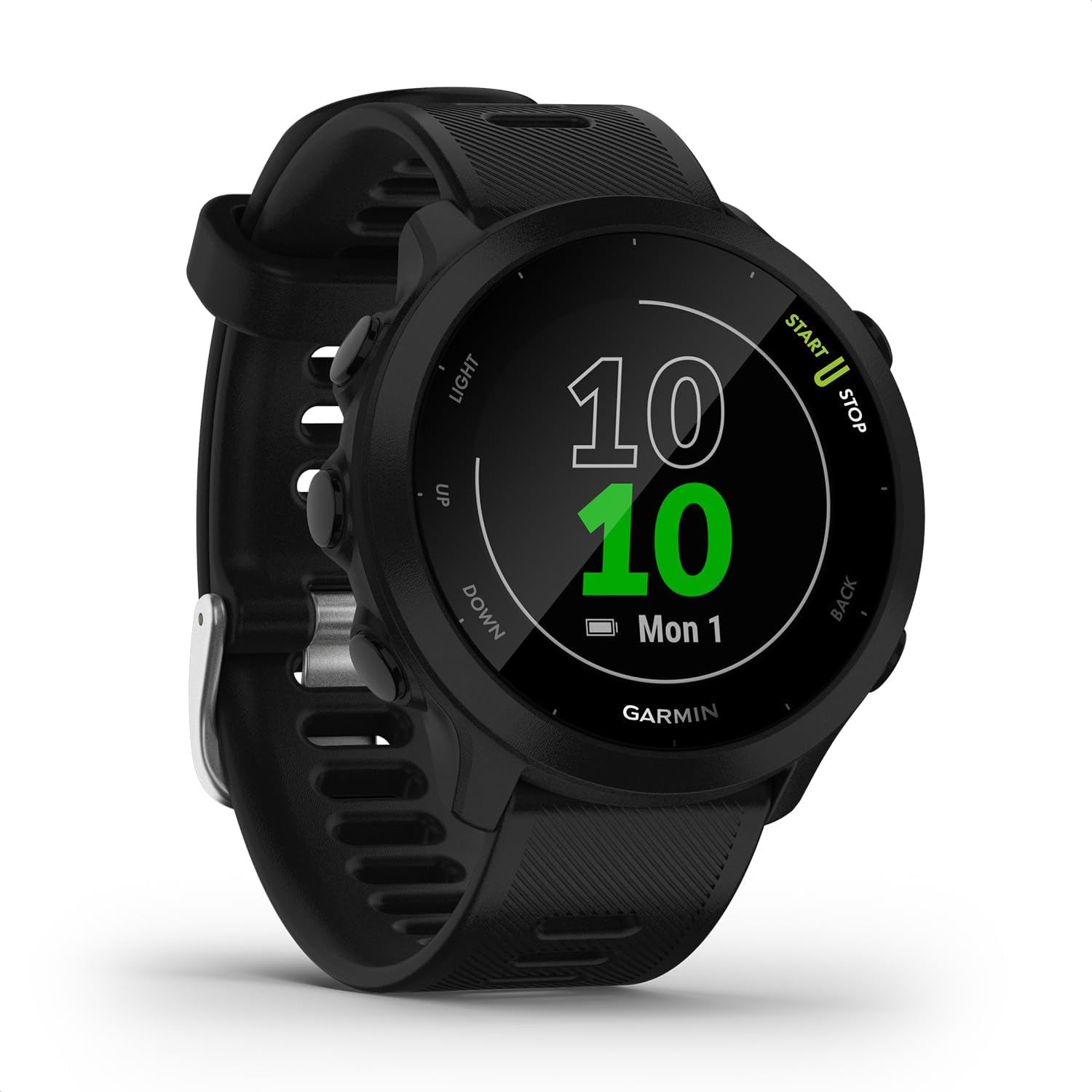
Garmin Forerunner 55
Best for: Returning athletes who need an accessible GPS watch to time precise walk-run intervals and monitor heart rate trends.
- Perfect for programming custom interval durations without manual stopwatch tracking.
- Tracks resting heart rate and daily stress trends to measure systemic recovery.
- Clean, dependable five-button interface that handles sweat and rain effortlessly.
Affiliate tracking tag papalex-20 active. Please verify seller ratings and regional warranty details before checkout.

High-Density Exercise Mat
Best for: Executing floor mobility routines, bridges, side planks, and low-impact resistance band rehab sessions comfortably.
- Provides non-slip grip to ensure stable joint positioning during single-leg exercises.
- Offers thick cushioning to shield sensitive knees and wrists from hard floors.
- Rolls up tightly for easy storage and regular home use.
Affiliate Note: Listings, materials, and color availability update dynamically. Double check length details before finalizing.
Five Common Training Errors to Avoid in Your First Month Back
- Testing your current 5K speed limits or trying to lock onto your old, pre-injury tempo pace.
- Stacking complex variables by introducing hill repeats, high volume, and speed intervals in the same training week.
- Chasing daily smart watch metrics or fitness scores while actively overriding subtle physical pain signals.
- Using extreme muscular soreness as inaccurate proof that your comeback session was highly productive.
- Unilaterally adding extra miles midway through a run just because your joints feel loose; always wait for the next-day response.
How to Safely Rebuild Toward Normal Continuous Training
Once you can complete 30 minutes of continuous, easy aerobic running with a completely stable next-day symptom profile, protect that baseline for an additional two to four weeks to cement tissue durability. From there, introduce one small training variable at a time. You could add four relaxed strides at the end of an easy run, tackle a gentle, rolling hill route, or slowly lengthen your weekly long run duration. Never introduce all of these variables inside the same training block. Your hierarchy of athletic progression must follow a strict sequence: build consistency first, scale up duration second, introduce light speed third, and layer in intense workouts last.
If you are returning with the goal of completing a scheduled race, keep your event expectations highly flexible. Treat a comeback race as a pure celebration of your successful return to health, rather than an aggressive performance test. You can chase fast course times down the road. Your primary victory right now is establishing a repeatable, safe training lifestyle.
Internal GearUpToFit Reading Path
To construct a balanced return-to-sport ecosystem, connect this guide with these related internal resources:
- 15-Minute Full-Body Stretch Routine
- Beginner Strength Training Guide
- BMI, BMR, and WHR Health Calculators
- Best Daily Running Shoes for 2026
- Best Budget GPS Running Watches Under $200
Related Questions This Guide Answers
return to running after illness
running after surgery recovery
start running again after long break
walk run plan after injury
20 minute walk run workout
resistance band exercises for knee pain
running shoes for inner knee pain
running shoes for overweight beginners
gps watch for beginner runners
best running shoes for beginner runners
knee pain old running shoes
Comeback Running Situations and Your Safest First Move
Athletes attempting to restart their running routine generally face one of four core challenges: managing the fear of reinjury, handling frustration over lost pacing speed, deciphering normal muscle adaptation from dangerous joint pain, or selecting effective footwear. Your best initial strategy is uniform: leave your ego behind, utilize a structured walk-run interval plan, and judge your physical readiness by your next-day structural response.
| Specific Comeback Context | Your Safest First Move | Critical Pitfall to Avoid |
|---|---|---|
| Running After Injury Recovery | Initiate short, flat walk-run intervals and finish before pain patterns change. | Do not test top-end sprint speeds, steep hills, or carbon racing shoes. |
| Return to Running After Illness | Rebuild baseline walking volume and easy breathing patterns before jogging. | Never train through lingering fevers, chest congestion, or resting dizziness. |
| Running After Surgery Milestones | Secure explicit clinical clearance, then rebuild with low-impact loading. | Do not let generic training templates override your surgeon’s tissue timeline. |
| Restarting After an Extended Layoff | Follow a dedicated beginner framework even if you used to be highly fit. | Do not compare your current return pacing to past personal records. |
| Knee Pain from Worn Out Running Shoes | Assess midsole breakdown, scale up hip strength work, and run on flat paths. | Do not assume buying a new shoe replaces the need for muscle conditioning. |
The 20-Minute Walk-Run Workout for Your First Two Weeks Back
A basic 20-minute walk-run framework provides an optimal entry point for your recovery journey. It delivers a meaningful metabolic and loading stimulus to your tendons, bones, and cardiovascular system without pushing your body into an injury zone. Only perform this session if you are completely clear of red-flag symptoms and have obtained medical clearance where required.
- The Warm-Up Phase: Walk at a relaxed, intentional pace for exactly 5 minutes to circulate blood flow.
- The Interval Set: Alternate between 30 seconds of easy, low-intensity jogging and 90 seconds of recovery walking. Repeat this cycle for 10 minutes total (5 full sets).
- The Cool-Down Phase: Complete a relaxed 5-minute walk to bring your heart rate down naturally.
- The Next-Day Evaluation: Only repeat this workout if your localized joints, swelling markers, and general fatigue indicators remain clear the next morning.
If a 30-second jog feels incredibly easy, avoid the urge to accelerate or lengthen the block immediately. Repeat this exact template across three separate sessions first to gauge tissue tolerance. If you experience minor tracking tracking sensations, scale back to 15 seconds of light jogging and 105 seconds of walking recovery. A comeback program works best when it feels almost too easy at the start.
Knee Pain, Running Footwear, and Strength Metrics: What Actually Matters?
Frequent search topics like running shoes for inner knee pain, cushioned running shoes knee pain, and knee pain old running shoes highlight a common theme: runners want to know if changing gear can shield them from impact injuries. While appropriate footwear plays a supportive role in managing joint load distribution, it represents just one component of a successful return-to-running strategy.
If Your Existing Trainers Are Worn Out
Replace your footwear immediately if the outsole displays uneven wear, the internal foam feels stiff and dead, or the heel counter no longer holds your foot stable. Worn out midsoles alter your natural landing mechanics, amplifying knee and ankle stress on every comeback step.
If You Are Navigating Active Inner Knee Pain
Never rely on commercial shoe marketing to diagnose tracking issues. Reduce your training volume immediately, avoid downhill stretches and speed intervals, step up your hip and quadricep strength work, and connect with a physical therapist if pain persists.
If You Are an Overweight Beginner Runner
Prioritize step-by-step structural progress over speed. Look for shoes that offer reliable lateral stability and protective cushioning, but remember that your biggest injury-prevention win comes from keeping walk-run splits conservative enough for bone adaptation.
If You Require Support and Stability Exercises
Targeted resistance band exercises for knee pain build hip abduction and knee tracking control when executed with controlled form. Focus on pain-free lateral band walks, glute bridges, terminal knee extensions (TKEs), and slow step-downs.
How to Identify Exactly When Your Body Is Ready to Progress
You are ready to advance to the next level of training when your current comeback runs feel unchallenging, predictable, and structurally stable. This means you consistently finish workouts feeling like you have plenty of energy left over, your next-day biofeedback stays clear, and your easy pace is relaxed enough to maintain a conversation. Only ever increase one metric at a time: either lengthen your total session duration, add an extra weekly run, or shorten your walking breaks. Never increase all three parameters inside the same training week.
- Add 5 minutes of easy volume to your weekly pool before modifying your pacing speeds.
- Keep a minimum of 48 hours of rest or non-impact cross-training between early interval sessions.
- Use your GPS running watch purely to monitor and hold back your pace, never to chase speed goals.
- Abort your training session immediately if localized pain patterns alter your running stride.
- Focus your core strength work on foundational movements: hips, calves, quadriceps, glutes, and deep core.
Bottom Line
A smart, highly successful return to running is intentionally simple and controlled. It starts with a base of consistent walking, transitions into brief running intervals, rigorously monitors next-day structural biofeedback, and repeats patterns that prove safe. Your entire plan should feel controlled, manageable, and emotionally reassuring, allowing you to rebuild confidence without putting your long-term recovery at risk.
Avoid comparing your early comeback efforts to past peak fitness milestones. Instead, look back at your progress relative to yesterday: you moved mindfully, listened to your body’s feedback, and successfully kept tomorrow’s training options wide open.
Frequently Asked Questions (FAQ)
How long should I wait before running after a structural injury?
Your ideal timeline depends on your unique injury profile, active tissue symptoms, and professional medical guidance. Before attempting a jog, you should be completely capable of walking 30 minutes pain-free, managing stairs without a limp, and clearing clinical timelines for bone stress or major tendon injuries.
Is a structured walk-run plan safer than trying to run continuously?
Yes. Walk-run interval protocols significantly lower peak impact forces, reduce acute cardiovascular strain, allow tissues to adapt gradually, and give you clear windows to monitor joint soreness and early fatigue markers.
What level of physical pain is acceptable when returning to running?
While mild, generalized muscle soreness can be a normal sign of tissue adaptation, any sharp pain, pinpoint bone tenderness, post-run swelling, or discomfort that changes your running stride means you must stop the session immediately and seek professional advice.
Can I return to running immediately after recovering from systemic illness?
You should only return to running once your acute symptoms have fully resolved and your energy levels handle standard daily routines without fatigue. Lingering fevers, respiratory distress, resting dizziness, or chest tightness require formal clearance from a physician.
What running shoes are safest for an athletic comeback?
Opt for highly comfortable, stable neutral daily training shoes that fit securely and do not create pressure points. Avoid using rigid carbon-plated racing shoes or ultra-minimalist footwear until your body easily handles continuous base miles.
Sources and Editorial Notes
This running resource is compiled for educational purposes to help fitness enthusiasts establish healthy training patterns. Footwear options, technical specifications, and global Amazon marketplace listings can change over time.
- Runner’s World Training Archive: Clinical Run-Walk Return Protocols
- Runner’s World Analysis: Managing Overuse Training Errors in Comeback Athletes
- Centers for Disease Control and Prevention (CDC): Physical Activity Guidelines for Adults
- GearUpToFit Human Performance Lab: Structural Mobility & Stretch Guide