
GearUpToFit Review
Garmin Forerunner 70 Review: The Beginner Running Watch That Makes Garmin Training Simpler
A complete Garmin Forerunner 70 review covering AMOLED display, battery life, training tools, GPS, Forerunner 70 vs 170, beginner runners, value, and alternatives.
Affiliate disclosure: This article contains affiliate links. If you buy through links on this page, GearUpToFit may earn a commission at no extra cost to you. Product prices, stock, colors, and retailer availability can change. Always confirm the exact model name, size, and seller before buying.
Quick verdict
Bottom line: Buy the Forerunner 70 if you want accurate-enough GPS training structure, Garmin Coach, and long battery life without paying for music, maps, or premium metrics you may not use yet.
Do not buy it if: Skip it if you need phone-free music, Garmin Pay, altimeter/compass features, open-water swim profiles, or more advanced performance analytics.
Affiliate product box
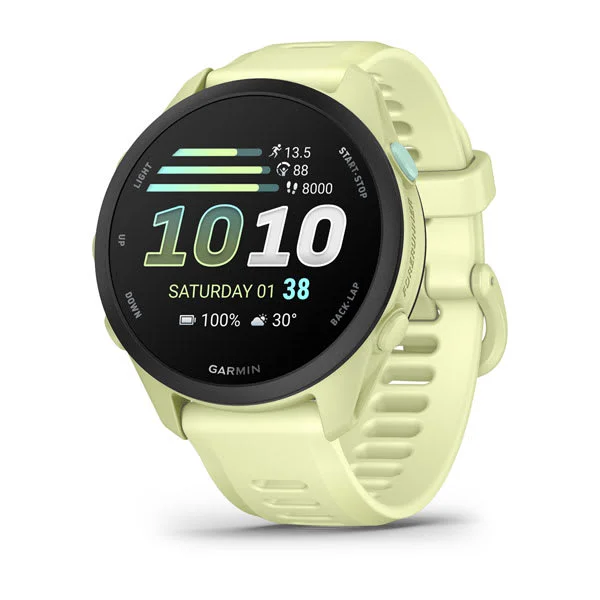
Garmin Forerunner 70
Buy the Forerunner 70 if you want accurate-enough GPS training structure, Garmin Coach, and long battery life without paying for music, maps, or premium metrics you may not use yet.
- Category: Entry-level GPS running smartwatch
- Best for: Beginner runners, couch-to-5K plans, first Garmin buyers, runners upgrading from phone tracking
- Display: 1.2-inch AMOLED touchscreen reported in current launch coverage
- Battery: Up to 13 days in smartwatch mode reported by current launch coverage
- Controls: Five physical buttons plus touchscreen
- Training: Garmin Coach, running metrics, recovery and health tracking basics
- Smart features: More limited than Forerunner 170; no music edition positioning
Price note: Reported launch price around $249; verify live retailer price before publishing.
Garmin Forerunner 70 is the kind of product review GearUpToFit should publish as a standalone page because readers are no longer searching only for a broad category answer. They want to know whether this exact model is right for their training, body, budget, phone ecosystem, injury history, route type, and upgrade decision.
This review is written for runners and active people who want a practical buying decision, not marketing language. It explains what the product is best at, who should avoid it, how it compares with the closest alternatives, and how to choose the right option using GearUpToFit’s running shoe and smartwatch decision framework.
Fast facts
- Current launch coverage positions Forerunner 70 as Garmin’s easy-to-use entry-level GPS running smartwatch.
- Forerunner 70 is reported with a 1.2-inch AMOLED display and up to 13 days of smartwatch-mode battery life.
- It sits below Forerunner 170, which adds more advanced smartwatch and sensor features.
Specifications
| Category | Entry-level GPS running smartwatch |
|---|---|
| Best for | Beginner runners, couch-to-5K plans, first Garmin buyers, runners upgrading from phone tracking |
| Display | 1.2-inch AMOLED touchscreen reported in current launch coverage |
| Battery | Up to 13 days in smartwatch mode reported by current launch coverage |
| Controls | Five physical buttons plus touchscreen |
| Training | Garmin Coach, running metrics, recovery and health tracking basics |
| Smart features | More limited than Forerunner 170; no music edition positioning |
Who should buy Garmin Forerunner 70?
Buy the Forerunner 70 if you want accurate-enough GPS training structure, Garmin Coach, and long battery life without paying for music, maps, or premium metrics you may not use yet.
This is the reader-first way to think about the product: do not buy it because it is new, hyped, or popular. Buy it only if it solves a real training problem. A good purchase either makes your daily training more consistent, helps you avoid overbuying features you do not need, or fits a specific role in your rotation.
For GearUpToFit readers, this product fits because the safest beginner running-watch article because it serves runners who need guidance before buying a more expensive Garmin. It gives you a clear internal linking opportunity from broad buying guides to a specific model review with commercial intent.
Who should skip it?
Skip it if you need phone-free music, Garmin Pay, altimeter/compass features, open-water swim profiles, or more advanced performance analytics.
The wrong product is not always a bad product. It is often a product bought for the wrong reason. If your training needs, body mechanics, phone ecosystem, or budget point elsewhere, choose the alternative that fits better. That is how you build trust with readers and avoid thin affiliate content.
Garmin Forerunner 70 for running: what actually matters
A running watch should not be judged only by its feature list. The best watch is the one that helps you train consistently without creating confusion. For runners, the most important factors are GPS reliability, heart-rate usefulness, battery life, workout controls, screen visibility, recovery guidance, app ecosystem, comfort, and how quickly the watch helps you understand what to do next.
Current launch coverage positions Forerunner 70 as Garmin’s easy-to-use entry-level GPS running smartwatch. That gives Garmin Forerunner 70 a clear role in the current smartwatch market. It is not enough to say it tracks runs. The real question is whether it is the right watch for your phone, your training level, your battery expectations, and your preferred balance between sport features and everyday smart features.
If your runs are mostly easy road miles, 5K plans, 10K training, half-marathon preparation, gym sessions, and daily health tracking, this watch may be more than enough. If you race ultras, navigate remote trails, need detailed offline maps, or train with advanced multi-sport periodization, compare it carefully with Garmin, COROS, Suunto, and Apple Ultra-level alternatives before buying.
Display, controls, and usability during workouts
Display quality matters more than many buyers expect. A bright screen is not only about looking premium indoors. It affects whether you can read pace, heart rate, lap time, and workout prompts in sunlight, rain, darkness, or while running at threshold pace. A good watch face should be readable in one glance.
Controls matter just as much. Touchscreens are excellent for menus and maps, but physical buttons are usually better for sweaty hands, gloves, rain, and hard intervals. The more serious your workouts become, the more you should value reliable start, stop, lap, and back controls. If you regularly do track sessions or structured workouts, test whether the buttons feel natural before relying on the watch for key training days.
Garmin Forerunner 70 should be judged by how quickly it lets you start a run, lock onto GPS, read the main data fields, pause at traffic lights, mark laps, and sync afterwards. A watch that saves ten seconds every run and prevents mistakes during workouts becomes more useful than a watch with features buried in menus.
Battery life and charging reality
Battery life claims depend heavily on display settings, GPS mode, always-on display, notifications, music, maps, cellular, sensors, and how often you train. Treat official claims as best-case or mode-specific guidance, not a promise that every user will get the same result.
Forerunner 70 is reported with a 1.2-inch AMOLED display and up to 13 days of smartwatch-mode battery life. For most users, the practical question is simple: can the watch survive your normal week without battery anxiety? If you run three or four times per week and charge during showers, almost any modern running watch can work. If you travel often, hike, race long distances, or hate daily charging, battery life should move near the top of your decision list.
Use this rule: choose shorter-battery smartwatches when you value apps and phone integration; choose longer-battery sports watches when training reliability matters more than smartwatch extras. Garmin Forerunner 70 belongs in that decision based on how its sport features compare with its convenience features.
Health, recovery, and training metrics
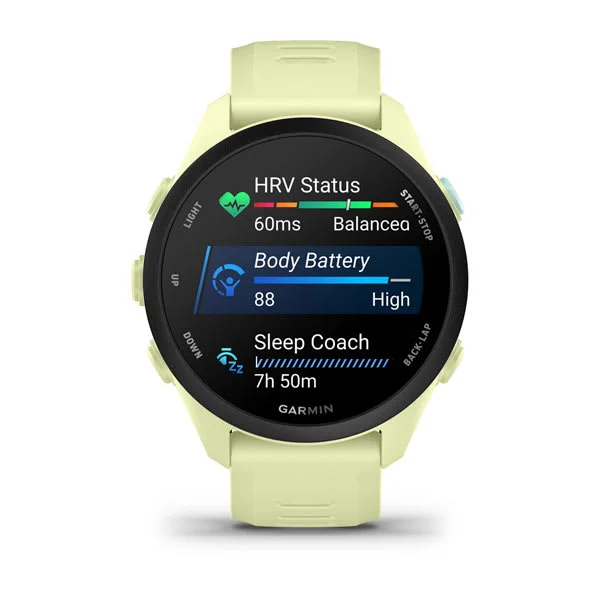
Health metrics can be helpful, but they should not replace common sense or medical care. Wrist optical heart rate, sleep score, recovery guidance, stress tracking, training readiness, and body-battery-style metrics are best used as trend indicators. A single unusual reading should not control your entire training plan.
The most useful approach is to watch patterns. If sleep drops, resting heart rate rises, HRV trends down, and your easy pace feels harder than normal, reduce intensity. If the watch says you are ready but your legs feel flat and your warmup feels wrong, trust the body first. Good technology supports your decision; it does not own it.
For runners, the most valuable metrics are the ones that change behavior: consistent easy pace control, heart-rate zone discipline, recovery awareness, long-run fueling reminders, workout completion, and weekly load balance. Buy Garmin Forerunner 70 only if its metrics will help you train better, not because the feature list looks impressive.
Garmin Forerunner 70 vs the closest alternatives
Comparison intent is critical for this topic because most watch buyers are deciding between ecosystems, not only models. Garmin buyers often care about training structure. Apple buyers often care about iPhone integration. Samsung buyers often care about Android smart features. Suunto and COROS buyers often care about endurance simplicity, battery, and navigation.
- Garmin Forerunner 70 vs Forerunner 170
- Garmin Forerunner 70 vs Forerunner 55
- Garmin Forerunner 70 vs COROS Pace
- Garmin Forerunner 70 vs Apple Watch SE
Choose Garmin Forerunner 70 if its strengths match your daily phone use and training priorities. Choose a rival if you need better battery life, deeper maps, more sport-specific analytics, a lighter race-day feel, or better smartwatch integration with your phone.
Privacy, accuracy, and medical caution
Smartwatch health features are useful but limited. They can encourage better habits and surface trends, but they are not replacements for professional medical devices or qualified medical advice. Any heart, blood pressure, breathing, sleep, or oxygen-related warning should be confirmed through appropriate medical guidance.
Accuracy also varies by wrist fit, skin contact, tattoo coverage, cold weather, interval intensity, cadence lock, and sensor position. For best results, wear the watch one finger above the wrist bone, tighten it during workouts, keep the sensor clean, and use a chest strap if heart-rate precision matters for hard training.
How to decide in 60 seconds
- Define the job. Decide whether this product is for easy training, speed work, race day, walking, health tracking, navigation, music, or daily smart features.
- Check compatibility. For shoes, check gait, foot shape, width, drop preference, and weekly mileage. For watches, check phone ecosystem, app preferences, battery expectations, and training depth.
- Compare only against the nearest alternatives. Do not compare a beginner daily trainer with a carbon racing shoe or a lifestyle smartwatch with a dedicated endurance watch unless the buying decision truly overlaps.
- Buy from a retailer with returns. Fit and comfort are personal. A generous return policy is part of the value.
Editorial evaluation method
This review uses verified product-page information, current launch and hands-on coverage, and GearUpToFit’s runner-focused buying framework. It does not pretend to include lab data that was not available. Claims about specifications, launch positioning, battery life, materials, and official features are based on the sources linked below. Real-world fit, long-term durability, GPS accuracy, and foam aging should be updated after hands-on testing, reader feedback, and verified retailer data.
For maximum trust, update this page after 30, 60, and 100 miles of use for shoes or after two weeks of daily wear for watches. Add your own photos, screenshots, route data, outsole wear images, and comparison notes. That is the fastest way to turn a strong product review into a genuinely defensible GearUpToFit asset.
FAQ
Is Garmin Forerunner 70 good for beginner runners?
Yes, Garmin Forerunner 70 can be good for beginners if its price and feature depth match what you will actually use. Beginners should prioritize simple run tracking, readable data, battery life, and clear coaching prompts.
Can Garmin Forerunner 70 replace a phone for running?
It can reduce phone dependence for GPS tracking and workout guidance. Whether it fully replaces your phone depends on music, LTE, maps, safety features, and payment support.
How accurate is Garmin Forerunner 70?
Accuracy depends on GPS mode, route conditions, wrist fit, heart-rate sensor contact, and software. Use trends for training decisions and consider a chest strap for high-intensity heart-rate precision.
Is Garmin Forerunner 70 better than Garmin for runners?
It depends on the model. Garmin often leads in training metrics and sport structure, while Apple and Samsung are stronger everyday smartwatches. Suunto and COROS often appeal to endurance users who value battery and navigation.
Who should avoid Garmin Forerunner 70?
Skip it if you need phone-free music, Garmin Pay, altimeter/compass features, open-water swim profiles, or more advanced performance analytics.
Final recommendation
Garmin Forerunner 70 is worth considering if its strengths match your actual use case. It should not be treated as a universal best choice. It is strongest for the reader described in the quick verdict, weakest for the reader described in the skip section, and most valuable when internally linked from the right GearUpToFit hub pages.
Check Amazon availabilityView official product page
Sources checked
- https://www.garmin.com/en-US/p/1941179/
- https://www.techradar.com/health-fitness/garmin-reveals-its-garmin-forerunner-70-and-garmin-forerunner-170-easy-to-use-running-watches-just-after-its-predecessor-was-used-to-break-the-2-hour-marathon-world-record
- https://www.tomsguide.com/wellness/smartwatches/garmin-forerunner-70-vs-garmin-forerunner-170-the-main-differences-between-garmins-two-new-running-watches
