Skip to content
Quick answer: Choose running shoes by the surface and activity first, then check fit, comfort, traction, and how your body responds. Altra running shoes, Nimbus running shoes, On Cloud running shoes, barefoot running shoes, and track running shoes are not interchangeable categories, and a brand name cannot replace a fit check.
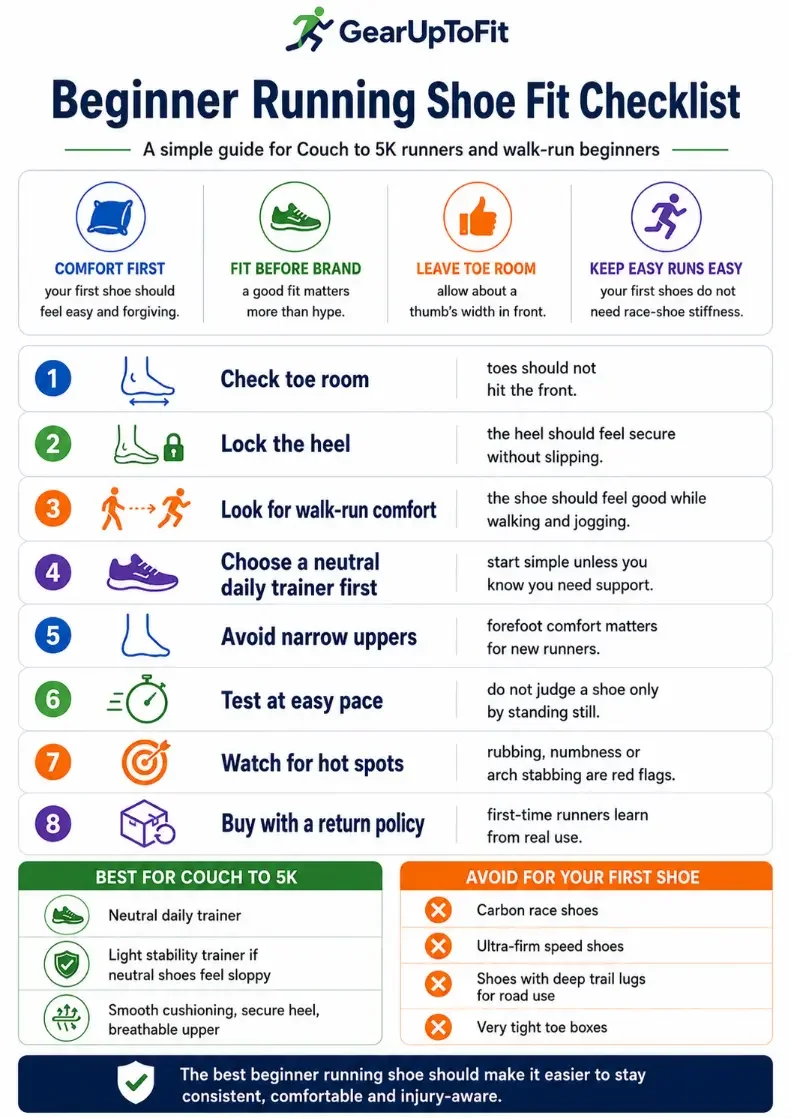
The useful question is rarely “Which shoe is best?” It is “Which shoe is a sensible match for this runner, this surface, and this session?” A road shoe, a track spike, a flexible minimalist shoe, and a cushioned daily trainer solve different problems. This guide gives you a way to compare them without turning marketing language into a medical promise.
Start with use, not the logo
| Use case | What to compare | Do not assume |
|---|---|---|
| Road running | Fit, cushioning feel, outsole durability, heat, and comfort over the distances you actually run. | That the softest foam is best for every runner or surface. |
| Track running shoes | Event, track rules, traction, fit, and whether the shoe is appropriate for the workout. | That a track shoe can replace a daily trainer for every session. |
| Trail or outdoor running | Surface, grip, rock protection, drainage, stability, and whether the shoe also needs to handle road miles. | That a rugged outsole automatically feels comfortable on pavement. |
| Barefoot or minimal shoes | Flexibility, protection, current conditioning, and a gradual transition plan. | That a minimal shoe is automatically suitable for every runner. |
How to interpret common brand searches
Altra running shoes
A search for Altra running shoes often reflects interest in fit geometry, forefoot room, or a different underfoot feel. Compare the actual model, length, width, heel security, and surface. If the geometry differs from the shoes you normally wear, use short, easy sessions first and monitor how your feet, calves, and lower legs respond.
Nimbus running shoes
“Nimbus” usually points to a cushioning comparison, but model versions and fit can change. Identify the exact model and version, then compare where you will run, how much cushioning you prefer, and whether the heel and midfoot feel secure. Do not turn a cushioning description into a claim about treating pain.
On Cloud running shoes
“On Cloud” is a broad brand search rather than one shoe. Narrow it to the model, use, surface, and fit. A useful review tells readers who should consider the shoe, who should skip it, and what to check in person.
Track running shoes
Track shoes vary by event and purpose. A sprint-oriented shoe, distance spike, and training flat may have different traction and fit expectations. Check meet rules and the coach or facility guidance where relevant; do not use a generic shopping list as a substitute.
A fit check you can do at home
- Measure both feet. Use the larger foot as the reference and measure near the end of the day when feet may be slightly larger.
- Use running socks. Try the socks you expect to wear, not a thin store sock that changes the fit.
- Check toe room standing. Toes should not press the front, and the forefoot should not be squeezed by the upper.
- Secure the heel. The heel should stay stable without aggressive lace pressure or numbness.
- Walk and jog briefly. Listen for rubbing, hot spots, pressure, slipping, or a change in your stride.
- Return early if needed. A shoe that feels wrong during a short test rarely becomes correct after a long run.
The American Podiatric Medical Association’s running-shoe guidance emphasizes matching shoe characteristics to foot shape and needs. The APMA Seal of Acceptance is a separate program; it is not a universal ranking of every running shoe.
Transition carefully when the shoe feels different
Changing drop, flexibility, stack, stability, or overall feel can change what your body experiences. The safest general approach is gradual: use the new shoe for short, easy sessions, keep the rest of the week familiar, and increase only when the transition remains comfortable. A transition is not a test of toughness.
Stop and seek qualified medical advice for persistent pain, numbness, swelling, a noticeable change in gait, or symptoms that worsen during or after running. A shoe guide can explain selection criteria; it cannot diagnose an injury or prescribe a shoe.
A five-minute decision matrix
| Question | If yes | If no |
|---|---|---|
| Will most miles be on paved roads? | Start with a road-oriented trainer and compare comfort and outsole wear. | Prioritize the actual surface: trail grip, track rules, or mixed-surface durability. |
| Do you need a specific event shoe? | Match the shoe to the event and training plan. | Choose a versatile trainer for normal sessions. |
| Does the current shoe cause pressure or slipping? | Change fit or last before chasing foam or brand claims. | Compare cushioning and surface features next. |
| Is the new shoe a major geometry change? | Plan a gradual transition. | Normal break-in and short tests may be enough. |
| Do symptoms persist? | Pause and seek qualified care. | Continue gradual use while monitoring comfort. |
Avoid the common comparison traps
- One universal winner: A winner only makes sense for a defined runner and use case.
- Specs without context: Stack, drop, and weight matter only alongside fit and use.
- Old model claims: Confirm the version, available sizes, and current manufacturer information.
- Affiliate certainty: A link or commission does not prove testing, suitability, or value.
- Medical shortcuts: Do not promise that a shoe prevents, treats, or cures an injury.
FAQ
Are barefoot running shoes suitable for beginners?
They may not be the simplest starting point for someone used to a more structured shoe. If you try them, use short, easy sessions, transition gradually, and stop if symptoms appear. Suitability depends on the runner, current conditioning, fit, and use.
Are Nimbus or On Cloud shoes better?
Neither brand is universally better. Compare the exact model, fit, surface, cushioning preference, price, and return policy. A transparent recommendation explains the assumptions behind the choice.
Can I use track running shoes for everyday miles?
That depends on the shoe and the use, but track-specific traction and construction may not be appropriate for every daily run. Check the event, surface, rules, and manufacturer guidance.
How much toe room should a running shoe have?
There should be enough room for the toes to avoid pressing the front while standing and moving, without the foot sliding inside the shoe. Fit depends on length, width, upper shape, socks, and the runner’s foot.
Should a review name one winner?
Only for a clearly defined use case. “Best for a wide forefoot on road easy runs” is more honest and useful than “best for everyone.”
Sources and editorial note
- American Podiatric Medical Association: Which running shoe is right for you?
- GearUpToFit running-shoe comparison
- Running shoes for wide feet
- Outdoor running-shoe guide
Editorial boundary: Shoe fit is personal, specifications and availability change, and persistent symptoms require qualified medical guidance.