
📊 Evidence-Based
⚡ Built for Busy Humans
Your immune system isn’t a light switch you “boost.” It’s a full-time security team: barriers (skin + gut lining), soldiers (immune cells), and communications (signals like cytokines). Food doesn’t replace sleep, vaccines, or medical care — but it does supply the raw materials your defenses need.
Quick Safety Note
This is educational, not medical advice. If you’re immunocompromised, pregnant, managing a chronic condition, or taking medications, ask your clinician what’s safe for you. Some “healthy” foods can still be the wrong move for certain people.
📑 What’s Inside This Guide
🎯 The 3-Step Immune Nutrition Playbook
Alex Hormozi-style translation: You don’t need 37 superfoods. You need a system you can execute when you’re tired.
Tim Ferriss-style translation: Find the minimum effective dose and repeat it.
Hit the Foundations
- Protein at most meals (immune cells are made of amino acids)
- Fiber daily (feeds your gut microbes → immune signaling)
- Micronutrients (vitamins/minerals are immune “tools,” not decorations)
If your basics are messy, “immune shots” won’t save you.
Build Your “Immune Plate”
- 2 colors minimum per meal (greens + reds/oranges/purples)
- 1 fermented food most days (yogurt, kefir, kimchi)
- 1 omega-3 or olive oil daily for inflammation balance
Simple rule: color + culture + clean protein.
Use Smart Add-Ons, Not Hype
- Use vitamin C foods consistently (not panic-chugging juice)
- Use zinc and probiotics strategically (details below)
- Prioritize sleep, stress management, and movement (food isn’t standalone)
The goal is a balanced immune response — not an overactive one.
💡 Want the full immune system lifestyle stack? Pair this nutrition guide with: 7 science-backed steps to increase your immune system naturally and these 10 natural tips to support your immune system.
🧬 How Immunity Works (Plain English)
Think of immunity as a three-layer defense system. No biology degree required.
Layer 1: Barriers
Skin, mucus, gut lining, and “tight junctions” are your perimeter fence. Vitamin A, D, zinc, and omega-3s support barrier integrity. Fiber feeds gut microbes that produce short-chain fatty acids like butyrate.
Layer 2: Innate Immunity
These are the bouncers: macrophages, neutrophils, natural killer (NK) cells. They act fast and use antioxidants and minerals to manage oxidative stress during battle.
Layer 3: Adaptive Immunity
T cells and B cells coordinate targeted attacks and build antibodies (your immune “memory”). Requires protein + folate, B vitamins, iron, zinc, and selenium.
The Modern Twist: Gut–Immune Axis
A huge share of immune activity is tied to the gut. That’s why fiber, fermented foods, and diet quality matter more than any single “immune booster.”
🎯 Translation: The best “immune diet” consistently supports barriers, reduces chronic inflammation, and provides raw materials for immune cells — without turning your kitchen into a supplement lab. Learn more about how metabolism and the immune system influence each other.
📊 The 12 Nutrients That Matter Most
Your “executive dashboard.” Don’t memorize it — use it to build meals that cover the bases.
| Nutrient | Why It Matters | Best Food Sources |
|---|---|---|
| Protein | Amino acids for antibodies and immune cell turnover | Poultry, eggs, Greek yogurt, legumes, fish |
| Vitamin C | Immune cell function; may reduce cold duration | Citrus, kiwi, red bell peppers, berries, broccoli |
| Vitamin D | Immune regulation; benefits more likely in deficiency | Fatty fish, egg yolk, fortified foods + sunlight |
| Vitamin A / Beta-Carotene | Mucosal integrity and “barrier strength” | Sweet potatoes, carrots, spinach, kale |
| Vitamin E | Antioxidant protection for immune cell membranes | Almonds, sunflower seeds, leafy greens |
| Zinc | Immune cell development; may shorten colds | Oysters, beef, pumpkin seeds, legumes |
| Selenium | Antioxidant enzymes and immune signaling | Brazil nuts (1-2), seafood |
| Folate + B12 | Cell division and immune cell replication | Leafy greens (folate), eggs/fish/dairy (B12) |
| Iron | Oxygen transport and immune function | Meat, legumes, leafy greens (+ vitamin C) |
| Omega-3s (EPA/DHA) | Inflammation balance and immune homeostasis | Salmon, sardines, trout, mackerel |
| Fiber + Prebiotics | Feeds gut microbiome; supports butyrate production | Oats, legumes, berries, vegetables, seeds |
| Polyphenols | Plant compounds for oxidative stress and signaling | Green tea, berries, dark chocolate, oregano |
💡 How to use this table: Don’t chase perfection. Aim for coverage. If your average day includes color + protein + fiber + fermented, you’re ahead of 90% of people. Athletes should also see nutrition for athlete recovery.
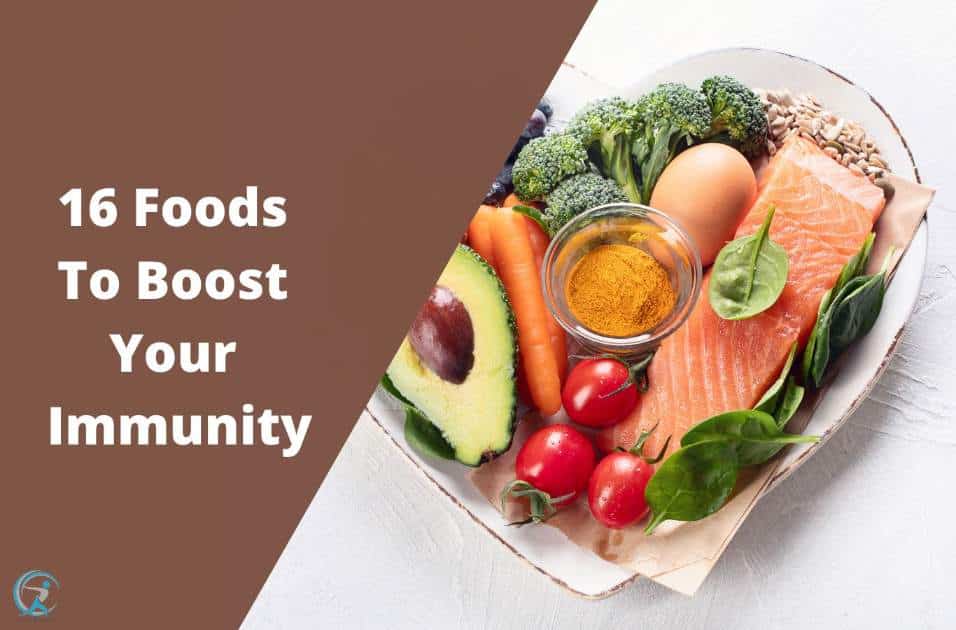
🥗 The 16 Foods That Support Your Immune System
2026 Edition — Including commonly missed “SERP gap” foods from competitive analysis.
⚠️ Reality check: No food prevents or cures infections on its own. Your goal is to make your baseline physiology harder to knock over. That’s “immune support.” Not “invincibility.”
Citrus Fruits (Especially Blood Oranges)
Citrus delivers vitamin C plus flavonoids. Blood oranges also bring extra anthocyanins — more “plant defense chemicals” that may influence oxidative stress.
🍴 Eat it: Orange + Greek yogurt bowl; lemon in lentil soup; grapefruit with breakfast. (Note: grapefruit can interact with some medications.)
SERP GAP
Red Bell Peppers
Vitamin C powerhouses that also provide beta-carotene. If you want “more vitamin C per bite,” this is the cheat code.
🍴 Eat it: Slice and dip in hummus; stir into eggs; roast with olive oil.
SERP GAP
Kiwi
Simple way to add vitamin C and fiber without a full meal prep project.
🍴 Eat it: Two kiwis as a snack; slice into oatmeal; blend into a smoothie.
SERP GAP
Papaya
Vitamin C, carotenoids, and digestive enzymes (papain). Efficient nutrition, not magic.
🍴 Eat it: Cubed papaya + lime; add to yogurt; freeze cubes for smoothies.
Berries (Blueberries, Strawberries, Raspberries)
Polyphenols (anthocyanins) + vitamin C with relatively low sugar density.
🍴 Eat it: Berries + kefir; add to oats; toss into salads.
SERP GAP
Broccoli (+ Other Cruciferous Vegetables)
Vitamins C, A, and E, fiber, and sulfur compounds linked to glutathione pathways. Include Brussels sprouts, kale, and cabbage.
🍴 Ferriss Move: Keep frozen broccoli on standby — removes “friction” from eating well.
Leafy Greens (Spinach, Kale)
Folate, beta-carotene, vitamin K, magnesium, and fiber. Foundational for gut health and micronutrient coverage.
🍴 Eat it: Spinach in smoothies; kale in soups; sauté with garlic and olive oil.
Sweet Potatoes (+ Carrots)
Orange vegetables = easiest way to raise beta-carotene for vitamin A status and barrier health.
🍴 Eat it: Baked sweet potato + Greek yogurt; mash with olive oil; add to bowls.
Tomatoes
Vitamin C plus lycopene. Cooked tomatoes (like tomato sauce) efficiently increase lycopene intake.
🍴 Eat it: Tomato + olive oil salad; add to soups/stews; marinara with lean protein.
SERP GAP
Garlic + Shallots
“Flavor adders” with sulfur compounds (like allicin). Research on supplements is mixed, but as a food habit it’s low-risk, high-upside.
🍴 Eat it: Mince into soups; roast whole cloves; sauté shallots as a base for everything.
Ginger (Fresh or Frozen)
Practical anti-inflammatory flavor tool. Makes “healthy food” taste like something you’d actually repeat.
🍴 Eat it: Ginger tea; grated into stir-fries; add to the soup recipe below.
SERP GAP
Turmeric (Curcumin)
Contains curcumin, studied for inflammation modulation. Pair with black pepper (piperine) + fat for better absorption.
🍴 Eat it: “Golden” turmeric latte; add to soups; turmeric eggs.
SERP GAP
Greek Yogurt
Protein + probiotics (if it contains live cultures). One of the easiest “two birds with one stone” foods.
🍴 Buy: Plain, high-protein, low added sugar. Eat: With berries + pumpkin seeds; as a sauce base (yogurt + lemon + garlic).
SERP GAP
Kefir
Fermented drink with multiple microbial strains. If yogurt feels boring, kefir is the “upgrade.”
🍴 Eat it: Drink plain; blend with berries; add to overnight oats.
SERP GAP
Almonds + Sunflower Seeds + Oregano
Sneaky powerful trio: almonds (vitamin E + healthy fats), sunflower seeds (vitamin E + selenium), oregano (polyphenols for flavor density).
🍴 Eat it: Seeds on salads; almonds as snacks; oregano on eggs, soup, roasted veggies.
SERP GAP
Fatty Fish + Oysters + Brazil Nuts
High ROI immune-support move: fatty fish (omega-3s EPA/DHA), oysters (zinc), Brazil nuts (selenium in small doses).
🍴 Eat it: Salmon/sardines 2x/week; oysters occasionally; 1-2 Brazil nuts a few times/week. (Selenium can be overdone.)
🍗 What about chicken soup and legumes? Yes — still elite. Poultry (protein + zinc), eggs (B12 + vitamin D), and legumes (fiber + folate) are the backbone. For performance-first nutrition, see essential nutrients for athletes.
📊 Nutrient Density Comparison Table
A practical decision tool based on vitamins/minerals + fiber/polyphenols per calorie.
| Food | Density | Top Immune Nutrients | Best Use |
|---|---|---|---|
| Red Bell Peppers | Very High | Vitamin C, beta-carotene | Snacks, salads, soups |
| Broccoli / Crucifers | Very High | Vitamins C, A, E, fiber, sulfur compounds | Daily vegetable base |
| Leafy Greens | Very High | Folate, beta-carotene, magnesium, fiber | Micronutrient coverage |
| Berries | High | Polyphenols, vitamin C, fiber | Antioxidant + gut support |
| Greek Yogurt | High | Protein, probiotics | Protein + microbiome |
| Fatty Fish | High | Omega-3 (EPA/DHA), vitamin D | Inflammation balance |
| Oysters | High | Zinc | Strategic mineral coverage |
| Brazil Nuts | High | Selenium | “Micro-dose” selenium |
| Almonds | Medium-High | Vitamin E, healthy fats | Functional snack |
| Green Tea | Very High | Catechins (EGCG), polyphenols | Zero-calorie add-on |
📅 7-Day “Minimum Effective Dose” Meal Template
Repeat meals that cover protein + fiber + color + fermented, then rotate produce for variety.
🌅 Breakfast (Choose 1)
- Greek yogurt + berries + sunflower seeds + honey
- Oats + kiwi + chia seeds + cinnamon
- Eggs + spinach + red bell pepper + oregano
☀️ Lunch (Choose 1)
- Big salad: greens + tomatoes + peppers + olive oil + protein
- Lentil bowl: lentils + sweet potato + broccoli + tahini
- Leftover soup (recipe below) + fruit
🌙 Dinner (Choose 1)
- Salmon + roasted crucifers + sweet potato
- Poultry stir-fry with ginger + garlic + broccoli
- Tempeh/miso bowl + greens + kimchi
🍎 Snacks (1-2)
- Kiwi or citrus + handful of almonds
- Kefir smoothie + berries
- 1-2 Brazil nuts (few times/week)
- Dark chocolate (80%+) after dinner
🔧 Execution Hack (Ferriss-Style): Keep these staples at home always: frozen broccoli, eggs, Greek yogurt, oats, lentils, canned sardines, frozen berries, garlic/ginger, olive oil. When you’re busy, your environment should do the “thinking.”
💊 Supplements: When They Help, When They Don’t
Most people don’t need a 20-pill stack. Highest ROI: (1) fix deficiencies, (2) support diet gaps, (3) avoid megadoses.
💛 Vitamin C
Consistent intake can modestly reduce cold duration. Taking it after getting sick is less reliable than regular intake. Food-first (peppers, kiwi, citrus) is the cleanest play.
☀️ Vitamin D
Evidence is mixed overall. Some subgroup patterns (daily dosing, deficiency status) may matter. If high-risk for low D, testing beats guessing.
⚡ Zinc
Prevention data is weak. As treatment (early), some evidence suggests shorter colds — but side effects (nausea, taste changes) are common.
🦠 Probiotics
Effects are strain-specific. Some reviews suggest fewer URTIs. Elderly/immunocompromised need extra caution. Food sources (yogurt/kefir) are a practical start.
⚠️ Don’t get trapped by the supplement industrial complex: If you don’t have a deficiency, more isn’t automatically better — and can be harmful. Your best “immune supplement” is still: sleep, diet quality, movement, and recommended vaccines.
🎬 One Video That Makes It All Click
This TED-Ed explainer is the cleanest 5-minute investment you can make to understand why these food choices matter.
Prefer reading? The same lesson exists as a transcript on TED-Ed.
🍲 Recipe: Ginger-Garlic Immune Support Soup
Fast, repeatable, family-friendly — and actually delicious.
✅ Why This Recipe Works
- Protein from chicken (or tofu/beans)
- Aromatics (garlic + shallots) for flavor density
- Ginger + turmeric for inflammation-friendly seasoning
- Mushrooms + greens for micronutrients and fiber
- Lemon at the end for brightness + vitamin C
🛒 Ingredients
- 1 tbsp extra virgin olive oil
- 1 medium shallot, diced
- 4-6 cloves garlic, minced
- 1-2 tbsp fresh ginger, grated
- 1 tsp turmeric + black pepper
- 2 carrots, sliced
- 2 celery stalks, sliced
- 8 oz mushrooms, sliced
- 1 lb chicken, bite-sized
- 6 cups bone broth
- 2 handfuls spinach or kale
- 1 lemon (juice at end)
- Salt to taste
- Optional: chili flakes, oregano
👨🍳 Instructions
- Heat olive oil in pot. Add shallot, cook 2-3 minutes until softened.
- Add garlic, ginger, turmeric, black pepper. Stir 30-60 seconds (don’t burn garlic).
- Add carrots, celery, mushrooms. Cook 4-5 minutes until slightly softened.
- Add chicken and broth. Simmer 18-22 minutes until chicken is cooked through.
- Stir in spinach/kale for final 2 minutes.
- Turn off heat. Add lemon juice. Taste, adjust salt, serve!
🍽️ Serve Like a Pro: Top with Greek yogurt + oregano, or serve with kimchi. This stacks protein + fermented + flavor without extra cooking. Batch tip: Make double and freeze — your future self deserves support!
❓ Frequently Asked Questions
Can foods “boost” immunity fast?
Food supports immune function over time by improving nutrient status, gut microbiome, and inflammation balance. You can improve your baseline quickly by cleaning up diet quality — but it’s not an instant shield.
What are the top 3 foods if I only pick a few?
Simplest “starter pack”: red bell peppers, Greek yogurt, and broccoli. Add salmon twice a week and you’re in a strong position.
Does vitamin C prevent colds?
Evidence is mixed. Regular intake may modestly reduce duration for some, but it isn’t a guaranteed preventative. Consistency matters more than “mega-dose panic mode.”
Is garlic antiviral?
Garlic contains compounds studied for antimicrobial activity, but it’s not a substitute for medical care. Use it as a food habit (flavor + consistency), not as a cure.
Do probiotics help with respiratory infections?
Some evidence suggests fewer URTIs and shorter duration, but outcomes depend on strain, dose, and population. Start with yogurt/kefir if tolerated; consider supplements if advised.
Should I take zinc when I’m sick?
Prevention evidence is weak. For treatment, some studies show shorter colds, but side effects are common. Do it early, follow label guidance, and avoid long-term high-dose use.
What’s the biggest mistake people make with “immune diets”?
Chasing single ingredients (elderberry gummies, “shots,” powders) while ignoring sleep, protein, fiber, and overall diet quality — the things that actually move the needle.
📚 Related Reading on GearUpToFit
© 2026 GearUpToFit • This content is informational and does not replace professional medical advice.