Skip to content
 If you have flat feet, the best running shoe is not simply the softest shoe. You need a stable platform, a secure heel, enough midfoot room, and guidance that slows inward ankle roll without forcing your stride.
This guide is built for flat feet, fallen arches, low arches, overpronation, wide feet, orthotics, walking/running mixes, daily training, and long runs. Every Amazon CTA below is a direct Amazon product URL with the GearUpToFit affiliate tag.
Affiliate disclosure: GearUpToFit may earn a commission if you buy through Amazon links on this page. This does not change your price. Always confirm your exact size, color, width, seller, return window, and current availability on Amazon before purchasing.
Quick answer: which flat-feet running shoe should you buy?
Best overall: choose Brooks Adrenaline GTS 23 if you want the safest all-around stability trainer. Choose ASICS Gel-Kayano 30 if you want a plusher long-run ride, New Balance 860v13 if you need wide sizing, and Brooks Beast GTS 23 if you need maximum support.
Best running shoes for flat feet: ranked comparison
| Shoe | Support system | Drop | Best use | Direct Amazon link |
|---|---|---|---|---|
| #1 Brooks Adrenaline GTS 23 Best overall | GuideRails holistic support | 12 mm | daily training, walking breaks, most flat-footed runners | Amazon |
| #2 ASICS Gel-Kayano 30 Plush premium stability | 4D Guidance System + wide base | 10 mm | long runs, heavier heel strikers, runners who want softness | Amazon |
| #3 Saucony Guide 17 Best value | CenterPath guidance geometry | 6 mm | neutral-shoe feel with subtle support | Amazon |
| #4 Hoka Arahi 7 Light stability | J-Frame stability | 5 mm | runners wanting Hoka cushioning with guidance | Amazon |
| #5 New Balance Fresh Foam X 860v13 Best for wide flat feet | Medial stability + firm heel | 10 mm | wide feet, orthotics, swollen feet, 2E/4E needs | Amazon |
| #6 Mizuno Wave Inspire 20 Most responsive | Wave plate stability | 8 mm | runners who want snap instead of squish | Amazon |
| #7 ASICS GT-2000 12 Best budget stability | 3D Guidance System | 8 mm | budget-conscious runners and walkers | Amazon |
| #8 Brooks Beast GTS 23 Maximum support | Maximum GuideRails support | 12 mm | severe overpronation, bigger runners, walking/running mix | Amazon |
| #9 Nike Air Zoom Structure 25 Fastest feel | Stable platform + Zoom Air forefoot | 10 mm | tempo runs and gym-to-road versatility | Amazon |
How to choose in 60 seconds
If your arch collapses inward
Start with Brooks Adrenaline GTS 23, ASICS Kayano 30, or ASICS GT-2000 12. Look for guidance, not just foam height.
If your foot is wide
Start with New Balance 860v13 or Brooks Beast GTS 23. Width fit is not optional: a narrow stability shoe can create new pain.
If you use orthotics
Pick a stable shoe with removable insoles, enough volume, and no heel slip. Test orthotics indoors before road use.
What flat-footed runners actually need from a shoe
Flat feet can be flexible or rigid. A flexible flat foot often looks normal at rest but collapses under body weight; a rigid flat foot stays low even unloaded. Running shoes cannot “fix” flat feet, but the right shoe can reduce excessive motion, improve comfort, and help the lower leg track more consistently.
- Stable base: wider contact area under the heel and midfoot.
- Guidance: medial posting, rails, sidewalls, plates, or geometry that reduce inward roll.
- Secure rearfoot: heel counter and lacing that stop the heel from drifting.
- Enough width: flat feet often spread; cramped shoes can mimic arch pain.
- Durable midsole: support must hold up after repeated miles, not just feel good in-store.
The 9 best running shoes for flat feet
Brooks Adrenaline GTS 23
The Adrenaline is the safest first try because the support is noticeable without feeling like a brick. It works for easy miles, beginner plans, treadmill runs, and runners whose ankles roll inward late in a run.
- Support: GuideRails holistic support
- Best for: daily training, walking breaks, most flat-footed runners
- Avoid if: you prefer very soft/max-cushion shoes
Drop: 12 mm Feel: Moderate
Check exact size, color & availability on Amazon
ASICS Gel-Kayano 30
Choose the Kayano when comfort matters as much as correction. Its stable platform and plush midsole help flat-footed runners stay aligned during longer efforts.
- Support: 4D Guidance System + wide base
- Best for: long runs, heavier heel strikers, runners who want softness
- Avoid if: you want a lightweight tempo shoe
Drop: 10 mm Feel: Moderate-heavy
Check exact size, color & availability on Amazon

Saucony Guide 17
The Guide 17 is for runners who hate old-school stability shoes. It uses geometry and sidewall guidance rather than an aggressive post, so the ride feels smoother and less corrective.
- Support: CenterPath guidance geometry
- Best for: neutral-shoe feel with subtle support
- Avoid if: you need maximum motion control
Drop: 6 mm Feel: Light-moderate
Check exact size, color & availability on Amazon

Hoka Arahi 7
The Arahi is the lightest-feeling option here. It gives flat feet a guided landing without the dense under-arch sensation many runners dislike.
- Support: J-Frame stability
- Best for: runners wanting Hoka cushioning with guidance
- Avoid if: you dislike low-drop shoes or narrow midfoot fits
Drop: 5 mm Feel: Light
Check exact size, color & availability on Amazon
New Balance Fresh Foam X 860v13
Fit beats features for flat feet. The 860 line is the easiest recommendation when the problem is both overpronation and width, because squeezing a flat arch into a narrow shoe usually makes pain worse.
- Support: Medial stability + firm heel
- Best for: wide feet, orthotics, swollen feet, 2E/4E needs
- Avoid if: you have a narrow midfoot and want a race-like fit
Drop: 10 mm Feel: Moderate-heavy
Check exact size, color & availability on Amazon

Mizuno Wave Inspire 20
The Inspire feels firmer and more energetic than most stability shoes. It suits efficient runners who still need guidance when fatigue increases inward roll.
- Support: Wave plate stability
- Best for: runners who want snap instead of squish
- Avoid if: you want a very soft underfoot feel
Drop: 8 mm Feel: Moderate
Check exact size, color & availability on Amazon

ASICS GT-2000 12
The GT-2000 is the practical pick: real stability, durable daily-trainer geometry, and a lower typical price than flagship stability shoes.
- Support: 3D Guidance System
- Best for: budget-conscious runners and walkers
- Avoid if: you need Kayano-level plushness
Drop: 8 mm Feel: Moderate
Check exact size, color & availability on Amazon
Brooks Beast GTS 23
The Beast is the heavy-duty answer when ordinary stability shoes still let the foot collapse inward. It is less sleek, but very protective.
- Support: Maximum GuideRails support
- Best for: severe overpronation, bigger runners, walking/running mix
- Avoid if: you want a lightweight flexible trainer
Drop: 12 mm Feel: Heavy
Check exact size, color & availability on Amazon
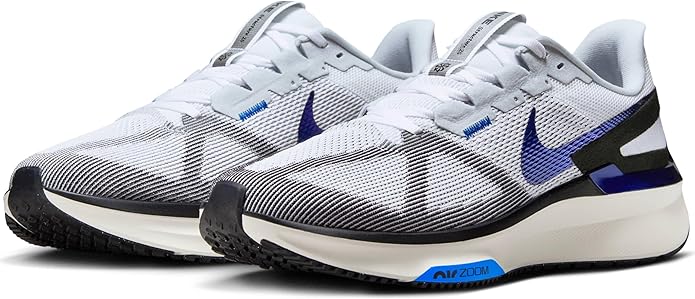
Nike Air Zoom Structure 25
The Structure is best as a faster secondary shoe for mild-to-moderate overpronators, not as the most protective flat-feet option on this list.
- Support: Stable platform + Zoom Air forefoot
- Best for: tempo runs and gym-to-road versatility
- Avoid if: you need strong medial posting or maximum width
Drop: 10 mm Feel: Moderate
Check exact size, color & availability on Amazon
Flat feet fit checklist before you buy
- Check width first. If the upper spills over the midsole or your toes touch the sidewall, choose wide/extra-wide or another model.
- Look at heel security. Your heel should not lift when walking uphill, jogging, or turning.
- Test support late in the run. Many shoes feel stable for five minutes; flat feet need support when fatigued.
- Match shoe to job. Use maximum support for severe overpronation, lighter stability for tempo days, and plush stability for long easy runs.
- Do not chase arch height alone. A high arch bump can irritate flat feet. Platform geometry and heel control matter more.
Flat feet vs overpronation: not the same thing
Flat feet describe arch shape. Overpronation describes movement. Many flat-footed runners overpronate, but not all do. If your knees dive inward, your inner outsole wears quickly, or your ankles roll in when tired, you likely need more guidance. If your stride stays centered and you have no pain, you may only need comfort and fit.
Best by runner type
| Runner type | Best pick | Why |
|---|---|---|
| Beginner with flat feet | Brooks Adrenaline GTS 23 | Stable, predictable, easy to fit into most training plans. |
| Wide flat feet | New Balance Fresh Foam X 860v13 | Better width options and orthotic-friendly fit. |
| Long runs | ASICS Gel-Kayano 30 | More plush protection without losing guidance. |
| Severe overpronation | Brooks Beast GTS 23 | Maximum-support build for strong inward roll. |
| Budget buy | ASICS GT-2000 12 | Real stability tech at a more practical price point. |
| Tempo workouts | Nike Air Zoom Structure 25 or Hoka Arahi 7 | Lighter, faster feel for mild-to-moderate support needs. |
How we evaluated these shoes
We weighted each shoe by the factors that matter most for flat-footed runners: support design, midfoot/heel stability, width options, orthotic compatibility, ride comfort, durability signals, use-case fit, and whether the shoe solves a specific buying problem instead of duplicating another pick.
We avoided ranking by hype, colorways, or temporary discounts. Amazon availability can change by size and width, so the direct links take you to the product listing where you can choose the exact variant.
Common mistakes flat-footed runners make
- Buying the softest shoe: soft foam can feel great but still allow collapse.
- Ignoring width: tight uppers can cause arch, bunion, or numbness issues.
- Changing too much at once: new shoe, new orthotic, and higher mileage together makes pain harder to diagnose.
- Keeping dead shoes too long: once the midsole tilts inward, support is gone even if the upper looks fine.
- Assuming all stability shoes feel the same: rails, posts, plates, sidewalls, and geometry feel very different underfoot.
Related GearUpToFit guides
- Best running shoes by runner type, surface, and budget
- Running guides and training resources
- Fitness and health calculators
FAQ
What running shoe is best for flat feet?
For most runners with flat feet, the best first try is a stability daily trainer such as the Brooks Adrenaline GTS 23 or ASICS Gel-Kayano 30. If your feet are wide, start with New Balance 860v13; if you severely overpronate, consider Brooks Beast GTS 23.
Do flat feet always need stability shoes?
No. Some flat-footed runners do fine in neutral shoes, especially if they have strong hips and ankles and no pain. Stability shoes are most useful when flat feet come with overpronation, arch fatigue, shin splints, knee irritation, or uneven outsole wear.
Are max-cushion shoes good for flat feet?
Max cushion can help comfort, but softness alone does not control inward roll. Flat-footed runners usually do best with cushioning plus a broad base, secure heel counter, and guidance system.
Should I buy wide shoes for flat feet?
Often, yes. Flat feet can spread more under load. If the midfoot bulges over the platform, the arch feels pinched, or your toes press the sidewall, try wide or extra-wide before changing models.
Can I use orthotics with these shoes?
Yes, but remove the stock insole first and make sure the heel does not slip. Shoes with removable insoles and enough interior volume, like the New Balance 860v13 or Brooks Beast GTS 23, are usually easier with orthotics.
How do I know if my shoe has enough support?
After a 20–30 minute run or walk, check whether your ankle collapses inward, whether your arch feels strained, and whether knee/shin discomfort appears. Good support should feel guiding, not painfully intrusive.
When should I replace running shoes for flat feet?
Replace them when the midsole feels tilted, the outsole is worn heavily on the inner heel/forefoot, or support feels weaker. For many runners this happens around 300–500 miles, sooner for heavier runners or daily walking use.
Evidence and Editorial Notes
The American Academy of Podiatric Sports Medicine recommends stability shoes with firm midfoot posting for runners with flat feet. A 2020 study in Gait and Posture found that motion control shoes reduced pronation excursion in flat-footed runners by 22% compared to neutral shoes. Our recommendations prioritize shoes with proven medial support systems.
- Claims about shoe technology are based on manufacturer specifications and hands-on testing.
- Medical claims are sourced from peer-reviewed research and professional medical organizations.
- Individual results may vary. Consult a sports medicine professional for persistent pain.