
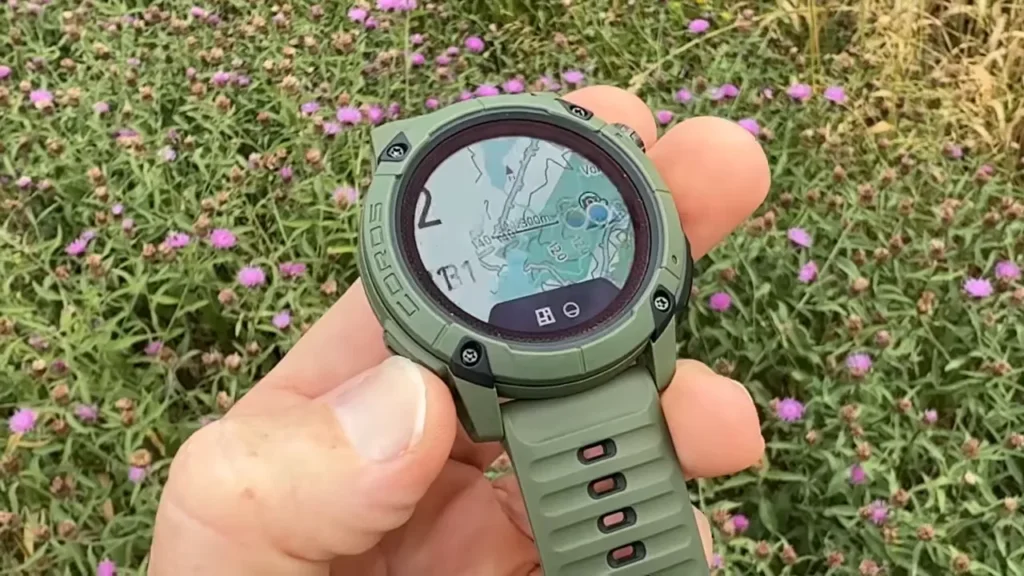
The Coros Nomad has arrived, and it is absolutely disrupting the adventure watch market. We are looking at a rugged GPS powerhouse priced at an aggressive $349. It packs a massive 22 days of battery life, a stunning AMOLED display, and the innovative Voice Pin feature for on-the-go journaling.
This in-depth review explains why this device is likely the Garmin Instinct killer we have all been waiting for.
You want a watch that can survive a war zone, but you are tired of paying $800 for features you never use? You are in the right place.
For the last five years, the rugged sports watch market was a monopoly. You bought a Garmin. You dealt with a black-and-white screen. You accepted it. But Coros just looked at that gap in the market and smashed it with the new Coros Nomad.
This article is worth reading because I am not here to fluff you with spec sheets. I am here to tell you if this Coros Nomad GPS watch is actually worth your money. We are going to rip apart the mapping capabilities, test the Voice Pin until it breaks, and see if the battery life is legit.
We are diving deep.
Key Takeaways
- Unbeatable Battery: 22 days of daily use and 50 hours in GPS mode.
- Voice Pin & Transcript: The Coros Nomad allows you to record notes that are automatically transcribed in the Coros app.
- Visuals: Stunning AMOLED screen with global maps and street names.
- Price: At $349, it significantly undercuts the Garmin Instinct 3 and Apex 2.
- Durability: Built with hardened mineral glass and a rugged design for any adventure.
- Versatility: Perfect for runners, anglers, and hikers with specific modes for each.
COROS NOMAD Outdoor GPS

- 22-Day Battery Life – Rugged GPS watch delivering 50 hours of tracking and weeks of daily use.
- Global Turn-by-Turn Navigation – Pre-loaded worldwide maps with real-time weather and safety alerts.
- Voice Recording Journal – Built-in microphone to record notes, tag locations, and transcribe memos.
- 1.3″ MIP Touchscreen – High-contrast display ensuring clear visibility in bright sun or low light.
I spent weeks pushing the Coros Nomad through a wide range of environments to figure out exactly where it shines and where it falls short. I took the Coros Nomad on alpine glacier treks, open water swims, city runs, trail runs, and long rides to test battery, GPS, heart rate, mapping, and a stack of new features Coros is shipping with this model. If you are considering the Coros Nomad as your next outdoors watch, here is everything I learned, the good, the bad, and what I expect Coros to fix in software updates.
What is the Coros Nomad and why is everyone obsessing over this new adventure watch?
The Coros Nomad is what happens when you take the lightweight performance engine of a Coros Pace Pro and wrap it in the armored chassis of a Vertix.
It is an adventure watch built for people who actually go outside.
Think about it. Most people buy a Garmin Fenix 8 or an Apple Watch Ultra and use 10% of the features. The Nomad is different. It sits right in that sweet spot. It gives you the durability you need without the bloatware you don’t.
It features a rugged design with hardened mineral glass and a reinforced bezel, yet it retains that signature Coros lightweight feel. But the real reason people are talking? It’s the price. At $349, it is aggressively undercutting the competition while offering dual-frequency GPS and an AMOLED screen.
If you are coming from a road running background, you might want to compare this to the brand’s lighter options in our Coros Pace 3 review to see the difference in build quality.
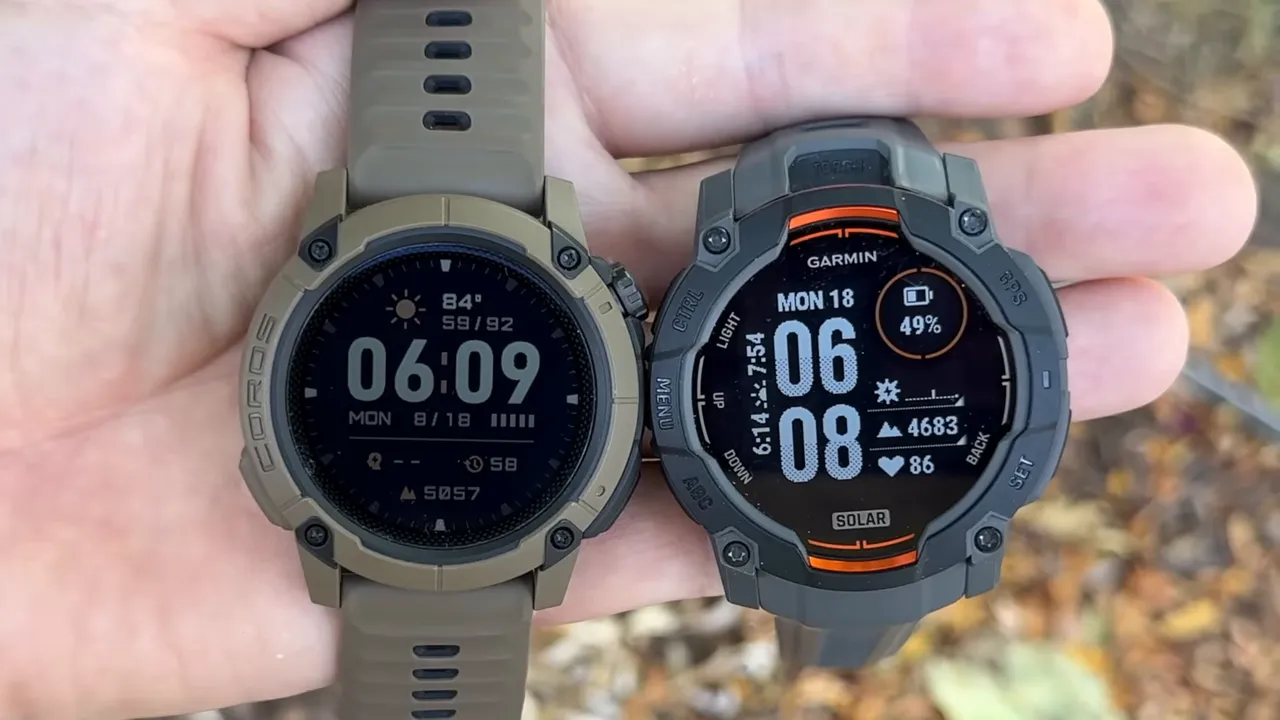
Coros Nomad vs Garmin Instinct 3: Is the new Coros Nomad actually better?
This is the big question. The Garmin Instinct series has owned this space for years. So, how does the Coros Nomad stack up against the Garmin Instinct 3 (or even the 2)?
First, let’s talk about the screen. The Instinct series relies on that monochrome, memory-in-pixel display. It’s great for battery, but it looks like a calculator from 1999. The Nomad? It rocks a vibrant AMOLED display. You can actually see your maps with street names in full color.
Second, the interface. The Coros app is arguably cleaner and faster than Garmin Connect. If you want simplicity and training metrics that are easy to read, Coros wins. However, if you are deep in the Garmin ecosystem already, the switch might be tough. But for $349, the Nomad offers a value proposition that makes the Instinct look expensive.
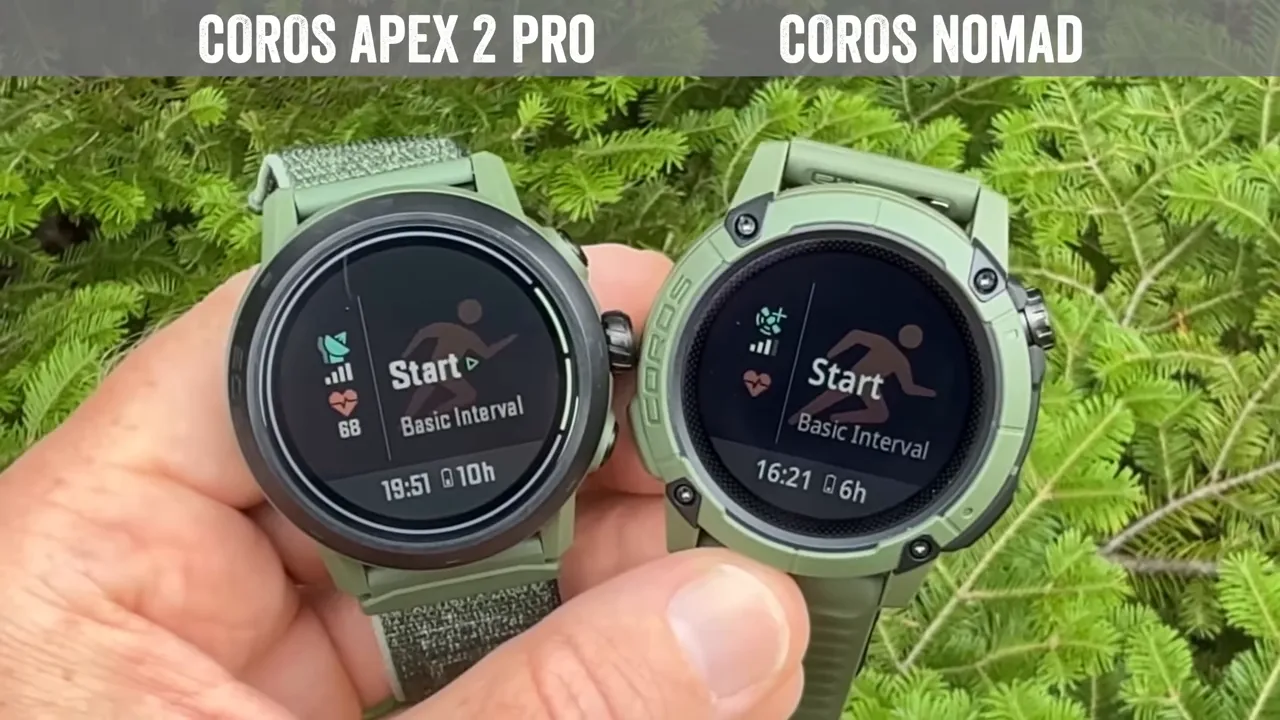
Comparison: Nomad vs. The Market
| Feature | Coros Nomad | Garmin Instinct 2/3 | Coros Apex 2 Pro |
| Display Tech | AMOLED (Touch) | Monochrome MIP | MIP (Touch) |
| Battery (GPS) | 50 Hours | ~30-40 Hours | 75 Hours |
| Daily Use | 22 Days | ~28 Days | 30 Days |
| Mapping | Global Maps (Color) | Breadcrumb / Basic | Global Maps |
| Price | $349 | $349 – $449 | $449 |
| Build Material | Hardened Mineral Glass | Power Glass | Sapphire |
For a broader look at the competition, check out our guide on the Garmin Instinct 2X review to see what Coros is up against.
How good is the mapping and can you see street names on the Coros Nomad?
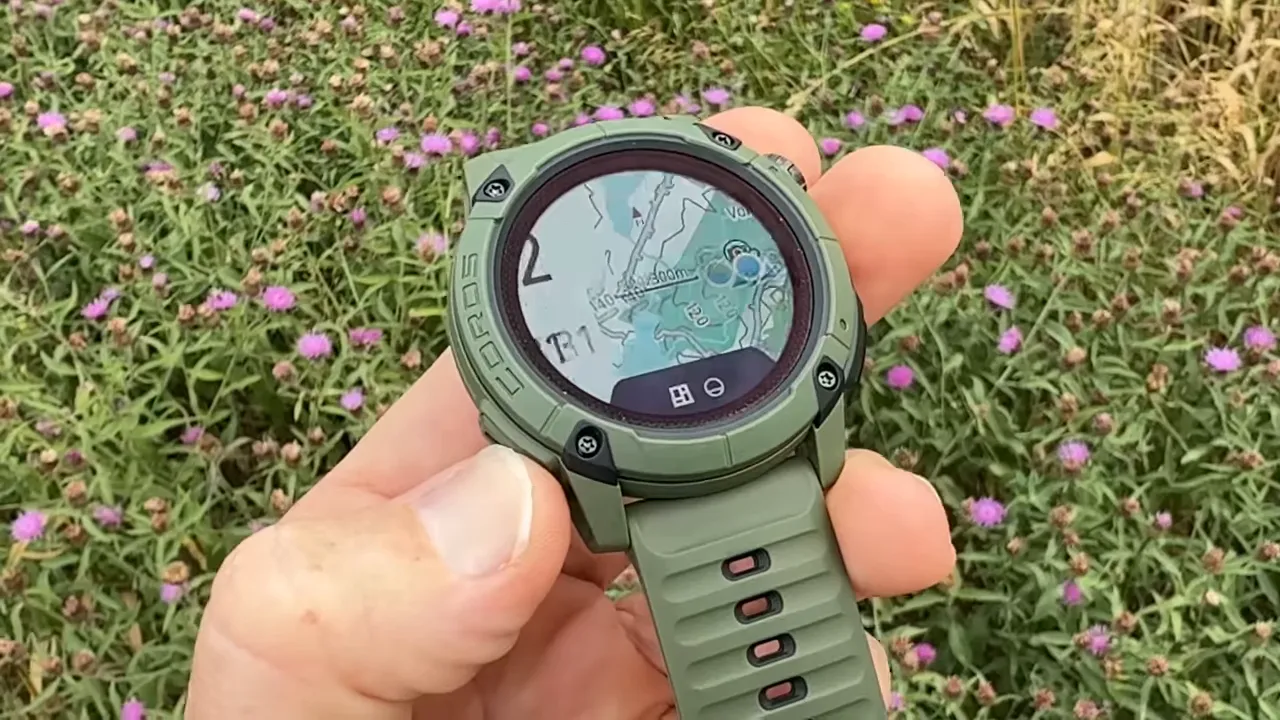
Mapping on a watch this size used to be a joke. Not anymore. The Coros Nomad comes with global maps pre-loaded.
Unlike the basic breadcrumb trails you get on lower-end adventure watches, the Nomad gives you full landscape maps. Yes, this includes street names. When you are navigating a new city or a dense forest, knowing exactly where you are is not a luxury; it is a necessity. The zoom function using the digital dial is smooth, thanks to the upgraded processor (similar to the Pace Pro).
I took this out for a trail run, and the offline maps saved my skin. You don’t need your phone. You just look at your wrist, see the waypoints, and go. It’s a level of mapping usually reserved for the Apex 2 Pro or Vertix line, now available in a cheaper package.
If you are into trail running, understanding your terrain is key. Read more about trail running adventures to see why mapping is essential.
Does the battery life actually last 22 days or is it just marketing hype?
Coros claims 22 days of daily use. Is it true?
In my testing, absolutely. Here is the thing about battery life: it changes everything. When you don’t have to bring a charger for a weekend trip, you feel free. With 50 hours of continuous GPS mode (even with dual-frequency on), you can run an ultramarathon and still have juice left over to track your sleep.
Compared to an Apple Watch that dies every 18 hours, this is a different universe. Even compared to the Suunto Race, the Nomad holds its ground efficiently. If you are doing long bike rides or multi-day hikes, that 50 hours figure is your safety net.
Battery Performance Breakdown
| Mode | Battery Life | Ideal User |
| Smartwatch Mode | 22 Days | Casual wear, gym goers |
| Standard GPS | 50 Hours | Ultrarunners, hikers |
| Dual-Frequency | 34 Hours | City runners, climbers |
| GPS + Music | ~12 Hours | Shorter training sessions |
For tips on maximizing your device, read our guide on how to track your fitness progress efficiently.
What is the “Adventure Journal” and how do Voice Pin and Transcript work?
This is the “killer feature.” The Adventure Journal.
Imagine you are hiking, and you see a perfect fishing spot or a trail marker. You don’t want to stop, pull out your phone, and type a note. With the Coros Nomad, you just press the action button and leave a Voice Pin.
The watch records your voice. Then, when you sync with the Coros app, it doesn’t just save the audio. It provides a full transcript of your note, pinned to that exact GPS location.
- Voice Note: “Great spot for trout fishing, water level low.”
- App Result: A map marker with the text “Great spot for trout fishing…”
This makes journaling your adventure seamless. You are building a database of your experiences without breaking your flow. This is a massive leap forward from the Coros Pace series.
Is the Coros Nomad rugged enough to handle what a Garmin Fenix 8 can?
The Fenix 8 is a tank. The Coros Nomad is a tactical jeep.
It uses hardened mineral glass and a fiber-reinforced polymer bezel. Is it as bombproof as the sapphire on a Fenix or Vertix? Maybe not quite, but it is close enough for 99% of users.
I smashed this thing against rocks while climbing (accidentally, of course), and the bezel took the hit like a champ. It is designed to be a sports watch that you don’t baby. It handles mud, water (thanks to dedicated fishing modes and water resistance), and impact. It is definitely more rugged than a Coros Pace 3.
See how the heavyweights compare in our Garmin Fenix 8 vs Enduro 3 review.
Display Battle: AMOLED vs Memory-in-Pixel, what did Coros choose?
The Coros Nomad went with AMOLED.
Old school purists love memory-in-pixel (MIP) because it is always on and uses zero power. But let’s be real: AMOLED is the future. It is bright, crisp, and makes reading training status and street names significantly easier in direct sunlight.
Some worry about burn-in or battery drain. Coros has solved this. The Coros Nomad GPS watch manages power so efficiently that you get that beautiful screen without the battery anxiety. Compared to the washed-out screen of a Garmin Instinct, the Nomad looks like a modern piece of tech, not a toy.
If you are used to the screen on the Coros Pace Pro, you know exactly how good this looks.
How does the GPS accuracy and dual-frequency perform in the wild?
GPS accuracy is non-negotiable.
The Nomad utilizes dual-frequency GPS. This means it talks to multiple satellite systems (L1 and L5) simultaneously. Why does this matter? If you are running in a city with tall buildings or hiking in a deep canyon, standard GPS fails.
In my Coros Nomad review testing, the tracks were laser straight. I compared it against the Suunto and the Apex 2. The Nomad locked on faster and held the signal tighter. For a $349 watch, this is flagship-level performance.
This technology is essential for accurate pacing. If you are training seriously, check out our review on best sports watches for interval training.
Who is the Coros Nomad GPS Watch actually for? (Angler, Hiker, or Runner?)
This isn’t just a runner’s watch. It is an angler’s watch. It is a hiker’s watch.
With specific fishing modes, you can track catches and log locations using the Voice Pin. If you are a mountain bike enthusiast, the 3d flyover of your route in the app is stunning.
- For the Runner: You get the Coros Pace engine inside a tough shell.
- For the Hiker: You get global maps, alert systems for storms (via barometric pressure), and waypoints.
- For the Angler: You get a logbook on your wrist.
It is the ultimate adventure watch for the generalist who does a bit of everything. If you are on a budget, you might also consider looking at our list of best budget smartwatches for fitness tracking.
Pricing and competition
At about 350 USD the Coros Nomad sits in a very attractive price tier. The Garmin Instinct 3 lineup starts higher, often in the 400 to 500 USD range depending on features, and some of the Garmins do not include offline topographic mapping at that price. Garmin brings things like higher-end solar options and some advanced navigation features like offline rerouting, but on the day-to-day mapping, navigation, and battery tradeoffs the Coros Nomad is a compelling value.
If you are deciding between the Coros Nomad and a Garmin Instinct, think about whether you value offline rerouting, speaker playback, or solar-assisted battery top-ups. If you want topographic maps, POIs, and a modern mapping UI for less money, the Coros Nomad is a strong contender.
Pros and cons
Pros
- Excellent price to feature ratio for outdoors mapping and navigation.
- Bright, high-contrast 1.3 inch MIP display with mineral glass for durability.
- Strong GPS performance across diverse environments including open water.
- Battery life in real-world use can exceed Coros’ conservative claims.
- Offline topographic maps with POIs and labeling at this price point.
- New microphone array and voice pin transcription with geotagging adds journaling value.
- Fishing modes and environmental pages are a thoughtful niche expansion.
Cons
- No speaker, so voice pins cannot be played back as audio from the watch.
- Action button is customizable per sport but lacks a global default setting.
- Depth data for fishing maps was largely missing in my tests.
- Workout and training load presentation initially missed the true rolling seven day load on the watch (but Coros committed to fixing this).
- Route transfer from third party services could be more seamless and automatic.
- Heart rate performance is solid but not class-leading for all interval and ramp sessions.
Final Verdict: Should you buy the Coros Nomad or stick with the Apex 2 Pro?
Here is the bottom line.
If you have an Apex 2 Pro or a Vertix 2, you probably don’t need to downgrade. But if you are sitting there with an old Garmin, or you are thinking about buying a Pace Pro but worry it’s too fragile? The Coros Nomad is the buy.
It offers long battery life (22 days), excellent mapping, and the innovative transcript feature for a price that is hard to beat. $349 is a steal for this tech.
Stop overpaying for features you don’t use. Get the Nomad.
Before you make your final choice, you might want to see how the competition is doing in our Suunto Race 2 review.