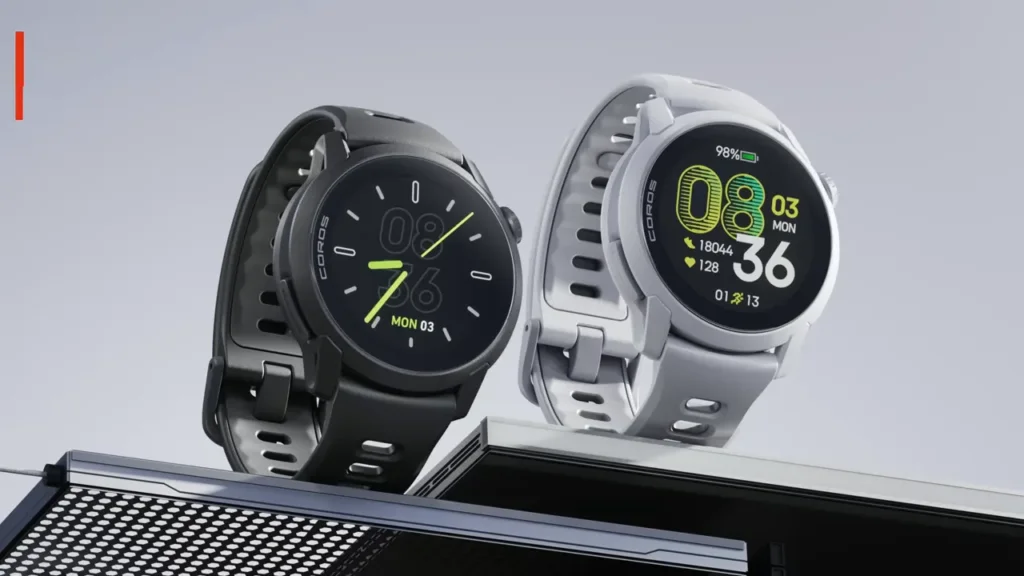
The COROS Pace 4 is a compact, value-focused GPS sports watch that brings several meaningful hardware updates over its predecessor while staying within a budget-friendly price bracket. I spent weeks running, swimming, and cycling with the COROS Pace 4 to see how those upgrades translate into everyday use, training accuracy, and battery life. Below I break down the specs, the things that really matter, how it compares to both the Pace 3 and the Pace Pro, and who should consider buying one.

COROS PACE 4 Ultralight Sport GPS Watch, 1.2″ AMOLED Touchscreen,19 days of dail
Quick overview: what the COROS Pace 4 changes
The standout changes on the COROS Pace 4 are easy to list and quickly explain why this model matters. It moves the series from MIP to an AMOLED display, adds an updated optical heart rate sensor and a microphone, introduces an action button, and tweaks the hardware and battery profile. Price is slightly higher than the Pace 3 but positioned to nudge buyers who want offline maps toward the Pace Pro.

COROS PACE 3 GPS Sport Watch – Lightweight, Comfortable Running Watch, 17-Day Ba
Key specifications at a glance
- Display: 1.2 inch 1500 nit AMOLED
- Weight: 40 g with default silicone strap; 32 g with optional nylon
- Thickness: 11.8 mm
- Bands: Standard 22 mm quick-release
- Sensors: Updated wrist optical heart rate sensor
- Connectivity: GPS/GLONASS/Galileo multi-band options (Max Satellite Mode available)
- Microphone: Yes (no speaker)
- Water resistance: Swim-capable (but offline maps not included)
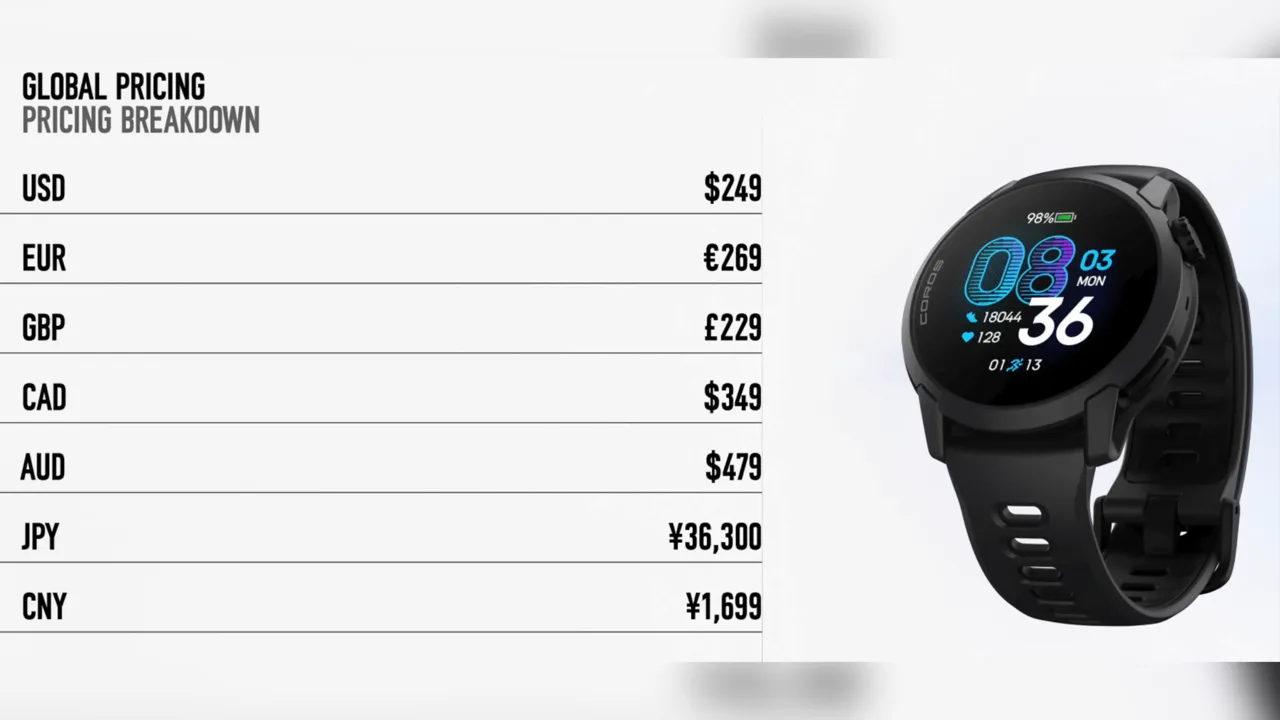
- Price at launch: $249 (varies by region)
AMOLED display: great visibility, different battery trade-offs
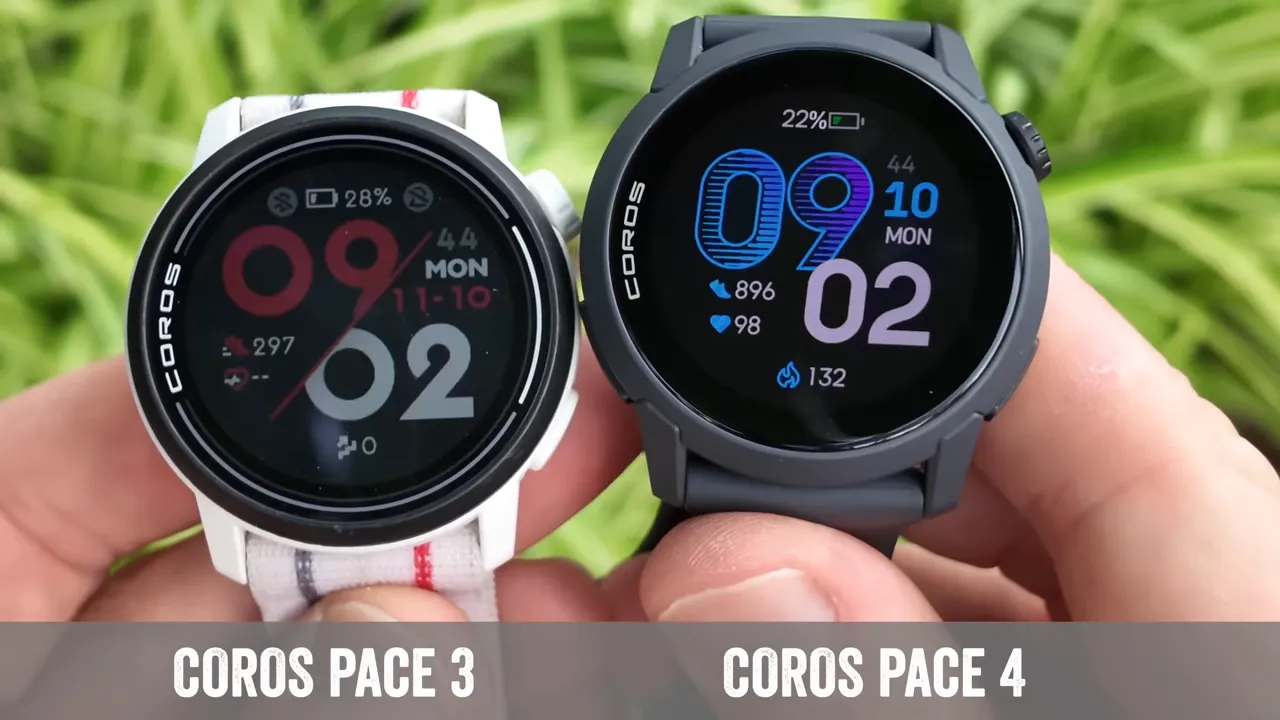
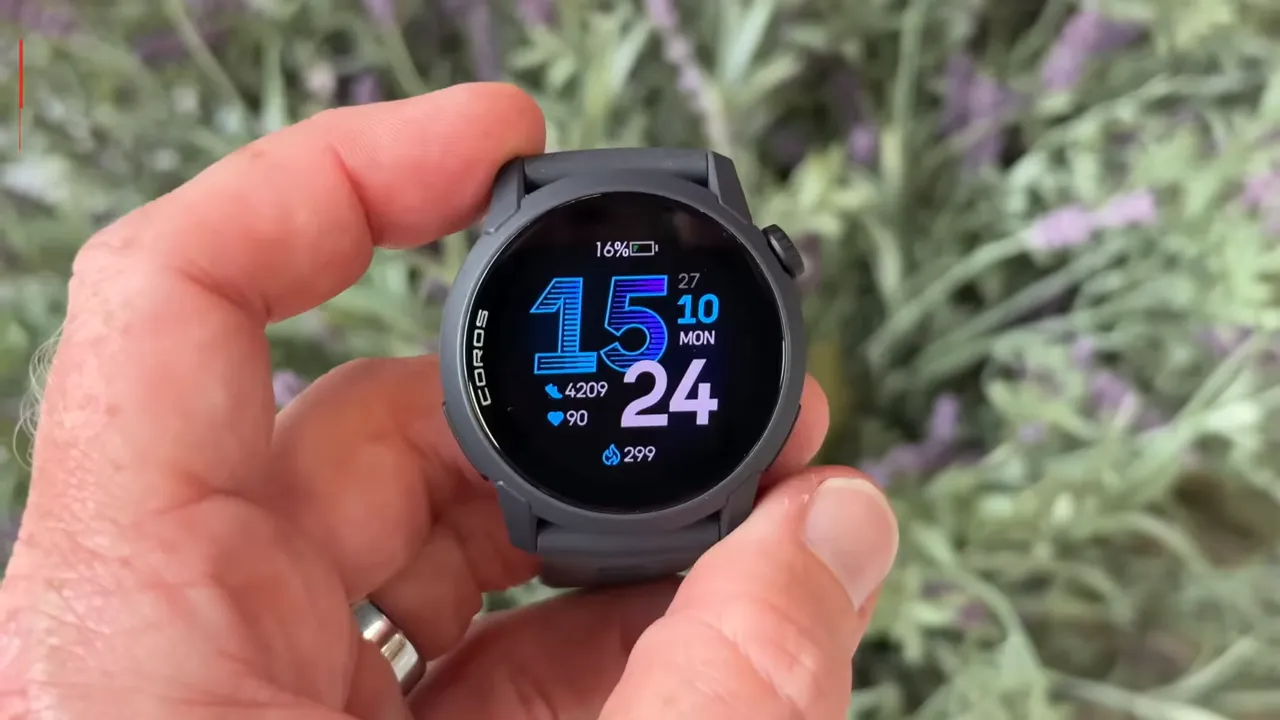
The COROS Pace 4 switches to a bright 1500 nit AMOLED panel. In daily use the screen looks much sharper than the Pace 3 and is perfectly readable in strong Mediterranean sunlight. The display size is technically slightly smaller than the previous model—1.2 inch versus 1.3 inch—but pixel density is much higher, so the visual experience is a net win.
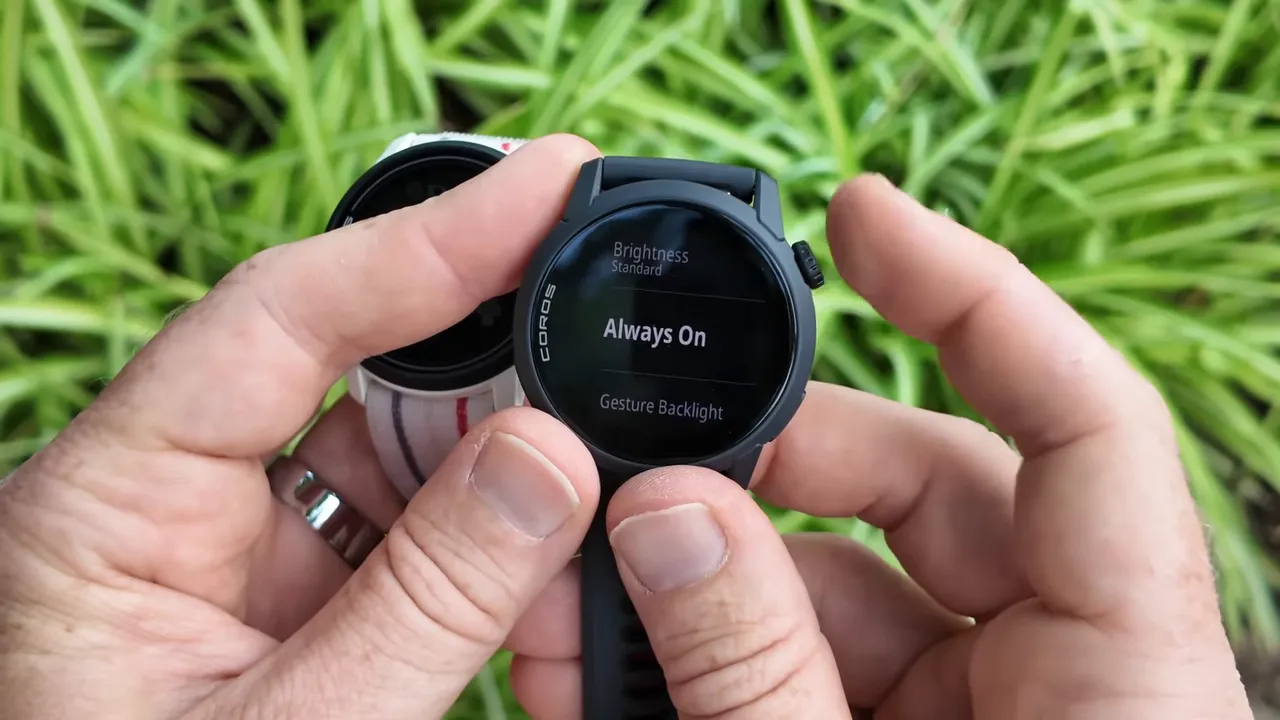
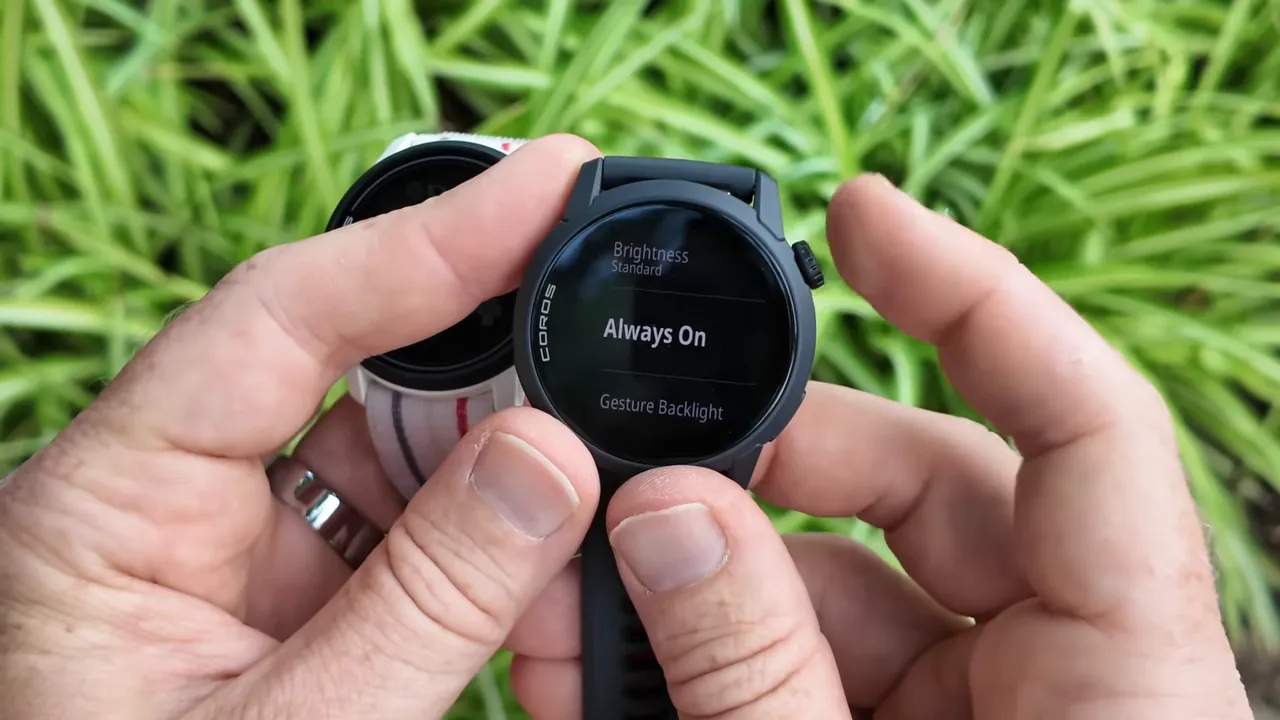
AMOLED does change the battery equation. In my testing the GPS battery life figures line up with COROS’ claims: the new model outperforms the Pace 3 in GPS runtime across modes. If you use gesture-based activation (screen off when wrist down) you can see battery life similar to the older Pace 3—around 15 days of typical smartwatch use. If you insist on always-on display, expect around six days. I personally keep Always On active because I want the time visible at a glance, but your mileage will vary with usage and satellite mode selection.
Heart rate sensor and algorithm: meaningful improvement
COROS updated the optical heart rate sensor and, crucially, the algorithms that interpret sensor data. This combo matters more than raw hardware. Across steady runs, interval sessions, and tempo efforts I found the heart rate readings very accurate and closely matched a chest strap reference in most cases.
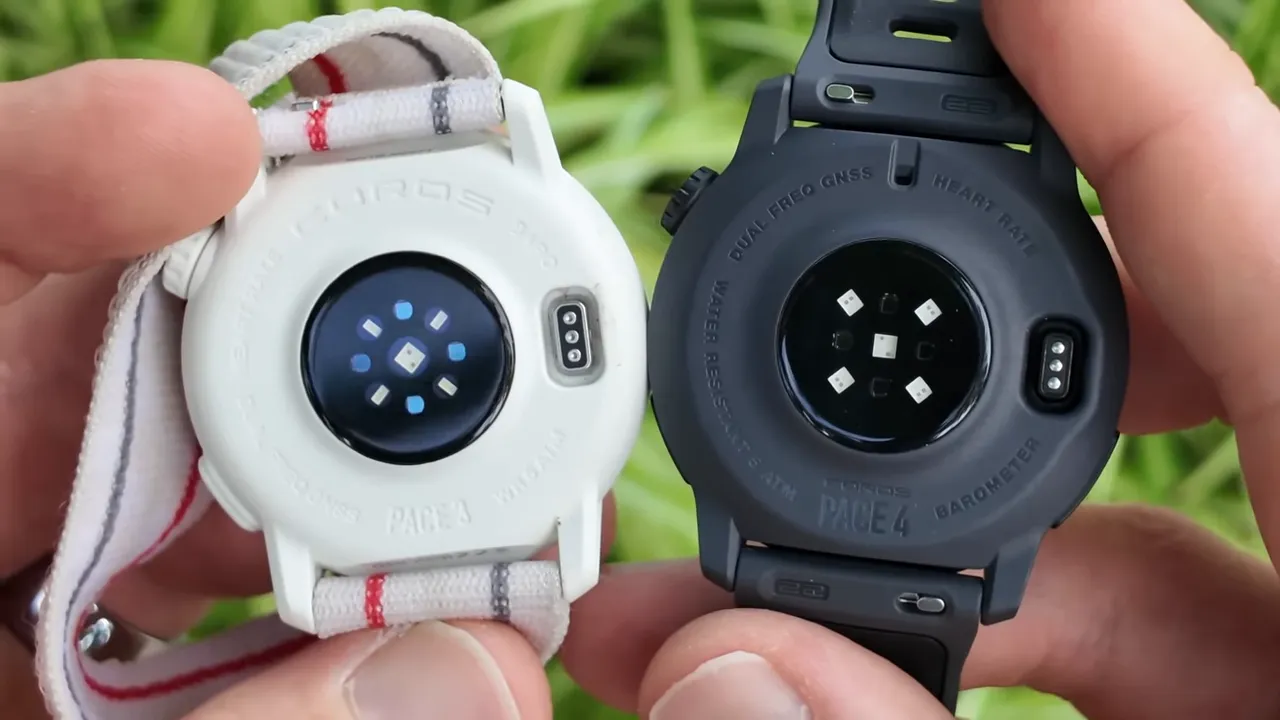
There were only isolated blips—one notable jump around the 10-minute mark on a trail run—but the majority of workouts showed very tight agreement. The Pace 4 even outperformed an Apple Watch Ultra 3 on certain interval sessions in matching chest strap data. For athletes who use heart rate to drive training zones, the COROS Pace 4 is now a solid contender for reliable wrist-based HR tracking.
![Apple Watch Ultra 3 [GPS + Cellular 49mm] Running & Multisport Smartwatch w/Rugg](https://m.media-amazon.com/images/I/81ClPojvddL._AC_SL1500_.jpg)
Apple Watch Ultra 3 [GPS + Cellular 49mm] Running & Multisport Smartwatch w/Rugg
Action button, microphone, voice pins, and RPE
COROS added an action button and a microphone to the Pace 4. The button is handy during activity—long press to record voice pins or quickly stash notes. The microphone records short voice memos that are transcribed and saved into the activity summary. Quality is good and the transcription is a welcome touch.
New to this model is the ability to capture perceived exertion (RPE) via voice immediately after a workout. You can leave a short spoken note like “felt good, slight hill in last 2k” and it appears in the activity file. For some athletes and coaches this can replace text notes or WhatsApp voice messages after big sessions and makes post-workout context easier to capture. For me personally I rarely use voice RPE, but I can see its value for coached athletes and anyone who wants richer workout context without fiddling with a phone.

One frustration: COROS has not yet exposed action button customization for non-sport modes. Right now the button does nothing outside activities. COROS announced plans to add broader customization but at the time of testing it was still limited to sport-specific actions. That feels like a missed opportunity for general utility.
Price and model positioning: Pace 3 and Pace Pro in the lineup
The COROS Pace 4 launches at $249. That’s a modest increase over the COROS Pace 3, now discounted to $199, while the Pace Pro has been repositioned at $299. From a product strategy perspective this is smart: the Pace Pro’s core differentiator is offline maps and COROS is using that feature to justify the $50 premium. If you want maps, the jump to the Pace Pro is logical. If you do not, the Pace 4 captures most new hardware benefits at a lower price than the Pro and better specs than the Pace 3.
That said, the pricing dynamic is competitive. Garmin frequently discounts its watches, and some models in that ecosystem offer a polished user experience with more day-to-day features at similar price points during sales. When Garmin models are on promotion the Pace 4’s value calculus can shift. But outside sale periods, the COROS lineup looks well balanced: budget Pace 3, feature-forward Pace 4, and mapping-enabled Pace Pro.
Real-world GPS and workout accuracy: what I found
GPS and HR accuracy are two of the most important factors for a training watch. I tested the COROS Pace 4 across trail runs, tempo runs, interval sessions, outdoor rides, indoor cycling, and open water swims.
Running
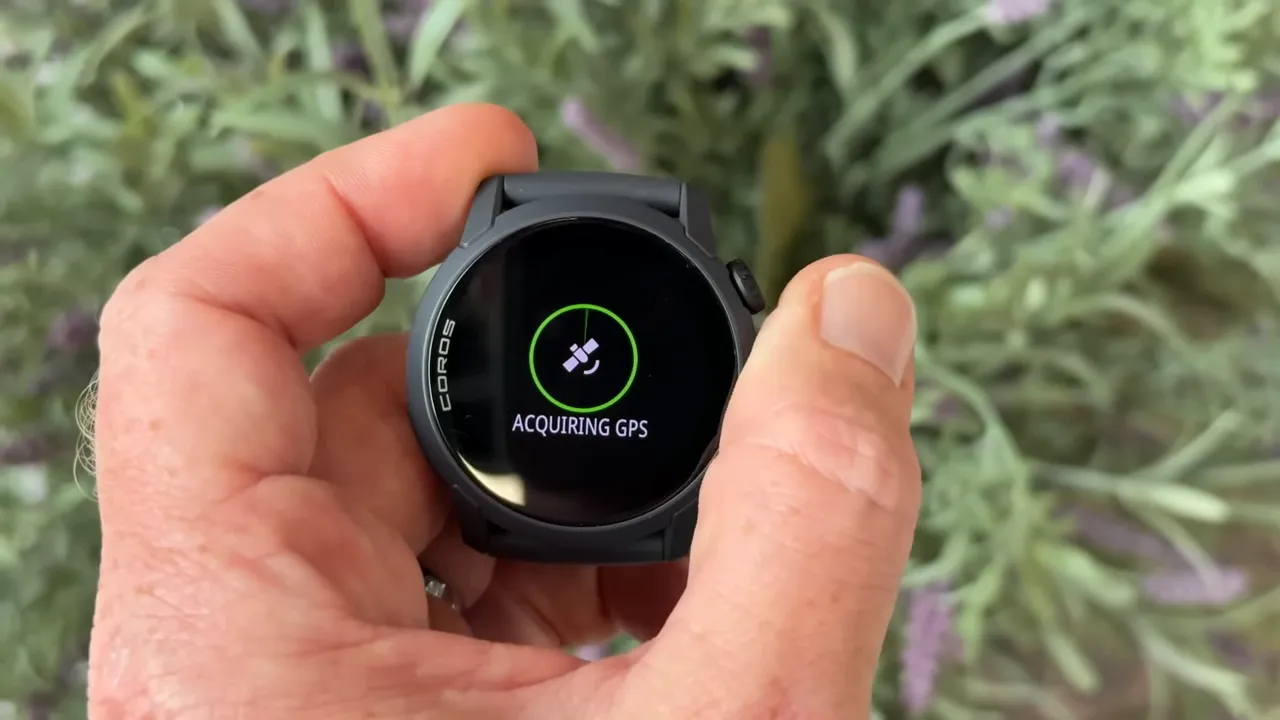
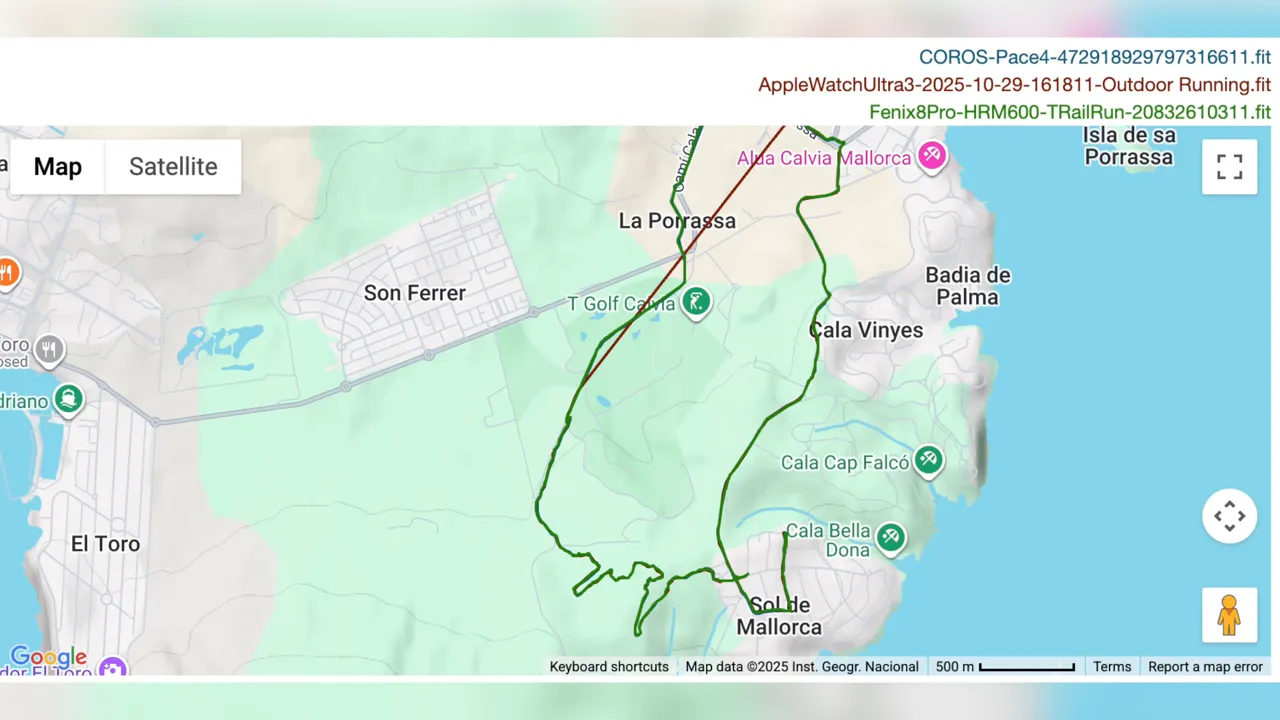
On open courses and tempo runs the COROS Pace 4 nailed both heart rate and GPS. Even during a set of 400 meter repeats the watch tracked heart rate almost identically to a chest strap and produced very accurate GPS lines. In tighter urban canyons and under tree cover the track occasionally shifted by two to three meters depending on the direction I was moving. That slight offset was noticeable on a corner where the watch showed a bit of grass clipping while a Garmin unit tracked precisely where I ran. These are small errors and only visible when you scrutinize the track, but worth noting if perfect breadcrumb precision matters.
Cycling
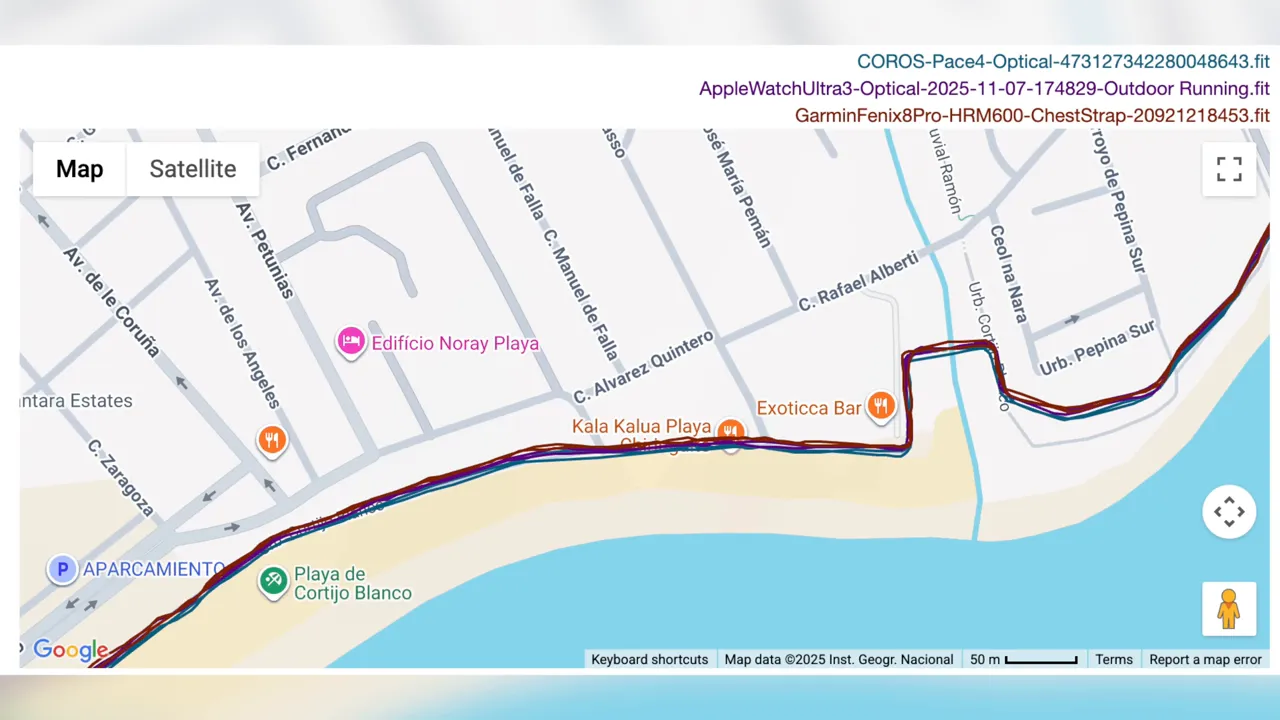
Indoor cycling was flawless from a heart rate standpoint. Outdoor riding remains a weak spot for wrist-based optical sensors in general because of arm position, road vibration, and bar grip. Expect reasonable results for casual rides, but if you do structured zones by power you will still want a chest strap or powermeter for the most reliable data. GPS on rides was solid with clean tracks and no major anomalies.
Open water swimming
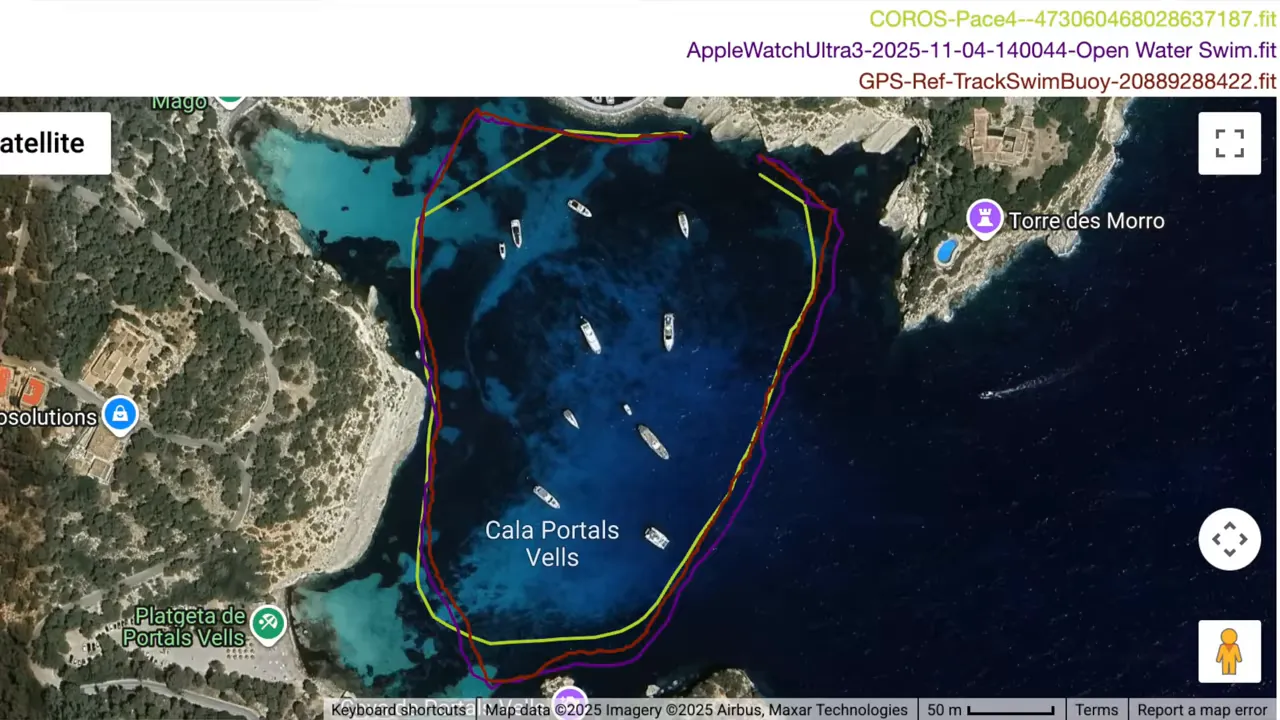
Open water swims showed mixed results. The COROS Pace 4 was better than some past COROS models but not perfect. The watch clipped an upper corner on one swim and otherwise produced acceptable lines. COROS continues to improve in this discipline, but if you rely heavily on perfect open water routing the Pace 4 remains a moderate performer rather than a class leader.
Hardware notes and day-to-day usability
- Bands: Uses standard 22 mm pins, so swapping bands is straightforward and compatible across many COROS models.
- Weight and comfort: With the silicone strap the watch is 40 g and sits comfortably on the wrist. The optional nylon strap reduces weight to 32 g.
- Flashlight: No dedicated LED, but the AMOLED display includes a flashlight mode in white or black. It works in a pinch for finding keys or reading a map at night.
- Speaker: There is no speaker on the Pace 4. That limits call handling and on-device audio playback. Microphone-only means no two-way calling or voice prompts from the watch itself.
Pros and cons
- Pros: Crisp AMOLED screen, improved heart rate accuracy, long GPS battery life in practice, useful voice pin and RPE features, competitive price, full COROS software feature set for supported hardware.
- Cons: No offline maps, action button not yet customizable outside sport modes, no speaker for calls or music, occasional small GPS track offsets in certain orientations, open water swim accuracy not best-in-class.
Who should buy the COROS Pace 4?
The COROS Pace 4 is ideal for runners and triathletes who want accurate heart rate during intervals, long GPS battery life for long workout days, and a sharp AMOLED display without jumping to a high-end price tier. If you want offline maps, then step up to the Pace Pro. If you frequently need call handling from the wrist or on-watch audio prompts, consider models with a speaker.
If you are budget conscious and want strong tracking accuracy, the COROS Pace 4 hits a sweet spot for most training needs while keeping cost reasonable. If you are a coach or athlete who likes to capture post-workout context, the built-in voice RPE and voice pins are surprisingly handy for remote coaching workflows.

COROS PACE Pro GPS Sport Watch, 1.3-inch AMOLED Touchscreen, Fastest in Class Pr
Final verdict
The COROS Pace 4 is a compact, capable sports watch that updates the lineup in meaningful ways. It keeps the series’ focus on training accuracy and battery life while adding modern conveniences like an AMOLED display and voice capture. There are a few feature gaps compared with sibling and competitor models, but overall the Pace 4 earns a strong recommendation for athletes who want a performance-first watch at a mid-range price.
FAQ
Does the COROS Pace 4 have offline maps?
No, the COROS Pace 4 does not include offline maps. It supports breadcrumb navigation but offline maps are reserved for the COROS Pace Pro.
How long does the battery last on the COROS Pace 4?
Battery depends on display mode and satellite settings. With gesture-based display you can expect around 15 days of smartwatch use. With Always On enabled you will see closer to six days. GPS runtimes in activity modes are significantly improved over the Pace 3 and match COROS’ published figures in my testing.
Is the heart rate accuracy on the COROS Pace 4 good enough for training?
Yes. The updated sensor and algorithms deliver very good wrist-based heart rate accuracy across steady runs and intervals, often closely matching a chest strap. Outdoor cycling can still be less reliable due to wrist position, which is common across most wrist-based optical sensors.
Can the action button be customized on the COROS Pace 4?
Currently the action button is customizable within sport modes, but it does nothing outside activities. COROS has indicated plans to expand customization, but at the time of review broader options were not yet available.
Is the COROS Pace 4 worth the upgrade from the Pace 3?
If you want the AMOLED display, improved heart rate accuracy, microphone with voice pins, and slightly better GPS battery life, the COROS Pace 4 is a worthwhile upgrade. If you are content with the Pace 3’s MIP display and longer Always On battery life in that configuration, the older model remains a strong value, especially at its reduced price.
Related images
The images above show the new AMOLED display, action button, voice pin interface, pricing strategy, and workout GPS overlays that illustrate how the COROS Pace 4 performs in the wild. Use the timestamps to jump directly to the moments that illustrate each feature in action.