Skip to content
Stop losing heat where it matters most.
What Are the Best Running Gloves Right Now?
For most runners: The Under Armour Armour Liner 2.0 is the top overall pick — exceptional warmth-to-weight ratio, touchscreen-compatible, and backed by nearly 10,000 5-star reviews. For extreme cold (-30°F), go with the OZERO Thermal Running Gloves. Budget pick? The Achiou Touch Screen Gloves at under $10 are shockingly good. Read the full breakdown below.
Why Running Gloves Are Non-Negotiable
The science of why cold hands kill your performance — and why shoes alone aren’t enough.
Here’s what most runners get wrong: they obsess over the perfect running shoes for beginners and veterans alike, agonize over GPS watches, but completely neglect their hands. That’s a catastrophic mistake. Your hands contain roughly 30,000 thermoreceptors and act as the body’s primary radiator for heat exchange. When they get cold, your entire cardiovascular system compensates — rerouting warm blood to your core, constricting peripheral blood vessels, and ultimately degrading your running economy by up to 12%.
Cold fingers don’t just feel uncomfortable. They reduce grip strength, impair fine motor control, and trigger the body’s cold-stress response, which elevates cortisol, increases perceived exertion, and can cause you to slow your pace or cut your run short entirely. According to research in sports physiology, hand temperature directly correlates with motivational drive to continue endurance exercise in cold conditions.
Whether you’re training for your first 5K or an ultramarathon, whether you’re on a trail through frosted forest or pounding asphalt at 5am in December, the physics don’t change. Unprotected hands in sub-40°F temperatures are a liability. And the good news? The fix is cheap, lightweight, and takes 3 seconds to deploy. Understanding how running affects your body holistically — including extremity management — is what separates smart training from grinding through unnecessary pain.
The Definitive Temperature Guide
Stop guessing. Here’s exactly when to reach for gloves, liners, or full mittens based on wind chill, temperature, and run duration.
One of the biggest content gaps in most running glove articles is the total absence of a temperature decision framework. Runners waste energy deciding whether to wear gloves when they should be focused on the run itself. Use this table — built from exercise science guidelines and real-world athlete feedback — and make the decision in under 5 seconds.
| Temperature (°F / °C) | Wind Chill Factor | Recommended Glove Type | Priority Level |
|---|---|---|---|
| 55°F+ / 13°C+ | Minimal | No gloves needed; optional fingerless gloves for comfort | Optional |
| 45–55°F / 7–13°C | Low | Lightweight touchscreen running gloves or thin liner gloves | Recommended |
| 32–45°F / 0–7°C | Moderate | Midweight thermal running gloves with moisture-wicking lining | Strongly Recommended |
| 20–32°F / -7–0°C | High | Windproof, fleece-insulated gloves or glove + liner combo | Essential |
| Below 20°F / Below -7°C | Extreme | Insulated mittens or -30°F rated waterproof thermal gloves | Critical — No Exceptions |
Wind chill is the often-overlooked variable that invalidates most temperature guidelines. A 40°F day with a 20 mph headwind feels closer to 25°F on exposed skin. Always factor wind speed into your gear decision. For those tackling winter outdoor fitness training in harsh conditions, windproof outer shells become as important as insulation.
The 7 Essential Features of Elite Running Gloves
What separates a $7 pair that falls apart after 2 runs from a $35 pair that lasts 5 years. Feature by feature.
1. Thermal Insulation
Polar fleece lining, Thinsulate™ fill, or merino wool inserts trap warm air closest to the skin. Look for grams of fill for benchmark comparisons.
2. Moisture Management
Sweat-wicking inner fabrics (polyester blends, CoolMax® fiber) pull moisture away from the skin, preventing the deadly chill of wet hands mid-run.
3. Windproof Shell
A windproof polyester or softshell outer blocks wind chill penetration — the #1 cause of rapid heat loss. Essential for any run below 40°F.
4. Touchscreen Compatibility
Conductive fabric on thumb and index finger lets you operate your GPS watch, phone, or earbuds without removing gloves. Non-negotiable in 2026.
5. Reflective Elements
360-degree reflective strips or hi-vis coloring dramatically increases your visibility to drivers during pre-dawn and post-sunset runs. A literal life-saver.
6. Anti-Slip Grip
Silicone gel patterns or textured TPU on the palm and fingers ensure secure grip on water bottles, phone screens, and trail surfaces in wet conditions.
7. Fit & Dexterity
Pre-curved finger construction, articulated knuckles, and four-way stretch fabric preserve full range of motion so running form isn’t compromised.
Bonus Feature: GPS Watch & Device Compatibility
An often-missed specification in 2026 is GPS watch compatibility — specifically whether the cuff of the glove clears a 47mm+ smartwatch case without bunching. Premium running gloves now feature a low-profile wrist cuff design specifically to accommodate Garmin Forerunner, Apple Watch Ultra, and COROS models. If you train with data, check the cuff height before buying.
Top Picks: Best Running Gloves Full Reviews
Affiliate Disclosure: We earn a commission from Amazon purchases at no extra cost to you. All picks are editorially independent.
✔ Verified · Feb 2026

Under Armour Men’s Armour Liner 2.0 Gloves
🚚 Fast Prime Shipping
↩️ 30-Day Returns
✅ Amazon Verified
✔ Verified · Feb 2026

OZERO Men’s Winter Thermal Running Gloves — Touchscreen Anti-Slip
🚚 Fast Prime Shipping
↩️ 30-Day Returns
✅ Amazon Verified
✔ Verified · Feb 2026

Achiou Winter Running Gloves — Touch Screen Thermal Soft Knit
🚚 Fast Prime Shipping
↩️ 30-Day Returns
✅ Amazon Verified
✔ Verified · Feb 2026
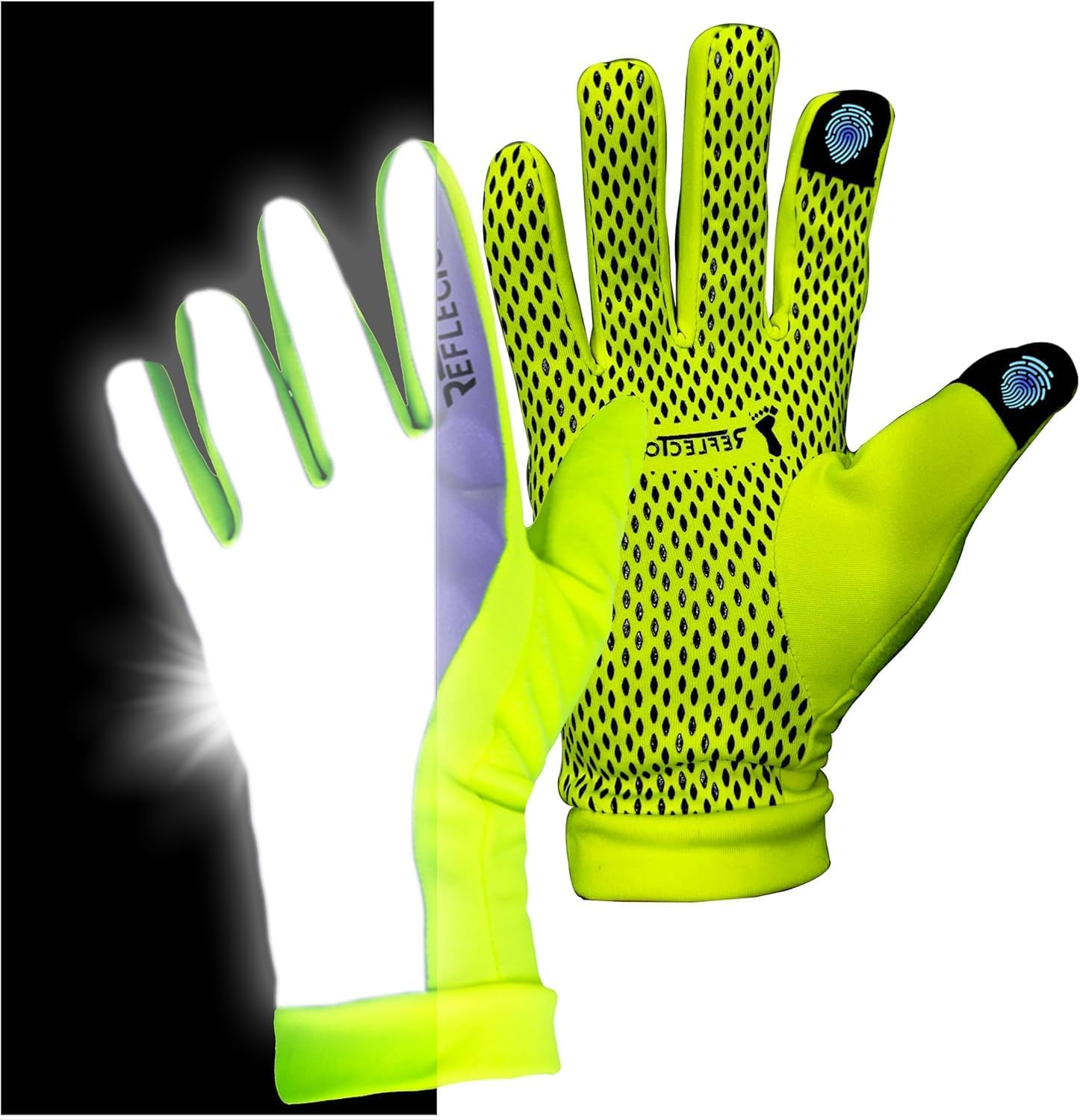
ReflecToes Reflective Winter Running Gloves — Hi-Vis Night Safety
🚚 Fast Prime Shipping
↩️ 30-Day Returns
✅ Amazon Verified
✔ Verified · Feb 2026

Cevapro -30℉ Warm Thermal Running Gloves — Deerskin + Polar Fleece Insulated
🚚 Fast Prime Shipping
↩️ 30-Day Returns
✅ Amazon Verified
✔ Verified · Feb 2026

New Balance Lightweight Running Gloves
🚚 Fast Prime Shipping
↩️ 30-Day Returns
✅ Amazon Verified
Running with Raynaud’s Disease
If your fingers go white, numb, or blue in the cold — you need a different glove strategy entirely.
Raynaud’s phenomenon (also called Raynaud’s disease or Raynaud’s syndrome) affects an estimated 5–10% of the general population, with prevalence significantly higher among women and endurance athletes. It’s characterized by vasospastic episodes where small blood vessels in the extremities — especially fingers — dramatically constrict in response to cold or stress, cutting off blood flow. The result: fingers that turn white, then blue, then painfully red as blood returns.
For runners with Raynaud’s, standard running gloves are often inadequate. The repeated arm swing motion and wind chill exposure create a perfect storm for vasospastic episodes. Here’s the evidence-based glove protocol for Raynaud’s sufferers:
- Use chemical hand warmers inside your gloves on particularly cold days
- Pre-warm your gloves before putting them on — cold gloves on warm hands trigger vasospasm
- Avoid caffeine before cold-weather runs (caffeine causes peripheral vasoconstriction)
- Start your run indoors and warm up fully before heading into the cold
- Consider heated running gloves for extreme cases — battery-powered heated models now exist at sub-$60 price points
If you experience frequent Raynaud’s episodes during cold-weather workouts, consult a physician. Some runners find significant relief with prescription vasodilators taken before outdoor cold-weather sessions. Understanding all aspects of your body’s response to exercise, including common training mistakes that cause unnecessary physical stress, is essential for sustainable long-term athletic development.
The Layering System: Gloves, Liners & Convertible Mittens
The same principle that governs jacket layering applies to your hands. Here’s the framework.
Elite cold-weather runners don’t think in terms of “one glove.” They think in systems. A well-designed hand-layering system adapts to changing conditions mid-run — whether that’s warming up as you hit mile 5, or facing an unexpected temperature drop on a trail descent. This approach, borrowed directly from alpinism and adapted for running, is what separates functional winter runners from those who cut their runs short every February.
Base Layer: Liner Gloves
Thin silk, polypropylene, or merino wool liners worn directly against skin. Primary function: wick sweat away from hands. Weight: under 0.5 oz.
Mid Layer: Insulated Gloves
Polar fleece or synthetic-fill gloves for warmth. The primary thermal layer for 20–40°F running. Can be worn alone or over liners.
Outer Layer: Windproof Shell
Softshell or hardshell windproof/waterproof outer gloves or mittens. Essential in extreme cold or wet conditions. Often removable mid-run.
2-in-1: Convertible Mittens
Mittens with a flip-back cap revealing full-finger gloves underneath. Maximum versatility — mitten warmth when needed, glove dexterity when not.
When building your winter running wardrobe, think of gloves as an integral part of your full cold-weather system. Just as you layer base + mid + shell on your torso, your hands deserve the same structured approach. Browse our comprehensive guide to year-round outdoor activities that keep your body moving in any climate for more full-system cold weather gear recommendations.
Running Glove Sizing Guide
A glove that doesn’t fit correctly fails at its primary job. Here’s how to measure and size correctly.
Improper glove fit is one of the most common and easily preventable gear mistakes runners make. A glove that’s too tight restricts blood circulation to fingers — accelerating heat loss through constriction (ironically making you colder). A glove that’s too loose creates air pockets that don’t warm efficiently and can bunch under a watch strap or cause mid-run distractions.
How to Measure Your Hand
Using a flexible tape measure or a piece of string and a ruler: measure the circumference of your dominant hand at the widest point across the knuckles (excluding the thumb), with your hand flat and fingers together. This single measurement is the most accurate predictor of glove fit.
| Hand Circumference | US Glove Size | EU Size | Recommended For |
|---|---|---|---|
| 6.5–7 inches (16.5–18 cm) | Small (S) | 7 | Most women, smaller-framed men |
| 7–8 inches (18–20 cm) | Medium (M) | 8 | Average women, smaller men |
| 8–9 inches (20–23 cm) | Large (L) | 9 | Average men, larger women |
| 9–10 inches (23–25.5 cm) | X-Large (XL) | 10 | Larger men, wide-palmed athletes |
| 10+ inches (25.5+ cm) | XX-Large (2XL) | 11 | Athletes with very large hands |
When shopping for women’s running gloves specifically, note that most brands offer gender-specific sizing with narrower finger profiles and shorter finger length — don’t assume a men’s “small” is equivalent to a women’s “medium.” Brands like OZERO and Achiou offer dedicated women’s models, such as the OZERO Winter Gloves for Women (check price on Amazon), with anatomically correct fit and non-slip silicone grip patterns optimized for smaller palms.
Care & Maintenance to Maximize Lifespan
Most running gloves fail early not because of poor quality — but because of poor care. Do this instead.
A quality pair of running gloves, properly maintained, should last 3–5 years even with daily use. Most runners see them degrade in under 12 months not because of material failure, but because they wash them incorrectly. The number one killer of technical running gloves is heat — dryers destroy elastic fibers, delaminate moisture-wicking coatings, and shrink pre-shaped knuckle construction.
Washing Instructions by Glove Type
- Knit/Fleece Gloves (e.g., Achiou, Simari): Machine wash cold on gentle cycle, lay flat to dry. Never tumble dry.
- Windproof/Shell Gloves (e.g., OZERO, Cevapro): Hand wash in lukewarm water with mild detergent. Rinse thoroughly. Air dry only. Re-apply DWR spray every 10–15 washes to restore water-resistance.
- Leather/Deerskin Outer Gloves: Wipe clean with damp cloth. Apply leather conditioner monthly. Never submerge in water.
- All Touchscreen Gloves: Avoid fabric softener — it coats conductive fiber tips and degrades touchscreen sensitivity over time.
Storing gloves correctly matters too. Avoid compressing gloves for extended periods — the pre-curved, articulated construction loses its shape. Store flat or stuffed loosely with a soft cloth. These basic maintenance habits, combined with pairing your gloves with the right full running gear setup for maximum performance, will protect your investment and keep every run comfortable.
Watch: Top 10 Best Running Gloves Reviewed (Video)
A comprehensive hands-on review of the top running gloves to help you make the right choice for your conditions.
Who Needs Running Gloves? (Everyone. Here’s Why.)
There’s a persistent myth that running gloves are only for hardcore ultramarathoners running through blizzards. This is wrong. Whether you’re a beginner avoiding the most common running mistakes or a seasoned competitive runner, cold hands cost you performance and enjoyment. A pair of thermal running gloves weighing under 2 oz is among the highest-ROI gear additions any runner at any level can make.
Trail runners face unique challenges: branch contact, trekking pole grip, and rapid temperature swings on elevation changes all make anti-slip, windproof gloves essential. Road runners face sustained wind chill exposure during long straight-line efforts. Even treadmill runners who transition outdoors during warm-ups and cool-downs benefit from having a lightweight pair stuffed in their shorts pocket. The investment is minimal; the performance and comfort payoff is significant.
And beyond running specifically — gloves optimized for running also excel at cold-weather outdoor activities like hiking, cycling, and outdoor HIIT, making them extraordinarily versatile additions to any athlete’s kit.
FAQ: Every Question Answered
papalex-20). This does not affect our editorial independence — we recommend products based on performance merit, not commission rates. Prices are accurate as of February 2026 and are subject to change.
📚 References & Further Reading
- Runner’s World — The 8 Best Running Gloves of 2026 (Tested by Editors)
- iRunFar — Best Running Gloves of 2026: Trail & Ultramarathon Testing
- Outdoors Magic — Best Running Gloves 2026: All Fully Tested and Reviewed
- Outside Online — Best Men’s Winter Running Hats and Gloves (2025–26)
- Women’s Running UK — 7 Best Running Gloves 2025: From Lightweight to Thermal
- Oleus — The Ultimate Guide to Winter Gloves for Endurance Athletes (2025)
- Encyclopædia Britannica — Long-Distance Running: Physiology & Performance
- Masks For Heroes — Best Gloves for Running: 2025 Reviews
- GearUpToFit — Complete Running Gear Guide for Beginners
- GearUpToFit — Winter Outdoor Fitness Tips for Cold Weather Training
- GearUpToFit — Best Running Shoes for Beginners 2025: Expert Guide & Top Picks
- GearUpToFit — Hot Weather Workout Clothes: Stay Cool & Perform Your Best
© 2026 GearUpToFit.com · All Rights Reserved · gearuptofit.com
Amazon and the Amazon logo are trademarks of Amazon.com, Inc. or its affiliates.
Frequently Asked Questions
What temperature should you wear running gloves?
Are mittens better than gloves for cold weather running?
Frequently Asked Questions
What are the best gloves for winter running in 2026?
The Under Armour Armour Liner 2.0 and OZERO Thermal gloves are top-rated for balancing warmth and touchscreen utility.
How should running gloves fit?
They should be snug but not restrictive, allowing full dexterity to operate a fitness tracking watch.