Skip to content
 Here’s the truth nobody in the running industry wants to admit: 90% of runners buy shoes based on hype — not the technology that actually matters.
They scroll through Instagram, see a pro wearing something flashy, and drop $180 on a shoe that doesn’t match their gait, their mileage, or their goals. Then they wonder why they’re nursing plantar fasciitis by month three.
This guide is different. No sponsor bias. No vague “these shoes feel great” fluff. We broke down every meaningful running shoe trend shaping 2025–2026 — the foam science, the plate geometry, the upper construction, and the sustainability innovations — so you can make a genuinely informed buying decision and run faster, farther, and healthier.
Whether you’re chasing a Boston qualifier or lacing up for your first 5K, the technology in this post will determine the shoe on your foot for the next 500 miles.
Table of Contents
- The Super-Foam Arms Race
- Carbon & Nylon Plates
- Max-Stack Cushioning (40 mm+)
- Robotic LightSpray Uppers
- Adaptive Stability Systems
- Category Blurring & Super Trainers
- Sustainability & Eco-Materials
- Trail vs. Road Divergence
- Trend Comparison Table
- How to Choose Your 2025 Shoe
- Frequently Asked Questions
Key Takeaways — 2025 Running Shoe Trends
- Max-stack cushioning (40 mm+) is standard in daily trainers — not just race-day super shoes
- PEBA-based super foams (ZoomX, Helion HF, DNA Flash) deliver 85%+ energy return
- Carbon & nylon plates have migrated from elite racers into everyday shoes
- Robotic LightSpray uppers cut weight by 30% while boosting breathability
- Adaptive-stability systems replace rigid medial posts with smart foam zones
- Category blurring means your daily trainer now performs like a 2022 race shoe
- Sustainability has entered the performance tier — recycled materials, zero compromise
1. The Super-Foam Arms Race: PEBA, ZoomX, Helion HF & Beyond
Foam is the single most important variable in a running shoe. It determines how much energy you lose with every stride — and in 2025, the gap between budget foam and premium foam has never been wider.
What Changed: Nitrogen-Infused & Variable-Density Foams
Traditional EVA foam returns roughly 55–60% of energy. The latest PEBA-based compounds — Nike’s ZoomX, On’s Helion HF, Brooks’ DNA Flash — push past 85% energy return. Less wasted effort per step, compounding over thousands of strides.
Brooks’ DNA Tuned technology adds variable-density: softer at the outer heel, firmer at the inner forefoot. It’s not about softness — it’s about directional energy flow.
New to cushioning? Best running shoes for beginners covers the fundamentals. Also see how running biomechanics interact with different foams.

ASICS Men’s NOVABLAST 5
The bounciest daily trainer of 2025. FF Blast Eco+ foam delivers elite energy return with 24% bio-based content — sustainability meets performance.

adidas Performance Ultraboost 5X
The gold standard of cushioned running. Next-gen Boost Light foam with Primeknit+ upper using 50%+ recycled materials. Plush, responsive, sustainable.
2. Carbon & Nylon Plates — No Longer Just for Race Day
In 2020, carbon-plated shoes were exotic. In 2025, they’re table stakes. Brands are embedding them into daily trainers. Nylon plates deliver 70–80% of carbon’s benefit with less calf fatigue — ideal for non-elite runners.
Plate Geometry Is Evolving
Midfoot foam bumps and heel bevels create smoother transitions. The Adidas Adios Pro 4 and ASICS Metaspeed Ray use contoured foam around the plate so it works with your biomechanics, not against them.

Saucony Men’s Endorphin Pro 4
Saucony’s fastest shoe ever. Full carbon plate in PWRRUN PB foam for explosive 5K-to-marathon propulsion with a smooth toe-off.

adidas Adizero Prime X 2.0 Strung
The most extreme shoe on the market. Dual Lightstrike Pro + carbon EnergyRods at 50 mm. Not race-legal — but the fastest training tool available.
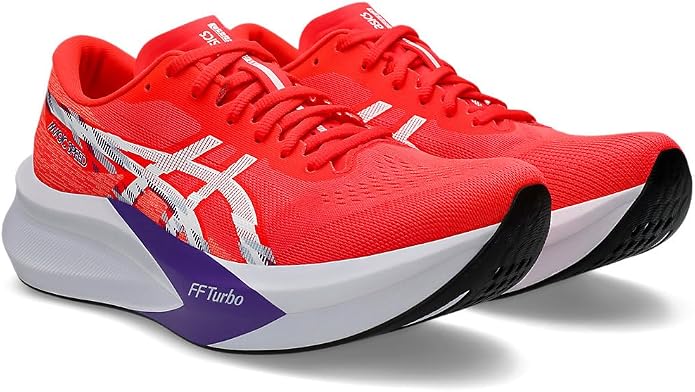
ASICS Men’s Magic Speed 4
The sweet spot between trainer and racer. Carbon plate + FF Turbo+ for serious speed at tempo, intervals, and race day.
Distance-specific picks: best shoes for different distances. Head-to-head: Adios Pro 4 vs. Metaspeed Sky Edge.
3. Max-Stack Cushioning Goes Mainstream (40 mm Is the New Normal)
The Brooks Glycerin Max 2 packs the brand’s highest-ever foam under 10.5 oz. The Hoka Bondi 9 reduces leg fatigue up to 40% on 10+ mile runs. The NB Fresh Foam X More v6 pushes nitrogen-infused foam to extreme stacks.
Joint issues? Best shoes for plantar fasciitis. Shoe fit? How running shoes should fit.
4. Robotic LightSpray Uppers — The Weight-Cutting Breakthrough
What Is LightSpray?
A robotic arm sprays TPU filaments onto a foot-shaped last — creating a seamless upper that’s 30% lighter, more breathable, and structurally tuned zone-by-zone. The On Cloudmonster 3 Hyper: 6.7 oz with 80% more foam. It breaks the weight-vs-cushion tradeoff.
Wide feet? Best shoes for wide feet. Also: On Cloudsurfer 2 review.
5. Adaptive Stability Replaces Rigid “Motion Control”
ASICS’ 4D Guidance in the Gel-Kayano 32 uses geometry — not rigid plastic — to guide your foot. Brooks’ DNA Tuned: softer at landing, firmer at push-off.

Brooks Men’s Adrenaline GTS 25
Modern adaptive stability benchmark. GuideRails corrects excess motion without forcing unnatural paths. Perfect for overpronators who want a natural ride.
More: Best for overpronation · Decode your gait · Best for flat feet
6. Category Blurring: Your Daily Trainer IS a Race Shoe Now
The New “Super Trainers”
- Nike Vomero Plus — ZoomX + Air in a daily trainer
- Adidas EVO SL — Lightstrike Pro from the Adios Pro
- Saucony Endorphin Speed 4 — Nylon plate + PWRRUN PB everyday
- ASICS Novablast 5 — FF Blast Eco+ for bouncy daily miles

adidas Adizero Boston 13
Category blurring at its finest. Lightstrike Pro + EnergyRods 2.0 in a daily-durable package. Tempo, long runs, and race day in one shoe.
Full roundup: Best running shoes. Women’s: Best for women.
7. Sustainability & Eco-Materials Enter the Performance Tier
Performance Without Planetary Cost
- ASICS FF Blast Eco+ — 24% bio-based, zero performance loss
- Adidas Primegreen/Primeknit — 50%+ recycled as standard
- On Cyclon — subscription-based shoe recycling
- Brooks — 100% manufacturing emissions offset
8. Trail vs. Road: Technology Divergence in 2025
Specialized Engineering for Every Terrain
Road: taller stacks, max energy return. Trail: ground feel, rock protection, lateral stability.
- Rock plates now standard in mid-tier trail shoes
- Vibram Megagrip for wet-rock traction
- Lower stacks (28–34 mm) for proprioception
- Gaiter compatibility & drainage ports

On Women’s Cloudultra 2
Ultra-distance trail running. Helion foam + Missiongrip outsole for exceptional traction on wet rock, gravel, and technical singletrack.
More: Best outdoor shoes · Trail shoe fit · Start trail running
2025 Running Shoe Trends: At a Glance
| Trend | Key Tech | Notable Shoes | Best For | Price |
|---|---|---|---|---|
| Super Foams | PEBA, ZoomX, Helion HF | Vomero Plus, Novablast 5, Glycerin Max 2 | All distances | $160–200 |
| Plates | Carbon, nylon | Endorphin Pro 4, Magic Speed 4, Adios Pro 4 | Tempo & racing | $170–275 |
| Max-Stack | 40 mm+ rebound | Bondi 9, NB More v6, Prime X 2.0 | Long runs | $150–250 |
| LightSpray | Robotic TPU | Cloudmonster 3 Hyper, Cloudsurfer 2 | Weight-conscious | $170–200 |
| Stability | 4D Guidance, GuideRails | Kayano 32, Adrenaline GTS 25 | Overpronation | $140–180 |
| Super Trainers | Race foam + plate | Boston 13, EVO SL | Versatile | $160–200 |
| Sustainability | Bio-based, recycled | Novablast 5, Ultraboost 5X | Eco-conscious | $150–200 |
Watch: Running Shoe Trends Explained
How to Actually Choose the Right 2025 Running Shoe
The 5-Filter System
- Define use case. Marathon? 3x/week? This eliminates 70%. New? Running gear for beginners.
- Identify gait. Free store analysis or gait guide.
- Set mileage. Under 20 mi/week: one shoe. Over 40: rotate two.
- Match foam to weight. Under 150 lbs: responsive. Over 190: denser foams.
- Consider surface. Road: super trainer. Mixed: add trail shoe. Best outdoor shoes.
Full guide: How to choose the right running shoes.
Related Reading
Frequently Asked Questions
What is the biggest running shoe trend in 2025?
Super-foam technology going mainstream. PEBA-based midsoles delivering 85%+ energy return are standard in $160–$200 daily trainers. Combined with 40 mm+ stacks and plates, everyday shoes match 2022 race-day performance.
Are carbon plate shoes worth it for non-elite runners?
Yes, but try nylon plates first. They deliver 70–80% of the propulsive benefit with less calf fatigue — ideal for recreational runners doing tempo work and races up to half-marathon.
What is LightSpray technology?
A robotic arm sprays TPU filaments onto a foot-shaped mold, creating a seamless upper ~30% lighter than mesh, more breathable, and structurally tuned zone-by-zone. On Cloudmonster 3 Hyper: 6.7 oz with 80% more foam.
How often should I replace super foam shoes?
At 400–500 miles. PEBA foams last longer than EVA, but compression is cumulative. Signs: new knee soreness, “flat” feeling, visible midsole creasing.
Do I need separate training and racing shoes?
Most runners: no. Super trainers (Vomero Plus, EVO SL) combine race tech with daily durability. One shoe covers 90% of needs under 40 mi/week.
What stack height is best for long runs?
38–44 mm with high-rebound foam. Glycerin Max 2, Bondi 9, NB More v6 hit the sweet spot. Avoid 50 mm+ for training.
What’s the best shoe for beginners?
Prioritize cushioning and neutral ride. Brooks Ghost 17, ASICS Nimbus 28, Nike Pegasus 41 ($130–$160). Avoid carbon racers first. Full guide: Best for beginners.
How do I know if I need stability or neutral?
Get a free gait analysis. Signs of needing stability: excessive inward roll, inner-edge wear, flat arches, shin splint history. 2025’s adaptive stability is far less intrusive. See: overpronation guide.
The Bottom Line
2025 running shoes are the most advanced footwear ever produced. Stop buying based on hype — buy based on the technology that matches YOUR running.
Our editors test 100+ pairs annually. Every recommendation is based on real-world miles, biomechanical data, and zero brand sponsorships. Updated February 2026.