Skip to content
 Affiliate disclosure: GearUpToFit may earn from qualifying purchases. Product relevance, fit, limitations and reader value—not commission rate—determine inclusion.
Verified Amazon listing
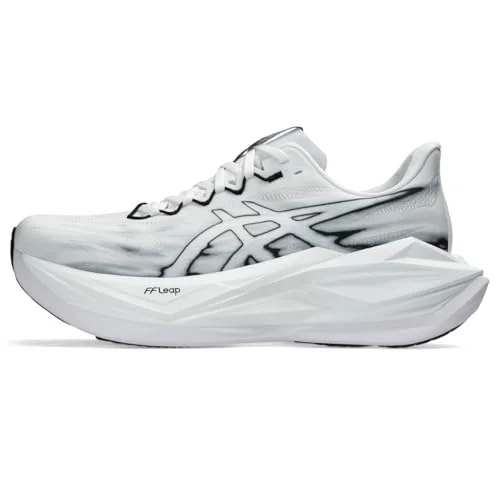
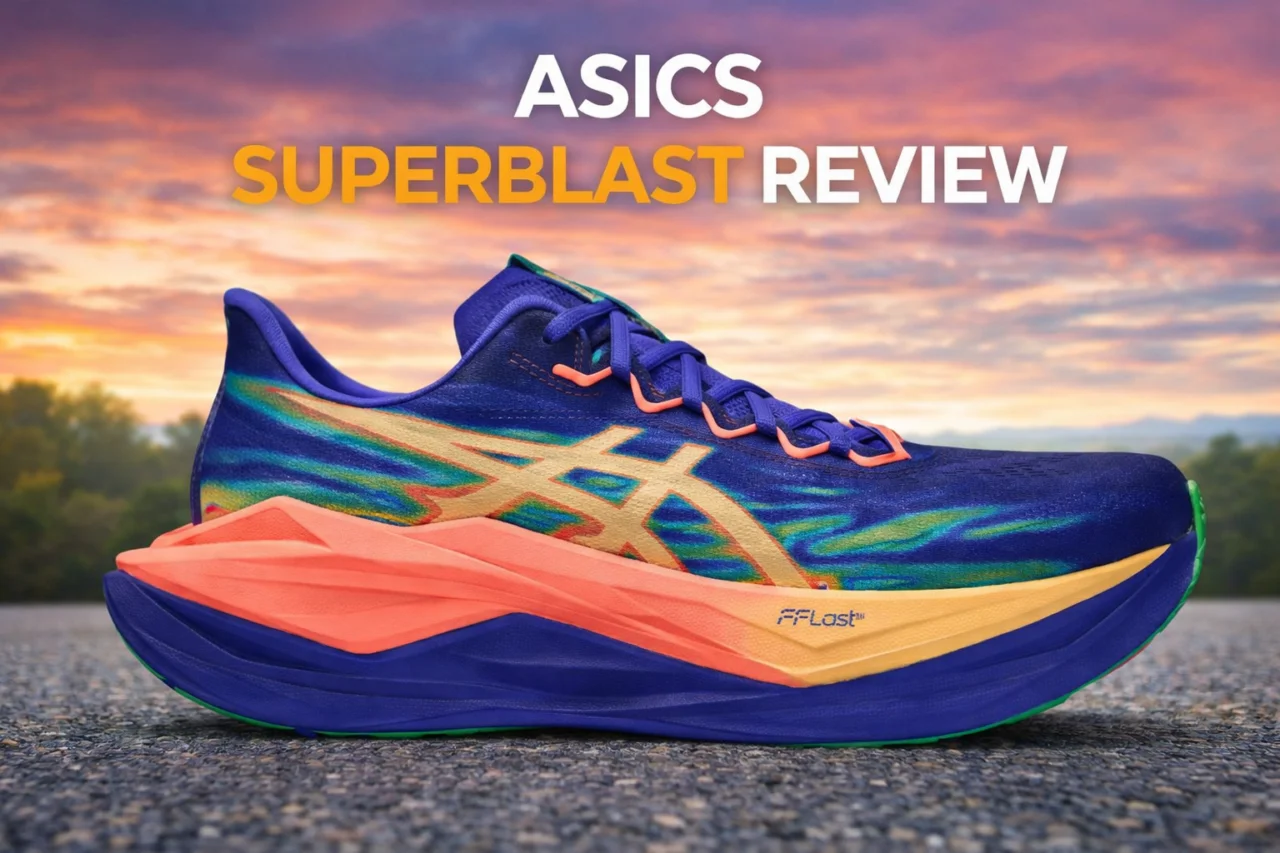
ASICS Superblast 3
A premium, plate-free super trainer featuring high-stack cushioning and energetic foam for long miles.
Check current Amazon availability
Confirm selected size, color, seller and return terms before ordering.
Who this is for—and who should skip it
Best for
neutral runners seeking a premium long-run shoe that can handle easy mileage, marathon-pace work and high weekly volume without a rigid plate.
Not the best fit for
runners who want low stack, strong ground feel, a narrow agile platform, a budget daily trainer or dedicated stability features.
What ASICS Superblast 3 means in this guide
A super trainer combines high cushioning, modern lightweight foam and training durability. Unlike a super shoe, the Superblast 3 does not rely on a carbon plate and is designed for repeated training use.
The purpose of this ASICS Superblast 3 page is to turn specifications and category labels into a decision a reader can explain. It does not assume that the newest, softest, most expensive or most feature-rich ASICS Superblast 3 option is automatically better. The correct answer depends on the job, the non-negotiable limitations and what can be verified on the exact product or measurement being used.
Before narrowing ASICS Superblast 3 to one answer, compare the best running shoes by training goal and compare dependable daily running shoes so that the purchase or training decision starts with the correct category rather than a popular model name.
Decision table: facts that change the verdict
| Area | Verified or stated information | Practical meaning |
|---|---|---|
| Weight | About 239 g in a men’s US 9 | Light relative to its 46.5 mm heel stack |
| Stack and drop | Approximately 46.5/38.5 mm; 8 mm drop | Substantial protection with a familiar heel-to-toe offset |
| Foams | FF LEAP over FF BLAST PLUS | Softness and energy return are balanced rather than purely plush |
| Plate | No plate | Allows more flex and a less aggressive feel than race shoes |
| Role | Long runs, steady efforts and mixed-pace training | A premium rotation anchor rather than a minimalist daily shoe |
Evidence, methodology and limitations
What to consider: fit on a high-volume upper, stability of the broad platform, softness versus responsiveness, performance at marathon pace, comfort after 90 minutes, outsole wear, and value for weekly mileage.
For ASICS Superblast 3, the editorial method prioritizes immediate fit, the intended running or walking job, surface, control when tired, and a realistic return-window test. Shoe geometry is treated as a trade-off rather than a medical prescription.
This ASICS Superblast 3 guide is a research synthesis. It does not claim undocumented laboratory testing, mileage totals, participant data, clinical accuracy, or personal hands-on testing. Manufacturer specifications are used for identity and stated capabilities; practical recommendations are tied to the use cases and exclusions shown on this page. When model names, regional functions or marketplace variants differ, the exact part number and current manufacturer listing take priority.
The main limitation in a ASICS Superblast 3 guide is individual response. Foot shape, socks, orthotics, pace, body mass, surface and recent training can change the experience. A shoe can support a job, but it cannot diagnose pain or guarantee injury prevention. These limits belong in the decision itself because they determine how confidently a reader can act.
Detailed analysis: what the specifications mean in use
1. Weight
About 239 g in a men’s US 9. Light relative to its 46.5 mm heel stack. In the ASICS Superblast 3 decision, this is useful when it changes the intended job, comfort, control, compatibility or value.
How to check it: Treat weight for ASICS Superblast 3 as context rather than a score. Compare the same stated size where possible and decide whether the weight is noticeable after the run has settled into normal pace.
Limitation: Published shoe weight changes with size and production variation, so a single sample should not be generalized too precisely.
2. Stack and drop
Approximately 46.5/38.5 mm; 8 mm drop. Substantial protection with a familiar heel-to-toe offset. In the ASICS Superblast 3 decision, this is useful when it changes the intended job, comfort, control, compatibility or value.
How to check it: Evaluate stack and drop for ASICS Superblast 3 on flat ground, gentle turns and a short downhill. Look for a centered landing, secure heel contact and no feeling that the platform tips laterally when fatigue appears.
Limitation: Drop and stack are descriptive measurements, not a diagnosis. A sudden change from your normal geometry may require gradual adaptation.
3. Foams
FF LEAP over FF BLAST PLUS. Softness and energy return are balanced rather than purely plush. In the ASICS Superblast 3 decision, this is useful when it changes the intended job, comfort, control, compatibility or value.
How to check it: Test the foams of ASICS Superblast 3 on one easy run and one controlled faster segment. Note whether the cushioning remains predictable when pace changes, whether the forefoot bends naturally, and whether the sensation encourages you to run harder than planned.
Limitation: Foam names do not guarantee the same experience for every runner; body mass, temperature, stride and pace alter compression and rebound.
4. Plate
No plate. Allows more flex and a less aggressive feel than race shoes. In the ASICS Superblast 3 decision, this is useful when it changes the intended job, comfort, control, compatibility or value.
How to check it: For a plate in ASICS Superblast 3, compare flexibility during walking, easy running and a few strides. The goal is to understand whether the shoe rolls naturally for you, not to assume that a plate or the absence of one is universally superior.
Limitation: A carbon-free shoe may still contain nylon, rods or other stiffening elements, so the exact construction matters.
5. Role
Long runs, steady efforts and mixed-pace training. A premium rotation anchor rather than a minimalist daily shoe. In the ASICS Superblast 3 decision, this is useful when it changes the intended job, comfort, control, compatibility or value.
How to check it: Use role for ASICS Superblast 3 during the primary workout named in this review. Keep pace and route familiar so that differences in comfort, control and effort can be attributed more clearly to the shoe.
Limitation: One good run is not enough to prove durability or long-term comfort; repeat the check before the return period ends.
When the main trade-off in ASICS Superblast 3 becomes clearer, compare fast running shoes without carbon plates and see comfort-focused running shoes for easy mileage for the next comparison that logically follows from the evidence above.
Examples by situation
1. High-mileage marathon block
Use it for long runs and steady aerobic work while keeping a lighter workout shoe for short intervals if desired.
ASICS Superblast 3 takeaway: This is the baseline case. Choose for the repeated weekly job first, because a product or method that works only for an occasional best-case scenario is unlikely to deliver good value.
2. Single premium trainer
It can cover many paces, but its bulk may feel unnecessary for short recovery jogs or treadmill sessions.
ASICS Superblast 3 takeaway: This situation introduces a trade-off. Decide which requirement is non-negotiable, remove the option that fails it and compare the remaining choices on comfort, usability and cost.
3. Heavier neutral runner
The tall foam can feel protective, provided the platform remains stable and the upper locks the foot securely.
ASICS Superblast 3 takeaway: This is where context matters most. Test the exact setting described rather than assuming that success in a different workout, meal pattern or route will transfer automatically.
4. Runner sensitive to plates
The plate-free construction offers modern foam without the rigid lever sensation some runners dislike.
ASICS Superblast 3 takeaway: Use this as the fallback case. Start with the smallest reversible change and keep an alternative ready when the first choice creates new friction.
Step-by-step practical method
- Define the job: Write one sentence describing what ASICS Superblast 3 must do most often: easy road mileage, faster sessions, long runs, walking, trails, stability or all-day comfort.
- Verify the exact product: Match the model name, generation, size, width, color and seller. Do not assume a parent marketplace page has selected the variant described here.
- Test fit indoors: Wear normal socks and any orthotic. Check heel hold, midfoot pressure, toe clearance and forefoot width while walking, jogging and turning.
- Run an easy baseline: Use a short familiar route. Keep pace relaxed so comfort and control can be evaluated without workout fatigue.
- Add the intended stress: Try the pace, distance, hill or workday that justifies the purchase, but increase exposure gradually.
- Inspect after use: Check skin, nails, pressure points, outsole wear and whether lacing changed during movement.
- Decide before the return deadline: Keep the product only when its strengths solve the original job and the limitations do not describe normal use.
Common mistakes and troubleshooting
1. Assuming tall stack automatically means unstable or automatically means protective
Why this causes trouble with ASICS Superblast 3: It lets appearance, hype or a category label replace the test that matters for the primary job.
What to do instead: Retest ASICS Superblast 3 on a familiar surface at an easy effort, change only one variable and record comfort, control and symptoms before deciding.
2. Using the shoe for sharp track turns before confirming control
Why this causes trouble with ASICS Superblast 3: It hides an early fit, compatibility or measurement problem until the return window or useful adjustment period has passed.
What to do instead: Retest ASICS Superblast 3 on a familiar surface at an easy effort, change only one variable and record comfort, control and symptoms before deciding.
3. Paying a premium without planning to use it for long or high-volume sessions
Why this causes trouble with ASICS Superblast 3: It evaluates the choice in a setting it was not designed to handle, so the result says little about normal use.
What to do instead: Return to the primary job for ASICS Superblast 3. Remove any option that fails a must-have requirement, then compare total value; do not use launch date, award position or price as a substitute for suitability.
4. Choosing size from another ASICS model without trying the Superblast last
Why this causes trouble with ASICS Superblast 3: It changes behavior around the product or metric instead of checking whether the product or metric supports the original plan.
What to do instead: Repeat the fit check for ASICS Superblast 3 with the exact socks, strap, orthotic or lacing setup. Do not solve pressure by adding excessive length or solve wrist movement by overtightening a sensor.
Frequently asked questions
Does the Superblast 3 have a carbon plate?
Answer for ASICS Superblast 3: No. It is a plate-free super trainer built around layered modern foams.
Practical takeaway: Final check: verify the exact ASICS Superblast 3 model, input or context before applying this answer to your own decision.
Is the Superblast 3 legal for racing?
Answer for ASICS Superblast 3: Its high stack may make it ineligible for some elite regulated competitions. Recreational runners should check the rules of a specific event if compliance matters.
Practical takeaway: Final check: verify the exact ASICS Superblast 3 model, input or context before applying this answer to your own decision.
Is it good for marathon training?
Answer for ASICS Superblast 3: Yes. Long-run protection and the ability to pick up pace are its clearest strengths.
Practical takeaway: Training check: introduce ASICS Superblast 3 on a lower-risk session before relying on it for a long run, race or major plan change.
Can beginners use it?
Answer for ASICS Superblast 3: They can, but the cost and height are unnecessary for many new runners. A simpler daily trainer may be easier to evaluate.
Practical takeaway: Beginner check: choose the simplest ASICS Superblast 3 option that performs the main job comfortably, then add specialist features after the need is clear.
Is it a stability shoe?
Answer for ASICS Superblast 3: No. The wide platform can feel stable for a neutral shoe, but it does not provide dedicated stability guidance.
Practical takeaway: Final check: verify the exact ASICS Superblast 3 model, input or context before applying this answer to your own decision.
How does it compare with Evo SL?
Answer for ASICS Superblast 3: The Superblast is taller and more protective; the Evo SL is lighter, cheaper and more direct.
Practical takeaway: Final check: verify the exact ASICS Superblast 3 model, input or context before applying this answer to your own decision.
Can it handle easy runs?
Answer for ASICS Superblast 3: Yes, although some runners may find it too energetic or bulky for very slow recovery days.
Practical takeaway: Final check: verify the exact ASICS Superblast 3 model, input or context before applying this answer to your own decision.
How long should it last?
Answer for ASICS Superblast 3: Durability depends on body mass, surface, gait and rotation. Track outsole wear and changes in comfort rather than relying on one mileage number.
Practical takeaway: Training check: introduce ASICS Superblast 3 on a lower-risk session before relying on it for a long run, race or major plan change.
After applying the checks in this ASICS Superblast 3 guide, follow the fit-first guide to choosing running shoes to continue through the GearUpToFit decision path without restarting the research process.
Sources, editorial note and review date
ASICS Superblast 3 Review: High-Stack, Plate-Free Long-Run Trainer was reviewed on 2026-07-10. The page uses the sources below for product identity, formulas or topic context. Specifications, software, marketplace variants and availability can change; health and nutrition information is educational and does not replace individualized care.
Editorial accountability for ASICS Superblast 3 Review: High-Stack, Plate-Free Long-Run Trainer: Written by Alexios Papaioannou and reviewed under the GearUpToFit Editorial Review process. Corrections should identify the exact sentence, source and current product or clinical context.