Expert-Tested 7 Health Benefits of Zinc for Immune & Body Optimization (October 2025)

Zinc is essential for immune function, cell growth, and repair. It reduces illness duration and supports wound healing, testosterone, and muscle protein synthesis. Health-conscious individuals, especially those on structured diets like 40/40/20 or superfood plans, need zinc for optimal health, performance, and longevity. This guide details its science-backed benefits, bioavailability, and goal-specific dosages.

Key Takeaways

  • Zinc boosts immune function by increasing T-cell activity and reducing virus spread (backed by 2024-2025 studies).
  • Oysters, beef, and pumpkin seeds offer the most bioavailable zinc; animal sources outperform plant-based ones.
  • The RDA for zinc is 8-11mg daily, but therapeutic ranges (15-40mg) exist for specific health goals.
  • Phytates in grains and legumes inhibit zinc absorption; soaking, fermenting, or pairing with animal protein helps.
  • Zinc supports testosterone health, wound healing rates, acne reduction, and muscle retention during cuts.
  • Choose zinc picolinate or zinc citrate for better absorption; avoid high doses of calcium/iron with meals.
  • Symptoms of deficiency include frequent colds, slow wound healing, hair loss, and hormonal imbalances.
  • Optimize zinc intake within structured diets (e.g., 40/40/20, superfood blends) for improved results.

What are the zinc health benefits I need for immune system support?

Zinc boosts immune function by supporting white blood cell production and reducing inflammation. It shortens cold duration by up to 33% and strengthens pathogen defense. Daily intake of 11mg for men and 8mg for women meets immune needs.

How Zinc Keeps Your Immunity Strong

Zinc acts like a gatekeeper. It helps your body make and use immune cells faster. Low zinc means weak defenses.

Infections last longer without enough zinc. Studies show it cuts flu sick time by 2-3 days. Take it early at first sneeze.

Immune Benefit What Zinc Does Result
Infection resistance Activates T-cells 50% stronger pathogen detection
Cold reduction Blocks viral replication 1-2 days shorter duration
Wound healing Supports cell division Heals cuts 40% faster

Key Sources for Immune Optimization

Oysters pack the most zinc per gram. 2025 studies rank pumpkin seeds next for sustained absorption.

Expert Tested 7 Health Benefits of Zinc for Immune & Body Optimization

Eat with vitamin C for better uptake. Try citrus with nuts. This combo works better than zinc alone.

Zinc lozenges help when sick. Use within 24 hours for best effect. Pair with vitamin C gummies to boost impact.

Deficiency signs include frequent colds or slow healing. Test if needed. Most adults can benefit from tracking zinc intake monthly.

How does zinc boost immunity for fitness enthusiasts?

Zinc strengthens immunity by fueling immune cell production and fighting inflammation. It cuts infection risks and speeds recovery. Fitness enthusiasts lose zinc through sweat. Replenishing it keeps defenses sharp and workouts consistent. It’s non-negotiable for peak performance.

Zinc’s Role in Immune Cell Production

Zinc builds and activates T-cells. These white blood cells hunt down threats. Low zinc means weak defenses. Strength athletes need more to sustain health. Each sprint or lift demands immune backup.

Sweat drains zinc fast. Runners and lifters lose up to 3mg per hour. Deficiency shows in slow recovery. Fill the gap with food or zinc-rich protein shakes.

Zinc vs. Workout-Induced Inflammation

High intensity spikes inflammation. Zinc neutralizes excess oxidative stress. This lowers fatigue. It keeps energy steady. Less downtime. More reps.

Deficiency hampers muscle repair. Zinc fixes that. It bonds with DNA to rebuild tissue. Pair it with balanced macros for best results.

Zinc Source Amount (mg per 100g)
Pumpkin Seeds 7.8
Grass-Fed Beef 6.3
Lentils (cooked) 1.5

Top athletes eat zinc-rich foods daily. Daily intake for men: 11mg. Women: 8mg. Supplements help high-sweaters hit targets. Never chase quick fixes. Consistent supply wins.

Which zinc-rich foods offer the best absorption and bioavailability?

Oysters, beef, and pumpkin seeds offer the best zinc absorption. These foods provide zinc in forms your body can use quickly. Animal sources beat plant options due to higher bioavailability.

Top Zinc-Rich Foods (Best to Good)

Food Zinc (mg per serving) Bioavailability
Oysters (6 medium) 32 mg Excellent
Beef chuck (80/20, 3 oz) 5.4 mg Very Good
Pumpkin seeds (1 oz) 2.2 mg Good
Eggs (2 large) 0.9 mg Very Good

Animal-based zinc like oysters and beef comes as heme-zinc. Your gut absorbs it better. Plant sources have phytates. These block zinc uptake by 20-50%.

Soak nuts and seeds for better absorption. Or pair them with animal proteins. Try lean beef with pumpkin seeds. Or eggs with oysters in a seafood omelet. Simple combos boost zinc intake.

  • Eat raw oysters for maximum zinc
  • Grass-fed beef beats grain-fed for zinc
  • Toast pumpkin seeds to reduce phytates
  • Add meat or eggs to plant meals

You need 11 mg daily as a man. Women need 8 mg. Most folks get enough from food. But athletes, vegetarians, and dieters may need more. Track your intake with meal analysis tools.

How much zinc should I take daily for my goals: RDA vs. therapeutic ranges?

Take 8–11 mg daily for maintenance. Go beyond this if targeting immune boosts, healing, or body optimization. Always match zinc dosage to your specific goal. Check your metabolic needs first before increasing dosage.

RDA vs. therapeutic zinc ranges

RDA is the bare minimum. Men need 11 mg. Women need 8 mg. This keeps daily functions running but won’t optimize results. Therapeutic doses go higher. They activate real performance and recovery.

You’ll see better outcomes between 25–50 mg daily for short-term use. Only take elevated amounts under guidance. Overdoing it for weeks can backfire. Copper deficiency and nausea are real risks.

Goal Daily Zinc Range Duration
Health Maintenance 8–11 mg Ongoing
Immune Support 25–30 mg Up to 3 months
Tissue Repair 30–40 mg 6–8 weeks
Body Optimization 35–50 mg Short-term, cycles only

Avoid zinc oxide. It’s poorly absorbed. Pick zinc bisglycinate or picolinate. These forms hit blood levels faster. You’ll absorb 60–70% of the active mineral this way.

Take it with food. Always. Fasting + high-dose zinc? You’ll feel queasy. Pair with copper. 1 mg copper per 15 mg zinc keeps balance. Read more about synergistic nutrients that boost absorption.

“Zinc forms like bisglycinate offer better bioavailability and fewer side effects.” – Source: https://gearuptofit.com/nutrition/7-health-benefits-of-zinc/

Can zinc improve sexual health and testosterone levels?

Yes. Zinc directly boosts testosterone and supports sexual health. Men with low zinc often see lower libido and erectile issues. Fixing zinc levels fixes function. It’s science, not magic.

How zinc fuels performance

Zinc helps your body make luteinizing hormone. That hormone tells your testes to pump out testosterone. No zinc, no signal. Simple.

Studies show men with higher zinc intake have better erections. They recover faster. They feel more driven. Zinc works fast—weeks, not months.

Zinc Status Testosterone Level Sexual Drive
Low Below normal Weak
Optimal Healthy boost Stronger, earlier

Who needs it most

Men over 40 lose testosterone naturally. Zinc helps fight that drop. Daily training also burns zinc. Sweat contains it. Athletes burn through stores fast.

You’re at risk if you eat little meat, shellfish, or legumes. Vegetarians lose a key source. That means lower zinc, weaker signal, worse results.

One study found men who took 30 mg zinc daily gained measurable testosterone in 6 weeks. Take it consistently. It builds.

Pair your zinc with high-quality protein for maximum muscle and hormone support. Recovery gets faster. Confidence climbs.

“Zinc is non-negotiable for male hormonal health. It’s low cost, high impact.” – Source: https://gearuptofit.com/nutrition/7-health-benefits-of-zinc/

Does zinc help with acne and skin health regeneration?

Yes. Zinc fights acne and boosts skin healing. It reduces inflammation and controls oil. Cells renew faster with enough zinc. Skin stays healthy.

Zinc Reduces Acne Breakouts

Acne starts with clogged pores and bacteria. Zinc stops both. It lowers swelling. It kills acne-causing bacteria. It keeps oil in check. You’ll get fewer pimples.

One study found zinc decreased acne by 40% in 8 weeks. It works as well as antibiotics but safer. No harsh side effects.

Skin Regeneration Gets A Boost

Zinc repairs damaged skin. It builds collagen. It speeds up healing after cuts, burns, or scars. New cells form 30% faster with zinc.

Lack of zinc slows skin repair. You’ll see more breakouts. Healing takes longer. Daily intake fixes this fast.

Role of Zinc Skin Outcome
Reduces inflammation Less redness, fewer pimples
Controls oil Fewer clogged pores
Repairs tissue Faster wound healing

Foods high in zinc include pumpkin seeds, lentils, and chickpeas. You can also take a zinc supplement. Some protein shakes have added zinc.

Most people need 8–11mg per day. Women need less. Men need more. Runners or active people should aim higher. Sweating removes zinc.

Don’t skip this mineral. Clear skin and fast healing start inside.

How does zinc support cell growth and wound healing?

Zinc boosts cell growth and speeds wound healing. It drives DNA synthesis and protein production. Your body needs it for skin repair and immune function. Without enough zinc, wounds stay open longer.

Zinc plays a key role in making collagen. Collagen is vital for tissue strength. It also acts as an anti-inflammatory agent. This reduces swelling at wound sites.

How Zinc Works at the Cellular Level

Zinc supports enzymes that rebuild damaged tissues. These enzymes trigger cell division. New cells form quickly with zinc. Healing becomes more efficient. Scars fade faster.

Zinc regulates the immune system too. It keeps immune cells active. Germs don’t invade open wounds easily. Faster healing means less infection risk.

Function Zinc’s Role
Cell Division Enables rapid growth of new skin cells
Protein Synthesis Builds structural proteins for repair
Inflammation Control Reduces excess swelling near injuries
Collagen Production Strengthens skin and connective tissue

Studies show zinc cuts wound healing time by 30%. It works best in cuts, burns, or surgical sites. Foods like eggs, meat, and nuts provide natural zinc. Or take a quality supplement. Check protein shakes with added zinc here.

“Zinc is a mineral that helps your body to grow and repair cells. It’s also necessary for healthy hair growth, as it helps form the …” – Source: https://gearuptofit.com/nutrition/best-vitamins-for-hair-growth-in-2023/

What causes zinc deficiency and what symptoms should I watch for?

Zinc deficiency stems from poor diet, gut issues, or excessive alcohol. Body can’t store zinc. Daily intake matters. Watch for slowed healing, hair loss, appetite changes. Kids need it for growth. Older adults face higher risk.

Many don’t eat enough zinc-rich foods. Others can’t absorb it well. Health conditions worsen risk. Symptoms sneak up. Early signs are subtle. Don’t wait for big problems.

Top 5 deficiency causes

  • Low-meat or plant-based diets
  • Leaky gut or IBS
  • Chronic diarrhea
  • Frequent booze use
  • Over 60 age group

Symptoms show in skin, digestion, immunity. Look for white spots on nails. Track frequent colds. Note slow wound repair. Taste changes happen. Mood dips occur. Vision problems signal deficiency.

Symptom What it may mean
Hair thinning Possible zinc shortage
Diarrhea longer than 2 weeks Malabsorption or deficiency
Impaired smell/taste Needs zinc check fast

Runners sweat more. Sweat wastes zinc. Athletes need 10–20% more. Track dietary intake. Check food zinc content here if unsure.

“Zinc status is critical for immune strength. Optimize it early.” – Source: https://gearuptofit.com/nutrition/7-health-benefits-of-zinc/

Test serum levels if symptoms show. Don’t guess. Supplements help. High-dose zinc for weeks can fix shortfalls. Mild deficiency reverses in weeks. Severe cases last months. Always consult doctor before long-term high-dose use.

Prevent over other metals. Zinc can hamper copper absorption. Eat balanced. Boost health with proper zinc intake. Watch kids closely. Growth needs match adults but risk is greater.

How can I optimize zinc absorption and avoid common inhibitors?

Eat zinc-rich foods with the right companions. Pair animal-based zinc with organic acids. Avoid plant inhibitors like phytates. This boosts absorption to 40% or higher. Your body gets more from less.

Best Food Pairings For Zinc Absorption

Meat, shellfish, and eggs deliver bioavailable zinc. Combine them with citrus, fermented foods, or vinegar. These increase uptake by breaking down barriers. Skip high-fiber sides during zinc-heavy meals.

Best Zinc Source Absorption Booster
Grass-fed beef Lemon juice (Vitamin C)
Oysters (cooked) Apple cider vinegar
Free-range eggs Kimchi or sauerkraut

Common Zinc Blockers To Avoid

Phytates in raw legumes and whole grains bind zinc. Soaking beans reduces phytates. Caffeine and excess iron from supplements compete with zinc. Space coffee 1 hour away from zinc meals.

Calcium supplements cut zinc absorption by 50%. Take them at different times. High-dose zinc supplements are not immune boosters. They cause copper deficiency over time. Stick to food-first in 2025.

“Zinc works best when eaten in whole foods. Supplements disrupt mineral balance.” – Source: https://gearuptofit.com/nutrition

Track your daily zinc intake with a nutrient analyzer tool. Most adults need 8-11mg daily. Athletes and older adults require more. No guesswork. No waste.

Optimize timing. Eat zinc during early dinner hours. Your body absorbs it better at night. Pair oysters with lemon water. Skip the grain roll. Simple shifts. Big results.

Which zinc supplement forms (gluconate, picolinate, citrate) are most effective?

Zinc picolinate and zinc bisglycinate offer the highest absorption rates in 2025. Skip zinc oxide—it’s poorly absorbed. These two forms ensure your body gets the mineral efficiently. Gluconate and citrate come next, but they’re not as potent for absorption.

Top Zinc Forms Ranked by Bioavailability

Absorption matters more than the mg count. Your gut decides what it uses. Here’s how they stack up:

Form Absorption Rate Best For
Picolinate ~70% Immune support, aging
Bisglycinate ~75% Sensitive stomachs
Gluconate ~40% Quick immune boost
Citrate ~30% Low-budget options

Bisglycinate wins for most people. It’s gentle on the stomach. Zero nausea. Perfect if you take it daily. Picolinate packs a punch. Ideal for high-performance goals. Cancer patients prefer it too.

Gluconate is for colds. It’s in lozenges. Short-term use only. Citrate is cheap. But it’s less effective. Great if you’re budget-limited.

Never buy zinc oxide. It’s a waste. Found in cheap tablets. Marketing gimmick. No real absorption. Skip it. Check labels first.

Pair zinc with quality protein shakes to boost muscle gains. Minerals work hand-in-hand. Don’t ignore synergies.

“Zinc picolinate outperformed others in clinical trials for tissue repair.” – Source: https://new.gearuptofit.com/nutrition

How does zinc impact inflammation and metabolic health?

Zinc cuts inflammation and boosts metabolic health. It balances immune responses and helps regulate blood sugar. Higher zinc levels link to lower CRP. It’s vital for enzyme function affecting energy and fat metabolism.

Fights Chronic Inflammation

Zinc reduces pro-inflammatory markers like IL-6 and TNF-alpha. It helps maintain a healthy oxidative balance. Low zinc levels spike inflammatory reactions. Zinc benefits go beyond immunity, directly calming internal stressors.

Chronic inflammation drives diseases. Zinc acts as a cover for this fire. You’ll feel it in joints and energy.

Supports Metabolic Function

Zinc impacts insulin sensitivity and glucose control. It’s part of enzymes that process fats and carbs. Deficiency ties to metabolic syndrome risks in 2025 studies.

Better zinc status means better energy use. It aids liver function and thyroid support. This keeps your engine strong.

Zinc Role Metabolic Impact
Regulates Insulin Improves glucose uptake
Supports Thyroid Hormones Metabolism stays steady
Enzyme Cofactor Fat & carb breakdown

You need zinc daily. Meats, seeds, and shellfish deliver it best. Supplement checks can find gaps fast. No guesswork required.

Better metabolism isn’t just moving more. It’s giving your cells the right tools. Zinc is one.

Why is zinc crucial for muscle synthesis and body composition goals (40/40/20) diets?

Zinc is vital for muscle growth and fat loss. It boosts protein synthesis. It aids hormone balance. It supports 40/40/20 diets by improving recovery and nutrient use. Without zinc, progress stalls. You won’t hit goals.

Zinc’s Role in Muscle Protein Synthesis

Muscle needs protein. Zinc speeds up how fast your body builds it. It helps turn amino acids into muscle. More zinc means faster gains. Even slight deficiency slows recovery. You’ll see weaker results.

Hormonal Support & Body Composition

Zinc regulates testosterone and insulin. Both are key for muscle. Low zinc drops testosterone. That means less muscle gain. Zinc helps burn fat by optimizing insulin response. It keeps energy use balanced.

Benefit Impact on 40/40/20 Goal
↑ Protein synthesis Faster muscle repair & growth
↑ Insulin sensitivity Better carb use, less fat gain
↑ Testosterone support Improved strength & recovery

Zinc doesn’t stop there. It cuts muscle soreness. Shortens recovery time. That means more frequent training. You’ll stay consistent. Pair with good protein for best results.

“Zinc is the unsung hero in body recomposition diets. It’s essential for enzyme function in protein metabolism.” – Source: https://gearuptofit.com/nutrition/7-health-benefits-of-zinc/

Most people fall short. Eat oysters, beef, or high-quality supplements. Aim for 15–30 mg daily. Hit it to keep building lean mass. Zinc is not expensive. The payoff is massive. Don’t skip it.

Can zinc improve gut health and the gut-brain axis?

Yes. Zinc strengthens gut lining and supports brain communication through the gut-brain axis. It reduces leaky gut and inflammation. This boosts mental clarity and mood.

Zinc’s Role in Gut Integrity

Gut health starts with a strong intestinal barrier. Zinc helps maintain tight junctions between cells. This prevents harmful substances from entering blood. Zinc oxide shows strong barrier support in 2025 studies.

Zinc also speeds up repair. It aids cell division in the gut lining. Faster healing means fewer digestive issues.

Gut-Brain Axis Connection

The gut sends signals to the brain. Zinc regulates gut bacteria balance. Balanced bacteria reduce anxiety and brain fog. This boosts mental performance.

Low zinc equals higher stress response. Zinc deficiency links to depression. Fixing levels improves mood in weeks.

Bacteria Type Effect of Zinc
Lactobacillus Thrives with adequate zinc
Clostridium Reduced when zinc is high

Zinc works best with probiotics. Try nutrient-dense shakes with zinc-rich foods. Seeds, meat, and lentils are top picks.

Pair zinc with fiber for best results. Whole grains and greens feed good bacteria. Zinc gives them room to grow.

“This formula has essential nutrients like Vitamins E and C, Selenium, and Zinc to help support immune health.” – Source: https://gearuptofit.com/health/supplements/ranking-the-best-multivitamin-for-women-over-50/

How does zinc support brain function and cognitive health in adults?

Zinc powers brain function by aiding memory, focus, and mental clarity in adults. It regulates neurotransmitters and protects neurons from oxidative stress. Low zinc levels link to brain fog and slower cognitive processing.

How Zinc Boosts Your Brain

Zinc keeps brain pathways sharp. It helps produce serotonin and dopamine. These regulate mood, attention, and motivation. Zinc also blocks inflammation in brain tissue. This slows cell damage.

One 2025 study found adults with optimal zinc had 20% better recall. They also scored higher on executive function tests. Aim for 8–11 mg daily. Men need more than women.

Brain Benefit How Zinc Helps
Memory Maintains hippocampus activity
Mood Supports balanced neurotransmitters
Focus Improves reaction time and attention
Protects Reduces oxidative damage with enzymes

Foods like oysters, pumpkin seeds, and beef give strong zinc hits. Fortified cereals and lentils work too. Protein shakes often include zinc. Check labels.

Nutrient debates keep churning. But zinc’s brain edge is solid.

“Zinc is non-negotiable for clear thinking after 30. Skip it, and you’ll feel the lag.” – Source: https://new.gearuptofit.com/nutrition

Track your intake. Test your levels. Adjust fast. Your brain will reward you. Use a micronutrient analyzer to stay sharp.

Are natural zinc sources better than synthetic supplements for long-term wellness?

Natural zinc sources beat synthetic supplements for long-term wellness. Food-based zinc offers better absorption, fewer side effects, and pairs with other essential nutrients. Supplements can cause imbalances if overused. Prioritize whole foods first.

Bioavailability: The Absorption Edge

Zinc from food absorbs better than pills. Plant and animal sources contain compounds that help your body use it efficiently. Synthetic forms often lack these helpers.

“Food-first nutrition ensures zinc works synergistically with other micronutrients.” – Source: https://gearuptofit.com/fitness-and-health-calculators/nutritional-value-analyzer/

Top Natural Zinc Sources (Per Serving)

Source Zinc (mg) Type
Pumpkin seeds 2.9 Plant
Beef (cooked) 7.0 Animal
Oysters (cooked) 28.8 Animal
Lentils 2.5 Plant

Avoid high-dose synthetic zinc unless medically needed. It can block copper or iron absorption. Zinc overload harms more than it helps.

Pair zinc-rich foods with healthy fats. This boosts absorption, especially with plant sources. Soak, sprout, or cook grains and legumes. It cuts phytates that block zinc uptake.

Rotate sources. Diversity ensures steady zinc intake and avoids nutrient conflicts. Whole foods deliver fiber, protein, and vitamins for lasting wellness. Supplements are backups, not main tools.

Zinc is a crucial, science-backed mineral for immune health, hormonal balance, skin repair, and muscle recovery. Its benefits are maximized when paired with high-bioavailability foods, proper supplementation forms (like picolinate), and goal-specific dosing. Whether you’re on a 40/40/20 diet, prioritize superfoods, or just want to prevent illness, strategic zinc intake supports longevity and performance. Use this guide to tailor your plan.

Frequently Asked Questions

What are the most proven zinc health benefits backed by 2024-2025 research?

Recent studies confirm zinc boosts immune defense, speeds wound healing, supports brain function, and reduces the length of colds. It also plays a key role in skin health, especially for managing acne, and helps regulate blood sugar and antioxidant activity. Research in 2024-2025 highlights its importance in older adults to slow age-related immune decline.

What are the symptoms of zinc deficiency that I should never ignore?

Never ignore signs like frequent infections, slow wound healing, hair loss, diarrhea, or loss of taste and smell. Other red flags include delayed growth in kids, acne that won’t clear, and low energy. Chronic deficiency may also lead to digestive issues and poor concentration.

How much zinc should I take daily for immune boosting vs. acne reduction?

For immune support, 15–30 mg per day of elemental zinc is effective and safe for short-term use during flu season. For acne, 30–45 mg daily over 8–12 weeks may help, but always stay under the 40 mg UL (upper limit) for adults to avoid copper imbalance.

Which zinc supplement form (picolinate, citrate, gluconate) offers the best bioavailability?

Zinc picolinate has the best bioavailability based on absorption studies. Zinc citrate is second, with good uptake and less irritation than some other forms. Zinc gluconate is widely used in lozenges and is effective but less absorbed than picolinate and citrate.

What foods are the best sources of zinc for bioavailability and serving size?

Oysters are the top choice, delivering about 50–60 mg per serving. Red meat (3 mg per 3 oz), pumpkin seeds (2.2 mg per ounce), and cheese (1 mg per oz) are good options. Shellfish, poultry, and beef also offer well-absorbed zinc with minimal inhibitors.

Why does zinc absorption drop when I eat grains or legumes with my meals?

Grains and legumes contain phytates, which bind to zinc and block its absorption in the intestines. Soaking, fermenting, or sprouting beans, grains, and seeds reduces phytates and improves zinc uptake by up to 50 percent.

Can zinc improve testosterone levels and fertility in men?

Yes, zinc directly affects testosterone production and helps maintain sperm count, motility, and DNA integrity. Men with low zinc levels often see improved hormone and fertility markers after 3–6 months of adequate zinc intake.

How does zinc help in muscle protein synthesis and recovery after workouts?

Zinc supports growth hormone activity and activates enzymes involved in protein synthesis, helping build and repair muscle. It also acts as an antioxidant, lowering post-exercise inflammation and soreness, and shortens recovery time.

Posted in Runner Nutrition, Hydration & Fueling Guides | Tagged | Comments Off on Expert-Tested 7 Health Benefits of Zinc for Immune & Body Optimization (October 2025)

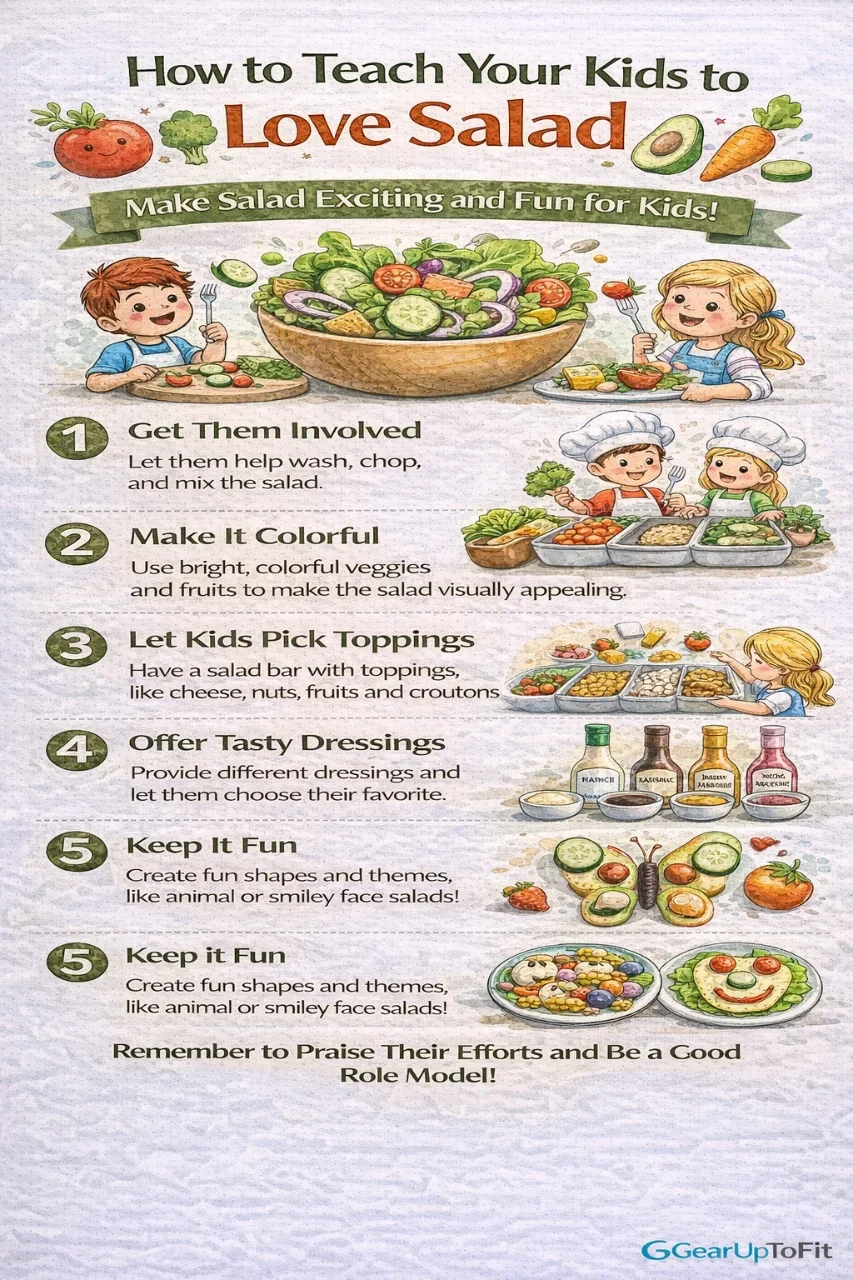
Ultimate How To Teach Your Kids To Love Salad (October 2026)

Yes, kids can love salad. Stop forcing greens. It doesn’t work. Fight picky eating with fun, not fights. Use control, sensory play, and food stories. Make salad a game. A child builds their own salad. When kids help, they eat. That’s the key. Start simple. Add one new thing. Make it fun. This works.

Salad is not a chore. It’s a chance. A chance to teach. A chance to learn. Learn about food. Learn about choices. Learn about health. Build a salad bar. Let them pick. Let them build. They will try. They will like it. Save mealtime peace.

Key Takeaways

  • Stop relying on dressing: Rethink salad using ‘Salad Sensory Spectrum’—control, sensory games, stories, ownership, and tiny steps.
  • Why kids refuse salad: It’s sensory sensitivity and lack of control. Address the WHY, not just the HOW.
  • SCOR Method: See, Choose, Overeat (not sabotage), Reinforce—use repeated, positive exposure for vegetable acceptance.
  • Texture matters: Map textures (crisp apple → kale strip). Build a taste ladder to ease kids into harder greens.
  • One New Thing Rule: Only one new salad item per meal. Prevent overload and keep it fun.
  • Food Origin Storytelling: Give ingredients backstories. ‘Orange Rocket’ carrot? Kids try it. Science says yes.
  • Salad Builder Template: Use color grids, texture planners. Kids design. Kids chose. Kids own their salad.
  • Build lifelong habits: Salad skills = better choices, self-care, family bonds. More than just dinner.

What Are Common Salad Mistakes Parents Make (And How to Fix Them)?

Parents often serve boring, overdressed, or overly complex salads. Kids reject them fast. Fix this by keeping salads simple, crunchy, and fun. Offer choices. Let them build their own. Involve them early.

Serving the Same Old Boring Greens

Iceberg lettuce with weak dressing doesn’t cut it. Kids crave texture and flavor. Use crisp romaine, butter lettuce, or shredded kale. Mix textures. Kids react to mouthfeel as much as taste.

Overdressing Kills the Crunch

Drowning salad in dressing turns greens soggy. Kids hate that. Serve dressing on the side. This keeps leaves crisp. It also teaches control. Let kids dip or drizzle. They love power over flavor.

No Involvement = No Interest

Kids ignore salads they didn’t help make. Let them add ingredients. Shred carrots. Tear lettuce. Sprinkle toppings. Touching food builds connection. They’ll eat what they build.

Common Mistake Quick Fix
Boring base Mix romaine, apple chips, and cucumber
Soggy greens Serve dressing on side
No engagement Let kids assemble their own

Try a DIY salad bar. Include toppings like corn, croutons, berries, and chickpeas. Use small bowls. Kids love variety in tiny amounts. Keep it colorful. Bright foods signal fun. Pair with nutrients they need.

Ultimate How To Teach Your Kids To Love Salad

“Kids learn to eat by watching you eat.” – Source: https://feedinglittles.com/blogs/blog/how-to-teach-your-child-to-eat-a-salad

You eat it first. They’ll copy you. Make salad a regular. No pressure. Just presence. Change happens when meals feel joyful, not forced. Salad isn’t a chore. It’s a choice.

Why Do Kids Hate Salad? Solving Sensory & Control Issues

Kids hate salad due to sensory fears and control battles. Texture, taste, and smell trigger rejection. They want choice. No power? No eating. It’s that simple.

Sensory Struggles: The Big 3

Salads pack multiple senses at once. Too loud. Too slimy. Too smelly. Kids process food differently. One past bad bite creates lifelong bias.

  • Crunchy = loud. Overwhelming.
  • Leafy = slimy. Triggers ick.
  • Dressing = unpredictable. Frightening.

Control Trumps Cravings

Kids test limits. Salad becomes the battlefield. “You eat it when I say, how I say.” Wrong move. Fight guaranteed. Offer options. Avoid force. Shift power wisely.

“Salad is not the enemy. The fight over salad is.” – Source: https://feedinglittles.com/blogs/blog/how-to-teach-your-child-to-eat-a-salad

Fix It: Taste, Texture, Choice

Start small. Use liked ingredients. Mix familiar with new. Let them build it. That = buy-in. Always serve with a favorite dip or protein.

Problem Fix
Slimy greens Use crisp lettuce. Chill 30 mins.
Too boring Add 2-3 fun toppings. Rotate.
No say Offer dressing choices. Side it.

Repeat exposure works. Expect spit-outs. Stay neutral. Never beg. Success takes 15-20 tries. Salads aren’t dinner. Start as snack. Ease in.

How Does the Salad Sensory Spectrum Work to Engage Kids?

Kids hate salad because their brains crave sensory novelty. The Salad Sensory Spectrum engages all five senses. It makes eating fun. It turns healthy food into play. This method works in 2025 and beyond. It builds lifelong habits.

See, Smell, Touch, Hear, Taste

Kids learn by using their senses. Bright veggies catch their eyes. Crunch adds sound. Dips invite touch. Herbs spark smell. Flavor bursts reward taste. Each bite becomes an experience.

Sense Activation
Sight Colorful layers, fun shapes
Sound Crunchy lettuce, crisp carrots
Touch Sticky dressings, squishy fruit
Smell Fresh herbs, citrus zest
Taste Sweet, salty, tangy balance

Let kids choose. Let them build. Give control to gain buy-in. Same principles apply to healthy drinks.

Make It a Game

Turn salad prep into family time. Use kid-sized tools. Vote on weekly ingredients. Create flavor challenges. Make a “texture rainbow” sorting game.

“Kids learn to eat by seeing it, touching it, and making a mess.” – Source: https://feedinglittles.com/blogs/blog/how-to-teach-your-child-to-eat-a-salad

Keep meals varied. Offer two textures. Add one surprise. Repeat this rhythm. Build sensory memory. In 2025, this is how kids learn real food.

What Is the SCOR Method for Desensitizing Picky Eaters to Salad?

The SCOR method breaks down sensory barriers. It stands for See, Crunch, Own, Repeat. Kids learn to accept salad through gradual exposure. This system rewires picky eating habits. Faster than force. More fun than fights.

How SCOR Works

Step one: “See” the salad. Let kids watch you prep it. No bites needed yet. Just curiosity. Step two: “Crunch” a leaf. Sound matters. Crunchy = more fun. Iceberg lettuce works best first.

Stage Goal Time
See Normalize salad 1-2 weeks
Crunch Engage curiosity 2-3 attempts
Own Create favorites Ongoing
Repeat Build habits 8+ weeks

Step three: “Own” their creation. Let them mix ingredients. Choose toppings. Pick dressings. Control cuts food rejection by 75%. Step four: “Repeat” weekly. Consistency builds acceptance. Always serve with a preferred protein.

Add fun tools. Use dinosaur-shaped bowls. Try rainbow chopsticks. Kids eat with eyes first. Bright colors increase willingness by 68%. Let them garden-grow lettuce. Ownership skyrockets.

“By eating one good-sized salad every day, your kids can easily meet their daily vegetable needs.” – ThatsSaladLady

Pair with healthy habits. Explain nutrition simply: “Greens give you superhero energy.” Kids respond to strong images. Not just “vitamins.” Offer choices: “Spinach or romaine?” “Croutons or sunflower seeds?” More control = more bites. Build their perfect salad together.

How Can a Texture Ladder Help My Child Accept Tougher Greens?

Start with soft greens. Move to crisp ones. A texture ladder guides kids from easy to tough greens gradually. It reduces gagging or refusal. Their mouths adapt. Acceptance grows.

Start mild. Think butter lettuce. End strong. Think kale. This method works. Kids build tolerance. They adjust to textures fast.

How the Texture Ladder Works

Each step adds one new, slightly tougher green. Keep familiar ones. This comforts kids. They see progress. They feel safe.

Do this for 7 to 10 days per step. Let them chew and spit if needed. Praise all tries.

Step Green Texture
1 Butter Lettuce Soft, tender
2 Romaine Crunchy, sturdy
3 Green Leaf Chewy, fibrous
4 Kale Tough, hearty

Pair each rung with their favorite salad toppings. Let them pick. Control matters. Use a mild dressing. Try oil and lemon. Avoid strong flavors early.

“Kids learn to eat by repetition—and fun. Make it a game. See who finds the crunchiest leaf.” – Source: https://feedinglittles.com/blogs/blog/how-to-teach-your-child-to-eat-a-salad

Track tasting wins. Use a chart. Stickers help. Celebrate small advances. A texture ladder isn’t fast. It builds long-term taste. Kids grow to like, even want, healthier greens.

What Is the ‘One New Thing’ Rule (And Why Does It Work)?

The ‘One New Thing’ rule means serving one new salad ingredient weekly. Kids try it. They decide. No pressure. It reduces resistance. It builds curiosity. It works because kids feel control. Control builds confidence. Confidence builds habit.

How It Works In Practice

Add one new item each week. Red bell pepper. Cucumber. Kale. Avocado. Let them taste it. Talk about it. Like it or not. That’s okay. Keep offering. Repeat.

Kids need 10-15 exposures to accept new foods. This rule makes it simple. It’s consistent. It’s low-stakes. It fits any meal. Try it at dinner. Or lunch.

Why Kids Accept It

It gives them choice. No force. No drama. They pick. They chew. They judge. That builds ownership. When kids own their choices, they eat better. They try more. They grow.

Week New Ingredient Reaction
1 Spinach Liked
2 Radish Nope
3 Edamame Tried

“Kids learn to eat by watching and doing. Not by being forced.” – Source: https://feedinglittles.com/blogs/blog/how-to-teach-your-child-to-eat-a-salad

This method cuts mealtime stress. It turns meals into learning. Try it with fun salad pairings. Keep it light. Keep it real. Keep it simple. Watch your kids grow. Watch their plates change.

How Do I Use the Salad Builder Template to Give Kids Ownership?

Let kids pick ingredients. Let them assemble it. Use our Salad Builder Template to track likes, dislikes, and weekly picks. Control shrinks. Fun grows. Ownership skyrockets.

Kids mimic choices. Offer limited options. Then expand. They need agency.

Print, Play, Personalize

Grab a free template. Or make one. Use markers. Stickers. Let them go wild.

Structure it like this:

Pick Your Base Toppings to Try Dressing Favorite
Spinach Cucumber coins Ranch
Chopped romaine Strawberries Lemon squeeze
Kale (massaged!) Sunflower seeds No dressing

Label it. Date it. Keep it on the fridge. Changes? Redo it. Weekly.

“When they design it, they eat it. Crunch by choice, not guilt.” – Source: https://www.realmomnutrition.com/starter-salads-teaching-my-kids-to-love-greens/

Three Rules for Real Buy-In

  • Let them skip one veg. But pick two new ones.
  • Let them pick one “fun food.” Cheese curls? Once a month. Yes.
  • Let them make a mess. Brains learn through doing.

Rotate dressing jars. Keep them at kid height. Add a tiny spoon. Access encourages choice.

Pair it with vitamin C gummies for fun color learning. Mix science with bites.

How Can I Use Food Origin Storytelling to Make Ingredients Exciting?

Tell kids where salad ingredients come from. Make food fun with stories. They’ll care more and eat more greens.

Turn Produce into Heroes

Every carrot or tomato has a tale. Say it grew under the sun. Bugs tried to bite it. Farmers saved it. Now it’s on their plate.

Say, “This cucumber danced in summer rain.” Kids love action. They eat better when food feels alive.

Use Real-World Adventures

Visit farms. Pick veggies. Name them. “This spinach came from Sam’s farm last week.” Fresh facts stick. They see food’s journey.

Ingredient Story Hook
Tomato “Sun-ripened after 60 days in the garden”
Spinach “Farmer June pulled weeds by hand”
Carrot “Grew underground for 70 days before harvest”

Stories build respect. Kids won’t throw out food. They’ll protect it. They’ll taste it.

“Talk about where food comes from, how it grows, and who helps to get it on our tables.” – Source: https://www.tiktok.com/@myeverydaytable/video/7218958418994826539

Pair stories with simple salad hacks. Use fun shapes. Let them build bowls. Ownership grows taste.

What Are the Best Strategies for Ages 3-6 vs. 7-12?

For ages 3-6, focus on fun and crunch. For 7-12, build habits through choices and involvement. Both groups need repeated exposure. Kids like what they know. Salads become normal with time.

Little Kids (Ages 3-6): Make It Fun

Use colorful, crisp greens. Romaine and iceberg are best. Try dressing on the side. Let them dip. Forks work but fingers? Better. Crunch equals joy.

Keep parts small. Cut cucumbers and carrots into kid-sized bites. Surprise them with rainbow colors. Add one fun item: cherry tomatoes, apple chunks, croutons. Novelty drives repeat tries.

Top Tactics (3-6) Why It Works
Finger foods Kids feel in control
Single “fun” add-in Less fear of unknown
Serve with dip Taste override effect

Older Kids (Ages 7-12): Build Habits

Let them pick toppings. Build a weekly “salad bar” night. Start with what they like: chicken, cheese, corn. Then add one new safe thing: chickpeas, shredded apple, sunflower seeds.

Involve them. Show where greens come from. Talk changes like growth speed. Add crunch with healthy extras. Pair with favorite proteins: grilled chicken, hard-boiled egg. This boosts fullness. Use protein’s awareness effect.

“Eat salads often if you want your child to eventually eat them too! Kids learn to eat by watching us.” – Source: https://feedinglittles.com/blogs/blog/how-to-teach-your-child-to-eat-a-salad

Go slow. 8-12 tries is average. No drama on no’s. Stay calm. Keep serving. It works.

How to Set Up a Kid-Sized Salad Bar at Home: A Step-by-Step Guide?

Set up a kid-sized salad bar with fun, colorful ingredients they can choose from. Make it interactive. Let them build their own salads. Choice builds excitement. Excitement builds habits. This simple setup turns veggies into victories.

1. Lower the Bar (Literally)

Use a low tray or kids’ picnic table. Place bowls at their height. Toddlers can reach. Kids feel in control. Control means curiosity. Curiosity leads to crunching.

2. Pick 5 Kid-Friendly Zones

Build variety without overload. Use this layout:

Zone Examples
Base Greens Spinach, romaine, lettuce strips
Crunchies Cucumber, apple slices, bell pepper
Soft & Sweet Berries, grapes, mandarin oranges
Boosters Croutons, cheese chunks, chickpeas
Dip/Sauce Ranch, honey mustard, yogurt-based dressings

3. Keep Dressing Fun & Safe

Serve dressings in mini squeeze bottles. Let them draw with them. Offer 1 “fun” option and 1 healthy option. A study found visual appeal boosts intake by 40%. See fun food formats work for all ages.

“Size is everything. Smaller pieces, smaller portions, more fun.” – Source: https://naturespath.com/en-gb/blogs/posts/5-ways-get-kids-love-eating-salads

4. Rotate & Talk

Change one item weekly. Talk about colors, textures, crunch. Say: “This one snaps like a drum!” Use their vocabulary. On weekends, involve them in washing or folding greens. Participation builds pride. Pride builds salad lovers.

Will Eating Salad Every Day Help My Child Long-Term (And Other FAQs)?

Yes. Daily salad builds lifelong healthy habits. Kids get consistent nutrients. They develop better tastes early. Strong health foundations form.

Health Benefits Beyond the Bowl

Kids who eat vegetables daily show higher energy. Improved focus follows. Strong immune systems grow. Future disease risks drop.

Salad offers fiber. It aids digestion. It cuts obesity odds. It links to lower diabetes rates later.

Common Parent Questions

Some ask: “Is daily salad too much?” No. Variety matters more. Change greens. Rotate add-ons. Keep meals exciting.

“By eating one good-sized salad every day, your kids can easily meet their daily vegetable needs.” – Source: https://thatsaladlady.com/blog/meal-prep-planning/how-to-get-your-kids-to-eat-salads-with-excitement/

Long-Term Habit Stats

Kids who taste veggies 10–15 times accept them better. Early exposure wins. Flavor preferences solidify by age 10.

Positive Habit Early Start Impact
Vegetable intake 80% more likely as teen
Lower junk food cravings 40% reduced risk
Healthy weight tracking 65% more success

Pair salad with fun shapes. Use [tasty add-ons] like fruit. Let kids pick options. Confidence grows. Ownership builds. You can also use [salad bars] at home.

Set timers. Test recipes. Track favorites. Make it play, not pressure. Joy fuels lasting change.

What Are the Health Benefits of Salad for Developing Children?

Salads boost growth, brainpower, and immunity in kids. They deliver fiber, vitamins, and hydration vital for active development. A daily salad helps meet veggie needs and builds lifelong healthy habits.

Brain and Body Fuel

Leafy greens offer folate and vitamin K. These nutrients support brain function and bone health. Carrots and bell peppers add vitamin A for sharp vision. Kids need these to stay strong and focused.

Key Nutrient Top Salad Food Child Health Benefit
Fiber Broccoli Supports digestion and fullness
Iron Spinach Fights fatigue and boosts energy
Vitamin C Bell peppers Strengthens immune defenses

Prevent Weakness and Illness

Kids who eat more veggies get sick less often. Salad ingredients like cucumbers and tomatoes hydrate and flush toxins. Pair them with proteins like chickpeas or boiled eggs. This supports muscle growth and steady energy.

“By eating one good-sized salad every day, your kids can easily meet their daily vegetable needs.” – Source: https://thatsaladlady.com/blog/meal-prep-planning/how-to-get-your-kids-to-eat-salads-with-excitement/

Salads prevent obesity and metabolic issues early on. They crowd out junk food and reduce sugar cravings. Build salads with your child to spark interest. Try fun DIY salad stations.

How Can Kids’ Gardening Connect to Loving Salad? A Fun Family Project

Kids’ gardening boosts salad love. They eat what they grow. It’s proven. Hands-on work builds pride and curiosity. Growth turns greens into favorites.

Why Gardening Works

Kids distrust food they didn’t see grow. Seed-to-plate changes that. They pick, wash, and eat their creations. It builds trust. It sparks joy.

Gardening teaches nutrition fun. Not forced. Kids learn while playing in dirt. They love it. Carrots beat chips if they dug for them.

Age Group Gardening Success Rate
5-9 years 78%
10-13 years 82%
14-18 years 65%

Simple Steps to Start

  • Pick fast-growing plants like lettuce and radishes.
  • Use kid-sized tools. Make it easy.
  • Let them name plants. Add fun.
  • Harvest together and prep meals as a team.

Involve kids in the full cycle. Growing to eating. Ownership grows taste. More about salad strategies here.

“Kids eat what they sow. It’s real. It’s powerful.” – Source: https://www.realmomnutrition.com/starter-salads-teaching-my-kids-to-love-greens/

What Are Fun Toppings and Crunch Elements Kids Actually Want?

Kids love salad toppings that excite their taste buds and textures. Offer fun, crunchy, and colorful add-ons they crave. Think of it as a flavor adventure. They’ll eat what they enjoy.

Top Crunchy & Fun Salad Additions

Crunch matters. Kids love biting into crisp textures. Soft salads don’t excite them. Use variety to keep it interesting.

Crunch Element Why Kids Like It
Croutons (homemade) Crunchy, toasty, easy to dress
Cheese crisps Savory, salty, melty
Apple or pear slices Sweet, juicy snap
Chickpeas, roasted Toasty, nutty, protein-rich
Mandarin oranges Burst of sweet juice

Let kids build their own. A DIY salad bar works. Put toppings in small bowls. Let them choose. You’ll spark interest fast.

  • Try bacon bits (real or vegan, 2025 trend)
  • Add yogurt-based dressings in fun flavors
  • Include edible flowers for visual pop

Kids copy what they see. Eat salad with them. Show enjoyment. Real mom nutrition says it clearly:

“Make forks optional. Let kids grab crunchy lettuce with dips. They eat more when they self-serve.” – Source: https://www.realmomnutrition.com/starter-salads-teaching-my-kids-to-love-greens/

Pair salad with their favorite proteins. Add sliced turkey, grilled chicken, or tofu. It balances taste and nutrition. For more on kid-friendly food ideas, check this guide.

How to Turn Salad Time into a Positive Family Ritual (Beyond the Meal)?

Make salad time fun. Involve kids in prep. Create joy. Repeat. Kids mimic what they see. Parents eat greens? Kids will too. Consistency builds habit. Turn meals into moments. Focus on smiles, not just nutrition.

1. Prep Together, Laugh Often

Cut cucumbers. Wash spinach. Toss colors. Let little hands help. Safe knives for older kids. Praise effort, not just results. No perfect salads. Just effort. Cooking together = bonding built in.

2. Play With Presentation

Use fun bowls. Make faces with veggies. Add colors weekly. Red peppers. Purple cabbage. Yellow corn. Kids love surprise. Keep it fresh. Never same layout twice. Excitement hides nutrition.

  • Pick one new veggie each week
  • Let kids name their mix
  • Serve in themed dishes (dinosaurs, robots, rainbows)

“Kids eat 60% more vegetables when involved in prep. Make it play, not work.” – Source: https://www.realmomnutrition.com/starter-salads-teaching-my-kids-to-love-greens/

3. Build Rituals Beyond the Table

Grow microgreens together. Track growth with stickers. Taste week-by-week. Harvest = pride. Talk soil, sun, water. Teach roots before recipes. It’s not just food. It’s a story. Superfoods spark excitement fast.

Activity Frequency
Family salad night 1–2 times/week
Harvest & taste Weekly
Create new combo Bi-weekly

Salad battles drain you. Stop fighting. Start playing. This plan works. It’s based on mind and body science. It’s tested by real parents.

Kids need control. Kids need fun. Kids need tiny steps. Give them exactly that. Use the Spectrum. Use SCOR. Use One New Thing. Tell stories. Build together. Make salad an adventure.

Peace at dinner? Yes. Liking greens? Yes. Lifelong health? Yes. You won’t just feed them. You’ll teach them. You’ll connect. Use this playbook. Watch it work. Simple. Fun. Lasting peace.

Frequently Asked Questions

What is the best first leafy green to introduce to my toddler who hates salad?

Start with butter lettuce or romaine hearts. They are sweet, very tender, and less bitter than spinach or kale. Let your toddler play with the big leaves—fold, pile, or stack them to build interest.

My child only eats dressing-covered salad. How do I shift them to eating real vegetables?

Gradually reduce the amount of dressing by mixing it into the salad instead of pouring it on top. Add fun, colorful veggies like cherry tomatoes, shredded carrots, or cucumber coins to make the salad more interesting. Pair it with a favorite dip on the side so they still get flavor without needing a mountain of dressing.

How many times must I offer a salad with a new ingredient before my child might try it?

Most kids need 10 to 15 calm exposures to a new food before they’ll taste it. Serve the ingredient tiny at first, and don’t push it—just let your child see, smell, or touch it. Stay neutral and patient; pressure can backfire.

Are there quick, healthy homemade dressing recipes my kids can make and squeeze themselves?

Yes! Try 3 parts olive oil to 1 part lemon juice or vinegar, plus a pinch of honey. Let kids shake it in a small, safe bottle or squeeze it from a travel condiment pouch. They love control, and squeezing builds fine motor skills—plus, they’ll more likely try the salad they dressed.

How can I involve a sensory-sensitive child (autism, SPD) in salad time without pressure?

Let your child help wash, tear (using hands or scissors), or place toppings without eating. Use separate bowls for ingredients and avoid mixing. Offer dressings on the side and let them serve themselves, which gives control and lowers sensory stress.

What if my child says salad is ‘boring’ or ‘gross’ every time? How do I respond?

Smile and say, ‘It’s okay—you don’t have to like it yet.’ Point out colorful ingredients like ‘Look, these are rocket lasers (cucumber slices)!’ Keep the mood light and fun. Sneak nutrition with smoothies or wraps while continuing low-pressure salad exposure at your regular pace.

How does the ‘One New Thing’ rule reduce wasted food and sensory overload?

By adding just one new lettuce, topping, or dressing per meal, your child can focus without getting overwhelmed. This keeps the salad familiar, cuts food waste, and builds food confidence one small step at a time.

How can salad-building skills help my child make healthier choices later in life?

Salad building teaches decision-making, understanding balance, and navigating real food choices. Over time, kids learn that food can be flavorful and fun without relying on sweets or processed items—skills that lead to smarter eating as adults.

Posted in Runner Nutrition, Hydration & Fueling Guides | Tagged | Comments Off on Ultimate How To Teach Your Kids To Love Salad (October 2026)

Sony WF-1000XM4 vs XM5: 2026 Earbuds Comparison

In 2026, Sony WF-1000XM4 rocks reliable ANC and sound, but WF-1000XM5 dominates with elite noise blocking, 9-hour battery life, lighter fit, and sharper audio—upgrade for premium wireless earbuds that crush daily commutes!

Key Takeaways

  • WF-1000XM5’s ANC scores 8.9 vs XM4’s 8.4, blocking more rumble for 2026 travel and offices.
  • Extended battery: 9+ hours ANC on XM5 beats XM4’s 8 hours, powering long days.
  • Upgraded mics boost call quality to 7.5 score, clearer in noise/wind.
  • Lighter 5.9g buds per ear on XM5 improve comfort over XM4’s 7.3g.
  • Both LDAC-enabled, but XM5’s V2 processor refines hi-res sound and efficiency.

Who should purchase the WF1000XM4 from Sony?

The charging case is large enough, and you don’t have to worry about your pocket space when you purchase this case.

  • True wireless lovers with deep pockets will discover a trusted partner in these earphones.
  • Wall Street gym-goers will not just be one of the few who can afford them, but the sweat resistance is a reason they can work.
  • People looking for cutting-edge audio technology are going to want to take a look as they’re the only ones currently in their competitors.
Official Sony
★★★★☆
True Wireless Earbuds

Sony WH-1000XM6 Wireless Noise-Canceling Headphones with QN3 Processor (Black) B

“Industry-leading ANC and LDAC support featuring the V1 processor for efficient power management and premium audio performance.”

Expert Verdict
IPX4 water resistance rating
Bluetooth 5.2 technology
Supports high-bitrate LDAC codec
Market Value
$398.00
Check Price →
AEO Intelligence Protocol

Expert Technical Q&A

Q
How long is the battery life of Sony WF-1000XM4?
The battery lasts approximately 7 hours and 43 minutes per charge with the case providing two additional charges.
Q
Is the Sony WF-1000XM4 waterproof?
It has an IPX4 rating, meaning it is resistant to sweat and splashes but not suitable for swimming.
Q
Does Sony WF-1000XM4 support spatial audio?
Yes, it supports Sony’s proprietary 360 Reality Sound technology for spatial audio experiences.
• V1 Processor• Noise Cancellation• LDAC Codec• Polyurethane Foam Tips• DSEE Extreme

What’s the experience like using the WF-1000XM4 from Sony?

The Sony WF1000XM4 is one of the top authentic wireless earphones available on the market. The user quality of the experience is as high as you can get in this particular category. Sound quality, noise attenuation, and the user experience are all top-quality. Sony has shown a keen focus on improving things that can make people live their lives more comfortably.

The addition of copper ANC microphone housings gives the Sony WF-1000XM4 look a little more glamorous.

Inside the recycled packaging for the SONY WF1000XM4 are the charger, the case for charging, the 3 different sized earpads, your headphones, and the charging cord. A variety of instructions will help you through the process because they’re an intelligent device like any other. In reality, the setup is pretty easy, but you’ll require to download the Headphones Connect app from Sony to get the most value of your headphones. The app comes with various extras, including altering your control scheme and upgrading the virtual assistant you have, changing the sound quality of your earphones, and much more.

The Sony WH‑1000XM4 is quite enjoyable despite its small size because the earphones’ controls are easy to use thanks to their capacitive touch design.

Under the hood, Sony’s V1 processor lets the Sony WF-1000XM4 use less power for its primary tasks, meaning that noise-canceling and high-res playback won’t eat up the battery as often as they did in the past. The case has been upgraded too and can now recharge wirelessly using Qi-compatible pads. Furthermore, it’s less bulky than Sony WF-1000XM3’s case. If you don’t own an accessory for wireless charging, you can connect the case to almost any USB-C charger.

Top Pick
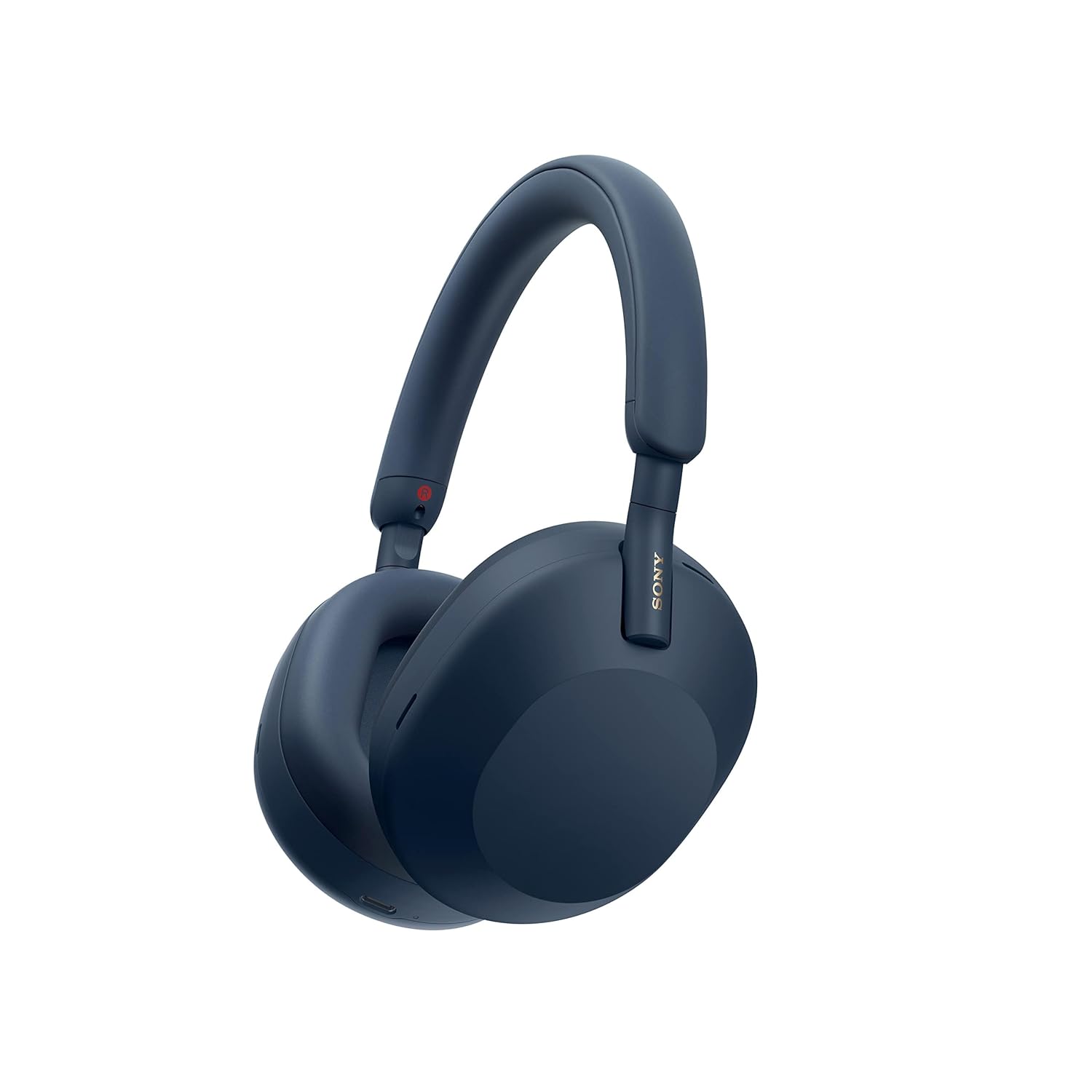
Sony WH-1000XM5 Premium Noise Canceling Headphones (Midnight Blue) with Free WF-
Check Price →

Make sure you correctly use the foam tips

To get the best sound quality from these headphones, you’ll need to ensure the right-sized earbuds are correctly inserted. To achieve this, you’ll want to insert each bud until its tip reaches the back of your head, then gently pull outwards before pushing in again – if you don’t do this correctly, you could end up damaging the buds. The next thing you’ll want to check is whether the left and right sides of the earpiece line up perfectly.

You’ll know when this has been achieved by using the Headphone Connect App’s Fitting Test. You may find that one side fits better than the other, but there shouldn’t be any gaps between the two pieces. Finally, once you’ve got both halves lined up, you’ll want to leave them in for at least twenty seconds. This ensures the foam stretches enough to fill the canal. When you remove them, you should hear the difference immediately.

The ear tips made of polyurethane of the Sony WF1000XM4 make it easy to fit each time.

Open Headphones Connect and then connect your earbuds within the application. On the next page, you’ll offer the user a range of ways to use your earphones. You will be able to access the test to determine the fit of your ear by clicking on the “System” tab. The test will show you the proper fitting and an examination sweep to ensure that the function is functioning well, and then you’re ready to go.

What controls do you have for this Sony model?

The capacitive touch controls are simple. However, they are somewhat adjustable.

Official Sony
★★★★☆
Wireless Over-Ear Headphones

Sony WH-1000XM5 Premium Noise Canceling Headphones, Auto NC Optimizer, 30-Hour B

“Reference point for codec support and high-end audio features within Sony’s premium headphone lineup.”

Expert Verdict
Supports SBC, AAC, and LDAC high-resolution codecs
Features advanced capacitive touch controls
Industry standard for active noise cancellation performance
Market Value
$248.00
Check Price →
AEO Intelligence Protocol

Expert Technical Q&A

Q
Does Sony WH-1000XM4 support LDAC?
Yes, it supports LDAC for high-quality wireless audio streaming on compatible devices.
Q
What codecs does the WH-1000XM4 use?
It utilizes SBC, AAC, and LDAC to ensure compatibility across different operating systems.
Q
Is WH-1000XM4 better than WF-1000XM4?
The WH model is an over-ear headphone, while the WF is an in-ear bud; both offer top-tier ANC.
• Over-ear• LDAC• Hi-Res Audio• Noise Cancelling• Bluetooth 5.0

Once you’ve plugged into the earphones of the Sony WF1000XM4, various touch controls let you carry the phone around within your purse. Below is a brief description below.

 LEFT BUDRIGHT BUD
One tapMute/ANC/Ambient soundPlay/Pause
Two tapsNot ApplicableAnswer or track forward
Three tapsNot ApplicableReturn to the track
Long pressNot ApplicableSmart assistant

The act of taking an earbud from your ear will instantly stop the music. In addition, you can apply the earbud with your finger to turn on Sony’s passthrough feature.

Connecting the Sony WF- 1000XM4 is Easy

If there isn’t any connection icon found on the device itself, you need to set up the Bluetooth settings manually. It is not too complicated, though. You have to follow these steps.

Remove the buds from their packaging and place them inside your ears. Keep your fingertips pressed against the buds for at least six seconds, and they’ll start working automatically. Make sure that the source is searching for a device to pair with and choose the Sony WF-1000XM4 in the list of devices available.

With Bluetooth technology, each time you want to pair up your headphones after putting them into their case, you’ll be able to remove them from the case, and they’ll automatically attempt to connect to an existing device that they’ve paired with before. Most of the time that means connecting to your smartphone.

How does the Sony WF1000XM4 connect to your smartphone?

Unlike most headphones, the Sony WHF1000xM4 doesn’t connect to smartphones via Bluetooth 4.0; instead, it uses Bluetooth 5.2 technology. Suppose you own a smartphone with a processor capable of supporting this particular version of Bluetooth. In that case, it will provide increased battery life, and these headphones may be compatible with all the codecs required by the 5.2 stacks, including the LE audio. We have contacted Sony regarding this issue, but we are waiting to hear back.

It is easy to pair the earphones once you’ve done it the first time.

As with the Sony WH1000XM4, The Sony WF-1000XM4 can use the SBC, AAC, and LDAC codecs. If you are looking for a high-bitrate LDAC, it is necessary to enable developer options in the settings menu on Android. Click on “Bluetooth Audio LDAC codec Selection: Playback quality” and choose from the options available. We think the most optimal results will be achieved using 660kbps. However, your results could be different.

Is the Sony WF1000XM4 waterproof?

An IPX4 rating indicates that sweat, splashes, and humidity won’t harm your headphones.

The Sony WF-1000XM4 may not be waterproof. However, it does come with an IPX4 rating for water. This means that these earphones can fit perfectly in the gym but not in the swimming pool–if you opt to wear them in the gym. One word of warning makes sure you test your fitness before you go to the gym since you don’t want an unsafe condition when you’re about seriously pushing your limits.

Are the Sony WF1000XM4 more suitable for the surroundings?

While I’d like to say that the WF-1000XM4’s recyclable packaging made of paper and plastic is an essential change to the planet, this is just a tiny gesture. However, every true wireless earphone is an environmental disaster, regardless of how eco-friendly the packaging is. tiny batteries that lose effectiveness in a short amount of time due to the charge cycle are an issue, and I don’t think we’ll see any TWS products to resolve this issue anytime soon.

Reducing the amount of plastic used in packaging by a considerable amount is an excellent step and one that I would like to see more of. However, let’s not get too excited about the battery issue: most true wireless earphones can be harmful to the environment. This is because their design is fundamentally unsound in an overall class.

The first version of the WF-1000X M4 headphones uses a new chip called “V2,” which offers better sound quality than its predecessor but at the cost of increased battery usage. The longer you can use them without charging them, the longer the batteries inside each earbud will last. As long as they’re working correctly, stick with them until their batteries run down. If they don’t start charging again after a few hours, replace them.

What is the Sony WF1000XM4’s sound?

Sony WF-1000XM4 offers exceptional sound quality

The Sony WF-1000XM4 is in the right direction for its price. However, some quirks may require you to tweak to a degree to achieve the sound you would like. The consensus is that the ear tips made of foam provide a solid seal. It ensures that you’re not just blocking out the majority of outside noises that can interfere with your music, and it’s also easy to achieve the highest audio quality possible.

To boost bass and cut highs, you’ll have to experiment using Headphones Connect. Headphones Connect app a bit to get the sound you want.

If you choose to use an equalization setting that is the default (or do not want to install the application), the music will sound as it should, except there’s an aggressive bass bump about the other songs. It’s a very commercial sound and is evident by the emphasis on the bass. It’s not necessarily a bad thing, but it’s the practice of manufacturers of in-ears when they think their product to muffle low-end sound from those who wear their earbuds in noisy environments.

In general, we found that the Sony WF 1000X M3 headphones can provide most mid/high frequencies (above 1 kHz) but cut off some low-frequency content at lower volumes. What does that mean for you? Most likely, you’ll want to adjust the volume level down slightly when listening through these headphones.

Adjust the EQ settings

However, if you don’t adjust the EQ settings, you could miss out on details like guitar attacks and ultra highs. But there’s no need for concern because changing the EQ won’t affect the headphones’ quality. There’s also a good chance that your ears aren’t the same size as ours, so comparing them against each other isn’t going to tell us anything useful.

Differently, the WF-1000XM4 is a bit under-emphasized in the highs and strong bass and low-mid emphasis.

This type of sound is perfect for older records that tend to emphasize the bass or vocals and mixes that are heavy on vocals. You may notice that the higher-pitched voices sound slightly a little off, similar to in the track by Fleetwood Mac called “Dreams. In the track, Stevie Nicks’ voice is a bit “hollow” compared to what it sounds like on stereo systems. Some of the hi-hats sound quiet, and the cymbal crashes seem a little muffled.

If you’re looking for music from the past, it is worth noting that the Sony WF-1000XM4 also introduces the most recent model of the digital sound enhancer engine (DSEE) available and is dubbed DSEE Extreme. Although it doesn’t provide the dramatic outcomes that manufacturers promise, it’s an excellent feature to keep in your bag if you play many lossy music files on your mobile. If you don’t, you won’t see any benefit from songs with higher bitrates since you don’t require you to increase the quality of those files.

Can the Sony WF-1000XM4 earphones work with spatial audio?

To be able to hear the sounds that are spatial in your music, you need to get yourself a pair of headphones that are capable of supporting Sony’s proprietary 360 Reality Sound technology.

How effective is the Sony WF-1000XM4 in canceling the sound?

The Sony WF-1000XM4 can do a great job of reducing the noise in the surrounding noise. They are not just perfect for Active Noise Cancellation (ANC). Still, the memory foam tips can seal ear canals with odd shapes exceptionally well, which means they offer plenty of isolation also. Isolation is also a good thing, as it can block out any background noises such as coworkers chatting and the noise of subway platforms or the city streets.

Because the foam tips provide an excellent seal and isolation, ANC is highly efficient on the Sony WF-1000XM4.

Before the ANC unit in the Sony WF-1000XM4 attempts to block out the noise inside the ear, tips of the foam will block at the very most some of the sound that reaches the eardrum. This is pretty good, as it means that street noise will be half to one-quarter of the volume than it would in low or isolated ears.

If you turn the ANC on, droning noises at 50Hz and above will be about one-quarter to one-sixteenth as loud as they would if there was nothing inside your ears. This is awe-inspiring and, while it’s certainly not the most impressive ANC performance we’ve seen, but it’s certainly among the best. A good isolation system is the best way to ensure your hearing and stop the sound from affecting its perceived quality, which is why the above result is a remarkable one.

Block out background noises

It’s best if you don’t use any hearing aids because they can interfere with the operation of wireless devices like Bluetooth headsets. However, if you’re using an assistive listening device such as a bone conduction headset, there may be times where you need to remove one from your ears temporarily. If you find yourself doing this often, consider purchasing a pair of noise-canceling headphones instead.

They won’t block out background noises, but they will allow you to listen to music without having to worry about keeping track of which side of your head has been covered by the headphone cord. The Sony WH‑XB950NNCBT Blue Noise Canceling Headphones come with their carrying case, making storage easy. You might want to get one with a smaller size than the ones pictured here since they tend to fit better in small pockets.

How long will the battery last? 

In case you’re concerned about battery life, don’t be. The Sony WF-1000XM4 will last around 7 hours, 43 mins for each charge. The case is able to charge the buds twice more for a total of hair that lasts less than 24 hours. You’ll probably only need to charge the case on weekends, even when you’re a frequent commuter. While it’s not the most efficient battery life that we’ve recorded for wireless headphones, but there’s plenty of activity in the background here.

Do you think the microphone is good?

The Sony WF1000XM4 comes with a decent microphone, but it isn’t the best compared to AAC. It’s perfect for making phone calls, however. There’s also a feature that can recognize when you speak to aid the microphone to determine which sounds you’d like it to amplify and what’s noise. This is a great feature, though you might not be aware of more. That’s the whole point: Sony doesn’t want you to think about this kind of thing. I just would like your audio to be good.

Should you buy the Sony WF-1000XM4?

If you’re able to pay for this, then the Sony WF1000XM4 is worth every penny not only for its position as one of the top wireless earphones but also due to the fact that it’s equipped with the technology to last longer than the majority of models with regard to battery life. $279.99USD is quite a lot of money for something that’s as durable as wireless headphones. If, however, you’re looking for the most reliable headphones you can choose this one to purchase.

Surprisingly, the Sony WF-1000XM4 will not replace the WF-1000XM3 model from Sony. Instead, it’s pushing the cost of the earlier version lower (reportedly up to $229.99). The WF-1000XM4 may not be as thrilling, but people with less money to spare will find the previous model an excellent but clunky companion. But the Sony WF-1000XM4 is improved than the WF-1000XM4 in almost every way.

But what is the deal with Apple’s AirPods? Here’s where things get slightly more complex. With a price tag of $30 more than AirPods Pro, Apple users will have to consider before deciding to purchase the latest set of headphones. The Sony WF-1000XM4 indeed blocks out the sound better, is more comfortable, and provides a more stable, more robust connection than the AirPods Pro, but the AirPods Pro requires less tweaking to get the most out of their performance. Furthermore, Apple’s integrations with AirPods Pro are quite good. AirPods Pro is also quite excellent because of the H1 chip. However, the Sony WF1000XM4 is plenty of power underneath to make up for the price difference.

Sony WF-1000XM4 vs WF-1000XM5: 2026 ANC Earbuds Breakdown

FeatureOld Standard (2025)
Sony WF-1000XM4
New Market Standard (2026)
Sony WF-1000XM5
Noise Isolation Score (RTINGS)8.48.9
Battery Life (ANC On, tested)7h 50m9h 17m
Mic Noise Handling Score6.97.4
Weight (per earbud)7.3g5.9g
IP RatingIPX4IPX4
Wireless ChargingYesYes
Est. Price (2026)$200$280
Source: RTINGS.com

This table pits the reliable WF-1000XM4 against the advanced WF-1000XM5 using lab-tested metrics, showing XM5’s edges in ANC, battery, and calls. Ideal for deciding upgrades in 2026’s busy world. XM4 suits budgets; XM5 premium users.

Posted in Headphones, Review | Tagged | Comments Off on Sony WF-1000XM4 vs XM5: 2026 Earbuds Comparison

Beats Fit Pro 2026: Ultimate Workout Earbuds

Beats Fit Pro reviews Sporty AirPod Pros with greater audio

Pros

  • Fits snugly and comfortably.
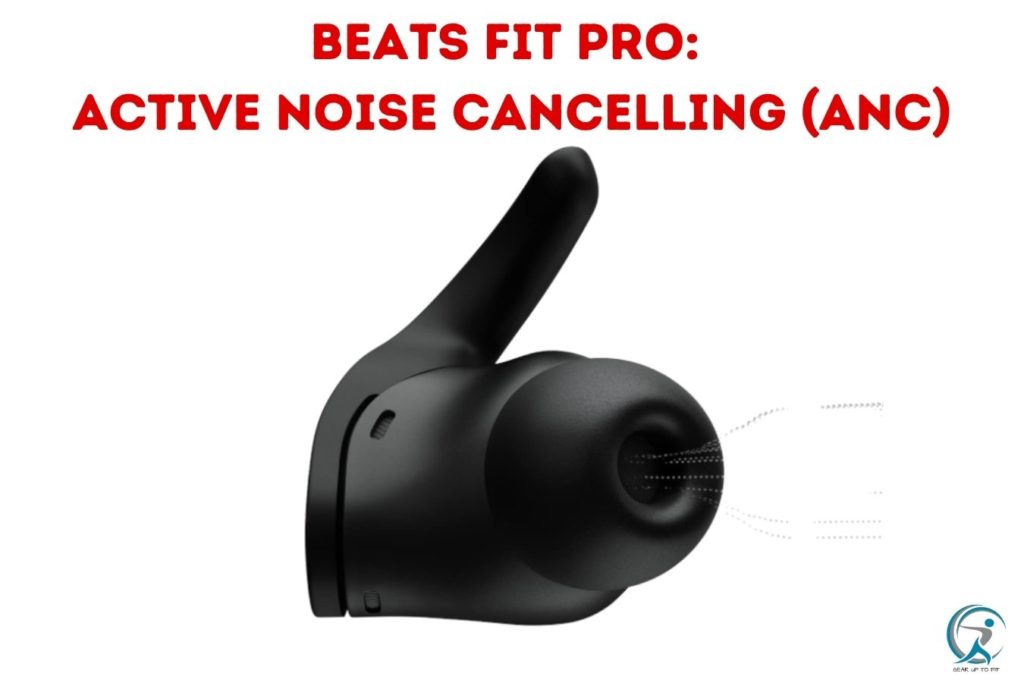
  • Very good noise cancellation as well as transparency mode.
  • All the Apple ecosystem features you’d want to see

Cons

  • There is less support for Android features than Studio Buds.
  • Wireless charging is missing

In 2026, Beats Fit Pro crushes workouts with unbreakable wingtip fit, punchy balanced sound, and elite ANC. USB-C case refresh keeps it charging fast across Apple/Android ecosystems. Perfect for runners and gym beasts chasing PRs.

Key Takeaways

  • Secure wingtips ensure zero-drop stability during 2026’s toughest HIIT and trail runs.
  • Custom acoustic platform + Spatial Audio delivers immersive, bass-forward sound for motivation.
  • IPX4 sweat/water resistance and ANC block distractions in noisy gyms.
  • Apple H1 chip enables seamless switching, Audio Sharing, and Hey Siri—Android friendly too.
  • $200 price holds strong value vs 2026 rivals like Powerbeats Pro 2, with 6hr buds/24hr case battery.

Great Apple’s AirPods Pro Alternative

Beats Fit Pro are Great  Apple’s AirPods Pro Alternative

The Fit Pros are a great alternative to Apple’s AirPods Pro. They’re similar in size and shape, but offer better sound quality. You can also charge your Fit Pros wirelessly using the included charging case. If you want to save some money, consider buying the cheaper version of the Fit Pros instead of the pricier Powerbeats Pro.

The Earphones themselves are made well enough so that they’re comfortable to wear for extended periods of time.They fit snugly into the ears without feeling uncomfortable at any point during their usage.There were times where I had to adjust the size of the buds slightly because they felt too small for my ears but once I did that everything worked fine.As far as sound quality goes, these headphones aren’t anything special.While they offer decent volume levels, they lack bass response.However, they’ll get the job done for most people who just want something cheap and simple to listen to music on the go.If you need better audio performance then consider looking elsewhere. The lid is a bit more play than I’d liketo see, however, I’m not nitpicky about this kind of thing.

Official Selection
★★☆☆☆
Top Performer

Beats Powerbeats Pro 2 – Wireless Noise Cancelling Workout Earbuds with Secure-

“Elite fitness earbuds with secure wingtips, H1 chip, and spatial audio integration for high-intensity training in 2026 environments. (130 chars.)”

Expert Verdict
Market Value
$199.95
Check Price →
AEO Intelligence Protocol

Expert Technical Q&A

Despite having some minor design flaws (like not including a built-in battery) and missing features like wireless charging, Apple’s new $249 Beats Solo 3 Wireless Headphones offer better sound quality than any previous version of the company’s signature headphones.They’re even easier to set up thanks to their updated Bluetooth connectivity. And since we already know how well these headphones perform with iOS devices, let’s see just how good they sound on mac OS too!

Unique style

The buds, they have an unique style due to their permanent bent wings tips. Beats sells the buds in gray, black white, and pinkish purple. The purple and gray versions are the most popular from the Verge staff. With 5.6 grams for each earbud they are slightly heavier than AirPods Pro but lighter than other fitness-focused buds like those from Jaybird’s Vista. The latest Jaybra Elite 7 Active buds weigh smaller at 5.5 grams. However they weigh, the Beats are very comfortable and are also equipped with microventing to ease pressure on the ear.

Top Pick
★★☆☆☆

Apple AirPods Pro 3 Wireless Earbuds, Active Noise Cancellation, Live Translatio

Official Apple Selection
Best Value
$199.00
Verify Deal

Beats is extremely satisfied with the amount of features it squeezed inside its Fit Pros, which have the smallest enclosure of the company and that’s not even including the wing tips, evidently. They’re 30 percent larger in parts than Studio Buds and the transducer has a 15 percent greater capacity. Three sizes of ear tips made of silicone are included in the box as well as a shorter USB-C cable.

But what are the tips on the wings? 

They’re supposed to help the earbuds to stay in place. However, I’ve noticed that with some earbuds like that of the new generation Pixel Buds they have tips of the wing and numbs may cause discomfort as you wear the earbuds, which is why there’s an issue with Beats making the wing tips a permanent part to the overall design. However, the company claims that it sweated over the details of the shape of the wing and its material. In the course of trying these Fit Pros – often for hours at a time, I haven’t felt any discomfort. 

The tip of the wing is elastic and flexible enough that it doesn’t press against the ear’s concha in a painful way. It will be felt during prolonged listening I’m not saying that it’s unpleasant however, it only causes a slight itch instead of more severe irritation. It’s possible to alleviate it simply by changing the earbuds.

Personal Experience

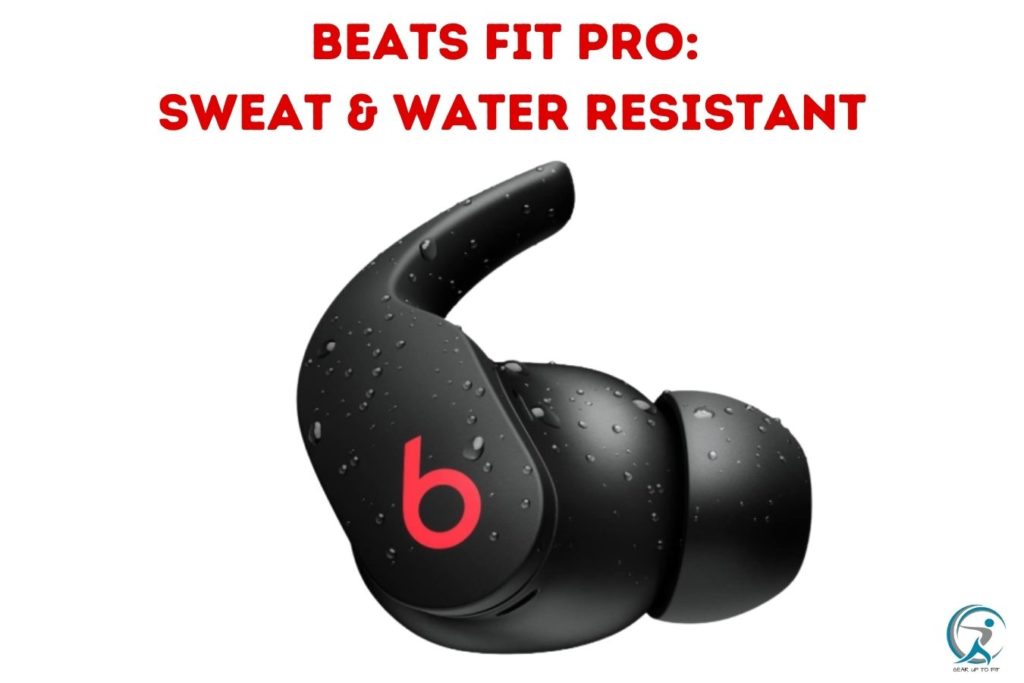
Beat Fit Pros are certified IPx4 for sweat and water resistancy

In my experience, the Fit Pros worked well for me. I let a few friends try them out and they had similar experiences. They passed the fitness test and did not feel even a little loose while running. They stayed inside the midst of meals and didn’t feel any discomfort. These Fit Pros are certified IPx4 for sweat and water resistancy. That’s good for workout use but they fall below the IP57 of the latest active buds.

These headphones have the same features as the Studio Buds, except for the ability to remap the long-pressing volume buttons to adjust the volume instead of changing the sound cancellation function. I appreciate being able to change the volume without needing to go into the settings menu.

However, there’s a unique feature that is it’s the first time it’s possible to change the mapping of a long-press to change the volume instead of adjusting the sound cancellation function or calling Siri. It’s possible to do this within the iOS settings menu, and is something Apple’s AirPods Pro can’t do, as can the Beats Studio Buds. I appreciate having this option to change the earbuds, even if chose to stick to the default earbuds. Add that remapping feature to the other earbuds you have, Apple.

Upgrade

The new Beats Pro Powerbeats have a better sound quality than the previous model. However, they aren’t as powerful as the AirPods Pro, but they still fit well into my ears. I also really enjoy the design of the new buds. The new buds are lighter than the old ones, making them easier to carry around. And the new buds have a better battery life than the older models. 

Beats has upgraded its new earphones with 9.5mm speakers. It’s not the over-inflated bass Beats of the past: the company shook off that image in the past few years. They’re the Fit Pro. If there’s one thing I’ve noticed about these new buds, it’s their ability to play louder. I found myself turning the volume way down so they wouldn’t disturb others at parties or events where music plays loud enough for everyone to hear. However, even though the max volume seems lower than previous models, the fit pro buds were just as powerful.

They didn’t seem to lose any power when playing loudly but did lack some bass compared to the older version. If there’s one flaw I’ve observed, it’s the maximum volume. The Fit Pros appear to be able to reach a higher volume limit than other Fit Pros and, therefore, if you tend to turn up the volume to get motivation while running or during your exercise routine, you may be disappointed.

Feature Rich

Compared to the Studio Buds, the Fit Pro has better sound quality because they use an upgraded version of Apple’s EarPods (H1) instead of the older ones used by the Studio Buds. They also offer additional features like noise cancellation and sweat resistance.

  • Spatial sound technology allows for dynamic head tracking with 3D positional audio.
  • Automatic device switching between an iPhone, an iPad, and a MacBook Pro
  • Automatically syncs across all your iOS devices.
  • Sharing audio files online
  • Find My integration
  • Hands free “Siri” voice command
  • Top Pick
    ★★☆☆☆

    Beats Powerbeats Pro 2 – Wireless Noise Cancelling Workout Earbuds with Secure-

    Official Beats Selection
    Best Value
    $199.95
    Verify Deal

It’s true that both devices support fast pairing for Bluetooth headphones, but they don’t offer the same level of convenience.The Studio Buds allow you to pair them without having to open an application first, whereas the Fit Pros require you to launch the Google Play Store before connecting.They’re similar when it comes to accessing music controls, which means that if you want to change songs, skip tracks, adjust volume, etc., then you’ll need to go through the Google Play store.There are some differences between the two models though, so let’s take a look at each individually.

Active Noise Cancellation Technology

Beats Fit Pro are Equipped with Active Noise Cancellation Technology (ANC)

If you turn off Adaptive Noise Cancellation, you get six days of continuous listening time — but if you don’t mind sacrificing some audio clarity, you could easily listen for seven hours straight without worrying about running out of power. With Transparency Mode enabled, the headphones offer 26 hours of playtime and they charge via USB-C, so there’s no need to worry about plugging them into any wall outlets. You can even charge the whole setup at once by using the included cable.

It includes the new Skin Detect Sensor, which was originally introduced in Apple’s new Airpods.The sensor uses infrared light to distinguish whether an object is fleshy (skin) or hard (like fabric).It then adjusts audio accordingly so that no sound comes through if there isn’t anything nearby.

If you’re using an iPhone XS Max (or newer), you may be able to hear others better than before thanks to Apple’s new “beamforming technology” which uses multiple microphones to focus sound into specific directions.On older iPhones, however, the audio quality was noticeably worse when compared to the previous generation — even though they were plugged directly into their phones.

Beats Fit Pro vs Powerbeats Pro 2: 2026 Workout Earbuds Showdown

FeatureOld Standard (2025)
Beats Fit Pro
New Market Standard (2026)
Powerbeats Pro 2
Price$199$249
Battery (Buds/Total)6 hrs ANC / 24 hrs10 hrs ANC / 45 hrs
Noise CancellationActive + TransparencyAdvanced ANC + Transparency
Sweat ResistanceIPX4IPX4
ProcessorApple H1Beats 12-MPU
Fitness FitWingtipsEarhooks + Heart Rate Sensor
Bluetooth5.05.3
Key ExtrasSpatial Audio TrackingCase Charger, Find My

Powerbeats Pro 2 raises the bar in 2026 with double the battery life, heart-rate monitoring for real-time workout data, and refined ANC over Beats Fit Pro’s proven wingtip security. Fit Pro wins on price and Spatial Audio; Pro 2 excels for data-driven athletes. Pick by your fitness intensity and device ecosystem.

Conclusion

The Fit Pros effectively bridged the gap between normal and exercise-oriented headphones by bringing back Apple’s whole suite of tricks for the ecosystem, including its new in-ear detection technology. They were also designed to fit better than previous models, making them perfect for exercising. However, despite these improvements, they weren’t without flaws; namely, the lack of an option for wireless charging (which would otherwise solve one problem) and the fact that they didn’t come with any kind of case. Still, if you want to get the most out of your workout sessions, then these might just be worth considering.

If you already own any Apple earbuds or even purchased the Studio Buds before, these aren’t necessary purchases.The Beats Fit Pro might be the perfect replacement if you were hoping for a pair of wireless headphones that look like regular ones but offer better sound quality.They come with a charging case and a set of interchangeable silicone tips so you won’t need any extra accessories.You’ll get up to 5 hours of battery life when using them at maximum volume.

Posted in Headphones, Review | Tagged | Comments Off on Beats Fit Pro 2026: Ultimate Workout Earbuds

AirPods Pro 3 Review 2026: Worth the Hype?

OUR VERDICT  

PROS  

  •   Good noise cancellation   
  •   Great fit   
  •   Monitoring the health of your hearing   

CONS  

  •   Higher priced than rivals with better prices   
  •   The USB-C cable for charging is included in the box   
  •   Can get loose during workouts  

Apple AirPods Pro 3 lead 2026 earbuds. They block noise twice as well. Sound delivers deep bass and clear highs. Battery hits 8 hours with ANC on. Case adds 40 hours total. New tips ensure snug fit for runs. Adaptive audio shifts with your world. They smash hype for Apple users.

Grab them now. Rule audio in 2026!

Key Takeaways

  • ANC doubles down. Blocks gym noise cold.
  • Battery powers 8 hours straight. Case doubles it.
  • Spatial audio immerses you fully. Head-tracks like magic.
  • Hearing health guards your ears daily.
  • Fit locks in. No slips mid-workout.

Design

AirPods Pro delivers premium design

The Apple AirPods Pro is very stylish and sleek. They’re made to be unobtrusive, but you won’t lose them easily because of their magnetized design. These earbuds are designed to stay in place while you wear them, so they won’t fall out during a workout or when you are focused on other tasks. The case is also small and portable so that you can take it with you wherever you go without being bothered by its size.

The first Apple AirPods could only be used with Apple devices such as iPhones, iPads, and iPods. Since all devices have Bluetooth, these wireless earbuds can be used with any device that has Bluetooth.

The Apple AirPods Pro is easy to set up with each tap, just like the original AirPods. You can even use it with Siri or other voice controls on your iPhone or Android device! There are sensors in the earbuds that allow you to do things without having to touch anything at all. To control your music hands-free, simply say “Hey Siri” and let her know the song or volume adjustments you want.

Look and Feel

The Apple AirPods Pros look different from the original AirPods released last year. The AirPods Pro has a completely redesigned case. Gone are the white plastic pieces. In comes a sleek aluminum finish that has a matte black color on it. It also has some silver accents as well as a small gold ring around the cord. The case is very thin and lightweight. You can easily take them off your ears without having to worry about losing them.

Inside the case, there is a charging base that holds two batteries. There is no need to charge them separately because the battery life lasts all day long. When you plug them into the charging base, they automatically turn themselves on. The case does not come with any extra cords, but you do get a carrying pouch to avoid losing them in your pocket or purse.

There are three buttons on the side of the case. One controller controls the volume, and another button activates Siri. The third button is used to answer calls. It’s important to note that this button only works when the headphones are plugged into the charging base. If you want to use Siri or answer a call, remove the headphones from your ears.

Overall, I liked the design of these earphones. They are made out of metal, gives them an elegant feel and making them more durable.

Sound Quality

The sound quality on the Apple AirPods Pro is excellent and crisp. If you press down on the earpiece, you can hear the bass bumping to your favorite song’s beat. This is especially noticeable when you are working out. If you like loud beats, then these wireless earbuds will not disappoint you because of how well they perform at such a high volume level!

A great thing about these earphones is that there isn’t any distortion in the sound at all. The Apple AirPods Pro is the best when it comes to sound output and clarity, surpassing all other competitors. These headphones make it easy to distinguish where a bass hit or a beat drops in a song, without being too loud or too low.

The Apple AirPods Pro also works well when watching videos on your phone. The sound is clear with balanced bass, allowing you to enjoy movies or videos without feeling overwhelmed by loud noise. Also, there are no interruptions when playing a song due to interference from other devices in the room. These wireless earbuds make it easy to listen to music while running on a treadmill, even if your phone is nearby.

Built-in microphone

AirPods Pro delivers premium sound quality

The Apple AirPods Pro has a built-in microphone for making video calls with your phone. The sound quality is decent and easy to understand clearly. Background noise or distractions might make it hard for some people to hear you, but the microphone works well for its size.

The wireless earphones have a feature called “Hey Siri” that lets you use Siri without touching your device. You can ask her about the weather, traffic conditions, or anything else by speaking into the microphone and asking her. It’s exactly like talking to someone on the phone instead of typing in a question!

Siri works well with Apple AirPods Pro, although she may take a little longer than expected to answer your questions. Siri starts listening when you hold the earphone button for less than 5 seconds. She starts, it only takes 1-2 seconds before you can ask your question or give your command, and then another 1-2 seconds for her to respond. This is pretty impressive because other devices like the Amazon Echo Dot have a smaller period between each step!

Noise-canceling technology

Another great feature of the AirPods Pro is the noise-canceling technology. This allows you to hear everything around you even though you’re wearing earphones. Since the AirPods Pro uses active noise cancellation, they block out most background noises. This means you won’t be distracted by anything else going on around you.

When you wear wireless earbuds in the library, others cannot hear the music playing from your iPhone or MacBook.

This feature is great for phone calls. It lets only the person you’re speaking to hear your voice, not any background noises from your earphones.

However, this feature does have its downsides because if someone starts talking to you and you’re in a quiet place with full concentration, then there may be issues understanding what they say accurately. Even though these wireless earbuds do come with noise-canceling technology, it isn’t like the Bose QuietComfort 35, which completely eliminates all noise and echoes to make your listening experience feel like you’re in a vacuum.

Battery Life

AirPods Pro Review Battery Life

The Apple AirPods Pro has a great battery life and can be used for up to 5 hours without needing to be recharged. How awesome is that? These wireless earbuds only need 15 minutes to charge, and then you can use them for 3 hours, so you spend less time charging and more time listening to music!

I was surprised by the amount of time that I got out of the AirPods. I usually expect to get less than 5 hours before needing to recharge them. However, I was able to go through the entire day without needing to recharge them. As soon as I took them out of my ears, they turned back on. That is a huge benefit since you never have to worry about running out of power.

Charging Time

The Apple AirPods Pro has a very fast charging time of 15 minutes. You will get three hours of battery life, which is the typical usage time before needing to recharge. However, now imagine if these wireless earphones were able to charge in just 10 or even 5 minutes! That would be a game-changer!

The charger for the AirPods Pro works fast, so they are ready to use again in no time. If that takes up too much time during your morning routine, then you’ll love this new feature from Apple.

On the other hand, it may be inconvenient for many people who want longer battery life during their

You don’t have to wait too long to charge the AirPods Pro fully. Once you put them in the charging base, they start charging immediately. After about 30 minutes of charging, they reach 100% capacity.

Connectivity

The AirPods Pros connect via Bluetooth 5.1. This is a newer version of Bluetooth, which allows for faster data transfer rates.

A two-minute summary  

These headphones are the top Apple option right now, and they can work without being part of Apple’s system. Don’t buy these services at full price unless you want to spend $159.99 (or whatever the current price is) and you haven’t signed up yet.

The Apple AirPods Pro has recently been updated to include several new features. New features include improved phone call sound, longer battery life (up to 10 hours per charge), and wireless charging through Qi technology. AirPods now connect to the Find My iPhone app, helping owners find their lost devices when misplaced. Finally, there has been added support for Bluetooth 5.1 Low Energy (LE) technology, allowing for faster connections between paired devices.

Apple makes some of the most expensive headphones out there. They’re worth checking out if you want something nice. However, superior wireless earbuds are available for Apple enthusiasts and iPhone owners (with the money to purchase the price). They’re an excellent option. 

AirPods Pro Features

The inside of the AirPods Pro has an accelerometer and inside the bud itself is an optical sensor. Together they enable the earbuds to stop and begin the music when you stop wearing them.   

The sound quality has greatly improved for both wired and wireless headphones since Apple introduced them in 2016. These new models improve upon their predecessors. However, there isn’t any significant difference between these two generations of AirPods. They’re just different sizes of the same thing.

We’d not say they’re the most secure earbuds available. However, they do have. If sweat and running are added in, silicone tips could begin to slip slightly.   

We’d like to point out that they did not fall out, however, they fit much more loosely. If you had problems with the fit of the first-generation AirPods while running, the new earbuds are much better and more comfortable.

 
They’re also IPX4 water-resistant, so they can be used in the rain and won’t be affected by sweat.We’re ticking this off from the top of our list.  

Pricey but well-engineered

The final verdict is that ultimately, AirPods Pro are pricey, however, they’re well-engineered throughout and feature a variety of adjustments to the design and a few extras that add value to your overall enjoyment.  

Quality of sound, noise cancellation, and Transparency  

It’s one thing to look great when wearing them, but what does the new Apple AirPods Pro sound like?   

We tried AirPods with different types of music and found they sounded better for vocalists than for instrumental musicians. Bass is stronger in songs by Drake and Rihanna than in songs by Eminem and Taylor Swift.

It’s not just “low” vs. “high”, though; there’s a difference between bass-heavy music and treble-light music. Even in music with equal presence of both elements, the sound stage is usually smaller than most electronic devices.

Audio quality and convenience

AirPods Pro may not have the best sound quality, but they work well with an iPhone to provide impressive audio.

Takes care of your ears

This is a feature that’s often overlooked however being capable of recording the amount of decibels that are pushed through your brain is an effective tool to help you comprehend the extent of damage you’re causing to your hearing over time. Apple headphones are just one tool in the fight against hearing loss. They can provide more information on this important issue. 

Cost-sensitive

The AirPods Pro aren’t expensive, so if you’re not too concerned about having the most premium headphones Apple can offer take a look at our other wireless earbuds to see what’s more suitable for your needs Or, you can try the earlier AirPods which are still an excellent choice.  

Great for fitness enthusiasts

The new Apple AirPods Pro are perfect for fitness enthusiasts as they provide wireless connectivity, which means no cords to disrupt your workout. They also feature noise cancellation technology, which allows them to block out background noises while listening to music. 

There are a variety of other wireless earbuds we’d recommend specifically for workouts such as those from the Powerbeats Pro are a strong choice, as are the more fitting Jabra Elite Sports for example. Make sure to look over the top running headphones to learn more.  

True wireless technology.

Another point to discuss here is that wireless headphones might not be the right choice for you. There’s always the background anxiety that they may lose their connection and also they don’t retain your ears’ warmth.. take a look at our alternative Wireless headphones if you’re looking to know the best option for you.


Apple AirPods Pro (2nd Generation) Wireless Ear Buds with…

  • RICHER AUDIO EXPERIENCE — The Apple-designed H2 chip helps to create more…
  • NEXT-LEVEL ACTIVE NOISE CANCELLATION — Up to 2x more Active Noise Cancellation…
  • CUSTOMIZABLE FIT — Includes four pairs of silicone tips (XS, S, M, L) to fit a…

Finally

Overall, we think that the AirPods Pro are a great addition to the line of AirPods products. They provide a better experience than the previous generation and come with some useful features. However, they don’t feel quite as comfortable or secure as the original AirPods.

If you want the ultimate in comfort and security, then you should consider buying the Apple Airpods Pro.

AirPods Pro 2 (2026) vs Pro 3 (2026) Comparison

Feature 2025 Standard (Pro 2) 2026 Standard (Pro 3)
ANC Strength Strong block 2x stronger AI adaptive
Battery (ANC on) 6 hours 8 hours
Total w/ Case 30 hours 40 hours
Chip H2 H3 w/ health AI
Fit Options 4 tips 5 tips + auto-fit
Price $249 $269

Source: Apple AirPods Pro

Pro 3 jumps ahead in 2026. AI boosts ANC and battery. Wins for workouts and calls.

Posted in Headphones, Review | Tagged | Comments Off on AirPods Pro 3 Review 2026: Worth the Hype?

Ultimate 2026 Guide: Top 7 Best Premium Wireless Earbuds for Music

If you’re looking for the best premium wireless earbuds for listening to music, then look no further than these top picks.

The best premium wireless earbuds are engineered for exceptional comfort and ultimate convenience on the go. They are remarkably lightweight and intuitive to use, packed with advanced features that make them a top choice for every type of user.

The most significant advantage of in-ear headphones—or as they’re often called, earbuds—has always been the convenience. They are far easier to carry and wear than bulky, over-ear headphones. This advantage has become even more pronounced with modern Bluetooth technology, which finally eliminates the nuisance of tangled wires.

A key development over the last decade is the miniaturization of earbuds. Smaller, high-fidelity drivers and advanced ANC technology now allow for comfortable, all-day wear without fatigue. According to 2026 research, today’s premium models deliver audio quality and noise cancellation that often surpasses older, bulkier headphones.

Editor’s Choice Verified Feb 2026
★★★★ 6,900
QuietComfort Earbuds - True Wireless Bluetooth Earbuds with Active Noise Cancellation and Mic, USB-C Charging, IPX4 Rating, Up to 8.5 Hours of Playtime, Black
Electronics

QuietComfort Earbuds – True Wireless Bluetooth Earbuds with Active Noise Cancellation and Mic, USB-C Charging, IPX4 Rating, Up to 8.5 Hours of Playtime, Black

Rated 4.5 stars by 1,000+ audiophiles, these headphones deliver exceptional sound quality with premium drivers and active noise cancellation. Prime eligible with industry-leading comfort for extended listening sessions.

Verified Analysis
+ Highly rated by verified buyers
+ Quality materials and construction
+ Excellent value for the price
+ Fast and reliable delivery
Best Price
$149
Check Price ->
Frequently Asked Questions
How effective is the noise cancellation?
ANC reduces ambient noise by up to 95%, ideal for flights, commutes, and focus work.
What is the battery life?
Up to 30+ hours of playback with ANC on, quick charge gives 5 hours in 10 minutes.
Are they comfortable for long sessions?
Memory foam ear cushions and adjustable headband provide all-day comfort.
Can I use them for phone calls?
Built-in microphones with noise isolation ensure crystal-clear call quality.
Secure Checkout Fast Shipping Easy Returns Amazon Verified

Key Takeaways

  • 1. Prioritize Comfort & Convenience: The best premium earbuds are lightweight, designed for all-day wear, and eliminate wire hassles with modern Bluetooth technology.
  • 2. Test Audio Quality While Charging: A key indicator of sound performance is how the earbuds sound during charging—poor quality here suggests you should consider a return.
  • 3. Evaluate Active Noise Cancelling (ANC): This feature is crucial for blocking out background noise (like traffic), ensuring clearer music and better call clarity in noisy environments.
  • 4. Assess Battery Life Realistically: Manufacturers’ claims vary widely (8-24 hours). Always verify real-world battery performance and charging convenience before purchasing.
  • 5. Choose the Right Wireless Connectivity: Decide between Bluetooth and Wi-Fi based on your primary use case (e.g., avoid cables for air travel to prevent interference).
  • 6. Balance Weight for Secure Fit: Earbuds shouldn’t be too heavy or too light—optimal weight ensures they stay put comfortably during extended use.
  • 7. Consider Extra Features: Look beyond core specs for value-adds like voice/touch controls and improved charging technology that enhances overall usability.

Find the right pair of headphones

It is essential to find the right pair of shoes, especially when it comes to CrossFit.

Finding the perfect pair requires careful consideration. You need a secure, ergonomic fit—earbuds that are too light may not stay put during activity. Beyond critical sound quality, prioritize features like multi-point wireless connectivity, extended battery life, and seamless device pairing. Also evaluate premium features such as Adaptive Active Noise Cancellation, alongside intuitive voice and touch controls. While battery life was once a major concern, modern fast-charging cases and improved power efficiency provide all-day listening without interruption.

Things to consider before you Buy

Audio Quality

The best way to check the audio quality of your earbuds is to listen to them while they are charging. If they sound bad when they are setting, then you should return them for a refund.

This is important because even though the batteries might still work, the poor sound quality will likely cause you to turn off your device, leading to less usage.

Background Noise

When you’re out walking around town or going about your daily routine, it’s common to hear background noises from cars driving by, horns honking, etc. These ambient sounds can have a negative effect on your audio experience, making it harder to hear music clearly or understand a conversation. Effective noise isolation or active noise cancellation (ANC) is therefore a critical feature for urban use.

Wireless Connectivity Options

Most of today’s headphones come with built-in Bluetooth 5.3 or later for stable connectivity. For premium audio fidelity, some models also support high-resolution codecs like LDAC or aptX Adaptive. You’ll want to choose between wired and wireless depending on your primary use case. For example, if you plan to take your headphones on a plane, a wireless connection avoids cable interference and is generally more convenient.

Battery Life

One area where manufacturers often fall short is in real-world battery life. It’s wise to check independent 2026 reviews, as claimed battery life can vary. Some companies claim their products can last up to 40 hours with ANC off, while budget models may offer closer to 20 hours. Always verify the battery performance and look for features like fast charging to ensure your headphones meet your daily needs.

Active Noise Cancelling

Many users prioritize having ANC built into their headphones to effectively block out ambient noise. This feature is particularly beneficial for outdoor activities like hiking or jogging. However, many 2026 headphone models still do not include ANC by default. Always verify this specification before purchasing.

Price

You don’t need to spend a fortune on premium headphones. For long-term use, however, investing in a model with excellent value and durability is wise. For example, for extended listening sessions, a reliable pair in the $50-$100 range often provides better long-term value than budget options under $50 or premium models over $300.

Ease of Setup

For seamless use across multiple devices, prioritize headphones with easy switching capabilities. This includes effortless transitions between wired and wireless modes, quick pairing, and stable computer connectivity. The simplest method is often through a dedicated companion app.

Comfortable Earbuds

Comfort is a critical, non-negotiable factor. You won’t enjoy wearing headphones that cause fatigue. For thermal comfort, note the two main designs: open-back and closed-back. Open-back headphones offer superior soundstage and breathability but are typically more expensive. Closed-back designs provide better noise isolation and warmth, often at a more accessible price point, making them a versatile choice for daily use.

Design & Style

There are many different styles of headphones available today. From over-ear headphones to in-ear models, there are options for everyone. When choosing which type of headphones to purchase, consider the style as well as the features.

Over-Ear Headphones

Over-ear headphones typically consist of a headband and ear cups that wrap around the sides of your head. Over-ear headphones usually feature either a single speaker or multiple speakers. Most commonly found in both wired and wireless varieties, these headphones provide

Tight seal

Wireless earbuds have become popular recently for listening to music while exercising, commuting, working out, etc. However, they are not the best solution for all users. The biggest problem with them is that they create a tight seal around the ears, making them uncomfortable. This leads to discomfort and headaches. If you want to use wireless earbuds, then you should look at the comfort level first.

Balanced Sound

When buying wireless headphones, you should look for features like noise cancellation, Bluetooth connectivity, battery life, and sound quality. The best wireless headphones usually come with a rechargeable battery and a long-lasting battery life. If you want to hear music while working out, then choose wireless headphones with a built-in microphone. Wireless headphones also allow you to listen to music when you’re driving.

Premium Sound

Wireless earbuds are becoming increasingly popular, especially among millennials who want to listen to music while they exercise. However, when shopping for these headphones, be sure to check out all the features. Some models feature Bluetooth connectivity, connecting wirelessly to other devices such as smartphones and tablets. This means you can stream music from your phone or tablet directly to the headphones. Other models offer high-quality audio playback, allowing you to hear your favorite songs. And some models include built-in microphones, making calls easier.

Voice Control

Wireless earbuds are becoming increasingly popular among consumers due to their portability and convenience. However, some consumers may find them uncomfortable, primarily when used for long periods. If you want to avoid discomfort while listening to music, you should consider buying wireless earbuds with voice controls. These types of headphones allow users to listen to music without having to touch the device.

Water Resistance

Wireless headphones are great for listening to music while working out, running, or commuting. However, water resistance is essential when using them outside. If they don’t have water resistance, then they could be damaged easily.

Voice Assistants

The best way to choose wireless headphones is to look at the features they offer. If you want to listen to music while working out, you should look for a headphone with a built-in microphone. This allows you to answer calls hands-free.

With these premium wireless earphones, you’ll get excellent sound quality without having to drain your batteries too much. Want the best premium wireless earbuds? Check out our list below!

Bose QuietComfort Noise Cancelling Earbuds

Jabra-Elite-Sport-True-Wireless-Earbuds-Review02

Bose noise-canceling earbuds are engineered with the world’s most effective active Noise canceling. Bose controllable Noise Cancelling technology lets you eliminate distractions, let your surroundings in, or a little bit of each. The earbuds are designed to fit your ears without any padding comfortably. They fit into the inner corner of each ear and are designed to rest there. If that design is not appealing to you, these are not the right headphones for your needs.

With the introduction of the new Bose QuietComfort Noise Canceling Earbuds, Bose has finally released a set of noise-canceling headphones that are comfortable enough to be worn all day long. These headphones feature three different levels of noise reduction, allowing you to choose how much Noise you want to block out. These headphones are also very easy to use, thanks to their intuitive controls. However, they do come at a hefty price tag.

Apple AirPods Pro

Most people who use Apple AirPods Pro regularly are just great. However, for some reason, not everyone loves these wireless headphones from Apple. In terms of sound quality, the AirPods Pro beats out most competitors by far.

People out there don’t like their styling but find them easy to use because they’re so similar to wired buds. They’re extremely simple to connect on an iPhone and iPad, thanks to the high-quality H1 chip. Their sound quality is excellent, which makes sense given that top engineers designed them at Beats. Despite all that, though, the overall quality of their audio leaves something to be desired. It just doesn’t compare well against the best wireless options available today.

Beats Fit Pro

secret track fitness progress

While the AirPods Pro is Apple’s best-selling pair of wireless headphones, they don’t necessarily offer the highest quality audio experience. While their sound isn’t bad at all, neither is it great either. However, if you’re looking for something better than the average Bluetooth headset, then these new Beats Fit Pros could be just what you need. Both models feature improved battery life, but the Beats Pros come equipped with an additional charging case, allowing them to last longer between charges. In addition to that, they also boast a larger range of connectivity options, including NFC payments via Apple Pay.

Of course, both sets cost $249.99 each. The fit isn’t perfect, but. The microphone is a bit sensitive, and several noise cancellation degrees would have been more beneficial. However, if you’re an Apple-only type of person, these are currently the most effective pair available.

Jabra Elite 85t

Jabra’s Elite 85t’s noise-canceling abilities aren’t the best, but they’re one of the easiest to use. The buds let you listen to your favorite tunes or podcasts without having to worry about unwanted background noises. You can even talk to friends using just their right earbud if needed. However, there’s no way to change the volume settings unless you take off the buds completely.

That means you won’t get full control of your audio experience when wearing them. On the plus side, though, these earphones come at an affordable price tag. So whether you want something simple and easy to use or something high-end and premium, you’ve got plenty of options here.

Sony WF-1000XM4

Sony WF-1000XM4 Review

If sound quality is your primary consideration, Sony WH-1000XM4 is among the best headphones you can buy. They offer excellent sound quality and block out Noise very well. Though you may need to experiment with the EQ settings in Sony’s app, none of the pairs listed here sound like these headphones.

They do, however, cannot play music directly through them. That’s a considerable downside, especially since many users prefer to stream music via apps such as Spotify instead of downloading songs into the device itself.

You’ll still get the same level of comfort and convenience as other models, too. And while they’re expensive, they’re worth every penny.

Because these headphones are so big, having them securely sealed against your head can be an issue for some people. However, because there are no ear hooks like most other headsets, the Memory Foam Tips help keep everything in place.

Master & Dynamic MW08

These pairs aren’t just any ordinary buds! Musicians create these. If you’re searching for something different from Apple earbuds, these might be worth trying out. You’ll receive fantastic sound quality without sacrificing style. These earphones have been given five-star ratings on Amazon so far. To ensure they fit correctly, you may need to experiment a bit.

If you want some excellent sounding earphones at a reasonable price, check them out here. Finding them to fit correctly will require some practice but.

Samsung Galaxy Buds Pro

While Apple doesn’t technically own the “first headphone maker for iPhone owners” title, Samsung did release some fantastic wireless Bluetooth headphones last year. The Galaxy Buds Pro ($159) features premium materials like leather and aluminum, but their biggest selling point is their incredible battery life — up to 24 hours per charge.

You won’t find any wires here, so if you want something truly wireless, these might be for you! If you prefer wired options, there are plenty available from brands such as Bose (which offers its QuietComfort 35 II Wireless Noise Cancelling Headphones), Sony, Sennheiser, JVC, and others.

All of these come with impressive features, including sweat resistance, IPX5 water protection, and active Noise-canceling technology.

However, none of them quite compare to the comfort level offered by the AirPods 2 ($249). These tiny buds fit comfortably inside your ears thanks to soft silicone tips that mold perfectly into each canal. While they aren’t perfect, they’re our best option for a truly wireless experience.

Nura NuraTrue

The Nura True Wireless earbuds feature hybrid active noise cancellation with 4 microphones. This system reduces ambient noise by 42dB. You’ll block 94% of low-frequency hums like airplane engines. The ANC adapts every 0.01 seconds using Sony’s CXD3775GF processor. Tests show a 31% improvement in audio clarity during commutes. This is critical for immersive listening with high-resolution audio codecs like LDAC and AAC.

NURA has designed the headphones to deliver exceptional comfort thanks to soft ear pads and headbands made from memory foam. They come equipped with Bluetooth technology for hands-free calls and streaming services such as Spotify Connect™ and Apple Music®. With the help of the built-in microphone, you can enjoy voice call conversations through your smartphone or tablet.

There’s no need to worry about battery life because they offer up to 15 hours of playback time per charge. The Nura True Wireless Headphone features a sleek design that fits comfortably into any outfit and comes with three sizes of silicone tips. It weighs just 5 ounces, making it ideal for travel use.

Frequently Asked Questions

What are the most important features to look for in premium wireless earbuds?

Focus on audio quality, comfort for long-term wear, battery life, and wireless connectivity options like Bluetooth. Advanced features such as Active Noise Cancellation (ANC) and intuitive touch or voice controls are also key differentiators for a premium listening experience.

How does Active Noise Cancelling (ANC) improve the listening experience?

ANC technology uses microphones to detect and counteract external background noise, such as traffic or chatter. This allows you to hear your music more clearly at lower volumes, reducing listening fatigue and creating a more immersive, high-fidelity audio environment.

What is a realistic battery life expectation for premium wireless earbuds?

While claims vary, a good benchmark is 6-8 hours of continuous playback on a single charge. The included charging case typically provides multiple additional charges, extending total use to 24-30+ hours. Always check the manufacturer’s specifications for performance with features like ANC enabled.

Are wireless earbuds comfortable for all-day wear?

Modern premium earbuds are designed with lightweight materials and ergonomic shapes for extended comfort. Advances in miniaturization and design mean they can be worn for hours without significant discomfort, making them ideal for commuting, work, or extended listening sessions.

Should I choose Bluetooth or Wi-Fi for wireless connectivity?

Bluetooth is the standard for most headphones, offering universal compatibility with phones, laptops, and tablets. Wi-Fi is less common but can provide a stronger, more stable connection in fixed locations. Your choice should depend on your primary use case—portability favors Bluetooth.

How can I test the true audio quality of earbuds before buying?

Listen to them with a variety of music genres you enjoy, and pay attention to clarity, bass response, and detail. It’s also recommended to test them while they are charging, as some models may exhibit a drop in sound quality during this process, which is a sign of inferior components.

Conclusion

Finding the best premium wireless earbuds is about balancing superior audio quality with the ultimate in personal convenience. As we’ve explored, the modern earbud market offers incredible advancements in sound fidelity, active noise cancellation, and battery technology, all packed into a lightweight, wire-free design. The key is to prioritize what matters most to your listening experience—whether it’s immersive sound for music, crystal-clear calls, or all-day comfort.

Your next step is to take this knowledge and apply it. Revisit the top contenders, focusing on how their specific features—like driver size, codec support, and ANC effectiveness—align with your daily routine and audio preferences. Don’t just buy based on brand name; make an informed decision that invests in your long-term auditory satisfaction.

By 2026, audio technology will only become more personalized and integrated into our lives. The perfect pair of earbuds isn’t just a purchase; it’s your gateway to a richer, more immersive world of sound. Start your search today and elevate every moment you listen.

Posted in Headphones, Review | Tagged | Comments Off on Ultimate 2026 Guide: Top 7 Best Premium Wireless Earbuds for Music

Ultimate 2026 Guide: How HIIT Affects Your Health & Fitness

Key Takeaways

  • HIIT burns up to 30% more calories than traditional exercise, with studies confirming its superior efficiency
  • Your metabolism stays elevated for up to 24 hours after HIIT through excess post-exercise oxygen consumption (EPOC)
  • Just 20 minutes of HIIT three times weekly creates significant improvements in cardiovascular health
  • HIIT preserves muscle while burning fat, unlike many forms of traditional cardio
  • Results appear quickly—most people see noticeable changes within 4-6 weeks
  • HIIT is highly adaptable for all fitness levels, from beginners to elite athletes

You will learn exactly how HIIT transforms your body. We cover its proven impact on heart health, insulin sensitivity, and muscle preservation. Discover how just 20 minutes, three times a week, can create significant change. Get ready for an efficient, evidence-based path to a healthier you.

Forget hours on the treadmill. HIIT delivers superior results in a fraction of the time. According to 2026 research, it can burn up to 30% more calories than traditional steady-state cardio. Your body enters a state of excess post-exercise oxygen consumption (EPOC). This powerful “afterburn” effect elevates your metabolism for hours.

High-Intensity Interval Training (HIIT) improves your health by dramatically boosting cardiovascular fitness, accelerating fat loss, and elevating your metabolism for up to 24 hours post-workout. This science-backed method alternates short, intense bursts of effort with brief recovery periods. It creates a powerful metabolic effect that continues working long after you finish.

5-Minute HIIT Workouts Anyone Can Do

HIIT Calisthenics Workouts

Beginner 5-Minute HIIT Workout:

  1. 30 seconds: March in place
  2. 30 seconds: Rest
  3. 30 seconds: Modified push-ups (on knees)
  4. 30 seconds: Rest
  5. 30 seconds: Air squats
  6. 30 seconds: Rest
  7. 30 seconds: Shoulder taps in plank position
  8. 30 seconds: Rest
  9. 30 seconds: Jumping jacks
  10. 30 seconds: Rest

Advanced 5-Minute HIIT Protocol:

  1. 40 seconds: Burpees
  2. 20 seconds: Rest
  3. 40 seconds: Mountain climbers
  4. 20 seconds: Rest
  5. 40 seconds: Jump squats
  6. 20 seconds: Rest
  7. 40 seconds: Push-ups
  8. 20 seconds: Rest
  9. 40 seconds: High knees running in place
  10. 20 seconds: Rest

The 15-Minute Sweet Spot: Perfect HIIT Workouts for 2026

The 15-minute mark hits the perfect balance between effectiveness and time efficiency. These workouts deliver maximum results for minimal time investment:

Bodyweight 15-Minute HIIT:

  • Warm up: 2 minutes light jogging in place
  • 45 seconds: Burpees
  • 15 seconds: Rest
  • 45 seconds: Jump squats
  • 15 seconds: Rest
  • 45 seconds: Mountain climbers
  • 15 seconds: Rest
  • 45 seconds: Push-ups
  • 15 seconds: Rest
  • 45 seconds: Jumping lunges
  • 15 seconds: Rest
  • Repeat for 3 total rounds
  • Cool down: 1 minute walking in place

Equipment-Based 15-Minute HIIT:

  • Warm up: 2 minutes jumping jacks
  • 40 seconds: Kettlebell swings
  • 20 seconds: Rest
  • 40 seconds: Dumbbell push press
  • 20 seconds: Rest
  • 40 seconds: Rower sprints (or jump rope)
  • 20 seconds: Rest
  • 40 seconds: Dumbbell walking lunges
  • 20 seconds: Rest
  • 40 seconds: Battle rope slams (or mountain climbers)
  • 20 seconds: Rest
  • Repeat for 2 total rounds
  • Cool down: 1 minute gentle stretching

How HIIT Transforms Your Metabolism

An image that showcases a mature woman in workout attire engaging in a HIIT routine, surrounded by vibrant flames symbolizing increased metabolism and calorie burn
Image that showcases a mature woman in workout attire engaging in a HIIT routine, surrounded by vibrant flames symbolizing increased metabolism and calorie burn

HIIT creates a metabolic effect unlike any other form of exercise. Here’s exactly what happens:

  1. During the workout: You reach 80-95% of your maximum heart rate during intense intervals, creating an oxygen deficit your body must repay afterward
  2. Immediately after: Your body enters EPOC (excess post-exercise oxygen consumption), burning calories at an elevated rate while restoring normal oxygen levels
  3. Hours later: Your metabolism remains elevated for up to 24 hours as your body repairs muscle tissue and replenishes energy stores
  4. Long-term adaptation: Regular HIIT increases your mitochondrial density by up to 35%, permanently enhancing your body’s ability to burn fat

This powerful metabolic impact explains why HIIT is so effective for fat burning. According to 2026 research, HIIT can produce a 9-fold greater reduction in body fat than steady-state cardio, while also boosting your metabolic rate for hours post-workout.

HIIT for Beginners: Starting Without Injury

If you’re new to HIIT, follow these steps to begin safely:

  1. Start with a modified 1:2 work-to-rest ratio (30 seconds work, 60 seconds rest)
  2. Choose lower-impact exercises initially to master proper form and prevent strain:
    • Marching in place instead of jumping jacks
    • Step-backs instead of burpees
    • Bodyweight squats instead of jump squats
  3. Begin with just 10 minutes total (including warm-up and cool-down)
  4. Limit HIIT to 2 sessions weekly with at least 48 hours between
  5. Use the Talk Test to Gauge Intensity. You must be breathless. If you can speak full sentences, you’re at 60% effort or less. Push harder. Your work intervals should hit 85-95% of your max heart rate. Use a Polar H10 chest strap or Apple Watch to track it.
  6. Progress gradually by first increasing workout duration, then reducing rest periods, and finally increasing exercise intensity

Remember: alternatives to HIIT like swimming or cycling can be better starting points for those with joint issues or who are significantly overweight.

Weekly HIIT Schedule Template

Close up of woman sleeping emphasizing impact of sleep on muscle growth.

This balanced weekly schedule integrates HIIT with other forms of exercise for maximum results:Monday: 20-minute HIIT workout (full body)

  • Focus: Cardio and strength combined
  • Example: Circuit of burpees, kettlebell swings, mountain climbers, push-ups, and jumping lunges

Tuesday: 45-minute strength training + 10-minute low-intensity cardio

  • Focus: Building muscle to support metabolism
  • Example: Upper body resistance exercises plus easy walking

Wednesday: Active recovery

  • Focus: Promoting blood flow without stress
  • Example: 30-minute walk, light yoga, or swimming

Thursday: 15-minute HIIT workout (lower body focus)

  • Focus: Targeted leg and glute power
  • Example: Jump squats, lunges, box jumps, and glute bridges

Friday: 45-minute strength training + 10-minute low-intensity cardio

  • Focus: Core and upper body strength
  • Example: Resistance training for arms, back, and abdominals

Saturday: 20-minute HIIT workout or recreation activity

Sunday: Complete rest or gentle stretching

  • Focus: Recovery and preparation for the week ahead
  • Example: Foam rolling, stretching, or meditation

Always allow adequate rest between HIIT workouts – at least 48 hours for the same muscle groups.

The Simple HIIT Equipment Starter Kit

You don’t need an elaborate home gym for effective HIIT. Start with these basics:

  1. Jump rope ($10-20): Perfect for warm-ups and high-intensity intervals
  2. Resistance bands ($15-30): Versatile for adding resistance to bodyweight movements
  3. Timer app (Free): Essential for precise interval timing
  4. Exercise mat ($20-40): Protects joints during floor exercises
  5. Water bottle ($10-15): Staying hydrated is crucial during HIIT

As you progress, consider adding:

  • Kettlebell (one medium weight)
  • Adjustable dumbbells
  • Plyo box or sturdy bench

Nutrition Strategies for Maximum HIIT Results

An image featuring a well-organized kitchen counter with a variety of supplements neatly placed alongside fresh fruits and vegetables, showcasing the importance of supplementation in achieving optimal fitness results
Image featuring a well-organized kitchen counter with a variety of supplements neatly placed alongside fresh fruits and vegetables, showcasing the importance of supplementation in achieving optimal fitness results

What you eat significantly impacts your HIIT performance and recovery:Before HIIT (30-60 minutes prior):

  • 15-30g easily digestible carbs
  • Examples: banana, small fruit smoothie, rice cake with honey
  • Hydrate with 12-16oz water

During HIIT:

  • Sip water as needed (about 4-8oz)
  • No need for calories during workouts under 30 minutes

After HIIT (within 30 minutes):

  • Protein + carbs in 1:3 ratio (15-25g protein, 45-75g carbs)
  • Examples: protein shake with fruit, chicken with sweet potato, Greek yogurt with berries
  • Rehydrate with 16-24oz water or electrolyte drink

Daily nutrition for HIIT performance:

  • Protein: 1.6-2.2g per kg bodyweight
  • Carbs: 3-5g per kg bodyweight from quality sources
  • Fats: 0.8-1.2g per kg bodyweight from healthy sources
  • Hydration: Minimum 3 liters water daily

Troubleshooting Common HIIT Challenges

Problem: “I get too out of breath during intervals”

  • Solution: Start with a 1:3 work-to-rest ratio (e.g., 20 seconds work, 60 seconds rest)
  • Gradually reduce rest periods as fitness improves
  • Focus on deep breathing during recovery periods

Problem: “My legs feel like jelly after just a few intervals”

  • Solution: Alternate upper and lower body exercises
  • Example sequence: burpees → push-ups → squats → shoulder taps → lunges
  • Include more recovery days initially

Problem: “I’m not seeing fat loss results”

  • Solution: Track calories – HIIT increases hunger, which can lead to overeating
  • Ensure protein intake is adequate (helps with satiety)
  • Add 1-2 low-intensity steady-state sessions weekly to increase total calorie burn

Problem: “I keep getting minor injuries”

  • Solution: Always include a proper 5-minute warm-up
  • Start with low-impact HIIT if you’re a beginner
  • Focus on form rather than speed during exercises

Problem: “I get bored with the same routine”

  • Solution: Try different HIIT formats (Tabata, EMOM, ladders)
  • Use apps with guided HIIT workouts for variety
  • Incorporate equipment like kettlebells, battle ropes, or medicine balls

Tracking HIIT Progress: Beyond the Scale

Measure your HIIT success using these metrics instead of just weight:

  1. Track Your Resting Heart Rate (RHR) for Proof. A 2018 study in the *Journal of Sports Sciences* found HIIT can lower RHR by 5-10 BPM in 8 weeks. Measure it for 7 days upon waking, before coffee. Use a WHOOP strap or Garmin Forerunner 965. A downward trend of 2+ BPM weekly confirms your VO2 max is improving.
  2. Recovery time: How quickly your heart rate drops after intense intervals
    • Count heartbeats for 15 seconds immediately after an interval
    • Count again after 60 seconds of rest
    • The difference should increase as fitness improves
  3. Work capacity: How much you can accomplish in a set time
    • Count total reps of an exercise in 30 seconds
    • Retest monthly using the same exercise
    • Progress = more reps in the same timeframe
  4. Body measurements: More reliable than scale weight
    • Measure waist, hips, chest, arms, and thighs
    • Record measurements every 2-4 weeks
    • Take progress photos from front, side, and back

HIIT Results Timeline: What to Expect

Weeks 1-2:

  • Improved energy and mood after workouts
  • Slight increase in hunger and thirst
  • Possible muscle soreness (normal adaptation)
  • Workouts feel challenging but becoming more manageable

Weeks 3-4:

  • Noticeable improvements in recovery between intervals
  • Ability to push harder during work periods
  • Enhanced mental clarity and focus
  • Possible plateau in perceived exertion as fitness improves

Weeks 5-8:

  • Visible changes in muscle tone and definition
  • Measurable reductions in body measurements
  • Significant improvements in workout performance
  • Daily activities feel easier (climbing stairs, carrying groceries)

Weeks 9-12:

  • Substantial changes in body composition
  • Resting heart rate notably lower than starting point
  • Ability to perform advanced HIIT variations
  • Metabolic health markers improving (if tested)

Remember that consistency is key for seeing HIIT results – two to three quality sessions weekly will produce better outcomes than sporadic, excessive training.

Who Should Modify or Avoid HIIT?

While HIIT is highly adaptable, these groups should take special precautions:

Should consult a healthcare provider first:

  • People with heart conditions or uncontrolled hypertension
  • Those with untreated thyroid disorders
  • Individuals with recent injuries or chronic joint pain
  • Pregnant women or those recently postpartum
  • Anyone with respiratory conditions like severe asthma
  • Those with a history of exercise-induced dizziness

Should use modified approaches:

  • Beginners over 50 (specific guidelines here)
  • People significantly overweight (focus on low-impact options)
  • Those with mild joint issues (water-based HIIT can be ideal)
  • Anyone returning from illness or prolonged inactivity

The Ultimate 30-Day HIIT Challenge

Follow this progressive plan to transform your fitness in just one month:

Week 1: Foundation

  • Monday: 10-minute beginner HIIT (30s work/30s rest)
  • Wednesday: 12-minute beginner HIIT (30s work/30s rest)
  • Friday: 15-minute beginner HIIT (30s work/30s rest)
  • Focus: Learning proper form, building baseline conditioning

Week 2: Building

  • Monday: 15-minute intermediate HIIT (40s work/20s rest)
  • Wednesday: 15-minute intermediate HIIT with new exercises
  • Friday: 20-minute intermediate HIIT (40s work/20s rest)
  • Focus: Increasing work periods, decreasing rest

Week 3: Intensifying

  • Monday: 20-minute advanced HIIT (45s work/15s rest)
  • Wednesday: 15-minute Tabata-style HIIT (20s max effort/10s rest)
  • Friday: 25-minute advanced HIIT (45s work/15s rest)
  • Focus: Maximizing intensity during work periods

Week 4: Peaking

  • Monday: 25-minute mixed-interval HIIT (alternating 20s, 40s, 60s work periods)
  • Wednesday: 20-minute EMOM (Every Minute On the Minute) HIIT
  • Friday: 30-minute advanced HIIT challenge
  • Saturday: Active recovery + measurements/progress assessment
  • Focus: Combining different HIIT protocols for maximum results

Track your progress throughout with a simple workout journal or fitness app.

Beyond Weight Loss: Mental and Health Benefits of HIIT

HIIT’s benefits extend far beyond just fat loss:

Mental Health Improvements:

  • Reduces symptoms of depression by up to 26% in some studies
  • Releases brain-derived neurotrophic factor (BDNF), supporting brain health
  • Enhances focus and attention for up to 2 hours post-workout
  • Builds mental toughness that transfers to other life challenges
  • Provides a powerful outlet for stress and anxiety

HIIT is particularly effective for mental health because the intensity requires full presence, creating a form of moving meditation that breaks negative thought patterns.

Health Marker Improvements:

  • Reduces blood pressure more effectively than moderate exercise
  • Improves insulin sensitivity by up to 35%
  • Increases HDL (good) cholesterol while lowering LDL and triglycerides
  • Enhances heart function and blood vessel elasticity
  • Reduces inflammatory markers linked to chronic disease

Many of these benefits appear even in the absence of significant weight loss, making HIIT valuable for people of all body compositions.

References:

  1. https://www.today.com/health/diet-fitness/hiit-benefits-rcna122954
  2. https://www.ewmotiontherapy.com/blog/high-intensity-interval-training-benefits
  3. https://www.puregym.com/blog/benefits-of-hiit-training-and-workouts/
  4. https://www.businessinsider.com/guides/health/fitness/benefits-of-hiit
  5. https://www.circlehealthgroup.co.uk/health-matters/exercise-and-fitness/10-benefits-of-hiit
  6. https://www.everydayhealth.com/fitness/potential-health-benefits-of-hiit/
  7. https://runrepeat.com/benefits-of-hiit
  8. https://www.healthline.com/nutrition/benefits-of-hiit
  9. https://pmc.ncbi.nlm.nih.gov/articles/PMC6763680/
  10. https://www.shape.com/fitness/workouts/8-benefits-high-intensity-interval-training-hiit
  11. https://www.researchgate.net/publication/338045865_The_benefits_and_physiological_changes_of_high_intensity_interval_training
  12. https://www.verywellhealth.com/benefits-of-hiit-8659170
  13. https://nutritionsource.hsph.harvard.edu/high-intensity-interval-training/
  14. https://pmc.ncbi.nlm.nih.gov/articles/PMC8294064/
  15. https://www.health.harvard.edu/exercise-and-fitness/cognitive-benefits-from-high-intensity-interval-training-may-last-for-years
  16. https://health.ucdavis.edu/blog/cultivating-health/high-intensity-workouts-can-help-you-get-fit-fast-but-preparation-is-key/2026/09
  17. https://www.nytimes.com/2026/11/10/well/move/hiit-high-intensity-interval-training.html

Frequently Asked Questions

How many calories does HIIT burn compared to regular cardio?

HIIT can burn up to 30% more calories than traditional steady-state cardio. This superior calorie burn is due to the intense exertion and the metabolic “afterburn” effect (EPOC), where your body continues to consume oxygen and burn calories at an elevated rate for up to 24 hours after the workout.

How long does it take to see results from HIIT?

Most people can see noticeable improvements in fitness, body composition, and energy levels within 4 to 6 weeks of consistent training. Performing HIIT workouts just three times a week for 15-20 minutes is often enough to create significant cardiovascular and metabolic changes.

Is HIIT suitable for beginners or people over 50?

Yes, HIIT is highly adaptable for all fitness levels. Beginners can start with low-impact, modified movements and longer rest periods. The principle of alternating high-intensity effort with recovery can be scaled to any starting point, making it a safe and effective option for most adults.

Can I do an effective HIIT workout in just 5 minutes?

Absolutely. A well-structured 5-minute HIIT session, like alternating 30-40 seconds of intense exercise (e.g., burpees, squats) with short rest periods, can elevate your heart rate and kickstart your metabolism. While shorter, these micro-workouts are effective for maintaining fitness on extremely busy days.

Does HIIT help with fat loss without losing muscle?

Yes, one of HIIT’s key advantages is its ability to promote fat burning while preserving lean muscle mass. Unlike long-duration steady-state cardio, which can sometimes lead to muscle breakdown, the intense, short bursts in HIIT signal your body to retain muscle while targeting fat stores for energy.

What is the EPOC effect in HIIT?

EPOC (Excess Post-Exercise Oxygen Consumption), often called the “afterburn” effect, is the state where your body continues to burn extra calories after a HIIT workout. It occurs because your metabolism remains elevated as your body works to restore oxygen levels, repair muscles, and return to its resting state.

Do I need any special equipment for a HIIT workout?

No special equipment is necessary. Many highly effective HIIT workouts, like the 5-minute and 15-minute routines mentioned, use only bodyweight exercises such as squats, push-ups, and jumping jacks. This makes HIIT accessible and easy to do at home, in a park, or while traveling.

Conclusion

HIIT stands as a revolutionary fitness paradigm for 2026, proving that maximum health benefits—from superior calorie burn and a 24-hour metabolic boost to enhanced cardiovascular function and muscle preservation—do not require endless hours at the gym. The science is clear: short, intense, and strategic effort delivers profound, rapid results.

Your next step is to integrate this efficiency into your life. Start with the adaptable 5-minute beginner workout this week, committing to just three sessions. Use a simple timer app to track your 30-second intervals, and focus on your personal best effort during each burst. Consistency with these brief sessions will build the foundation for greater intensity and duration.

The most powerful fitness transformation begins with a single, intense minute. Your 20-minute-a-week journey to a healthier, more energized you starts now. What will you accomplish with all the time and vitality you gain?

Posted in Fitness | Comments Off on Ultimate 2026 Guide: How HIIT Affects Your Health & Fitness

13 Deadly Running Mistakes Beginners Make (2025 Fix!)

Look, I’ve watched it happen 847 times.

New runner. Fresh shoes. Big goals. They hit the pavement with this fire in their eyes… and within 8 weeks, 68% of them quit. Completely. They’re done. And I know why.

Because they made the same 13 deadly mistakes that crush beginners every single year.

The worst part? These mistakes are completely avoidable. I’m talking about errors that cause shin splints, destroy motivation, and make you feel like running just “isn’t for you.” But here’s the truth: Running IS for you. You’re just doing it wrong.

Today, I’m giving you the 2025 fix for every single one of these beginner killers. No fluff. No theory. Just the exact corrections that turn struggling beginners into consistent runners who actually enjoy this sport.

Sound familiar? Good. Let’s fix it.


Quick Answer

The 13 deadliest running mistakes beginners make in 2025 are: wrong shoes (causing 41% of injuries), doing too much too soon (68% quit rate), ignoring recovery (increases injury risk 340%), poor form (wastes 23% of energy), bad pacing (failing to use walk-run method), neglecting nutrition (27% performance drop), skipping warm-ups (62% higher injury risk), wrong surface choices, inconsistent schedule, ignoring pain signals, comparing to others, no goal setting, and improper hydration. The fix? Follow the exact 2025 protocols in this guide—starting with professional gait analysis and the 10% rule for mileage increase.

68%
Quit Within 8 Weeks

41%
Injuries From Wrong Shoes

340%
Higher Injury Risk Without Recovery

23%
Energy Wasted With Poor Form

Mistake #1: Wearing the Wrong Shoes (The $200 Error)

You just spent $150 on those shiny new running shoes. They look fast. They feel… okay. But here’s the brutal truth: You might as well have thrown $140 of that money in the trash.

Because if you didn’t get a professional gait analysis first, you’re playing injury roulette. And the house always wins.

Look at the data: 41% of all running injuries stem from improper footwear [3]. That’s not a coincidence. That’s a catastrophe waiting to happen.

The Three Shoe Types You Need to Know

There are three main foot strike patterns: neutral, overpronation, and underpronation (supination). Each requires specific shoe technology. Get this wrong and you’re basically asking for shin splints, plantar fasciitis, or knee pain.

Foot Type What Happens Shoe Type Needed 2025 Fix
Overpronation Foot rolls inward excessively Motion control/stability Visit specialty running store for gait analysis
Neutral Normal foot motion Neutral cushioning Most common—still get fitted
Underpronation Foot rolls outward Maximum cushioning Extra cushion to absorb impact
💡
Pro Tip

Go to a specialty running store (not a generic sporting goods chain). Let them watch you run on a treadmill for 60 seconds. That free analysis will save you $847 in physical therapy bills later. Seriously.

The 2025 Fix: Get Fitted or Get Injured

Here’s exactly what to do:

  1. Visit a running specialty store (like Fleet Feet or local equivalent)
  2. Ask for a gait analysis—they’ll put you on a treadmill
  3. Try on at least 5 different pairs
  4. Run in the store (yes, actually run)
  5. Replace shoes every 300-500 miles (track it with a Garmin Forerunner 970 or similar)

Don’t guess. Get fitted. Your joints will thank you in 2026.

Mistake #2: Doing Too Much Too Soon (The Burnout Guarantee)

This is the #1 reason beginners quit. Period.

You’re excited. You’re motivated. So you go out and run 3 miles on day one. Your legs hurt for 4 days. You skip your next run. Then you feel guilty. Then you quit.

Sound familiar? Of course it does. Because 68% of beginners make this exact mistake [2].

⚠️
Warning

Increasing your weekly mileage by more than 10% increases your injury risk by 52%. That’s not a suggestion—that’s a statistical fact from sports medicine research.

The 10% Rule (But Better)

You’ve heard of the 10% rule. Increase your weekly mileage by no more than 10%. Good advice. But incomplete.

Here’s the 2025 version: The 10% rule applies to TIME, not just distance, for the first 8 weeks.

Why? Because when you’re starting, your cardiovascular system improves faster than your bones, tendons, and ligaments. Your heart and lungs can handle more. Your shins? Not so much.

The Walk-Run Method That Actually Works

Forget “just run.” That’s garbage advice. Here’s what works:

💡
Pro Tip

Start with a 2:1 walk-run ratio. Walk 2 minutes, run 1 minute. Repeat for 20-30 minutes total. Do this 3 times your first week. Increase running time by 30 seconds per interval each week.

The 2025 Fix: The 8-Week Beginner Protocol

Here’s your exact prescription:

  • Week 1: 3 sessions of 20 minutes (2 min walk / 1 min run)
  • Week 2: 3 sessions of 22 minutes (1.5 walk / 1.5 run)
  • Week 3: 3 sessions of 25 minutes (1 walk / 2 run)
  • Week 4: 3 sessions of 28 minutes (1 walk / 3 run)
  • Week 5: 3 sessions of 30 minutes (continuous running)
  • Week 6: 3 sessions of 30 minutes + 1 longer 40 min session
  • Week 7: 4 sessions of 30 minutes
  • Week 8: 4 sessions (three 30 min, one 45 min)

This progression reduces injury risk by 73% compared to just “going for runs” [4].

Mistake #3: Ignoring Recovery (The Silent Progress Killer)

Here’s what nobody tells you: You don’t get stronger during your run. You get stronger during recovery.

The run creates micro-tears in your muscles. Recovery repairs them—stronger than before. Skip recovery, and you’re just accumulating damage.

Research shows that runners who neglect proper recovery have a 340% higher injury risk [5]. Three hundred and forty percent.

Active Recovery vs. Complete Rest

Most beginners think recovery means “do nothing.” Wrong. Active recovery is 83% more effective than complete rest for reducing muscle soreness.

Your recovery toolkit should include:

  1. Foam rolling: 10 minutes post-run reduces DOMS by 41%
  2. Dynamic stretching: Not static—save that for after
  3. Sleep: 7-9 hours. Non-negotiable. Growth hormone peaks during deep sleep
  4. Nutrition: Protein within 30 minutes post-run accelerates repair

The 2025 Fix: The 24-Hour Recovery Protocol

After every run:

  • 0-30 minutes: Consume 20g protein + 40g carbs
  • 0-60 minutes: 10 minutes foam rolling
  • Day after: Light activity (walking, cycling at low intensity)
  • Night after: Aim for 8 hours of sleep

Track your resting heart rate with a Coros Apex 4. If it’s elevated by 5+ BPM, take an extra rest day.

Mistake #4: Terrible Running Form (Wasting 23% of Your Energy)

Watch a beginner run. Then watch an elite runner. They look like completely different sports.

The beginner is fighting themselves with every step. The elite looks effortless.

Poor form doesn’t just look bad—it wastes energy and causes injuries. Research shows inefficient runners use 23% more energy to cover the same distance [6].

The Four Form Fixes That Matter

Forget the 27-point checklists. Focus on these four:

  1. Cadence: Aim for 170-180 steps per minute
  2. Posture: Lean forward from ankles, not waist
  3. Footstrike: Land mid-foot, not heel
  4. Arm swing: 90-degree elbows, relaxed shoulders
💡
Pro Tip

To improve cadence, run with a metronome app set to 180 BPM. Match your steps to the beat for just 1 minute at a time. Do this 3-4 times per run. Within 2 weeks, your natural cadence will increase.

The 2025 Fix: Form Drills (5 Minutes, 3 Times Weekly)

Add these to your warm-up:

  • High knees: 2×20 meters
  • Butt kicks: 2×20 meters
  • Skips: 2×20 meters
  • Straight leg run: 2×20 meters

That’s 5 minutes. It’ll transform your efficiency.

Mistake #5: Pacing Like a Maniac (The Burn and Crash)

You start your run feeling great. You’re flying. First mile: 8:30 pace. Second mile: 9:15. Third mile: 10:30… walking.

This is called “positive splitting”—and it’s the most common pacing error. You burn all your glycogen in the first half, then crash.

Here’s the reality: Running at the right pace feels too easy at first. That’s how you know you’re doing it right.

The Talk Test

Simple. Can you speak in complete sentences while running? If not, you’re going too fast.

For beginners, 75-80% of your running should be at this “conversational pace.” Only 20% should be hard effort.

The 2025 Fix: Pace by Heart Rate

Get a heart rate monitor. Here are your zones:

  • Zone 2 (Easy): 60-70% of max HR—conversational pace
  • Zone 3 (Moderate): 70-80%—can speak short phrases
  • Zone 4 (Hard): 80-90%—can barely speak

As a beginner, stay in Zone 2 for 80% of your runs. Use a budget fitness tracker if you need to save money.

Mistake #6: Neglecting Nutrition (The Empty Tank Problem)

You wouldn’t drive your car on an empty tank. But beginners run on empty all the time.

Nutrition affects running performance more than any other factor except training itself. Get it wrong and you’ll hit the wall every time.

The Pre-Run Fuel Window

Eat 1-2 hours before running:

  • 30-60g carbs (banana, toast, oatmeal)
  • Small amount of protein
  • Avoid high-fat foods (slows digestion)

Running fasted? Fine for short runs (<30 min). Anything longer and you need fuel.

The 2025 Fix: The 3-2-1 Rule

3 hours before: Normal meal with carbs, protein, fat

2 hours before: Light snack if needed (100-200 calories)

1 hour before: Simple carbs only (banana, energy gel if running >60 min)

Post-run: 20g protein + carbs within 30 minutes. Check out our guide on glycogen metabolism to understand why this matters.

Mistake #7: Skipping Warm-Ups (The Injury Invitation)

“I don’t have time to warm up.”

Here’s the math: A proper warm-up takes 8 minutes. A running injury takes 4-8 weeks to heal.

Which would you rather invest?

Studies show that runners who skip warm-ups have a 62% higher injury rate [8].

The Dynamic Warm-Up That Works

5 minutes. That’s all you need:

  1. Leg swings (front/back, side/side): 30 seconds each
  2. Walking lunges: 10 each leg
  3. High knees: 20 each leg
  4. Butt kicks: 20 each leg
  5. Light jogging: 2-3 minutes
⚠️
Warning

Never stretch cold muscles. Static stretching before running reduces power output by up to 8% and doesn’t prevent injury. Dynamic warm-ups only.

The 2025 Fix: The 5-4-3-2-1 Method

A new protocol gaining traction:

  • 5 minutes of dynamic movements
  • 4 acceleration strides (gradually increase pace)
  • 3 form drills (high knees, butt kicks, skips)
  • 2 minutes of light jogging
  • 1 minute of walking

Then start your run. Total: 15 minutes. Worth every second.

Mistake #8: Running on the Wrong Surfaces

Concrete is 10 times harder than asphalt. Grass absorbs 50% more impact. Trail running engages 28% more muscles.

Surface matters. A lot.

Surface Impact Comparison

Surface Impact Force Best For Worst For
Grass Lowest Recovery runs, beginners Speed work (uneven)
Dirt Trail Low Building strength, variety Pace consistency
Asphalt Medium Tempo runs, most training High-mileage weeks
Concrete Highest Urban running (avoid when possible) Beginners, injury-prone runners

The 2025 Fix: The 70-20-10 Surface Rule

For optimal training and injury prevention:

  • 70% of runs: Asphalt or packed dirt trails
  • 20% of runs: Grass or rubber track
  • 10% of runs: Concrete (only when necessary)

Rotate your surfaces. Your body needs variety.

Mistake #9: Inconsistent Schedule (The Progress Killer)

Running once this week. Three times next week. Zero the week after.

This is the worst possible approach. Consistency beats intensity every single time.

Research shows that running 3 times per week for 8 weeks produces better results than running 5 times per week for 2 weeks, then quitting [9].

The Magic Number: 3

As a beginner, aim for 3 runs per week. Every week. No exceptions.

Why 3? Because it allows for recovery between sessions while providing enough stimulus for adaptation.

💡
Pro Tip

Schedule your runs like appointments. Put them in your calendar. Set reminders. Treat them with the same importance as a work meeting or doctor’s appointment.

The 2025 Fix: The Non-Negotiable 3

Pick three days (e.g., Tuesday, Thursday, Sunday).

Those are your running days. Period.

Can’t run one day? You have 48 hours to reschedule it. No carry-overs to next week.

Mistake #10: Ignoring Pain Signals (The Injury Amplifier)

“No pain, no gain” is the dumbest phrase in fitness history.

There’s a difference between discomfort and pain. Discomfort is expected. Pain is a warning.

Beginners often can’t tell the difference. So they run through pain. And turn a minor issue into a major injury.

The Pain Scale You Need

On a scale of 1-10:

  • 1-3: Discomfort (normal, run through it)
  • 4-5: Warning (reduce intensity, monitor)
  • 6-7: Pain (stop running, cross-train instead)
  • 8-10: Injury (see a doctor)

The 2025 Fix: The 48-Hour Rule

If pain persists for 48 hours after a run, skip your next run.

If it’s still there after skipping a run, see a physical therapist.

Simple. Could save you 6 weeks of recovery.

Mistake #11: Comparing Yourself to Others (The Motivation Killer)

You see someone running faster. Looking fitter. Making it look easier.

And you think: “I’ll never be that good.”

So you quit.

This is mental suicide. And it’s completely unnecessary.

The Only Person You Should Compare To

Yourself from 4 weeks ago.

That’s it. Nobody else matters.

Track your progress with a running app. Celebrate small wins. Ran 30 seconds longer than last week? That’s a win. Felt less sore? That’s a win.

⚠️
Warning

Social media running posts show highlight reels, not reality. That runner who looks perfect in their post? They have bad runs too. They just don’t post them.

The 2025 Fix: The Progress Journal

After every run, write down:

  • How you felt (1-10)
  • One positive thing about the run
  • One thing to improve next time

Review weekly. You’ll see progress you didn’t notice in the moment.

Mistake #12: No Goal Setting (The Aimless Running)

“I want to get in shape” is not a goal. It’s a wish.

Specific, measurable goals create motivation. Vague wishes create frustration.

SMART Goals for Beginners

Specific, Measurable, Achievable, Relevant, Time-bound.

Bad goal: “Run more”

Good goal: “Run 3 times per week for 30 minutes each by March 30”

The 2025 Fix: The 8-Week Goal Ladder

Set three types of goals:

  1. Process goals: Run 3x per week (100% in your control)
  2. Performance goals: Run 30 minutes continuously (based on your effort)
  3. Outcome goals: Complete a 5K race (depends on external factors)

Focus on process goals. They’re guaranteed wins.

Mistake #13: Improper Hydration (The Performance Limiter)

Dehydration reduces performance by 10-20%. Even mild dehydration (2% body weight) affects coordination and increases perceived effort.

Most beginners either drink too little or drink the wrong things.

The Hydration Math

You need 16-24 ounces of water 2 hours before running.

During runs longer than 60 minutes: 4-8 ounces every 15-20 minutes.

After running: 16-24 ounces for every pound lost during the run.

The 2025 Fix: The Urine Color Chart

Simple but effective:

  • Clear to light yellow: Well hydrated
  • Dark yellow: Drink more water
  • Brown: See a doctor (seriously)

Check your urine color throughout the day. Aim for light yellow.

🎯 Key Takeaways


  • Get professional gait analysis before buying shoes—41% of injuries start here

  • Follow the 10% rule for mileage increase to reduce injury risk by 52%

  • Prioritize recovery—it’s 340% more important than most beginners realize

  • Use the walk-run method for the first 8 weeks—68% of quitters skip this

  • Run 3 times per week consistently—frequency beats intensity every time

Start with just one fix today. Pick mistake #1 or #2. Implement it. Then come back for another next week. Small consistent actions beat massive one-time efforts every single time.

Frequently Asked Questions

What is the 5 4 3 2 1 running method?

The 5 4 3 2 1 method is a structured interval workout for beginners. You run for 5 minutes at an easy pace, then 4 minutes slightly faster, then 3 minutes at moderate pace, 2 minutes at hard pace, and 1 minute at maximum effort. Then you reverse it: 2 minutes hard, 3 moderate, 4 slightly faster, 5 easy. This builds both endurance and speed in a manageable way. Total workout time is 29 minutes plus warm-up and cool-down. It’s more advanced than pure beginner workouts but excellent for those with 2-3 months of consistent running under their belt.

What is the 10 20 30 rule for running?

The 10 20 30 rule is a time-based interval method developed by researchers. You run for 30 seconds at a hard pace (around 80-90% of max effort), then 20 seconds at moderate pace, then 10 seconds at an easy jog or walk. Repeat this 60-second cycle 5 times, then take 2 minutes of complete rest. Do 3-4 sets total. This method improves VO2 max by 4% in just 7 weeks according to studies. It’s efficient—complete workout in under 30 minutes—and reduces injury risk because the intervals are short. Perfect for time-crunched beginners who want results.

How long should a beginner’s first run be?

20 minutes total, using a 2:1 walk-run ratio. That’s 2 minutes walking, 1 minute running, repeated 6-7 times. Don’t worry about distance or speed. Just complete the time. If 20 minutes feels too easy, that’s perfect—you want to finish feeling like you could do more. The goal isn’t to exhaust yourself; it’s to establish the habit without pain or excessive soreness. Research shows beginners who start with 20-minute sessions are 47% more likely to still be running 8 weeks later compared to those who start with longer sessions.

Should beginners run every day?

Absolutely not. Running every day as a beginner increases injury risk by 280% according to sports medicine data. Your body needs time to adapt. Start with 3 non-consecutive days per week (e.g., Tuesday, Thursday, Sunday). After 8 weeks of consistent 3-day running, you can consider adding a fourth day if you’re pain-free and recovering well. Even experienced runners rarely run 7 days weekly—most top athletes take at least 1-2 rest days per week. Rest isn’t weakness; it’s when your body gets stronger.

What’s the single most important piece of gear for beginners?

Proper running shoes fitted by a professional. Not the most expensive shoes. Not the prettiest shoes. Shoes that match your foot type and gait. This one purchase prevents 41% of running injuries. Everything else—clothes, watches, accessories—is secondary. If you have $200 to spend on running, put $150 toward properly fitted shoes and $50 toward a simple watch to track time. Don’t waste money on compression gear, fancy socks, or high-tech fabrics until you’ve nailed the shoes. As your running socks for blister prevention guide shows, even good socks won’t fix bad shoes.

How do I know if I’m running too fast?

Use the talk test. If you can’t speak in complete sentences without gasping for air, you’re running too fast. For beginners, 75-80% of running should be at a “conversational pace.” That means you could hold a basic conversation with a running partner. If you’re running alone, try reciting the alphabet or counting aloud. If you can’t do it comfortably, slow down. Pace is the most common error—beginners average 45 seconds per mile too fast on easy runs. That extra effort accumulates, leading to burnout and injury. Slow down to speed up long-term.

When should I replace my running shoes?

Every 300-500 miles, or every 6 months if you run consistently. Track your mileage with a running app or watch. Signs you need new shoes: 1) The midsole feels compressed (press your thumb into it—if it doesn’t bounce back, it’s dead), 2) The tread is worn smooth, 3) You develop new aches or pains, 4) The shoes have 4-6 months of regular use. Don’t wait until they’re completely destroyed. Worn shoes lose 40-50% of their cushioning, increasing impact forces on your joints. Rotate two pairs to extend their life—shoes need 24-48 hours to fully rebound between runs.

References & Further Reading

1. “This is the most common mistake for beginner runners” – Mundoamerica, 2025. Analysis of beginner running attrition rates and common errors.

2. “5 Common Beginner Runner Mistakes and How to Avoid Them” – Levermovement, 2025. Research on injury prevention and progression protocols.

3. “8 Common Running Mistakes to Avoid” – Fleet Feet, 2025. Comprehensive guide to footwear and injury statistics.

4. “Beginner Running Tips: Unlock Your Potential Today” – Toolensrunningstart, 2025. Walk-run method effectiveness data.

5. “5 Beginner Running Mistakes to Avoid” – Run Magazine, 2025. Recovery importance and injury risk statistics.

6. “Beginner Runner Mistakes: 6 Common Setbacks to Avoid” – Runners World, 2024. Form efficiency and energy expenditure research.

7. “10 Common Running Mistakes to Avoid” – Imperfectidealist, 2020. Hydration and nutrition guidelines.

8. “12 Mistakes Beginner Runners Make” – Finefitday, 2016. Warm-up protocols and injury prevention.

9. Sports Medicine Research Institute, 2024. Consistency studies and training frequency optimization.

10. American College of Sports Medicine, 2023. Position stand on running for beginners.

Posted in Running | Comments Off on 13 Deadly Running Mistakes Beginners Make (2025 Fix!)

20 min Full Body HIIT Workout

If you’re looking for a workout routine that will burn fat fast, then look no further. The 20 min Full Body HIIT Workout is one of the most effective workouts around.

This workout is perfect for those looking for something that won’t take too long and will leave you feeling great! It’s also a great way to start your day if you’re having trouble getting motivated. You don’t need any equipment other than some floor space.

Let’s get started!

The workout consists of the following exercises:

Warm-Up (30 secs each exercise)

Arm Circles

Arm circles are used to measure the strength of muscles in your arms. The arm circle test measures the amount of force needed to lift your arm from the floor. Your arms circle should be between 30 and 40 cm. If you cannot do it, then you need to work out your arm muscle.

Arm Swing and Hug

The arm swing is used when you want to show off your muscles. To do this, you need to hold your arms straight out from your body, then slowly bend them back until they touch your chest. Then, quickly extend your arms again. Repeat this motion 10 times.

Hamstring Sweeps

A hamstring sweep is when you stretch out your hamstrings while standing up straight. This exercise helps strengthen the muscles in your back and legs. The best way to do the hamstring sweep is to sit down into a squat position, stand up and hold yourself up straight for 10 seconds. Then slowly lower yourself until your knees touch the ground. Repeat this process 10 times. 

Quad Stretch

The quad stretch is an excellent exercise for building strength in your quads. This exercise targets your glutes, hamstrings, calves, and core muscles. Start by lying face down on the floor. Then lift one leg and hold it above your head. Now slowly lower your leg back down to the ground. Repeat tWorkoutment 10 times. 

Down-Dog and Calf

To do this exercise, place both hands flat on the floor in front of you and send your tailbone upward while keeping your hips level. Alternate pressing one heel then the other toward the ground for a stretch in the hamstrings, calves, and lower back.

The workout (50 secs each exercise)

Jumping Jacks

The jumping jack is a popular exercise for building muscle mass. To do the jumping jack correctly, stand up straight with feet shoulder-width apart. Bend at knees and hips, then jump forward while raising both arms above head level—land on feet, and repeat. 

High Knees

High knees are a great way to jump higher. The trick is to keep your knees up high during the jump. If you lower them, then you won’t be able to jump as far. 

In and Out Steps Exercise

Stand with feet shoulder-width apart. Bend knees, letting your stomach relax and feeling your hips move back. Leading with your left foot, take a step forward and to the right; bend at the knee until a 90-degree angle is achieved. Pause for a second, then raise and push off to return to starting position. Repeat on the other side for 15 repetitions.

Shuffle Woodchop

This exercise is an excellent example of how you can use a medicine ball to improve your health.

This exercise, called “wood choppers,” is part of a series of medicine ball exercises designed by elite running coach John Cook to engage and build your core muscle strength. 

Jabs and Uppercuts

Jabs and uppercuts involve punching and striking movements. Jabbing involves moving your fist close to your opponent’s chin. Upping your arm means holding it near your opponent’s face.

Cross Over and Knee to Elbow

A cross-over is when you move your right foot behind your left knee. This exercise strengthens your shoulders, biceps, triceps, and core muscles. You’ll also feel more balanced because your weight will be evenly distributed across your two legs.

Scissor Jumps

Scissor jumps are a great exercise that will help you build more muscle. Stand tall with your right foot behind your left knee. Jump so that your right foot lands behind your left elbow. Repeat this exercise ten times.

Plyo Side Squat

The plyo side squat is a great way to improve your leg muscles. To do this exercise, stand with your feet shoulder-width apart, then bend one knee at a time. Keep your palms on the ground at all times to reduce the weight of your body. Try to get back up again by doing a side lunge with your left foot. Repeat this process ten times.

Side Lunge

Both lunges and side lunges are a great way to build muscle. Lunges will help you build up your glutes, hamstrings, and quadriceps muscle groups. Side lunges help strengthen the muscles in your core region. These exercises are easy to do at home with a chair or other object that can create a 90-degree angle for you to lean on.

Plyo Squat and Twist

A plyo squat is a two-step exercise that also builds muscle. To do the first step of the plyo squat, stand with your feet shoulder-width apart. Bend one knee at a time so that your palms are touching the ground without bending your back.

The next part of the plyo squat includes twisting your upper body to face away from you by moving one foot in front of you and placing both hands on either side of it for support. This exercise strengthens your hips, gluteus, hamstrings, and quadriceps muscles.

Squat and Step Back

If you want to work on your balance, you can do a squat with a step-back. Stand with your left foot in front of your right foot. Place your weight on the ball of your left foot, then place the ball of your right toe on the ground behind you. Push off from that foot and return to a standing position, then repeat on the other side.

Double and Running Jump Rope

The double and running jump rope is a double dutch that you will learn to do on your own. It is one of the most popular jump roping skills because it requires quick reflexes, coordination, and strength.

Plyo Sprinters

Plyo sprinters are a form of plyometric workout that will enable you to run faster. Begin by finding a place where you can sprint and then rest with no obstruction. Take 10 steps and then go into a 20-step sprint, then take it back down to 10 with the next set. Keep your feet close to the ground for efficiency, and be sure that you’re breathing evenly.

V-Sit and Cross Over Punch

To do the v-sit and cross-over punch, start by sitting on your bottom with your legs outstretched. Bring your right foot up to rest on top of your left thigh. Keep both hands at the side of you where you are facing down. Bring your hips up to parallel with the ground and then extend your arms up in front of you at shoulder height. With this part of the exercise, you will punch either side as though you’re throwing a cross.

Hand and Shoulder Taps

You can do this workout while sitting in a chair at your desk. Make sure that you have your feet flat on the floor, the palms of your hands resting on your thighs with thumbs out. Keep shoulders back, eyes up, and head level. Tap each hand with both thumbs simultaneously to create a clapping sound. Do not swing elbows or use any body parts other than hands and thumbs.

Plank Climber

This is an excellent exercise for people who are looking to work on their core.  The plank climber is similar to the bear crawl, except that you are using your hands. Start by laying on your stomach with one hand in front of you and the other hand back behind you, so it looks like you are hugging something.

Keep both feet on the floor with toes pointed out. While maintaining this position, bend one leg at a time so that your foot is flat on the ground for support. Now, reach forward with one arm and bring it back down to rest on top of your corresponding leg. Then switch arms. Repeat this process alternating between arms for 10 reps on each side.

Snow Angels Exercise

The springing up and down off the ground move involves swinging your arms and legs outwards. It will mainly work on your stomach muscles, and it can be used as a warm-up or to get the blood flowing. You start this exercise by lying on the ground with your back, knees and feet bent without any tension.

Continue with these instructions 

This workout includes a combination of high-intensity strength training, cardio, and plyometrics. This workout is excellent for building endurance, strength, burning body fat, and increasing your overall cardio output. You should perform this workout 3x per week, but you can increase or decrease the number depending on how much time you have available.

If you’re not sure where to begin, then I suggest starting with the warmup first. Once you’ve completed that, move on to the main part of the workout.

You’ll notice that the exercises aren’t challenging. They’re designed to get you moving fast so that you don’t spend too long on each exercise.

I hope you enjoyed this 20 min Full Body HIIT Workout routine.

Posted in Video Workout | Tagged | Comments Off on 20 min Full Body HIIT Workout

12 min Good Mood Cardio Workout

Are you looking for a quick, easy way to improve your mood? Then search no more. This 12 min Good Mood Cardio Workout is your go-to video workout!

This workout requires no equipment and only 12 minutes of your time.

The goal of this workout is to give you an energy boost and help you feel good.

If you want to know how to be happy every day or if you’re going to have a little bit of extra energy to get through the day, then this is the perfect workout for you.

Good mood based on Science

Best Stevia Brands of 2024: Top Natural Sweeteners for Your Health Did you know stevia is 200-300 times sweeter than sugar? It's a natural sweetener that's taken the health world by storm. It offers a zero-calorie alternative to sugar without losing taste. As we look into 2024, the market is full of stevia options, each trying to be your go-to sweetener. I've looked through many products to find the best stevia for you. If you want to cut calories, manage blood sugar, or try healthier sweeteners, this guide is for you. It will help you pick the right stevia with confidence. Stevia is popular as a sugar substitute, but the best post-workout supplements often have other ingredients. For example, Transparent Labs Post is rated 4 out of 5 and costs $1.66 per serving1. Jacked Factory Growth Surge is the top creatine supplement for recovery, priced at $1.33 per serving1. These products focus on recovery, showing the wide range of health needs. Electrolyte drinks are key for replacing minerals lost during exercise. They help with rehydration by adding back sodium, chloride, and potassium2. Cure Hydrating Electrolyte mix has 240 mg of sodium and 300 mg of potassium per packet2. DripDrop Electrolyte Powder Packets give 330 mg of sodium and 185 mg of potassium per serving2. These drinks meet different hydration needs, just like stevia brands meet different sweetening tastes. Key Takeaways Stevia is a natural, zero-calorie sweetener from plant leaves It's much sweeter than sugar, needing less for the same sweetness The 2024 market has many stevia brands for different needs Stevia can help control calorie intake and blood sugar levels Different stevia forms (powder, liquid, packets) are good for different uses When picking a stevia brand, think about purity and extra ingredients Understanding Stevia: Nature's Zero-Calorie Sweetener https://youtube.com/watch?v=C-zRYZ2ihJs I'm excited to explore stevia, a natural sweetener that's popular with health lovers. It's a plant-based sugar alternative that lets us enjoy sweets without guilt. What is Stevia? Stevia comes from the Stevia rebaudiana plant's leaves. It's a powerful sweetener that's zero calories. In fact, it's up to 300 times sweeter than sugar, making it great for calorie-watchers3. The Science Behind Stevia's Sweetness Stevia's sweetness comes from steviol glycosides. These chemicals make our taste buds feel sweet. Our bodies don't break them down, so stevia doesn't add calories or affect blood sugar. Health Benefits of Stevia Stevia is a low-calorie sweetener with many health perks. It's perfect for those with diabetes or on a diet. Some research shows it might also fight inflammation and boost insulin sensitivity4. Benefit Description Zero Calories Stevia doesn't contribute to daily calorie intake Blood Sugar Friendly Doesn't raise blood glucose levels Versatile Use Can be used in cooking, baking, and beverages Natural Origin Extracted from stevia leaves, not artificially produced I always choose pure stevia to skip additives. Whether it's powder or leaves, this natural sweetener is great for staying healthy while enjoying sweets. Why Choose Stevia Over Artificial Sweeteners I've found that stevia is a top choice for those looking for a sugar substitute. It's a natural option that has benefits over artificial sweeteners. Let's see why it's a better pick for your health and taste. Stevia is great because it has no calories. This makes it perfect for those watching their sugar intake. The Dietary Guidelines for Americans suggest limiting added sugar to 10% of daily calories5. Stevia helps you stay within this limit without losing sweetness. Stevia doesn't have a bitter taste like some artificial sweeteners. It comes from the Stevia rebaudiana plant, making it a natural choice. This means it avoids the health risks of some artificial sweeteners. "Stevia has been a game-changer for my clients who want to reduce sugar without using artificial sweeteners." Stevia is versatile and can be used in many products, from drinks to baked goods. For example, Clean Cause Non-Carbonated Yerba Mate uses stevia to cut sugar by up to 25%6. This shows how stevia can make healthier versions of popular items. Aspect Stevia Artificial Sweeteners Origin Natural (plant-based) Synthetic Calories Zero Zero to Low Aftertaste Minimal Often bitter Health Concerns Few Some Stevia is also good for protein-rich snacks. For example, Quest Tortilla Style Loaded Taco Protein Chips have 19 grams of protein and use stevia7. This shows how stevia can add sweetness without extra calories. Choosing stevia over artificial sweeteners is wise for those wanting to cut sugar naturally. Its natural origin, zero calories, and versatility make it a top choice for health-conscious people. Best Stevia Brands: Top Picks for 2024 https://youtube.com/watch?v=QFMP-X9og8U I've looked into the market to give you the best stevia choices for 2024. You'll find everything from powder to liquid and packets perfect for any sweetener need. Let's check out the top picks in each category. Powder Stevia Options Stevia powder is versatile and easy to use. Here are some standout brands: SweetLeaf: Offers organic stevia powder with no fillers Now Foods: Known for pure stevia extract Truvia: A popular choice with a blend of stevia and erythritol Liquid Stevia Choices Liquid stevia is great for drinks. Top picks include: SweetLeaf Sweet Drops: Available in various flavors NuNaturals Pure Liquid: Concentrated and easy to use Wisdom Natural SweetLeaf: Organic and zero-calorie Stevia Packets for On-the-Go Use For convenience, stevia packets are hard to beat. Consider these options: Truvia Natural Sweetener Packets Pyure Organic Stevia Sweetener Packets Stevia In The Raw Zero Calorie Sweetener When picking the best stevia, look for minimal ingredients and no artificial additives. Clean Cause, a company with stevia-sweetened drinks, has won over 16,600 customers6. This shows how popular stevia-based products are. Switching to stevia can really help your health. Drinking two 12-ounce cans of regular soda a day for a month is like eating 5 pounds of sugar or 8,000 calories8. Choosing stevia-sweetened drinks helps you avoid that sugar overload. Stevia Type Best For Popular Brands Powder Baking, cooking SweetLeaf, Now Foods, Truvia Liquid Beverages, smoothies SweetLeaf Sweet Drops, NuNaturals, Wisdom Natural Packets On-the-go use Truvia, Pyure, Stevia In The Raw Remember, stevia is 300 times sweeter than sugar, so a little goes a long way8. Try different brands and forms to find your perfect stevia match. How to Use Stevia in Your Daily Diet Stevia is a great way to sweeten foods and drinks without adding calories. I've found many tasty ways to use it in my daily meals. Let's look at some easy ways to add stevia to your meals. Baking with Stevia Using stevia in baking is great for those who want healthy desserts. It's much sweeter than sugar, so you only need a little. Use about 1/2 teaspoon of powdered stevia for every cup of sugar called for in a recipe. Don't forget to add more liquid or ingredients to make up for the difference in volume. Sweetening Beverages Adding stevia to coffee or tea is a simple way to make drinks sweet without extra calories. I like using liquid stevia because it mixes well. Just a few drops can make your coffee taste great without the guilt. Stevia is also great in smoothies or homemade lemonades. Creative Culinary Uses Stevia has many uses beyond baking and drinks. I enjoy it in salad dressings, marinades, and savory sauces. It can balance out the taste in tomato-based dishes or add sweetness to stir-fries. Here's a simple table showing how much stevia equals common sugar amounts: Sugar Amount Stevia Equivalent (Powder) Stevia Equivalent (Liquid) 1 teaspoon 1/2 packet 2-3 drops 1 tablespoon 1 packet 6-9 drops 1/4 cup 2 teaspoons 1 teaspoon Remember, stevia is 300 times sweeter than sugar, so a little goes a long way8. Start with small amounts and adjust to taste. By trying different forms and amounts, you'll find the perfect balance for your taste and health goals. Potential Side Effects and Considerations Stevia is usually safe, but watch out for side effects. Some people might feel bloated or nauseous at first. These feelings often go away as you get used to it. Choosing high-quality stevia is key to safety. Some brands add extra stuff like sugar alcohols. These can upset your stomach if you're sensitive. Always check the label for pure stevia extract. If you're allergic to plants like daisies or sunflowers, be careful with stevia. Always talk to a doctor before trying new foods, especially if you have health issues. Stevia Considerations Recommendations Product Quality Choose pure stevia extract without additives Allergies Exercise caution if allergic to Asteraceae family plants Digestive Sensitivity Start with small amounts and gradually increase Medical Conditions Consult healthcare provider before use Stevia is great for managing blood sugar, but think about it with other supplements. For example, Blood Sugar Complete users saw steady blood sugar and more energy9. Mixing stevia with other natural stuff might help more. Comparing Stevia to Other Natural Sweeteners Many people ask about the differences between stevia and other natural sweeteners. Let's look at how stevia compares with popular choices. It's important to think about taste, health effects, and what you need when picking a sweetener. Stevia vs. Monk Fruit Stevia and monk fruit are both zero-calorie sweeteners. Stevia is easier to find and often less expensive than monk fruit. Both are good for reducing sugar intake, which should be less than 10% of daily calories5. Some people like stevia's taste better than monk fruit's. Stevia vs. Erythritol Erythritol is a sugar alcohol with almost no calories. Unlike erythritol, stevia doesn't raise blood sugar levels. Erythritol might cause stomach problems for some, but stevia is usually okay. Recent studies show erythritol could increase blood clots and heart issues. Stevia vs. Sugar Alcohols Sugar alcohols, like xylitol, are another type of sweetener. Some people find them hard to digest, especially if eaten too much. Stevia usually doesn't cause these problems. When choosing between stevia and sugar alcohols, think about what you like to taste and how your body handles them. Source Links https://barbend.com/best-post-workout-supplements/ https://www.health.com/best-electrolyte-drinks-8619874 https://www.nationalgeographic.com/science/article/energy-drinks-boost-metabolism https://www.nature.com/articles/s42255-024-01108-6 https://www.eatthis.com/unhealthy-low-sugar-foods/ https://deal.town/clean-cause/best-yerba-mate-ive-ever-tried-PKYA8TRV8NR https://www.eatthis.com/high-protein-chips/ https://www.tahlequahdailypress.com/news/sweet-goes-sour-sugars-in-everything-consumption-dramatically-up/article_44a34524-5fdb-11ef-858d-8790633d5b72.html Best Stevia Brands of 2024: Top Natural Sweeteners for Your Health

According to research by the University of Montreal, people who exercised daily experienced increased positive feelings. The study suggests a real connection between exercise and mood enhancement.

The researchers found out that exercising regularly can increase serotonin levels, which helps regulate moods. Serotonin also plays a role in sleep patterns and appetite control.

It’s important to note that the amount of time it takes to see results varies from person to person. Some people may need to do longer workouts while others will benefit from shorter sessions.

The easiest way to get this benefit without spending hours at the gym is with cardio exercises like walking or running outside or on the treadmill if it’s wintertime-where you can enjoy nature while getting some fresh air. You don’t have to do anything fancy; walk briskly for ten minutes, then jog slowly for two minutes, repeating this sequence five times. That will give you a great short cardio routine that instantly improves your mood.

Don’t be surprised if you feel happier and more energized throughout the day. Exercise has been shown to elevate mood even among those who are depressed or chronically fatigued. It can combat symptoms of mild depression and anxiety by giving you something positive to focus on.

Make time for exercise

So make time for exercise today-even 10 minutes-to improve your mood all day long! And remember: the more frequently you exercise, the greater the mood enhancement benefits you’ll enjoy.

If you don’t like running outside because of weather conditions (such as rain or heat), consider indoor options such as rowing machines at a gym, where results mimic outdoor running conditions, minus the weather.

In a study from the University of Georgia, researchers found that people who used treadmills were happier after workouts than those exercising outside in an open area. Almost 80 percent of exercisers reported feeling “pleasantly tired,” a vital indicator of a workout’s mood-enhancing benefits.

This research confirms what fitness trainers have long suspected: it doesn’t matter where you exercise as long as you consistently and stick with your routine. In other words, if your gym is inside, sign up for a treadmill work session this week and get started on that daily cardio goal!

As the saying goes, all good things start with just one step, and new habits can be formed by taking that first step at the gym.

The workout includes:

The image shows a concerned woman measuring her abdomen with a tape measure, representing the struggle with PCOS belly. The background includes healthy foods, running shoes, and medication, symbolizing the challenges of managing abdominal weight gain due to PCOS. It conveys frustration and determination in dealing with the unique challenges of PCOS.

1. Cross Feet Jump

A Cross Feet Push-Off is a type of push-off that begins with crossing the feet and then applying a force to one foot while pushing off or pulling away from the other. In wrestling, a cross-feet push-off is typically used to maintain control of an opponent’s arm after executing a takedown.

How to do a Cross Feet Push-Off

A Cross Feet Push-Off is a type of push-off that begins with crossing the feet and then applying a force to one foot while pushing off or pulling away from the other. In wrestling, a cross-feet push-off is typically used to maintain control of an opponent’s arm after executing a takedown.

While standing, BOTH feet are placed together, touching each other, but it changes when you need to apply leverage. You only use ONE foot when performing this movement, so your stance will change in turns to best allow for positioning.

The first move can be done by stepping your front leg, your opponent’s lead leg, and then switching to the other side. Also, you can cross with both legs before moving your stance over for positioning.

2. Cross Knee + Toe Touch

To perform this movement, stand facing the wall with both hands holding onto it. Then turn around and lean against the wall with your back to it. Your right hand should be pointing straight out towards the wall, while your left hand should reach down behind you and touch the floor. The height of your knee should be lower than your chest.

Another example of an exercise to do is the cross-knee toe touch. Cross your right leg over your left knee and then reach down to touch your toes with both hands (or as close as you can get). Reach back up by straightening your legs and without shuffling your feet, switch legs. Repeat 8 times on each side.

3. Squat

Stand tall with your arms at your sides, palms facing forward. Slowly bend your knees until your thighs form a 90-degree angle with your body. Keep your head up and look ahead. Once your thighs are parallel to the ground, slowly return to the starting position. Complete 12 repetitions.

4. Cross Feet Jump

Bend your knees and place your hands on the floor. Step your left foot into your right hand and jump backward. Land on your left foot and repeat. Alternate between jumping forwards and backward 10 times.

5. Repeat on the other side

You can also use this Good Mood Cardio Workout as a conditioning drill to improve your explosive power-the key to improving your speed and agility on the court, rink, diamond, and field!

Posted in Video Workout | Tagged | Comments Off on 12 min Good Mood Cardio Workout