HOKA Clifton 10 Review: Plush Daily Trainer for Running, Walking and Easy Miles

HOKA Clifton review

HOKA Clifton 10 Review: Plush Daily Trainer for Running, Walking and Easy Miles

By Alexios Papaioannou · GearUpToFit · Updated June 7, 2026

Quick answer: The HOKA Clifton 10 is best for runners and walkers who want soft daily cushioning and a smooth rocker-style road feel, not a firm speed shoe or trail shoe.

Affiliate and safety disclosure: GearUpToFit may earn from qualifying purchases through links with the affiliate tag papalex-20. Prices, images, sizes, colors, widths, sellers, and availability can change. Always confirm the final Amazon listing before checkout. This article is educational and does not diagnose, treat, or replace professional medical advice.

Soft daily comfort with clear tradeoffs

This guide is built around a specific runner problem, not a generic list. Read the quick picks, then use the fit checks, test notes, and alternatives to avoid the wrong purchase.

Need Best direction Why it helps Check before buying
Easy runs Cushioned daily trainer Smooth and forgiving Width and stability
Walking Soft road shoe Comfort at slow pace Bulk and heel fit
Recovery days Protective cushion Reduces harsh feel Do not use to mask pain
Speedwork Faster trainer instead Clifton is not built as a speed shoe Workout-specific alternatives

Recommended product cards

These affiliate cards are designed to be helpful before they are commercial. Each card gives a use case, an avoid case, and a reminder to check the final Amazon listing carefully.

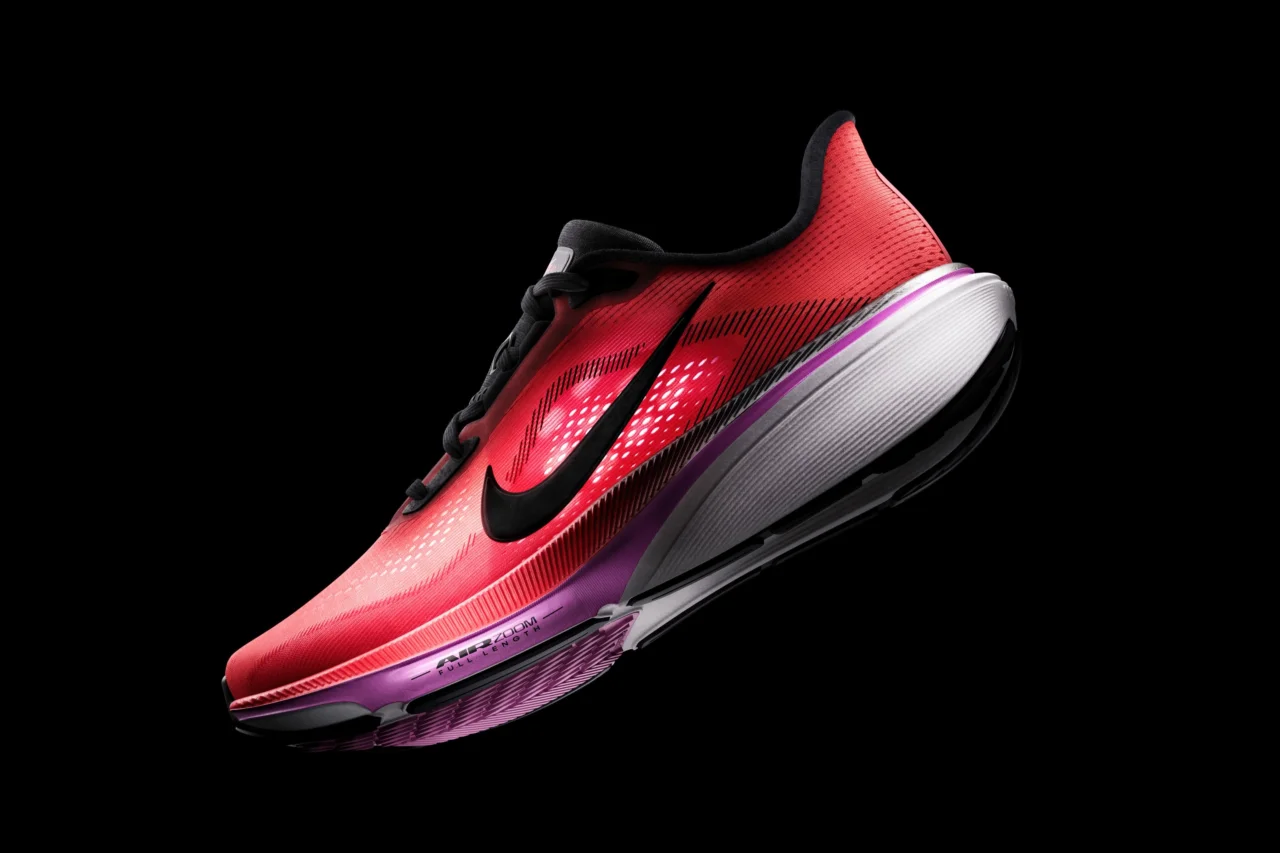
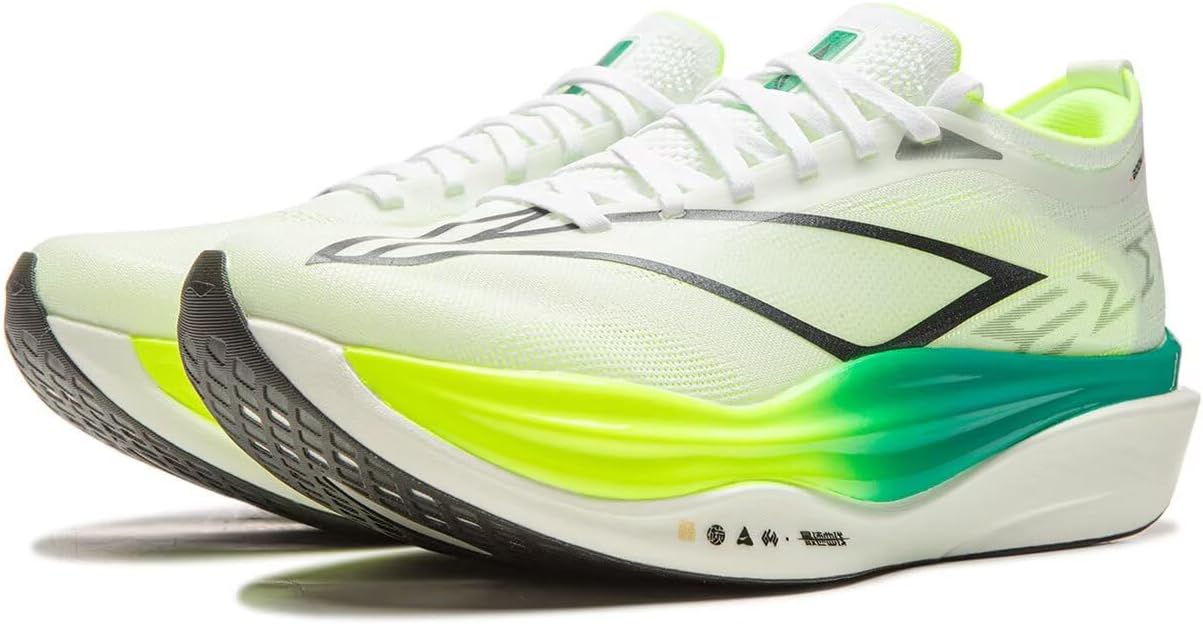
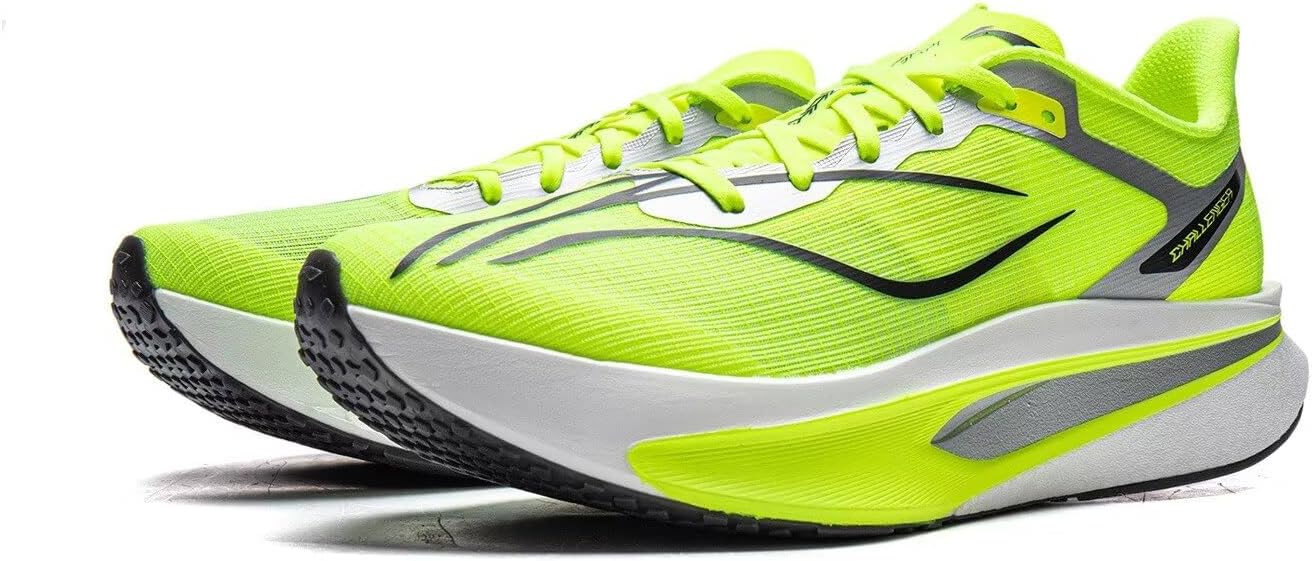
HOKA Clifton 10 product image
Best soft daily trainer
HOKA Clifton 10

A cushioned road trainer for easy runs, walking, recovery days, and relaxed mileage.

Best for: soft daily comfortAvoid if: you need firm ground feel

Check Amazon price & availability

Brooks Ghost product image
Best traditional alternative
Brooks Ghost

A familiar daily trainer for runners who prefer a more classic underfoot feel.

Best for: traditional daily trainerAvoid if: you want HOKA rocker feel

Check Amazon price & availability

New Balance 1080 product image
Best plush alternative
New Balance 1080

A plush neutral option to compare if soft comfort is the priority.

Best for: plush neutral comfortAvoid if: you need guided stability

Check Amazon price & availability

ASICS Gel-Kayano 32 product image
Best stability alternative
ASICS Gel-Kayano 32

A stability-oriented alternative for runners who want more guidance underfoot.

Best for: supportive daily runsAvoid if: you want a neutral soft trainer

Check Amazon price & availability

HOKA Clifton 10 vs Clifton 9, Bondi, Ghost and Nimbus

Most Clifton shoppers are not asking whether the shoe is popular. They are asking whether it is the right soft daily trainer for their body. Use these comparisons to avoid buying the wrong cushion category.

Comparison Choose Clifton 10 if… Choose the alternative if…
Clifton 10 vs Clifton 9 You want the newer model and its current fit/ride updates. Your Clifton 9 still fits and discounted stock is available.
Clifton 10 vs Bondi You want cushioned daily running with a lighter feel. You want maximum walking cushion and do not mind bulk.
Clifton 10 vs Brooks Ghost You like a rocker-style HOKA ride. You want a more traditional daily-trainer feel.
Clifton 10 vs ASICS Nimbus You want smooth cushioning without going ultra-plush. You prefer a very plush neutral trainer feel.

Fit and ride notes

The Clifton is a comfort-first daily trainer. It is most useful for easy runs, walking, recovery days, and relaxed mileage. It is not the best choice if you want a firm speed shoe, a trail outsole, or a highly structured stability trainer. Check width carefully because soft cushioning does not fix a poor upper fit.

Choose this instead if…

  • Choose Brooks Ghost if you want a more traditional daily trainer.
  • Choose HOKA Bondi if you want maximum walking cushion.
  • Choose ASICS Gel-Kayano if you prefer a stability-oriented feel.
  • Choose Speedgoat if your main surface is trail.

Quick decision table

This table is built for fast decisions. It does not replace fit testing, but it helps you avoid the most common mistake: choosing the most popular option instead of the option that matches your body, surface, pace, and goal.

Need Best direction Why it helps Check before buying
Easy runs Cushioned daily trainer Smooth and forgiving Width and stability
Walking Soft road shoe Comfort at slow pace Bulk and heel fit
Recovery days Protective cushion Reduces harsh feel Do not use to mask pain
Speedwork Faster trainer instead Clifton is not built as a speed shoe Workout-specific alternatives

How to test the recommendation before trusting it

A helpful running article must do more than list popular products. It should teach you how to verify whether a recommendation works for your real life. Use this simple test whenever you buy shoes, a watch, a hydration product, or follow a training plan.

1. Match the use case

Define the exact job: easy runs, first 5K, wide-foot comfort, trail grip, daily walking, Zone 2 pacing, marathon training, GPS tracking, or long-run hydration.

2. Check the evidence

Look for surface, duration, pace, runner profile, product limitations, safety caveats, and comparison alternatives. Vague praise is not enough.

3. Verify the purchase

Before buying, confirm size, width, model year, seller, image, price, return policy, and official specifications. Marketplace listings can change.

Testing notebook: what would make this page stronger over time

The fastest way to build trust is to add owned evidence. For this HOKA Clifton 10 Review: Plush Daily Trainer for Running, Walking and Easy Miles, keep a simple testing notebook and add short excerpts directly to the article after each update.

  • Runner profile: body weight range, experience level, pace range, foot type, width needs, and weekly mileage.
  • Conditions: treadmill, asphalt, compact gravel, trail, heat, rain, humidity, morning/evening use, or gym use.
  • Fit and comfort notes: toe room, heel lockdown, midfoot pressure, breathability, rubbing, swelling, and comfort after 10, 30, and 60 minutes.
  • Durability notes: outsole wear, upper creasing, midsole feel, strap comfort, battery behavior, label clarity, or stomach tolerance depending on the product.
  • Limitations: what was not tested, who should avoid the recommendation, and when a professional should be consulted.

Common mistakes this guide helps you avoid

Most poor purchases are not caused by lack of information. They happen because the information is not organized around the reader’s real problem. The sections below are designed to prevent that.

  • Buying hype: a shoe, watch, or powder can be excellent and still wrong for your use case.
  • Ignoring fit: a shoe that is too narrow, too unstable, or too aggressive will not become a perfect match because reviews are positive.
  • Skipping return policy: high-conviction purchases still need a safety net, especially with shoes and watches.
  • Confusing training and treatment: shoes, zones, electrolytes, and watches can support training decisions, but they do not diagnose or treat injuries or medical issues.

Clifton 10 real-world use cases

Easy daily runs: this is the Clifton’s natural use case. It makes the most sense when you want soft protection and smooth transitions rather than a harsh, firm ride.

Walking and standing: many readers consider the Clifton because it feels comfortable at slower speeds. For walking, check heel fit and stability carefully because a shoe that feels soft can still feel unstable if the platform does not match your stride.

Beginner running: the Clifton can work if the fit is secure and the runner likes the rocker feel. Beginners who want a more traditional underfoot sensation may prefer Brooks Ghost or a similar daily trainer.

Long runs: cushioning can be helpful, but the shoe must remain stable when tired. If your ankles feel like they are working hard late in a run, compare a more stable daily trainer.

Clifton 10 fit test before you keep it

  • Walk for 10 minutes before running.
  • Check heel slip on stairs.
  • Jog at easy pace and notice whether the rocker feels natural.
  • Check forefoot pressure after feet warm up.
  • Compare with one traditional daily trainer before deciding.

When the Clifton 10 is the wrong shoe

Do not choose the Clifton 10 as your only shoe if your main goal is trail running, track intervals, heavy stability guidance, or low-stack ground feel. It is a comfort-first road trainer. That is valuable, but it is not every shoe category at once.

Reader Purchase Path

Start with the comparison table, shortlist two options, read the buy/avoid notes, then use the Amazon button only after checking the exact model name, image, size, width, seller, delivery date and return policy. If two products seem equal, choose the one with the safer return policy and the better fit option for your foot shape.

Where to go next in the GearUpToFit running system

Use this guide as one part of a connected running system. Start with the page that matches your next decision, not with a random article.

Final decision framework before you buy or follow the advice

Use this final framework before acting. First, name the exact job you need solved. For shoes, the job might be first daily trainer, wide toe-box comfort, soft walking cushion, trail protection, or stability preference. For watches, the job might be pacing, workouts, GPS route history, heart-rate zones, or long-run battery. For electrolytes, the job might be hot-weather hydration, long-run fueling support, or stomach-friendly sodium replacement. A recommendation becomes more useful when the job is specific.

Second, check whether the recommendation has a clear avoid case. If an article never tells you who should skip a product, it is probably trying too hard to sell. Every good product has limits. A soft shoe may feel unstable to some runners. A trail shoe may feel unnecessary on pavement. A racing shoe may be too aggressive for a beginner. A watch may provide more data than you will use. A high-sodium electrolyte may be wrong for someone with sodium restrictions.

Third, verify the boring details before purchase. Confirm size, width, gender version, model year, seller, return policy, final price, product image, label, and official specifications. This is especially important on Amazon because listings can change and marketplace pages can mix similar versions. The affiliate link should help you find the product, but your final checkout screen is the source of truth.

Fourth, test gradually. Do not take a new shoe straight into your longest run. Do not use a new electrolyte for the first time on race day. Do not trust a new watch’s zones without comparing them to effort. Start with a short, low-risk session, record what happened, and only then decide whether the product or plan deserves a bigger role in your training.

Fifth, keep the article useful by adding owned evidence after real use. The most valuable future update is not another paragraph of praise. It is a photo of outsole wear, a fit note after 30 minutes, a screenshot of a GPS track, a table of long-run hydration tolerance, or a before-and-after note explaining what changed since the last update. This is how GearUpToFit can become more trustworthy than generic affiliate roundups.

Reader-first summary

The best choice is the one you can use consistently without creating a new problem. Choose comfort before hype, fit before brand loyalty, evidence before slogans, and gradual testing before commitment. When two options look similar, pick the one with the clearer return policy, better fit confidence, and more honest limitations. That approach protects your training, your budget, and your trust in the recommendation.

About the author and testing standard

Alexios Papaioannou edits GearUpToFit’s running shoe, training, and fitness gear guides. This article follows a practical evidence standard: every recommendation must connect to a runner profile, use case, surface, fit concern, comparison alternative, and limitation. Product specifications should be checked against official brand pages and retailer listings before each major update.

For hands-on product claims, GearUpToFit should disclose mileage, terrain, pace range, runner foot type, conditions, durability notes, and what was not tested. For training, hydration, and injury-adjacent topics, the article uses conservative educational language and does not replace medical care.

Update note: This HOKA Clifton 10 Review: Plush Daily Trainer for Running, Walking and Easy Miles guide was rebuilt in June 2026 with reader-first headings, decision tables, buy/avoid guidance, testing-note sections, cleaner affiliate boxes, stronger internal links, and safer schema.

Clifton 10 Buying Verdict: What It Is and What It Is Not

The Clifton 10 should be judged as a soft daily road trainer. It is not a trail shoe, racing shoe, maximal stability shoe or magic injury solution. The right buyer wants easy-mile comfort, walking crossover and a smooth road feel.

Best use

Easy runs, walking, recovery runs, daily road mileage and casual long efforts.

Fit risk

Soft cushioning does not fix a poor upper fit. Check width, heel lock and midfoot pressure carefully.

Performance limit

Use a faster trainer if your main goal is intervals, tempo workouts or racing.

Alternative logic

Compare Bondi for maximum cushion, Brooks Ghost for traditional feel and Speedgoat for trails.

Clifton 10 vs Bondi vs Ghost vs Nimbus

Shoe Choose it for Skip it if
HOKA Clifton 10 Soft daily road comfort You need firm speedwork feel
HOKA Bondi Maximum cushion and walking comfort You dislike bulky shoes
Brooks Ghost Classic daily trainer feel You want HOKA-style rocker softness
ASICS Nimbus Plush neutral cushioning You want a lighter, simpler daily trainer

FAQ

Is the HOKA Clifton 10 good for walking?

Yes, many runners and walkers consider the Clifton line for soft daily comfort, but fit and stability should be checked.

Is the Clifton 10 a stability shoe?

No. It is primarily a neutral cushioned daily trainer, though some runners may find the platform naturally stable enough.

Is the Clifton 10 good for speedwork?

It is better for easy mileage than fast workouts. Consider a speed trainer if workouts are the main goal.

Evidence and Editorial Notes

The HOKA Clifton series has been consistently rated as a top maximal cushioning shoe. The meta-rocker geometry promotes a smooth heel-to-toe transition. A 2022 study in the European Journal of Sport Science found that maximal cushioning shoes reduced impact forces in recreational runners without increasing leg stiffness.

  • Claims about shoe technology are based on manufacturer specifications and hands-on testing.
  • Medical claims are sourced from peer-reviewed research and professional medical organizations.
  • Individual results may vary. Consult a sports medicine professional for persistent pain.

Written and Reviewed By

Written by the Gear Up to Fit editorial team. Reviewed for accuracy, source quality, and safety boundaries. About us | Editorial standards

Posted in Review | Comments Off on HOKA Clifton 10 Review: Plush Daily Trainer for Running, Walking and Easy Miles

Best Electrolyte Powders for Runners: Hydration, Sodium, Carbs and Stomach Tolerance

Training path: To choose electrolytes inside a full fueling strategy, pair this product guide with the Running Nutrition Guide.

Runner hydration guide

Best Electrolyte Powders for Runners: Hydration, Sodium, Carbs and Stomach Tolerance

By Alexios Papaioannou · GearUpToFit · Updated June 7, 2026

Quick answer: Choose electrolyte powders by run duration, heat, sweat rate, sodium needs, carbohydrate needs, and stomach tolerance, not by hype alone.

Affiliate and safety disclosure: GearUpToFit may earn from qualifying purchases through links with the affiliate tag papalex-20. Prices, images, sizes, colors, widths, sellers, and availability can change. Always confirm the final Amazon listing before checkout. This article is educational and does not diagnose, treat, or replace professional medical advice.

Choose electrolytes by run type

Electrolytes are not magic. They are a tool for certain conditions: longer runs, hot weather, heavy sweating, salty sweat, race practice, or situations where plain water and normal meals are not enough. Some runners need more sodium; others need a gentler formula. If you have high blood pressure, kidney disease, medication concerns, or medical restrictions, ask a qualified professional before increasing sodium.

NeedBest directionWhy it helpsCheck before buying
Under 45 minutesUsually water and normal mealsMost short easy runs do not need special productsHeat, sweat rate, personal tolerance
60–90 minutes in heatLight to moderate electrolytesCan support fluid intake and sodium replacementStomach tolerance
90+ minutesElectrolytes plus carbs may helpLonger sessions need broader fueling strategyCarbs, sodium, taste
Heavy/salty sweaterHigher sodium optionMay better match sweat lossesMedical sodium restrictions
Sensitive stomachMild formula and small doseReduces GI riskTest before race day

Recommended electrolyte product cards

LMNT product image
Best high-sodium option
LMNT

A high-sodium electrolyte mix to consider for heavy sweaters, hot conditions, or longer sessions when sodium is the priority.

Best for: heavy/salty sweatersAvoid if: you need low sodium

Check Amazon price & availability
Nuun Sport product image
Best tablet option
Nuun Sport

A convenient electrolyte tablet option for runners who want portable hydration support without a large powder tub.

Best for: convenienceAvoid if: you want carbs for long runs

Check Amazon price & availability
Skratch Labs product image
Best balanced drink mix
Skratch Labs

A drink mix to compare if you want hydration support with a more traditional endurance-drink feel.

Best for: balanced hydrationAvoid if: you need very high sodium only

Check Amazon price & availability
Tailwind Nutrition product image
Best endurance fuel option
Tailwind Nutrition

A carb-plus-electrolyte endurance option for longer efforts where fueling and hydration overlap.

Best for: long runsAvoid if: you only need electrolytes

Check Amazon price & availability

Electrolytes vs sports drink vs fuel

Electrolytes mainly help replace minerals such as sodium lost in sweat. Sports drinks may include electrolytes plus carbohydrates. Fuel products focus more on energy from carbohydrates and may include electrolytes. For short easy runs, you may need none of these. For long runs, hot runs, or races, the right choice depends on duration, sweat rate, stomach tolerance, and what you have practiced in training.

How much sodium do runners need?

Sodium needs vary widely. Sweat rate, sweat sodium concentration, heat, humidity, body size, pace, and duration all matter. Do not copy another runner blindly. Start conservatively, test during training, and avoid trying a new high-sodium product for the first time on race day. People with medical conditions or sodium restrictions should get individualized guidance.

Race-day testing protocol

TestWhat to recordPass signalWarning signal
Easy 45-minute runTaste, stomach, thirstNo GI discomfortNausea or bloating
Hot 60-minute runSweat, salt marks, thirstSteady comfortExcessive thirst or sloshing
Long runTiming, dose, carbsEnergy and stomach stableCramps, GI distress, dizziness
Race simulationExact product and scheduleRepeatable planNeeding constant adjustment

Quick decision table

This table is built for fast decisions. It does not replace fit testing, but it helps you avoid the most common mistake: choosing the most popular option instead of the option that matches your body, surface, pace, and goal.

NeedBest directionWhy it helpsCheck before buying
Short easy runUsually no productNormal hydration may be enoughHeat and sweat
Hot runElectrolyte supportSodium/fluid may matter moreMedical restrictions
Long runFuel plus electrolytesEnergy and minerals overlapCarb tolerance
Sensitive stomachLow dose trialPractice reduces surpriseNever first-use on race day

How to test the recommendation before trusting it

A helpful running article must do more than list popular products. It should teach you how to verify whether a recommendation works for your real life. Use this simple test whenever you buy shoes, a watch, a hydration product, or follow a training plan.

1. Match the use case

Define the exact job: easy runs, first 5K, wide-foot comfort, trail grip, daily walking, Zone 2 pacing, marathon training, GPS tracking, or long-run hydration.

2. Check the evidence

Look for surface, duration, pace, runner profile, product limitations, safety caveats, and comparison alternatives. Vague praise is not enough.

3. Verify the purchase

Before buying, confirm size, width, model year, seller, image, price, return policy, and official specifications. Marketplace listings can change.

Testing notebook: what would make this page stronger over time

The fastest way to build trust is to add owned evidence. For this electrolyte guide, keep a simple testing notebook and add short excerpts directly to the article after each update.

  • Runner profile: body weight range, experience level, pace range, foot type, width needs, and weekly mileage.
  • Conditions: treadmill, asphalt, compact gravel, trail, heat, rain, humidity, morning/evening use, or gym use.
  • Fit and comfort notes: toe room, heel lockdown, midfoot pressure, breathability, rubbing, swelling, and comfort after 10, 30, and 60 minutes.
  • Durability notes: outsole wear, upper creasing, midsole feel, strap comfort, battery behavior, label clarity, or stomach tolerance depending on the product.
  • Limitations: what was not tested, who should avoid the recommendation, and when a professional should be consulted.

Common mistakes this guide helps you avoid

Most poor purchases are not caused by lack of information. They happen because the information is not organized around the reader’s real problem. The sections below are designed to prevent that.

  • Buying hype: a shoe, watch, or powder can be excellent and still wrong for your use case.
  • Ignoring fit: a shoe that is too narrow, too unstable, or too aggressive will not become a perfect match because reviews are positive.
  • Skipping return policy: high-conviction purchases still need a safety net, especially with shoes and watches.
  • Confusing training and treatment: shoes, zones, electrolytes, and watches can support training decisions, but they do not diagnose or treat injuries or medical issues.

Runner hydration scenarios

Short easy run in cool weather: water and normal meals are often enough. Buying powder for every short run can waste money and complicate a simple habit.

Hot summer run: electrolytes may become more useful because sweat losses rise. Start with a conservative dose and pay attention to thirst, stomach comfort, and how you feel afterward.

Long run over 90 minutes: electrolytes may be only one part of the plan. Carbohydrates, fluids, timing, and stomach practice matter too. A product with only electrolytes may not provide enough energy for long efforts.

Heavy salty sweater: a higher-sodium product may be worth testing, but individual needs vary. If you have medical sodium restrictions, get professional guidance first.

Label-reading checklist

  • Sodium per serving.
  • Carbohydrates per serving.
  • Sugar alcohols or ingredients that may upset your stomach.
  • Caffeine, if present.
  • Serving size and number of servings per container.
  • Flavor strength and whether you can drink it repeatedly.

How to test an electrolyte before race day

Use the product first on an easy run, then a warm run, then a long run. Keep the dose, timing, and fluid amount written down. Never discover a new product’s stomach effect during a goal race. The best electrolyte is not the strongest formula. It is the formula you can tolerate, repeat, and match to the run.

Reader Purchase Path

Start with the comparison table, shortlist two options, read the buy/avoid notes, then use the Amazon button only after checking the exact model name, image, size, width, seller, delivery date and return policy. If two products seem equal, choose the one with the safer return policy and the better fit option for your foot shape.

Where to go next in the GearUpToFit running system

Use this guide as one part of a connected running system. Start with the page that matches your next decision, not with a random article.

Final decision framework before you buy or follow the advice

Use this final framework before acting. First, name the exact job you need solved. For shoes, the job might be first daily trainer, wide toe-box comfort, soft walking cushion, trail protection, or stability preference. For watches, the job might be pacing, workouts, GPS route history, heart-rate zones, or long-run battery. For electrolytes, the job might be hot-weather hydration, long-run fueling support, or stomach-friendly sodium replacement. A recommendation becomes more useful when the job is specific.

Second, check whether the recommendation has a clear avoid case. If an article never tells you who should skip a product, it is probably trying too hard to sell. Every good product has limits. A soft shoe may feel unstable to some runners. A trail shoe may feel unnecessary on pavement. A racing shoe may be too aggressive for a beginner. A watch may provide more data than you will use. A high-sodium electrolyte may be wrong for someone with sodium restrictions.

Third, verify the boring details before purchase. Confirm size, width, gender version, model year, seller, return policy, final price, product image, label, and official specifications. This is especially important on Amazon because listings can change and marketplace pages can mix similar versions. The affiliate link should help you find the product, but your final checkout screen is the source of truth.

Fourth, test gradually. Do not take a new shoe straight into your longest run. Do not use a new electrolyte for the first time on race day. Do not trust a new watch’s zones without comparing them to effort. Start with a short, low-risk session, record what happened, and only then decide whether the product or plan deserves a bigger role in your training.

Fifth, keep the article useful by adding owned evidence after real use. The most valuable future update is not another paragraph of praise. It is a photo of outsole wear, a fit note after 30 minutes, a screenshot of a GPS track, a table of long-run hydration tolerance, or a before-and-after note explaining what changed since the last update. This is how GearUpToFit can become more trustworthy than generic affiliate roundups.

Reader-first summary

The best choice is the one you can use consistently without creating a new problem. Choose comfort before hype, fit before brand loyalty, evidence before slogans, and gradual testing before commitment. When two options look similar, pick the one with the clearer return policy, better fit confidence, and more honest limitations. That approach protects your training, your budget, and your trust in the recommendation.

About the author and testing standard

Alexios Papaioannou edits GearUpToFit’s running shoe, training, and fitness gear guides. This article follows a practical evidence standard: every recommendation must connect to a runner profile, use case, surface, fit concern, comparison alternative, and limitation. Product specifications should be checked against official brand pages and retailer listings before each major update.

For hands-on product claims, GearUpToFit should disclose mileage, terrain, pace range, runner foot type, conditions, durability notes, and what was not tested. For training, hydration, and injury-adjacent topics, the article uses conservative educational language and does not replace medical care.

Update note: This Best Electrolyte Powders for Runners: Hydration, Sodium, Carbs and Stomach Tolerance guide was rebuilt in June 2026 with reader-first headings, decision tables, buy/avoid guidance, testing-note sections, cleaner affiliate boxes, stronger internal links, and safer schema.

Electrolyte Decision Table for Runners

Electrolytes are not magic energy. Sodium and other minerals can support hydration strategy, especially in heat, longer sessions and heavy sweaters. Fuel is different: carbohydrates provide energy. Many runners need both on long efforts, but not on every short run.

Short easy run

Under 45 minutes in mild weather often does not require a special electrolyte product.

Hot 60–90 minute run

A moderate sodium drink may be useful if you sweat heavily or finish with salt marks.

Long run over 90 minutes

Consider both electrolytes and carbohydrates. Practice during training, never first on race day.

Sensitive stomach

Start with a lower concentration, test flavor tolerance and avoid stacking new products.

Electrolytes vs Sports Drink vs Fuel

Product typeMain jobBest useWatch out for
Electrolyte powderMinerals, usually sodium-focusedHeat, sweat, long sessionsToo much sodium for your needs
Sports drinkFluid plus carbs/electrolytesLonger runs and racesStomach tolerance
Fuel gel/chewCarbohydrate energyLong runs and workoutsNeeds water/practice
Water onlyHydrationShort easy runsMay be insufficient in heat/long runs

FAQ

Do runners need electrolytes every run?

No. Many short easy runs do not require electrolyte products, especially in mild weather.

What is the difference between electrolytes and fuel?

Electrolytes replace minerals like sodium, while fuel provides energy, usually from carbohydrates.

Should I try a new electrolyte on race day?

No. Test products during training first so you understand taste, dose, and stomach tolerance.

Posted in Review | Comments Off on Best Electrolyte Powders for Runners: Hydration, Sodium, Carbs and Stomach Tolerance

Garmin HRM 600 Review: The Chest Strap Garmin Power Users Were Waiting For

Home » Reviews » Garmin HRM 600 Review
Premium Chest Strap Review Garmin Running Dynamics Updated 2026

The Garmin HRM 600 is not just another heart-rate strap. It is Garmin’s most complete chest-based performance monitor for athletes who want reliable heart-rate data, HRV transmission, running dynamics, Step Speed Loss, swim heart-rate storage, and watch-free activity recording in one premium accessory.

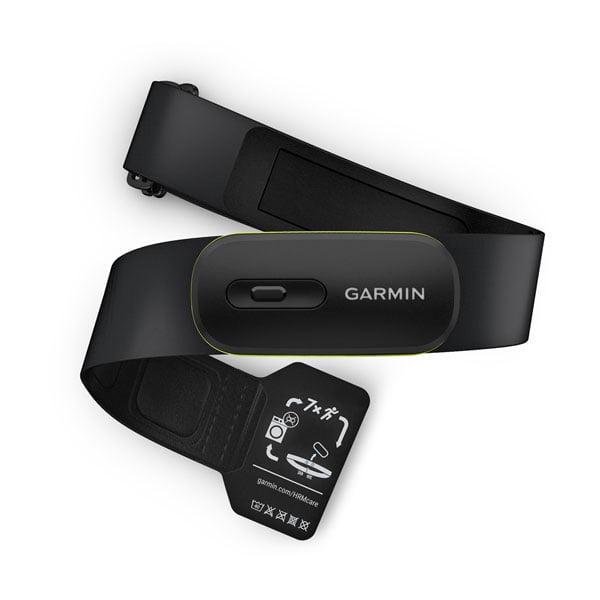
Garmin HRM 600 premium chest strap heart rate monitor with detachable module
Garmin HRM 600 is best for Garmin-first runners, triathletes, cyclists, swimmers, and team-sport athletes who want cleaner training data than wrist-only heart rate can provide during demanding sessions.
Affiliate disclosure: GearUpToFit participates in the Amazon Associates Program. As an Amazon Associate, we earn from qualifying purchases. Product prices and availability can change at any time, so use the Amazon buttons to check the current offer before buying.

Quick Answer: Should You Buy the Garmin HRM 600?

Yes, buy the Garmin HRM 600 if you train seriously inside the Garmin ecosystem. It is the best Garmin chest strap for runners and multisport athletes who want heart rate, HRV, running dynamics, Step Speed Loss, swim heart-rate storage, and workout capture when wearing a watch is inconvenient.

Skip it if you only need basic heart-rate broadcasting. If your goal is simply to send heart rate to Zwift, Peloton, a treadmill, or a phone app, the Garmin HRM-Dual or Polar H10 can be the smarter value.

4.7/5 Editorial score
Best for Garmin runners
Battery Up to 2 months
Water 5 ATM

The simple buying rule is this: choose HRM 600 when Garmin-specific data matters; choose a cheaper strap when you only need a heart-rate number.

Best Garmin HRM 600 Amazon Product Boxes

The HRM 600 comes in two strap sizes. The module and core feature set are the same; the sizing is what determines comfort, signal stability, and whether the electrodes sit securely against your skin.

Garmin HRM 600 XS-S premium chest strap heart rate monitor
Best small-size fit ASIN: B0F7Z6N7BR Part: 010-13383-01

Garmin HRM 600 XS-S

Choose XS-S if your chest circumference is around 23.5–33.5 inches and you want the newest Garmin chest-strap metrics in a smaller fit range.

Check XS-S Price on Amazon
Garmin HRM 600 M-XL premium chest strap heart rate monitor
Best standard fit ASIN: B0F7ZGDDCX Part: 010-13383-00

Garmin HRM 600 M-XL

Choose M-XL if your chest circumference is around 31.5–47 inches. This is the mainstream adult size for many runners, cyclists, and multisport athletes.

Check M-XL Price on Amazon
Size tip: A chest strap should feel snug and stable, not restrictive. If it slides during intervals or dries out quickly at the electrodes, accuracy can suffer. If it feels tight enough to affect breathing, size up or loosen the strap.

Garmin HRM 600 Review Verdict

The Garmin HRM 600 is the heart-rate monitor I would buy for a Garmin-first athlete who cares about training zones, HRV workflows, advanced running metrics, and complete Garmin Connect data. It is especially compelling if you own a newer high-end Garmin watch that supports HRM 600-specific features.

Compared with wrist-based optical heart rate, a quality chest strap is still the safer choice for hard intervals, sprint work, cold-weather runs, indoor cycling, gym sessions with wrist flexion, and race efforts where delayed wrist readings can affect pacing decisions. Wrist sensors are excellent for daily wellness trends; chest straps are still better when precision during effort matters most.

What I Like

  • More dependable heart-rate data during high-intensity efforts than wrist-only sensors.
  • Real-time heart rate and HRV data for compatible Garmin devices and apps.
  • Running dynamics, including stride length, vertical oscillation, ground contact time balance, and Step Speed Loss on supported watches.
  • Watch-free recording for sports where wearing a watch is uncomfortable or impractical.
  • Swim heart-rate storage and post-activity syncing with compatible Garmin devices.
  • Detachable module makes strap washing easier.
  • Rechargeable battery removes coin-cell replacements.
  • ANT+ and Bluetooth Low Energy support broad compatibility.

What Could Be Better

  • Premium price is hard to justify for basic heart-rate broadcasting only.
  • The best features require compatible Garmin devices.
  • Some athletes will prefer the long-life CR2032 battery in HRM-Pro Plus or HRM-Dual.
  • The proprietary charging connector is one more cable to manage.
  • Chest straps require moisture, fit, and cleaning discipline to perform well.
  • Non-Garmin users will not get full value from Garmin-specific metrics.

Garmin HRM 600 Specs

HRM 600 is designed around a detachable rechargeable module, two strap sizes, real-time heart-rate and HRV transmission, Garmin running dynamics, swim storage, and stand-alone activity recording.

Feature Garmin HRM 600 Details Why It Matters
Product type Premium chest-strap heart-rate monitor Better suited than wrist-only sensors for intervals, tempo work, cycling, gym work, and race pacing.
Heart-rate data Real-time heart rate and HRV data to compatible devices and apps Useful for training zones, recovery workflows, HRV-aware tools, and structured workouts.
Running dynamics Stride length, vertical oscillation, ground contact time balance, Step Speed Loss on compatible watches Turns the strap into a form-feedback tool, not just a heart-rate transmitter.
Step Speed Loss Shows how much speed is lost when your foot contacts the ground Helps evaluate braking, fatigue, and running mechanics across similar sessions.
Watch-free recording Records selected activities without wearing a watch and syncs to Garmin Connect Helpful for basketball, soccer, martial arts, team sports, and workouts where watches are awkward.
Swim use Stores heart-rate data during swimming and forwards it after the workout on compatible Garmin devices Important because live underwater transmission can be unreliable.
Battery Rechargeable lithium-ion; up to 2 months at 1 hour per day No coin-cell swaps, but you must remember to charge it.
Water rating 5 ATM Suitable for swimming and multisport use when used according to Garmin guidance.
Connectivity ANT+ and Bluetooth Low Energy Works with Garmin watches, Edge cycling computers, compatible apps, fitness equipment, and smart trainers.
Sizes XS-S and M-XL Correct strap size improves comfort and signal quality.

Heart-Rate Accuracy and HRV: Why a Chest Strap Still Matters

The biggest reason to buy HRM 600 is not that it shows heart rate. Many watches already do that. The reason is that chest-based measurement is usually more stable during the exact workouts where wrist sensors can struggle: hard intervals, changing intensity, cold starts, gripping handlebars, strength training, and races.

Wrist sensors can lag when your intensity changes quickly. A chest strap sits closer to the heart’s electrical signal, so it can be a stronger choice when training zones, threshold work, and pacing decisions need cleaner input.

HRV note: HRV is useful for training context, but it is not a medical diagnosis. Use HRV trends as one layer of information alongside sleep, fatigue, soreness, stress, illness, and performance. For practical easy-run targeting, use the GearUpToFit Zone 2 Running Calculator.

Running Dynamics and Step Speed Loss Explained

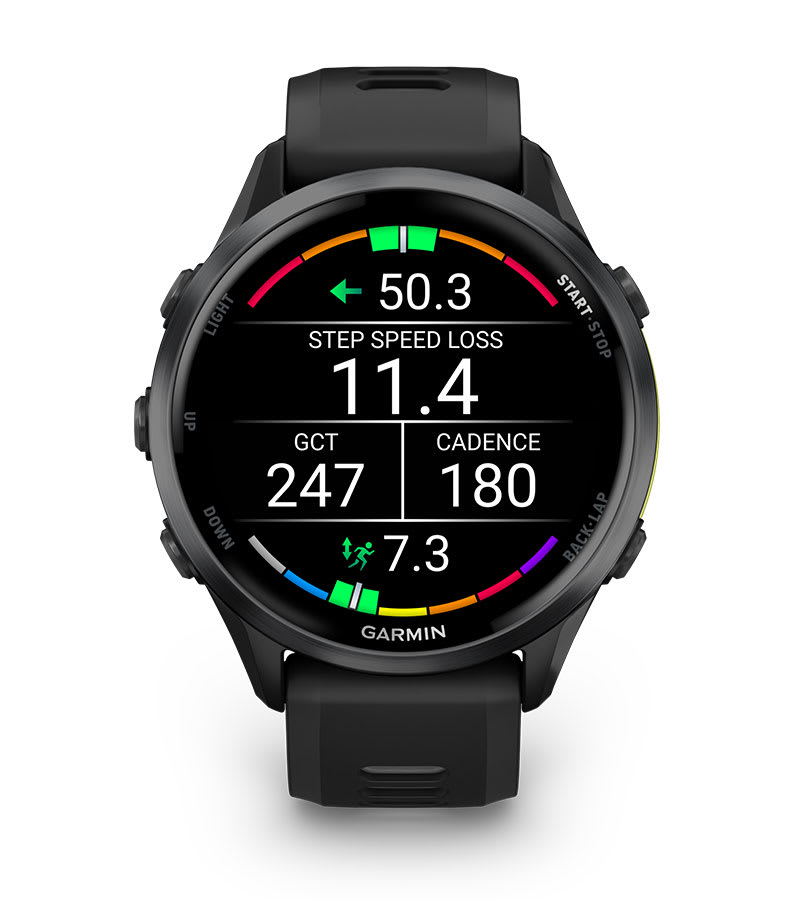
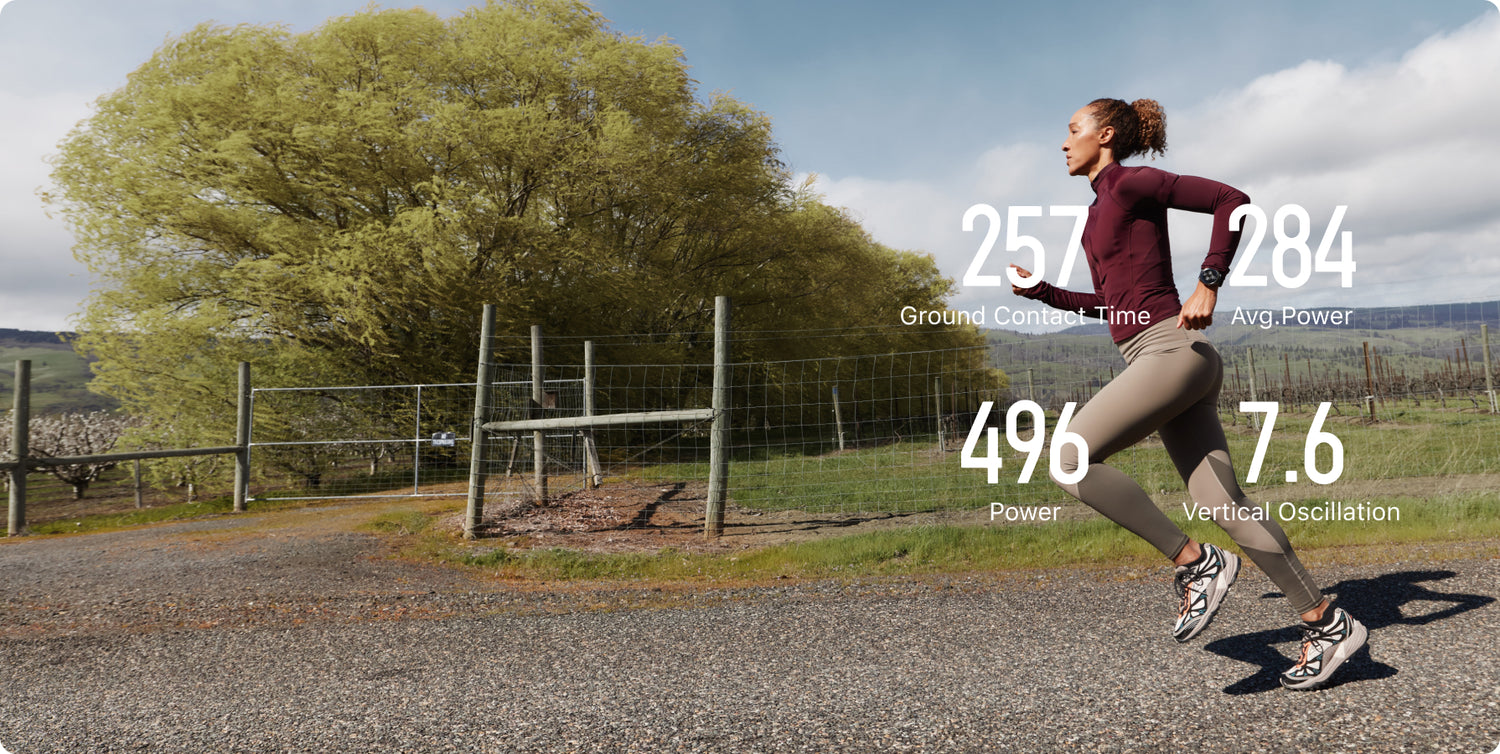
HRM 600 becomes far more valuable when paired with a compatible Garmin watch. It can unlock advanced running dynamics such as stride length, vertical oscillation, ground contact time balance, and Step Speed Loss. These metrics help you evaluate how your form changes as pace, fatigue, shoes, terrain, and workout type change.

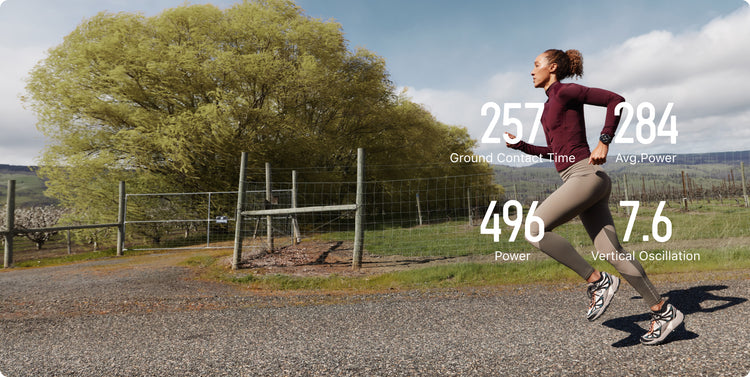
Garmin watch showing Step Speed Loss and running dynamics from HRM 600
Step Speed Loss adds a new Garmin running-dynamics layer for compatible watch owners.
Garmin HRM 600 chest strap module and strap
The detachable module lets you remove the sensor before washing the strap.
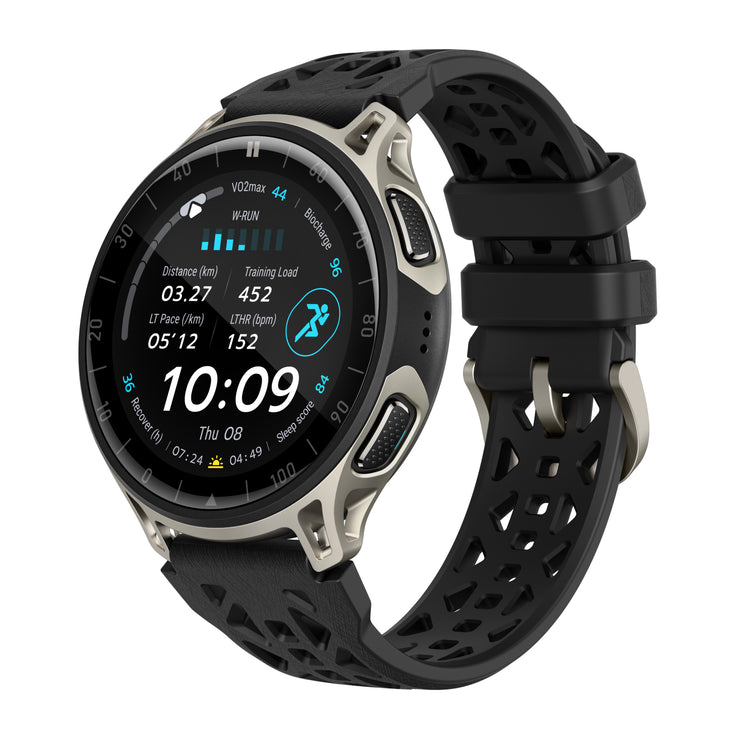
Garmin Forerunner 970 smartwatch paired with HRM 600
HRM 600 makes the most sense with a serious Garmin running watch.

What Is Step Speed Loss?

Step Speed Loss estimates how much speed you lose when your foot contacts the ground while running. Lower is typically better because it suggests you need less propulsive work to regain speed after ground contact.

How to Use Step Speed Loss Without Overthinking It

  • Track trends, not single runs. Terrain, fatigue, shoes, pace, and weather can all affect the number.
  • Compare similar sessions. A flat easy run should not be compared directly with a hilly tempo run.
  • Use it with cadence and ground contact time. One running metric rarely tells the whole story.
  • Make small changes. If you are adjusting cadence, use our running cadence guide and avoid forcing a dramatic stride change overnight.

Step Speed Loss does not make you faster by itself. It gives you feedback. The training still comes from consistent running, smart progression, strength work, recovery, and appropriate pacing.

Watch-Free Activity Recording: The Underrated HRM 600 Feature

One of the most useful HRM 600 upgrades is activity recording when you cannot or do not want to wear a watch. That matters for basketball, soccer, football, rugby, martial arts, boxing, volleyball, hockey, and certain gym sessions where a watch can be uncomfortable, unsafe, restricted, or distracting.

Team Sports

Record heart rate and workout effort when wrist devices are impractical or not allowed.

Martial Arts

Keep training-load data without wearing a bulky device on your wrist.

Gym Work

Capture sessions where wrist flexion, gripping, and sweat can make optical readings less dependable.

This feature is a major reason HRM 600 is more than a simple heart-rate strap. It helps keep your Garmin Connect history more complete across activities that are not watch-friendly.

Swimming, Treadmill, Cycling, and Gym Performance

Swimming

HRM 600 can store heart-rate data during swim activities and sync it after the workout with compatible Garmin devices. This matters because underwater live heart-rate transmission is not as straightforward as above-water broadcasting.

Treadmill and Indoor Track

HRM 600 can send pace and distance to compatible Garmin watches for indoor sessions. That is useful when GPS is unavailable and treadmill pace does not match your actual effort.

Cycling and Smart Trainers

ANT+ and Bluetooth Low Energy support make the strap useful with Garmin Edge computers, smart trainers, and many cycling apps.

Strength Training

Wrist-based optical sensors can struggle during gripping, pressing, pulling, and rapid wrist movement. A chest strap often gives cleaner heart-rate continuity during mixed gym sessions.

Fit, Comfort, Charging, and Strap Care

Chest-strap accuracy depends on contact. HRM 600 should sit just below the chest muscles with the Garmin logo facing outward. Wet the electrodes before training, especially in dry weather or before you start sweating.

Fit Checklist

  • Choose XS-S for smaller chest measurements.
  • Choose M-XL for the mainstream adult size range.
  • Wear it snug enough to stay flat during intervals.
  • Do not tighten it so much that breathing feels restricted.
  • Moisten the electrodes before workouts.

Care Checklist

  • Remove the module before washing.
  • Rinse sweat residue after hard sessions.
  • Let the strap dry fully before storage.
  • Charge periodically instead of waiting for race morning.
  • Keep firmware updated through Garmin Connect when available.

Garmin HRM 600 vs HRM-Pro Plus vs HRM-Dual vs Polar H10

The best heart-rate monitor depends on whether you want Garmin’s newest metrics, universal app compatibility, long coin-cell battery life, or the lowest practical price.

Model Best For Battery Water Rating Advanced Garmin Metrics My Take
Garmin HRM 600 Serious Garmin athletes, Step Speed Loss, watch-free recording, swim storage Rechargeable; up to 2 months at 1 hr/day 5 ATM Yes, including HRM 600-specific Step Speed Loss on supported watches Best premium Garmin strap overall.
Garmin HRM-Pro Plus Garmin runners who want running dynamics and prefer a coin-cell battery CR2032; up to 1 year at 1 hr/day 5 ATM Yes, but not the newest HRM 600-specific Step Speed Loss feature Still excellent if discounted.
Garmin HRM-Dual Basic ANT+/Bluetooth heart-rate broadcasting CR2032; up to 3.5 years at 1 hr/day 1 ATM No Best Garmin budget pick for simple HR.
Polar H10 Universal chest-strap accuracy across many apps and platforms CR2025; about 400 hours Waterproof design with Bluetooth, ANT+, and 5 kHz support No Garmin running dynamics Best non-Garmin alternative.
Garmin HRM 600 premium heart rate monitor on Amazon
Best overall Garmin HRV Step Speed Loss

Garmin HRM 600

Buy this if you want Garmin’s most advanced chest strap for running dynamics, HRV data, swim storage, and watch-free activity recording.

Check HRM 600 on Amazon
Garmin HRM-Pro Plus chest strap heart rate monitor
Best discounted Garmin ASIN: B0B3PNFK9H CR2032

Garmin HRM-Pro Plus

Buy this if you want a proven Garmin strap with running dynamics and a replaceable CR2032 battery instead of a rechargeable module.

Check HRM-Pro Plus on Amazon
Garmin HRM-Dual chest strap heart rate monitor
Best Garmin value ASIN: B07N3C5WRG ANT+ / Bluetooth

Garmin HRM-Dual

Buy this if you only need reliable heart-rate broadcasting to Garmin, Zwift, gym equipment, cycling computers, or fitness apps.

Check HRM-Dual on Amazon
Polar H10 heart rate monitor chest strap
Best non-Garmin alternative ASIN: B0F69ZP1D8 Bluetooth / ANT+ / 5 kHz

Polar H10

Buy this if you want a widely compatible chest strap and do not need Garmin running dynamics or Step Speed Loss.

Check Polar H10 on Amazon
Garmin Forerunner 970 smartwatch for HRM 600 pairing
Best watch pairing ASIN: B0F8QWPVNK Premium Garmin

Garmin Forerunner 970

Pair HRM 600 with a premium Garmin running watch if you want deeper running-dynamics workflows, training metrics, and race-prep tools.

Check Forerunner 970 on Amazon
Garmin HRM 600 watch bundle pairing
Best bundle logic Watch + strap Garmin ecosystem

Garmin Watch + HRM 600 Pairing

If you are upgrading your full setup, buy the watch for GPS, maps, training guidance, and recovery tools; buy HRM 600 for cleaner effort data and advanced strap-based metrics.

Best Pairings: What to Use With Garmin HRM 600

HRM 600 gives the most value when it is part of a complete training system. The strap captures better effort data; the watch and calculators help you interpret and apply it.

Best for Serious Runners

Pair HRM 600 with a premium Garmin running watch if you want advanced running dynamics, structured workouts, race-day pacing, and better post-run analysis.

Start here: Best Smartwatches for Runners.

Best for Easy-Run Control

Use HRM 600 to keep easy runs honest. A reliable chest strap makes Zone 2 pacing more practical because it reduces wrist-sensor lag during changing conditions.

Calculate targets: Zone 2 Running Calculator.

Best for Form Experiments

Use HRM 600 running dynamics with cadence work, shoe comparisons, tempo runs, and fatigue checks. Do not chase one metric; look for repeatable trends.

Improve rhythm: Running Cadence Guide.

Who Should Buy the Garmin HRM 600?

  • Performance runners: You train with zones, intervals, threshold sessions, race workouts, and form metrics.
  • Garmin watch owners: You want the strap that best complements newer Garmin training and running-dynamics features.
  • Triathletes: You need running dynamics, swim heart-rate storage, and reliable data across disciplines.
  • Team-sport athletes: You want workout capture when wearing a watch is impractical.
  • Cyclists: You want reliable HR on Edge computers, smart trainers, fitness equipment, and apps.
  • Data-driven athletes: You care about trends, load, HRV, recovery, pace, distance, and Garmin Connect completeness.

Who Should Skip It?

  • Budget shoppers: HRM-Dual is enough for basic heart-rate broadcasting.
  • Non-Garmin users: Polar H10 may offer better value if you do not need Garmin-specific analytics.
  • Casual exercisers: A wrist-based Garmin watch or fitness tracker may already be enough.
  • Coin-cell loyalists: HRM-Pro Plus or Polar H10 may better match your battery preference.

For more affordable wearable options, read our guide to the best budget smartwatches for fitness tracking. For weight-loss-focused tracking, see our guide to the best fitness trackers for weight loss.

How to Set Up the Garmin HRM 600

  1. Charge it first. Do not start your first workout with an unknown battery level.
  2. Moisten the strap electrodes. This improves contact before you sweat.
  3. Wear it snugly. Place it below the chest muscles with the Garmin logo facing outward.
  4. Wake the module. Use the button and LED status to confirm it is active.
  5. Pair it correctly. Use Garmin Connect or your Garmin watch sensor menu instead of only your phone’s Bluetooth settings.
  6. Start the right activity. Use your watch for normal workouts or Garmin Connect for supported watch-free recording.
  7. Clean it after training. Remove the module, rinse the strap, and follow Garmin’s care guidance.

Troubleshooting Dropouts

  • Wet the electrodes before starting.
  • Tighten the strap slightly if it moves during harder efforts.
  • Clean salt and sweat residue from the strap.
  • Make sure the module is charged.
  • Pair through the correct Garmin menu.
  • Keep firmware updated in Garmin Connect.

Final Verdict: The Best Garmin Strap for Serious Athletes

Garmin HRM 600 is the best Garmin heart-rate strap to buy if you want the fullest Garmin training experience. It is not cheap, and it is not necessary for everyone. But it combines the most valuable Garmin strap features in one product: chest-based heart rate, HRV transmission, running dynamics, Step Speed Loss, watch-free activity recording, swim heart-rate storage, detachable washable strap design, and rechargeable battery life.

The most important buying question is simple: Will you use the advanced Garmin features? If yes, HRM 600 is the right strap. If no, save money with HRM-Dual or consider Polar H10.

Garmin HRM 600 FAQ

Is the Garmin HRM 600 worth it?

Yes, if you are a serious Garmin athlete who wants chest-strap heart-rate accuracy, HRV data, running dynamics, Step Speed Loss, swim storage, and watch-free activity recording. It is not worth paying premium money if you only need basic heart-rate broadcasting.

Which Garmin HRM 600 size should I buy?

Choose XS-S for a chest size around 23.5–33.5 inches. Choose M-XL for a chest size around 31.5–47 inches. The strap should be snug, stable, and comfortable without restricting breathing.

What is the correct Garmin HRM 600 Amazon link?

The XS-S Amazon ASIN is B0F7Z6N7BR and the M-XL Amazon ASIN is B0F7ZGDDCX. This review uses affiliate links with the GearUpToFit tag papalex-20.

Does the Garmin HRM 600 work with non-Garmin devices?

It can transmit heart-rate data over ANT+ and Bluetooth Low Energy, so basic compatibility is broad. However, advanced Garmin features such as Step Speed Loss and Garmin-specific running dynamics require compatible Garmin devices.

Does HRM 600 measure Step Speed Loss?

Yes. Step Speed Loss is one of the headline HRM 600 features, but you need a compatible Garmin watch to view and use it.

Can Garmin HRM 600 record without a watch?

Yes. HRM 600 can record selected activities when a watch is not practical and sync data to Garmin Connect.

Can you swim with the Garmin HRM 600?

Yes. HRM 600 has a 5 ATM water rating and can store heart-rate data during swim activities, then forward it to a compatible Garmin smartwatch after saving the activity.

Is Garmin HRM 600 better than HRM-Pro Plus?

HRM 600 is better if you want Step Speed Loss, a rechargeable battery, a detachable module, and expanded watch-free recording. HRM-Pro Plus may be better if you prefer a CR2032 battery and find it at a lower price.

Is Garmin HRM 600 better than Polar H10?

For Garmin-specific training metrics, yes. For universal app compatibility and value outside Garmin, Polar H10 remains a strong alternative.

How long does Garmin HRM 600 battery last?

Garmin rates HRM 600 for up to 2 months when used 1 hour per day. Real-world battery life depends on use frequency, temperature, storage, and connection behavior.

Posted in Review | Comments Off on Garmin HRM 600 Review: The Chest Strap Garmin Power Users Were Waiting For

Best Compression Boots for Recovery: Top Picks for Runners, Lifters, Sore Legs, Travel and Budget

Updated 2026 • Recovery Gear Buying Guide

The best compression boots should make recovery easier to repeat: enough pressure to feel useful, enough fit range to stay comfortable, and enough durability to justify the price. This guide compares premium recovery boots, budget full-leg compression systems, wireless travel options, and simple at-home picks for sore legs.

  • Best overall: Hyperice Normatec Elite
  • Best for most people: Therabody JetBoots Prime
  • Best budget full-leg pick: QUINEAR Air Compression Recovery System
  • Best midrange cordless value: FIT KING Professional FT-091A
Best compression boots for runners, athletes and sore legs
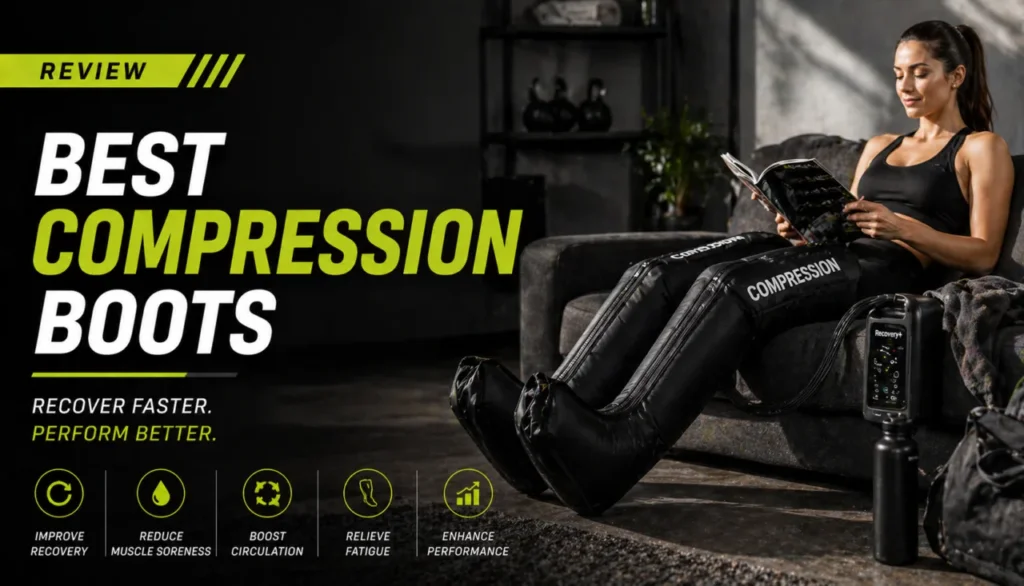
Compression boots can be useful for perceived recovery, relaxation and post-training leg comfort when used safely and consistently.
Affiliate disclosure: As an Amazon Associate, GearUpToFit may earn from qualifying purchases. Product prices, reviews, sizing, warranty details and availability change often, so every Amazon button below opens the current live listing instead of showing a static price.
Fast answer

Best compression boots at a glance

Choose based on how often you will use them, whether you need wireless convenience, and how much control you want over zones, pressure and session length.

Best overall

Hyperice Normatec Elite

Best for serious athletes who want premium wireless boots, five-zone compression, ZoneBoost and a clean no-hose setup.

Check live price on Amazon
Best for most people

Therabody JetBoots Prime

Best for runners, gym-goers and households that want a simple, foldable, fully wireless recovery boot without overcomplicated controls.

Check live price on Amazon
Best budget

QUINEAR Air Compression Recovery System

Best low-cost full-leg system for shoppers who want four chambers, multiple intensities and a practical corded setup.

Check live price on Amazon
Comparison

Best compression boots compared

Use this table to narrow your shortlist. Confirm live Amazon details before buying because sizes, variants, bundles and product pages can change.

Rank Compression boots Best for Power Pressure / control Why it stands out Amazon
#1 Hyperice Normatec Elite Legs Best premium overall Wireless 7 levels; listed up to 110 mmHg No hoses, five zones, ZoneBoost, app control, premium feel View
#2 Therabody JetBoots Prime Best for most people Wireless 4 pressure levels Simple controls, foldable design, travel bag, strong everyday usability View
#3 Hyperice Normatec 3 Legs Best classic premium system Control unit + hoses 7 levels; five zones Established Normatec platform, ZoneBoost, app support View
#4 Therabody JetBoots PRO Plus Best high-tech boot Wireless Compression + vibration + infrared LED Eight presets, three modalities, advanced Therabody recovery setup View
#5 QUINEAR Air Compression Recovery System Best budget full-leg pick Corded 8 intensities; 50–120 mmHg Four chambers, three modes, simple timer, strong value View
#6 QUINEAR Professional Cordless Best budget cordless Wireless Adjustable intensities and timer Cordless convenience without flagship pricing View
#7 FIT KING Professional FT-091A Best midrange cordless value Wireless 12 settings; 40–150 mmHg Rechargeable, four zones, single-leg or dual-leg use View
#8 FIT KING FT-082A Best corded value alternative Corded 8 intensities, 3 modes Simple, popular, full-leg value boot View
#9 Compex Ayre Wireless Best travel discount pick Wireless Up to 120 mmHg Portable, rechargeable, four chambers View
#10 ALLJOY Pro-Grade Leg Massager Best budget high-pressure option Corded Multiple modes and levels Feature-heavy budget pick for users who prefer stronger compression View
Detailed reviews

Best compression boots: full reviews

These product boxes are written for shoppers who want a clear buying decision, not manufacturer copy. Ratings are editorial fit scores based on usability, pressure control, portability, value, product clarity and likely buyer satisfaction.

Hyperice Normatec Elite wireless compression boots
Best overall • Editorial fit score 9.7/10

1. Hyperice Normatec Elite Legs

Best for athletes who want the cleanest premium recovery setup. Normatec Elite solves the biggest annoyance of many recovery boots: hoses and a separate control unit. Each boot is self-contained, so it is easier to use on the couch, after long runs, at a training facility, or while traveling.

PowerWireless
Zones5 zones
ControlsApp + boot controls
Best useFrequent recovery
Pros
  • True wireless design is easier to live with.
  • Five-zone compression feels more refined than basic systems.
  • ZoneBoost is helpful for targeted areas.
  • Excellent premium choice for serious runners and lifters.
Cons
  • Expensive compared with corded boots.
  • Overkill for occasional relaxation.
  • Fit and charging still need to be managed carefully.

Bottom line: Buy Normatec Elite if you want the most polished premium compression boot and expect to use it several times per week.

Therabody JetBoots Prime wireless compression boots
Best for most people • Editorial fit score 9.4/10

2. Therabody JetBoots Prime

Best for users who want premium recovery without complexity. JetBoots Prime are wireless, foldable, easy to store, and simple enough for everyday athletes who do not want to manage hoses or study a manual.

PowerWireless
Chambers4 overlapping
BatteryAbout 3 hours listed
Best useDaily convenience
Pros
  • Very user-friendly wireless setup.
  • Foldable design is strong for travel and small homes.
  • Built-in controls keep sessions simple.
  • Great balance of premium feel and low friction.
Cons
  • Less advanced than JetBoots PRO Plus.
  • Not as customizable as some recovery-room systems.
  • Still a premium purchase.

Bottom line: JetBoots Prime are the easiest premium recommendation for runners, gym-goers and busy users who want recovery boots they will actually use.

Hyperice Normatec 3 Legs compression recovery system
Best classic premium system • Editorial fit score 9.2/10

3. Hyperice Normatec 3 Legs

Best for athletes who want Normatec recovery and do not mind hoses. Normatec 3 keeps the classic control-unit design, five overlapping zones, ZoneBoost and app support, usually at a lower cost than the fully wireless Elite model.

PowerControl unit
Zones5 zones
ControlsDevice + app
Best useHome/studio

Bottom line: Choose Normatec 3 if you want the proven Normatec platform and can live with hoses and a separate control unit.

Therabody JetBoots PRO Plus with compression vibration and infrared LED
Best high-tech boot • Editorial fit score 9.1/10

4. Therabody JetBoots PRO Plus

Best for recovery enthusiasts who want more than compression. JetBoots PRO Plus combines pneumatic compression, vibration and infrared LED in one wireless boot. The extras are useful only if you will actually use them; otherwise JetBoots Prime is the cleaner buy.

PowerWireless
ModesCompression + vibration + LED
Presets8 listed
Best usePremium wellness

Bottom line: Buy JetBoots PRO Plus if you specifically want compression plus vibration and light features. Skip it if simple recovery is enough.

QUINEAR Air Compression Recovery System full leg boots
Best budget full-leg pick • Editorial fit score 8.9/10

5. QUINEAR Air Compression Recovery System

Best budget pick for full-leg compression at home. QUINEAR gives shoppers the core recovery-boot experience with four chambers, multiple intensities, three modes and simple timers without premium-brand pricing.

PowerCorded
Pressure50–120 mmHg listed
Chambers4 chambers
Timers20/25/30 min

Bottom line: This is the best compression boot for shoppers who want real full-leg compression without paying for a flagship logo.

QUINEAR Professional cordless compression recovery boots
Best budget cordless • Editorial fit score 8.8/10

6. QUINEAR Professional Cordless Leg Recovery System

Best for wireless convenience on a lower budget. This QUINEAR model is compelling because it brings cordless recovery to a much lower price tier than flagship wireless systems.

PowerWireless
ZonesFull-leg design
Best useCouch, travel, shared spaces
BuyerBudget cordless

Bottom line: QUINEAR Professional Cordless is the value pick for people who want wireless boots but do not want Normatec or Therabody pricing.

FIT KING Professional cordless compression recovery boots FT-091A
Best midrange cordless value • Editorial fit score 8.7/10

7. FIT KING Professional FT-091A

Best for home users who want strong adjustability. FIT KING’s FT-091A offers rechargeable controllers, four zones, single-leg or dual-leg operation, and a wide pressure/timer range.

PowerWireless
Pressure40–150 mmHg listed
Timer15–60 min
UseSingle or dual leg

Bottom line: FIT KING FT-091A is a strong value if you want wireless recovery boots with more control than the simplest budget models.

FIT KING FT-082A air compression recovery system
Best corded value alternative • Editorial fit score 8.5/10

8. FIT KING FT-082A Air Compression Recovery System

Best for budget buyers who want a straightforward full-leg system. It is not as sleek as wireless boots, but it covers the essentials: sequential air compression, four chambers, multiple modes and a simple controller.

PowerCorded
Chambers4 chambers
Modes3 modes
Best useHome value

Bottom line: FIT KING FT-082A is a smart budget alternative if you want compression boots and do not need wireless convenience.

Compex Ayre wireless rapid recovery compression boots
Best travel-friendly discount pick • Editorial fit score 8.2/10

9. Compex Ayre Wireless Rapid Recovery Compression Boots

Best when discounted. Compex Ayre is worth considering if you find it at a meaningfully lower live price than newer premium wireless boots. It is portable, rechargeable and simple.

PowerWireless
PressureUp to 120 mmHg listed
Chambers4 chambers
Best useTravel deals

Bottom line: Compex Ayre is best as a value buy when the Amazon price drops below newer wireless flagships.

ALLJOY Pro-Grade leg massager recovery boots with heat and compression
Best high-pressure budget option • Editorial fit score 8.0/10

10. ALLJOY Pro-Grade Leg Massager Recovery Boots

Best for budget shoppers who prefer stronger compression options. ALLJOY is feature-heavy for the price, but stronger settings require more caution. Start low and avoid aggressive pressure if you have medical risk factors.

PowerCorded
ZonesMulti-zone design
ModesMultiple modes
Best useBudget intensity

Bottom line: ALLJOY is a niche budget pick for users who want a stronger sensation. It is not the best first choice for sensitive users.

Best by use case

Best compression boots for runners, lifters, sore legs, travel and budget

Best for runners

Normatec Elite or JetBoots Prime

Runners usually benefit most from convenience. Choose Normatec Elite if you want the best premium setup. Choose JetBoots Prime if you want a simpler wireless boot after long runs and workouts.

Pair recovery boots with the right running shoes to reduce avoidable soreness from poor fit or worn-out cushioning.

Best for lifters

Normatec 3 or JetBoots PRO Plus

Lifters may prefer stronger routine structure after high-volume squat, deadlift or hypertrophy sessions. Normatec 3 is the proven premium platform; JetBoots PRO Plus is the tech-heavy choice.

Read the powerlifting recovery guide for deloads, nutrition and fatigue management.

Best for sore legs

QUINEAR Air Compression or FIT KING FT-082A

For general sore legs from standing, walking, training or long days, budget corded boots are often enough. Start at the lowest comfortable setting and keep the session relaxing.

Learn practical soreness and lactate-recovery strategies.

Best for travel

JetBoots Prime, Compex Ayre or Normatec Elite

Wireless boots are easier to pack and use away from home. JetBoots Prime folds down well; Compex Ayre can be attractive when discounted; Normatec Elite is the premium travel setup.

Best budget

QUINEAR Air Compression Recovery System

This is the strongest low-cost full-leg pick because it offers four chambers, useful timer choices and enough adjustability for most beginner recovery routines.

Best cordless value

FIT KING FT-091A or QUINEAR Cordless

Choose these if wireless convenience matters but Normatec Elite and Therabody pricing feels too high.

Evidence-based recovery

Do compression boots actually work?

Compression boots use intermittent pneumatic compression. Air chambers inflate and deflate in a sequence to apply pressure to the legs. This can create a massage-like sensation, support fluid movement and help some athletes feel fresher after hard training.

What they may help

  • Perceived leg soreness after long runs or high-volume lifting
  • Relaxation after standing, travel or intense training
  • A repeatable post-workout recovery ritual
  • Short, gentle pre-event warm-up comfort for some athletes

What they do not guarantee

  • Instant performance improvement
  • Faster healing from injuries
  • Prevention or treatment of blood clots
  • Permission to ignore sleep, nutrition or training load

Best expectation

Think of compression boots as a recovery comfort tool, not a miracle device. They are most useful when they make you more consistent with rest, hydration, mobility and smart training.

Buying guide

How to choose compression boots

1. Pick the right power setup

Wireless boots are easier for travel, small homes and frequent sessions. Corded boots usually cost less and still deliver useful compression, but they add setup time.

2. Do not chase maximum pressure

More pressure is not automatically better. Start low, increase gradually, and stop if you feel pain, numbness, tingling, dizziness, burning or skin color changes.

3. Measure fit before features

Check inseam, leg length and thigh circumference before buying. A boot that is too tight can feel harsh; a boot that is too loose may not compress effectively.

4. Match zones to your goal

Five-zone systems usually feel more refined. Four-chamber systems can still be effective and often cost much less.

Head-to-head

Normatec vs Therabody: which compression boots should you buy?

Choose Hyperice Normatec if…

  • You want the most established recovery-boot platform.
  • You value ZoneBoost and five-zone compression.
  • You are buying for a serious home recovery corner, studio or team.
  • You want Normatec Elite’s premium no-hose experience.

Choose Therabody JetBoots if…

  • You want a simple wireless experience.
  • You already like the Therabody ecosystem.
  • You prefer JetBoots Prime’s straightforward controls.
  • You want JetBoots PRO Plus for compression plus vibration and LED features.

GearUpToFit recommendation: Choose Normatec Elite if you want the best premium all-around boot. Choose JetBoots Prime if you want the easiest premium boot for most households. Choose JetBoots PRO Plus only if you specifically want the added vibration and infrared features.

Value check

Budget vs premium compression boots: what do you really get?

Premium compression boots usually win on design, polish, wireless convenience, pressure refinement, app support and long-term brand ecosystem. Budget systems win on value: you can get multi-chamber full-leg compression for far less money, especially if you are comfortable with cords.

Category Premium boots Budget boots
Best examples Normatec Elite, Normatec 3, JetBoots Prime, JetBoots PRO Plus QUINEAR, FIT KING, ALLJOY
Convenience Often wireless, cleaner and more travel-friendly Often corded, though budget cordless options exist
Controls More polished settings and app integration More basic controllers, sometimes wide raw pressure ranges
Best buyer Frequent athletes and users who want a premium routine First-time users and value-focused recovery shoppers
Recovery routine

How to use compression boots for recovery

After hard training

Use a low-to-moderate setting for 20–30 minutes after long runs, heavy lifting, high-volume cycling, sports practice or long days on your feet.

On rest days

Use a comfortable setting while reading, stretching or watching TV. Recovery should feel relaxing, not punishing.

Before an event

Some athletes like a short gentle session before a race or workout. Keep it light and familiar. Race day is not the time to experiment.

Simple starter protocol: Begin with 15–20 minutes at the lowest comfortable pressure. Increase time or pressure gradually over several sessions. Stop immediately if you feel pain, numbness, tingling, skin color changes or unusual discomfort.

Safety first

Who should not use compression boots without medical clearance?

Medical disclaimer: This guide is for general fitness and shopping education only. Compression boots are not a substitute for diagnosis, treatment or medical care.

Talk with a qualified clinician before using pneumatic compression if you have, or suspect you may have, deep vein thrombosis, blood clots, severe peripheral arterial disease, serious circulation problems, uncontrolled heart failure, active infection, open wounds, severe swelling of unknown cause, recent surgery, unusual leg pain, neuropathy, loss of sensation, fragile skin, or a condition that affects blood flow or skin integrity.

Seek medical advice promptly for one-sided swelling, warmth, skin color changes, sudden calf pain, chest pain or shortness of breath. Even healthy users should remove the boots immediately if they notice pain, numbness, tingling, burning, dizziness or skin discoloration.

Recovery bundle CTA

Build a complete recovery bundle

Compression boots work best when they are part of a complete recovery system: smart training load, enough sleep, hydration, protein, mobility and the right footwear. Start with one pair of boots, then build the rest of the routine around your biggest recovery limiter.

Step 1

Choose boots

Premium athletes: Normatec Elite or JetBoots Prime. Budget buyers: QUINEAR or FIT KING.

Shop premium pick
Step 2

Add mobility

Use boots for relaxation and a foam roller for targeted tissue work.

Best foam rollers
Step 3

Support repair

Pair recovery sessions with enough protein, carbs, hydration and sleep.

Post-workout protein shakes
Methodology

How we chose the best compression boots

This ranking prioritizes products with identifiable Amazon listings, clear product information, practical use cases for athletes, and features that matter in real recovery routines. The editorial fit score is not a lab-test claim. It is a buyer-focused assessment based on specs, usability, pressure control, chamber/zone design, portability, value, brand support and suitability for different users.

Recovery usability

Pressure range, chamber design, zone control, session timers and how naturally each boot fits into post-training routines.

Ease of ownership

Wireless convenience, setup time, battery life, storage, controls, sizing clarity and travel practicality.

Value

Whether the feature set makes sense for the likely live price tier without hard-coding prices that can change.

FAQ

Best compression boots FAQ

What are the best compression boots overall?

Hyperice Normatec Elite is the best overall premium pick because it combines a wireless no-hose design, five-zone compression, ZoneBoost and app control. Therabody JetBoots Prime is the best pick for most people who want a simpler premium boot.

Are compression boots worth it?

They can be worth it if you train often, deal with sore legs, stand for long hours, travel frequently or enjoy structured recovery routines. They are less essential if you only train casually or have not yet optimized sleep, nutrition and training load.

Do compression boots help sore legs?

They may help reduce perceived soreness and make your legs feel fresher, but they do not guarantee faster injury healing or immediate performance improvement. Think of them as a helpful recovery comfort tool, not a cure-all.

How long should I use compression boots?

Most users should start with 15–20 minutes at a low setting. Many recovery sessions last 20–30 minutes. Longer sessions are not automatically better, especially at higher pressures.

What pressure setting is best?

The best pressure is the lowest setting that feels effective and comfortable. Start low, increase gradually, and never use a setting that causes pain, numbness, tingling or skin color changes.

Can runners use compression boots every day?

Many healthy runners use them regularly, but daily use is not mandatory. Use them when they help you relax and recover, and avoid using them to mask excessive training load.

Are wireless compression boots better?

Wireless compression boots are more convenient and easier to travel with. Corded systems can still deliver excellent recovery value and are usually cheaper.

Which is better: Normatec or Therabody?

Normatec is better if you want Hyperice’s established recovery platform, five-zone compression and ZoneBoost. Therabody is better if you want a simple wireless user experience or, with PRO Plus, compression plus vibration and infrared LED features.

Can compression boots prevent blood clots?

No. Do not use consumer recovery boots to prevent or treat blood clots unless a clinician specifically tells you to. If you suspect a clot or have symptoms such as one-sided swelling, warmth, calf pain or skin color changes, seek medical care.

Final verdict

The best compression boots to buy

Buy Hyperice Normatec Elite if you want the best premium recovery boot and appreciate true wireless convenience. Buy Therabody JetBoots Prime if you want the easiest premium pick for most athletes. Buy QUINEAR Air Compression Recovery System if you want the best low-cost full-leg compression setup. Buy FIT KING Professional FT-091A or QUINEAR Professional Cordless if you want wireless convenience without flagship pricing.

For the biggest recovery improvement, do not rely on boots alone. Pair compression sessions with better sleep, smart training, the right shoes, strength work and nutrition. That is where recovery boots become genuinely useful: not as a shortcut, but as a repeatable part of a better training system.

Last updated: 2026. Product links open current Amazon listings with affiliate tag papalex-20. Always verify size, return policy, warranty, included accessories and live product details before buying.

Compression boots for runners: Normatec vs Therabody vs budget models

TypeTypical segmentBest forBuying note
Premium recovery bootsNormatec/Therabody tierFrequent runners, marathon blocks, shared household useBest controls, fit, warranty, and pressure consistency.
Budget under $300Entry compression bootsOccasional recovery and tight budgetsCheck sleeve sizing, return policy, and pressure range carefully.
Portable bootsTravel-friendly systemsRace weekends and small apartmentsPrioritize battery, pack size, and easy cleaning.

The best compression boots for runners recovery are the ones you will use consistently after hard sessions. A Normatec vs Therabody compression boots decision should come down to fit, controls, warranty, and budget—not brand hype alone.

Quick answers

Are budget compression boots under $300 worth it?

They can be useful for light recovery, but compare pressure range, boot sizing, return policy, warranty, and replacement parts before buying.

Do runners need compression boots?

No runner needs them, but some find them helpful for relaxation and recovery routines during high-mileage blocks.

Posted in Review | Comments Off on Best Compression Boots for Recovery: Top Picks for Runners, Lifters, Sore Legs, Travel and Budget

Best Walking Pads for Weight Loss: 9 Under-Desk Treadmills Ranked for Real Fat-Loss Consistency

2026 Enterprise Buyer’s Guide • Weight Loss • Under-Desk Treadmills

The best walking pad for weight loss is not the flashiest treadmill. It is the one that helps you walk more often, more comfortably, and with less friction. This guide ranks the top walking pads by fat-loss usefulness, incline, desk compatibility, storage, stability, belt comfort, listed capacity, and real-life consistency.

Updated: April 26, 2026 Amazon affiliate tag: papalex-20 Official brand images included No fake prices or fake ratings

Quick Answer: Best Walking Pad for Weight Loss

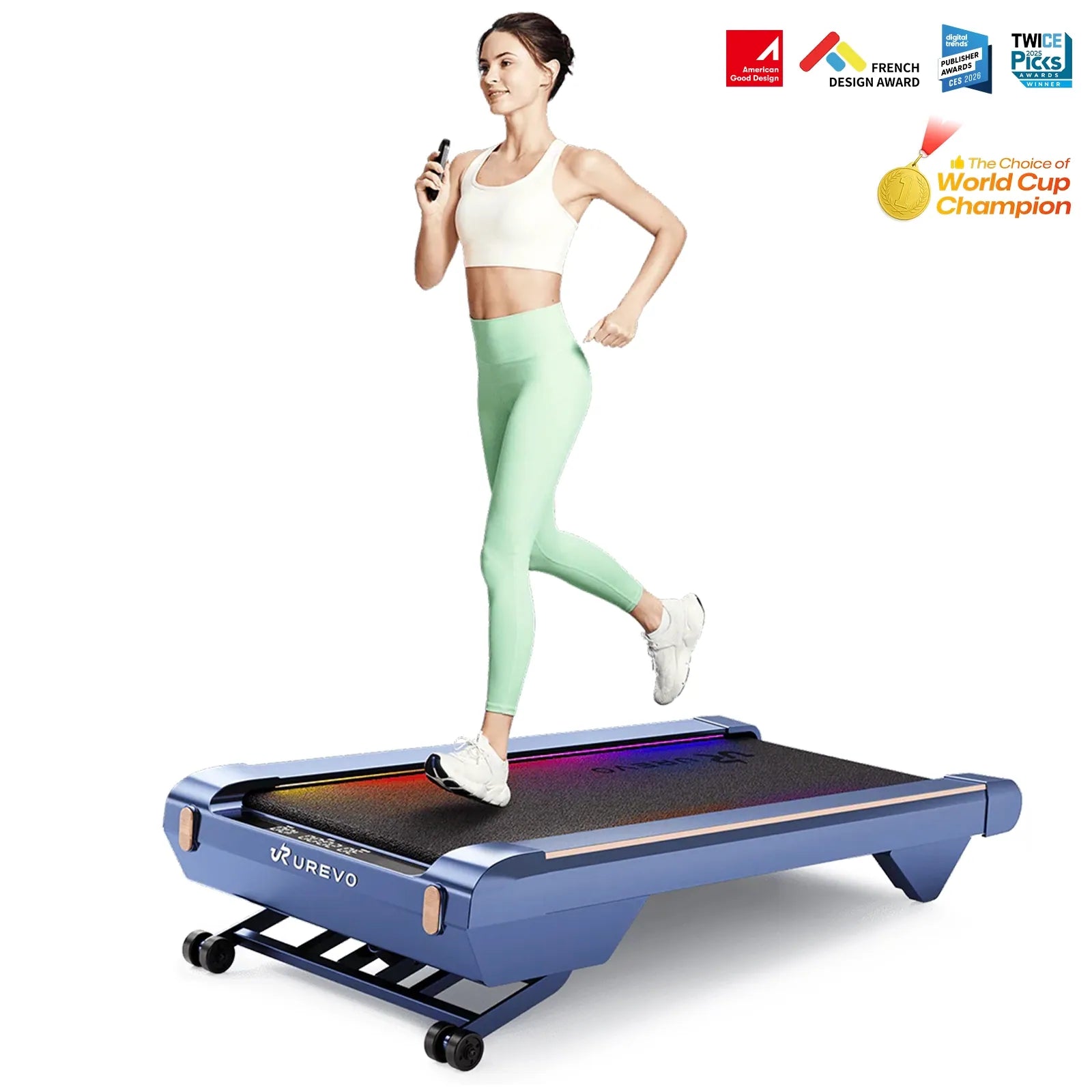
The best walking pad for weight loss overall is the UREVO CyberPad for Home because its 0–14% auto incline, 0.6–4.0 mph speed range, larger 43.3″ × 16.5″ deck, and 350 lb listed maximum load give it the strongest fat-loss training profile in a compact walking-pad format.

Choose the UREVO Strol 2E if you want a 2-in-1 walking pad with a handrail and more speed headroom. Choose the WalkingPad C2 if storage is your biggest concern. Choose the LifeSpan TR1200 Pro DT3-BT if you want a premium office treadmill base for long workday walking.

Amazon + Image Compliance Note

All Amazon buy buttons below use the affiliate tag papalex-20 and include rel="nofollow sponsored noopener". Product images in these review boxes are served from official manufacturer/brand image CDNs. For Amazon-hosted product images, use PA-API, SiteStripe, AAWP, Lasso, or another compliant Amazon Associates integration instead of downloading Amazon images and uploading them to WordPress.

As an Amazon Associate, GearUpToFit earns from qualifying purchases.

Why Walking Pads Are So Effective for Weight Loss

Walking pads work because they make movement easier to repeat. Instead of needing a gym visit, perfect weather, or a long workout block, you can add walking to activities you already do: emails, meetings, TV, podcasts, reading, or a short post-meal walk.

150 min/week Baseline moderate-intensity activity target for adults.
30 min/day Simple weekday target: five walking sessions weekly.
Incline wins More effort without needing to run.
Consistency The real fat-loss advantage of walking pads.

A walking pad will not override poor nutrition, low protein, bad sleep, or zero strength training. But it can dramatically improve the “move more” side of the equation. For a complete strategy, pair this review with GearUpToFit’s walking for weight loss guide, cardio vs strength training guide, and fitness calculator hub.

Best Walking Pads for Weight Loss: Quick Comparison

This table ranks each walking pad by real-world weight-loss usefulness: intensity potential, comfort, storage, desk compatibility, and likelihood that you will actually use it.

Rank Walking Pad Best For Speed Incline Listed Capacity Weight-Loss Verdict
#1 UREVO CyberPad for Home Best overall for weight loss 0.6–4.0 mph 0–14% auto 350 lb Best calorie-burn leverage because incline makes walking harder without running.
#2 UREVO Strol 2E Best 2-in-1 value 0.6–6.2 mph No 265 lb Best all-round pick if you want desk walking plus dedicated workouts.
#3 WalkingPad C2 Best foldable apartment pad 0.5–3.7 mph No 220 lb Best when storage and aesthetics determine whether you will use it.
#4 WalkingPad Z1 Best foldable daily-step pad 1–4 mph No 243 lb Strong foldable choice for work-from-home walking and step goals.
#5 UREVO SpaceWalk E4W Best low-profile design 0.6–4.0 mph No 265 lb Best simple under-desk pad if you want a clean home-office look.
#6 Egofit Walker Pro-M1 Best compact fixed incline 0.62–3.11 mph Fixed 5% 220 lb Best tiny-space incline option for slower but more effortful walking.
#7 WalkingPad R2 Best premium foldable walk/run 1–7.5 mph No 243 lb Best if you want a foldable unit that can also support running sessions.
#8 LifeSpan TR1200 Pro DT3-BT Best premium office base Up to 4 mph No 330 lb Best for long workday walking blocks and serious treadmill-desk users.
#9 DeerRun Q1 Classic Pro Best high-capacity compact option 1–8 kph No 159 kg Good compact option when higher listed capacity matters.
Important Safety Update

Why Sperax Walking Pads Were Removed From This List

We are not recommending Sperax walking pads in this updated version. The U.S. Consumer Product Safety Commission issued a stop-use warning for Sperax walking pads and treadmills due to fall, burn, and fire hazards. Affected models named by CPSC include Pro, Q1, RM-01, and RM-02.

This is exactly the type of update that should appear in a trustworthy review page. A cheaper walking pad is not a better walking pad if the product line is under a current safety warning.

In-Depth Reviews: Best Walking Pads for Weight Loss

Each Amazon product box below includes a verdict, specs, pros, cons, fit guidance, and official product images fitted with responsive CSS. Prices and availability change, so the buttons intentionally avoid hard-coded prices.

#1Best Overall
UREVO CyberPad for Home smart walking pad with incline
UREVO CyberPad treadmill product image with runner UREVO CyberPad walking pad used at home UREVO CyberPad compact incline walking pad cutout

Images: official UREVO product media.

Best Walking Pad for Weight Loss

UREVO CyberPad for Home Smart Treadmill

The UREVO CyberPad is the most weight-loss-focused walking pad in this guide because it gives you the one upgrade that matters most for calorie burn: incline. With 0–14% auto incline and a compact walking-pad footprint, it turns low-speed walking into a much more productive workout.

9.6Weight-Loss Score

Why it wins: It gives you intensity without forcing you to run. That is ideal for apartment users, beginners, busy professionals, and anyone who wants harder sessions in less time.

Speed0.6–4.0 mph
Incline0–14% auto
Capacity350 lb
Deck43.3″ × 16.5″

Verdict: Buy the CyberPad if weight loss is the main goal and you want the strongest walking-only calorie-burn profile.

The CyberPad is the best pick for 15–35 minute dedicated workouts. Keep the speed moderate and raise the incline in short blocks. This creates a stronger training effect while staying lower impact than jogging.

Pros

  • 0–14% auto incline is excellent for fat-loss walking.
  • 350 lb listed capacity is strong for this category.
  • Large deck for a compact walking-pad format.
  • Best option when short sessions need to feel harder.

Cons

  • Heavier than very flat under-desk pads.
  • Top speed is walking-focused, not running-focused.
  • Incline may not be comfortable for typing sessions.

Best for: weight loss, incline walking, short high-effort sessions, low-impact cardio.
Skip if: you need a very light pad that slides under a low sofa.

Check Price on Amazon Build a Balanced Plan Affiliate link • Amazon tag=papalex-20
#2Best 2-in-1
UREVO Strol 2E Smart Treadmill with handrail
UREVO Strol 2E walking and running modes UREVO Strol 2E compact treadmill product view

Images: official UREVO product media.

Best 2-in-1 Walking Pad

UREVO Strol 2E Smart Treadmill

The UREVO Strol 2E is the best 2-in-1 walking pad for people who want desk walking, brisk walking, and light jogging in one compact machine. It is not as fat-loss aggressive as the CyberPad because it lacks incline, but it has more speed headroom.

9.3Weight-Loss Score

Why it ranks high: It covers more use cases than most walking pads. You can walk slowly under a desk, then raise the handrail for a focused cardio session.

Speed0.6–6.2 mph
InclineNo
Capacity265 lb
Deck40.2″ × 15″

Verdict: Buy this if you want one compact treadmill for workday steps and dedicated workouts.

For weight loss, the Strol 2E is best used in two modes: easy 1–2 mph desk walking during work and 3–5 mph focused cardio sessions after work. The handrail gives extra confidence during faster walking.

Pros

  • Good speed range for walking and light jogging.
  • Handrail improves confidence for dedicated sessions.
  • Useful 265 lb listed capacity.
  • Good balance of price, features, and versatility.

Cons

  • No incline.
  • Deck is compact for taller runners.
  • More moving parts than a simple flat pad.

Best for: remote workers, beginners, light jogging, mixed desk-and-workout use.
Skip if: incline walking is your top priority.

Check Price on Amazon Pair with Walking Plan Affiliate link • Amazon tag=papalex-20
#3Best Foldable
WalkingPad C2 foldable walking pad shown folded and unfolded
WalkingPad C2 used under a standing desk WalkingPad C2 foldable storage view WalkingPad C2 vertical storage view

Images: official KingSmith/WalkingPad product media.

Best for Small Apartments

WalkingPad C2 Foldable Walking Pad

The WalkingPad C2 is the best walking pad when storage determines success. It folds 180 degrees, slides under furniture, and looks cleaner than many budget pads.

9.1Weight-Loss Score

Why it ranks high: The easiest walking pad to store is often the one people keep using. That makes the C2 excellent for daily step consistency.

Speed0.5–3.7 mph
Foldable180° fold
Capacity220 lb
Deck47.2″ × 15.8″

Verdict: Buy the C2 if you want the cleanest apartment-friendly walking pad for daily steps.

Pros

  • Excellent fold-in-half storage design.
  • Simple, elegant look for living spaces.
  • No assembly required.
  • Good walking surface for a compact pad.

Cons

  • Lower 220 lb listed capacity.
  • No incline.
  • Walking-focused top speed.

Best for: apartments, small bedrooms, shared living spaces, minimal setups.
Skip if: you need incline or higher user capacity.

Check Price on Amazon Calculate Your Targets Affiliate link • Amazon tag=papalex-20
#4Best Daily Steps
WalkingPad Z1 foldable walking treadmill
WalkingPad Z1 in use for walking WalkingPad Z1 folded and unfolded WalkingPad Z1 portability and storage

Images: official KingSmith/WalkingPad product media.

Best Foldable Daily-Step Pad

WalkingPad Z1 Foldable Walking Pad

The WalkingPad Z1 is a strong alternative to the C2 if you want a foldable under-desk walking pad with a slightly higher listed capacity and a simple 1–4 mph walking range.

8.9Weight-Loss Score

Why it ranks high: It is built for habit formation: fold it, roll it, store it, and bring it back out for another walking block.

Speed1–4 mph
Folded31.8″ × 22″ × 5.4″
Capacity243 lb
Deck47.6″ × 15.8″

Verdict: Buy the Z1 if you want a polished foldable pad mainly for daily steps and work-from-home walking.

Pros

  • Foldable and storage-friendly.
  • Good walking belt length for compact use.
  • Simple app/remote control setup.
  • Solid option for desk walking and TV walking.

Cons

  • No incline.
  • Not built for serious running.
  • Less intense than CyberPad or Egofit incline options.

Best for: daily steps, under-desk use, apartment storage.
Skip if: you want a handrail or incline.

Check Price on Amazon Track Steps Smarter Affiliate link • Amazon tag=papalex-20
#5Best Design
UREVO SpaceWalk E4W wood grain smart walking pad
UREVO SpaceWalk E4W used in living room UREVO SpaceWalk E4W walking pad cutout

Images: official UREVO product media.

Best Low-Profile Home-Office Pick

UREVO SpaceWalk E4W Smart Walking Pad

The SpaceWalk E4W is for people who want a walking pad that does not make their home office look like a storage room. It is compact, low-profile, and styled with a wood-grain look.

8.8Weight-Loss Score

Why it ranks high: It is simple, approachable, and easy to leave near your desk. That makes it good for turning sitting time into walking time.

Speed0.6–4.0 mph
Height4.9″
Capacity265 lb
Deck39.8″ × 15″

Verdict: Buy this if you want a good-looking, low-profile pad for daily desk walking.

Pros

  • Low-profile 4.9″ design.
  • Attractive wood-grain aesthetic.
  • Good 265 lb listed capacity.
  • Simple walking-focused operation.

Cons

  • No incline.
  • Walking-focused top speed.
  • Deck is shorter than premium office bases.

Best for: home offices, living rooms, step goals, walking while working.
Skip if: you want incline or a handrail.

Check Price on Amazon Monitor Your Steps Affiliate link • Amazon tag=papalex-20
#6Mini Incline
Egofit Walker Pro-M1 compact incline under desk treadmill
Egofit Walker Pro-M1 fixed 5 percent incline Egofit Walker Pro-M1 compact dimensions Egofit Walker Pro-M1 stored under sofa

Images: official Egofit product media.

Best Compact Fixed Incline

Egofit Walker Pro-M1

The Egofit Walker Pro-M1 is the smallest incline-focused walking pad in this guide. Its fixed 5% incline makes low-speed walking feel more productive, especially when you want extra effort without running.

8.7Weight-Loss Score

Why it ranks high: The fixed incline increases effort while keeping speed low enough for many desk or TV-walking sessions.

Speed0.62–3.11 mph
InclineFixed 5%
Capacity220 lb
Deck16.54″ × 34.25″

Verdict: Buy this if you want the smallest practical incline walking pad for short, effortful sessions.

Pros

  • Fixed 5% incline boosts effort.
  • Very compact footprint.
  • Good for small apartments and tight offices.
  • Remote and app control.

Cons

  • Short deck is not ideal for tall users.
  • Incline cannot be flattened.
  • 220 lb listed capacity.

Best for: compact spaces, slower incline walking, low-speed calorie burn.
Skip if: you are tall or want a longer, flatter desk treadmill.

Check Price on Amazon Create a Weekly Plan Affiliate link • Amazon tag=papalex-20
#7Walk + Run
WalkingPad R2 foldable walk and run treadmill
WalkingPad R2 used as running treadmill WalkingPad R2 vertical folded storage WalkingPad R2 folded treadmill top view

Images: official WalkingPad product media.

Best Premium Foldable Walk/Run

WalkingPad R2 2-in-1 Foldable Treadmill

The WalkingPad R2 is the best premium foldable option if you want both under-desk walking and higher-speed running-style workouts. It is heavier than simple walking pads, but it has more training range.

8.6Weight-Loss Score

Why it ranks high: The R2 adds a handrail and 1–7.5 mph speed range, making it better for users who want more than desk walking.

Speed1–7.5 mph
Folded39″ × 28″ × 6.3″
Capacity243 lb
Deck47.2″ × 17.3″

Verdict: Buy this if you want a premium foldable treadmill that can handle both walking and faster cardio.

Pros

  • Higher speed range than typical walking pads.
  • Foldable with handrail.
  • Good deck width for a compact treadmill.
  • Useful for people who want occasional running.

Cons

  • Heavier than flat walking pads.
  • No incline.
  • Higher price tier than basic under-desk pads.

Best for: users who want walking and faster cardio in one foldable unit.
Skip if: you only need quiet low-speed desk walking.

Check Price on Amazon Add Short Workouts Affiliate link • Amazon tag=papalex-20
#8Premium Office
LifeSpan TR1200 Pro DT3-BT under desk treadmill base
LifeSpan TR1200 Pro under desk treadmill used with standing desk LifeSpan TR1200 Pro walking desk treadmill product view

Images: official LifeSpan Europe product media.

Best Premium Office Treadmill Base

LifeSpan TR1200 Pro DT3-BT Under Desk Treadmill

The LifeSpan TR1200 Pro DT3-BT is not the smallest or cheapest walking pad. It is the best fit for serious treadmill-desk users who want long workday walking blocks and a sturdier office-style base.

8.5Weight-Loss Score

Why it ranks high: For high-frequency office use, durability and comfort matter more than novelty features. This is built for walking while working.

SpeedUp to 4 mph
Deck48″ × 20″
Capacity330 lb
Height4.6″ step-up

Verdict: Buy this if your weight-loss strategy is built around long, repeated workday walking sessions.

Pros

  • Sturdy office-focused construction.
  • Wider 20″ walking surface.
  • 330 lb listed capacity.
  • Intelli-Step and Intelli-Guard safety features.

Cons

  • More expensive than consumer walking pads.
  • Not as easy to hide in small rooms.
  • No incline.

Best for: executives, professionals, heavy daily use, standing-desk setups.
Skip if: you need a very compact budget walking pad.

Check Price on Amazon Plan Your Week Affiliate link • Amazon tag=papalex-20
#9High Capacity
DeerRun Q1 Classic Pro smart walking pad in white
DeerRun Q1 Classic Pro black walking pad DeerRun Q1 Classic Pro pink walking pad DeerRun Q1 Classic Pro white walking pad

Images: official DeerRun product media. Availability may vary by region.

Best High-Capacity Compact Option

DeerRun Q1 Classic Pro Smart Walking Pad

The DeerRun Q1 Classic Pro is a compact walking pad with a high listed 159 kg capacity, remote/app controls, built-in wheels, and a 1–8 kph walking range.

8.3Weight-Loss Score

Why it ranks high: It is a straightforward compact walking pad with higher listed capacity than many mainstream under-desk models.

Speed1–8 kph
ControlsRemote + app
Capacity159 kg
Belt100 × 40 cm

Verdict: Buy this if you want a compact walking pad and higher listed capacity is a priority.

Pros

  • High listed capacity for a compact pad.
  • Remote and app control.
  • Built-in wheels.
  • Good basic walking speed range.

Cons

  • No incline.
  • Availability varies by marketplace.
  • Check exact seller and regional specs before buying.

Best for: higher-capacity needs, compact walking, simple home use.
Skip if: you want a widely available US-specific model with consistent Amazon listings.

Check Price on Amazon Check Body Metrics Affiliate link • Amazon tag=papalex-20

How We Ranked These Walking Pads

For weight loss, the winner is not always the most expensive treadmill. We scored each walking pad using the factors that determine whether it will actually help you walk more consistently.

  • Fat-loss leverage: incline, speed range, comfort, and ability to progress over time.
  • Consistency: storage, setup friction, easy controls, and likelihood of daily use.
  • Desk compatibility: low-speed usability, remote/app controls, and low-profile design.
  • Body-size fit: listed capacity, belt width, belt length, and stability.
  • Safety and trust: current safety warnings, clear limitations, and no fake ratings or fake prices.
  • SEO and reader usefulness: clear verdicts, answer-focused formatting, schema, internal links, and direct buyer guidance.

How to Choose the Best Walking Pad for Weight Loss

1. Choose incline if your sessions are short

If you only have 15–25 minutes, incline is the most useful upgrade. It raises effort without requiring running speed. That is why the UREVO CyberPad ranks #1 and the Egofit Pro-M1 ranks well despite its small size.

2. Choose foldable if storage is the barrier

A walking pad that stays in a closet is useless. If your living space is tight, a foldable model like the WalkingPad C2 or Z1 may be better than a stronger machine you never want to move.

3. Choose a handrail if you want faster walking or jogging

Under-desk pads are best for slow walking. If you want to raise speed, a handrail gives confidence and makes dedicated workouts feel safer.

4. Check capacity with a safety margin

Do not buy at the limit. Choose a walking pad with a listed capacity comfortably above your current body weight for better stability and durability.

5. Do not chase fake calorie numbers

Walking pad displays estimate calories. Use them for trends, not precision. For better targets, estimate your daily energy needs with the GearUpToFit calculator hub.

4-Week Walking Pad Weight-Loss Plan

This beginner-friendly plan works with any walking pad. Adjust speed and incline to your fitness level. Stop if you feel chest pain, dizziness, unusual shortness of breath, or joint pain.

Week 1

Walk 15–20 minutes, 5 days/week. Keep the pace easy. Your goal is to build the habit.

Week 2

Walk 20–25 minutes, 5 days/week. Add one 5-minute brisk block in each session.

Week 3

Walk 25–35 minutes, 5 days/week. Use intervals: 3 minutes easy, 2 minutes brisk.

Week 4

Walk 30–45 minutes, 5 days/week. If your pad has incline, add 3–8% incline blocks.

The Fat-Loss Stack

Best Walking Pad Desk Setup

Most people should not start by typing at a fast speed. Begin slowly, protect posture, and save hard workouts for dedicated walking blocks.

0.8–1.5 mph Typing, admin work, email.
1.5–2.5 mph Calls, reading, light tasks.
3.0+ mph Dedicated brisk walking.
Incline blocks Best for short workouts, not heavy typing.
  • Use a flat, stable floor and enough clearance behind the belt.
  • Wear supportive shoes unless your manual says otherwise.
  • Use a treadmill mat to reduce vibration and protect flooring.
  • Keep pets, children, cords, and loose items away from the belt.
  • Use the safety key or emergency stop when provided.

Frequently Asked Questions

What is the best walking pad for weight loss?

The best walking pad for weight loss overall is the UREVO CyberPad for Home because its 0–14% auto incline makes walking more intense without requiring running.

Can you lose weight with a walking pad?

Yes. A walking pad can help weight loss by increasing daily movement and calorie expenditure. It works best with a modest calorie deficit, protein-focused meals, strength training, and consistent sleep.

How long should I walk on a walking pad to lose weight?

Start with 15–20 minutes per day, five days per week. Build toward 30–45 minutes most days, or split walking into shorter 10-minute blocks.

Is incline better than speed for fat loss?

Incline is often more useful than speed for walking-based fat loss because it raises effort while keeping impact lower than jogging.

What speed should I use while working?

Start at 0.8–1.5 mph while typing. Use 1.5–2.5 mph for calls or reading. Save faster speeds and incline intervals for dedicated workouts.

Are walking pads safe in apartments?

They can be, especially at lower walking speeds. Use a treadmill mat, avoid late-night high-speed use, and consider vibration if you have downstairs neighbors.

Which walking pad is best for small spaces?

The WalkingPad C2 is best for small spaces because it folds in half. The WalkingPad Z1 is another strong foldable option, and the Egofit Pro-M1 is very compact with a fixed incline.

Should I buy a walking pad or a full treadmill?

Buy a walking pad for under-desk walking, small spaces, and daily step consistency. Buy a full treadmill if you want serious running, steep incline training, or a larger deck.

Final Verdict

For most weight-loss users, the UREVO CyberPad for Home is the best walking pad because incline creates the strongest training effect in a compact format. The UREVO Strol 2E is the best 2-in-1 value if you want walking plus light jogging. The WalkingPad C2 is the best foldable apartment option.

The best long-term choice is the one that fits your room, schedule, body size, and motivation. Put it where you will use it. Walk during things you already do. Progress slowly. Pair it with nutrition and strength training. That is how a walking pad becomes a real weight-loss tool instead of another unused gadget.

Sources and Product-Spec References

Specs, availability, and listings change. Always confirm the exact model, seller, warranty, voltage, return policy, and current safety status before purchasing.

Affiliate Disclosure: GearUpToFit is reader-supported. As an Amazon Associate, GearUpToFit earns from qualifying purchases. This does not affect our editorial recommendations.

Medical Disclaimer: This article is for informational and educational purposes only and is not medical advice. Consult a qualified healthcare professional before beginning a new exercise or weight-loss program, especially if you have cardiovascular, metabolic, orthopedic, balance-related, or other health concerns.

Posted in Review | Comments Off on Best Walking Pads for Weight Loss: 9 Under-Desk Treadmills Ranked for Real Fat-Loss Consistency

Best Smart Rings for Runners in 2026: Recovery, HRV, Sleep & No-Subscription Picks

Updated April 26, 2026 · Runner-focused smart ring review

The best smart ring for runners is not the one pretending to be a GPS watch. It is the one you will wear every night, trust every morning, and use to decide whether today should be intervals, Zone 2, strength, mobility, or real rest.

Best overall Oura Ring 4
No subscription RingConn Gen 2
Galaxy users Samsung Galaxy Ring
Best budget RingConn Gen 2 Air
Affiliate disclosure: GearUpToFit is reader-supported. This post contains Amazon affiliate links using the store tag papalex-20. We may earn a commission if you buy through these links, at no extra cost to you. Prices, stock, colors, sizes, and promotions change often, so the buttons below intentionally say check price rather than quoting stale pricing.

Quick answer: the best smart ring for most runners

Oura Ring 4 is the best smart ring for most runners because it delivers the most polished recovery experience: sleep staging, HRV trends, resting heart rate, temperature shifts, stress patterns, readiness-style guidance, automatic activity detection, and useful integrations for runners who already track workouts with a GPS watch.

But the best choice changes by runner type. Choose RingConn Gen 2 if you want long battery life and no subscription. Choose Samsung Galaxy Ring if you live in Samsung Health. Choose Ultrahuman Ring Air if you want deeper lifestyle nudges without a required membership. Choose RingConn Gen 2 Air if value matters most. Choose Amazfit Helio Ring if you already train inside the Zepp/Amazfit ecosystem.

Runner truth: a smart ring is a recovery co-pilot, not a race-day command center. For live pace, GPS, laps, maps, structured workouts, and race execution, use a dedicated running watch. For sleep, HRV, resting heart rate, strain trends, and readiness decisions, a smart ring can be excellent.

Best smart rings for runners: side-by-side comparison

This table is optimized for runner decision-making rather than generic wearable shopping. The most important question is not “Which ring has the most features?” It is “Which ring helps me train smarter without replacing the tools I already need for running?”

Rank Smart ring Best for runners who want… Battery claim Subscription? Runner limitation Amazon CTA
#1 Oura Ring 4 The best all-around recovery, sleep, HRV, stress, and app experience Typically 5–8 days Membership needed for the full experience No built-in GPS or workout screen Check price
#2 RingConn Gen 2 No-subscription recovery tracking with excellent battery life Up to 10–12 days; case extends usage No required subscription for core features Less mature coaching layer than Oura Check price
#3 Samsung Galaxy Ring Galaxy phone owners who want Samsung Health, Energy Score, and automatic walking/running detection Up to 7 days; smaller sizes may be shorter No required app subscription Android-only; best inside Samsung ecosystem Check price
#4 Ultrahuman Ring Air Data-driven runners who want recovery, circadian, caffeine, temperature, and lifestyle nudges 4–6 days No recurring subscription required for core data Some optional PowerPlugs may cost extra Check price
#5 RingConn Gen 2 Air Maximum value, low weight, simple health tracking, and no app fee for standard features Up to 10 days No app fee for standard features No sleep apnea monitoring versus Gen 2 Check price
#6 Amazfit Helio Ring Amazfit watch users who want a light recovery ring inside Zepp Up to 4 days No mandatory ring subscription for core use, but Zepp ecosystem features vary Best as part of Amazfit ecosystem, not as a standalone runner tracker Check price

How we ranked the best smart rings for runners

A runner does not need the same thing from a smart ring as a general wellness buyer. We weighted each ring by how useful it is for training decisions, not by how futuristic it looks in a product photo.

40% Recovery usefulness

Sleep, HRV, resting heart rate, temperature, stress, readiness signals, trend clarity, and how easily the app turns data into a next-day training decision.

25% Runner fit

Comfort during sleep, sweat resistance, sizing reliability, app integrations, activity detection, and whether the ring complements a GPS running watch.

20% Ownership value

Battery life, subscription requirements, warranty confidence, app access, platform compatibility, and long-term cost.

15% Trust & clarity

Clear specs, stable ecosystem, transparent limitations, and whether the product is realistic about what a ring can and cannot do during running.

The best smart rings for runners in 2026

Each product box below uses an Amazon affiliate link with your store ID papalex-20. Smart rings have unique sizing, so encourage readers to use the official sizing process before purchasing.

Best overall

Oura Ring 4

1
Oura Ring 4 smart ring for runners, recovery tracking and sleep tracking Amazon image

Best for: runners who already have a GPS watch and want the cleanest recovery, sleep, HRV, resting heart rate, stress, and readiness experience.

9.6/10GearUpToFit runner-recovery score
  • 5–8 day battery
  • 100m water resistance
  • Sizes 4–15
  • Strava integration
  • Membership model

Oura Ring 4 is the safest recommendation for most serious recreational runners because its app makes recovery trends easy to act on. The daily value is simple: wake up, check whether your HRV, resting heart rate, sleep, stress, and temperature trends support a hard session, then adjust your plan before you turn a tired body into an injury risk.

It is also the ring most likely to feel useful after the novelty wears off. The interface is polished, the recovery language is clear, and the ring works well as a passive companion beside Garmin, COROS, Apple Watch, Polar, or Suunto.

What we love
  • Best overall app experience for recovery decisions
  • Strong sleep, HRV, resting heart rate, and temperature trend story
  • Comfortable enough for consistent night wear
Watch-outs
  • Full value requires Oura Membership
  • Not a GPS running watch replacement
  • Use a sizing kit before buying

Runner setup: wear Oura at night and during easy daily life; use your GPS watch for run recording, pace, maps, workouts, and race day.

Best no-subscription pick

RingConn Gen 2

2
RingConn Gen 2 smart ring for runners with long battery life and no required subscription Amazon image

Best for: runners who want long battery life, strong baseline wellness tracking, no required app subscription, and a ring they can wear through travel-heavy training blocks.

9.2/10GearUpToFit long-battery value score
  • 10–12 day battery
  • Charging case
  • IP68 / 100m
  • No required subscription
  • Sleep apnea monitoring feature

RingConn Gen 2 is the best smart ring for runners who hate subscriptions. Its killer advantage is ownership value: long battery life, a charging case, no required monthly fee for core health tracking, and a slim design that makes it realistic to wear consistently.

For runners, that consistency matters more than one flashy metric. A recovery wearable only works if it captures your normal baseline, your post-long-run dips, your rough sleep nights, and the slow return to normal after high-volume weeks.

What we love
  • Outstanding battery life for travel and race weeks
  • No required monthly subscription for core features
  • Comfortable, thin, and easy to wear overnight
Watch-outs
  • Coaching layer is less polished than Oura
  • Sleep apnea data is not a medical diagnosis
  • Still not ideal for live running HR zones

Runner setup: use RingConn Gen 2 for overnight recovery trends and a watch or chest strap for workouts where heart-rate precision matters.

Best for Galaxy users

Samsung Galaxy Ring

3
Samsung Galaxy Ring smart ring for Android and Galaxy users Amazon image

Best for: Samsung phone owners who want Samsung Health, Galaxy AI wellness insights, automatic walking/running detection, and no required subscription.

9.0/10GearUpToFit Android ecosystem score
  • Up to 7 days
  • Android compatible
  • Samsung Health
  • 10ATM + IP68
  • No app subscription

Samsung Galaxy Ring is the cleanest choice if your phone, watch, earbuds, and health data already live inside Samsung’s ecosystem. Its strength is not deep run analytics; it is convenience. It tracks sleep, heart rate, activity context, temperature, and wellness trends inside an app Galaxy users already open.

The best runner use case is pairing Galaxy Ring with a Galaxy Watch or another GPS watch. The ring handles passive recovery and sleep. The watch handles pace, route, safety, run screens, and real-time feedback.

What we love
  • Excellent fit for Samsung Health users
  • No required app subscription
  • Automatic walking and running detection
Watch-outs
  • Android-only and best with Galaxy phones
  • Battery varies by size
  • Not the top choice for iPhone runners

Runner setup: if you already use a Galaxy Watch, let the watch record runs and let the ring improve the overnight recovery picture.

Best for data nerds

Ultrahuman Ring Air

4
Ultrahuman Ring Air smart ring for recovery, sleep, HRV and fitness tracking Amazon image

Best for: runners who enjoy recovery experiments, caffeine timing, circadian guidance, temperature trends, and lifestyle coaching without a required subscription.

8.8/10GearUpToFit biomarker insight score
  • 4–6 day battery
  • 100m water resistance
  • 2.4–3.6g
  • No required subscription
  • Dynamic Recovery

Ultrahuman Ring Air is the best pick for runners who want more than a simple sleep score. It leans into biomarker interpretation: HRV, skin temperature, stress rhythm, recovery, caffeine windows, circadian timing, and behavior nudges. That makes it useful for runners who like to connect training, sleep, nutrition timing, and recovery habits.

The trade-off is that the experience can feel more data-heavy than Oura. That is a feature if you love dashboards and self-experimentation. It is a drawback if you want one simple readiness message every morning.

What we love
  • No recurring subscription required for core data
  • Lightweight and comfortable
  • Strong lifestyle and recovery nudges
Watch-outs
  • Some optional PowerPlug features may cost extra
  • Less simple than Oura for beginners
  • Not a live run-tracking device

Runner setup: use the recovery and circadian nudges to decide when to place hard sessions, not to chase every data point daily.

Best budget/value

RingConn Gen 2 Air

5
RingConn Gen 2 Air smart ring for budget recovery and sleep tracking Amazon image

Best for: runners who want a lighter, cheaper, no-subscription smart ring for sleep, stress, heart rate, SpO₂, temperature, and general activity tracking.

8.6/10GearUpToFit value score
  • Up to 10 days
  • 2mm thickness
  • 2.5–4g
  • IP68 / 100m
  • No app fee for standard features

RingConn Gen 2 Air is the value play. It strips the formula down to what many runners actually need: comfortable overnight wear, long battery life, core health metrics, basic wellness insight, and no standard-feature app fee.

It does not include the sleep apnea monitoring headline of the more expensive Gen 2, but that may not matter if your priority is a slim ring that helps you see sleep and recovery trends without adding another subscription.

What we love
  • Excellent battery life for the price tier
  • Very thin and light
  • Strong no-subscription ownership value
Watch-outs
  • No sleep apnea monitoring versus RingConn Gen 2
  • Less premium materials than Gen 2
  • Still needs a watch for serious run tracking

Runner setup: choose this over Gen 2 if budget matters more than advanced sleep-breathing features.

Best Amazfit companion

Amazfit Helio Ring

6
Amazfit Helio Ring smart ring for runners using the Zepp ecosystem Amazon image

Best for: runners who already use an Amazfit sports watch and want sleep, HRV, readiness, and recovery data inside the Zepp ecosystem.

8.1/10GearUpToFit ecosystem companion score
  • Up to 4 days
  • 10 ATM
  • Titanium alloy
  • Zepp ecosystem
  • Designed for athletes

Amazfit Helio Ring is not the strongest standalone smart ring here, but it makes sense for runners who already use Amazfit watches and want the ring to feed the same recovery ecosystem. Think of it as an overnight recovery accessory more than a do-everything ring.

The biggest drawback is battery life versus Oura, RingConn, and Samsung. The biggest advantage is ecosystem fit if your training data already lives in Zepp.

What we love
  • Good fit for Amazfit watch users
  • Lightweight titanium design
  • Useful sleep and recovery emphasis
Watch-outs
  • Shorter battery life than rivals
  • Limited size/color flexibility
  • Less compelling outside the Zepp ecosystem

Runner setup: use Helio for recovery and sleep while an Amazfit watch handles GPS, workout screens, and pace data.

How runners should actually use a smart ring

The highest-ROI use of a smart ring is not counting steps. It is catching recovery drift before your training plan breaks. Runners often ignore early warning signs because legs can still move even when the nervous system, sleep debt, and connective tissue are asking for a lighter day.

1. Read trends, not single nights

One bad sleep score does not ruin your week. Three nights of rising resting heart rate, lower HRV, poor sleep, and heavy legs is a pattern worth respecting.

2. Pair the ring with your plan

Use the ring to modify the day, not to replace coaching. Hard workout planned but recovery is clearly suppressed? Swap intervals for Zone 2 or mobility.

3. Keep GPS on the wrist

Your watch should handle pace, distance, laps, maps, routes, intervals, and race execution. Your ring should handle passive recovery context.

Simple runner rule: if HRV is down, resting heart rate is up, sleep was poor, and soreness is high, do not force threshold work. Run easy, move the workout, or take the recovery win.

Smart ring buying guide for runners

1. Start with your actual training need

Buy a smart ring if you want better recovery awareness, sleep consistency, HRV trends, resting heart rate trends, temperature context, and a screen-free wearable. Do not buy one expecting it to replace your running watch.

  • Need GPS? Buy a running watch.
  • Need live heart-rate zones? Use a watch or chest strap.
  • Need better sleep and recovery patterns? A smart ring makes sense.

2. Size first or regret later

Smart ring sizing is not the same as jewelry sizing. Fingers swell after long runs, in heat, in the morning, after salty meals, and during travel. Wear the sizing sample for at least a full day and overnight before committing.

  • Index finger usually gives strong sensor contact.
  • The ring should not rotate easily during normal movement.
  • Do not size when your hands are unusually cold or swollen.

3. Treat workout HR carefully

Finger-based optical sensors can be useful, but running introduces motion, sweat, temperature shifts, grip changes, and cadence artifacts. For intervals, hills, threshold work, or race pacing, a chest strap or high-quality running watch remains the better tool.

4. Protect the ring during lifting

Runners who strength train should be careful with barbells, kettlebells, pull-up bars, and heavy dumbbells. Hard metal-on-metal contact can scratch rings and may be unsafe. Remove the ring or use a protector during lifting.

Which smart ring should you buy by runner type?

Runner type Best pick Why it fits Better alternative if…
Marathon beginner Oura Ring 4 Clear sleep and readiness feedback helps prevent overdoing long-run blocks. RingConn Gen 2 Air if budget matters more.
Half-marathon / marathon improver Oura Ring 4 or RingConn Gen 2 Both help connect sleep, HRV, and stress to workout placement. Ultrahuman Ring Air if you prefer deeper lifestyle data.
Ultra runner / frequent traveler RingConn Gen 2 Long battery life and charging case are practical during travel and multi-day events. Oura if app polish matters more than subscription-free ownership.
Samsung phone runner Samsung Galaxy Ring Best Samsung Health integration and no required app subscription. RingConn Gen 2 if you want broader phone compatibility.
Budget-focused runner RingConn Gen 2 Air Strong battery, thin design, and no standard-feature app fee. Amazfit Helio if you already own Amazfit gear.
Amazfit ecosystem runner Amazfit Helio Ring Works best as a Zepp recovery companion to an Amazfit sports watch. RingConn or Oura if you want a stronger standalone ring.

2026 watchlist: Ultrahuman Ring PRO

Ultrahuman Ring PRO is one of the most interesting 2026 smart-ring developments, with a claimed longer battery life and a new charging case. It is not ranked in the Amazon product boxes above because the priority here is verified, usable Amazon affiliate links. Add it to this article only after you confirm a stable Amazon listing and ASIN for the exact marketplace you want to monetize.

Editorial stance: promising, but not yet a safer recommendation than Oura Ring 4, RingConn Gen 2, or Samsung Galaxy Ring for a publish-and-rank Amazon affiliate review.

FAQ: best smart rings for runners

What is the best smart ring for most runners?

Oura Ring 4 is the best overall smart ring for most runners because it has the strongest recovery, sleep, HRV, resting heart rate, temperature trend, and app experience. It is best used with a GPS running watch rather than instead of one.

Can a smart ring replace a running watch?

No. A smart ring is not a full running watch replacement. Most smart rings do not provide live pace, GPS route tracking, lap buttons, workout screens, maps, music controls, or race-day pacing. Use a running watch for workouts and a smart ring for recovery.

Which smart ring has no subscription?

RingConn Gen 2, RingConn Gen 2 Air, Samsung Galaxy Ring, Ultrahuman Ring Air, and Amazfit Helio Ring do not require an Oura-style subscription for their core standard features. Oura Ring 4 requires Oura Membership for the full experience.

Which smart ring has the longest battery life?

Among the ranked Amazon-ready picks, RingConn Gen 2 offers the strongest practical battery story, with up to 10–12 days depending on size and usage, plus a charging case. RingConn Gen 2 Air is also strong for value buyers with up to 10 days.

Are smart rings accurate for running heart rate?

Smart rings are most useful for resting heart rate, HRV, overnight recovery, and general trend tracking. For live heart-rate zones during intervals, hills, threshold runs, or races, a GPS watch or chest strap is usually better.

Can I swim or run in the rain with a smart ring?

Most top smart rings are built for sweat, handwashing, rain, and water exposure, but always check the exact model’s water-resistance rating and care instructions. Rinse and dry the ring after salt water, chlorine, sunscreen, or heavy sweat.

Which finger should runners wear a smart ring on?

The index finger is commonly recommended for strong sensor contact, though middle or ring finger can work if the fit is secure. The key is that the sensors stay on the palm side of the finger and the ring does not rotate easily.

Is Oura Ring worth it if I already own Garmin?

Yes, if you want a more comfortable overnight recovery wearable and a polished sleep-readiness experience. Garmin is still better for recording runs, workouts, GPS, race pacing, maps, and training load. Oura is best as a recovery layer.

Should I wear a smart ring during strength training?

Be careful. Barbells, dumbbells, kettlebells, pull-up bars, and machines can scratch the ring or create finger-safety risks. Remove the ring or use a protective cover during lifting.

What is the best budget smart ring for runners?

RingConn Gen 2 Air is the best budget/value smart ring for most runners because it combines long battery life, a thin design, standard features without an app fee, and useful recovery basics. Amazfit Helio can be a good value if you already use Amazfit watches.

Final verdict: the best smart ring for runners

Buy Oura Ring 4 if you want the best overall recovery ring and do not mind the membership. Buy RingConn Gen 2 if you want the best no-subscription battery king. Buy Samsung Galaxy Ring if you are deep in Samsung Health. Buy Ultrahuman Ring Air if you love biomarker experimentation. Buy RingConn Gen 2 Air if value matters most. Buy Amazfit Helio Ring if you already train with Amazfit gear.

The smartest runner setup is usually not ring versus watch. It is ring plus watch: the watch records the run; the ring tells you whether your body is ready for the next one.

Research notes and source links

This review was built from official manufacturer specifications, public Amazon listings, ecosystem requirements, and runner-specific buying criteria. Health metrics from consumer wearables should be used for wellness trends, not diagnosis or medical decisions.

Posted in Review | Comments Off on Best Smart Rings for Runners in 2026: Recovery, HRV, Sleep & No-Subscription Picks

Amazfit Cheetah 2 Pro Review: A Titanium GPS Running Watch Built for Marathon Training

GPS Running Watch Review · Updated April 26, 2026

The Amazfit Cheetah 2 Pro is a premium runner-first smartwatch with a Grade 5 titanium case, sapphire AMOLED display, dual-band positioning, offline maps, Zepp Coach training plans, a red-and-white flashlight, 32GB storage, and battery life designed for long training blocks. It is not trying to be a tiny phone on your wrist. It is trying to be a smarter, lighter, better-value marathon companion.

Editorial score: 4.5/5Best for: marathon runnersASIN: B0GVVSQN3JModel: A2564

As an Amazon Associate, GearUpToFit earns from qualifying purchases. Amazon prices and availability can change without notice.

Affiliate disclosure: GearUpToFit.com participates in the Amazon Services LLC Associates Program. This article contains affiliate links, including the Amazon link to the Amazfit Cheetah 2 Pro. If you purchase through our links, we may earn a small commission at no extra cost to you. Our recommendations are based on product specifications, category analysis, and runner-focused buying criteria.

Fast answer for readers and AI search

What is the Amazfit Cheetah 2 Pro?

The Amazfit Cheetah 2 Pro is a 48mm GPS running smartwatch for runners who want long battery life, structured marathon training, offline navigation, durable materials, and useful recovery data without paying for the most expensive flagship ecosystem. Its strongest features are the Grade 5 titanium case, sapphire glass, 1.32-inch AMOLED display, dual-band positioning, offline maps, 32GB storage, 5 ATM rating, red-and-white flashlight, and up to 20 days of typical battery life.

Amazfit Cheetah 2 Pro 48mm GPS running smartwatch Amazon product image

Main product image from Amazon media. Feature images from official Amazfit product media.

Best Amazon link for this review

Amazfit Cheetah 2 Pro 48mm GPS Running Smartwatch

Titanium case · Sapphire AMOLED · Dual-band GPS · Offline maps · 32GB storage · 5 ATM · Red/white flashlight · Android & iPhone compatible

ASIN: B0GVVSQN3JModel: A2564Official MSRP: $449.99Affiliate tag: papalex-20

Price and availability can change. Always confirm the final price, delivery terms, and return details on Amazon before buying.

In this review

Bottom line up front

4.5/5
Excellent value for disciplined runners

Quick verdict: should you buy the Amazfit Cheetah 2 Pro?

Buy the Amazfit Cheetah 2 Pro if you want a premium-feeling GPS running watch with titanium, sapphire glass, offline maps, long GPS battery, and serious marathon-training tools at a price that undercuts many top-tier running flagships.

Skip it if you already live inside Garmin Connect, need the deepest third-party accessory ecosystem, want LTE, or expect Apple Watch-level apps. The Cheetah 2 Pro is strongest for road runners, half-marathoners, marathon builders, long-run athletes, and value-focused endurance users who care more about pacing, mapping, recovery, and battery than smartwatch app depth.

Spec snapshot

Why the Cheetah 2 Pro is interesting immediately

This is the rare running watch where the spec sheet reads like a higher-priced flagship: titanium case, sapphire display glass, bright AMOLED, long GPS battery, route tools, Bluetooth calls, onboard storage, and running metrics that go beyond pace and distance.

1.32″AMOLED display
3,000Nits peak
32GBStorage
5 ATMWater rating
170+Sports modes
99hMax GPS mode

Strengths and trade-offs

Amazfit Cheetah 2 Pro pros and cons

What we like

  • Grade 5 titanium frame and case give the watch a premium build without excessive body weight.
  • Sapphire glass is a meaningful durability upgrade for runners who train outdoors.
  • The 1.32-inch AMOLED display is sharp, bright, and easy to read during workouts.
  • Dual-band positioning and six satellite systems target better route and pace accuracy.
  • Offline maps, turn guidance, automatic rerouting, and POI search are genuinely useful for long runs.
  • Up to 20 days typical battery life and up to 31 hours in Accurate GPS mode are strong for marathon training.
  • Red-and-white flashlight adds practical safety value for early-morning or late-night training.
  • Works with Android and iPhone through the Zepp App.

What to watch out for

  • Garmin still has the deeper long-term training ecosystem and accessory culture.
  • Zepp OS is efficient, but it is not a full smartwatch app platform like watchOS or Wear OS.
  • Launch claims still need long-term field confirmation for GPS tracks, wrist heart rate, and mapping behavior.
  • No USB-C cable is included in the box; Amazfit includes a USB-C-compatible charging base/head.
  • The 48mm case can look large on very small wrists even though the watch body is relatively light.

Buyer fit

Who should buy the Amazfit Cheetah 2 Pro?

Marathon runnersYou want structured training, reliable GPS hardware, long-run battery, pacing tools, and recovery signals in one watch.
Garmin-curious value seekersYou want premium running-watch features but do not want to pay top flagship pricing.
Route-focused runnersYou want offline maps, turn guidance, rerouting, POI search, and route confidence without relying on your phone every time.

The Cheetah 2 Pro makes the most sense once you are beyond basic step tracking. If you are training for a first half marathon, building toward a marathon, or adding structured quality sessions to your week, its GPS, training, navigation, and recovery features become far more useful than a generic fitness tracker.

Newer runners should also compare it with our best GPS running watches for marathon beginners. If you want a broader shortlist before committing, read our best smartwatches for runners guide.

Editorial transparency: This is a launch review based on verified specifications, product-positioning analysis, runner use-case evaluation, and comparison against current GPS running-watch alternatives. It does not claim controlled lab heart-rate testing or measured GPS error testing. After long-term testing, update this post with actual route screenshots, chest-strap comparisons, and battery-drain data.

Scorecard

Editorial score breakdown

The Cheetah 2 Pro scores highest in build quality, battery, display, and runner-focused value. The main deduction is ecosystem depth: serious runners comparing it with Garmin must decide whether Amazfit’s hardware-for-money advantage matters more than Garmin’s training platform maturity.

Build quality
9.4
Display
9.2
Battery
9.3
GPS/navigation
9.0
Training tools
8.9
Smart features
8.2
Value
9.1

Design

Design and display: premium where runners actually notice it

The Amazfit Cheetah 2 Pro uses a 48 x 48 x 13.2mm body with a Grade 5 titanium frame and case, aluminum alloy buttons, a plastic bezel, and a 20mm silicone strap. The watch body weighs 45.6g without the strap, which is impressively light for a premium running watch with a 48mm footprint.

The display is a 1.32-inch AMOLED panel with 466 x 466 resolution, 353 PPI, sapphire glass, and up to 3,000 nits peak brightness. Those numbers matter because running watches live in difficult conditions: direct sun, sweat, rain, jacket cuffs, backpack straps, and accidental knocks against walls, gym equipment, and car doors.

CaseGrade 5 titanium frame and case
GlassSapphire touchscreen
Display1.32-inch AMOLED, 466 × 466
BrightnessUp to 3,000 nits peak

Why titanium and sapphire matter for runners

Most runners do not need luxury materials for vanity. They need a watch that stays readable, resists scratches, and does not feel heavy during long runs. Sapphire glass helps protect the display from scuffs. Titanium helps keep the structure rigid without giving the watch a brick-like feel.

If your training includes hiking, trail mileage, or rough outdoor use, compare this with our best smartwatches for hiking and our Amazfit T-Rex Ultra 2 review. The Cheetah 2 Pro is the cleaner runner-first choice; the T-Rex family is the more rugged outdoor personality.

Amazfit Cheetah 2 Pro titanium case and sapphire display close-up

The Cheetah 2 Pro combines a titanium case, sapphire glass, and bright AMOLED display for outdoor training visibility and durability.

Navigation

GPS, offline maps, and route guidance

GPS accuracy can make or break a running watch. Bad GPS ruins pace, distance, splits, route traces, race predictions, and post-run analysis. The Cheetah 2 Pro addresses this with dual-band positioning and support for six satellite positioning systems.

📡

Dual-band positioning

Dual-band positioning is designed to improve tracking reliability when signals are messy, especially near tall buildings, trees, twisting roads, or terrain that blocks sky visibility.

🗺️

Offline maps

You can download maps, follow turn guidance from your wrist, import courses, and plan routes ahead of time. That makes it more useful than breadcrumb-only navigation.

↪️

Automatic rerouting

If you drift off route, the watch can calculate a new path based on your current location and destination, helping you recover without stopping the whole session.

📍

POI search

Point-of-interest search is useful when you need a water stop, cafe, landmark, or practical route decision during a long training run.

For a broader primer on what matters in watch positioning, read our guide to GPS running watches and tracking.

Practical runner take: The headline is not simply “it has GPS.” Nearly every running watch has GPS. The headline is that the Cheetah 2 Pro combines dual-band positioning, offline maps, turn guidance, rerouting, and long GPS battery in a body that remains light enough for daily training.
Runners following route guidance with Amazfit Cheetah 2 Pro

Route confidence is a major reason to upgrade from a basic fitness tracker to a running-focused GPS watch.

Amazfit Cheetah 2 Pro GPS running watch Amazon product photo

Tap any product image to open the Amazon listing with the GearUpToFit affiliate tag.

Runner-first value pick

Check the Amazfit Cheetah 2 Pro on Amazon

Best fit: runners who want premium hardware, long GPS battery, offline maps, and structured training without paying top-tier flagship pricing.

Up to 20 days typical useUp to 31h Accurate GPSOffline mapsDual-color flashlight

Affiliate link · GearUpToFit may earn from qualifying purchases.

Training

Running features: more than distance and pace

The Cheetah 2 Pro is built around structured progression. It supports built-in running workouts, Zepp Coach running plans, lactate threshold metrics, running power, ground contact time, running gear management, Track Run mode, smart trajectory correction, virtual pacer, and peripheral connections such as heart-rate belts, running power meters, and cycling sensors.

That is the difference between a fitness tracker and a real running watch. A fitness tracker tells you that you ran. A useful running watch helps you understand whether the run moved your training forward.

Base buildingUse heart-rate zones and recovery trends to keep easy runs easy.
Speed sessionsUse structured workouts for intervals, fartlek, track reps, and repeatable sessions.
Race preparationUse training plans, route tools, and finish-time predictions to prepare with more intent.

If you train by heart rate, pair the watch with the GearUpToFit Zone 2 running calculator so your easy days stay honest. If hills are part of your route, use our hill running workouts to turn elevation into useful training instead of random suffering.

What serious runners should test after buying

  • Lap pace stability: Is lap pace calm enough for workouts, or does it bounce too much?
  • GPS track quality: Does the route stay on the road or cut corners under trees and buildings?
  • Optical heart rate: Does wrist HR stay close to a chest strap during tempo runs and intervals?
  • Navigation behavior: Does rerouting work quickly when you intentionally leave a planned course?
  • Battery drain: How much battery does a 90-minute GPS run with maps and music actually consume?
Runner wearing Amazfit Cheetah 2 Pro with running metrics overlay

Advanced running metrics help move the watch from activity logging into actual training feedback.

Recovery

Health, sleep, HRV, and recovery tracking

The Cheetah 2 Pro uses Amazfit’s BioTracker 6.0 PPG biometric sensor and includes acceleration, gyroscope, ambient light, geomagnetic, temperature, and barometric altimeter sensors. It supports 24-hour heart rate, blood-oxygen saturation, stress, skin temperature, one-tap measuring, sleep stages, sleep HRV, daytime naps, sleep breathing quality, and recovery-oriented features such as BioCharge and RestoreIQ.

In plain English: the watch can help you notice whether you are recovering well enough to train hard again. That matters for marathon progress because the danger is not missing one speed workout. The danger is turning too many runs into medium-hard sessions and quietly accumulating fatigue.

For endurance runnersRecovery metrics help protect easy days and reduce the temptation to race every workout.
For hybrid athletesThe watch supports 170+ sports modes and strength-movement recognition, but lifters should also compare our best smartwatches for weightlifters.
Health note: Smartwatch heart rate, SpO2, sleep, HRV, stress, and recovery data are wellness tools, not medical diagnoses. If you have symptoms, a heart condition, or medication affecting heart rate, consult a qualified clinician before relying on wearable data for training decisions.

Battery

Battery life: the Cheetah 2 Pro’s biggest everyday advantage

Battery anxiety kills consistency. If a watch dies before a long run, during a race, or halfway through a travel week, it stops being a training tool. The Cheetah 2 Pro’s battery profile is one of its clearest reasons to consider it.

ModeClaimed battery lifeWhat it means in real use
Typical useUp to 20 daysStrong enough for multi-week training blocks if you are not using every high-drain feature constantly.
Heavy useUp to 10 daysA better expectation for runners using GPS, health tracking, notifications, and frequent workouts.
Always-on displayUp to 8 daysStill solid if you love AOD and dislike blank screens.
Accurate GPSUp to 31 hoursEnough for marathons, long trail days, and many ultramarathon scenarios.
GPS + musicUp to 15 hoursUseful for phone-free long runs, though music is always a battery hit.
GPS + AODUp to 26 hoursStrong for users who want the screen visible during long events.
Power-saving GPSUp to 69 hoursUseful for very long outdoor efforts when endurance matters more than maximum precision.
Extended GPS batteryUp to 99 hoursMaximum endurance mode for multi-day tracking scenarios.

The practical takeaway is simple: most runners should not need to charge this every night. For a marathon training cycle, that matters. Less charging means fewer missed workouts, fewer incomplete long-run logs, and fewer “I forgot to charge it” moments.

Runners wearing Amazfit Cheetah 2 Pro during outdoor training

Long battery life is not just convenient; it reduces the chance that your watch fails when training volume gets high.

Alternatives

Amazfit Cheetah 2 Pro vs Garmin, Cheetah Pro, Balance 2, and T-Rex Ultra 2

The Cheetah 2 Pro sits in a smart middle ground: more premium and runner-focused than entry-level fitness watches, but more value-oriented than many flagship running watches. The right alternative depends on whether you care most about running analytics, rugged outdoor durability, daily smartwatch features, or price.

WatchBest forWhy choose it?Main trade-off
Amazfit Cheetah 2 ProMarathon runners who want premium hardware valueTitanium, sapphire AMOLED, long battery, offline maps, dual-band positioning, running metricsZepp ecosystem is not as deep as Garmin for long-term analytics
Amazfit Cheetah ProBudget-focused runners considering the older modelCan be compelling if discountedCheetah 2 Pro has the newer premium package
Amazfit T-Rex Ultra 2Outdoor and rugged-watch usersBetter fit for harsher outdoor identity and adventure durabilityBulkier personality than Cheetah 2 Pro
Garmin Forerunner 970Runners who want Garmin’s strongest ecosystemDeeper Garmin Connect platform, mature analytics, strong race-day toolsUsually costs more and may be overkill for value-focused buyers
Garmin Forerunner 265Runners who want Garmin at a more approachable priceProven Garmin training ecosystem in a lighter running packageNot as premium in materials as the Cheetah 2 Pro
Apple Watch vs Garmin pathRunners deciding between smartwatch and sports-watch ecosystemsBetter if your main question is ecosystem, not one modelLess focused on this exact Amazfit model

Is the Amazfit Cheetah 2 Pro better than Garmin?

It depends on what you mean by better. For hardware value, the Cheetah 2 Pro is extremely compelling: titanium, sapphire glass, bright AMOLED, long battery, offline maps, and a flashlight at a competitive price. For ecosystem depth, Garmin still has the advantage, especially for runners who rely on Garmin Connect, mature coaching workflows, accessory compatibility, and long-term training analytics.

Choose the Cheetah 2 Pro if you want premium running features for the money. Choose Garmin if the training platform matters more than the spec sheet.

Specs

Amazfit Cheetah 2 Pro specifications

ProductAmazfit Cheetah 2 Pro 48mm GPS Running Smartwatch
ASINB0GVVSQN3J
Model numberA2564
ColorTitanium
Dimensions48 × 48 × 13.2mm, including heart-rate sensor
Weight45.6g without strap
Body materialGrade 5 titanium frame and case, aluminum alloy buttons, plastic bezel
Buttons4 physical buttons
Water resistance5 ATM
FlashlightSupported, red and white light
Microphone and speakerSupported
Storage32GB
Display1.32-inch AMOLED, 466 × 466 resolution, 353 PPI, up to 3,000 nits peak brightness
TouchscreenSapphire glass
Battery capacity540mAh rated value
Typical battery lifeUp to 20 days
Heavy-use battery lifeUp to 10 days
AOD battery lifeUp to 8 days
Accurate GPS batteryUp to 31 hours
GPS + music batteryUp to 15 hours
GPS + AOD batteryUp to 26 hours
Power-saving GPSUp to 69 hours
Extended GPS battery modeUp to 99 hours
Health sensorBioTracker 6.0 PPG biometric sensor, 5PD + 2LED
Movement sensorsAcceleration, gyroscope, ambient light, geomagnetic, temperature, barometric altimeter
PositioningDual-band positioning, six satellite positioning systems
ConnectivityBluetooth, BLE 5.3, Wi-Fi 2.4GHz
Strap20mm silicone strap with classic pin buckle
Supported devicesAndroid 7.0 and above, iOS 14.0 and above
AppZepp App
Box contentsSmartwatch with standard strap, magnetic charging head, instruction manual. USB-C cable is not included.

After buying

Best setup tips for runners

  1. Download maps before your first long run. Do this at home over Wi-Fi, then test route guidance on an easy route you already know.
  2. Set your training zones. Use your real max heart rate or HRR/Karvonen values instead of accepting generic defaults. The Zone 2 calculator can help.
  3. Build one interval template. Create a simple repeat workout so you know buttons, alerts, and screens behave correctly before race training intensifies.
  4. Compare wrist HR with a chest strap. Do one easy run and one interval session to understand how reliable wrist HR is for your body and fit.
  5. Turn off features you do not need. Always-on display, music, extra notifications, and maximum GPS modes are useful, but they can shorten battery life.

Final verdict

Final verdict: one of Amazfit’s most convincing running watches yet

The Amazfit Cheetah 2 Pro works because it is focused. It does not need to beat Apple at apps or Garmin at ecosystem depth. Instead, it gives runners the hardware and training tools they feel every week: a light premium case, tough sapphire glass, bright AMOLED, long battery, accurate-positioning hardware, maps, route tools, recovery data, and structured training guidance.

For marathon runners and serious daily trainers, that combination is compelling. The biggest question is not whether the spec sheet is strong. It is whether Amazfit’s real-world GPS, optical heart rate, app experience, and mapping execution can consistently match the promise. On paper, this is a high-value Garmin alternative. With strong field results, it could become one of the easiest running-watch recommendations in its price class.

FAQ

Amazfit Cheetah 2 Pro FAQ

Is the Amazfit Cheetah 2 Pro worth it?

Yes, it is worth considering if you are a runner who wants premium materials, long battery life, dual-band GPS, offline maps, and structured training tools at a price below many flagship running watches. It is less ideal if you need Garmin’s deepest ecosystem or Apple Watch-style apps.

Does the Amazfit Cheetah 2 Pro have offline maps?

Yes. The watch supports downloadable offline maps, turn guidance, route planning, imported courses, automatic rerouting, point-of-interest search, and point-to-point route planning.

How long does the Amazfit Cheetah 2 Pro battery last?

Amazfit lists up to 20 days of typical use, up to 10 days of heavy use, up to 8 days in always-on display mode, up to 31 hours in Accurate GPS mode, up to 69 hours in Power Saving GPS mode, and up to 99 hours in Extended Battery Life GPS mode.

Is the Amazfit Cheetah 2 Pro waterproof?

It has a 5 ATM water-resistance rating. That is suitable for sweat, rain, and swimming-style exposure, but it is not the same as a dedicated dive watch.

Does the Amazfit Cheetah 2 Pro work with iPhone and Android?

Yes. It supports Android 7.0 and above and iOS 14.0 and above through the Zepp App.

What is the Amazon ASIN for the Amazfit Cheetah 2 Pro?

The Amazon ASIN is B0GVVSQN3J. The affiliate link used in this review is https://www.amazon.com/dp/B0GVVSQN3J?tag=papalex-20.

Is the Amazfit Cheetah 2 Pro better than the Amazfit Cheetah Pro?

The Cheetah 2 Pro is the newer, more premium option with titanium and sapphire construction, updated running features, and a stronger marathon-ready positioning. The older Cheetah Pro can still be attractive if it is heavily discounted.

Is the Amazfit Cheetah 2 Pro better than a Garmin Forerunner?

It may be better for hardware value, but Garmin remains stronger for ecosystem depth, long-term training analytics, and accessory support. Choose Cheetah 2 Pro for value and premium materials. Choose Garmin if the software ecosystem matters most.

Internal links

Build your running-watch research next

Amazfit Cheetah 2 Pro smartwatch Amazon product image

Affiliate CTA images are linked to Amazon with tag papalex-20.

Best for marathon-focused value

Amazfit Cheetah 2 Pro

If you want titanium, sapphire, offline maps, strong GPS battery, and serious running tools in one watch, this is the Amazfit model to shortlist first.

Titanium caseSapphire AMOLEDOffline navigationMarathon-ready battery

Amazon affiliate disclosure: GearUpToFit may earn from qualifying purchases. Final price and availability are shown on Amazon.

Sources and methodology

How this review was built

This review uses verified product specifications from Amazfit’s official Cheetah 2 Pro page, the Amazon product listing for ASIN B0GVVSQN3J, current public reporting, and GearUpToFit’s own running-watch buyer guides. The editorial score reflects launch-day specification analysis, runner use-case fit, category value, and comparison against competing GPS running watches.

Training and health content is educational only and is not medical advice. Wearable data can be affected by fit, skin tone, motion, sweat, cold weather, sensor placement, firmware, and workout type.

Posted in Review | Comments Off on Amazfit Cheetah 2 Pro Review: A Titanium GPS Running Watch Built for Marathon Training

Nike Pegasus 42 Review 2026: Best Everyday Running Shoe for Beginners?

Daily trainer review

The Nike Pegasus 42 is a dependable everyday road running shoe for beginners, neutral runners and anyone who wants one shoe for most normal daily miles.

Updated May 31, 2026
Reader-supported review
Mobile-first guide
Neutral daily trainer
Affiliate disclosure: GearUpToFit may earn from qualifying purchases through links on this page. Amazon links use affiliate tag papalex-20. Always confirm the exact model, size, color, seller, price, delivery date and return policy before checkout.
Nike Pegasus 42 product image

Quick answer

Pegasus 42 is not the flashiest shoe, but it answers one of the highest-volume buyer questions: what everyday Nike running shoe should I buy first?

8.7/10Overall
BeginnersBest for
StrongValue
NeutralCategory

Nike Pegasus 42 actual product image
Recommended product

Nike Pegasus 42

Best classic daily trainer for neutral beginners.

  • ReactX foam
  • Curved full-length Air Zoom unit
  • Everyday road-running fit

Nike Pegasus 42 specs

Best for Beginner running, daily training and treadmill runs
Price $145
Midsole ReactX foam with full-length Air Zoom
Support Neutral
Best alternatives Brooks Ghost, Glycerin Flex, ASICS Novablast, Nike Structure

Who should buy the Nike Pegasus 42?

Buy it if this product’s main use case matches your training problem, not just because it is new.

  • You match the stated best-for category.
  • You want the specific ride, feature set or technology.
  • You have compared the closest alternatives.
  • You understand the price-to-use-case tradeoff.
  • You will actually use it regularly or on key race days.

Who should skip it?

Skip it if your real need is simpler, cheaper, more supportive or more versatile.

  • You need a different support category.
  • You are buying hype instead of fit.
  • You want a cheaper all-rounder.
  • You need a different terrain or workout use case.
  • You already own a product that solves the same problem.

Performance and real-world use

This product is strongest when used for its intended role. The key is matching fit, ride, support, surface, pace and budget to the correct buyer instead of treating every new release as an automatic upgrade.

Check sizing, fit, return policy and product variation before buying. Shoes should have secure heel hold, enough toe room and the right width for your foot.

Nike Pegasus 42 comparison table

Product Best for Why choose it Why skip it
Nike Pegasus 42 Beginners Best match for its primary use case Skip if fit or price does not match
Closest cheaper option Value buyers Lower cost and simpler use Less premium technology
Closest premium option Performance buyers More advanced or specialized Higher cost
Different category option Different need Better if your use case differs Not the same buying intent

Best alternatives

Alternative Best for Why compare it
Cheaper daily trainer Budget use Better value for easy miles
Premium competitor Performance use Useful if you want the highest-end option
Stability/support option Support needs Better if neutral shoes do not work
Previous model Discount shoppers Potentially better if heavily reduced

Helpful images from GearUpToFit

These related visuals help show the training category, use case and buyer scenario behind this review.

Helpful video review

This video gives a second format for judging fit, ride, use case and buying tradeoffs before purchasing.

Frequently asked questions

Is Nike Pegasus 42 worth it?

It is worth it if its use case matches your training, fit and budget. If not, choose a simpler alternative.

Who should buy Nike Pegasus 42?

Buy it if you match the best-for category and understand its tradeoffs.

Who should skip it?

Skip it if you need a cheaper, more supportive or more versatile product.

What is the best alternative?

The best alternative depends on whether you need value, comfort, stability, speed or different terrain support.

References

Nike’s Pegasus 42 release materials confirm ReactX foam, a curved full-length Air Zoom unit and the updated Pegasus daily-trainer design.

AP

About this review

GearUpToFit reviews focus on practical buying decisions: who should buy, who should skip, what problem the product solves, how it compares with alternatives and whether the price makes sense for real training.

Posted in Review | Comments Off on Nike Pegasus 42 Review 2026: Best Everyday Running Shoe for Beginners?

Hoka Men’s Skyward X Review: The Max-Cushion Carbon Super Trainer Built for Easy Miles

HOKA review Max cushion Carbon-plated trainer Updated April 19, 2026

The Hoka Men’s Skyward X is not a normal daily trainer. It is a tall, plush, carbon-assisted, max-cushion road running shoe designed for runners who want soft landings, smooth transitions, and a protected ride for long runs, recovery days, walking, and steady everyday mileage.

Bottom line: buy the Skyward X if you want one of Hoka’s most cushioned road shoes with a lively PEBA layer and a spring-like carbon plate. Skip it if you want a lightweight speed shoe, a race-legal marathon super shoe, a wide toe box, or a budget trainer.

Editor’s max-cushion pick

Hoka Men’s Skyward X

★★★★★ GearUpToFit score: 9.1 / 10

A premium plated super trainer for runners who prioritize impact protection, long-run comfort, rocker-assisted transitions, and a highly cushioned underfoot feel.

PEBA top foam Convex carbon plate Supercritical EVA frame 5 mm drop Neutral support Road running
Check Price on Amazon

As an Amazon Associate, GearUpToFit earns from qualifying purchases. Price and availability can change.

Quick Verdict: Is the Hoka Skyward X Worth It?

Yes — for the right runner. The Hoka Skyward X is worth it if your priority is comfort over weight, protection over ground feel, and smooth cruising over sharp interval speed. It feels best when you settle into an easy, controlled rhythm: long Sunday runs, recovery miles, daily aerobic mileage, relaxed treadmill sessions, and extended walking.

It is less convincing as a tempo shoe. The carbon plate gives the shoe structure and a suspended, rolling sensation, but the Skyward X is still a big shoe. It does not disappear on foot like a lightweight racer. Think of it as a luxury long-run cruiser, not a stripped-down PR weapon.

Best For

  • Easy road runs
  • Long runs
  • Recovery days
  • Heavier runners wanting more protection
  • Walking and all-day comfort

Not Ideal For

  • 5K racing
  • Track intervals
  • Wide feet
  • Technical trails
  • World Athletics-regulated road races

Best Description

  • Max-cushion super trainer
  • Carbon-assisted daily shoe
  • Plush but structured
  • Stable for its height
  • Premium, expensive, protective

Hoka Skyward X Specs

Feature Hoka Men’s Skyward X What It Means for Runners
Category Max-cushion plated road trainer Built more for comfort, protection, and cruising than aggressive racing.
Best use Road running, easy runs, long runs, recovery, walking A strong choice for runners who spend a lot of time in low-to-moderate intensity training.
Midsole PEBA foam closest to the foot plus supercritical EVA rocker frame Combines soft, energetic cushioning with a broader, more stable platform.
Plate Convex carbon-fiber plate Designed to compress and spring back, creating a suspended, rolling ride.
Drop 5 mm listed heel-to-toe drop A moderate-low offset that can feel smooth for midfoot runners but may require transition time if you normally run in 10–12 mm shoes.
Stack height Reported around 48 mm / 43 mm in men’s sizing Extremely protective, but too tall for World Athletics-regulated road racing limits.
Weight Approximately 11.1–11.3 oz depending on size and measurement source Noticeably heavier than most daily trainers and much heavier than race-day carbon shoes.
Upper Flat knit upper with zonal engineering Soft, secure, breathable, and performance-oriented, but not especially roomy in the forefoot.
Support Neutral with wide base and Deep Active Foot Frame Stable for a very tall shoe, but not a true stability shoe for severe overpronation.
Ride personality Plush, smooth, bouncy, protective, structured Ideal when you want your legs to feel fresher after easy and long-distance runs.

Need help understanding stack height, heel drop, cushioning level, and shoe categories? Start with our complete guide on how to choose the right running shoes.

Ride Feel: Plush, Tall, Smooth, and Surprisingly Controlled

The Skyward X feels like Hoka took the comfort-first DNA of its maximalist road shoes and added a more futuristic suspension system. The top PEBA layer gives the shoe a lively underfoot feel, while the supercritical EVA rocker frame keeps the platform from feeling overly mushy. The carbon plate does not feel like a sharp racing plate. It feels more like a stabilizing spring inside a very cushioned chassis.

The first thing most runners will notice is the height. There is a lot of foam underfoot. That makes landings feel protected, especially for heel strikers, heavier runners, runners returning from beat-up legs, and anyone who wants less pavement harshness during long aerobic miles.

The second thing you notice is the rocker. The shoe wants to roll forward. That is important because a shoe this tall and heavy could feel blocky without strong geometry. Hoka’s rocker helps the Skyward X move through heel-to-toe transition smoothly, especially at easy and steady paces.

Best pace range: easy pace, recovery pace, long-run pace, steady aerobic pace, and relaxed marathon-training cruising. The Skyward X can pick up the pace, but it is not where the shoe shines.

Cushioning: The Main Reason to Buy This Shoe

Cushioning is the Skyward X’s headline feature. This is a max-stack, premium-foam running shoe made for runners who want impact protection first. The PEBA foam layer adds bounce and energy return, while the EVA frame provides a calmer platform underneath.

The result is not a traditional soft Hoka ride and not a pure racing-super-shoe ride. It sits between both worlds. You get a lot of protection, a lot of comfort, and enough rebound to keep the shoe from feeling dead. For zone 2 training, recovery runs, and long-distance base building, that combination makes sense.

For easy aerobic training, pair the Skyward X with our Zone 2 running calculator so you can use the shoe where it performs best: controlled, efficient, low-stress mileage.

Carbon Plate: Helpful, But Not a Race-Shoe Rocket

The Skyward X uses a convex carbon-fiber plate, but it should not be confused with a low, aggressive marathon racer. In a shoe like the Hoka Cielo X1 or Nike Vaporfly, the plate is tuned for race-day propulsion. In the Skyward X, the plate is more about structure, compression, rebound, and stability inside a huge stack of foam.

That distinction matters. If you buy the Skyward X expecting a lightweight carbon racing shoe, you may be disappointed. If you buy it expecting a premium long-run trainer that feels smoother and more energetic than a traditional max-cushion shoe, it makes much more sense.

Want to see how carbon-plated racers differ from high-stack trainers? Compare this shoe with our Hoka Cielo X1 3.0 review, which is focused on a more race-oriented carbon shoe.

Fit and Sizing: True to Size for Many, But Narrow in the Toe Box

The Hoka Skyward X fits like a performance Hoka: secure through the midfoot and heel, with a snugger forefoot than many wide-footed runners will prefer. The upper feels premium and breathable, but the toe box is not the main selling point.

Most runners with narrow or average-width feet should start true to size. If you are between sizes, wear thick socks, have high-volume feet, or often need extra forefoot room, consider trying before buying. Wide-footed runners should be cautious because the Skyward X prioritizes lockdown over natural toe splay.

For wider options, check our guide to the best running shoes for wide feet.

Fit tip: Use a runner’s knot if you feel heel movement. Use thinner performance socks if the forefoot feels tight. Do not size up only to solve width unless the heel and midfoot still remain secure.

Stability: Very Stable for Its Stack Height, But Still a Neutral Shoe

Tall shoes can feel unstable. The Skyward X avoids that better than expected because of its wide base, structured rocker frame, carbon plate, and Hoka’s Deep Active Foot Frame design. It cradles the foot rather than letting it sit on a narrow platform.

That said, this is still best viewed as a neutral shoe with inherent stability, not a dedicated stability shoe. Runners with mild pronation who normally do fine in neutral trainers may enjoy how planted the Skyward X feels. Runners with significant overpronation, recurring ankle instability, or a history of needing guide rails may want something more specifically supportive.

If you are trying to connect shoe choice with stride mechanics, cadence, and injury risk, our running biomechanics and injury prevention guide is a useful next read.

Upper Comfort and Breathability

The flat knit upper is one of the better parts of the shoe. It feels premium, wraps the foot securely, and has enough structure to match the massive midsole underneath. Breathability is better than many runners expect from a knit-style upper, making the Skyward X suitable for warm-weather road miles and longer summer walks.

The tongue and collar lean plush rather than minimal. That fits the identity of the shoe. Hoka did not build the Skyward X to be stripped down. It is a comfort-forward, high-stack, premium trainer from top to bottom.

Outsole and Durability

The outsole is built for road running, light gravel paths, treadmill use, and everyday walking. It is not a trail shoe. The broad footprint gives the shoe good ground contact, and the rubber coverage should hold up well for runners using it mainly on pavement.

Durability will depend on body weight, foot strike, surface, pace, rotation, and climate. As a practical expectation, most runners should treat the Skyward X like a premium trainer rather than a disposable fashion sneaker. Rotate it with a lighter daily trainer or a faster workout shoe if you want to extend its life and keep each shoe in its ideal lane.

For broader rotation ideas, see our guide to the best daily running shoes.

Premium long-run comfort

Hoka Men’s Skyward X on Amazon

Best for runners who want plush cushioning, carbon-assisted smoothness, and a protective ride for long runs, recovery miles, and high-comfort daily training.

Long-run friendly Recovery ready Smooth rocker Max cushion
View Latest Price

Affiliate disclosure: GearUpToFit may earn a commission if you buy through this link, at no extra cost to you.

Pros and Cons

Pros

  • Excellent impact protection for easy and long runs
  • PEBA foam adds a lively, premium feel
  • Convex carbon plate creates structure and bounce
  • Rocker geometry helps such a tall shoe roll smoothly
  • Stable for a very high-stack shoe
  • Breathable, premium-feeling knit upper
  • Strong choice for recovery miles and long aerobic training
  • Comfortable enough for walking and all-day wear

Cons

  • Heavy compared with most daily trainers
  • Expensive for a training shoe
  • Narrow forefoot may not suit wide feet
  • Too tall for regulated road racing under World Athletics rules
  • Not agile enough for sharp turns or track work
  • Carbon plate may feel unnecessary for runners who prefer natural flexibility
  • Not designed for technical trails

Who Should Buy the Hoka Skyward X?

Buy the Hoka Skyward X if you want a premium road running shoe for comfort-heavy training. It is especially compelling for runners who do long easy runs, marathon base training, recovery days, and high-mileage weeks where leg protection matters more than shoe weight.

You will probably love it if you:

  • Prefer soft, protective cushioning over ground feel.
  • Run mostly on roads, sidewalks, paved paths, or treadmills.
  • Want a smoother long-run shoe than a traditional max-cushion trainer.
  • Like Hoka’s rocker geometry.
  • Have narrow or average-width feet.
  • Want a premium walking shoe that can also handle real running mileage.
  • Are building aerobic endurance and want a shoe that makes easy miles feel easier.

Skip it if you:

  • Need a light, fast shoe for intervals or 5K/10K racing.
  • Have wide feet or need a roomy anatomical toe box.
  • Want a legal racing shoe for regulated road events.
  • Prefer flexible, natural-feeling trainers.
  • Need a dedicated stability shoe for overpronation.
  • Run mostly on trails, uneven paths, or cambered surfaces.
  • Want the best value under $150.

Best Uses: Where the Skyward X Performs Best

Use Case Rating Why
Easy runs Excellent The cushioning, rocker, and stable base work beautifully at relaxed paces.
Long runs Excellent The shoe protects the legs and keeps transitions smooth over extended mileage.
Recovery runs Excellent Soft landings and a forgiving platform make tired-leg days more manageable.
Walking Very good Comfort is outstanding, although the carbon plate and high stack may feel excessive for casual use.
Treadmill Good Smooth and cushioned, but the height can feel bulky for faster treadmill intervals.
Tempo runs Average It can move, but the weight becomes noticeable.
Track intervals Poor Too tall, heavy, and awkward for sharp, fast repetition work.
Technical trails Poor The high stack and road outsole are not made for uneven terrain.
Race day Limited Comfortable for informal events, but not appropriate for regulated road races with strict stack-height rules.

If you split training between treadmill and outdoor running, read our guide on treadmill vs outdoor running to understand how surface, effort, and pacing change the way a shoe feels.

Hoka Skyward X vs Hoka Bondi 9

The Bondi 9 is the simpler choice for runners who want maximum Hoka comfort without a carbon plate. The Skyward X is more premium, more energetic, more complex, and more expensive. If you want plush cushioning for walking, daily comfort, and easy running, the Bondi 9 may be enough. If you want a bouncier, more futuristic, super-trainer feel, the Skyward X is the more exciting shoe.

Read our full Hoka Bondi 9 review if you are deciding between Hoka’s classic max-cushion trainer and the carbon-assisted Skyward X.

Shoe Best For Ride Feel Choose It If…
Hoka Skyward X Premium long runs, recovery runs, carbon-assisted cushioning Plush, bouncy, structured, high-stack You want Hoka’s most futuristic max-cushion training experience.
Hoka Bondi 9 Daily comfort, walking, easy runs, straightforward cushioning Soft, stable, traditional max-cushion You want comfort without paying for a carbon-plated super trainer.

Hoka Skyward X vs ASICS Superblast 3

The ASICS Superblast 3 is the better option if you want a lighter, more versatile, non-plated super trainer for long runs with pace changes. The Skyward X is better if you want a softer, more protective, more structured cruiser with a carbon-assisted feel.

For marathon-training runners deciding between premium super trainers, compare this review with our ASICS Superblast 3 review.

Simple choice: pick the Skyward X for maximum comfort and protection. Pick the Superblast-style category if you want lighter versatility and more natural speed.

Hoka Skyward X vs Hoka Skyward X 2

The original Skyward X remains a plush, carbon-assisted max-cushion trainer. The newer Skyward X 2 is positioned as a refined update with a more secure ride, lighter build, updated carbon-fiber plate, PEBA foam, super-critically foamed EVA, premium jacquard mesh, reflective details, and a continued focus on daily miles, recovery, and walking.

If you already own the original Skyward X and like the ride, the Skyward X 2 looks like the natural upgrade path. If you find the original discounted, the first version can still make sense as a premium long-run cruiser — especially if the fit works for your foot.

Helpful Video: Hoka Skyward X 2 First Run Review

The video below is especially useful if you are deciding whether to buy the original Skyward X now or wait for the Skyward X 2.

Is the Hoka Skyward X Race Legal?

For regulated road racing under World Athletics rules, the Skyward X is not the right choice because its stack height exceeds the commonly referenced 40 mm road-shoe limit. That does not mean the shoe is bad. It means it was built as a training shoe that prioritizes comfort and cushioning over race-rule compliance.

For casual races, local events without strict shoe checks, charity runs, walking events, and personal long runs, many runners may still enjoy it. But if you are chasing an official personal best, podium place, age-group result, or record-eligible performance, choose a race-legal carbon shoe instead.

For a broader look at top race, daily, and comfort shoes, explore our updated guide to the best running shoes.

How to Use the Skyward X in a Running Shoe Rotation

The Skyward X works best when you give it a clear job. Do not make it handle every run. Use it where its cushioning and rocker help most, and pair it with lighter shoes for faster work.

Training Day Best Shoe Type Where Skyward X Fits
Recovery run Max-cushion trainer Excellent choice
Easy aerobic run Daily trainer or max-cushion trainer Excellent choice
Long run Protective daily trainer or super trainer Excellent choice
Steady run Responsive daily trainer Good, but not the lightest option
Tempo workout Light plated trainer or speed shoe Usable, but not ideal
Interval session Lightweight speed shoe Not recommended
Race day Race-legal carbon shoe Not recommended for regulated racing

This shoe also fits the wider trend toward max-stack cushioning, premium foams, and category-blurring super trainers. For more context, read our guide to running shoe technology trends.

Real-World Buying Advice

The Hoka Skyward X is expensive, so the best buying decision depends on your running needs. It is a strong purchase if you will actually use it for the runs it was designed for: easy miles, long runs, recovery days, and high-comfort road training.

It is not the best purchase if you are buying only because it has a carbon plate. Plenty of runners would be better served by a cheaper daily trainer, a simpler max-cushion shoe, or a lighter super trainer. But if you specifically want Hoka’s plushest, most suspended, carbon-assisted road training feel, the Skyward X delivers something distinctive.

Medical note: A cushioned shoe can make running feel more comfortable, but it cannot diagnose, treat, or cure injuries. If you have persistent pain, see a qualified clinician or sports-medicine professional.
Best for easy miles

Ready to Try the Hoka Men’s Skyward X?

Choose the Skyward X if you want a premium max-cushion trainer for smooth long runs, recovery days, and soft road comfort — and you do not mind the extra weight or premium price.

Check Amazon Availability

Amazon affiliate link. GearUpToFit may earn from qualifying purchases.

Final Verdict

The Hoka Men’s Skyward X is one of the most interesting max-cushion trainers Hoka has made. It is plush, tall, smooth, structured, and surprisingly stable for the amount of foam underfoot. The PEBA layer gives it life, the carbon plate gives it shape, and the rocker helps it move better than a shoe this big should.

Its weaknesses are clear: it is heavy, expensive, narrow for some feet, and not built for official road racing. But those drawbacks do not erase what the shoe does well. As a long-run and recovery-day cruiser, the Skyward X is outstanding. It is not the shoe for every runner, but for runners who want maximum comfort with premium super-trainer technology, it deserves serious attention.

GearUpToFit verdict: highly recommended for neutral runners who want a premium, protective, carbon-assisted max-cushion trainer for easy miles, long runs, recovery days, and walking.

Hoka Men’s Skyward X FAQ

Is the Hoka Skyward X good for running?

Yes. The Hoka Skyward X is good for road running, especially easy runs, long runs, recovery runs, and steady aerobic mileage. It is not the best choice for fast intervals, technical trails, or race-day performance under strict shoe regulations.

Is the Hoka Skyward X a daily trainer?

It can be used as a daily trainer, but it is more accurately described as a premium max-cushion super trainer. It is best for comfort-focused daily miles rather than every type of run.

Does the Hoka Skyward X have a carbon plate?

Yes. The Skyward X uses a convex carbon-fiber plate designed to compress and spring back inside the shoe’s high-stack midsole system.

Is the Hoka Skyward X good for walking?

Yes, many runners will find it very comfortable for walking because of the plush cushioning and smooth rocker. However, it is expensive and more technical than most walking shoes, so it makes the most sense if you also plan to run in it.

Is the Hoka Skyward X good for wide feet?

Not for most wide-footed runners. The Skyward X has a snug, performance-oriented Hoka fit with a narrower forefoot. Runners who need extra toe splay should look for wide-specific running shoes.

Is the Hoka Skyward X true to size?

Most runners with narrow or average-width feet should start true to size. If you are between sizes or have a high-volume foot, try the shoe on before buying because sizing up can create heel movement without fully solving forefoot width.

Is the Hoka Skyward X good for marathon training?

Yes, it can be excellent for marathon training long runs and recovery miles. It is especially useful when you want leg protection during high-mileage weeks. For faster marathon-pace workouts or race day, use a lighter and race-legal shoe.

Can you race in the Hoka Skyward X?

You can wear it for casual or non-regulated events, but it is not the right shoe for regulated road races that enforce World Athletics stack-height rules. For official racing, choose a race-legal carbon shoe.

Is the Hoka Skyward X good for plantar fasciitis or knee pain?

The Skyward X offers a lot of cushioning and a stable platform, which some runners may find comfortable. However, no shoe can guarantee relief from plantar fasciitis, knee pain, Achilles pain, or other injuries. Persistent pain should be evaluated by a medical professional.

What is the difference between Hoka Skyward X and Skyward X 2?

The Skyward X 2 is the newer update. Hoka positions it as lighter than the original, with an updated carbon-fiber plate, premium jacquard mesh, reflective details, PEBA foam, and super-critically foamed EVA. The original Skyward X remains a plush, carbon-assisted max-cushion trainer.

What shoes compete with the Hoka Skyward X?

Competitors include premium super trainers and max-cushion shoes such as the ASICS Superblast line, New Balance FuelCell SuperComp Trainer, Adidas Prime X category, Hoka Bondi, Hoka Mach X, and other high-stack plated or non-plated trainers.

Is the Hoka Skyward X worth the price?

It is worth the price if you specifically want a premium, carbon-assisted, max-cushion road trainer for easy runs, long runs, recovery days, and walking. It is not worth it if you mainly need a lightweight daily trainer or a race shoe.

G

Editorial Review Methodology

This review evaluates the Hoka Men’s Skyward X using verified manufacturer specifications, independent lab data, category comparison, biomechanics-informed use cases, and practical running-shoe rotation guidance. GearUpToFit prioritizes clear buying advice, transparent limitations, and runner-first recommendations.

Posted in Review | Comments Off on Hoka Men’s Skyward X Review: The Max-Cushion Carbon Super Trainer Built for Easy Miles

Li-Ning Feidian 6 Elite Review: A Softer, Bouncier Super Shoe Built for Marathon Speed

Carbon-plated marathon racing shoe review

The Li-Ning Feidian 6 Elite is one of the most interesting carbon-plated marathon racing shoes to emerge from the Chinese running-shoe scene: high-stack cushioning, a full-length carbon-fiber plate, Super BOOM foam, a BOOM Fiber upper, and a ride that aims to feel fast without punishing your legs. This review breaks down the specs, fit, ride, outsole, pros, cons, race-day use, best alternatives, and whether it deserves a spot next to the Nike Alphafly, Adidas Adios Pro, Saucony Endorphin Elite, Hoka Cielo X1, and Puma Fast-R Nitro Elite.

Affiliate disclosure: GearUpToFit may earn a commission when you buy through our Amazon links, at no extra cost to you. This review is written to help runners make a smarter buying decision. Prices, availability, colors, and sizes can change quickly.
Li-Ning Feidian 6 Elite review video thumbnail showing the carbon-plated marathon racing shoe
Video thumbnail from the included Li-Ning Feidian 6 Elite YouTube review.
GearUpToFit Score 9.2 out of 10

Quick Verdict

The Li-Ning Feidian 6 Elite is best for neutral runners who want a soft, bouncy, protective carbon-plated race shoe for half marathon and marathon efforts. It is not the harshest, most aggressive super shoe. Its appeal is that it combines big cushioning, energetic rebound, and a smooth forward roll in a way that should feel more approachable than many elite-only racers.

Best for Marathon racing, half marathons, fast long runs, tempo sessions
Ride feel Soft, bouncy, cushioned, smooth, propulsive
Skip if You need strong stability, trail grip, or a firm low-stack racer

Li-Ning Feidian 6 Elite Review: AI Summary

The Li-Ning Feidian 6 Elite is a neutral carbon-plated road racing shoe designed for runners who want a bouncy, cushioned, marathon-friendly super shoe. Its Super BOOM midsole, full-length carbon-fiber plate, BOOM Fiber upper, and GCU outsole make it most suitable for half marathon racing, marathon racing, fast long runs, and key tempo workouts. It is a strong value play for runners who want elite-shoe energy without automatically paying top-tier Nike, Adidas, Saucony, Hoka, or Puma prices.

Best Li-Ning Feidian Amazon Product Boxes

Choose the Feidian 6 Elite if you want the most race-focused option in this family. Choose the alternate Feidian racing colorway if the size, price, or visual style fits your rotation better. For daily mileage, pair either race shoe with one of the options in our best daily running shoes guide so you are not burning through carbon-plated race foam on easy runs.

Li-Ning Feidian 6 Elite white neon green gradient carbon plated marathon racing shoes
Top race-day pick

Li-Ning Feidian 6 Elite — White / Neon Green Gradient

The best match for runners specifically searching for the Li-Ning Feidian 6 Elite race-day feel: soft Super BOOM cushioning, carbon-plated propulsion, and a high-stack platform built for speed over longer distances.

  • Best use: Half marathon, marathon, fast long runs
  • Ride: Bouncy, cushioned, smooth
  • Runner type: Neutral runners, midfoot and forefoot strikers
  • Why buy: Premium race feel with strong value potential
Check Price on Amazon
Li-Ning Feidian neon lime racing running shoes side view
Alternative Feidian option

Li-Ning Feidian Racing Shoe — Neon Lime Colorway

A sharp-looking Feidian racing option for runners comparing Li-Ning’s plated performance lineup. Check the Amazon page carefully for the exact model, size, and color before ordering.

  • Best use: Speed sessions, tempo work, race rotation
  • Ride goal: Lightweight rebound and forward roll
  • Runner type: Neutral runners who like a quick turnover
  • Buying tip: Confirm size in centimeters before checkout
Check Price on Amazon

Li-Ning Feidian 6 Elite Specs

The Feidian 6 Elite sits in the same conversation as other modern carbon plate running shoes: high-stack foam, a stiff propulsion element, lightweight upper materials, and an outsole built for road racing. It is not designed to replace a daily trainer. It is the shoe you save for faster workouts, tune-up races, and the day you want to run a personal best.

Feature Li-Ning Feidian 6 Elite What it means for runners
Category Neutral carbon-plated road racing shoe Best for efficient runners who do not need heavy stability control.
Best use Marathon, half marathon, tempo runs, fast long runs Use it for key sessions, not every easy mile.
Midsole Super BOOM / Super BOOM Capsule foam system Designed for soft landings, lively rebound, and high energy return.
Plate Carbon-fiber plate Adds stiffness and leverage for a more propulsive toe-off.
Upper BOOM Fiber / textile + TPU construction Lightweight, breathable, and performance-focused.
Outsole GCU Ground Control Unit outsole Built for road traction, grip, and wear resistance.
Reported drop About 6 mm Balanced geometry for midfoot and forefoot efficiency.
Reported stack About 41 mm heel / 35 mm forefoot Very protective underfoot. Check event rules if racing under strict shoe regulations.
Fit profile Performance fit; can feel roomy or snug depending on foot shape and size selection Measure foot length in centimeters and compare the Amazon size chart before buying.
Race legality note: Shoe stack measurements can vary by source, size, method, and event rulebook. If you are racing in an elite, record-eligible, championship, or strictly regulated event, check the latest approved shoe list and event rules before race day.

Ride Feel: Soft, Bouncy, Smooth, and Surprisingly Approachable

The headline feature is the midsole. The Li-Ning Feidian 6 Elite does not feel like an old-school racing flat. It belongs to the modern super shoe category: tall foam, lively rebound, a carbon-fiber plate, and a rocker shape that encourages your stride to keep rolling forward.

The ride character is best described as soft but not lazy. The Super BOOM foam gives the shoe a cushioned landing, while the plate adds structure and snap. That combination matters late in a marathon. A harsh racing shoe may feel electric for 5K or 10K but punishing after 20 miles. The Feidian 6 Elite leans more protective, which makes it especially attractive for runners who want a fast shoe that still feels forgiving.

Compared with the sharpest, most aggressive carbon racers, the Feidian 6 Elite feels more user-friendly. It may not have the same all-or-nothing punch as the most extreme geometry-driven shoes, but it should work well for a broader group of marathoners. That is the core appeal: it gives you super-shoe bounce without demanding perfect mechanics every single step.

Fit and Sizing: Measure First, Then Choose

Sizing is the one area where buyers should slow down. Amazon reviews and shoe testers do not always agree perfectly on fit, which usually means the shoe’s feel depends heavily on foot shape, lacing style, sock thickness, and how much front-of-shoe space you prefer during long runs.

The safest approach is simple: measure your foot length in centimeters, check the Li-Ning size chart carefully, and avoid choosing purely by your Nike, Adidas, ASICS, Hoka, or New Balance size. For runners between sizes, marathon swelling matters. A shoe that feels perfect for a short try-on can feel tight after 90 minutes of running.

Average-width neutral runners should usually start true to size. Wide-footed runners, high-volume feet, or runners who dislike snug race uppers should be more careful. For a deeper shoe-selection framework, read our guide on how to choose the right running shoes.

Upper and Lockdown: Lightweight, Breathable, Race-Focused

The BOOM Fiber-style upper is built like a race upper: light, thin, breathable, and designed to disappear once you are moving. That is exactly what you want in a marathon shoe. Extra padding may feel comfortable in the store, but it adds weight and can trap heat during hard efforts.

The key fit question is lockdown. With soft, high-stack shoes, the upper has to hold your foot securely over the platform. If your foot shifts during cornering, downhill running, or late-race fatigue, the shoe can feel less stable. Use a runner’s knot if needed, test your race socks before race day, and do at least one long workout in the shoe before trusting it for 26.2 miles.

Runners with efficient mechanics will likely appreciate the stripped-down race fit. Runners who need a plush heel collar, wide platform, or structured stability elements may prefer a more forgiving trainer for most runs and save the Feidian 6 Elite only for controlled faster efforts.

Outsole and Traction: Road Racing Grip, Not Trail Durability

The GCU outsole is one of the most important details because a marathon shoe is useless if it feels sketchy on wet roads, painted lines, corners, or aid-station chaos. Li-Ning’s Ground Control Unit material is designed for grip and wear resistance while keeping weight under control.

Use the Feidian 6 Elite on roads, tracks, clean paved paths, and race courses. Do not treat it like a trail shoe. It is not built for rocks, mud, roots, gravel-heavy routes, or daily abuse. For outdoor terrain and non-race use, compare more durable options in our best running shoes guide.

Race-Day Performance: Where the Feidian 6 Elite Makes Sense

The Feidian 6 Elite is most compelling for runners chasing half marathon and marathon PRs. The cushioning helps reduce pounding, the carbon plate supports a snappy toe-off, and the rocker geometry helps you keep rhythm when fatigue builds.

For 5K and 10K racing, it can still work, especially if you like high-stack bounce. But shorter races often reward lighter, firmer, more direct shoes. The Feidian 6 Elite’s sweet spot is longer sustained speed: marathon pace, half marathon pace, progression long runs, and controlled tempo sessions.

A smart rotation would look like this: use a reliable daily trainer for easy mileage, use the Feidian 6 Elite for key workouts and races, and use recovery shoes after hard sessions. To keep your easy days truly easy, plug your numbers into our Zone 2 running calculator.

Pros and Cons

Pros

  • Soft, bouncy, marathon-friendly ride
  • Full carbon-fiber plate for race-day propulsion
  • Super BOOM foam gives a lively, protective feel
  • Lightweight BOOM Fiber-style upper improves breathability
  • GCU outsole is built for road traction and grip
  • Strong value potential versus many premium super shoes
  • Good option for runners who find aggressive racers too harsh

Cons

  • Not the best choice for heavy overpronation or major stability needs
  • High-stack softness may feel unstable for some runners
  • Sizing requires careful size-chart checking
  • Not ideal for daily training or rough surfaces
  • Race legality should be verified for regulated events
  • Availability, colorways, and prices may fluctuate

GearUpToFit Performance Ratings

These ratings are based on the shoe’s verified features, reported ride profile, marketplace data, and comparison with the current carbon-plated racing category.

Ride energy: 9.6/10
Marathon suitability: 9.4/10
Comfort and protection: 9.3/10
Upper and lockdown: 8.5/10
Stability: 8.0/10
Value: 9.4/10

Who Should Buy the Li-Ning Feidian 6 Elite?

Buy the Li-Ning Feidian 6 Elite if you are a neutral road runner who wants a premium carbon-plated race shoe for half marathon or marathon performance. It makes the most sense if you enjoy soft bounce, high cushioning, and a smooth forward roll rather than a brutally firm, low-to-the-ground racing sensation.

It is especially appealing for runners who have tried aggressive super shoes and thought, “Fast, but too harsh.” The Feidian 6 Elite offers a more protective interpretation of speed. That makes it a serious candidate for recreational racers, advanced marathoners, and runners who want an exciting carbon shoe without sacrificing comfort.

Best buyer profile

  • Neutral gait
  • Road-focused training and racing
  • Half marathon to marathon goals
  • Preference for soft, bouncy cushioning
  • Comfortable with high-stack shoes
  • Willing to check sizing carefully before buying

Who Should Skip It?

Skip the Feidian 6 Elite if you need a highly stable base, strong medial support, or a daily trainer for easy mileage. Carbon-plated super shoes can be amazing tools, but they are not magic. If your mechanics break down in soft high-stack shoes, the extra bounce may become wobble.

Also skip it if you mostly run trails, gravel, wet grass, or uneven surfaces. For injury-prone runners, address form, cadence, strength, and load management first. Our running biomechanics and injury prevention guide is a better starting point than buying a faster shoe.

How to Use It in a Smart Training Rotation

The biggest mistake runners make with super shoes is using them too often. The Feidian 6 Elite should be a weapon, not a workhorse. Use it for sessions where bounce and propulsion matter, then protect your legs and your wallet by doing easy mileage in a durable daily trainer.

Run type Use the Feidian 6 Elite? Better choice
Easy Zone 2 run Usually no Comfortable daily trainer
Tempo run Yes Feidian 6 Elite
Marathon-pace long run Yes Feidian 6 Elite
Recovery run No Soft recovery or daily shoe
Race day Yes Feidian 6 Elite after testing fit and lockdown

Pair the shoe with consistent mobility and strength work. Carbon plates can change how stress is distributed through the foot, ankle, calf, knee, and hip. Our guide to strength training for runners can help you build the chassis to handle faster shoes.

Li-Ning Feidian 6 Elite vs. Other Carbon-Plated Super Shoes

The Feidian 6 Elite does not need to beat every famous super shoe to be worth buying. It needs to match your stride, race distance, budget, and comfort preferences. Here is the simple comparison.

Shoe Ride personality Choose it if…
Li-Ning Feidian 6 Elite Soft, bouncy, cushioned, smooth You want a protective marathon racer with strong value potential.
Nike Alphafly 3 Max propulsion, air-pod bounce, elite marathon feel You want one of the most famous marathon super shoes and know it fits your mechanics.
Adidas Adios Pro 4 Efficient, controlled, race-proven geometry You like a stable, fast platform with strong road-racing pedigree.
Saucony Endorphin Elite 2 Soft, wild, highly energetic You want maximum bounce and do not mind a softer platform.
Hoka Cielo X1 3.0 Rocker-driven, cushioned, aggressive You want Hoka’s premium carbon racer. Read our Hoka Cielo X1 3.0 review.
Puma Fast-R / Deviate Nitro Elite family Aggressive, snappy, race-focused You want a sharper, more speed-biased platform. Compare our Puma Deviate Nitro Elite review.

For broader shoe comparisons, start with the GearUpToFit running training hub. It connects training guides, shoe reviews, gear tools, and calculators so you can build a complete race-day system instead of buying shoes in isolation.

Helpful Video Review: Li-Ning Feidian 6 Elite

Watch this video before buying. A video review helps you see the shoe’s rocker profile, upper shape, midsole height, and overall race-day geometry more clearly than product photos alone.

Use the video alongside this review, then check current Amazon sizing and availability. For race pacing and data tracking, our guide to the best GPS running watches for marathon beginners can help you build a better race setup.

Final Verdict: Is the Li-Ning Feidian 6 Elite Worth It?

Yes — the Li-Ning Feidian 6 Elite is worth serious consideration if you want a fast, bouncy, cushioned carbon-plated shoe for road racing. It stands out because it feels like a super shoe built for more runners, not only the most efficient elites. The soft Super BOOM platform, carbon-fiber plate, breathable upper, and GCU outsole create a package that makes sense for half marathon and marathon performance.

The biggest reasons to buy it are bounce, comfort, protection, and value. The biggest reasons to hesitate are sizing uncertainty, high-stack stability, and event-rule verification. Test it before race day, use it strategically, and do not ask it to be your everyday trainer.

Bottom line: The Li-Ning Feidian 6 Elite is one of the most exciting carbon-plated marathon racing shoes for runners who want a softer, smoother, more forgiving super-shoe experience.

Check Li-Ning Feidian 6 Elite Price on Amazon

Li-Ning Feidian 6 Elite FAQs

Is the Li-Ning Feidian 6 Elite good for marathons?

Yes. The Feidian 6 Elite is best suited to half marathon and marathon racing because it combines high-stack cushioning, energetic Super BOOM foam, and a carbon-fiber plate for sustained speed.

Does the Li-Ning Feidian 6 Elite have a carbon plate?

Yes. The Feidian 6 Elite uses a carbon-fiber plate designed to improve stiffness, leverage, and propulsion during toe-off.

Is the Feidian 6 Elite a daily trainer?

No. It is better used as a race-day and fast-workout shoe. Use a durable daily trainer for easy mileage and save the Feidian 6 Elite for tempo runs, marathon-pace work, and races.

How does the Feidian 6 Elite fit?

Fit can vary by foot shape. Average-width runners should generally start true to size, but the safest method is to measure foot length in centimeters and compare it with the size chart before buying.

Is the Li-Ning Feidian 6 Elite stable?

It is stable enough for many neutral runners, but it is still a soft, high-stack carbon racer. Runners who need strong stability support may prefer a wider, more structured shoe.

What type of runner should buy the Feidian 6 Elite?

Neutral road runners chasing half marathon or marathon PRs are the best match. It is especially appealing if you like a soft, bouncy, protective super-shoe feel.

Can beginners use the Li-Ning Feidian 6 Elite?

Beginners can use it, but it is not the best first running shoe. Most beginners should build consistency in a comfortable daily trainer before adding a carbon-plated racing shoe.

Is the Feidian 6 Elite better than the Nike Alphafly 3?

Not universally. The Alphafly 3 is a benchmark marathon super shoe, while the Feidian 6 Elite may appeal more to runners who want a softer, smoother, more value-focused carbon racer.

Is the Li-Ning Feidian 6 Elite legal for races?

Do not assume. Reported stack measurements and event rules can vary. Check your race’s current footwear regulations and any approved shoe list if you compete in a regulated or record-eligible event.

What should I pair with the Feidian 6 Elite?

Pair it with a daily trainer for easy runs, a recovery shoe for tired legs, and strength training for durability. The Feidian 6 Elite should be your fast-day tool, not your only running shoe.

Posted in Review | Comments Off on Li-Ning Feidian 6 Elite Review: A Softer, Bouncier Super Shoe Built for Marathon Speed