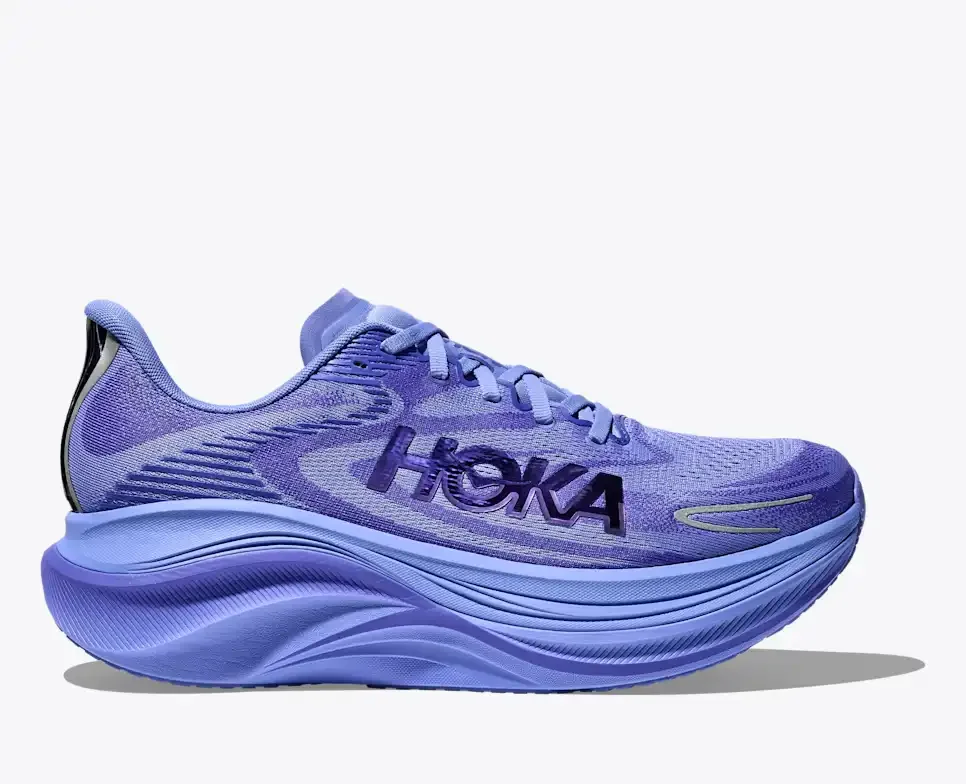
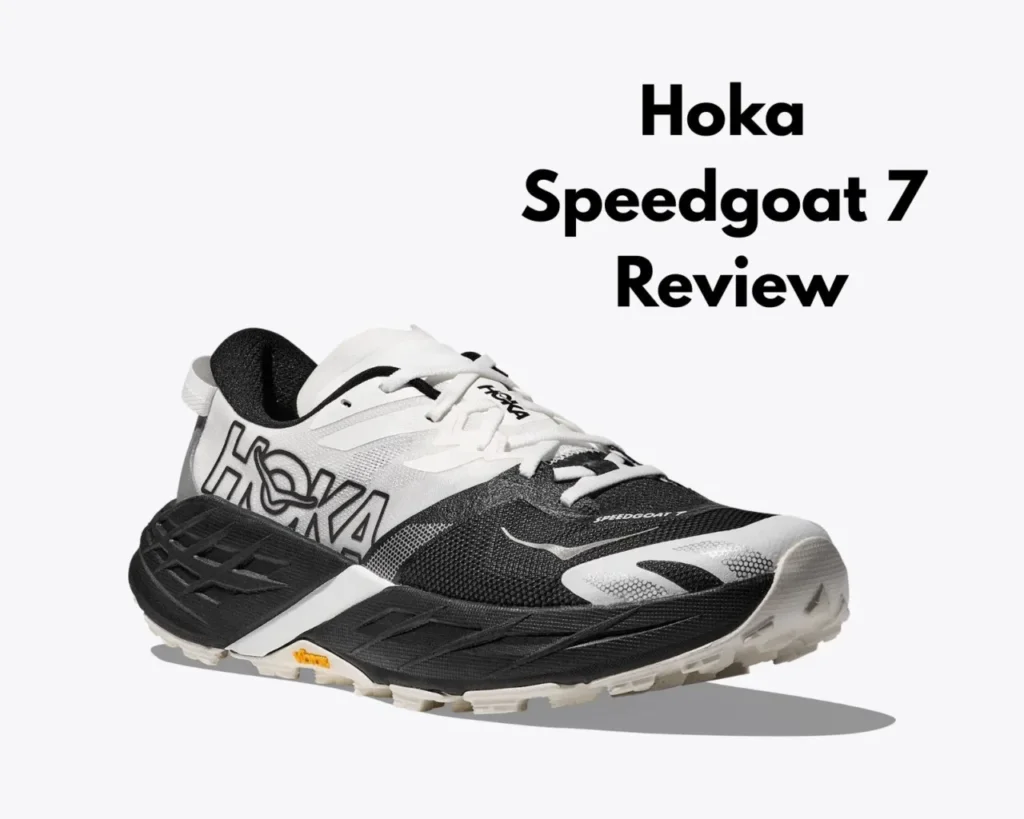
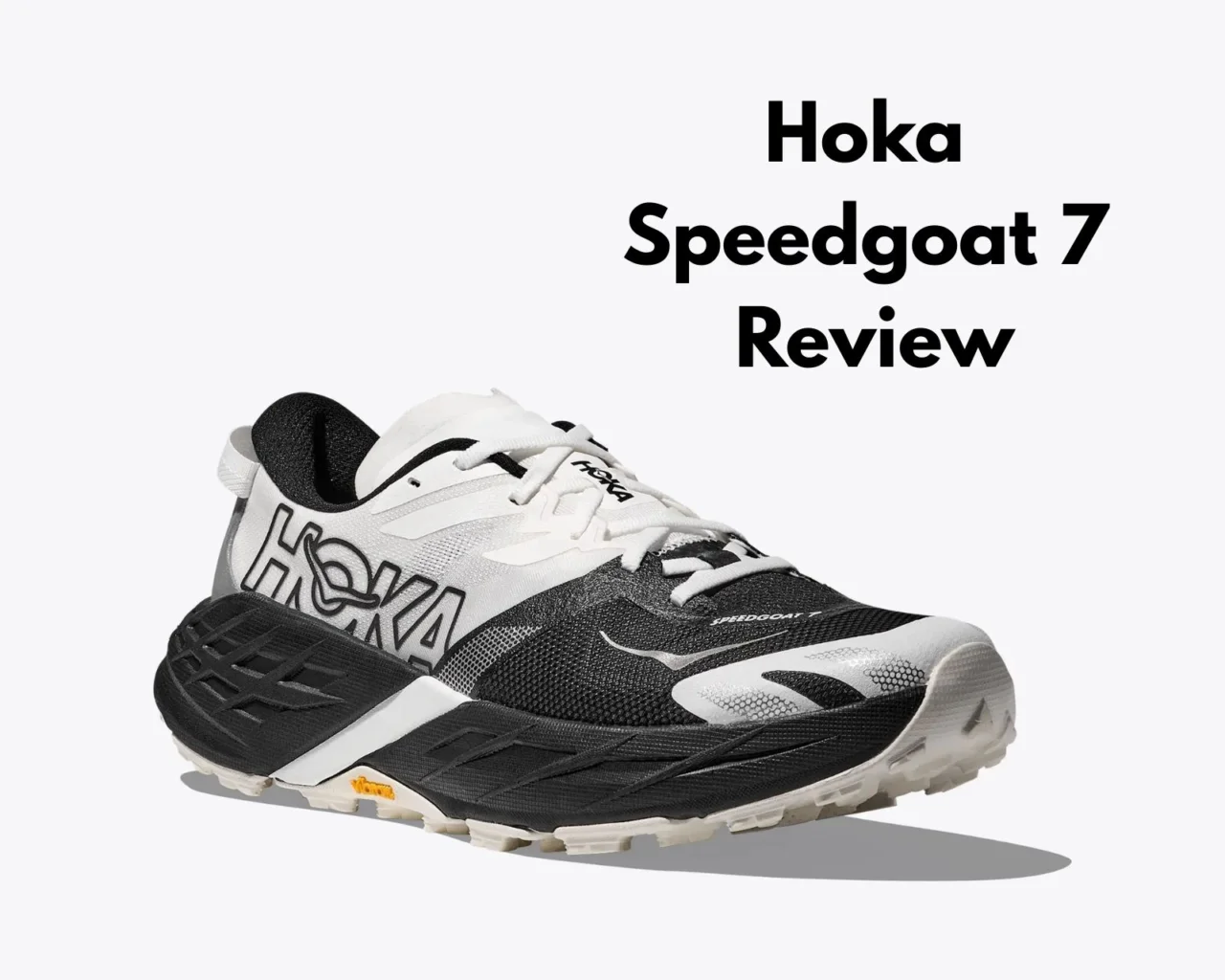
The HOKA Skyward X 2 is a premium plated super trainer for runners who want soft landings, smooth transitions and long-run protection without wearing a race-only supershoe.
Updated May 31, 2026 Reader-supported review Mobile-first guide Plated super trainer
Affiliate disclosure: GearUpToFit may earn from qualifying purchases through links on this page. Amazon links use affiliate tag papalex-20. Always confirm the exact model, size, color, seller, price, delivery date and return policy before checkout.
Quick answer
Skyward X 2 makes more sense than a fragile race shoe for runners who need weekly mileage protection.
Long runs, recovery runs and cushioned daily mileage
Price
$225
Drop
5 mm
Midsole
PEBA foam plus supercritical EVA
Plate
Convex carbon fiber plate
Who should buy the HOKA Skyward X 2?
Buy it if this product’s main use case matches your training problem, not just because it is new.
You match the stated best-for category.
You want the specific ride, feature set or technology.
You have compared the closest alternatives.
You understand the price-to-use-case tradeoff.
You will actually use it regularly or on key race days.
Who should skip it?
Skip it if your real need is simpler, cheaper, more supportive or more versatile.
You need a different support category.
You are buying hype instead of fit.
You want a cheaper all-rounder.
You need a different terrain or workout use case.
You already own a product that solves the same problem.
Performance and real-world use
This product is strongest when used for its intended role. The key is matching fit, ride, support, surface, pace and budget to the correct buyer instead of treating every new release as an automatic upgrade.
Check sizing, fit, return policy and product variation before buying. Shoes should have secure heel hold, enough toe room and the right width for your foot.
HOKA Skyward X 2 comparison table
Product
Best for
Why choose it
Why skip it
HOKA Skyward X 2
Long runs
Best match for its primary use case
Skip if fit or price does not match
Closest cheaper option
Value buyers
Lower cost and simpler use
Less premium technology
Closest premium option
Performance buyers
More advanced or specialized
Higher cost
Different category option
Different need
Better if your use case differs
Not the same buying intent
Best alternatives
Alternative
Best for
Why compare it
Cheaper daily trainer
Budget use
Better value for easy miles
Premium competitor
Performance use
Useful if you want the highest-end option
Stability/support option
Support needs
Better if neutral shoes do not work
Previous model
Discount shoppers
Potentially better if heavily reduced
Helpful images from GearUpToFit
These related visuals help show the training category, use case and buyer scenario behind this review.
Modern running shoe foam, plate and outsole technologyOutdoor running shoes for road and trail routesOutdoor running on mixed terrain
Helpful video review
This video gives a second format for judging fit, ride, use case and buying tradeoffs before purchasing.
Frequently asked questions
Is HOKA Skyward X 2 worth it?
It is worth it if its use case matches your training, fit and budget. If not, choose a simpler alternative.
Who should buy HOKA Skyward X 2?
Buy it if you match the best-for category and understand its tradeoffs.
Who should skip it?
Skip it if you need a cheaper, more supportive or more versatile product.
What is the best alternative?
The best alternative depends on whether you need value, comfort, stability, speed or different terrain support.
Related GearUpToFit guides
Use these guides to compare this product with the right category before buying.
HOKA’s official Skyward X 2 page confirms the plated super-trainer positioning, PEBA foam, EVA carrier and convex carbon plate.
AP
About this review
GearUpToFit reviews focus on practical buying decisions: who should buy, who should skip, what problem the product solves, how it compares with alternatives and whether the price makes sense for real training.
Posted inReview|Comments Off on HOKA Skyward X 2 Review 2026: Max-Cushion Carbon Super Trainer for Long Runs
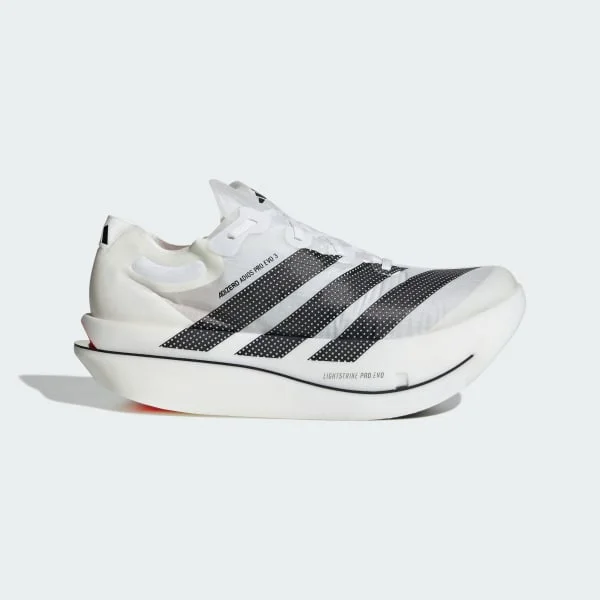
The Adidas Adizero Adios Pro Evo 3 is an extreme race-day shoe for fast runners who care about maximum marathon efficiency, sub-100g weight and elite-level propulsion more than durability or daily comfort.
Updated May 31, 2026 Reader-supported review Mobile-first guide Carbon racing shoe
Affiliate disclosure: GearUpToFit may earn from qualifying purchases through links on this page. Amazon links use affiliate tag papalex-20. Always confirm the exact model, size, color, seller, price, delivery date and return policy before checkout.
Quick answer
Adios Pro Evo 3 is a headline racing shoe, not a practical daily trainer. Buy it only if your racing goals and budget justify a $500 specialist shoe.
Who should buy the Adidas Adizero Adios Pro Evo 3?
Buy it if this product’s main use case matches your training problem, not just because it is new.
You match the stated best-for category.
You want the specific ride, feature set or technology.
You have compared the closest alternatives.
You understand the price-to-use-case tradeoff.
You will actually use it regularly or on key race days.
Who should skip it?
Skip it if your real need is simpler, cheaper, more supportive or more versatile.
You need a different support category.
You are buying hype instead of fit.
You want a cheaper all-rounder.
You need a different terrain or workout use case.
You already own a product that solves the same problem.
Performance and real-world use
This product is strongest when used for its intended role. The key is matching fit, ride, support, surface, pace and budget to the correct buyer instead of treating every new release as an automatic upgrade.
Check sizing, fit, return policy and product variation before buying. Shoes should have secure heel hold, enough toe room and the right width for your foot.
Adidas Adizero Adios Pro Evo 3 comparison table
Product
Best for
Why choose it
Why skip it
Adidas Adizero Adios Pro Evo 3
Elite racing
Best match for its primary use case
Skip if fit or price does not match
Closest cheaper option
Value buyers
Lower cost and simpler use
Less premium technology
Closest premium option
Performance buyers
More advanced or specialized
Higher cost
Different category option
Different need
Better if your use case differs
Not the same buying intent
Best alternatives
Alternative
Best for
Why compare it
Cheaper daily trainer
Budget use
Better value for easy miles
Premium competitor
Performance use
Useful if you want the highest-end option
Stability/support option
Support needs
Better if neutral shoes do not work
Previous model
Discount shoppers
Potentially better if heavily reduced
Helpful images from GearUpToFit
These related visuals help show the training category, use case and buyer scenario behind this review.
Modern running shoe foam, plate and outsole technologyOutdoor running shoes for road and trail routesOutdoor running on mixed terrain
Helpful video review
This video gives a second format for judging fit, ride, use case and buying tradeoffs before purchasing.
Frequently asked questions
Is Adidas Adizero Adios Pro Evo 3 worth it?
It is worth it if its use case matches your training, fit and budget. If not, choose a simpler alternative.
Who should buy Adidas Adizero Adios Pro Evo 3?
Buy it if you match the best-for category and understand its tradeoffs.
Who should skip it?
Skip it if you need a cheaper, more supportive or more versatile product.
What is the best alternative?
The best alternative depends on whether you need value, comfort, stability, speed or different terrain support.
Related GearUpToFit guides
Use these guides to compare this product with the right category before buying.
Adidas’ official KH7678 page confirms the shoe’s $500 pricing, Lightstrike Pro Evo foam, ENERGYRIM structure and Continental outsole details.
AP
About this review
GearUpToFit reviews focus on practical buying decisions: who should buy, who should skip, what problem the product solves, how it compares with alternatives and whether the price makes sense for real training.
Posted inReview|Comments Off on Adidas Adizero Adios Pro Evo 3 Review 2026: Is the $500 Supershoe Worth It?
Garmin Forerunner 70 Review: The Beginner Running Watch That Makes Garmin Training Simpler
A complete Garmin Forerunner 70 review covering AMOLED display, battery life, training tools, GPS, Forerunner 70 vs 170, beginner runners, value, and alternatives.
Affiliate disclosure: This article contains affiliate links. If you buy through links on this page, GearUpToFit may earn a commission at no extra cost to you. Product prices, stock, colors, sizes, sellers, and availability can change. Always confirm the exact model before buying.
Quick verdict
Buy it if: you want your first Garmin for running, workouts, sleep, and basic training guidance without paying for maps or premium multisport features.
Skip it if: you need music, Garmin Pay, advanced maps, triathlon tools, or premium race-day metrics.
Best alternative: Garmin Forerunner 170 Music if you want music and payments, Forerunner 165 if discounted, or COROS Pace 4 for value-focused runners.
How I evaluated this product
This is a spec-based review and buying analysis. This review evaluates the Garmin Forerunner 70 for the exact reader problem: whether it is worth buying compared with the closest alternatives. I checked official specifications, current marketplace availability, product positioning, fit and use-case signals, competitor comparisons, and GearUpToFit’s running-watch buying framework.
Buyer-risk check: compatibility, battery expectations, exact model year, seller, sensors, privacy settings, and feature limitations.
Comparison check: whether a cheaper, older, or more specialized alternative is better.
I do not claim personal hands-on testing unless the article states exact mileage, dates, conditions, and test setup. Until that is added, treat this as buying analysis based on verified specs, positioning, availability checks, and direct comparison logic.
Specs at a Glance: fact-checked update
Editorial update: This review was upgraded to remove generic AI-review ambiguity and lock the buying advice to the exact release details that matter for Garmin Forerunner 70. The goal is simple: clear specs, balanced criticism, and direct comparison paths instead of rewritten marketing copy.
Retail price
$249
Battery life
Up to 13 days smartwatch mode
Missing sensor
No barometric altimeter
Missing navigation sensor
No compass
Missing motion sensor
No gyroscope
Payments
No Garmin Pay
Critical fact-check notes
Do not confuse this with the Forerunner 170 Music: FR70 is the stripped-down budget model.
It lacks a barometric altimeter, compass, gyroscope, and Garmin Pay.
Its key advantage over the FR170 Music is longer 13-day battery life versus 10 days.
Price target is $249.
Who is this for?
Budget-focused runners who want Garmin basics, long battery life, and simple training tracking without paying for AMOLED/music/payment extras.
Who should skip it?
Skip it if you want Garmin Pay, richer sensors, better navigation tools, or the AMOLED/music experience. Move up to the Garmin Forerunner 170 Music.
The verdict
The Verdict: The Garmin Forerunner 70 is the budget alternative to the Forerunner 170 Music. Its value comes from a lower $249 price and longer 13-day battery life, but the cuts are serious: no barometric altimeter, no compass, no gyroscope, and no Garmin Pay.
Pros
Lower $249 price keeps it accessible.
13-day battery beats the Forerunner 170 Music rating.
Good fit for simple run tracking and basic training.
Cons
No barometric altimeter, compass, gyroscope, or Garmin Pay.
Less future-proof than the Forerunner 170 Music for serious training features.
Bottom line: Buy the Forerunner 70 if you want accurate-enough GPS training structure, Garmin Coach, and long battery life without paying for music, maps, or premium metrics you may not use yet.
Do not buy it if: Skip it if you need phone-free music, Garmin Pay, altimeter/compass features, open-water swim profiles, or more advanced performance analytics.
Category: Entry-level GPS running smartwatchBest for: Beginner runners, couch-to-5K plans, first Garmin buyers, runners upgrading from phone trackingDisplay: 1.2-inch AMOLED touchscreen reported in current launch coverageBattery: Up to 13 days in smartwatch mode reported by current launch coverageControls: Five physical buttons plus touchscreenTraining: Garmin Coach, running metrics, recovery and health tracking basics
Direct Amazon product link verified by ASIN: B0H1F6H8FN
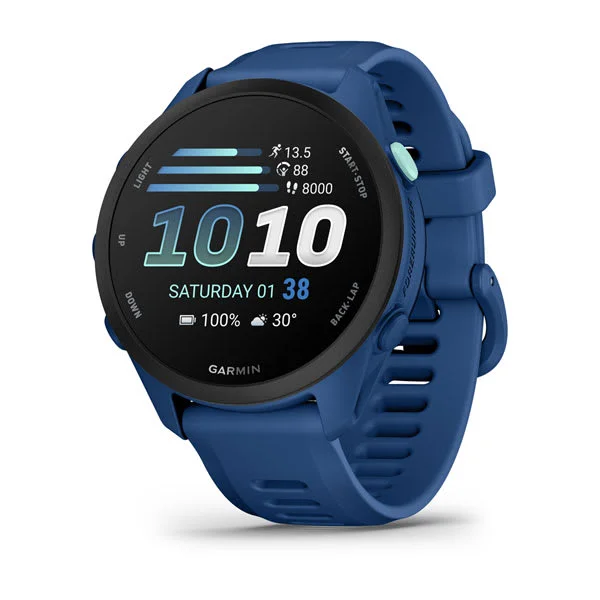
Garmin Forerunner 70 GPS running smartwatch
Best reason to buy: Buy the Forerunner 70 if you want accurate-enough GPS training structure, Garmin Coach, and long battery life without paying for music, maps, or premium metrics you may not use yet.
Category: Entry-level GPS running smartwatch
Best for: Beginner runners, couch-to-5K plans, first Garmin buyers, runners upgrading from phone tracking
Display: 1.2-inch AMOLED touchscreen reported in current launch coverage
Battery: Up to 13 days in smartwatch mode reported by current launch coverage
Controls: Five physical buttons plus touchscreen
Training: Garmin Coach, running metrics, recovery and health tracking basics
Smart features: More limited than Forerunner 170; no music edition positioning
Price and availability: Reported launch price around $249; verify live retailer price before publishing. Amazon stock, colorways, sizing, sellers, and delivery windows can change.
Buying check: confirm the exact model name, size/case size, color, seller, return policy, and whether the listing is new current-season stock before purchasing.
Garmin Forerunner 70 should be judged by how well it supports your actual training, not by how long the spec sheet looks. A runner’s watch needs to start quickly, show readable data, track GPS accurately enough for your routes, survive your battery routine, and give coaching information you can understand.
This review focuses on running use first, then daily smartwatch value. It covers battery life, GPS and heart-rate expectations, display readability, controls, app ecosystem, health features, training metrics, and the closest alternatives so you can choose the right watch without paying for features you will not use.
Buy Garmin Forerunner 70 if…
you want a watch that makes runs easier to plan, track, and review
you care about readable workout data, reliable syncing, and useful recovery guidance
the phone ecosystem and app support match the device you already use every day
you want a current model with enough features to stay useful for several seasons
Buy the Forerunner 70 if you want accurate-enough GPS training structure, Garmin Coach, and long battery life without paying for music, maps, or premium metrics you may not use yet.
Skip Garmin Forerunner 70 if…
you need multi-day expedition navigation or ultra-specific mapping tools the watch does not offer
you want the absolute longest battery life above all smartwatch features
your phone ecosystem is not compatible or would limit key features
you only need basic step tracking and would be better served by a cheaper fitness tracker
Skip it if you need phone-free music, Garmin Pay, altimeter/compass features, open-water swim profiles, or more advanced performance analytics.
Fast facts
Current launch coverage positions Forerunner 70 as Garmin’s easy-to-use entry-level GPS running smartwatch.
Forerunner 70 is reported with a 1.2-inch AMOLED display and up to 13 days of smartwatch-mode battery life.
It sits below Forerunner 170, which adds more advanced smartwatch and sensor features.
Specifications
Category
Entry-level GPS running smartwatch
Best for
Beginner runners, couch-to-5K plans, first Garmin buyers, runners upgrading from phone tracking
Display
1.2-inch AMOLED touchscreen reported in current launch coverage
Battery
Up to 13 days in smartwatch mode reported by current launch coverage
Controls
Five physical buttons plus touchscreen
Training
Garmin Coach, running metrics, recovery and health tracking basics
Smart features
More limited than Forerunner 170; no music edition positioning
Product images: side, detail, and angle views
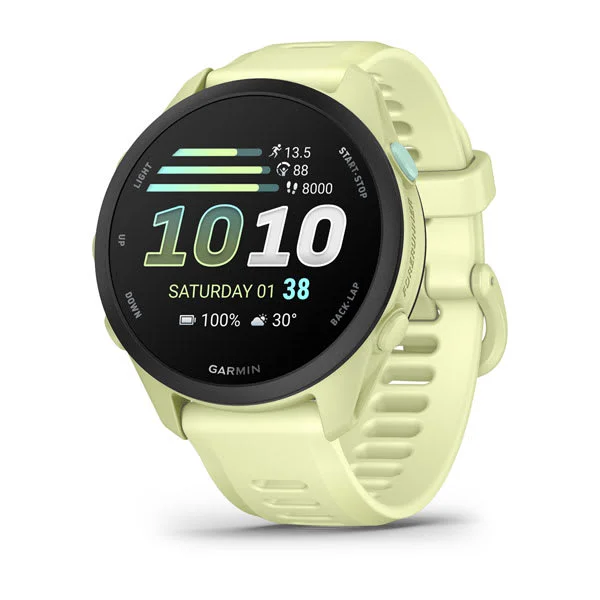
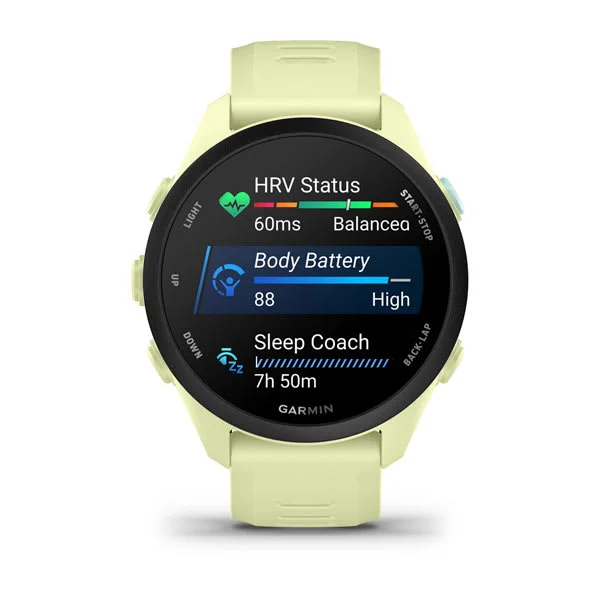
Garmin Forerunner 70 watch face: beginner Garmin running watch with AMOLED and core training tools.Garmin Forerunner 70 side profile: check button layout, case size, and everyday fit before buying.Garmin Forerunner 70 workout screen: best for beginners setting up first runs, alerts, and simple training metrics.
Running performance: what actually matters
A running watch is useful only if it reduces friction. It should find GPS quickly, start workouts without menu digging, show pace and heart rate clearly, mark laps reliably, sync without drama, and help you understand the run afterward. A giant feature list does not matter if the watch is annoying at mile six.
Current launch coverage positions Forerunner 70 as Garmin’s easy-to-use entry-level GPS running smartwatch. That gives Garmin Forerunner 70 a specific role in the current watch market. The question is whether that role matches your phone, training level, battery expectations, and the amount of coaching detail you actually want.
Simple watch test: before keeping it, start a run, customize the data screen, mark a manual lap, pause at a stoplight, sync the workout, and review the result. If any of those steps frustrate you, the watch may not be the right long-term choice.
Display, controls, and workout usability
Display quality matters because runners rarely stare at the watch for long. You need a quick glance to show pace, lap time, distance, heart rate, and workout prompts. A bright AMOLED display can be excellent, but always-on settings, gesture wake, and sunlight readability affect battery life and usability.
Controls matter just as much. Touchscreens are convenient for maps and menus, but buttons are usually better for sweaty hands, rain, gloves, and interval workouts. The best watch for training is the one you can control while tired.
Garmin Forerunner 70 should be judged by whether it makes the main training actions easy: start, stop, lap, back, scroll, resume, save, and sync. Those basics matter more than obscure features buried three menus deep.
Battery life and charging reality
Battery claims depend on GPS mode, always-on display, notifications, music, maps, cellular, sensor use, and how often you train. Treat official battery estimates as mode-specific guidance, not a promise that every runner will get the same result.
Forerunner 70 is reported with a 1.2-inch AMOLED display and up to 13 days of smartwatch-mode battery life. For most runners, the practical question is whether the watch survives your normal week without anxiety. If you run three or four times per week and charge during showers, many watches can work. If you travel, race long, hike, or hate charging, battery should move near the top of your decision list.
Choose a sports-first watch when training reliability, battery, and buttons matter more. Choose a smartwatch-first device when app integration, notifications, calls, payments, and everyday convenience matter more.
Health, recovery, and training metrics
Recovery scores, sleep scores, HRV trends, training readiness, stress tracking, wrist heart rate, and oxygen or temperature features can be helpful, but they are trend tools. They should not replace common sense or medical care.
The best use is pattern recognition. If sleep drops, resting heart rate rises, HRV trends down, and easy pace feels harder, back off. If the watch says you are ready but your body feels flat, trust the warmup and adjust.
For runners, the best metrics are the ones that change behavior: easy pace discipline, heart-rate zone awareness, recovery balance, long-run consistency, workout completion, and weekly training load. Buy Garmin Forerunner 70 only if its metrics help you make better decisions.
Garmin Forerunner 70 vs the closest alternatives
Watch comparisons are ecosystem decisions. Garmin buyers often want training depth. Apple buyers often want the best iPhone integration. Samsung buyers often want Android smart features. Suunto and COROS buyers often value endurance, battery, simplicity, and navigation.
Garmin Forerunner 70 vs Forerunner 170
Garmin Forerunner 70 vs Forerunner 55
Garmin Forerunner 70 vs COROS Pace
Garmin Forerunner 70 vs Apple Watch SE
Choose Garmin Forerunner 70 if its strengths match your daily phone use and training priorities. Choose a rival if you need better battery life, more advanced maps, stronger sport analytics, a lighter race-day feel, or better compatibility with your phone.
Accuracy, privacy, and health caution
GPS and heart-rate accuracy can vary by buildings, trees, cloud cover, wrist fit, tattoos, skin contact, cold weather, cadence lock, and software. For best wrist heart-rate results, wear the watch one finger above the wrist bone and tighten it during workouts.
If heart-rate precision matters for intervals or threshold training, pair the watch with a chest strap or reliable optical arm band. If a watch shows a health warning or unusual reading, treat it as a prompt to investigate, not as a diagnosis.
How it fits into a smart training setup
Beginner runner: use Garmin Forerunner 70 to build consistency, understand pace, and follow basic workouts without overthinking data.
Improving runner: use workout structure, recovery trends, and weekly load to avoid doing every run too hard.
Advanced runner: compare battery, mapping, sport profiles, sensor support, and training metrics before choosing it over a more specialized endurance watch.
60-second buying checklist
Phone ecosystem
Confirm iPhone/Android compatibility before buying. Some smartwatch features are limited outside the intended phone ecosystem.
Battery routine
Match the watch to how often you are willing to charge, not only the longest advertised mode.
Training depth
Buy more advanced metrics only if you will use them to adjust training. Otherwise, a simpler watch may be better value.
Accuracy setup
For hard sessions, improve heart-rate accuracy with correct fit or a chest strap.
Editorial evaluation method
This review is built around the questions runners and active buyers actually ask before purchasing: fit, comfort, durability, training role, feature usefulness, alternatives, price/value, and whether the product solves a real problem. Specifications and official features were checked against product pages and current hands-on coverage listed below.
The recommendation is intentionally practical. It avoids fake lab claims, fake long-term testing claims, and unsupported medical promises. For shoes, the safest final decision still depends on your foot shape, gait, surfaces, and return policy. For watches, it depends on phone compatibility, battery routine, sensor expectations, and training needs.
Garmin Forerunner 70 vs 170 Music, 165, COROS Pace 4, and Forerunner 970
Watch
Best for
Why choose it
Why skip it
Garmin Forerunner 70
Beginner Garmin runners
Simple, lower-cost Garmin path
Skip if music, Pay, or maps matter
Garmin Forerunner 170 Music
Runners wanting music/payments
Adds smarter convenience features
Costs more
Garmin Forerunner 165
Discount AMOLED Garmin
May be better if found cheaper
Model-year/value depends on pricing
COROS Pace 4
Battery/value runners
Strong sport-watch value
Less Garmin ecosystem depth
Forerunner 970
Advanced marathoners
Maps and premium training stack
Overkill for many beginners
Deep buying notes: fit, use case, alternatives, and buyer risk
Beginner clarity is the entire value of this review. The Forerunner 70 is for runners moving from phone tracking or a basic smartwatch to a dedicated Garmin. Before buying, decide whether missing music, Garmin Pay, maps, and triathlon tools are acceptable. For a first 5K, 10K, or half-marathon plan, simple GPS, heart-rate trends, and training guidance may be enough. For travel runs, races, or phone-free music, pay more.
Best settings for first run
Before your first run, set GPS mode, auto-lap, heart-rate alerts, display timeout, data screens, safety/contact settings, and whether you want always-on display. Do one easy calibration run before trusting pace alerts in a race.
Battery by runner type
Daily smartwatch users care about overnight charging and always-on display. Marathoners need race-day GPS confidence. Trail runners and travelers should prioritize GPS mode, map use, music drain, and cold-weather battery loss.
GPS accuracy expectations
Tall buildings, tree cover, watch fit, firmware, and satellite mode all affect GPS. Use route consistency and lap behavior rather than one perfect-looking map screenshot as your accuracy standard.
Heart-rate accuracy limits
Wrist optical heart rate is convenient, not magic. Cold weather, tattoos, loose straps, intervals, cycling grip, and high cadence can create errors. Use a chest strap or arm band if heart-rate precision changes training decisions.
Maps/workouts/music/payment decision
Do not pay for features you will never use. Maps matter for travel and trails. Music matters for phone-free runs. Payments matter if you leave your wallet at home. Structured workouts matter if you follow a plan.
iPhone vs Android compatibility
Compatibility can decide the purchase before specs do. Apple Watch is for iPhone users. Samsung is strongest for Android/Samsung users. Garmin, COROS, and Suunto are broader sport-watch ecosystems with different app trade-offs.
Who should buy cheaper previous model
Buy the older model if it has the same core sensors and features you need at a better price. Upgrade only for battery, screen, GPS, training, maps, or ecosystem features that change daily use.
Race-day setup checklist
Charge fully, update firmware early, disable unnecessary battery drains, set data screens, confirm GPS mode, pair sensors, lock buttons if needed, and start the activity with enough time for GPS lock.
Privacy and health-metric caution
Health metrics are trend tools, not medical diagnosis. Review data-sharing settings, cloud sync, third-party app permissions, and whether you are comfortable storing sleep, HRV, location, and cycle data in that ecosystem.
Ecosystem lock-in
Garmin, Apple, Samsung, Suunto, and COROS each reward staying inside their ecosystem. Consider where your historical data, routes, workouts, music, payments, and health trends will live for the next three years.
FAQ
Is Garmin Forerunner 70 good for beginner runners?
Yes, Garmin Forerunner 70 can be good for beginners if the price, phone compatibility, battery life, and training features match what you will actually use.
Can Garmin Forerunner 70 replace a phone for running?
It can reduce phone dependence for GPS tracking and workout guidance. Whether it fully replaces your phone depends on music, LTE, maps, payments, safety features, and your phone ecosystem.
How accurate is Garmin Forerunner 70?
Accuracy depends on GPS mode, route conditions, wrist fit, heart-rate sensor contact, temperature, tattoos, and software. Use trends for training decisions and consider a chest strap for high-intensity heart-rate precision.
Is Garmin Forerunner 70 better than Garmin for runners?
It depends on the model and ecosystem. Garmin often leads in training depth, Apple and Samsung often lead in smartwatch integration, and Suunto/COROS often appeal to runners who value battery and endurance features.
Who should avoid Garmin Forerunner 70?
Skip it if you need phone-free music, Garmin Pay, altimeter/compass features, open-water swim profiles, or more advanced performance analytics.
What is the best alternative to Garmin Forerunner 70?
The best alternative depends on your priority: battery life, maps, music, LTE, training metrics, phone compatibility, or price. Use the comparison section to choose the closest rival.
Final recommendation
Garmin Forerunner 70 is worth considering when its strengths match your actual use case. It is not a universal best choice for every runner or active person. It is strongest for the buyer described in the quick verdict and weakest for the buyer described in the skip section.
Best next step: compare your training needs against the checklist above, then confirm current sizing, color, seller, and return policy before buying.
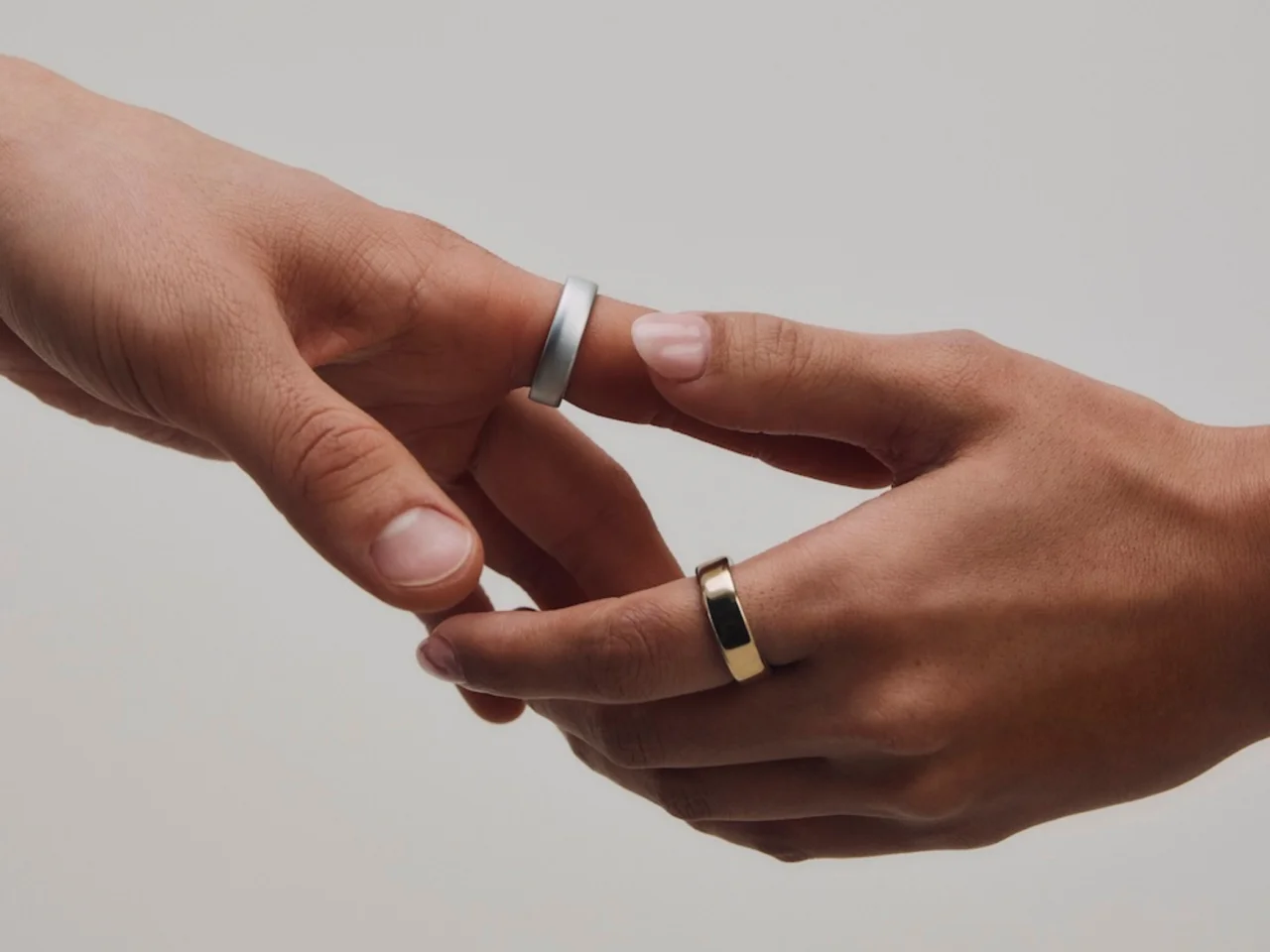
The Oura Ring 5 is a screenless recovery wearable for people who want better sleep data, HRV trends, readiness guidance and health insights without wearing a bulky watch overnight.
Updated May 31, 2026 Reader-supported review Mobile-first guide Smart ring
Affiliate disclosure: GearUpToFit may earn from qualifying purchases through links on this page. Amazon links use affiliate tag papalex-20. Always confirm the exact model, size, color, seller, price, delivery date and return policy before checkout.
Quick answer
Oura Ring 5 is the best choice if you want a recovery wearable that disappears during sleep. It is not a Garmin replacement, but it can be more useful for sleep, HRV, readiness, resting heart rate, temperature trends and recovery decisions than a watch you remove at night.
Sleep, HRV, readiness, recovery and low-friction health tracking
Starting price
$399
Membership
Oura Membership needed for full app insights
Workout role
Recovery companion, not a GPS watch
Best alternatives
Garmin, WHOOP, Apple Watch, Ultrahuman Ring Air
Who should buy the Oura Ring 5?
Buy it if your main problem is understanding recovery, not collecting more workout data.
You want overnight sleep and HRV tracking.
You already use a watch for workouts.
You care about readiness and recovery trends.
You want a low-distraction wearable.
You are comfortable with the membership model.
Who should skip it?
Skip it if you need live workout metrics or dislike subscriptions.
You need GPS pace and routes.
You need lap splits and workouts.
You dislike subscription products.
You lift heavy with rings on.
You want a medical diagnostic device.
Recovery performance for runners
The smartest setup is to track runs with a GPS watch and recovery with Oura. If HRV drops, resting heart rate rises and sleep quality falls after a hard workout, the Ring 5 gives you a practical signal to reduce intensity or protect the next easy day.
Use Oura’s current sizing process. A smart ring needs stable skin contact overnight, so sizing affects comfort and data quality.
Oura Ring 5 vs Garmin, WHOOP and Apple Watch
Product
Best for
Why choose it
Why skip it
Oura Ring 5
Sleep and recovery
Comfortable screenless overnight tracking
No GPS workouts
Garmin Forerunner
Running performance
Pace, workouts and GPS
Less discreet overnight
WHOOP
Recovery coaching
Strong strain/recovery platform
Subscription model
Apple Watch
Smartwatch lifestyle
Apps and iPhone ecosystem
Less recovery-first
Best alternatives
Alternative
Best for
Why compare it
Garmin Forerunner 70
Beginner GPS running metrics
Better for pace, routes and workouts
WHOOP
Recovery coaching
Better if you prefer band-based strain coaching
Apple Watch
Lifestyle smartwatch
Better for apps and iPhone features
Ultrahuman Ring Air
Alternative smart ring
Compare if subscription matters most
Helpful images from GearUpToFit
These related visuals help show the training category, use case and buyer scenario behind this review.
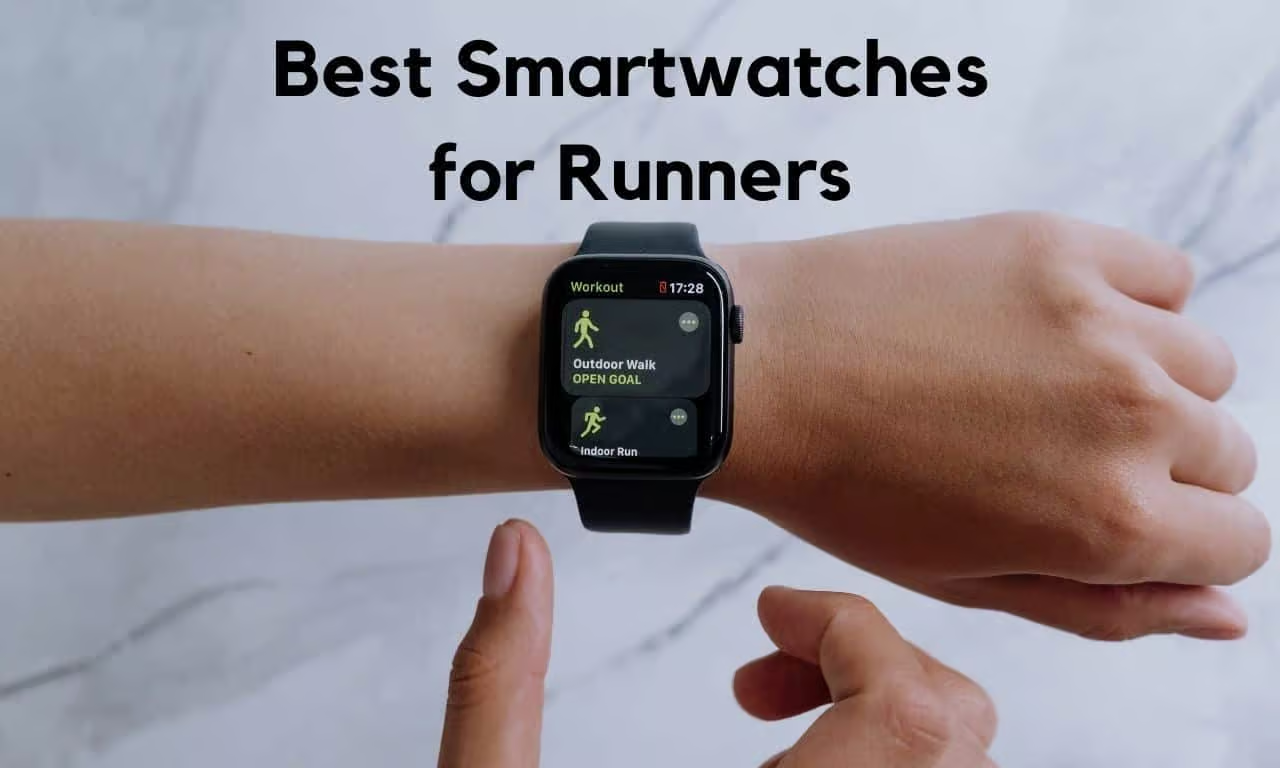
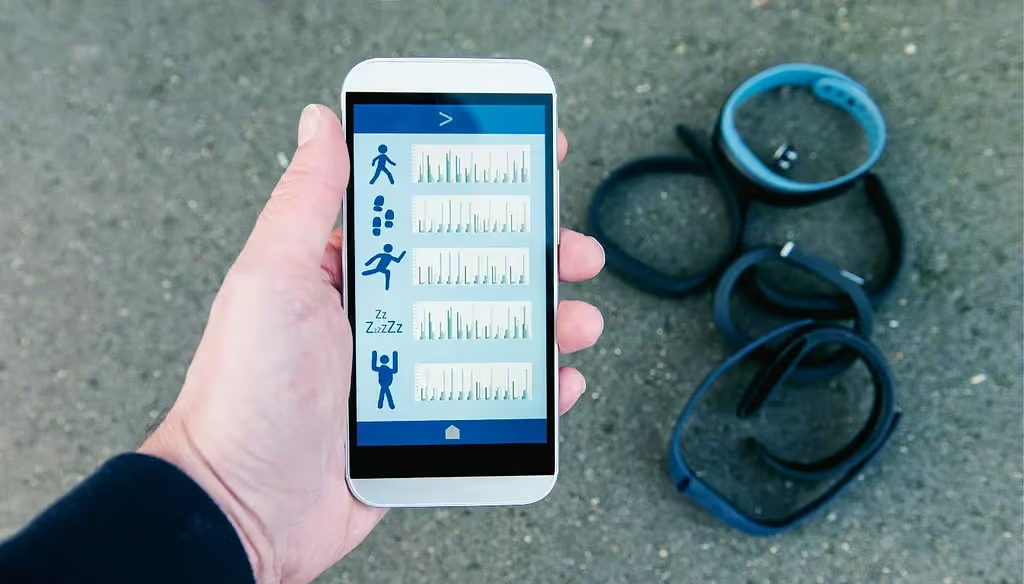
Smartwatches for runnersFitness tracker data for training and recoveryWearable technology for health and performance
Helpful video review
This video helps explain how Oura-style sleep and recovery tracking feels in daily life.
Frequently asked questions
Is Oura Ring 5 good for runners?
Yes, if you use it for sleep, HRV, readiness and recovery. It is not a GPS running watch.
Can Oura Ring 5 replace Garmin?
No. Garmin is better for workouts and GPS; Oura is better for overnight recovery.
Is Oura Ring 5 worth the subscription?
It is worth it if you use the sleep, readiness and recovery insights consistently.
Who should skip Oura Ring 5?
Skip it if you need live workout data, dislike subscriptions or do not want to wear jewelry overnight.
Related GearUpToFit guides
Use these guides to compare this product with the right category before buying.
Oura product and launch information, current wearable reporting and GearUpToFit wearable guides were used to verify product positioning and comparisons.
AP
About this review
GearUpToFit reviews focus on practical buying decisions: who should buy, who should skip, what problem the product solves, how it compares with alternatives and whether the price makes sense for real training.
Posted inReview|Comments Off on Oura Ring 5 Review 2026: Best Smart Ring for Sleep, HRV, Readiness and Recovery?
The best massage gun is not simply the strongest one. It is the one you will actually use consistently, safely, and comfortably after hard runs, strength training, long desk days, or mobility sessions. This guide ranks the top massage guns by recovery value, power, ergonomics, portability, battery life, and who each model is best for.
Affiliate disclosure: GearUpToFit is reader-supported. When you buy through qualifying Amazon links on this page, we may earn a commission at no extra cost to you. Product prices, ratings, images, availability, and offers can change quickly, so always verify the latest details on Amazon before buying.
9.4
Best overall: Theragun Prime Plus
The Theragun Prime Plus is the best overall pick for most serious recovery users because it combines strong percussive therapy, heat, premium ergonomics, and guided recovery routines. It is not the cheapest choice, but it is the most complete option if you want one recovery tool for warm-ups, post-workout soreness, and stubborn large-muscle tightness.
Best for beginners: BOB AND BRAD Q2 Mini or Theragun Prime Plus on lower settings
Heat Useful for warm-ups and comfort
5 speeds Better control for different muscles
Low first Start gently on sore tissue
Avoid bone Use on muscle, not joints or spine
Best massage guns for muscle recovery: comparison table
Use this table to narrow your choice quickly. For most people, the best massage gun is the one that balances enough power with comfort, quietness, control, and realistic daily usability.
In-depth reviews: which massage gun should you buy?
Best overall
1. Theragun Prime Plus
The Theragun Prime Plus is the best massage gun for users who want a premium, all-in-one recovery device. Its biggest advantage is the combination of percussive therapy and heat, which makes it especially useful before training when you want to warm up tight quads, glutes, calves, or upper back muscles.
The triangular handle is also a major usability win. A massage gun is only helpful if you can reach the area you need without twisting your wrist. Theragun’s handle shape makes it easier to treat the back, hips, hamstrings, traps, and calves without fighting the device.
Pros
Heated percussive therapy
Excellent ergonomic grip
Guided app routines
Premium build quality
Cons
Expensive
More than casual users may need
Start low if you are sensitive
Best for: runners, lifters, cyclists, CrossFit athletes, and anyone who wants a serious recovery tool with heat.
The Hypervolt 2 Pro is built for users who want controlled intensity and structured recovery. It offers five speed settings, five head attachments, Bluetooth app support, and a pressure sensor.
This is a strong pick if you train consistently and want a massage gun that can handle large muscle groups after hard workouts. It is less “mini and casual” and more “recovery station in your gym bag.”
Pros
Powerful full-size design
Five speed levels
App and pressure sensor support
Good for large muscle groups
Cons
Heavier than travel guns
Can be intense for tender areas
Premium pricing
Best for: athletes, strength training, high-volume runners, and people who want app-guided recovery.
The Ekrin B37v2 is the sensible performance pick: strong, ergonomic, quiet, and built around long battery life rather than flashy smart features. The angled handle helps reduce arm fatigue and makes it easier to reach your back, glutes, hamstrings, and calves.
This is the massage gun to consider if you want premium recovery performance without paying extra for an app you may never open.
Pros
Excellent battery-life claim
Comfortable angled handle
Quiet operation
Strong everyday recovery value
Cons
No major smart features
Less recognizable brand
Not as compact as mini models
Best for: users who want performance, battery life, and ergonomics without overpaying for smart features.
The BOB AND BRAD Q2 Mini is the best budget-friendly massage gun for travel, desk tension, and light-to-moderate recovery. It is compact, easy to pack, less intimidating than full-size massage guns, and popular on Amazon.
It is not the deepest full-size massage gun, but that is also part of the appeal. It is easier to hold, easier to carry, and practical for quick use after workouts or long workdays.
Pros
Compact and lightweight
Great value
USB-C charging
Five attachments
Cons
Less deep than premium models
Not ideal for very dense muscle tissue
Better for maintenance than aggressive therapy
Best for: beginners, travel, office workers, casual gym-goers, and anyone wanting an affordable recovery tool.
How to choose the best massage gun for muscle recovery
1. Amplitude: how deep the head travels
Amplitude is the distance the massage head moves in and out. Higher amplitude generally feels deeper and more percussive, while lower amplitude feels more like vibration. For large muscles such as quads, glutes, calves, and hamstrings, deeper amplitude can feel more effective. For beginners or sensitive users, a mini massage gun can be easier to tolerate.
2. Stall force: how much pressure it can handle
Stall force tells you how easily the motor stops when you press into muscle tissue. More stall force is useful for dense muscles, but bigger numbers are not always better. Too much pressure can irritate sore tissue if you use it aggressively.
3. Ergonomics: the feature people ignore until their wrist hurts
Handle shape matters. A massage gun should help you reach your traps, lower back area, glutes, hamstrings, and calves without awkward twisting. This is where Theragun and Ekrin stand out.
4. Noise level: quiet devices get used more often
If a massage gun sounds like a power tool, you will probably use it less. Quieter models are better for evening recovery, shared spaces, and consistent daily use.
5. Battery life and charging
If you travel or train often, battery life matters. USB-C charging is convenient on mini models, while full-size massage guns may use proprietary chargers.
Helpful GearUpToFit recovery resources
To build a complete recovery routine, pair your massage gun with these GearUpToFit guides:
How to use a massage gun safely for muscle recovery
Simple rule: use a massage gun on soft muscle tissue, not bone, joints, bruises, open wounds, numb areas, the front of the neck, or directly over the spine.
Post-workout 5-minute routine
Calves: 30 seconds per side using a round or soft head.
Quads: 45 seconds per side, moving slowly from above the knee toward the hip.
Hamstrings: 45 seconds per side, avoiding the back of the knee.
Glutes: 45 seconds per side on a low-to-medium setting.
Upper back/traps: 30 seconds per side, avoiding the neck and spine.
Before training
Use the lowest effective setting for 30 to 60 seconds on the muscle group you are about to train. Then move. A massage gun is not a replacement for a warm-up; it works best before dynamic mobility, easy cardio, or activation drills.
After training
Use gentle passes to reduce perceived tension and help you relax. Avoid digging aggressively into sore tissue. More pressure is not automatically better.
Safety note: Ask a qualified clinician before using a massage gun if you have blood clot risk, nerve symptoms, severe varicose veins, recent surgery, fracture, osteoporosis, cancer, pregnancy-related concerns, implanted medical devices, unexplained pain, or an acute injury.
Helpful video: how to use a massage gun properly
This video is included to help readers understand safe massage-gun use, common mistakes, and how to apply percussion therapy without overdoing pressure.
Massage gun FAQ
Do massage guns really help muscle recovery?
Massage guns may help reduce perceived soreness, stiffness, and short-term tightness, and they may improve range of motion for some users. They are best viewed as a recovery support tool, not a magic fix for poor sleep, overtraining, or injury.
What is the best massage gun overall?
For most serious recovery users, the Theragun Prime Plus is the best overall pick because it combines strong percussive therapy, heat, ergonomics, and guided routines. For value, the Ekrin B37v2 is excellent. For budget and travel, the BOB AND BRAD Q2 Mini is the easiest recommendation.
How long should I use a massage gun?
Start with 30 to 60 seconds per muscle group. A full-body recovery session does not need to be long. Five to ten focused minutes is plenty for most people.
Can I use a massage gun every day?
Many healthy users can use a massage gun daily on low or moderate settings, but you should avoid painful, bruised, inflamed, numb, or injured areas. If soreness gets worse, stop and reassess.
Should I use a massage gun before or after workouts?
You can use it before workouts for a short warm-up pass, then follow with dynamic movement. After workouts, use it gently to reduce tension and help relaxation.
Is a mini massage gun enough?
A mini massage gun is enough for travel, office tension, casual recovery, calves, forearms, traps, and light soreness. For dense muscles and deeper pressure, a full-size model usually performs better.
Final verdict: the best massage gun for muscle recovery
If you want the best overall massage gun for recovery, buy the Theragun Prime Plus. It offers the best blend of depth, heat, ergonomics, and guided recovery support.
If you train hard and want a powerful app-connected device, choose the Hyperice Hypervolt 2 Pro. If you want the best long-term value with excellent battery life, choose the Ekrin Athletics B37v2. If you want a compact, affordable massage gun for travel and everyday muscle tension, choose the BOB AND BRAD Q2 Mini.
Best overall pick: Theragun Prime Plus
The most complete choice for people who want premium recovery support, heated percussive therapy, and a comfortable handle that makes regular use easier.
Posted inReview|Comments Off on Best Massage Guns for Muscle Recovery: The Honest Buyer’s Guide for Sore Legs, Tight Hips, Back Tension & Faster Warm-Ups
GearUpToFitAffiliate disclosure: we may earn a commission if you buy through links on this page.
Updated for 2026Best for outdoor valueTitanium + sapphire
The Amazfit Falcon is not the newest adventure watch anymore — and that is exactly why it is interesting. It now sits in a rare sweet spot: premium materials, long battery life, strong GPS hardware, offline maps, and a lower street price than many flagship Garmin, Apple, Suunto, and COROS watches.
By GearUpToFit TeamUpdated May 13, 202622-minute practical review
4.3/5
Verdict: Buy it if you want a rugged, premium-feeling fitness watch for running, hiking and trail running, swimming, strength training and travel — but skip it if NFC payments, a rich app store, on-wrist calls or elite heart-rate accuracy from the optical sensor are must-haves.
Quick Answer: Should You Buy the Amazfit Falcon?
Yes — if your priority is outdoor fitness value. The Falcon gives you a titanium case, sapphire glass, 20 ATM water resistance, dual-band positioning, offline maps, detailed sport modes and multi-day battery life for far less than many flagship adventure watches.
No — if you want a tiny phone on your wrist. There is no NFC payment support, no LTE, no deep third-party app ecosystem, and no speaker/mic experience like an Apple Watch or Samsung Galaxy Watch. The Falcon is a fitness-first watch, not a lifestyle-app smartwatch.
Helpful GearUpToFit Guides to Read Next
Use these companion guides to compare the Falcon against nearby choices and understand the fitness metrics it tracks. These links are intentionally placed to help readers move deeper into the smartwatch, running, and outdoor-training topic cluster.
A lot of smartwatch reviews read like spec sheets. The Amazfit Falcon deserves a more practical question: does it make training, traveling and outdoor life easier? For many people, yes.
The Falcon feels like a watch built for someone who spends more time looking at routes, pace, elevation, lap splits, fitness-tracker data, sleep trends and recovery data than downloading apps. It is rugged without feeling like a plastic tool watch, premium without drifting into luxury-watch pricing, and simple enough that you can hand it to a runner, hiker, cyclist or gym user and they will understand the core features quickly. For broader buying context, see our best fitness trackers guide.
Its value is strongest for people who want high-end hardware but do not want to buy fully into Garmin pricing or Apple’s daily-charging routine. The titanium-and-sapphire build is the headline, but the real reason to care is longevity: this is the kind of watch that can survive trail falls, gym knocks, travel, pool sessions and daily wear without feeling fragile.
Plain-English verdict: The Falcon is best understood as a durable outdoor fitness watch with useful smartwatch extras. Do not buy it expecting Apple Watch-level apps. Buy it because you want strong battery life, robust hardware, real sport tracking, offline navigation and a premium feel at a more reasonable price.
Amazfit Falcon Key Specs
Here are the specifications that matter most for buying decisions, without drowning you in marketing language.
CaseTitanium unibody
GlassSapphire crystal
Display1.28-inch AMOLED
Water resistance20 ATM
BatteryUp to 14 days typical use
GPSDual-band, multi-satellite
MapsOffline maps + routes
Sport modes150+ modes
HealthHR, SpO₂, sleep, stress
The important story is not one individual spec. It is the combination: premium case materials, adventure-ready water resistance, long battery life and capable positioning in a watch that often costs less than flagship outdoor watches.
Design, Build Quality and Comfort
The Falcon’s design is confident but not flashy. The titanium case gives it a more premium feel than most polymer rugged watches, while the sapphire crystal is a meaningful durability upgrade if you hike, lift weights, work with your hands, or tend to scrape watches against door frames and equipment.
What feels premium
The case has the cool, solid feel you expect from titanium. The display glass looks clean and resists the tiny hairline scratches that make cheaper watches look tired after a few months. The buttons are easier to use during workouts than touch-only controls, especially with sweaty hands, wet fingers or gloves.
What might bother you
This is not a small watch. If your wrist is under about 6.5 inches, the 49mm-style presence may feel bulky, especially during sleep tracking. The included silicone strap is fine for workouts, but many users will prefer a breathable nylon strap for all-day wear and sleeping.
Buy it for
Rugged premium materials
Outdoor and travel durability
Good physical controls
Low maintenance compared with daily-charge watches
Think twice if
You have very small wrists
You want a dressy minimalist smartwatch
You dislike large round adventure watches
You need built-in cellular features
GPS, Navigation and Offline Maps
This is one of the biggest reasons to consider the Falcon. Dual-band positioning can improve tracking in hard environments such as dense cities, wooded trails, mountain valleys and areas where signals bounce off buildings or terrain. That does not mean every route will be perfect, but it gives the Falcon better hardware foundations than many older or cheaper GPS watches.
Who benefits most from the GPS setup?
Trail runners, hikers, cyclists, open-water swimmers, travelers and anyone who trains somewhere more complicated than an open track. If your routes include switchbacks, tree cover, bridges, tall buildings or unfamiliar trails, better positioning and offline navigation matter more than they do for casual neighborhood walks.
Offline maps: useful, but not Garmin-level polished
The Falcon supports offline maps and route use through the Zepp app. This is genuinely helpful for pre-planned hikes, long runs and trips where you do not want to rely on phone signal. However, Garmin still has the advantage for deeply developed mapping, routing and navigation workflows. The Falcon is strong for the price; it is not a perfect replacement for every Garmin power-user feature.
Navigation tip: Set up maps and routes before you leave home. Download the map area over Wi-Fi, sync your route, check that it opens correctly on the watch, and still carry a phone or backup navigation tool for remote hikes.
Health and Workout Tracking
The Falcon tracks the essentials: heart rate, blood oxygen, stress, sleep, workouts, training load-style insights and recovery-oriented data. It also supports a large list of sport modes, which makes it more flexible than basic fitness trackers.
Running, cycling and endurance workouts
For steady runs, casual cycling, hiking and trail running and general endurance training, the Falcon gives you the metrics most people need: pace, distance, route, heart-rate zones, elevation, calories, lap data, post-workout summaries and useful VO2 max trend context. The AMOLED screen makes those numbers easy to read at a glance.
Strength training
The Falcon’s strength-training features are useful for gym users who want rep counting and workout logging without manually entering every set. Automatic recognition is convenient, but it is not magic. Expect to correct occasional mistakes if you care about a perfect lifting log.
Heart-rate accuracy: the honest version
The optical heart-rate sensor is good enough for daily trends, resting heart rate, sleep context and many steady workouts. It is less trustworthy during hard intervals, sudden intensity changes, heavy lifting, CrossFit-style workouts and cycling sessions where wrist tension and vibration can interfere with optical readings.
If you train by heart-rate zones seriously, pair the Falcon with a Bluetooth chest strap. That single accessory solves most of the accuracy concern and lets the watch focus on display, GPS, battery and workout recording.
Important: The Falcon is a wellness and fitness device, not a medical device. Do not use SpO₂, heart-rate or stress readings to diagnose a health condition.
Battery Life: The Everyday Advantage
Battery life is where the Falcon feels freeing. Amazfit rates it at up to 14 days in typical use, and even if your real-world number is lower because you use GPS, brighter display settings and notifications, it still avoids the daily-charging anxiety that comes with many smartwatches.
Usage style
What it means
Expected experience
Light to typical use
Notifications, health tracking, some workouts, no always-on display
Longest battery life; close to the official claim for many users
Strong fit because you do not need to charge every night
The practical benefit is simple: you can go away for a long weekend, track workouts, monitor sleep and still not pack the charger if you leave with a full battery. For hikers, runners and frequent travelers, that matters more than a shiny app feature you rarely use.
Software, Zepp App and Smart Features
The Falcon runs Amazfit’s Zepp ecosystem. It is fast, efficient and focused on health, workouts and watch customization. The trade-off is that the app ecosystem is not as deep as Apple watchOS, Wear OS or Garmin Connect IQ.
What works well
Clean workout summaries and health dashboards in the Zepp app
Custom watch faces and practical widgets
Phone notifications for common apps
Sleep, stress, SpO₂ and heart-rate trend tracking
Zepp Coach for guided training plans and recommendations
Sync options with popular fitness platforms, depending on region and app version
What is missing
No NFC payments
No LTE version
No broad app store comparable to Apple Watch
No ECG-style health feature set
No true replacement for a phone during calls and app-heavy tasks
That makes the buying decision clearer. If you want a training watch, the software is good enough. If you want a wrist computer, choose another platform.
Amazfit Falcon vs Garmin, Apple, Suunto and COROS
The Falcon competes best on hardware value. Garmin still wins for training analytics and mature outdoor ecosystems. Apple wins for smartwatch features. Suunto and COROS remain strong for endurance athletes. The Falcon’s angle is simple: premium build and strong core fitness features for less money.
Training ecosystem, maps, accessories, reliability reputation
Falcon usually costs much less and still covers core needs
Apple Watch Ultra
iPhone users who want the best smartwatch
Apps, calls, payments, safety ecosystem
Falcon wins on battery-per-charge and simple outdoor value
Suunto Race / Vertical
Endurance athletes and outdoor mapping
Sport-focused platform and outdoor credibility
Falcon often offers better value for general users
COROS Apex / Vertix
Battery-focused endurance training
Training efficiency and battery reputation
Falcon has a more premium smartwatch-style feel
Helpful YouTube Video Review
For a visual look at the watch, menus, build quality and fitness features, this DesFit video is one of the more useful hands-on reviews to embed with the article.
Video credit: DesFit on YouTube. The embedded video is included for helpful visual context and does not replace our written buying advice.
Pros and Cons
Pros
Premium titanium and sapphire construction
20 ATM water resistance
Strong value versus many flagship adventure watches
Dual-band GPS and useful offline maps
Long battery life for travel and outdoor use
150+ sport modes and broad workout coverage
Works with both iPhone and Android
Cons
No NFC payments
Limited app ecosystem
Optical HR can struggle during high intensity
Large case may not suit small wrists
Mapping is useful but not Garmin-polished
No LTE and no true phone-call replacement
Not the newest model in the category
Who Should Buy It?
Buy the Amazfit Falcon if you want a rugged multisport watch for running, hiking, swimming, cycling, gym training, travel and everyday health tracking — and you care more about battery life and durable hardware than smartwatch apps.
Skip it if you want Apple Pay or Google Wallet, LTE, a huge app ecosystem, advanced medical-style health features, or the deepest training analytics available. In those cases, Apple, Garmin or Samsung may fit better. Start with our smartwatch awards guide if you want alternatives by use case.
Buying Guide: How to Decide in 60 Seconds
Choose Falcon over Apple Watch if…
You want much longer battery life, a round rugged watch, outdoor tracking and lower maintenance more than apps, calls and payments.
Choose Falcon over Garmin if…
You want premium materials and core GPS fitness features but do not need Garmin’s full training ecosystem or maps. Compare the trade-off in our Garmin Instinct 3 vs Fenix 8 breakdown.
Choose Garmin over Falcon if…
You are training seriously for races, rely on advanced metrics, or want the most mature outdoor navigation ecosystem.
Choose Apple over Falcon if…
You use an iPhone and want payments, calls, apps, safety features and daily smart convenience more than battery life.
FAQ: Amazfit Falcon Review Questions
Is the Amazfit Falcon still worth it in 2026?
Yes, if the current price is significantly below flagship adventure watches and you want premium materials, long battery life, GPS, maps and broad sport tracking. It is less compelling at full original MSRP if newer alternatives are discounted.
Is the Amazfit Falcon better than a Garmin Fenix?
For value and premium-feeling hardware at a lower price, the Falcon can be attractive. For advanced training metrics, navigation depth, accessory ecosystem and long-term athlete workflows, Garmin is still stronger.
Does the Amazfit Falcon have accurate GPS?
Its dual-band, multi-satellite hardware is strong for the price and useful in difficult GPS environments. Real-world accuracy still depends on settings, route conditions, firmware and how the watch is worn.
Does the Amazfit Falcon have NFC payments?
No. If tap-to-pay is essential, consider Apple Watch, Samsung Galaxy Watch or a Garmin model with Garmin Pay.
Can the Amazfit Falcon store music?
Some regional materials mention music features, but buyer experience can vary by firmware and market. Treat phone music controls as the safer expectation unless your exact listing confirms onboard music support.
Is the Amazfit Falcon good for swimming?
Yes. The 20 ATM water-resistance rating makes it a strong swimming and water-sports option. It is still not a substitute for a dedicated dive computer.
Is the Amazfit Falcon too big?
It may be too large for small wrists or for people who dislike rugged round watches. Smaller-watch shoppers should compare lighter options in our fitness tracker rankings. Medium and larger wrists are a better match.
What is the biggest weakness?
The biggest weakness is not one spec. It is the gap between fitness-watch features and true smartwatch features: no NFC, limited apps and less polished navigation than Garmin. Heart-rate accuracy during hard workouts is also a common complaint.
Final Verdict
The Amazfit Falcon is a smart buy when it is priced as a value alternative to flagship outdoor watches. It gives you the parts of a premium adventure watch most people actually notice — durable materials, great battery life, strong GPS hardware, water resistance, offline maps and clear workout tracking — without forcing you into the highest price tier.
It is not perfect, and the review should not pretend otherwise. Garmin still has better athlete tools. Apple still has the better smartwatch experience. A chest strap is still the right answer for serious heart-rate training, especially if you use heart-rate zones to improve running performance. But for the buyer who wants one rugged watch for training, hiking, swimming, traveling and everyday health tracking, the Falcon remains one of the more interesting premium-value options.
Best for: rugged outdoor value
Choose it if you want premium hardware and practical fitness features. Skip it if payments, apps and on-wrist phone features matter more than battery life and durability.
Still comparing options? These GearUpToFit resources support the main search intents around this review: best GPS watch, best fitness tracker, Garmin alternative, running performance, trail running, VO2 max, and outdoor gear.
Amazfit official launch and product materials were used to verify titanium, sapphire, 20 ATM water resistance, sports positioning and battery claims.
Amazon listing data was used only for live marketplace context because price, seller and review counts can change.
Independent reviews from Cycling Weekly and Android Authority informed the balanced discussion of battery, GPS, display and heart-rate limitations.
YouTube embed: DesFit’s in-depth Amazfit Falcon review, selected because it visually demonstrates the watch and compares it with premium sport watches.
G
About this review
This rewrite is structured for readers first: fast answer, honest trade-offs, comparison intent, FAQ-ready answers, product schema, review schema, video schema and mobile-safe HTML. It avoids exaggerated claims and uses flexible CSS so tables, images and embeds do not break small screens.
Posted inReview|Comments Off on Amazfit Falcon Review 2026: Premium Titanium GPS Watch, Still Worth It?
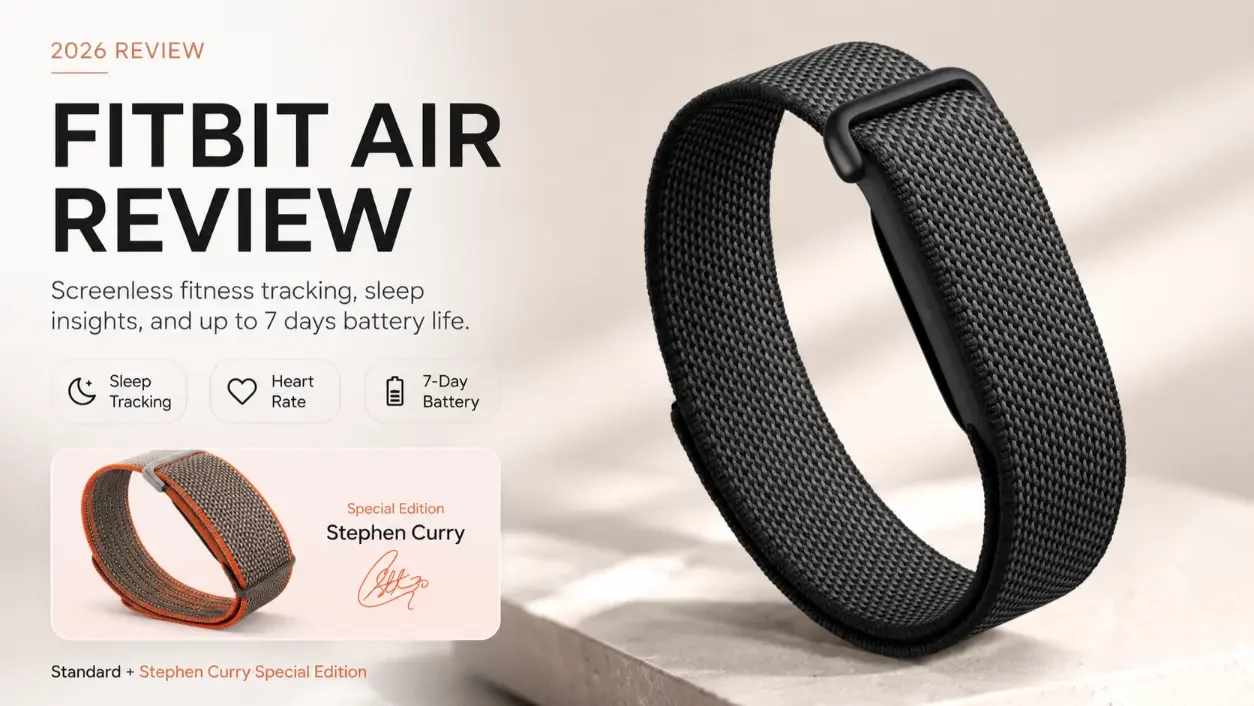
Fitbit Air is Google’s new screenless activity tracker for people who want sleep tracking, heart-rate trends, activity data, recovery insights, and AI-powered coaching without wearing another tiny phone on their wrist. This review explains who should buy it, who should skip it, how accurate the promise looks, and whether it is the right fitness tracker for weight loss, sleep, and everyday health.
Evidence-based early review
Updated: May 12, 2026
Best for: simple 24/7 health tracking
Battery: up to 7 days
Category: screenless fitness tracker
Affiliate disclosure: GearUpToFit may earn from qualifying purchases as an Amazon Associate. This does not change our recommendations. Product pricing, release dates, availability, color options, subscription terms, and included trials can change, so always confirm the final details on Amazon or Google before buying.
Quick verdict: should you buy Fitbit Air?
Fitbit Air is worth buying if you want a comfortable, low-distraction fitness tracker for daily activity, heart rate, sleep, recovery trends, and app-based coaching. It is not the best choice if you need a screen, smartwatch apps, built-in GPS maps, music controls, or live workout stats on your wrist.
Think of Fitbit Air as a health-awareness band, not a full sports watch. It is designed for people who want to improve consistency, understand their sleep, move more, and build better habits without obsessing over every notification.
Fitbit Air is built for passive, screen-free tracking: wear it, collect the data, and review your health trends in the Google Health app.
GearUpToFit early review score
8.8
early score
Fitbit Air looks like one of the most useful beginner-friendly wearables because it focuses on the behavior that matters most: wearing the tracker consistently.
The screenless design is not a limitation for everyone. For the right person, it is the point. No scrolling. No notification fatigue. No tiny menus. Just health tracking, sleep data, heart-rate trends, and coaching in the app.
Comfort & wearability: 9.4/10
Thin, light, and better suited to sleep tracking than many bulky smartwatches.
Health tracking promise: 8.8/10
Strong sensor coverage for passive tracking, including heart rate, SpO2, HRV, skin temperature variation, breathing rate, and resting heart rate.
Workout usefulness: 7.6/10
Good for general fitness, walking, gym consistency, and wellness tracking; less ideal for serious runners.
Value: 9.0/10
Strong value if you want simple screenless health tracking without smartwatch complexity.
What is Fitbit Air?
Fitbit Air is a screenless fitness tracker from Google Fitbit. Instead of showing your stats on a wrist display, it quietly tracks your health and activity in the background and sends the data to the Google Health app.
That makes Fitbit Air different from Fitbit Charge, Fitbit Inspire, Fitbit Sense, Fitbit Versa, Apple Watch, Pixel Watch, Garmin watches, and Samsung Galaxy Watch models. Those devices are built around screens. Fitbit Air is built around consistency.
This matters because the best fitness tracker is not always the one with the longest feature list. The best tracker is the one you actually wear when you walk, train, sleep, recover, and live your normal life.
Plain-English summary: Fitbit Air is for people who want health data without smartwatch distraction. It is a small, screenless wearable that tracks your body and habits in the background.
Who Fitbit Air is best for
Fitbit Air is not trying to be the most advanced sports watch. It is trying to be a simple, comfortable, low-friction tracker that helps regular people understand their sleep, movement, heart rate, and recovery.
Best for beginners
If you are new to fitness tracking, Fitbit Air avoids feature overload and gives you the core metrics that actually matter.
Best for sleep tracking
A small screenless band is easier to wear overnight than many smartwatches.
Best for habit building
Steps, Active Zone Minutes, sleep consistency, and resting heart rate can help you build better routines.
Best for low-distraction users
No screen means fewer alerts, fewer glances, and less wearable anxiety.
Buy Fitbit Air if you want:
A screenless fitness tracker that does not feel like another smartwatch.
24/7 heart-rate tracking, sleep tracking, activity tracking, and recovery trends.
A tracker that works with both iOS and Android.
Better awareness of steps, distance, calories burned, Active Zone Minutes, resting heart rate, breathing rate, HRV, skin temperature variation, and SpO2.
Google Health app insights and Google Health Coach guidance.
A cheaper alternative to some premium screenless wearables.
Skip Fitbit Air if you want:
A display for checking time, pace, notifications, or workout stats.
Built-in GPS maps or advanced running metrics.
Music controls, apps, calls, texts, or contactless payments.
A sports watch for marathon training, triathlon, hiking navigation, or performance analytics.
A wearable that gives all feedback directly on the wrist without opening an app.
Fitbit Air specs and features that actually matter
The headline feature is obvious: no screen. But the real question is whether Fitbit Air collects enough useful data to help you improve your health and fitness decisions. For most everyday users, the answer looks like yes.
Feature
What it does
Why it matters
Screenless design
No on-device display. You review insights in the Google Health app.
Less distraction, less wrist-checking, and better focus on long-term trends.
24/7 heart-rate tracking
Tracks heart rate throughout the day and during activity.
Useful for activity intensity, resting heart-rate trends, and recovery context.
Sleep tracking
Tracks overnight sleep patterns and recovery-related signals.
Sleep consistency is one of the most important foundations for fat loss, energy, and training progress.
SpO2
Estimates blood oxygen saturation trends.
Useful as a wellness signal, but not a replacement for medical testing.
HRV
Tracks heart-rate variability trends.
Can help show how stress, sleep, alcohol, illness, and hard training affect recovery.
Skin temperature variation
Tracks changes from your usual temperature pattern.
May help you notice recovery changes, poor sleep, or unusual body stress.
Active Zone Minutes
Tracks time spent at meaningful exercise intensity.
More useful than steps alone for people trying to improve cardiovascular fitness.
Up to 7 days of battery
Designed for week-long tracking between charges.
Better battery life means fewer missed nights of sleep data.
Google Health Coach
AI-powered coaching inside the Google Health ecosystem.
Helps turn wearable data into more understandable next steps.
Fitbit Air is best understood as a minimalist tracker, not a full replacement for every fitness watch or smartwatch.
What Fitbit Air should feel like in real life
The biggest advantage of Fitbit Air is psychological. Many people buy a fitness tracker because they want accountability, then end up overwhelmed by charts, notifications, battery anxiety, badges, scores, and constant wrist-checking.
Fitbit Air takes a calmer approach. You wear the tracker, live your day, and check your trends later. That makes it a better fit for people who want a healthier relationship with data.
For daily activity
Fitbit Air should work well for steps, distance, calories burned, Active Zone Minutes, walking, general workouts, and daily movement awareness. It is especially useful if your main goal is to become less sedentary.
For sleep
Sleep tracking may be the strongest reason to choose Fitbit Air over a smartwatch. A small band is easier to tolerate overnight, and longer battery life means you are less likely to charge it right when you should be collecting sleep data.
For workouts
Fitbit Air should be fine for walking, gym sessions, general cardio, cycling workouts, HIIT-style sessions, and beginner fitness tracking. It is less ideal for people who need to see pace, lap time, heart-rate zones, intervals, or route data during the workout itself.
For recovery
HRV, resting heart rate, skin temperature variation, sleep patterns, and breathing rate can help you see how your body responds to stress, training, and poor recovery. These are trend metrics, not perfect daily judgments.
How accurate is Fitbit Air?
Fitbit Air should be treated as a trend tracker, not a medical device. That is true for nearly all consumer wrist wearables. The value comes from patterns over time: your weekly sleep consistency, average resting heart rate, activity volume, workout frequency, and recovery signals.
Wrist-based sensors can struggle during rapid intervals, heavy lifting, cold weather, loose fit, tattoos, darker lighting conditions, and workouts with a lot of wrist movement. That does not make the tracker useless. It means you should avoid overreacting to one weird reading.
Best practice: Use Fitbit Air to answer better questions: “Am I moving enough this week?” “Is my resting heart rate trending up?” “Did my sleep drop before my workouts felt worse?” “Am I recovering from training or just pushing through fatigue?”
Can Fitbit Air help with weight loss?
Fitbit Air can help with weight loss, but not because it magically burns fat. It helps by making your behavior visible. You can see whether you are walking enough, sleeping enough, training consistently, and maintaining a realistic weekly activity baseline.
For fat loss, the most useful Fitbit Air metrics are step trends, Active Zone Minutes, sleep consistency, resting heart rate, and workout frequency. Calorie burn estimates should be treated carefully because wearable calorie estimates are never perfectly accurate.
The best Fitbit Air weight-loss workflow
Set a weekly step goal instead of obsessing over one perfect day.
Track Active Zone Minutes to make sure your workouts have enough intensity.
Use sleep data to identify recovery problems before they hurt motivation.
Watch resting heart-rate trends during dieting, stress, and hard training blocks.
Use body weight as a weekly average, not an emotional daily grade.
Pair wearable data with a nutrition plan, protein target, and strength training.
These are the most relevant Fitbit Air Amazon listings to check if you want Google’s screenless fitness tracker for sleep tracking, heart-rate monitoring, activity tracking, recovery trends, and Google Health coaching.
Compare color, band size, release date, availability, final price, and included trial details on Amazon before buying.
Top pick
Google Fitbit Air Screenless Activity Tracker
Best for low-distraction health tracking, sleep insights, heart-rate trends, daily activity, and simple app-based coaching.
Affiliate note: As an Amazon Associate, GearUpToFit may earn from qualifying purchases. Product prices, colors, release dates, availability, bundles, and included trials can change. Always confirm the final product details on Amazon before buying.
Helpful video: official Fitbit Air overview
This official Google video is useful because it shows the concept behind Fitbit Air: a lightweight, screenless wearable designed around passive health tracking and Google Health insights.
Fitbit Air vs Fitbit Charge, Fitbit Inspire, Pixel Watch, WHOOP, and Oura
The most important comparison is not “which wearable has the most features?” The better question is: “Which wearable matches the way I want to use health data?”
Fitbit Air data becomes more useful when you review it weekly instead of reacting emotionally to every single number.
Fitbit Air pros and cons
Pro: fewer distractions
No screen means no constant wrist-checking, fewer interruptions, and less wearable fatigue.
Pro: better sleep wearability
A small screenless band is easier to wear overnight than many full-size watches.
Pro: strong core health metrics
Heart rate, sleep, SpO2, HRV, breathing rate, resting heart rate, and skin temperature variation cover the essentials.
Pro: approachable value
The product makes sense for users who want focused health tracking instead of smartwatch complexity.
Con: no screen
You cannot glance at workout stats, pace, time, notifications, or heart-rate zones.
Con: app-first experience
The product depends heavily on the Google Health app and coaching experience.
Con: not a running watch
Serious runners should choose a dedicated GPS watch or screened fitness tracker.
Con: premium features may matter
Some deeper insights and coaching features may require Google Health Premium after the included trial.
Should you preorder Fitbit Air?
Preordering Fitbit Air makes sense if you already know you want a screenless tracker and you are comfortable using your phone for insights. It also makes sense if you want a simpler, more affordable wearable for sleep, steps, heart-rate trends, and recovery awareness.
Waiting makes sense if you want real-world accuracy testing, comfort reports, long-term battery testing, Google Health Coach reviews, subscription details, and comparisons against Fitbit Charge, WHOOP, Oura, Garmin, Apple Watch, and Pixel Watch.
Our buying advice: Buy Fitbit Air for simplicity, comfort, and passive health tracking. Do not buy it expecting a full smartwatch or advanced sports watch.
Fitbit Air FAQ
Is Fitbit Air a smartwatch?
No. Fitbit Air is a screenless fitness tracker, not a smartwatch. It is designed for passive health and activity tracking through the Google Health app.
Does Fitbit Air have a screen?
No. Fitbit Air does not have a display. This is the main difference between Fitbit Air and traditional Fitbit trackers like Fitbit Charge or Fitbit Inspire.
What does Fitbit Air track?
Fitbit Air tracks core health and fitness metrics such as heart rate, steps, distance, calories burned, Active Zone Minutes, sleep, SpO2, HRV, breathing rate, skin temperature variation, and resting heart rate.
Does Fitbit Air work with iPhone?
Fitbit Air is listed as working with iOS and Android. Before buying, confirm the latest phone and app requirements on the official retailer page.
Does Fitbit Air require Google Health Premium?
Fitbit Air includes 3 months of Google Health Premium. Basic tracking and premium coaching features may differ, so check the latest Google Health Premium terms before purchasing.
Is Fitbit Air good for weight loss?
Yes, Fitbit Air can help with weight loss by improving awareness of steps, activity, sleep, and consistency. It does not cause fat loss by itself. Nutrition, training, daily movement, and adherence still matter most.
Is Fitbit Air good for running?
Fitbit Air can support general running activity, but it is not the best option for runners who need live pace, distance, GPS maps, lap alerts, or advanced training metrics on the wrist.
Is Fitbit Air better than Fitbit Charge?
Fitbit Air is better if you want a screenless, low-distraction tracker. Fitbit Charge is better if you want a slim fitness tracker with a display.
Final verdict: Fitbit Air is for people who want health data without smartwatch noise
Fitbit Air is one of the most interesting fitness trackers because it does less on your wrist and asks you to focus on the bigger picture: better sleep, more movement, steadier habits, and clearer recovery trends.
Choose Fitbit Air if you want a simple, comfortable, screenless tracker for everyday health. Choose a traditional fitness tracker or smartwatch from our best fitness trackers guide if you need live workout stats, a display, GPS tools, or smartwatch features.
Posted inReview|Comments Off on Fitbit Air Review: A Screenless Fitness Tracker That Finally Makes Wearable Health Feel Simple Again
GearUpToFit Review | Updated June 8, 2026 | Mobile-first | No sticky or frozen elements
Quick answer: The HOKA Speedgoat 7 is for trail runners who want protective cushioning, reliable trail grip, and confidence on dirt, gravel, roots, rocks, and long trail outings. It is not the right shoe for mostly pavement, deep mud specialists, low-stack ground-feel runners, or buyers who want one road shoe for everything.
Affiliate disclosure: GearUpToFit is reader-supported. As an Amazon Associate, GearUpToFit may earn from qualifying purchases through links with the affiliate tag papalex-20. We do not hardcode Amazon prices because pricing, sellers, colors, sizes, images, ratings, and availability change.
The Speedgoat 7 should be judged by terrain, downhill control, and grip.Road trainers and trail shoes solve different problems.
Who this is for / who should skip it
Best for
shoppers who want a fast, practical, evidence-aware recommendation with clear buy, skip, fit, and alternative guidance.
Not for
readers expecting one product to solve every foot, injury, surface, budget, and training goal without fit testing.
Clear definition
A good recommendation connects the product to a specific job, explains who should avoid it, and teaches the reader how to verify fit, listing accuracy, and real-world usefulness before buying.
Decision table: choose by situation
Need
Best direction
Why it helps
Check before buying
Rocky trails
Protective trail shoe
Reduces underfoot harshness and improves confidence.
Stability on uneven landings.
Road-to-trail
Hybrid judgment
Works only if trail sections matter most.
Pavement wear and lug feel.
Long trail day
Cushion plus grip
Comfort matters under fatigue.
Heel hold and downhill control.
Deep mud
Specialist outsole
Lugs matter more than foam.
Speedgoat is not a mud spike.
Road running
Road trainer
Smoother and more durable on pavement.
Choose Clifton, not Speedgoat.
Best picks at a glance
Award
Product
Buy it if
Skip it if
Best HOKA trail pick
HOKA Speedgoat 7
trail grip and underfoot protection matter more than road smoothness.
you mostly run pavement or want a low-profile road shoe.
Traditional trail alternative
Brooks Cascadia Trail Running Shoe
you want a reliable trail shoe without a max-rocker feel.
you want the softest HOKA-style cushioning.
Nimble trail alternative
Saucony Peregrine Trail Running Shoe
you want a faster, nimbler trail feel.
you want maximum cushion and protection.
Best daily comfort
HOKA Clifton 10
you want a smooth cushioned road shoe for easy runs and walking.
you dislike rocker geometry or tall-feeling midsoles.
Amazon product verdict boxes with fixed image rendering
Each card now uses either a verified direct Amazon image URL or an exact-ASIN Amazon SiteStripe-style image creative, plus a separate affiliate CTA. This prevents blank image anchors and keeps the product image tied to the exact listing or ASIN.
Amazon prices, images, ratings, colors, sizes, sellers, and availability can change. Verify the final checkout screen before buying.
The terrain-first trail shoe framework
Trail shoes should be judged by terrain before brand. The right question is not whether Speedgoat 7 is good; it is whether your trails require its protection, outsole, and platform.
Name your terrain. Hardpack, gravel, rock, wet roots, mud, and road connectors stress shoes differently.
Test downhill fit. Trail shoes fail when toes slam forward or heels slide on descents.
Check grip honestly. No outsole guarantees safety on wet rock, ice, or deep mud.
Compare Speedgoat 6 vs 7 by problem. Upgrade only if the new fit or ride solves a real issue.
Do not use trail lugs for road-only mileage. Roads can wear out trail outsoles and feel awkward underfoot.
How we evaluated these recommendations
This page uses a reader-first review model: a product earns a recommendation only when it solves a clear buying problem, has a defined avoid case, and can be verified at checkout. The goal is not to crown the most hyped product; it is to help the right reader buy the right product with fewer returns.
Evaluation area
What we checked
Why it matters
Fit and lockdown
Toe space, heel hold, midfoot pressure, upper volume, sock compatibility, and width options.
Fit failure causes returns faster than foam preference.
Ride purpose
Daily training, speed, racing, trail, max cushion, walking crossover, or support.
Shoes should be judged by the job they are built to do.
A great treadmill shoe can be a bad trail or wet-road shoe.
Buyer safety
Exact model year, size, width, seller, return policy, and listing image.
Amazon listings can mix versions, colors, and sellers.
Accuracy rule: no hardcoded Amazon prices, no fake star ratings, no medical promises, and no claim that a shoe or wearable can diagnose, treat, or cure a condition. Amazon listings must be checked again after every major content update.
Step-by-step buying method
Define the exact job before shopping.
Shortlist two products from the decision table.
Read buy, skip, fit, and alternative notes before clicking Amazon.
Verify exact model, ASIN, size, width, color, seller, return policy, and final checkout details.
Test gradually before long runs, races, travel days, or work shifts.
Examples by situation
Long trail runner
Speedgoat 7 is a strong candidate if protection and comfort late in the run matter.
Road runner trying trails
Buy only if trail mileage becomes regular; otherwise start with a road-to-trail option.
Technical racer
Compare Peregrine or another nimble shoe if ground feel and agility matter more than cushion.
Helpful video
This video module adds a visual buying check so readers can compare fit, ride, and real-world use before ordering.
Common mistakes and troubleshooting
Buying the award instead of the use case.
Ignoring width, heel hold, or listing version.
Overvaluing softness when stability is the real need.
Skipping the return policy on shoes and wearables.
It can handle short road connectors, but it is built for trails. Choose a road shoe such as HOKA Clifton 10 if most of your mileage is pavement.
Is Speedgoat 7 good for hiking?
It can work for light hiking and fast hiking if the fit is secure and the terrain suits trail-running shoes.
Should I size up in Speedgoat 7?
Only size up if length is short. Trail shoes need downhill toe room, but too much length causes sliding and instability.
Who should skip Speedgoat 7?
Skip it if you run mostly roads, prefer low-stack ground feel, race short technical trails, or need a shoe for deep mud.
What are the best Speedgoat 7 alternatives?
Compare Brooks Cascadia for traditional protection, Saucony Peregrine for nimble grip, and HOKA Clifton 10 if you actually need a road shoe.
Sources, editorial note, and review date
Reviewed and rewritten on June 8, 2026. This page is built for search intent coverage, AI answer extraction, affiliate transparency, mobile readability, and reader-safe buying decisions. Product specifications and Amazon listings should be rechecked during each update because manufacturers and marketplace sellers can change details.
Receiving a Multiple Sclerosis diagnosis is a life-altering moment, marked by a complex interplay of clinical symptoms, advanced imaging, and specific diagnostic criteria. This comprehensive guide illuminates the intricate process, from initial symptom recognition to the conclusive confirmation using tools like MRI and the McDonald Criteria, equipping you with the knowledge to actively participate in your healthcare journey.
Understanding each step, from evaluating neurological signs to interpreting laboratory results, is crucial for both patients and caregivers navigate this challenging but manageable autoimmune condition affecting the central nervous system. We delve into the diagnostic pillars, including the critical role of imaging and lumbar puncture, and empower you with essential questions to pose to your medical team.
MS Diagnosis Requires Multiple Pillars: A definitive diagnosis integrates clinical evaluation, MRI findings, spinal fluid analysis, and evoked potentials to meet established criteria.
McDonald Criteria is Key: The 2017 Revised McDonald Criteria are the global standard, requiring evidence of ‘dissemination in space’ (lesions in different CNS areas) and ‘dissemination in time’ (lesions occurring at different times).
MRI is Central to Imaging: Magnetic Resonance Imaging (MRI) of the brain and spinal cord is indispensable, identifying characteristic white matter lesions indicative of demyelination.
Lumbar Puncture Adds Detail: A lumbar puncture (spinal tap) can reveal oligoclonal bands in cerebrospinal fluid, supporting the diagnosis by showing immune system activity unique to MS.
Proactive Patient Involvement: Asking informed questions about symptoms, diagnostic tests, treatment options, and disease management is vital for effective care and self-advocacy.
The initial symptoms of Multiple Sclerosis (MS) are often varied and unpredictable, commonly involving neurological issues such as vision problems, numbness or tingling, muscle weakness, and balance difficulties, which can wax and wane over time. These early signs are crucial because they often prompt the first medical consultations that can lead to a Multiple Sclerosis diagnosis.
MS is an autoimmune disease where the body’s immune system mistakenly attacks the protective myelin sheath covering nerve fibers in the brain and spinal cord. This damage disrupts communication between the brain and the rest of the body, leading to a wide range of symptoms. While symptoms vary greatly among individuals, some common initial presentations include:
Vision problems: Optic neuritis (painful eye movement, blurred vision, or temporary loss of vision in one eye) is often an early symptom.
Numbness or tingling: Sensations of pins and needles, electric-shock sensations (Lhermitte’s sign), or numbness in the limbs, trunk, or face.
Muscle weakness and fatigue: Unexplained weakness in a limb, often accompanied by debilitating fatigue that isn’t relieved by rest.
Balance and coordination issues: Dizziness, vertigo, clumsiness, or difficulty walking (ataxia).
Pain: Chronic pain, including neuropathic pain and spasticity-related pain.
Bladder and bowel dysfunction: Increased urinary frequency or urgency, or constipation.
Cognitive changes: Problems with memory, attention, and information processing.
Recognizing these subtle yet persistent symptoms is key, as they form the foundation for a physician to consider MS in a differential diagnosis. Early recognition and a timely Multiple Sclerosis diagnosis can significantly impact the disease course through prompt intervention with disease-modifying therapies.
Pro tip
Keep a detailed symptom journal, noting when symptoms started, their duration, severity, and any triggers. This information is invaluable for your neurologist in piecing together your clinical picture.
The Critical Role of MRI in Multiple Sclerosis Diagnosis
Magnetic Resonance Imaging (MRI) is the most sensitive and widely used imaging technique for identifying brain and spinal cord lesions characteristic of Multiple Sclerosis, playing a pivotal role in confirming a Multiple Sclerosis diagnosis. The MRI scans reveal areas of demyelination (myelin loss) and inflammation, referred to as lesions, within the central nervous system (CNS).
An MRI provides detailed images of the brain and spinal cord, allowing neurologists to detect the hallmark lesions of MS. These lesions typically appear as bright spots on certain MRI sequences (T2-weighted and FLAIR images) and can be enhanced by gadolinium contrast to highlight active inflammation. The presence, location, and evolution of these lesions are critical diagnostic indicators:
Dissemination in Space (DIS): The detection of lesions in at least two distinct areas of the CNS, such as the periventricular, juxtacortical, infratentorial, or spinal cord regions.
Dissemination in Time (DIT): Evidence of lesions occurring at different points in time, typically indicated by the simultaneous presence of gadolinium-enhancing (active) and non-enhancing (older) lesions, or new lesions on follow-up MRI scans.
“MRI has revolutionized the Multiple Sclerosis diagnosis process, allowing for earlier detection and intervention, which is crucial for preserving neurological function.”— National Multiple Sclerosis Society
Advances in MRI technology, including higher field strength magnets and improved sequences, continue to enhance the ability to precisely identify and characterize MS lesions, leading to more accurate and earlier diagnoses. While powerful, an MRI alone does not definitively diagnose MS; it must be interpreted in conjunction with a patient’s clinical symptoms and other diagnostic test results to meet the established McDonald Criteria.
90%of MS patients have active lesions visible on MRI at diagnosis
2.5Tcommon MRI field strength for detailed CNS imaging
4+distinct CNS lesion locations often needed for DIS
Deciphering the McDonald Criteria for Multiple Sclerosis
The McDonald Criteria are the internationally recognized diagnostic guidelines for Multiple Sclerosis, providing a standardized framework to confirm a Multiple Sclerosis diagnosis based on clinical evidence, MRI findings, and sometimes cerebrospinal fluid analysis. First introduced in 2001 and last revised in 2017, these criteria aim to improve diagnostic accuracy and allow for earlier diagnosis, especially in patients presenting with fewer clinical manifestations.
The 2017 Revised McDonald Criteria primarily rely on demonstrating neurological events (attacks or relapses) that are ‘disseminated in space’ (evidence of lesions in different areas of the CNS) and ‘disseminated in time’ (evidence of lesions occurring at different times). Here’s a breakdown:
Key Diagnostic Elements
Clinical attacks (relapses)
Objective clinical evidence of lesions
MRI evidence of Dissemination in Space (DIS)
MRI evidence of Dissemination in Time (DIT)
Presence of cerebrospinal fluid-specific oligoclonal bands (OCBs)
Exclusion Criteria
Symptoms better explained by another diagnosis (differential diagnosis is crucial)
Lack of objective evidence for clinical attacks or lesions
Absence of DIS or DIT requirements (unless OCBs are present)
How the McDonald Criteria are Applied
Two or more attacks, two or more lesions: Clinical evidence is sufficient.
Two or more attacks, one lesion: Needs DIS by MRI or positive OCBs.
One attack, two or more lesions: Needs DIT by MRI or second clinical attack.
One attack, one lesion (Clinically Isolated Syndrome – CIS): Needs DIS and DIT by MRI, or positive OCBs. This is the earliest possible Multiple Sclerosis diagnosis.
For progressive forms of MS, the criteria additionally require evidence of one year of disease progression independent of attacks, along with characteristic MRI findings or positive OCBs. Precise application of these criteria requires a skilled neurologist experienced in evaluating complex neurological symptoms and interpreting advanced imaging. This standardized approach has been instrumental in reducing the time to diagnosis and enabling more timely initiation of disease-modifying therapies, significantly impacting patient outcomes.
Lumbar Puncture and Other Diagnostic Tests
While MRI and clinical evaluation are paramount, a lumbar puncture (spinal tap) and other tests like evoked potentials provide additional evidence for a Multiple Sclerosis diagnosis, especially when clinical and MRI data are equivocal. A lumbar puncture involves collecting a small sample of cerebrospinal fluid (CSF) from the lower back for laboratory analysis.
The Role of Lumbar Puncture
CSF analysis in MS often reveals specific abnormalities:
Oligoclonal Bands (OCBs): The presence of two or more unique oligoclonal bands in the CSF that are absent in the blood serum is a strong indicator of an immune response within the central nervous system. OCBs are found in approximately 90-95% of people with definite MS.
Elevated IgG Index: An increased IgG index suggests elevated production of antibodies within the CNS.
The 2017 McDonald Criteria now allow a positive CSF oligoclonal band result to substitute for Dissemination in Time (DIT) in certain clinical scenarios, further emphasizing its diagnostic utility.
Evoked Potentials (EPs)
Evoked Potentials measure the electrical activity of the brain in response to sensory stimulation (visual, auditory, or somatosensory). In MS, demyelination slows nerve conduction, leading to delayed or absent responses. Visual Evoked Potentials (VEPs) are particularly useful, as optic nerve involvement is common in MS, even in the absence of current visual symptoms.
Blood Tests
While no blood test directly diagnoses MS, they are crucial for ruling out other conditions that can mimic MS symptoms, such as:
Deficiencies (e.g., Vitamin B12)
Infections (e.g., Lyme disease)
Other autoimmune disorders (e.g., lupus)
Expert insight
“The combination of clinical presentation, MRI findings, and positive CSF oligoclonal bands creates a highly specific diagnostic fingerprint for Multiple Sclerosis. Without all pieces, differentiating MS from look-alike conditions can be very challenging.” – Dr. Eleanor Vance, Senior Neurologist at Mayo Clinic
These supplementary tests reinforce a Multiple Sclerosis diagnosis by providing objective evidence of CNS inflammation and demyelination beyond what clinical examination and MRI alone might show, ensuring a more confident and accurate diagnostic conclusion, distinguishing it from conditions like Lipoedema which presents very differently.
What to Ask Your Neurologist After an MS Diagnosis
After receiving a Multiple Sclerosis diagnosis, engaging proactively with your neurologist is critical for understanding your condition, exploring treatment options, and planning for long-term health management. Asking informed questions empowers you to be a key partner in your care team.
Key Questions to Consider:
What type of MS do I have? Understanding whether you have relapsing-remitting MS (RRMS), primary progressive MS (PPMS), or another subtype influences treatment strategies and prognosis.
What specific lesions were found on my MRI, and what do they indicate about my disease activity? Ask to review your MRI images with your neurologist to better visualize the sites of demyelination.
What are my immediate treatment options? Discuss Disease-Modifying Therapies (DMTs), their benefits, potential side effects, and how they align with your lifestyle.
What is my prognosis? While challenging to predict definitively, discuss factors influencing your individual prognosis and how to manage expectations.
What lifestyle modifications can I make to manage my symptoms and overall health? Inquire about diet, exercise, stress management, and supplements that might support your well-being.
Whom else should I add to my healthcare team? This might include physical therapists, occupational therapists, speech therapists, mental health professionals, or nutritionists.
How often should I have follow-up appointments and MRI scans? Establish a monitoring schedule to track disease progression and treatment effectiveness.
Are there any clinical trials relevant to my type of MS that I should consider? Stay informed about cutting-edge research opportunities.
Where can I find support groups or resources for people with MS? Connecting with others facing similar challenges can provide invaluable emotional support and practical advice.
This comprehensive dialogue ensures you are not just a recipient of medical care but an active participant, helping to shape a personalized treatment plan that addresses your unique needs and concerns. Open communication fosters trust and optimizes your long-term health journey following a Multiple Sclerosis diagnosis.
Watch out
Be wary of unproven or ‘alternative’ treatments that promise quick cures for MS. Always discuss any new therapies or supplements with your neurologist, as some may interfere with prescribed medications or have adverse effects.
Complete MS Diagnosis Guide
Multiple sclerosis diagnosis is not based on one blood test, one symptom, or one MRI phrase. It is a careful clinical process that combines your symptom history, neurological exam, MRI findings, sometimes cerebrospinal fluid testing, and a serious effort to rule out conditions that can look like MS.
MS Diagnosis: Criteria and Timelines
For patients navigating the diagnostic path under the updated ms diagnosis criteria 2025, the focus remains on confirming central nervous system lesion dissemination. If you are wondering how long does ms diagnosis take, the timeline can range from a few weeks to several months. This depends on clinical attacks, MRI availability, and the necessity of ruling out alternative conditions.
Updated for current diagnostic guidance Patient-friendly MRI + CSF + mimics explained Medical education only
Medical disclaimer: This guide is for education only. It does not diagnose MS, rule out MS, replace a neurologist, or replace emergency care. Seek urgent medical care for new vision loss, new weakness, trouble walking, severe dizziness, new bladder/bowel problems, confusion, or sudden neurological symptoms.
Navigating an ms diagnosis early symptoms in women or men can be a stressful, confusing journey. Because the clinical presentation of multiple sclerosis can overlap with many other neurological and inflammatory disorders, understanding what tests are required is the key to obtaining an accurate, timely diagnosis.
The short answer
Doctors diagnose multiple sclerosis by looking for evidence that inflammatory damage has occurred in the central nervous system — the brain, spinal cord, and optic nerves — in a pattern typical of MS. The diagnostic framework is commonly called the McDonald Criteria. In plain English, clinicians look for damage in different CNS locations and, depending on the case, evidence that activity happened at different times. They also must make sure another condition does not better explain the symptoms or test results.
A possible MS diagnosis can feel overwhelming. The goal is not just a fast answer — it is the right answer.
What Is a Multiple Sclerosis Diagnosis?
A multiple sclerosis diagnosis is a structured medical conclusion. It means a clinician has found enough evidence that a person’s symptoms and test results fit MS better than other possible explanations.
MS is a disease of the central nervous system. In MS, immune-mediated inflammation damages myelin, the protective covering around nerve fibers. That damage can disrupt signals between the brain, spinal cord, optic nerves, and the rest of the body.
1. Clinical story
What happened, when it started, how long it lasted, whether it improved, and whether it fits a typical demyelinating event.
2. Neurological exam
Checks vision, strength, reflexes, sensation, coordination, walking, balance, and other nervous system functions.
3. MRI evidence
Looks for lesion patterns in the brain, spinal cord, and sometimes optic pathway that fit MS.
4. Supportive testing
May include lumbar puncture, evoked potentials, optical coherence tomography, and targeted lab work.
5. Excluding mimics
Doctors must consider other conditions such as B12 deficiency, migraine, NMOSD, MOGAD, infections, lupus, or vascular disease.
6. Diagnostic confidence
The best diagnosis is documented, criteria-based, and clear enough to guide treatment decisions safely.
Symptoms That May Lead a Doctor to Test for MS
MS symptoms vary because lesions can affect different parts of the central nervous system. Many symptoms are not specific to MS, so symptoms alone cannot confirm the diagnosis.
Common symptoms that may prompt evaluation
Vision loss, blurred vision, eye pain, or suspected optic neuritis
Numbness, tingling, burning, or altered sensation
Weakness in one limb or one side of the body
Balance problems, dizziness, clumsiness, or difficulty walking
Electric-shock sensation down the spine with neck flexion
Bladder urgency, retention, or bowel changes
Severe fatigue that is not explained by sleep, illness, anemia, thyroid disease, or medication
Cognitive changes, brain fog, or slowed processing
Important: These symptoms can come from many causes. A careful neurologic workup matters because treating a mimic as MS can delay the correct care.
For broader wellness context after medical evaluation, GearUpToFit’s health and recovery guides can help readers build safer routines around sleep, movement, and recovery. Lifestyle content should support medical care, not replace it.
Tests Used to Diagnose Multiple Sclerosis
There is no single “MS test” that gives a simple yes-or-no answer. Doctors combine several pieces of evidence.
Diagnostic step
What it looks for
What it can and cannot do
Medical history
Past neurological episodes, symptom timing, recovery, triggers, and relapse-like patterns.
Essential for context. Symptoms alone do not prove MS.
Can show nervous system involvement, but may be normal between attacks.
Brain MRI
Lesions in locations typical for MS, such as periventricular, cortical/juxtacortical, infratentorial, and other CNS areas.
Central tool. MRI findings must match the clinical picture and should not be over-read when nonspecific.
Spinal cord MRI
Cervical or thoracic cord lesions that may explain limb symptoms, walking problems, or bladder issues.
Helpful when symptoms suggest spinal cord involvement or brain MRI is not enough.
Lumbar puncture / CSF analysis
Inflammatory markers such as oligoclonal bands and other CSF findings.
Can support diagnosis or raise concern for another condition. Not always required.
Evoked potentials
Slowed nerve signal conduction, often in visual pathways.
Can reveal past damage that may not be obvious from symptoms alone.
Blood tests
B12 deficiency, thyroid disease, autoimmune disease, infections, and other mimics.
Blood tests do not diagnose MS. They help rule out other explanations.
Fatigue is common in many conditions, not only MS. A sleep and symptom diary can help your clinician separate neurological symptoms from sleep debt, stress, medication effects, or other health issues.
McDonald Criteria Explained in Plain English
The McDonald Criteria are the main framework neurologists use to diagnose MS. They help clinicians decide whether there is enough evidence of inflammatory demyelination in the central nervous system.
Two key ideas: space and time
Dissemination in space: evidence that lesions affect more than one characteristic area of the central nervous system.
Dissemination in time: evidence that disease activity occurred at different times, which may come from clinical attacks, MRI changes, contrast-enhancing and non-enhancing lesions, or supportive CSF evidence depending on the case and criteria used.
Ask your neurologist this: “Can you show me how my symptoms, exam, MRI, and any CSF results meet the diagnostic criteria — and what other conditions have been ruled out?”
This question is powerful because it moves the conversation away from vague phrases like “spots on MRI” and toward a criteria-based explanation.
Helpful Video: Tests Used for Diagnosing MS
This National MS Society video is a useful patient-friendly overview of the types of tests clinicians may use when evaluating possible MS.
Video: Tests for Diagnosing MS — National MS Society
Conditions That Can Mimic Multiple Sclerosis
One of the most important parts of an MS diagnosis is checking whether another condition better explains the findings. This is called the differential diagnosis.
Possible mimic
Why it can look like MS
Questions to ask
Migraine-related white matter changes
Migraine can be associated with nonspecific MRI white matter spots.
Are the MRI lesions in locations and shapes typical for MS, or are they nonspecific?
Vitamin B12 deficiency
Can cause numbness, weakness, gait changes, cognitive symptoms, and spinal cord involvement.
Was B12 checked, and were methylmalonic acid or related tests needed?
NMOSD
Can cause optic neuritis and spinal cord attacks but needs different treatment.
Should aquaporin-4 antibody testing be considered?
MOG antibody-associated disease
Can resemble optic neuritis, demyelination, or ADEM-like presentations.
Is MOG antibody testing appropriate for this pattern?
Lyme disease (infectious mimics)
Because ms mimics lyme disease in its neurological presentations (such as fatigue, numbness, and joint pain), clinicians must rule out tick-borne infections through serology or CSF testing.
Does my exposure history, tick-risk geography, or specific symptom pattern justify a Lyme titer to rule out this mimic?
Lupus, Sjögren’s, vasculitis
Autoimmune disease can involve the nervous system and mimic MS.
Are ANA, inflammatory markers, or autoimmune labs appropriate?
Small vessel ischemic disease
Can create white matter changes, especially with age, hypertension, diabetes, smoking, or vascular risk factors.
Could vascular risk factors explain the MRI findings?
Red flag: Be cautious if someone says “your MRI has white spots, so it is definitely MS” without connecting the MRI pattern to your symptoms, exam, diagnostic criteria, and mimic screening.
How Much Does an MS Diagnosis Cost?
Costs vary widely by country, insurance status, facility, imaging center, and which tests are needed. In the United States, MRI and hospital-based procedures can be expensive for uninsured or underinsured patients.
Step
Possible uninsured U.S. range
Cost-saving question
Neurology consultation
$250–$600+
Do you offer cash-pay rates or payment plans?
Brain MRI with/without contrast
$1,200–$4,000+
Can this be done at a lower-cost outpatient imaging center?
Spinal cord MRI
$1,000–$3,500+
Is cervical, thoracic, or both regions clinically needed?
Lumbar puncture + CSF labs
$1,500–$5,000+
What facility, lab, and physician fees will be billed separately?
Blood work
$200–$2,000+
Which tests are essential now, and which can wait?
Practical tip: ask for an itemized estimate before imaging or procedures. If you have insurance, confirm prior authorization, in-network status, contrast coverage, and whether radiology interpretation is billed separately.
Your 10-Step Action Plan for a More Accurate Diagnosis
Create a symptom timeline. Write down dates, duration, severity, body area affected, recovery, triggers, and whether symptoms lasted more than 24 hours.
Bring objective details. Include falls, walking distance changes, bladder symptoms, vision changes, temperature sensitivity, or missed work.
Ask whether symptoms fit a typical demyelinating event. Not every tingling episode or headache pattern points toward MS.
Ask about brain and spinal cord MRI. Brain MRI is common, but spinal imaging can be important when symptoms suggest cord involvement.
Request a criteria-based explanation. Ask how your case meets or does not meet McDonald Criteria.
Ask what mimics were considered. This is especially important if your symptoms or MRI pattern are atypical.
Discuss whether CSF testing is useful. Lumbar puncture may add evidence, especially when MRI findings are unclear.
Consider neuro-ophthalmology if vision symptoms are involved. Optic neuritis evaluation may include specialized eye testing.
Seek an MS specialist when possible. A second opinion can be valuable before starting long-term disease-modifying therapy.
Keep lifestyle support realistic. Sleep, exercise, and nutrition can support health, but they do not diagnose or treat MS by themselves.
Nutrition, hydration, and movement can support general health, but diagnosis and treatment decisions belong with a qualified clinician.
Where GearUpToFit Can Support the Reader Journey
MS diagnosis is a medical process. GearUpToFit can still support readers with evidence-aware wellness content after they have medical guidance.
No. Blood tests do not diagnose multiple sclerosis. They are mainly used to look for other conditions that can mimic MS, such as vitamin deficiencies, infections, thyroid disease, or autoimmune disease.
Can MRI alone diagnose MS?
MRI is central to MS diagnosis, but MRI alone is not the whole diagnosis. The MRI pattern must fit the clinical history, neurological exam, diagnostic criteria, and exclusion of better explanations.
Is a lumbar puncture always needed for MS diagnosis?
No, a lumbar puncture for ms diagnosis is not always mandatory if clinical history and MRI scans demonstrate dissemination in time and space under the McDonald criteria. However, spinal-fluid analysis remains a highly valuable tool to check for oligoclonal bands and rule out other inflammatory or infectious conditions.
Can an MRI rule out MS?
A frequently asked question is whether you can mri rule out ms completely. A normal MRI of the brain and spinal cord makes the diagnosis highly unlikely, effectively ruling out active demyelinating plaques in the central nervous system. However, clinicians always correlate imaging with clinical history and neurological exams to ensure no early-stage activity was missed.
What are oligoclonal bands?
Oligoclonal bands are immune-related proteins that may be found in cerebrospinal fluid. Their presence can support inflammatory activity in the central nervous system, but they are not completely specific to MS.
What are the first signs of MS?
Possible first signs include optic neuritis, numbness, tingling, weakness, balance problems, bladder changes, fatigue, and electric-shock sensations with neck flexion. These symptoms can also have other causes, so medical evaluation is essential.
How long does it take to get diagnosed with MS?
It depends. Some people are diagnosed quickly when symptoms and MRI findings are clear. Others need repeat imaging, specialist review, CSF testing, or mimic screening before the diagnosis is clear.
Can MS be misdiagnosed?
Yes. MS misdiagnosis is a recognized problem, especially when nonspecific MRI findings are treated as definite MS without enough clinical correlation. Specialist review can reduce this risk.
Should I get a second opinion?
A second opinion is reasonable if the diagnosis is uncertain, symptoms are atypical, MRI findings are vague, or major treatment decisions are being discussed.
What should I bring to my neurology appointment?
Bring a symptom timeline, MRI reports and images if available, lab results, a medication list, family history, questions, and notes about how symptoms affect walking, vision, work, sleep, bladder function, and daily life.
Can lifestyle changes replace MS treatment?
No. Sleep, exercise, stress management, and nutrition can support general health, but they do not replace diagnosis, monitoring, or disease-modifying therapy when a clinician recommends it.
Bottom Line
The best MS diagnosis is not the fastest guess. It is a documented, criteria-based conclusion that explains your symptoms, MRI pattern, neurological exam, supportive tests, and why other conditions are less likely.
Start with one practical step today: write a clear symptom timeline and bring it to your neurologist. That single document can make the entire workup more accurate.
Medical scope note: This page is informational and cannot diagnose multiple sclerosis. GearUpToFit should add a named MD/neurologist reviewer before expanding clinical diagnostic guidance. Readers should use this only to prepare questions for a licensed clinician.
Quick answers
Can GearUpToFit diagnose multiple sclerosis?
No. This page is informational and should not be used to diagnose MS. Diagnosis requires a licensed clinician, usually a neurologist.
Who should review detailed MS diagnosis content?
Detailed diagnostic content should be reviewed by a named, credentialed medical professional such as an MD neurologist. Until that review exists, GearUpToFit treats this page as informational only.
What should readers do if they suspect MS?
Readers should contact a licensed healthcare professional or neurologist. Urgent neurological symptoms require prompt medical care.
Frequently Asked Questions
Can MS be misdiagnosed?
Yes, MS can be misdiagnosed because its symptoms can mimic those of other neurological conditions or even systemic diseases. Conditions like lupus, Lyme disease, B12 deficiency, or other demyelinating disorders can present similarly. This makes thorough diagnostic testing, including MRI and CSF analysis, along with careful clinical evaluation, crucial for accurate diagnosis.
How long does it take to get a Multiple Sclerosis diagnosis?
The time to diagnosis can vary widely. Historically, it could take years due to the unpredictable nature of symptoms. However, with the 2017 Revised McDonald Criteria and advanced MRI technology, a diagnosis can sometimes be made as early as a first clinical event, known as Clinically Isolated Syndrome (CIS), if the MRI shows dissemination in space and time.
What is the earliest sign of MS?
The earliest signs of MS are often subtle and varied, but common initial symptoms include temporary vision problems (like optic neuritis), persistent numbness or tingling in parts of the body, unusual fatigue, or unexplained weakness in a limb. These symptoms tend to come and go, making them easy to dismiss initially.
Does everyone with MS have lesions on their MRI?
Almost everyone with a definite Multiple Sclerosis diagnosis will have visible lesions on an MRI of their brain and/or spinal cord. While rare cases exist where clinical presentation strongly suggests MS without typical MRI lesions, these are exceptions, and advanced imaging is a cornerstone of the diagnostic process for the vast majority of patients.
Is a lumbar puncture always required for MS diagnosis?
No, a lumbar puncture (spinal tap) is not always required for a Multiple Sclerosis diagnosis, especially if the clinical presentation and MRI findings definitively meet the McDonald Criteria for ‘dissemination in space’ and ‘dissemination in time.’ However, it is often performed when MRI findings are insufficient or to rule out other conditions.
What are oligoclonal bands in CSF?
Oligoclonal bands (OCBs) are specific antibodies found in the cerebrospinal fluid (CSF) but not in the blood serum, indicating an immune response confined to the central nervous system. Their presence is a strong biomarker for MS, found in over 90% of individuals with definitive Multiple Sclerosis, and can aid in diagnosis when other criteria are ambiguous.
Bottom Line
A Multiple Sclerosis diagnosis is a nuanced process, synthesizes a constellation of clinical symptoms, advanced imaging data, and specific laboratory findings, all guided by the internationally recognized McDonald Criteria. From the initial, often subtle, neurological indicators to the definitive identification of demyelinating lesions via MRI and confirmatory tests like lumbar puncture, each step is critical. Understanding this journey empowers individuals to engage meaningfully with their healthcare providers, ensuring accurate diagnosis and timely initiation of disease-modifying therapies. Proactive questioning and informed self-advocacy are paramount in managing this complex condition, leading to better long-term outcomes and an improved quality of life following a Multiple Sclerosis diagnosis.
Exercising in hot weather requires strategic clothing choices to prevent overheating, discomfort, and chafing, significantly impacting performance and safety. The best hot-weather workout clothes feature advanced moisture-wicking technology, lightweight construction, and breathable designs, allowing your body to regulate temperature more efficiently. This guide will help you select the ideal gear, focusing on fabrics and features that actively draw sweat away from the skin, promote airflow, and minimize friction. By gearing up with the right attire, you can maintain comfort, extend your training sessions, and avoid common heat-related issues, ensuring your fitness routine remains effective and enjoyable even when temperatures soar.
Summer training gear
Best Hot-Weather Workout Clothes: Stay Cool Without Chafing or Overheating
A gear-focused guide to breathable fabrics, fit, sweat control, sun exposure, and smart Amazon picks for hot-weather training.
Updated April 29, 2026Amazon affiliate picks includedReviewed against practical buying criteria
Quick answer
The best hot-weather workout clothes are light, breathable, quick-drying, and slightly loose without flapping. Prioritize polyester or nylon blends, mesh panels, anti-chafe seams, UPF-rated sun layers, sweat-wicking socks, and a hat or cooling towel when heat index climbs.
This guide is built for runners, walkers, lifters, cyclists, and outdoor exercisers training in heat and humidity. It keeps the recommendation logic simple: choose products only when they remove friction, improve consistency, or solve a real gap.
Affiliate disclosure:Gear Up to Fit may earn from qualifying Amazon purchases through affiliate links using store ID papalex-20. Recommendations are editorially selected and should be checked against your own sizing, medical needs, budget, and seller details.
Important safety note
Clothing helps, but it cannot make unsafe heat safe. Reduce pace, train early, hydrate, and stop if you feel chills, confusion, dizziness, or nausea.
Best Amazon product shortcuts for this guide
These boxes are not random ads. They match the buying criteria in this article and give you a fast way to compare current Amazon availability, images, labels, reviews, and pricing.
Relevant Amazon pick
BOOJO 5 Pack Workout Shirts for Men-Quick Dry Black Gym Moisture Wicking Short Sleeve T-Shirts for Running Athletic Casual
Chosen to match this guide’s buying criteria. Check the current label, sizing, ingredients, warranty, and seller details before ordering.
Choose moisture-wicking synthetics over heavy cotton.
Use lighter colors for sun exposure.
Avoid thick waistbands and rough seams on long runs.
Add UPF coverage when shade is limited.
How to decide without overbuying
Start with the bottleneck
If the real problem is inconsistent training, poor sleep, low protein, bad fit, or heat management, fix that bottleneck first. The right product should make the behavior easier, not distract from it.
Read the boring details
Serving size, return policy, sizing chart, warranty, third-party testing, ingredient amounts, and seller reputation matter more than a dramatic product name.
Avoid miracle language
Be skeptical of products promising instant fat loss, cure-level results, detox transformations, or guaranteed performance jumps. Real improvements are usually cumulative.
Buy for repeat use
The best choice is the one you will actually use every week. Comfort, taste, fit, storage, and simplicity often decide long-term results.
Product role comparison
Product type
Why it belongs here
men moisture wicking workout shirt
Best when it solves a real gap in the routine instead of adding another random purchase.
women moisture wicking workout shirt
Useful for comparison shoppers who want a simple, repeatable buying shortcut.
running shorts anti chafe
Worth checking when quality signals, serving size, materials, or warranty matter.
cooling towel for running
A supporting item that improves consistency, comfort, storage, or daily use.
Recommended buying process
Define the use case. Decide whether you need performance, recovery, convenience, safety, comfort, or nutrition support.
Compare two or three options. Do not let the Amazon results page push you into the first sponsored-looking product.
Check the label or sizing chart. Most bad purchases happen because the buyer skipped the details.
Start conservatively. With supplements, start low and verify tolerance. With gear, test it on short sessions before relying on it.
Reassess after two weeks. Keep products that improve consistency. Return or stop using anything that adds friction.
Where this fits inside your bigger fitness plan
This article should support the fundamentals: training consistency, enough protein and fiber, progressive overload, hydration, sleep, and realistic recovery. Products can help, but they should never become the plan itself.
Cotton absorbs sweat and dries slowly, which can feel heavy and increase chafing. Lightweight synthetic fabrics usually perform better in heat.
What color clothes are best for summer workouts?
Light colors reflect more sun than dark colors, but fabric weight, breathability, and fit matter more than color alone.
Do cooling towels actually help?
They can help you feel cooler around breaks or easy sessions, but they do not replace hydration, shade, and heat-aware pacing.
Bottom line
The best hot-weather workout clothes are light, breathable, quick-drying, and slightly loose without flapping. Prioritize polyester or nylon blends, mesh panels, anti-chafe seams, UPF-rated sun layers, sweat-wicking socks, and a hat or cooling towel when heat index climbs.
Use the Amazon boxes above as a fast comparison layer, then make the final decision based on your body, routine, budget, and the product details in front of you.
Frequently Asked Questions
What type of fabric is best for hot-weather workouts?
For hot-weather workouts, synthetic fabrics like polyester, nylon, and blends with spandex are generally superior. They are engineered to be moisture-wicking, meaning they pull sweat away from your skin to the fabric’s outer surface, where it can evaporate quickly. This process helps keep you dry and cool, preventing the uncomfortable clammy feeling associated with cotton or other absorbent materials in high heat.
How can I prevent chafing when exercising in the heat?
Preventing chafing in hot weather primarily involves choosing appropriate clothing and using friction-reducing products. Opt for seamless garments or those with flatlock seams to minimize irritation. Form-fitting clothes made from moisture-wicking fabrics also reduce movement and rubbing. Additionally, applying anti-chafing balms, sticks, or creams to high-friction areas like inner thighs, underarms, and bra lines can create a protective barrier.
Are there specific colors I should wear for hot-weather workouts?
Yes, wearing lighter colors is highly recommended for hot-weather workouts. Darker colors, especially black, absorb more direct sunlight and heat, potentially increasing your body temperature. Lighter colors like white, pastels, and bright hues reflect sunlight, which helps to keep you cooler. This simple choice can make a noticeable difference in your comfort during outdoor activities in the sun.
Should my hot-weather workout clothes be loose or tight?
Both loose-fitting and form-fitting (but not constricting) garments can be effective, depending on the specific activity and your personal preference. Loose-fitting clothing allows for maximum airflow and can feel breezy. Form-fitting, moisture-wicking apparel, however, can be more effective at drawing sweat away from the skin, which is crucial for evaporative cooling. Ultimately, the best choice minimizes friction and maximizes sweat management for your activity.
What features should I look for in hot-weather running shorts?
For hot-weather running shorts, look for lightweight, breathable, and moisture-wicking materials like polyester or nylon. Features such as built-in briefs or liners made from anti-chafing fabric are crucial. Mesh panels or laser-cut perforations enhance ventilation. Also, consider shorts with small zippered pockets for essentials and reflective elements for visibility during early morning or late evening runs.
Posted inFitness|Comments Off on Best Hot-Weather Workout Clothes: Cool, Chafe-Free & Performance