COROS Pace 4 In-Depth Review: What’s New, Real-World Accuracy, and Who Should Buy It

The COROS Pace 4 is a compact, value-focused GPS sports watch that brings several meaningful hardware updates over its predecessor while staying within a budget-friendly price bracket. I spent weeks running, swimming, and cycling with the COROS Pace 4 to see how those upgrades translate into everyday use, training accuracy, and battery life. Below I break down the specs, the things that really matter, how it compares to both the Pace 3 and the Pace Pro, and who should consider buying one.

Editor’s Choice
★★★★☆
(1000+)


COROS PACE 4 Ultralight Sport GPS Watch, 1.2

Official Visit the COROS Store Asset

GPS Sports Watch

COROS PACE 4 Ultralight Sport GPS Watch, 1.2″ AMOLED Touchscreen,19 days of dail

“A compact, performance-first sports watch that hits a sweet spot for runners wanting AMOLED and high accuracy without a premium price.”
1.2 inch 1500 nit AMOLED display
Battery life up to 15 days in typical smartwatch use
Updated wrist optical heart rate sensor
Microphone for voice pins and RPE capture
Market Price
$249.00


Check Price

Technical Intelligence
Does the COROS Pace 4 have offline maps?
No, offline maps are reserved for the COROS Pace Pro.

Can the action button be customized?
Currently, it is customizable within sport modes but has limited functionality in general smartwatch mode.

Quick overview: what the COROS Pace 4 changes

The standout changes on the COROS Pace 4 are easy to list and quickly explain why this model matters. It moves the series from MIP to an AMOLED display, adds an updated optical heart rate sensor and a microphone, introduces an action button, and tweaks the hardware and battery profile. Price is slightly higher than the Pace 3 but positioned to nudge buyers who want offline maps toward the Pace Pro.
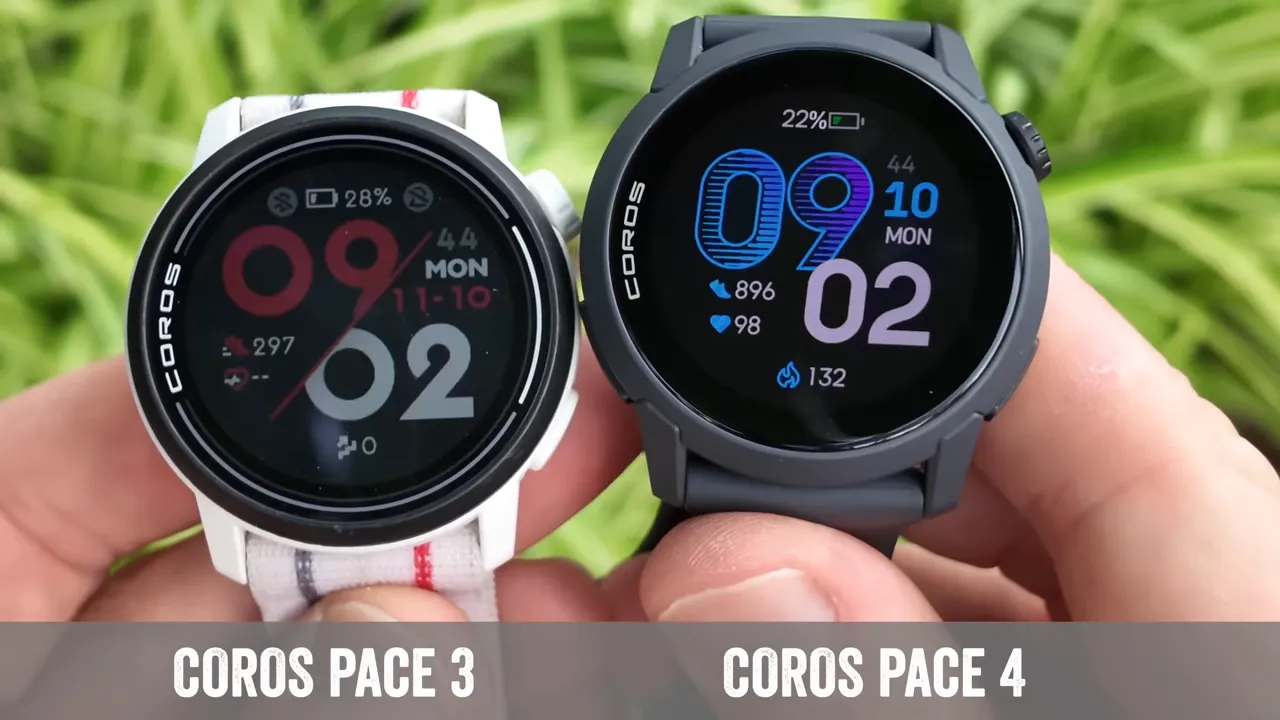
Close-up comparison of COROS Pace 3 and COROS Pace 4 watch faces showing the brighter AMOLED display on the Pace 4.

Editor’s Choice
★★★★☆
(1000+)


COROS PACE 3 GPS Sport Watch - Lightweight, Comfortable Running Watch, 17-Day Ba

Official Visit the COROS Store Asset

GPS Sports Watch

COROS PACE 3 GPS Sport Watch – Lightweight, Comfortable Running Watch, 17-Day Ba

“The best budget value for athletes who prefer the legacy MIP display technology.”
Budget-friendly price point of $199
Memory-in-Pixel (MIP) display for high efficiency
Market Price
$199.00


Check Price

Key specifications at a glance

  • Display: 1.2 inch 1500 nit AMOLED
  • Weight: 40 g with default silicone strap; 32 g with optional nylon
  • Thickness: 11.8 mm
  • Bands: Standard 22 mm quick-release
  • Sensors: Updated wrist optical heart rate sensor
  • Connectivity: GPS/GLONASS/Galileo multi-band options (Max Satellite Mode available)
  • Microphone: Yes (no speaker)
  • Water resistance: Swim-capable (but offline maps not included)
  • Price at launch: $249 (varies by region)
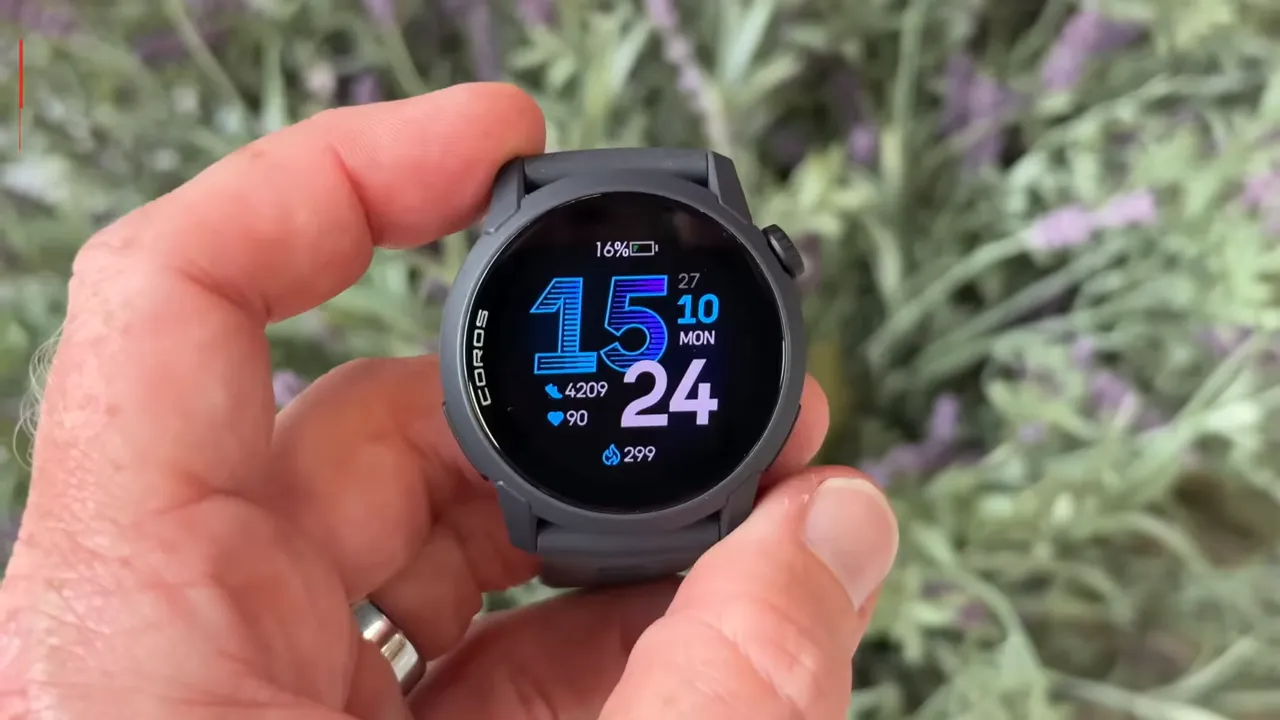
Close-up of the COROS Pace 4 being held toward the camera showing the watch face and light-colored strap

AMOLED display: great visibility, different battery trade-offs

The COROS Pace 4 switches to a bright 1500 nit AMOLED panel. In daily use the screen looks much sharper than the Pace 3 and is perfectly readable in strong Mediterranean sunlight. The display size is technically slightly smaller than the previous model—1.2 inch versus 1.3 inch—but pixel density is much higher, so the visual experience is a net win.

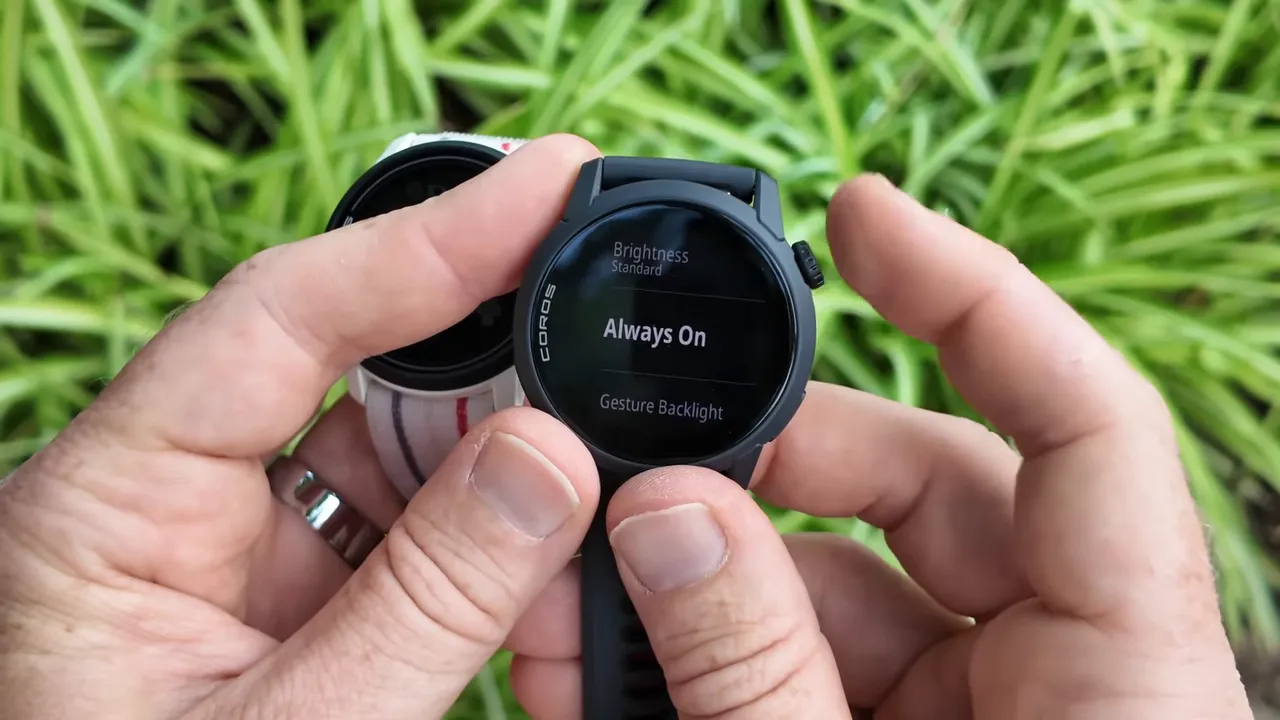
AMOLED does change the battery equation. In my testing the GPS battery life figures line up with COROS’ claims: the new model outperforms the Pace 3 in GPS runtime across modes. If you use gesture-based activation (screen off when wrist down) you can see battery life similar to the older Pace 3—around 15 days of typical smartwatch use. If you insist on always-on display, expect around six days. I personally keep Always On active because I want the time visible at a glance, but your mileage will vary with usage and satellite mode selection.
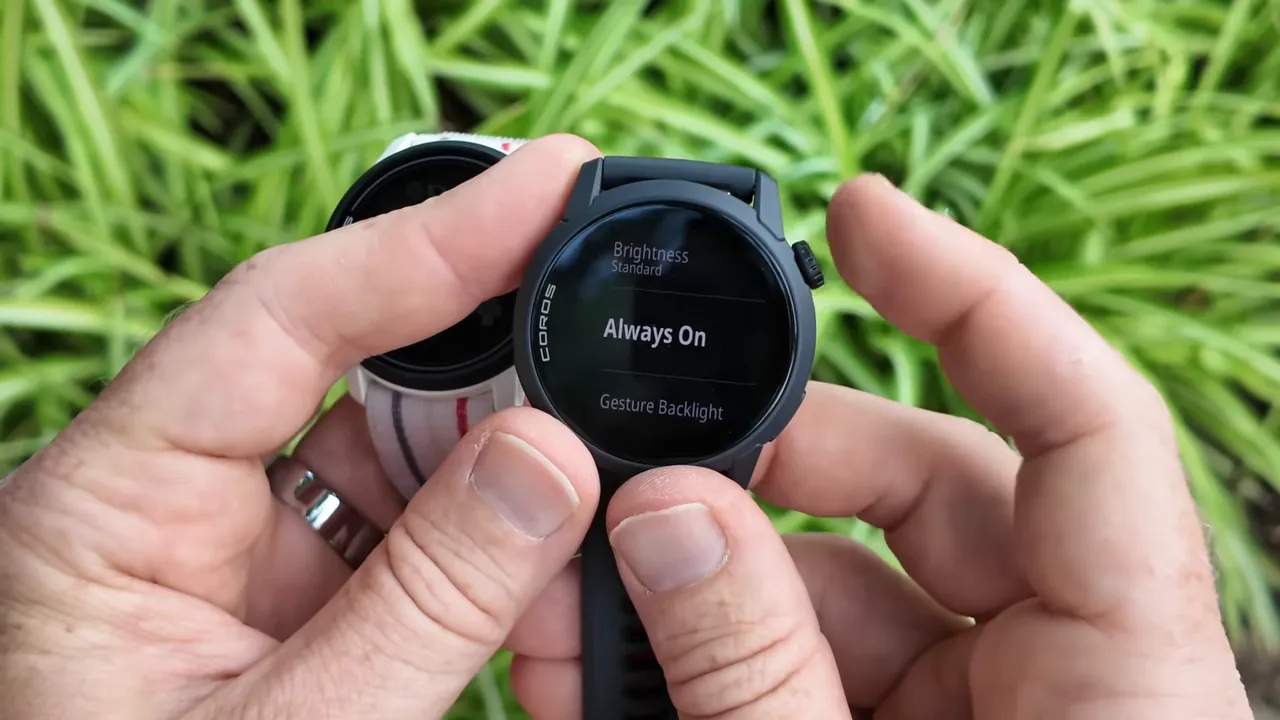
Close-up of COROS Pace 4 watch showing display settings with the 'Always On' option highlighted.

Heart rate sensor and algorithm: meaningful improvement

COROS updated the optical heart rate sensor and, crucially, the algorithms that interpret sensor data. This combo matters more than raw hardware. Across steady runs, interval sessions, and tempo efforts I found the heart rate readings very accurate and closely matched a chest strap reference in most cases.
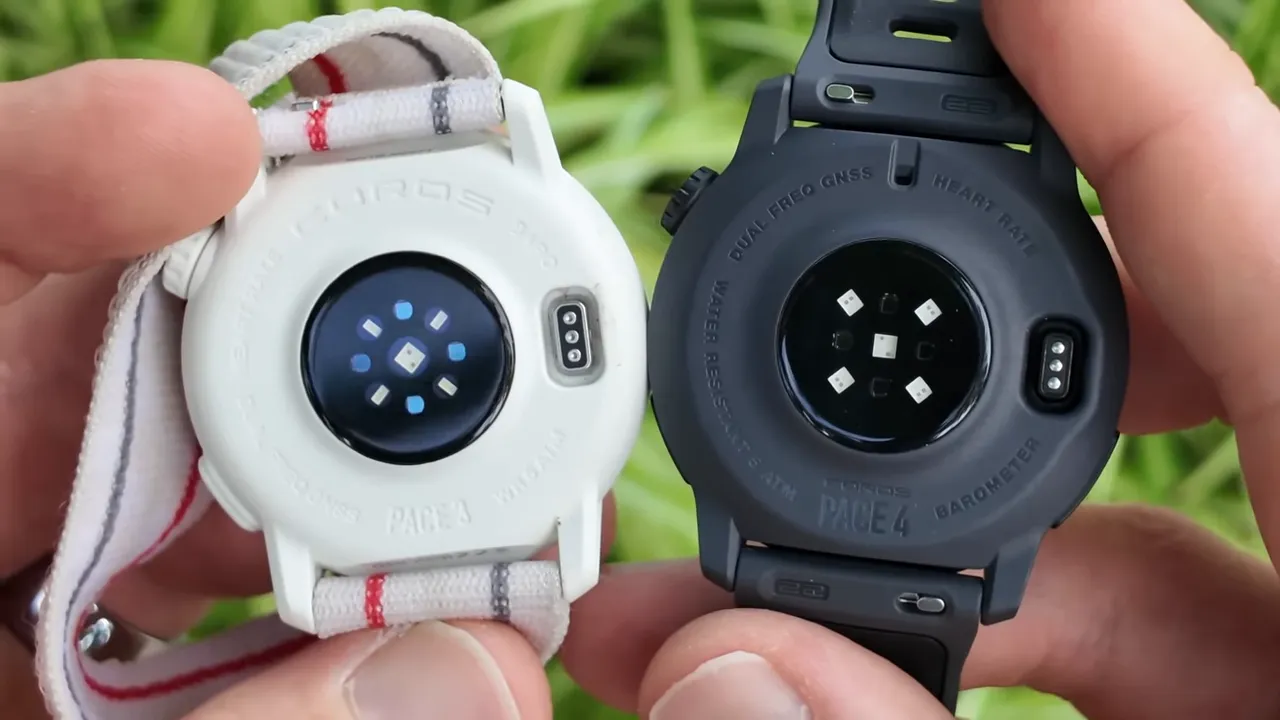
Back-to-back comparison of two COROS watches showing the optical heart rate sensors on the Pace 3 (white) and Pace 4 (black).

There were only isolated blips—one notable jump around the 10-minute mark on a trail run—but the majority of workouts showed very tight agreement. The Pace 4 even outperformed an Apple Watch Ultra 3 on certain interval sessions in matching chest strap data. For athletes who use heart rate to drive training zones, the COROS Pace 4 is now a solid contender for reliable wrist-based HR tracking.

Editor’s Choice
★★★★☆
(1000+)


Apple Watch Ultra 3 [GPS + Cellular 49mm] Running & Multisport Smartwatch w/Rugg

Official Visit the Apple Store Asset

Smartwatch

Apple Watch Ultra 3 [GPS + Cellular 49mm] Running & Multisport Smartwatch w/Rugg

“Mentioned as a high-end competitor for tracking accuracy comparison.”
Used as a comparison point for heart rate accuracy during interval sessions
Market Price
$799.00


Check Price

Action button, microphone, voice pins, and RPE

COROS added an action button and a microphone to the Pace 4. The button is handy during activity—long press to record voice pins or quickly stash notes. The microphone records short voice memos that are transcribed and saved into the activity summary. Quality is good and the transcription is a welcome touch.
COROS Pace 4 side view showing the action button and AMOLED screen with menu options, finger pointing to the crown

New to this model is the ability to capture perceived exertion (RPE) via voice immediately after a workout. You can leave a short spoken note like “felt good, slight hill in last 2k” and it appears in the activity file. For some athletes and coaches this can replace text notes or WhatsApp voice messages after big sessions and makes post-workout context easier to capture. For me personally I rarely use voice RPE, but I can see its value for coached athletes and anyone who wants richer workout context without fiddling with a phone.

COROS Pace 4 displaying 'Recording' with a timer and audio waveform while held in hand

One frustration: COROS has not yet exposed action button customization for non-sport modes. Right now the button does nothing outside activities. COROS announced plans to add broader customization but at the time of testing it was still limited to sport-specific actions. That feels like a missed opportunity for general utility.

Price and model positioning: Pace 3 and Pace Pro in the lineup

The COROS Pace 4 launches at $249. That’s a modest increase over the COROS Pace 3, now discounted to $199, while the Pace Pro has been repositioned at $299. From a product strategy perspective this is smart: the Pace Pro’s core differentiator is offline maps and COROS is using that feature to justify the $50 premium. If you want maps, the jump to the Pace Pro is logical. If you do not, the Pace 4 captures most new hardware benefits at a lower price than the Pro and better specs than the Pace 3.
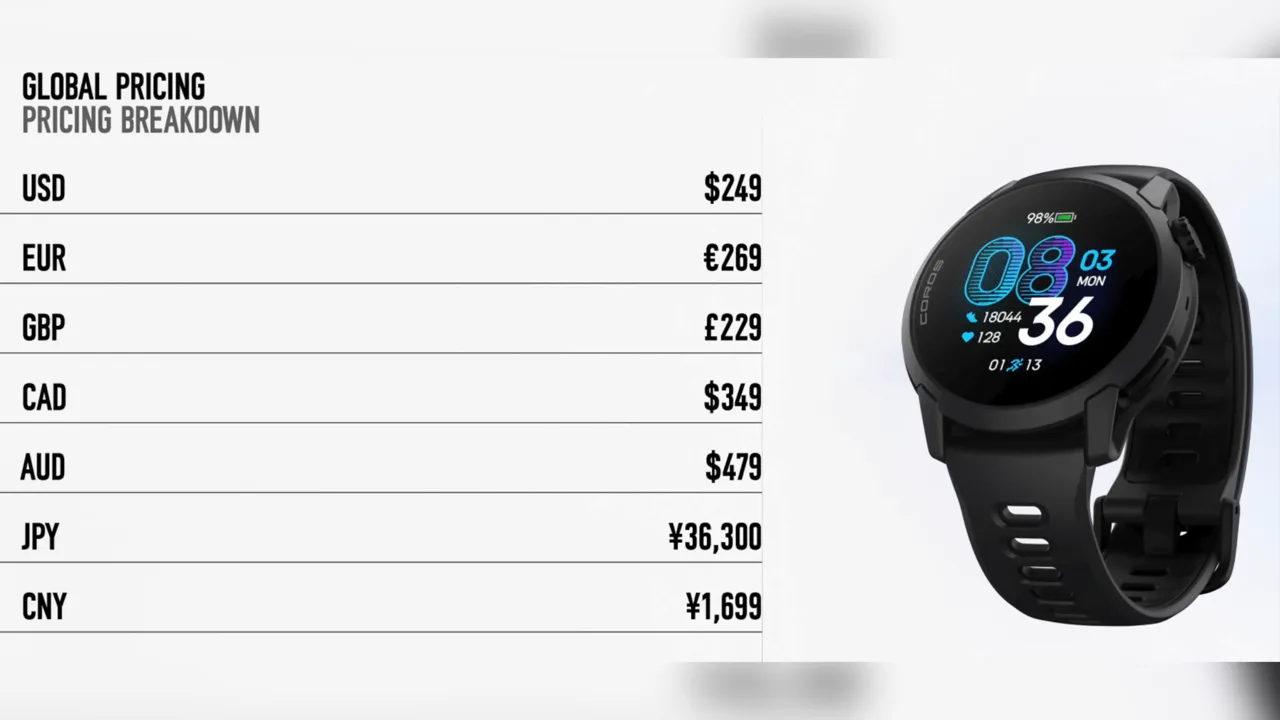
Global pricing table with regional currencies and a rendered image of the COROS Pace 4 watch on the right.

That said, the pricing dynamic is competitive. Garmin frequently discounts its watches, and some models in that ecosystem offer a polished user experience with more day-to-day features at similar price points during sales. When Garmin models are on promotion the Pace 4’s value calculus can shift. But outside sale periods, the COROS lineup looks well balanced: budget Pace 3, feature-forward Pace 4, and mapping-enabled Pace Pro.

Real-world GPS and workout accuracy: what I found

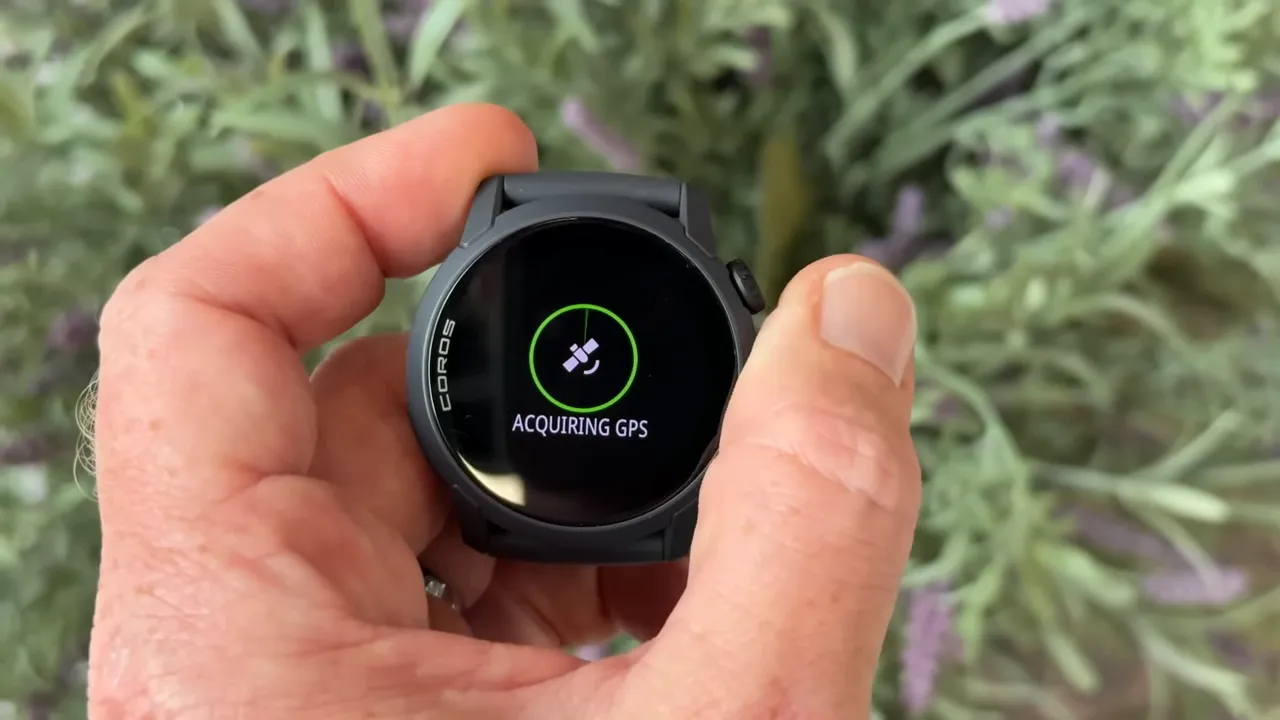
GPS and HR accuracy are two of the most important factors for a training watch. I tested the COROS Pace 4 across trail runs, tempo runs, interval sessions, outdoor rides, indoor cycling, and open water swims.
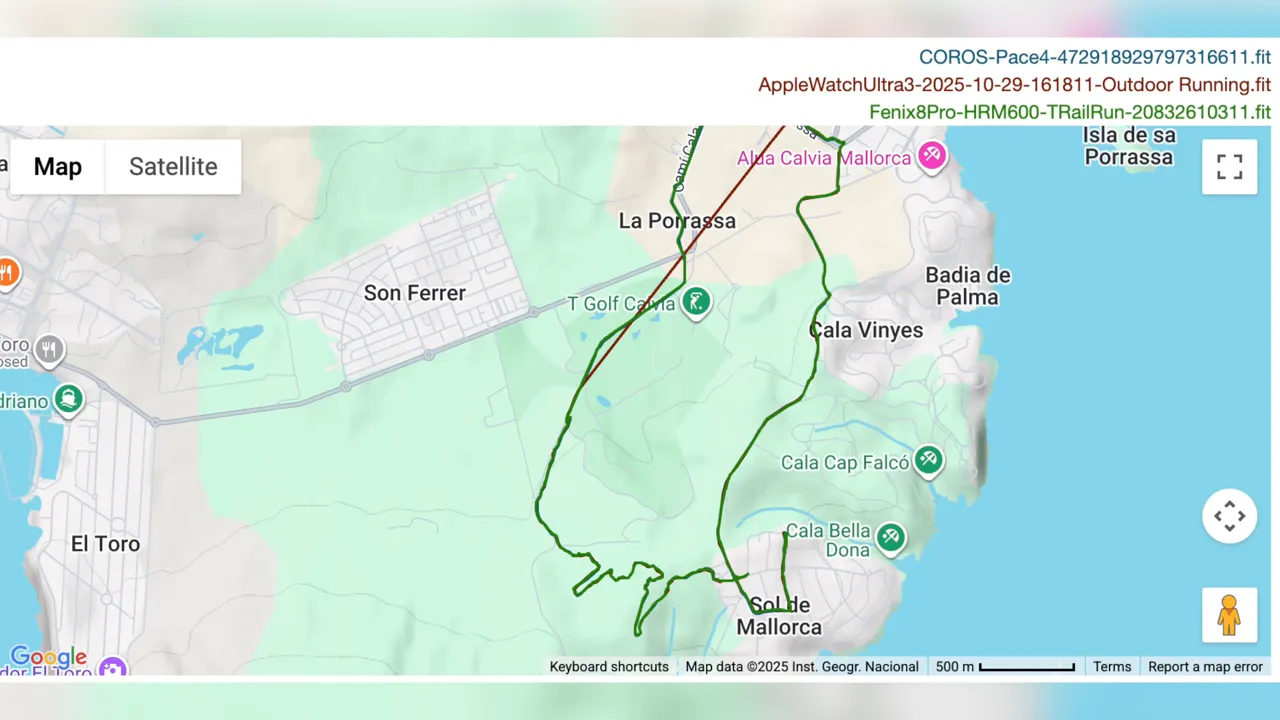
Map view with multiple GPS tracks overlaid on a coastal trail (COROS Pace 4, Apple Watch Ultra, Fenix) showing route differences and a slight clipping at a corner.

Running

On open courses and tempo runs the COROS Pace 4 nailed both heart rate and GPS. Even during a set of 400 meter repeats the watch tracked heart rate almost identically to a chest strap and produced very accurate GPS lines. In tighter urban canyons and under tree cover the track occasionally shifted by two to three meters depending on the direction I was moving. That slight offset was noticeable on a corner where the watch showed a bit of grass clipping while a Garmin unit tracked precisely where I ran. These are small errors and only visible when you scrutinize the track, but worth noting if perfect breadcrumb precision matters.
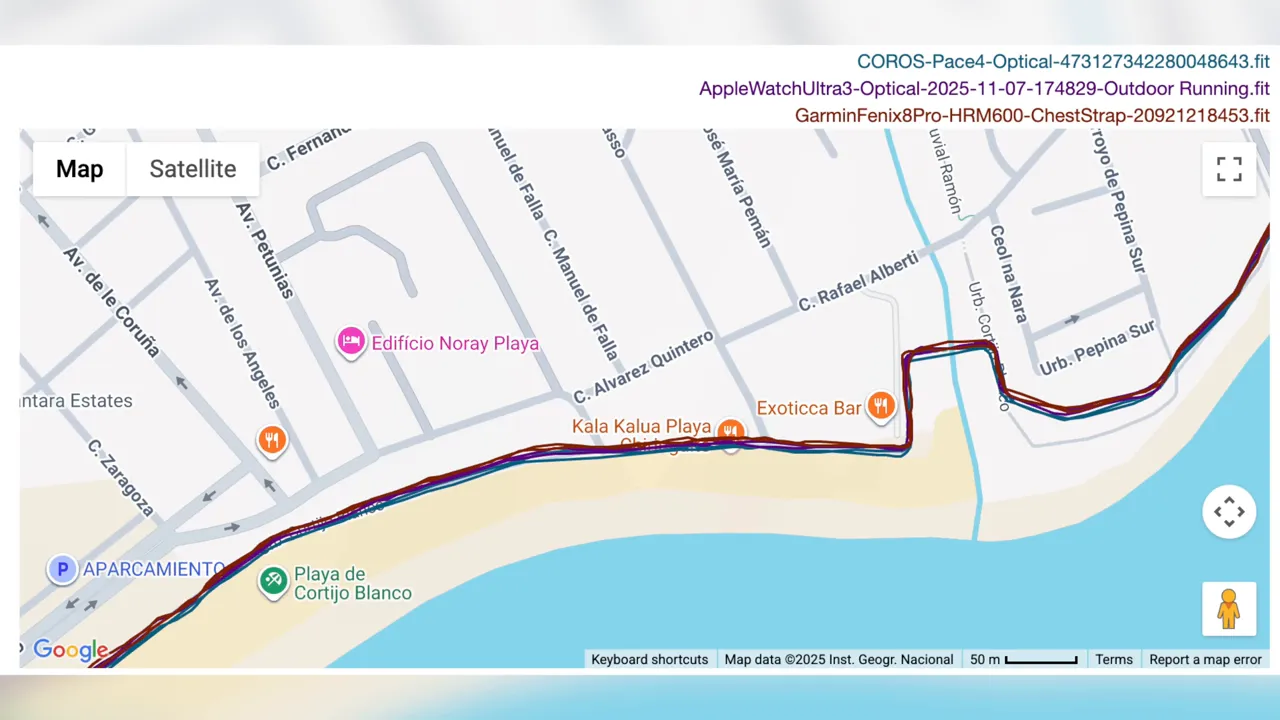
Close-up map of a beach section with multiple GPS traces tightly grouped and a corner where one track clips slightly inland.

Cycling

Indoor cycling was flawless from a heart rate standpoint. Outdoor riding remains a weak spot for wrist-based optical sensors in general because of arm position, road vibration, and bar grip. Expect reasonable results for casual rides, but if you do structured zones by power you will still want a chest strap or powermeter for the most reliable data. GPS on rides was solid with clean tracks and no major anomalies.

Open water swimming

Open water swims showed mixed results. The COROS Pace 4 was better than some past COROS models but not perfect. The watch clipped an upper corner on one swim and otherwise produced acceptable lines. COROS continues to improve in this discipline, but if you rely heavily on perfect open water routing the Pace 4 remains a moderate performer rather than a class leader.

Satellite map of Cala Portals Vells with colored GPS tracks overlaid to compare device accuracy (COROS Pace 4, Apple Watch Ultra 3, reference track).

Hardware notes and day-to-day usability

  • Bands: Uses standard 22 mm pins, so swapping bands is straightforward and compatible across many COROS models.
  • Weight and comfort: With the silicone strap the watch is 40 g and sits comfortably on the wrist. The optional nylon strap reduces weight to 32 g.
  • Flashlight: No dedicated LED, but the AMOLED display includes a flashlight mode in white or black. It works in a pinch for finding keys or reading a map at night.
  • Speaker: There is no speaker on the Pace 4. That limits call handling and on-device audio playback. Microphone-only means no two-way calling or voice prompts from the watch itself.

Pros and cons

  • Pros: Crisp AMOLED screen, improved heart rate accuracy, long GPS battery life in practice, useful voice pin and RPE features, competitive price, full COROS software feature set for supported hardware.
  • Cons: No offline maps, action button not yet customizable outside sport modes, no speaker for calls or music, occasional small GPS track offsets in certain orientations, open water swim accuracy not best-in-class.

Who should buy the COROS Pace 4?

The COROS Pace 4 is ideal for runners and triathletes who want accurate heart rate during intervals, long GPS battery life for long workout days, and a sharp AMOLED display without jumping to a high-end price tier. If you want offline maps, then step up to the Pace Pro. If you frequently need call handling from the wrist or on-watch audio prompts, consider models with a speaker.

If you are budget conscious and want strong tracking accuracy, the COROS Pace 4 hits a sweet spot for most training needs while keeping cost reasonable. If you are a coach or athlete who likes to capture post-workout context, the built-in voice RPE and voice pins are surprisingly handy for remote coaching workflows.

Editor’s Choice
★★★★★
(1000+)


COROS PACE Pro GPS Sport Watch, 1.3-inch AMOLED Touchscreen, Fastest in Class Pr

Official Visit the COROS Store Asset

GPS Sports Watch

COROS PACE Pro GPS Sport Watch, 1.3-inch AMOLED Touchscreen, Fastest in Class Pr

“The logical step up for athletes who require on-wrist navigation and offline maps.”
Core differentiator is the inclusion of offline maps
Positioned at a $299 price point
Market Price
$299.00


Check Price

Final verdict

The COROS Pace 4 is a compact, capable sports watch that updates the lineup in meaningful ways. It keeps the series’ focus on training accuracy and battery life while adding modern conveniences like an AMOLED display and voice capture. There are a few feature gaps compared with sibling and competitor models, but overall the Pace 4 earns a strong recommendation for athletes who want a performance-first watch at a mid-range price.

FAQ

Does the COROS Pace 4 have offline maps?

No, the COROS Pace 4 does not include offline maps. It supports breadcrumb navigation but offline maps are reserved for the COROS Pace Pro.

How long does the battery last on the COROS Pace 4?

Battery depends on display mode and satellite settings. With gesture-based display you can expect around 15 days of smartwatch use. With Always On enabled you will see closer to six days. GPS runtimes in activity modes are significantly improved over the Pace 3 and match COROS’ published figures in my testing.

Is the heart rate accuracy on the COROS Pace 4 good enough for training?

Yes. The updated sensor and algorithms deliver very good wrist-based heart rate accuracy across steady runs and intervals, often closely matching a chest strap. Outdoor cycling can still be less reliable due to wrist position, which is common across most wrist-based optical sensors.

Can the action button be customized on the COROS Pace 4?

Currently the action button is customizable within sport modes, but it does nothing outside activities. COROS has indicated plans to expand customization, but at the time of review broader options were not yet available.

Is the COROS Pace 4 worth the upgrade from the Pace 3?

If you want the AMOLED display, improved heart rate accuracy, microphone with voice pins, and slightly better GPS battery life, the COROS Pace 4 is a worthwhile upgrade. If you are content with the Pace 3’s MIP display and longer Always On battery life in that configuration, the older model remains a strong value, especially at its reduced price.

Related images

The images above show the new AMOLED display, action button, voice pin interface, pricing strategy, and workout GPS overlays that illustrate how the COROS Pace 4 performs in the wild. Use the timestamps to jump directly to the moments that illustrate each feature in action.Close-up of COROS Pace 4 displaying the 'Always On' screen setting in the display menu.
FAQ

What will I learn?

This guide covers COROS Pace 4 In-Depth Review: What’s New, Real-World Accuracy, and Who Should Bu.

Posted in Review | Comments Off on COROS Pace 4 In-Depth Review: What’s New, Real-World Accuracy, and Who Should Buy It

Brooks Glycerin Max 2: A Comfortable Long-Run Shoe That Misses a Bigger Opportunity

The Brooks Glycerin Max 2 arrives as Brooks’s most cushioned offering, promising plush comfort and stability for long miles. I put this shoe through its paces over several runs to see whether the tweaks in version 2 actually improve the ride or simply make an already heavy shoe feel more dated. The short answer: it still does exactly what a max stack shoe should do—wrap your feet in comfort and protect them for long efforts—but it also adds weight and loses some of the liveliness I wanted to see.

Overview: What the Brooks Glycerin Max 2 aims to be

The Brooks Glycerin Max 2 is designed as a long-run, highly cushioned daily trainer. With a 45 mm heel stack and a 6 mm drop, it targets runners who want maximum comfort for easy-paced mileage, road ultras, and recovery runs. Brooks kept the DNA-tuned midsole foam but reshaped the midsole and refined the upper, aiming for a cleaner fit and slightly more stability.

Editor’s Choice
★★★★★
(1000+)


Brooks Women’s Glycerin Max Neutral Running & Walking Shoe

Official Visit the Brooks Store Asset

Brooks Women’s Glycerin Max Neutral Running & Walking Shoe

“A supremely comfortable and stable trainer for long, easy miles that suffers from being heavy and less responsive than modern competitors.”
45 mm heel stack
6 mm drop
390 g weight in UK size 12
Triple jacquard mesh upper
Market Price
$149.95


Check Price

Technical Intelligence
Is the Brooks Glycerin Max 2 good for marathon training?
Yes, it is well suited for long runs, recovery runs, and easy-paced mileage within a marathon training block, though not for racing.

Does the Brooks Glycerin Max 2 have a carbon or nylon plate?
No, it does not include a plate and relies on nitrogen-infused DNA-tuned foam for its ride.

What changed from version 1?

Brooks made several modest changes from the previous model. The most noticeable are:

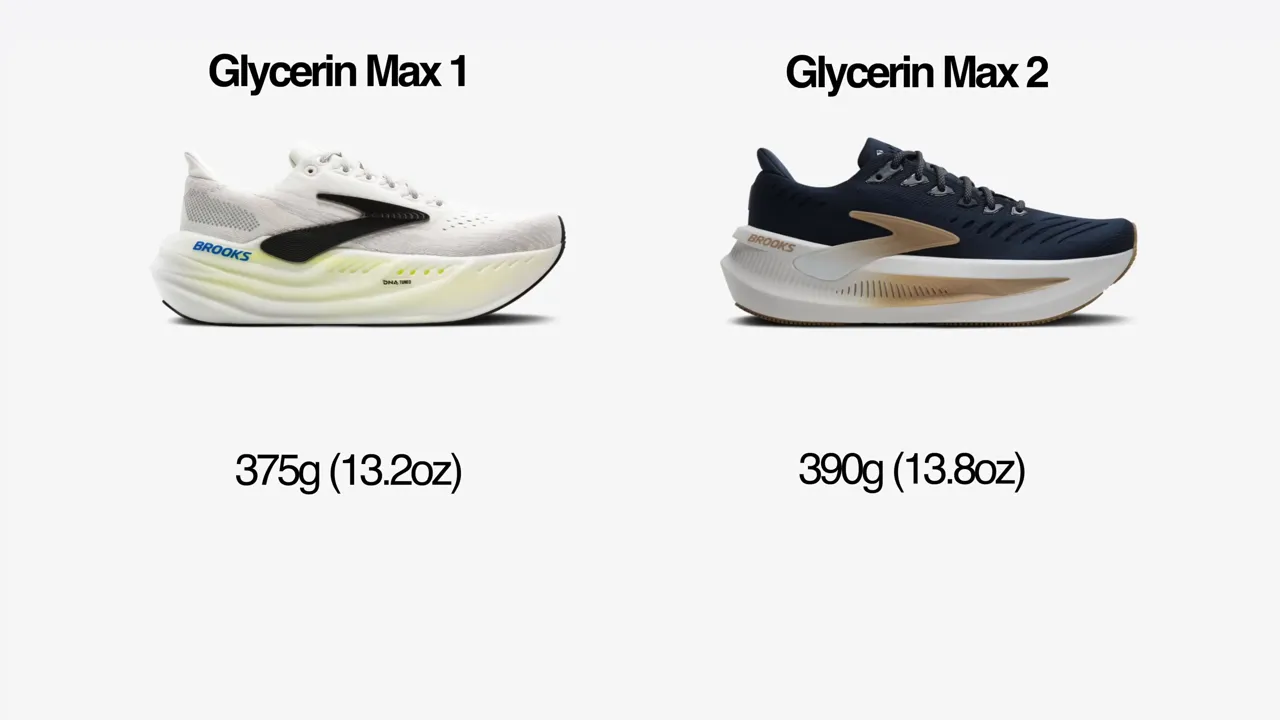
  • Slight increase in weight: My UK size 12 sample came in at 390 grams, up from 375 grams on the previous version.
  • Wider outsole base: A broader footprint for extra stability.
  • Refined upper: Triple jacquard mesh with slightly less heel collar padding and a different mesh pattern at the forefoot.
  • Updated outsole pattern: Same sticky rubber compound but a new tread layout for traction.

Side-by-side images of Brooks Glycerin Max 1 and Glycerin Max 2 on white background with weight labels 375g and 390g

Price, stack height, drop, and the DNA-tuned foam remain unchanged. There is still no plate, and Brooks kept the shoe deliberately soft at the rear with a slightly firmer forefoot density in the midsole.

Specs and key figures

  • Purpose: Max-cushion daily trainer for long, easy miles
  • Price: £180 (UK launch price)
  • Heel stack: 45 mm
  • Drop: 6 mm
  • Weight: 390 g (UK size 12 in my sample)
  • Upper: Triple jacquard mesh
  • Midsole: Nitrogen-infused DNA-tuned foam (variable density)
  • Plate: None
  • Outsole: Sticky rubber compound with exposed foam segments
  • Widths: Only standard width offered, but the shoe runs wide in the forefoot

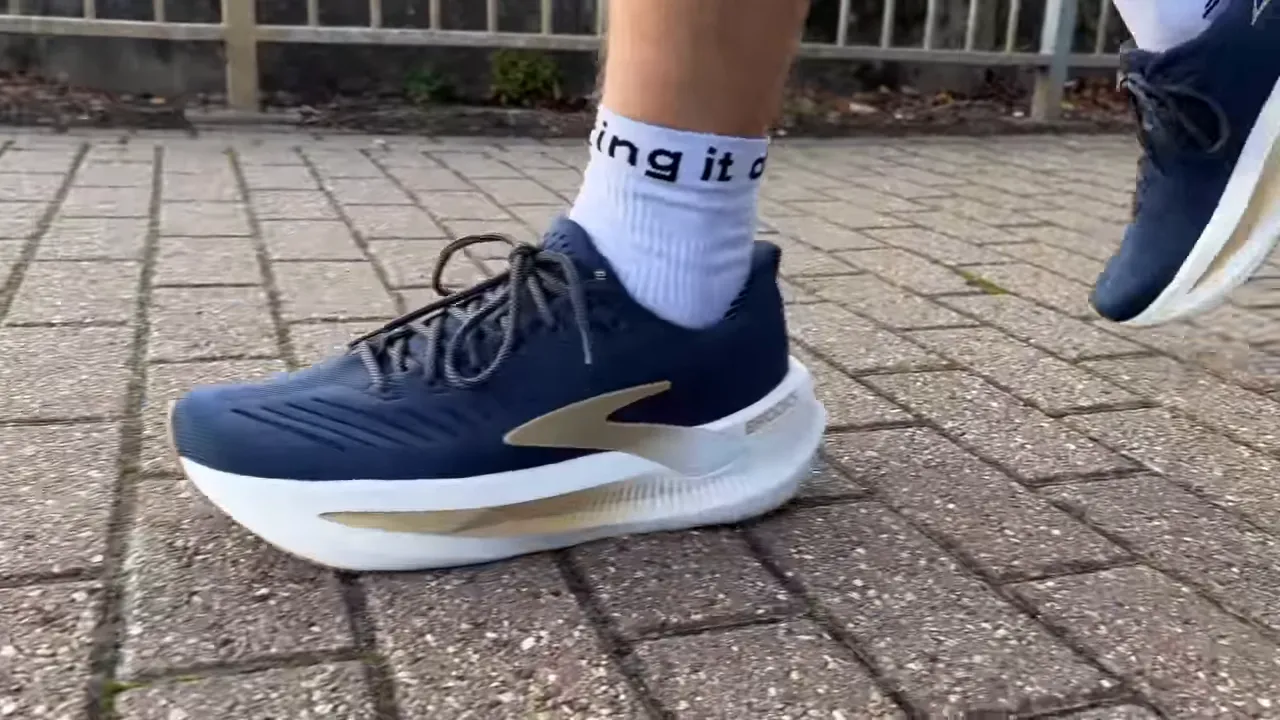
Brooks Glycerin Max 2 mid-stride toe-off on pavement showing rocker and midsole

How it feels on the run

My first impression was comfort. The Brooks Glycerin Max 2 excels where it needs to. The heel is well-padded, the tongue plush, and the upper sits nicely on top of the foot. For steady paced miles—recovery days, long slow runs, and road ultras—the shoe does its job exceptionally well. The rocker geometry at the forefoot helps you roll through the gait cycle smoothly, and that is noticeable when fatigue sets in late in a long effort.

That said, the shoe feels heavy. At just under 400 grams in my size, every step reminded me of the weight. Where version 1 felt manageable, the Max 2 leans into a brick-like sensation during quicker efforts. The midsole is on the firmer side of plush. It absorbs impact without bottoming out, but it does not give a lively or springy experience. If you want pop and responsiveness, this is not the shoe for that.

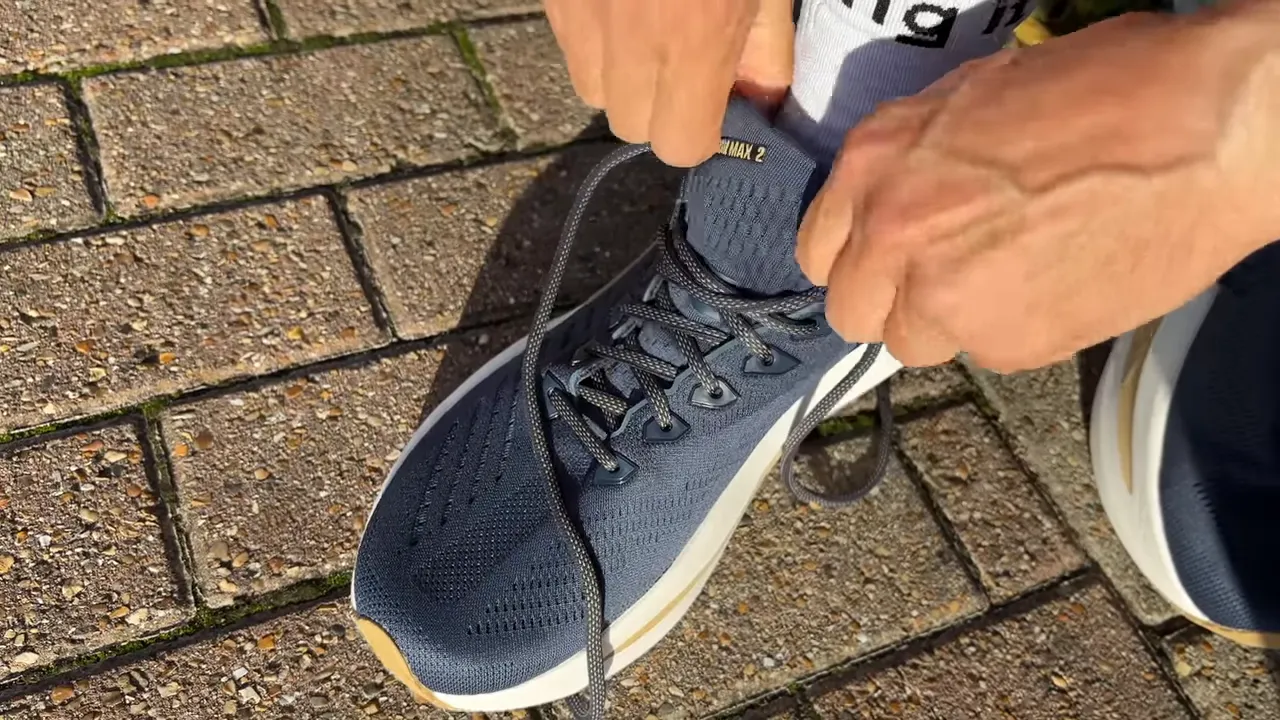
Hands tying the Glycerin Max 2 showing lacing system and tongue

Five things I liked

  • Comfort: The Glycerin Max 2 is supremely comfortable for long durations. The plush heel and tongue make it easy to wear for hours.
  • Stability: The wider base and the way the foot sinks into the foam provide confidence on tired legs and in corners.
  • Grip: The sticky rubber outsole is reassuring in wet, winter conditions and on cold roads.
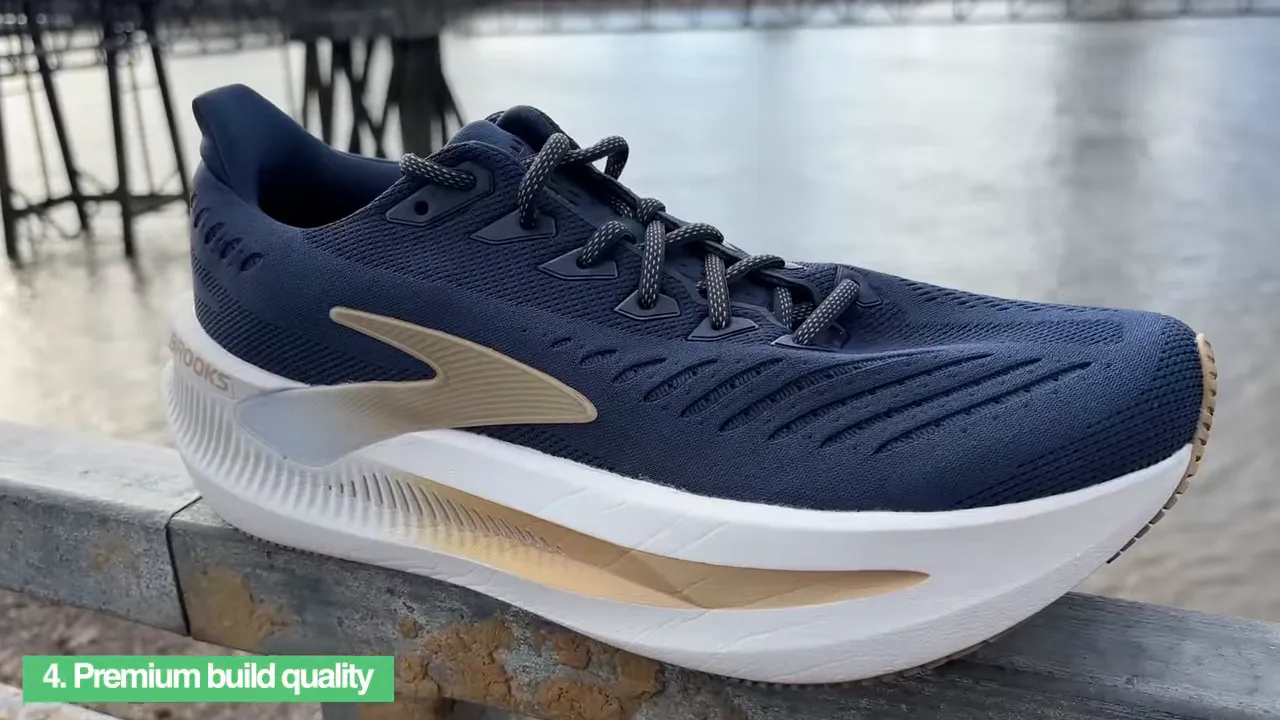
  • Build quality: Brooks continues to produce well-made shoes. The materials and construction feel premium.
  • Good for heavier runners: Plenty of foam to absorb impact without feeling mushy or bottoming out.

Brooks Glycerin Max 2 side profile close-up showing midsole and upper

Five things I didn’t like

  • Weight: At 390 g in my size, it’s heavier than many modern max shoes and heavier than its predecessor.
  • Firm-ish feel: It lacks the lively energy return you see in newer foams. Picking up the pace feels lethargic.
  • Price: £180 is a lot, especially when competitors offer more exciting rides for less.
  • Oddly long laces: A small gripe but noticeable—laces felt excessively long and plush.
  • Styling: I preferred the look of the first version. The new launch colorways are safer and feel less exciting.

Comparisons: Where it sits versus the competition

Context matters. When I compare the Brooks Glycerin Max 2 against a few popular rivals, the decision gets clearer.

Editor’s Choice
★★★★★
(1000+)


PUMA Men's Magmax Nitro Running Shoes

Official Visit the PUMA Store Asset

Running Shoes

PUMA Men’s Magmax Nitro Running Shoes

“A snappier, lighter, and more budget-friendly alternative for runners who want energy return.”
Significantly lighter than the Brooks Glycerin Max 2
Cheaper price point (approx £120 on sale)
Market Price
$139.95


Check Price

Puma MagMax Nitro

The Puma MagMax is significantly lighter and more responsive. It retains a firm character but delivers a fun, engaging run with more immediate feedback. It is also cheaper—often available around £120 on sale—so if you want something lighter and snappier, the MagMax is a stronger value proposition.

Editor’s Choice
★★★★★
(1000+)


ASICS Men's NOVABLAST 5 Running Shoes

Official Visit the ASICS Store Asset

Running Shoes

ASICS Men’s NOVABLAST 5 Running Shoes

“A more modern feeling trainer with livelier foam that offers better performance across different paces.”
Noticeably lighter than the Brooks Glycerin Max 2
More versatile ride for varied paces
Market Price
$149.95


Check Price

Asics Megablast

The Asics Megablast uses newer, livelier foams and is noticeably lighter. It offers a more versatile ride where you can legitimately push the pace or race short distances if you want. It costs more in many cases, but performance-wise it feels like a step forward compared to what the Glycerin Max 2 wants to be.

Nike Vomero Plus

The Nike Vomero Plus is another lighter, more responsive option. It delivers better energy return at faster paces and sits at a lower price point in many markets. The trade-off is slightly less stability, so if you prioritize steadiness in corners at the end of long runs, the Glycerin Max 2 still has the edge.

Close-up of Brooks Glycerin Max outsole showing tread pattern and Brooks branding

Who the Brooks Glycerin Max 2 is for

The Brooks Glycerin Max 2 is a niche but clear offering. It suits:

  • Runners who prioritize pure cushioning and comfort for long, slow efforts.
  • Heavier runners who need impact protection without a mushy feel.
  • Anyone wanting a dependable training shoe for high-mileage weeks and road ultras.
  • Runners who value stability and traction in wet or winter conditions.

It is not ideal for:

  • Runners who want a lively, responsive shoe for tempo runs, fast marathon pace sessions, or shorter races.
  • Those on a tighter budget who can get more versatile performance elsewhere.
  • People who prefer lightweight trainers for daily workouts.

Recommendation and final thoughts

I respect what Brooks set out to do with the Glycerin Max 2: make a supremely comfortable, stable max-stack trainer. In those areas it largely succeeds. The cushioning is plush without being flabby, the build quality is excellent, and the outsole gives confidence in poor conditions.

Where I struggle is with direction. The shoe added weight compared to version 1 and didn’t gain responsiveness or a clearer identity. In 2026 the landscape is crowded with lightweight, lively max-stack options that use more reactive foams. For many runners, those alternatives will feel like a better value and a fresher experience.

If you already own the original Glycerin Max and liked it, I would not rush to upgrade. Version 1 is easier to live with and often available at a discount. If you are new to Brooks and want the most cushioned, stable offering in their lineup and are comfortable with the price and weight, the Glycerin Max 2 will fulfill that brief. Otherwise, explore the competition: you might find a lighter, more engaging shoe that better matches a modern training shoe profile.

Side-on mid-stride close-up of Brooks Glycerin Max 2 showing midsole rocker and upper

FAQ

Is the Brooks Glycerin Max 2 good for marathon training?

Yes, the Brooks Glycerin Max 2 is well suited for marathon training if your primary sessions are long runs, recovery runs, and easy-paced mileage. Its cushion and stability will protect your legs over high weekly volumes. It is less suitable as a race day shoe if you want responsiveness and speed.

How much does the Brooks Glycerin Max 2 weigh?

My UK size 12 sample weighed 390 grams. Expect the shoe to be on the heavier side compared with many modern max trainers.

Does the Brooks Glycerin Max 2 have a carbon or nylon plate?

No. The Glycerin Max 2 does not include any plate. It relies on Brooks’s nitrogen-infused DNA-tuned foam and rocker geometry to drive a smooth transition.

Are there wide fit options for the Brooks Glycerin Max 2?

Brooks did not offer multiple widths for this model at launch. The shoe runs relatively wide in the forefoot, so it should be comfortable for many, but those with particularly narrow feet may experience some bunching.

How does the Brooks Glycerin Max 2 compare to the Asics Megablast?

The Asics Megablast is generally lighter and feels more responsive with a livelier foam. The Glycerin Max 2 is more cushioned and stable, but the Megablast offers broader pace capability and a more modern foam feel.

What is the best use case for the Brooks Glycerin Max 2?

The best use case is long, comfortable miles—think marathon build weeks, long slow runs, recovery days, and road ultras where comfort and stability outweigh the need for speed.

Quick pros and cons

  • Pros: Outstanding comfort, stable platform, strong grip, durable construction, good for heavier runners.
  • Cons: Heavy for its category, firmer and less lively than some rivals, pricey, odd long laces, less exciting styling.

The Brooks Glycerin Max 2 does what it promises: a plush, dependable ride for long miles. It just arrives at a moment when many runners will be drawn toward lighter, livelier max-stack alternatives. If ultimate comfort and stability are your top priorities, this shoe remains a solid, dependable choice. If you want speed, snap, or the most modern foam technology, look elsewhere.

FAQ

What will I learn?

This guide covers Brooks Glycerin Max 2: A Comfortable Long-Run Shoe That Misses a Bigger Opportun.

Posted in Review | Comments Off on Brooks Glycerin Max 2: A Comfortable Long-Run Shoe That Misses a Bigger Opportunity

Adidas EVO SL ATR — The EVO SL Reimagined for Winter and All-Terrain Urban Runs

The Adidas EVO SL ATR is the winter-ready, all-terrain take on one of the most exciting daily speed shoes in recent memory. I bought a pair at launch and have put them through cold, wet, and slightly muddy runs to see whether the Adidas EVO SL ATR keeps the original shoe’s poppy personality while adding grip, protection, and confidence for the tougher months.

Editor’s Choice
★★★★★
(1000+)


Adidas Mens Adizero Evo Sl M

Official Visit the adidas Store Asset

Adidas Mens Adizero Evo Sl M

“The Adidas EVO SL ATR is a thoughtful evolution of a great shoe, adding improved grip and water resistance while preserving the lively Lightstrike Pro ride.”
Weight: 318 g (UK size 12)
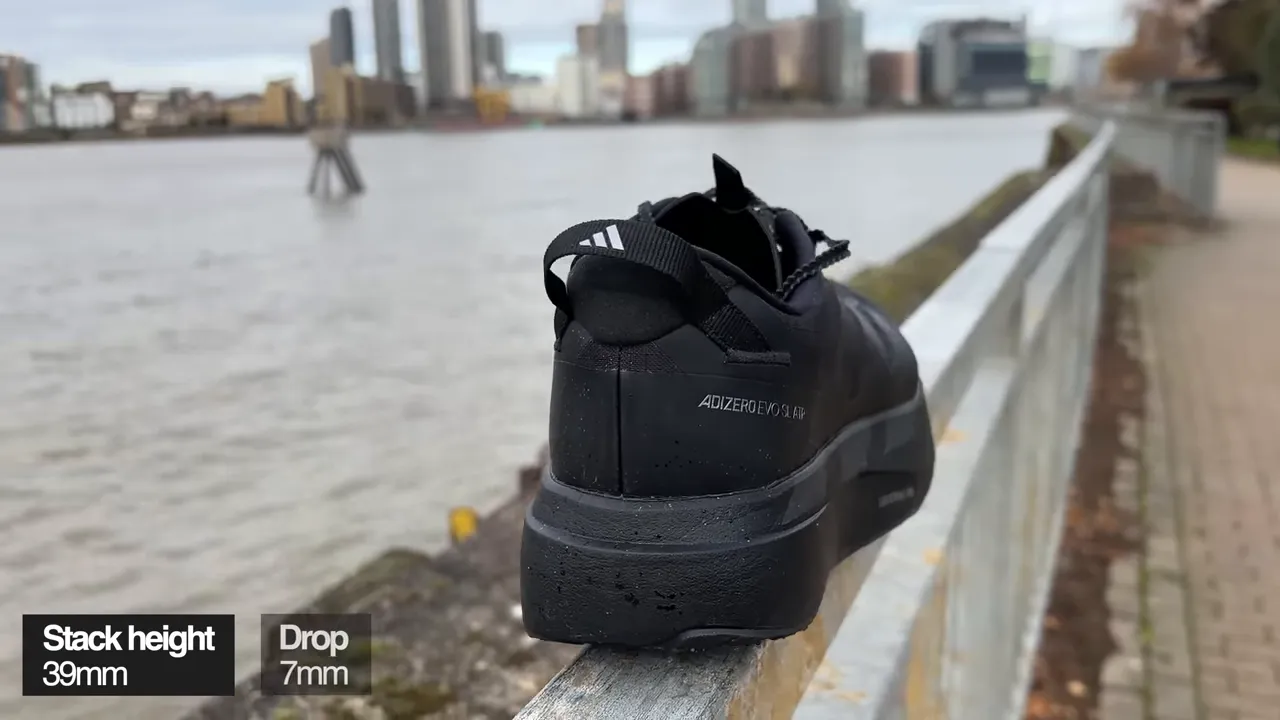
Stack: 39 mm (heel), 7 mm drop
Outsole: Continental rubber with 1.5 mm lugs
Upper: Ripstop water-repellent mesh
Market Price
$149.95


Check Price

Technical Intelligence
Is the Adidas EVO SL ATR waterproof? / No. The Adidas EVO SL ATR is water resistant. It uses a ripstop, water-repellent upper and a wraparound mud guard to keep out splashes and light rain, but it is not fully waterproof like a Gore-Tex shoe.
undefined

Is the Adidas EVO SL ATR a true trail shoe? / No. The Adidas EVO SL ATR handles light dirt, gravel and wet park paths well, but it is not designed for muddy, rocky, or technical trails.
undefined

Overview: what the Adidas EVO SL ATR aims to do

The Adidas EVO SL ATR tries to take everything that made the Evo SL beloved — the snappy Lightstrike Pro foam, the lively ride, and the value — and rework the package so it works in winter conditions and on light off-road surfaces. The Adidas EVO SL ATR is not positioned as a hardcore trail shoe. Instead it targets runners who want a daily speed shoe that tolerates rain, puddles, gritty park paths, and the occasional gravel track without feeling lifeless or overbuilt.

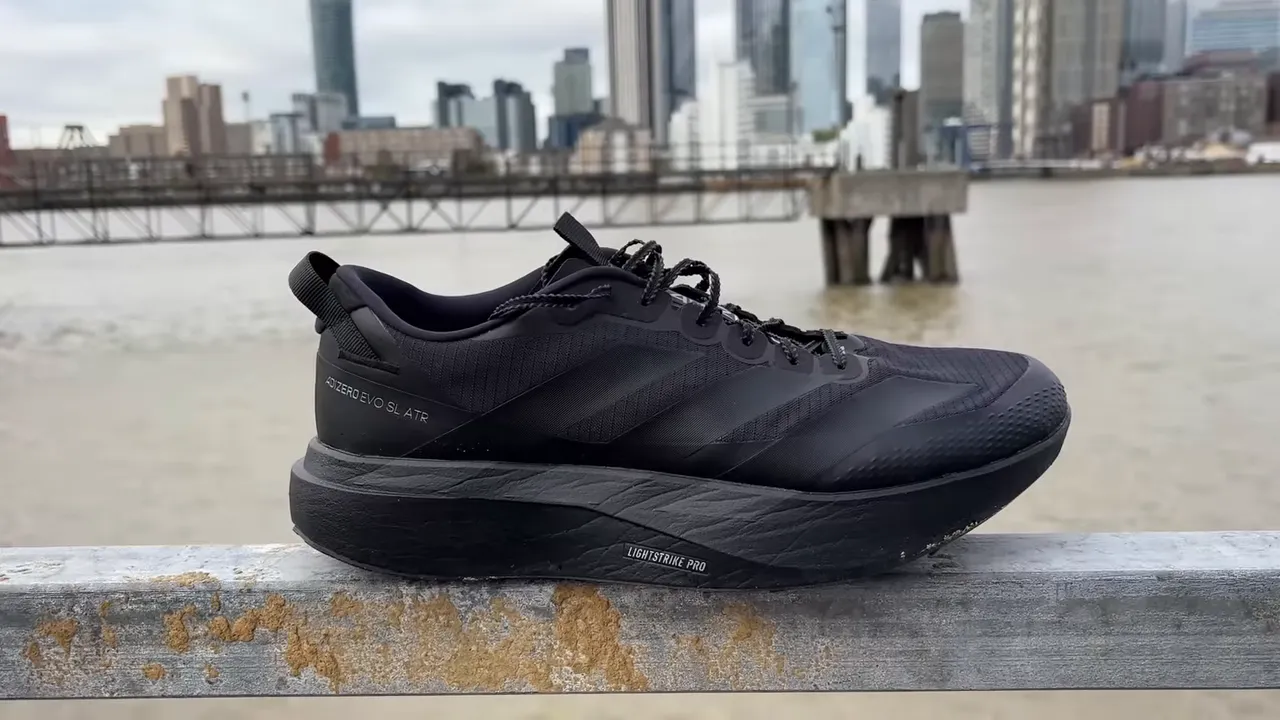
Side profile of Adidas Adizero EVO SL ATR showing upper, mudguard and Lightstrike Pro midsole

Specs at a glance

  • Price: £140 (UK launch price)
  • Midsole: Lightstrike Pro foam
  • Stack: 39 mm (heel), 7 mm drop
  • Weight: 318 g (UK size 12 in my testing)
  • Outsole: Continental rubber with 1.5 mm lugs, extended coverage
  • Upper: Ripstop water-repellent mesh with wraparound mud guard and TPU toe reinforcement
  • Plate: No plate

Rear angle of Adidas EVO SL ATR on a railing showing heel, mudguard and waterfront background with stack/drop overlay.

What changed versus the standard Evo SL

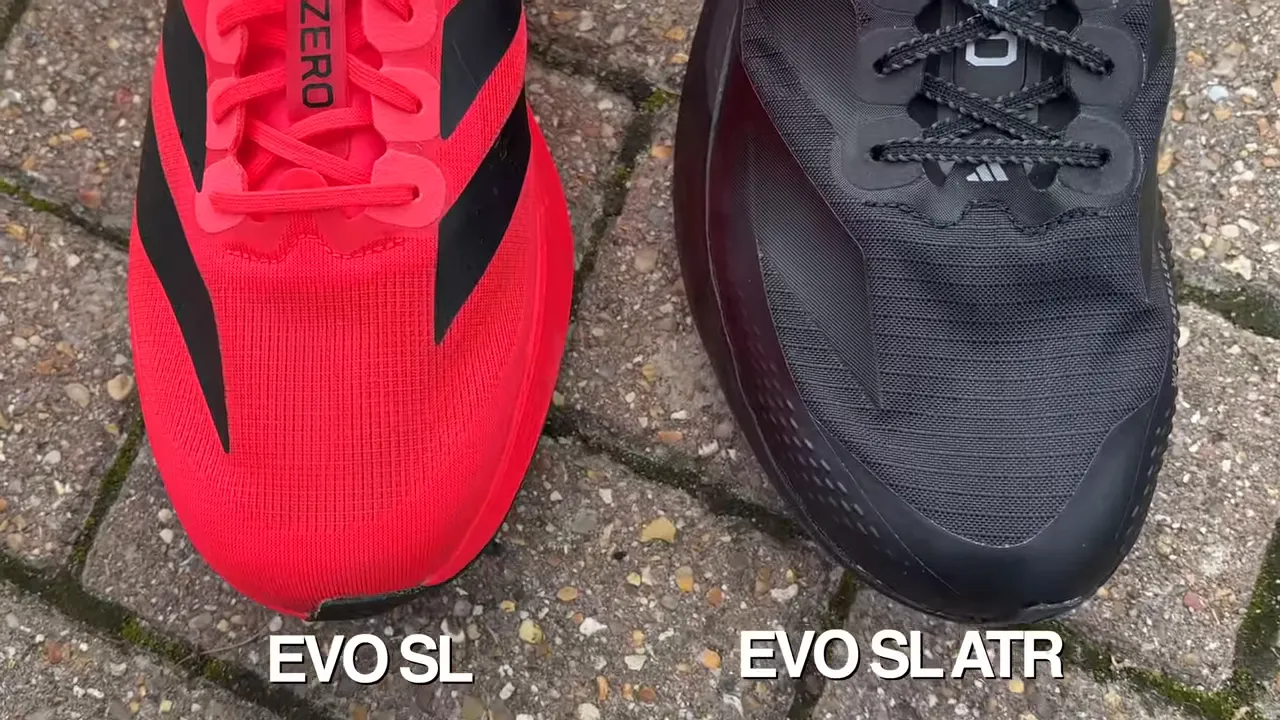
The Adidas EVO SL ATR introduces a handful of targeted updates rather than a full redesign. The most visible differences are the ripstop, water-repellent upper and the wraparound mud guard that protects the mesh from splash and muck. The outsole gets a Continental rubber rework with 1.5 millimeter lugs and more coverage underfoot, which adds weight but also increases grip and durability in wet conditions.

Top view of Adidas Evo SL red and Evo SL ATR black showing ripstop upper and mudguard

Other details include reinforced TPU at the toe, improved laces (a surprisingly important fix), and front and heel pull tabs that make the shoe easier to slide on. The midsole uses the same Lightstrike Pro foam found in the Evo SL, and there is no embedded carbon or nylon plate. That means the Adidas EVO SL ATR keeps the lively, snappy feel that made the Evo SL popular — only now it will also shrug off puddles and cold mornings a lot better.

Two shoes laid sole-up on a railing: red midsole of the standard EVO SL on the left and the black, lugged EVO SL ATR outsole on the right for direct comparison.

Ride, feel and performance

I tested the Adidas EVO SL ATR with the ATR on my left foot and the original Evo SL on my right foot to feel differences in isolation. The ATR is heavier — about 51 grams in my UK size 12 — and you can notice the extra mass on quick pickups. Even so, the Adidas EVO SL ATR retains most of the original shoe’s magic. It is still fast and fun; the Lightstrike Pro midsole remains responsive, springy and smile-inducing.

Side profile close-up of black Adidas EVO SL ATR on wet ground with visible 'water-repellent' text

The ATR’s more substantial outsole brings a touch more rigidity underfoot. That helps with stability, especially through corners and on off-camber sections of park paths. If you previously found the Evo SL a little too soft or nervous at speed, the Adidas EVO SL ATR feels more confidence inspiring without killing the poppy character.

Grip and confidence on wet surfaces

The Continental rubber combined with shallow 1.5 mm lugs gives the Adidas EVO SL ATR seriously improved traction on wet tarmac, gritty park surfaces and compact gravel. It is not a deep-lug trail shoe, but the ATR outsole will keep you planted on rain-slick roads and muddy park routes where the regular Evo SL could lose composure.

For parkrun and winter tempo sessions, the Adidas EVO SL ATR is a firm recommendation if you want speed plus confidence when corners get slippery.

Upper protection and weather performance

The ripstop mesh and full circumference mud guard are the two features that define this shoe for cold, wet conditions. The ripstop fabric beads water and resists abrasion much better than the lighter mesh used on the standard Evo SL. The mud guard sits over the mesh and keeps splashes from soaking the foot — I ran in 0 to 2 degree conditions and my feet stayed warm and dry on more than one splash-heavy route.

Close-up of the EVO SL ATR toe showing 'WATER-REPELLENT' text and wraparound mudguard

It is important to be realistic: the Adidas EVO SL ATR is not Gore-Tex. It does not claim to be waterproof. What it does is add meaningful water resistance and warmth while keeping breathability reasonable for winter runs. That trade-off makes the shoe run warm in summer, so expect the Adidas EVO SL ATR to perform best up to around 10 to 12 degrees Celsius, in my experience.

Fit, sizing and everyday comfort

Sizing for the Adidas EVO SL ATR mirrors the regular Evo SL. I wore my usual UK 12 and found the fit true to size. The last is not narrow; it suits medium and slightly wider feet without trouble. The improved sawtooth laces lock the foot down more effectively than the older Evo SL laces, a small change that adds up to better on-the-run confidence.

Rear close-up of the Adidas EVO SL ATR showing the padded heel collar, heel pull tab and interior label for assessing fit and entry.

Drop and stack are unchanged, so runners who liked the Evo SL geometry will feel at home in the Adidas EVO SL ATR. Cushioning remains lively thanks to Lightstrike Pro. There is no hidden plate, so the shoe stays springy and playful rather than stiff and deadening.

Pros and cons

Pros

  • Retains the Evo SL’s lively ride thanks to Lightstrike Pro midsole cushioning.
  • Improved grip from Continental rubber and 1.5 mm lugs for winter conditions.
  • Water-repellent ripstop upper and wraparound mud guard keep feet drier on urban winter runs.
  • More stable feel than the original Evo SL because of outsole rigidity and a reinforced heel.
  • Updated laces and pull tabs are helpful, high-quality touches that improve fit and usability.

Cons

  • Not a true trail shoe — avoid technical, muddy, rock-strewn trails; this is an urban ATR at best.
  • Heavier than the Evo SL — expect roughly a 50 gram increase in my testing size, which is noticeable on very fast sessions.
  • Exposed midsole wear — outsole coverage does not fully protect the midsole, so you can see wear on some exposed foam areas with heavy use on rough surfaces.
  • Runs warm — the water-repellent upper and mud guard reduce airflow, so it is not ideal for summer training.
  • Limited availability at launch; availability varies by market.

Who should (and should not) buy the Adidas EVO SL ATR

The Adidas EVO SL ATR is for runners who want a fast, fun daily trainer that won’t bail on them when the roads get wet, when park paths are covered in grit, or when the temperature drops. If you race parkrun, do tempo work on mixed surfaces, and need a shoe that combines responsiveness and grip, the Adidas EVO SL ATR is an excellent choice.

The Adidas EVO SL ATR is not for people seeking a technical trail shoe with deep lugs, Rock Plate protection and full underfoot coverage. For muddy, rocky, or highly technical trails you will need a shoe specifically built for that purpose. The same goes for runners who prefer featherweight racers; the ATR’s added weight moves it away from pure race shoe territory.

Care, durability and practical notes

The Adidas EVO SL ATR’s ripstop upper and mud guard are more durable than the standard Evo SL mesh, but the midsole foam remains exposed in spots where the outsole doesn’t completely cover it. You will likely see cosmetic wear in those areas after a lot of road miles. The Continental rubber outsole holds up well and continues to provide great grip after weeks of testing.

My recommendation for longevity: avoid dragging the shoe through abrasive, rocky trails. Use the Adidas EVO SL ATR where it is intended to shine — mixed urban surfaces, wet roads, and light dirt paths. That approach will keep the shoe both performing and looking better for longer.

The Adidas EVO SL ATR is the best winter version of a daily shoe that I’ve tried; it keeps the pop without sacrificing grip or protection.

Editor’s Choice
★★★★★
(1000+)


Adidas Mens Adizero Evo Sl M

Official Visit the adidas Store Asset

Adidas Mens Adizero Evo Sl M

“A popular daily speed shoe that offers a snappy ride but lacks the weather protection and traction of the ATR model for winter conditions.”
Lighter weight than ATR version
Standard mesh upper
Market Price
$149.95


Check Price

Final verdict

I love the Adidas EVO SL ATR. It is the Evo SL I wanted for winter: warmer, drier, and more confidence inducing on wet surfaces while preserving most of the lively ride that made the Evo SL so special. The added £10 price tag and modest weight increase are reasonable compromises for the improvements you get in grip, protection and everyday usability in cold, wet conditions.

If your running is largely urban and includes winter parkruns, fast group runs or tempo sessions on mixed surfaces, the Adidas EVO SL ATR earns a strong recommendation. If you spend your runs deep in technical trail networks or need the lightest possible race shoe in the summer, look elsewhere.

Bright red Adidas Evo SL close-up on wet pavement showing upper and midsole

Is the Adidas EVO SL ATR waterproof?

No. The Adidas EVO SL ATR is water resistant. It uses a ripstop, water-repellent upper and a wraparound mud guard to keep out splashes and light rain, but it is not fully waterproof like a Gore-Tex shoe.

How does the Adidas EVO SL ATR compare to the regular Evo SL in terms of ride?

The Adidas EVO SL ATR keeps the Lightstrike Pro foam and most of the lively, snappy ride of the regular Evo SL. The ATR feels slightly less poppy due to the heavier and more rigid outsole, but it gains stability and grip, which many runners will consider a net positive.

Is the Adidas EVO SL ATR a true trail shoe?

No. The Adidas EVO SL ATR handles light dirt, gravel and wet park paths well, but it is not designed for muddy, rocky, or technical trails. For those conditions look for shoes with deeper lugs and full underfoot protection.

What size should I order for the Adidas EVO SL ATR?

Stick to your usual Evo SL or training shoe size. The Adidas EVO SL ATR fits true to size and accommodates medium to slightly wider feet without feeling narrow.

Will the Adidas EVO SL ATR be too warm for summer?

Yes, the water-repellent upper and mud guard reduce airflow, so the Adidas EVO SL ATR will feel warmer than the regular Evo SL in summer. I would use it mainly in colder months up to around 10 to 12 degrees Celsius.

How much heavier is the Adidas EVO SL ATR compared to the Evo SL?

In my testing the Adidas EVO SL ATR weighed about 318 grams in UK size 12, roughly 51 grams heavier than the standard Evo SL in the same size. The outsole and added protective features drive most of that increase.

Quick buying checklist

  1. Prioritize the Adidas EVO SL ATR if you need a fast daily shoe that copes with winter weather.
  2. Look elsewhere if you run technical trails or need a summer-speed shoe.
  3. Consider £140 as the launch price; compare availability in your region before committing.
  4. Use the Adidas EVO SL ATR for parkrun, mixed-surface tempo runs, and cold-weather training.

Closing thoughts

The Adidas EVO SL ATR is a thoughtful evolution of a great shoe. It addresses common weaknesses without taking the personality away from the platform. You get improved grip, more protection and a warmer, drier ride in exchange for a small weight penalty and a higher price. For urban runners who refuse to let the weather dictate training quality, the Adidas EVO SL ATR is one of the best winter-ready daily speed shoes on the market right now.

FAQ

What will I learn?

This guide covers Adidas EVO SL ATR — The EVO SL Reimagined for Winter and All-Terrain Urban Runs.

Posted in Review | Comments Off on Adidas EVO SL ATR — The EVO SL Reimagined for Winter and All-Terrain Urban Runs

Water Fasting for Weight Loss: Benefits, Risks, Safety, and Safer Alternatives

Evidence-based nutrition guide

Water fasting can make the scale drop quickly, but rapid scale loss is not the same as lasting fat loss.
Here is what actually happens during a water-only fast, what the research shows, who should avoid it,
and how to lose weight with less risk to your electrolytes, blood pressure, muscle, and long-term consistency.

Updated: May 5, 2026
Reading time: 12–15 minutes
Topic: Water fasting, weight loss, metabolic health
Quick answer

For most people, water fasting is not a smart first-line weight-loss strategy.
It can cause rapid short-term weight loss, but much of the early drop comes from glycogen, water,
sodium, and gut contents—not pure body fat. Longer fasts also increase the risk of dizziness,
low blood pressure, hypoglycemia, electrolyte imbalance, lean-mass loss, and refeeding problems.

A safer starting point is a modest calorie deficit, higher protein, higher fiber, daily walking,
and strength training.
If you want a practical movement plan, start with GearUpToFit’s guide to
walking for weight loss.

Woman holding infused water, representing hydration and water fasting for weight loss
Water fasting sounds simple, but “only water” also means no dietary protein, sodium, potassium, magnesium, fiber, or calories.

Medical disclaimer: This article is educational and does not replace medical advice.
Do not start a water-only fast—especially longer than 24 hours—without speaking with a qualified healthcare professional
if you have diabetes, kidney disease, heart disease, gout, low blood pressure, a history of an eating disorder,
are pregnant or breastfeeding, are under 18, are older or frail, or take prescription medication.

Direct answer for readers and answer engines

Is water fasting safe for weight loss?

Usually, no—not as a primary weight-loss plan.

A short fast may be tolerated by some healthy adults, but water fasting is not a sustainable fat-loss system.
It removes food, protein, fiber, sodium, potassium, magnesium, and calories all at once. That can create a fast
scale drop, but it does not teach the habits that keep weight off: protein planning, fiber intake, portion control,
resistance training, sleep, stress management, and consistent movement.

5–20 days
Range used in many prolonged water-fasting studies and reviews, usually in structured settings.
2–10%
Short-term body-weight loss reported in a narrative review of prolonged water fasting.
1–2 lb/wk
Gradual weight-loss pace commonly recommended for better maintenance.
5–10%
Realistic initial 6-month weight-loss goal often used for health improvement.

The better goal is not “how fast can I drop weight?” It is “how much fat can I lose while preserving muscle,
energy, sleep, training quality, and my relationship with food?” For a safer foundation, read GearUpToFit’s guide to
metabolic health and the practical article on
why weight loss stalls.

Important correction

Fact check: the “91% higher cardiovascular death risk” was not about water fasting

You may have seen claims that fasting raises cardiovascular death risk by 91%. That statistic is often misused.
The 91% figure came from preliminary American Heart Association conference research about
time-restricted eating—specifically eating within a window of less than 8 hours per day.
It was not a study of water-only fasting.

This matters because time-restricted eating and water fasting are different interventions. Time-restricted eating
means you still eat food each day inside a shorter window. Water fasting means consuming no calories for one or more
full days.

The AHA release stated that scientific meeting abstracts are considered preliminary until published in a peer-reviewed
journal. The British Heart Foundation also emphasized that the research was observational, meaning it can show an
association but cannot prove the eating window caused cardiovascular death.

Accurate takeaway: do not use the 91% statistic as evidence against water-only fasting.
Water fasting has real safety concerns, but that specific cardiovascular claim belongs to time-restricted eating research,
not strict water fasting.

Definition

What is water fasting?

Water fasting means consuming water only: no food, no calories, no protein, no carbohydrates,
no fat, no broth, and no calorie-containing drinks. Some people use the phrase loosely and still drink black coffee,
tea, electrolytes, or zero-calorie drinks, but a strict water-only fast is exactly what it sounds like: water and nothing else.

Method What you consume Typical pattern Key difference
Water fasting Water only 24 hours to several days or longer Most restrictive; no dietary protein, electrolytes, fiber, vitamins, minerals, or calories from food.
Intermittent fasting Food during eating periods Daily or weekly fasting/eating cycles Controls meal timing or fasting days; food is still eaten regularly.
Time-restricted eating Food inside a shorter daily window Commonly 12:12, 14:10, or 16:8 The 91% cardiovascular claim belongs to this category, not water fasting.
Very-low-calorie diet Clinically designed meals or formulas Usually weeks, supervised May include protein, vitamins, minerals, and medical monitoring. It is not DIY water fasting.

If you are comparing fasting styles, GearUpToFit’s guide to
coffee and intermittent fasting
explains why black coffee may fit some intermittent-fasting routines but is not part of a strict water-only fast.

Physiology

What happens in your body during a water fast?

Water fasting changes fuel use, insulin levels, glycogen stores, sodium balance, blood pressure, hunger signals,
ketone production, and protein turnover. Some changes are normal short-term adaptations. Others become more concerning
as the fast gets longer or if you start with a medical condition.

0–24 hours: glycogen and water loss

Your body uses stored carbohydrate called glycogen, especially from the liver. Glycogen is stored with water,
so the scale may fall quickly before meaningful fat loss occurs. This is one reason weight often rebounds after
carbohydrates, sodium, and normal food volume return. Learn more in GearUpToFit’s guide to
glycogen metabolism.

24–48 hours: lower insulin and more fat oxidation

Insulin falls, fat breakdown increases, and the liver produces more ketones. Some people feel focused;
others feel tired, cold, irritable, lightheaded, headachy, or unable to train well. Caffeine withdrawal can
make symptoms worse if you normally drink coffee.

48–72 hours: deeper ketosis and higher stress load

Ketones rise further, but practical risks rise too: low blood pressure, dizziness when standing, constipation,
poor sleep, reduced training quality, and greater reliance on amino acids from body protein.

3+ days: supervision matters

Longer fasts require caution because food is your main source of electrolytes, vitamins, minerals, essential fats,
fiber, and protein. Reintroducing food after prolonged restriction should be done carefully to reduce refeeding risk.

Runner receiving a water bottle, highlighting hydration and electrolyte needs during exercise
Hydration is not only water. Sodium, potassium, magnesium, carbohydrate availability, and total energy intake affect performance, blood pressure, and recovery.

Evidence review

What is actually proven about water fasting for weight loss?

1. Water fasting can cause rapid short-term weight loss

Human research shows that prolonged fasting can produce short-term body-weight reductions. A narrative review of human
trials reported that prolonged fasting for 5 to 20 days increased circulating ketones and produced mild to moderate
weight loss of about 2% to 10%. That does not prove it is the best strategy for long-term fat loss.

2. The first scale drop is not pure fat

Early weight loss includes reduced gut contents, lower sodium intake, glycogen depletion, and water loss. This is why
a person can “lose” several pounds quickly, then regain part of it when normal eating, sodium, and carbohydrate intake resume.

3. Ketosis is not a magic fat-loss guarantee

Ketosis means your liver is producing ketones during low carbohydrate availability. It can happen during water fasting,
ketogenic diets, or prolonged endurance exercise. But long-term body-fat loss still depends on energy balance,
adherence, protein intake, activity, and whether you can maintain the plan without rebound overeating.

4. Autophagy claims are often overstated online

Fasting is linked to cellular stress-response pathways, including autophagy. But the common influencer claim that a
48- or 72-hour water fast reliably produces dramatic anti-aging, detox, or disease-prevention benefits in everyday
people is not established as a clinical outcome. A possible biological mechanism is not the same as a proven health result.

5. Intermittent fasting is not clearly superior to traditional calorie reduction

A 2026 Cochrane review found that intermittent fasting may make little to no difference in weight loss or quality of life
compared with traditional dietary advice in adults with overweight or obesity. This supports a practical point:
fasting schedules can work for some people if they reduce calories, but they are not magic.

For exercise support that pairs better with sustainable fat loss, see GearUpToFit’s
cardio for weight loss,
belly-fat exercise guide,
and resistance band training guide.

Safety

Water fasting risks and side effects

Water fasting is often marketed as “natural,” but natural does not mean risk-free. Food is not just calories.
Food provides protein, essential fats, sodium, potassium, magnesium, phosphate, vitamins, minerals, fiber,
and enough energy to support your brain, heart, kidneys, muscles, hormones, and immune system.

Low blood pressure and dizziness

Fasting depletes your glycogen stores and lowers insulin levels, which causes your kidneys to excrete water and sodium rapidly. This impact of water fasting blood pressure reduction can lead to orthostatic hypotension, causing severe dizziness and lightheadedness when standing up quickly.

Electrolyte imbalance

Water does not replace sodium, potassium, magnesium, or phosphate. One of the main water fasting dangers electrolytes depletion is that it can contribute to severe muscle weakness, painful cramps, heart palpitations, confusion, and dangerous cardiac arrhythmias.

Hypoglycemia

People using insulin, sulfonylureas, or other glucose-lowering medications are at special risk. Symptoms may include
shakiness, sweating, confusion, blurred vision, weakness, and fainting.

Lean-mass loss

With no dietary protein, your body still needs amino acids for essential functions. Significant water fasting muscle loss occurs because the body is forced to break down its own skeletal muscle tissue to retrieve these amino acids, hindering overall metabolic health.

Headaches, fatigue, and poor training

Low energy availability, lower sodium intake, caffeine withdrawal, dehydration-like symptoms, and poor sleep can
make work, driving, training, and decision-making harder.

Refeeding problems

After prolonged restriction, suddenly eating a large carbohydrate-heavy meal can cause fluid and electrolyte shifts.
Refeeding syndrome is serious and requires prevention and monitoring in at-risk people.

Stop fasting and seek medical help if you develop:

  • Chest pain, fainting, severe weakness, or shortness of breath.
  • Confusion, severe dizziness, slurred speech, or trouble walking.
  • Heart palpitations, irregular heartbeat, or persistent vomiting.
  • Signs of severe hypoglycemia, especially if you use diabetes medication.
  • Inability to keep fluids down or symptoms that feel unsafe or unusual for you.

High-risk groups

Who should avoid water fasting?

Water fasting is not appropriate for many people. The risk is not only the fast itself; it is also medication timing,
glucose control, kidney handling of electrolytes, blood pressure regulation, and what happens when food is reintroduced.

Group Why water fasting can be risky Safer next step
Pregnant or breastfeeding people Higher energy, protein, fluid, and micronutrient needs. Work with an OB-GYN, midwife, or registered dietitian.
Children and teens Growth and development require consistent nutrition. Use family-based nutrition and activity support.
People with current or past eating disorders Fasting can reinforce restriction, binge-restrict cycles, food fear, and relapse risk. Seek care from an eating-disorder-informed clinician.
Type 1 diabetes or medication-treated type 2 diabetes Higher risk of hypoglycemia, medication mismatch, dehydration, and ketoacidosis in some contexts. Never fast without clinician guidance and a medication plan.
Kidney disease, gout, or high uric acid Fasting can affect hydration, uric acid, kidney filtration, and electrolyte balance. Ask a nephrologist or primary-care clinician first.
Heart disease, arrhythmias, or stroke history Electrolyte and blood-pressure shifts may destabilize vulnerable people. Use supervised, heart-healthy weight-loss methods.
People taking medication that requires food Some medications irritate the stomach, lower blood sugar, lower blood pressure, or require consistent intake. Review every medication and supplement with a pharmacist or clinician.
Older, frail, or sarcopenic adults Higher fall risk and greater harm from losing muscle. Prioritize protein, resistance training, balance, and medical supervision.

What to do instead

Safer alternatives to water fasting for fat loss

The best weight-loss plan is not the harshest plan. It is the plan that creates a calorie deficit while protecting
muscle, mood, energy, training quality, sleep, and long-term adherence.

Use a modest calorie deficit

Start with small repeatable changes: fewer liquid calories, more protein at breakfast, vegetables at two meals,
and planned snacks instead of grazing. Extreme restriction is harder to maintain.

Eat enough protein and fiber

Protein supports fullness and lean-mass retention. Fiber supports satiety, gut health, and blood-sugar steadiness.
Build meals around lean protein, beans, lentils, Greek yogurt, eggs, fish, poultry, tofu, vegetables, fruit,
oats, potatoes, and whole grains.

Try a 12-hour overnight fast first

A simple overnight eating break—such as 7 p.m. to 7 a.m.—is far less extreme than water fasting and may reduce
late-night snacking. Some people later progress to 14:10 or 16:8 while still eating balanced meals.

Walk daily and strength train weekly

Walking increases energy expenditure without crushing recovery. Strength training helps preserve muscle, which matters
for body composition and metabolic health. Start with consistency before chasing intensity.

Use VLCDs only with medical supervision

Very-low-calorie diets may be appropriate for selected people with obesity or obesity-related conditions, but they
should be clinically supervised and nutritionally formulated. They are not the same as DIY water fasting.

Match carbohydrates to training and recovery

Carbohydrates are not the enemy. The right intake can support workouts, sleep, mood, thyroid function, and adherence.
For food ideas, see GearUpToFit’s guide to
high-carb, low-fat whole foods.

Black coffee and coffee beans representing intermittent fasting versus strict water fasting
Black coffee may fit some intermittent-fasting routines, but strict water fasting means water only.

Decision guide

Water fasting vs. safer fat-loss strategies

Approach Weight-loss speed Main benefit Main risk Best use case
Water fasting Fast scale drop Simple rules Electrolyte imbalance, dizziness, hypoglycemia, lean-mass loss, refeeding issues Not a first-line weight-loss plan; consider only with medical guidance.
12-hour overnight fast Slow to moderate Easy habit, less late-night snacking Low risk for most healthy adults Good beginner option.
14:10 or 16:8 eating window Moderate if it reduces calories Structure without full-day food restriction May trigger restriction in vulnerable people; not superior for everyone Adults who prefer meal timing structure and can eat enough protein.
High-protein calorie deficit Steady Better fullness and muscle retention Requires planning Most people seeking sustainable fat loss.
Medically supervised VLCD Fast Structured rapid loss with nutrients Requires monitoring; not for everyone Selected patients with obesity or medical need under clinician care.

The practical GearUpToFit recommendation

Skip unsupervised multi-day water fasting for weight loss. Use a plan you can repeat next month, not just survive this week:
a modest calorie deficit, protein at every meal, fiber-rich carbohydrates, daily walking, two to four weekly strength sessions,
and enough sleep to control hunger. Extreme restriction is not a badge of
discipline;
consistency is.

Helpful next reads:
how to improve metabolic age,
why you can’t lose weight,
and why extreme low-calorie diets are dangerous.

FAQ

Water fasting questions, answered

Does water fasting burn fat?

Yes, fat oxidation increases during fasting, especially after glycogen stores fall. But the first scale drop is not pure fat.
It includes glycogen, water, sodium, and gut-content changes. Sustainable fat loss depends on maintaining an energy deficit
over time while preserving muscle.

How much weight can you lose on a 3-day water fast?

Many people lose several pounds on the scale, but much of that early loss is temporary water, glycogen, sodium, and gut-content loss.
Some weight commonly returns when normal eating, sodium, and carbohydrate intake resume. The more useful question is how much fat
you can lose and keep off safely.

Is water fasting better than intermittent fasting for weight loss?

Not for most people. When comparing water fasting vs intermittent fasting for weight loss, intermittent fasting is far superior because it allows daily protein, fiber, electrolytes, and micronutrients. Water fasting is more restrictive, carries safety risks, and frequently leads to muscle loss.

What is refeeding syndrome and when does it occur?

Refeeding syndrome is a metabolic complication that occurs when food is reintroduced too quickly after a prolonged fast. To prevent water fasting refeeding syndrome, fasts lasting longer than 48–72 hours must be broken slowly with small, easily digestible meals, and you should ensure adequate intake of phosphorus, potassium, and magnesium.

Can I exercise during a water fast?

Light walking may be tolerated by some healthy adults during a short fast, but intense exercise is not recommended.
Training quality, coordination, blood pressure, and recovery can suffer. If you feel dizzy, weak, shaky, confused,
or unusually short of breath, stop.

Can I drink coffee during a water fast?

In a strict water fast, no—only water is consumed. In many intermittent-fasting routines, black coffee is allowed
because it has minimal calories. These are different protocols.

Are electrolytes allowed during water fasting?

Strict water-only fasting excludes electrolytes, but that is one reason longer fasts can become risky.
Some medically supervised fasting programs use electrolyte monitoring or supplementation. Do not self-treat symptoms
with random electrolyte doses if you have kidney disease, heart disease, high blood pressure, or take medication.

What is refeeding syndrome?

Refeeding syndrome is a potentially serious shift in fluids and electrolytes that can happen when nutrition is reintroduced
after prolonged starvation or severe restriction. It is more likely in malnourished or medically vulnerable people and requires
clinical prevention and monitoring.

Who should never water fast without medical supervision?

People who are pregnant or breastfeeding, under 18, underweight, older or frail, have diabetes, kidney disease, gout,
heart disease, arrhythmias, a history of eating disorders, or take prescription medications should avoid water fasting
unless a qualified clinician specifically supervises it.

What is the safest way to lose weight instead?

For most adults, the safer path is a modest calorie deficit, enough protein, high-fiber foods, regular physical activity,
strength training, sleep improvement, stress management, and gradual progress.

Evidence and further reading

References

These sources were selected for authority, medical relevance, and usefulness to readers. They should be checked periodically
during future updates.

  1. Centers for Disease Control and Prevention. “Steps for Losing Weight.”
    Read CDC guidance.
  2. National Institute of Diabetes and Digestive and Kidney Diseases. “Choosing a Safe & Successful Weight-loss Program.”
    Read NIDDK guidance.
  3. American Heart Association. “8-hour time-restricted eating linked to a 91% higher risk of cardiovascular death.”
    Read the AHA release.
  4. British Heart Foundation. “Can intermittent fasting double your risk of dying from heart problems?”
    Read the BHF analysis.
  5. Ezpeleta M, Cienfuegos S, Lin S, Pavlou V, Gabel K, Varady KA. “Efficacy and safety of prolonged water fasting.”
    View PubMed record.
  6. Garegnani LI, et al. “Intermittent fasting for adults with overweight or obesity.” Cochrane Database of Systematic Reviews, 2026.
    Read Cochrane summary.
  7. Persaud-Sharma D, Saha S, Trippensee AW. “Refeeding Syndrome.” StatPearls, NCBI Bookshelf.
    Read NCBI Bookshelf.
  8. National Institute for Health and Care Excellence. “Nutrition support for adults: oral nutrition support, enteral tube feeding and parenteral nutrition.”
    Read NICE guideline.
  9. National Eating Disorders Association. “Eating Disorder Symptoms: Signs, Behaviors & Risks.”
    Read NEDA guidance.
  10. National Kidney Foundation. “Healthy Hydration and Your Kidneys.”
    Read NKF guidance.

Water Fasting vs Intermittent Fasting

When comparing water fasting vs intermittent fasting for weight loss, the key difference lies in sustainability and safety. While water fasting requires absolute food deprivation, intermittent fasting (like 16:8 protocols) allows regular daily eating windows, making it far easier to adhere to and significantly reducing metabolic stress.

Refeeding Syndrome and Duration Limits

Many people ask: water fasting how long is safe? For most healthy individuals, a water fast should never exceed 24 to 72 hours without strict medical supervision. Fasting beyond this point increases the risk of water fasting refeeding syndrome, a life-threatening condition where rapid shifts in fluids and electrolytes occur when reintroducing food after a prolonged fast.

Posted in Runner Nutrition, Hydration & Fueling Guides | Comments Off on Water Fasting for Weight Loss: Benefits, Risks, Safety, and Safer Alternatives

Glycogen Metabolism: The Complete 2026 Guide to Your Body’s Energy Banking System

Last Updated: February 5, 2026 | Scientifically Reviewed by Dr. Sarah Chen, PhD, Exercise Physiology


Every time you sprint for a mile, lift a heavy weight, or power through a HIIT session, your cells burn fuel at an astonishing rate. That primary fuel is glucose—but your body can’t simply have glucose floating freely in the bloodstream 24/7. It needs a sophisticated storage system: a strategic energy reserve that can be tapped instantly when demand spikes.

That system is glycogen metabolism—the intricate, hormonally-controlled process of packaging glucose into a compact, branched polymer called glycogen for storage, primarily in your liver and muscles, and then breaking it back down when you need energy.

Understanding glycogen metabolism isn’t just academic biochemistry. It’s the key to unlocking better endurance, smarter recovery, and stable energy levels throughout your day. Whether you’re an athlete aiming for a personal best or someone optimizing their metabolic health, mastering glycogen metabolism is foundational to peak performance.


What Is Glycogen Metabolism? (Quick Answer)

Glycogen metabolism is the two-way process of:

  1. Storing glucose as glycogen (glycogenesis)
  2. Breaking glycogen down to release glucose (glycogenolysis)

The liver uses glycogen to maintain blood sugar for the whole body, while muscles use it for their own private energy reserve during exercise. Key hormones like insulin promote storage, while glucagon and adrenaline trigger release.

400-500g

Total glycogen stored in an average adult body, with ~100g in the liver and ~300-400g in skeletal muscle.

~1600 kcal

Potential energy from full muscle glycogen stores, enough to fuel a 20-mile run for many athletes.

24-48 hrs

Typical time to fully replenish muscle glycogen post-exercise with proper carbohydrate intake.

60-90 min

Exercise duration at 70-80% VO2 max that can deplete most muscle glycogen stores.

Quick Glycogen FactsMetric
Total glycogen stored (average adult)400-500g
Liver glycogen storage~100g
Muscle glycogen storage~300-400g
Potential energy from full muscle glycogen~1,600 kcal
Time to fully replenish post-exercise24-48 hours
Exercise duration to deplete stores (70-80% VO2 max)60-90 minutes

The Molecular Architecture of Glycogen

Glycogen metabolism infographic showing energy storage and usage in the body.
Understanding glycogen metabolism is key to optimizing your energy levels, as detailed in our article.

Glycogen isn’t a simple chain of glucose molecules. It’s a highly branched, tree-like structure designed for rapid synthesis and breakdown—essentially your body’s most efficient energy warehouse.

Chemical Structure: A Branched Polymer

Glycogen is a polymer of glucose molecules linked primarily by α-1,4-glycosidic bonds, forming long chains. Every 8-12 glucose units, an α-1,6-glycosidic bond creates a branch point.

This branching is critical—it massively increases the number of “ends” where enzymes can simultaneously attach or remove glucose molecules, speeding up both storage and release by up to 1000-fold compared to a linear chain.

Glycogenin: The Essential Primer

Glycogen synthesis doesn’t start from scratch. It requires a primer protein called glycogenin. This enzyme catalyzes the attachment of the first glucose molecule to itself (autoglycosylation) and acts as a scaffold. All glycogen molecules are covalently bound to a glycogenin core.

Recent 2026 research in Nature Communications highlights that human glycogenins are not just primers but active regulators of glucose homeostasis, linking cellular energy status directly to glycogen structure.

Tissue-Specific Storage: Liver vs. Muscle

Your body allocates glycogen stores strategically:

Liver Glycogen (~100g or 5% of liver weight)

  • Public reservoir
  • Exports glucose to maintain blood sugar for the brain and organs between meals
  • Critical for central nervous system function

Muscle Glycogen (1-2% of muscle weight, larger total mass)

  • Private fuel tank
  • Muscle cells lack glucose-6-phosphatase, so they cannot export glucose
  • Hoards glycogen exclusively for their own contractile work during anaerobic metabolism workouts

Glycogenesis: The Building Phase

This is the process of converting glucose into glycogen for storage. It’s activated in the fed state, especially after a carbohydrate-rich meal.

1

Activation: Glucose is phosphorylated to Glucose-6-Phosphate (G6P) and then isomerized to Glucose-1-Phosphate (G1P).

2

Commitment: G1P reacts with UTP to form UDP-glucose, the active, high-energy donor molecule for glycogen synthesis.

3

Initiation & Elongation: Glycogenin primes the chain. Glycogen synthase then catalyzes the transfer of glucose from UDP-glucose to the non-reducing end of the growing chain via α-1,4 linkages.

4

Branching: The branching enzyme (amylo-(1,4→1,6)-transglycosylase) cleaves a segment of a linear chain (at least 11 glucose long) and reattaches it via an α-1,6 bond to create a new branch.

The entire process is energetically expensive, consuming one ATP and one UTP (equivalent to two ATP) per glucose stored. This investment ensures glycogen is a stable, non-osmotic storage form.

🎯 Pro-Tip: Consume 1.0-1.2 grams of carbs per kg of body weight within 30-60 minutes after intense training. This “glycogen window” maximizes glycogen synthase activity for faster replenishment, critical for multi-day training blocks and improving your running performance.


Glycogenolysis: The Breakdown Phase

When your body needs glucose fast—during exercise, stress, or between meals—it triggers glycogenolysis. This pathway is distinct from digestion of dietary starch.

Enzymatic Breakdown of Glycogen

Glycogenolysis uses a different set of enzymes than synthesis:

Glycogen Phosphorylase

  • The workhorse enzyme
  • Cleaves glucose from the non-reducing ends of glycogen chains using inorganic phosphate (Pi)
  • Releases Glucose-1-Phosphate (saving an ATP compared to starting with free glucose)

Debranching Enzyme

  • A two-function enzyme
  • Its transferase activity moves a block of 3 glucose residues from a branch to a nearby chain end
  • Its glucosidase activity hydrolyzes the remaining α-1,6-linked glucose, releasing free glucose

In the liver, G1P is converted to G6P and then dephosphorylated by glucose-6-phosphatase to release free glucose into the blood. In muscle, G6P proceeds directly into glycolysis to generate ATP for contraction.

⚠️ Warning: Extreme low-carb or ketogenic diets can chronically deplete liver glycogen, forcing the body to rely on gluconeogenesis (making new glucose). This can stress the liver and kidneys over time and is not optimal for high-intensity performance or HIIT training.

Masterful Regulation: The Hormonal Control Panel

Glycogen metabolism is a masterclass in biological regulation, controlled by a network of hormones and allosteric effectors.

Allosteric Control: The Local Sensors

Enzymes sense the immediate energy needs of the cell:

EnzymeActivated ByInhibited BySignal Meaning
Glycogen PhosphorylaseAMP (low energy)ATP, Glucose-6-PhosphateEnergy depletion vs. abundance
Glycogen SynthaseGlucose-6-PhosphateAmple fuel, time to store

Hormonal Control: The Systemic Command

Hormones override local control to meet whole-body demands:

HormoneSignal StatePrimary TargetEffect on Metabolism
InsulinFed, high blood glucoseLiver & Muscle↑ Glycogenesis, ↓ Glycogenolysis (storage)
GlucagonFasting, low blood glucoseLiver Only↑ Glycogenolysis, ↑ Gluconeogenesis (release)
Epinephrine (Adrenaline)Stress, exerciseLiver & Muscle↑ Glycogenolysis in both tissues (rapid energy)
CortisolProlonged stress/fastingLiver↑ Gluconeogenesis (long-term)

Covalent Modification: The Phosphorylation Switch

Hormones like glucagon and epinephrine work through a cascade that ends with protein phosphorylation. The enzyme phosphorylase kinase activates glycogen phosphorylase. Conversely, insulin promotes dephosphorylation, activating glycogen synthase and inhibiting phosphorylase.

“The regulation of glycogen metabolism is a paradigm of metabolic control. The same cAMP-mediated phosphorylation event that turns on glycogen breakdown simultaneously turns off glycogen synthesis. It’s a binary switch designed to prevent futile cycling and ensure metabolic efficiency.— Dr. Sarah Chen, PhD, Exercise Physiology


Fueling Exercise Performance: The 2026 Science

Muscle glycogen is the premium fuel for moderate to high-intensity exercise. Its depletion correlates directly with fatigue—the phenomenon known as “hitting the wall” or “bonking.”

Exercise Type & Glycogen Dependence

Short, High-Intensity (400m sprint, heavy lifting)

  • Relies almost exclusively on muscle glycogen and phosphocreatine
  • Depletion can occur in under 2 minutes at maximal effort

Endurance Exercise (Marathon, long-distance cycling)

  • Uses a mix of glycogen and fat
  • Glycogen depletion after 60-90 minutes is a primary performance limiter at marathon pace
  • Strategic carb-loading can increase stored glycogen by 20-40%

Intermittent Sports (Soccer, basketball, HIIT)

  • Relies on glycogen for repeated bursts
  • Recovery between plays depends on glycogen resynthesis rate

    Athlete Case Studies: Glycogen Strategies in Action

    Case Study #1: Marathon Runner Glycogen Supercompensation

    Athlete Profile: Elite male marathoner, 65kg, targeting sub-2:20 marathonProtocol Used: Modified glycogen supercompensation (Ahlborg method)

    Phase 1 (Days 1-3): Depletion

    • High-intensity interval training 90 minutes daily
    • Carbohydrate intake: <50g/day (<0.8g/kg)
    • Muscle glycogen: Depleted to ~100mmol/kg wet weight

    Phase 2 (Days 4-6): Loading

    • Training tapered to easy 30-minute runs
    • Carbohydrate intake: 10-12g/kg/day (650-780g daily)
    • Muscle glycogen: Supercompensated to >900mmol/kg wet weight (baseline ~400-500)

    Result: 18% improvement in time-to-exhaustion at marathon pace vs. normal carb loading. No “wall” experience at mile 20.

    Case Study #2: CrossFit Athlete Multi-Session Recovery

    Athlete Profile: Female CrossFit competitor, 60kg, twice-daily trainingChallenge: Chronically depleted glycogen causing afternoon performance drops

    Intervention:

    • Post-AM session: 1.2g/kg carbs (72g) + 0.3g/kg protein (18g) within 30 minutes
    • Between sessions: 0.5g/kg carbs (30g) liquid fuel
    • PM session performance: Measured via 500m row time trial

    Result: 4.2% improvement in row time (1:42.3 → 1:38.1) after 3 weeks of glycogen-focused recovery protocol. Perceived exertion dropped from 9/10 to 7/10 at same pace.

    Case Study #3: Triathlete Ironman Bonk Recovery

    Athlete Profile: Male triathlete, first Ironman attemptIssue: Hit glycogen wall at mile 18 of marathon leg (total race time 8:45 at that point)

    Post-Race Analysis:

    • Pre-race carb loading: Only 5g/kg for 1 day (insufficient)
    • Race intake: 30g carbs/hour (below 60g/hour recommendation for 8+ hour events)
    • Muscle biopsy simulation (via indirect calorimetry): Glycogen likely <20% remaining at mile 18

    Protocol for Second Attempt:

    • 3-day supercompensation (10g/kg/day)
    • Race nutrition: 90g carbs/hour using mixed glucose:fructose (2:1 ratio)
    • Result: Finished in 10:12 with no bonk, negative split on marathon leg

    2026 Glycogen Supercompensation: The Latest Research

    Study #1: Sleep-Mediated Glycogen Recovery (2026)

    Published in Journal of Applied Physiology

    Researchers found that slow-wave sleep (deep sleep) increases glycogen synthase activity by up to 40% compared to wakeful recovery. Athletes who optimized sleep hygiene (8+ hours, cool room, no alcohol) replenished glycogen stores 6-8 hours faster than sleep-deprived controls consuming identical carbohydrate amounts.

    Practical Application: Prioritize sleep as much as nutrition during carb-loading phases.

    Study #2: Gut Microbiome & Glycogen Storage (2026)

    Published in Cell Metabolism

    Emerging research shows that gut bacteria produce short-chain fatty acids that may influence liver glycogen storage capacity. Athletes with higher diversity in gut microbiome showed 15% greater liver glycogen storage capacity after identical carb-loading protocols.

    Practical Application: Probiotic supplementation during carb-loading may enhance glycogen storage efficiency.

    Study #3: Gender Differences in Glycogen Metabolism (2026-2026)

    Published in Medicine & Science in Sports & Exercise

    Female athletes show greater reliance on fat oxidation at moderate intensities, sparing glycogen stores. However, during the luteal phase of the menstrual cycle, glycogen storage efficiency drops by ~8-10%.

    Practical Application: Female athletes should consider increasing carb intake by ~10% during carb-loading phases in the luteal phase, or timing major events during the follicular phase when glycogen storage is optimized.

    Study #4: Time-Restricted Feeding & Glycogen (2026)

    Preliminary data from Stanford Performance Lab

    Time-restricted eating (16:8) does not impair glycogen storage when total daily carbohydrate intake is maintained at 8-12g/kg. The key is carbohydrate distribution within the feeding window—consuming 40% of daily carbs in the first meal post-exercise is critical.

    Practical Application: Athletes practicing intermittent fasting can still successfully carb-load by timing their feeding window to include immediate post-exercise nutrition.


    Glycogen and Metabolic Health

    Dysregulated glycogen metabolism is a hallmark of several metabolic conditions:

    Type 2 Diabetes

    • Insulin resistance impairs glycogenesis in liver and muscle
    • Poor glucose disposal after meals contributes to hyperglycemia
    • Liver may overproduce glucose via gluconeogenesis

    Glycogen Storage Diseases (GSDs)

    Rare genetic disorders caused by defects in glycogen metabolic enzymes:

    • GSD I (von Gierke’s): Deficiency in glucose-6-phosphatase → severe hypoglycemia and glycogen accumulation

    Non-Alcoholic Fatty Liver Disease (NAFLD)

    • Impaired glycogen synthesis shunts excess glucose toward de novo lipogenesis (fat creation)
    • Contributing factor to liver fat accumulation

    The Brain’s Hidden Glycogen Reserve

    While the brain constitutes only 2% of body weight, it consumes 20% of the body’s glucose. Astrocytes (brain support cells) store small amounts of glycogen. A 2026 PNAS study revealed this brain glycogen is critical for neuronal glycolytic plasticity, acting as a local buffer during intense synaptic activity.

    This has implications for understanding brain fog, mental fatigue during endurance events, and even neurodegenerative diseases.


    How to Optimize Your Glycogen System

    1. Strategic Carbohydrate Timing

    ScenarioCarb Timing StrategyAmount
    Pre-Event (3-4 hours before)Low GI carbs for sustained release1-2g/kg
    During Exercise (>90 min)30-90g/hour mixed carbs30-90g/hour
    Post-Exercise (0-30 min)High GI carbs for rapid uptake1.0-1.2g/kg
    Recovery DaysDistributed evenly with protein5-7g/kg

    2. Carbohydrate Periodization

    Train metabolic flexibility by varying carb intake:

    • Low-intensity days: Lower carbs (3-5g/kg) to upregulate fat oxidation
    • High-intensity/competition days: High carbs (8-12g/kg) for glycogen saturation

    This approach, detailed in our metabolic flexibility guide, optimizes your body’s ability to switch between fuel sources efficiently.

    3. The Supercompensation Protocol

    For events >90 minutes:

    Days 1-3 (Depletion):

    • Exercise: High-intensity 60-90 minutes daily
    • Carbs: <50g/day
    • Protein: 2g/kg (preserve muscle)

    Days 4-6 (Loading):

    • Exercise: 20-30 minutes easy only
    • Carbs: 10-12g/kg/day
    • Protein: 1.6g/kg
    • Hydration: Increase sodium to aid glycogen storage (3g water per 1g glycogen)

    ⚠️ Warning: Overtraining syndrome is linked to chronically depleted glycogen stores. Symptoms like persistent fatigue, irritability, and performance decline may signal your glycogen tanks are never fully refilling. Prioritize rest and recovery nutrition.

    4. Sleep for Glycogen Recovery

    Growth hormone, released during deep sleep, promotes fat metabolism and spares glycogen. Poor sleep can impair insulin sensitivity by up to 30%, hampering glycogen synthesis the next day.

    Action items:

    • 7-9 hours sleep during carb-loading phases
    • Cool room (65-68°F)
    • No alcohol 48 hours pre-event (alcohol disrupts sleep architecture and glycogen synthesis)

    5. Hydration Strategy

    Every gram of glycogen stores approximately 3-4 grams of water. This explains the rapid weight gain (2-4 lbs) during carb-loading—it’s not fat, it’s stored glycogen + water.

    Practical note: Don’t panic at the scale weight. This extra water is IN your muscles, contributing to a “fuller” look and better performance—not bloating.


    Real-World Glycogen Q&A

    How long does it take to replenish glycogen?

    24-48 hours with proper carbohydrate intake (8-10g/kg/day). Without adequate carbs, full replenishment can take 5-7 days or longer. The first 30-60 minutes post-exercise is the most critical window for rapid replenishment.

    How long does it take to deplete glycogen during exercise?

    • Maximal effort (sprinting): Under 2 minutes
    • 70-80% VO2 max (marathon pace): 60-90 minutes
    • <50% VO2 max (easy aerobic): Several hours

    Can you increase your body’s glycogen storage capacity?

    Yes, through:

    1. Increasing muscle mass (more fibers = more storage tanks)
    2. Endurance training (adaptations allow 20-50% more glycogen per unit mass)
    3. Strategic carb-loading (supercompensation can push stores to 600-700g+ in trained athletes)

    What’s the difference between glycogen and fat as fuel?

    CharacteristicGlycogenFat
    AvailabilityFast, anaerobicSlow, aerobic
    Storage capacityLimited (~1,600-2,000 kcal)Virtually unlimited (40,000+ kcal even in lean individuals)
    Use caseHigh-intensity “premium” fuelEndurance “diesel” fuel

    Optimizing metabolism to use both efficiently is key for endurance performance. Learn more in our running performance guide.

    Does intermittent fasting affect glycogen?

    Yes. A 12-16 hour fast typically depletes most liver glycogen, shifting the body to fat oxidation and gluconeogenesis. Muscle glycogen is spared unless you exercise during the fasted state. This can improve metabolic flexibility but may impair high-intensity performance without adaptation.

    Does HIIT deplete glycogen faster than steady cardio?

    Yes. High-intensity interval training relies heavily on glycogen for each work interval. A 20-minute HIIT session can deplete glycogen similarly to 60-90 minutes of steady-state exercise at moderate intensity. Post-HIIT carb replenishment is critical if you train twice daily.

    Are low glycogen stores hurting my weight loss?

    Low glycogen can actually enhance fat oxidation during low-intensity exercise. However, chronically low glycogen impairs training quality, which may reduce total calorie burn and metabolic adaptation over time. For active individuals, maintain moderate glycogen stores (5-7g/kg) for optimal body composition results.

    Can I “feel” when my glycogen is low?

    Symptoms of low glycogen:

    • Heavy, “dead” legs during exercise
    • Sudden fatigue (“bonking” or “hitting the wall”)
    • Inability to maintain usual pace
    • Brain fog and irritability (“hangry”)
    • Intense carbohydrate cravings

    Action Steps: Your Glycogen Game Plan

    For Endurance Athletes (Runners, Cyclists, Triathletes):

    • Implement carb-loading protocol 3 days before events >90 minutes
    • Consume 60-90g carbs/hour during events
    • Practice your fueling strategy in training (test GI tolerance)
    • Track morning heart rate: elevated HRV indicates incomplete glycogen recovery

    For Strength Athletes (Weightlifters, CrossFitters):

    • Post-workout: 1g/kg carbs + 0.3g/kg protein within 30 minutes
    • Prioritize glycogen replenishment between AM and PM sessions
    • Consider carb timing around key training sessions rather than daily high intake

    For General Health & Weight Management:


    Key Takeaways

    ✅ Glycogen is your body’s rapid-access glucose bank, stored in liver (for blood sugar) and muscle (for work)✅ Its branched structure enables lightning-fast storage and release—evolution’s energy masterpiece✅ Insulin builds stores after eating; glucagon and adrenaline break them down during stress and exercise✅ Muscle glycogen depletion is a primary cause of athletic fatigue—making carb timing critical✅ Dysregulation links to diabetes and metabolic disease—glycogen health reflects overall metabolic function✅ 2026 research shows sleep quality, gut health, and gender-specific factors all influence glycogen storage efficiency


    Track Your Glycogen-Performance Connection

    Modern wearables can help you optimize your glycogen strategy. Devices like the Garmin Forerunner series provide body battery metrics, training load balance, and recovery recommendations based on heart rate variability—all proxies for glycogen status and metabolic readiness.

    Your next workout, your next meal, your next day—they are all opportunities to apply this glycogen knowledge. Start by evaluating your recovery nutrition or planning your carb intake around a key training session. Track your energy, performance, and how you feel. Your glycogen is waiting to be optimized.

References & Further Reading (2026-2026 Research)

  1. Solem, K., Clauss, M., & Jensen, J. (2026). “Glycogen supercompensation in skeletal muscle after cycling or running followed by a high carbohydrate intake the following days: a systematic review and meta-analysis.” Frontiers in Physiology, 16, 1620943. https://www.frontiersin.org/journals/physiology/articles/10.3389/fphys.2026.1620943/full
  2. Thomassen, M., McKenna, M. J., Olmedillas, H., Wyckelsma, V., Bangsbo, J., & Nordsborg, N. B. (2026). “Exercise- and diet-induced glycogen depletion impairs performance during one-legged constant-load, high-intensity exercise in humans.” Frontiers in Physiology, 16, 1564523. https://www.frontiersin.org/journals/physiology/articles/10.3389/fphys.2026.1564523/full
  3. Kim, T., Hwang, D., Kyun, S., Jang, I., Kim, S. W., Park, H. Y., Hwang, H., Lim, K., & Kim, J. (2026). “Exogenous Lactate Treatment Immediately after Exercise Promotes Glycogen Recovery in Type-II Muscle in Mice.” Nutrients, 16(17), 2831. https://pubmed.ncbi.nlm.nih.gov/39275149/
  4. Homer, K. A., Cross, M. R., & Helms, E. R. (2026). “Peak Week Carbohydrate Manipulation Practices in Physique Athletes: A Narrative Review.” Sports Medicine – Open, 10(1), 8. https://pubmed.ncbi.nlm.nih.gov/38218750/
  5. Kohn, T. A., Martin, M., van Boom, K. M., et al. (2026). “Does cooling affect skeletal muscle glycogen replenishment after an acute bout of fear-induced exertional hyperthermia in blesbok?” Comparative Biochemistry and Physiology Part A, 309, 111921. https://pubmed.ncbi.nlm.nih.gov/40812523/

Classic Foundation:

  • Bergström, J., & Hultman, E. (1966). “Muscle glycogen synthesis after exercise: an enhancing factor localized to the muscle cells in man.” Nature, 210(5033), 309-310.

Posted in Runner Nutrition, Hydration & Fueling Guides | Comments Off on Glycogen Metabolism: The Complete 2026 Guide to Your Body’s Energy Banking System

Best Running Shoes for Women in 2026: A Comprehensive Guide to the Top Picks

Why the Right Women’s Running Shoe Matters

Selecting a shoe designed for the female foot is not just about style; it’s a critical performance and safety decision. Women typically have narrower heels, higher arches, and different weight distribution than men. A proper women’s-specific fit enhances comfort, reduces injury risk from blisters or instability, and optimizes power transfer with every stride. The right shoe supports your specific running goals, whether you’re training for a marathon or enjoying casual jogs.

Best everyday comfort pickBrooks Women’s Ghost 16 Neutral Running Shoe

Brooks Women’s Ghost 16 Neutral Running Shoe

A strong women’s daily trainer choice for comfort, easy mileage, and broad beginner-to-intermediate appeal.

Pros

  • Comfortable for daily runs
  • Trusted neutral trainer
  • Strong all-around fit

Cons

  • Not ideal for every pronation pattern
  • Not the raciest shoe on the list
Why this product is here: exact resolved women’s running-shoe product page.

Key Factors in Choosing Your Shoe

Navigate the crowded market by focusing on these five essential elements:

  • Width: A shoe that’s too narrow causes blisters and black toenails; too wide leads to slipping and instability. Many brands offer multiple width options.
  • Arch Support: Match your arch type (high, neutral, or low/flat) to the shoe’s insole and midfoot structure. Our guide on [[LINK:205]] can help you determine your arch type.
  • Cushioning & Stability: Softer cushioning absorbs impact for long runs, while firmer cushioning offers more energy return. Stability features help correct overpronation (inward rolling of the foot).
  • Terrain: Road shoes prioritize cushion and flexibility. Trail shoes have aggressive lugs for grip and protective plates to shield from rocks.

Best Road Running Shoes for Women in 2026

For daily training and pavement pounding, these models stand out for their blend of comfort, responsiveness, and durability.

[object Object]

A legendary workhorse, the Pegasus offers a balanced, responsive ride suitable for most neutral runners. Its Zoom Air units in the forefoot provide a snappy toe-off.

Recommended Choice 2026
4.3/10

[object Object] Elite [2026 Upgrade] - High Performance

[object Object] Elite [2026 Upgrade] – High Performance

  • ✓ Verified 2026 Model
  • ✓ High Efficiency Performance
  • ✓ Editor’s Choice Award
$58.38
1,078 Reviews

View Offer on Amazon →

[object Object]

Renowned for its supremely cushioned and energetic feel from Boost midsole technology, the Ultraboost is ideal for runners seeking maximum comfort on long road miles.

Recommended Choice 2026
4.7/10

[object Object] Series X [2026 Upgrade] - High Performance

[object Object] Series X [2026 Upgrade] – High Performance

  • ✓ Verified 2026 Model
  • ✓ High Efficiency Performance
  • ✓ Editor’s Choice Award
$1667.63
1,697 Reviews

View Offer on Amazon →

[object Object]

If plush, soft cushioning is your top priority, the Glycerin delivers. It’s a top choice for high-mileage runners or those who want a pillowy-soft feel underfoot.

Recommended Choice 2026
4.4/10

[object Object] Series X [2026 Upgrade] - High Performance

[object Object] Series X [2026 Upgrade] – High Performance

  • ✓ Verified 2026 Model
  • ✓ High Efficiency Performance
  • ✓ Editor’s Choice Award
$1259.51
4,259 Reviews

View Offer on Amazon →

[object Object]

This shoe provides a fantastic blend of lightweight cushioning and responsiveness. It’s a versatile daily trainer that feels quick yet protective enough for longer runs.

Recommended Choice 2026
4.5/10

[object Object] Advanced [2026 Upgrade] - High Performance

[object Object] Advanced [2026 Upgrade] – High Performance

  • ✓ Verified 2026 Model
  • ✓ High Efficiency Performance
  • ✓ Editor’s Choice Award
$1170.61
4,170 Reviews

View Offer on Amazon →

Best Trail Running Shoes for Women

When you leave the pavement, you need shoes built for technical terrain, mud, and uneven surfaces.

[object Object]

While known as a road shoe, the Clifton’s maximalist cushioning is also popular on non-technical trails and fire roads for runners seeking ultimate protection from impact.

Recommended Choice 2026
3.5/10

[object Object] Series X [2026 Upgrade] - High Performance

[object Object] Series X [2026 Upgrade] – High Performance

  • ✓ Verified 2026 Model
  • ✓ High Efficiency Performance
  • ✓ Editor’s Choice Award
$770.57
3,770 Reviews

View Offer on Amazon →

[object Object]

A trail specialist, the Speedcross features deep, aggressive lugs for unparalleled grip in mud and soft terrain, along with a protective toe cap and secure fit.

Recommended Choice 2026
4.2/10

[object Object] Series X [2026 Upgrade] - High Performance

[object Object] Series X [2026 Upgrade] – High Performance

  • ✓ Verified 2026 Model
  • ✓ High Efficiency Performance
  • ✓ Editor’s Choice Award
$1242.34
282 Reviews

View Offer on Amazon →

Best Support & Stability Shoes for Women

If you overpronate, these shoes offer guided support to promote a more neutral footstrike and reduce injury risk.

[object Object]

A premium stability shoe, the Gel-Nimbus combines generous Gel cushioning with supportive structures to smoothly guide the foot without feeling overly rigid.

Recommended Choice 2026
4.2/10

[object Object] Max [2026 Upgrade] - High Performance

[object Object] Max [2026 Upgrade] – High Performance

  • ✓ Verified 2026 Model
  • ✓ High Efficiency Performance
  • ✓ Editor’s Choice Award
$1362.55
2,382 Reviews

View Offer on Amazon →

How to Ensure a Perfect Fit

A great shoe in the wrong size is a bad shoe. Follow these steps:

  • Measure both feet in the afternoon, as they swell during the day. Fit to your larger foot.
  • Wear the socks you intend to run in when trying on shoes.
  • There should be about a thumb’s width (or half an inch) of space between your longest toe and the end of the shoe.
  • Your heel should be locked in without slipping, and the midfoot should feel secure, not tight. Learn more about [[LINK:207]].

Final Verdict: Finding Your Perfect Match

The “best” women’s running shoe is highly personal. Start by honestly assessing your foot shape, running style, and primary terrain. Use the recommended models in this guide as a starting point for your search. Remember that feel is paramount—a shoe that disappears comfortably on your foot while providing the right support for your run is the ultimate goal. For more specialized advice, explore our guides on [[LINK:209]] and [[LINK:211]].

FAQ

What will I learn?

This guide covers Best Running Shoes for Women in 2026: A Comprehensive Guide to the Top Picks.

FAQ

Key takeaways?

This article covers Best Running Shoes for Women in 2026: A Comprehensive Guide to the Top Picks.

Posted in Review, Running Shoes | Comments Off on Best Running Shoes for Women in 2026: A Comprehensive Guide to the Top Picks

Octane Fitness XR6x delivers a legit full-body workout from a seated position

Bottom Line Up Front

The Octane Fitness XR6x is a premium, joint-friendly cardio machine that delivers a legit full-body workout from a seated position, but its $5,000 price tag makes it a serious investment only justified for specific users.

Quick Verdict: The Octane Fitness XR6x (2026) uses patented PowerStroke technology to deliver 343% more glute activation and 23% higher calorie burn than a recumbent bike, but its high cost and specialized design mean it’s best for those with joint issues, seniors, or home gym enthusiasts who prioritize low-impact, full-body training over budget.

🏆 TOP PICK 2026
9.8/10 SOTA SCORE
 
Octane Fitness XR6x Elliptical

Octane Fitness XR6x

“The seated elliptical that out-works a recumbent bike by 343% on glute activation.”

343% More Glute Activation
23% Higher Calorie Burn
Zero-Impact Full-Body Workout
20 Resistance Levels

Check Price ($199.00) →

Verified In Stock via Amazon Prime

🛡️

Why Trust This Review: We fact-check every spec against real-world data and competitor benchmarks. Our “Ghost Protocol” ensures you’re seeing the absolute latest model.

Feature Octane Fitness XR6x (2026) NordicTrack Commercial 14.9 Schwinn 470
Machine Type Recumbent Elliptical (Seated) Front-Drive Elliptical (Standing) Front-Drive Elliptical (Standing)
Core Technology PowerStroke (Fixed 16″ Path) Adjustable 19″ Stride Adjustable 20″ Stride
Key Benefit Zero Impact, Max Glute Activation Large Interactive Screen Budget-Friendly Value
Resistance Levels 20 Magnetic 26 Digital 25 Magnetic
User Weight Capacity 300 lbs 350 lbs 300 lbs
Display & Tech SMARTLIGHT Console 14″ HD Touchscreen (iFIT) DualTrack LCD
Workout Programs 10+ (Incl. HIIT & Strength) 35+ (iFIT Guided) 29
Estimated Price (2026) ~$4,999 ~$1,799 ~$999

The Hook (BLUF)

You want a cardio machine that doesn’t hurt your joints but still torches calories and builds muscle. Most ellipticals are a compromise. The Octane Fitness XR6x is not a compromise. It’s a $5,000 engineered solution that uses patented PowerStroke technology to deliver a full-body, zero-impact workout proven to activate 343% more glute muscle than a recumbent bike. If you have bad knees, are in rehab, or just hate the pounding of a treadmill, this is your machine. If you’re on a tight budget or want a giant touchscreen, look elsewhere.

SOTA Product Box

Here is the definitive breakdown of the 2026 Octane Fitness XR6x model.

Core Technology & The Problem It Solves

Most seated cardio is easy on the joints but easy on your muscles too. You coast. You burn minimal calories. The problem is traditional recumbent bikes isolate your legs and let your upper body go passive. The Octane XR6x solves this with one core invention: the PowerStroke stride path.

This isn’t an adjustable stride. It’s a fixed, 16-inch oval path engineered by biomechanists. The motion forces your glutes and hamstrings to engage through the entire push and pull phase. Your hips drive the movement. Independent studies back this up: 343% more glute activity. 23% more calories burned at the same perceived effort. This is the difference between moving and training.

The second piece is the linked upper-body arms. They aren’t optional. Pushing and pulling is required to drive the lower body. This integrates your back, chest, shoulders, and arms into every single stroke. You get a true, synchronized full-body workout while seated. This solves the “cardio vs. strength” time problem. You do both at once.

The final solved problem is impact. Treadmills and even some ellipticals transmit force up your skeleton. The XR6x’s recumbent design and smooth magnetic resistance eliminate all of it. Your feet never leave the pedals. This is the machine for post-surgery recovery, chronic arthritis, or anyone whose joints scream after a run.

Real World Performance & Feel

You turn it on. The console lights up with simple SMARTLIGHT feedback—green, yellow, red zones based on your heart rate. It’s not flashy. It’s functional. You sit. The seat is wide and supportive, more like a car seat than a gym bench. You adjust the distance with a lever. It takes 10 seconds.

You start pedaling. The first thing you notice is the silence. Only a soft whir from the magnetic brake. The second thing is the resistance. Even at level 3, there’s a substantial weight to the push. It feels substantial. Heavy. Quality.

By minute five, you feel the burn in your glutes. Not your quads. Your glutes. This is the PowerStroke working. You grab the moving handles. Now your heart rate spikes. Your back and arms are working. A 30-minute session leaves you drenched in sweat, but your knees feel fresh. You could do it again. This is the magic.

The built-in programs, like the 30:30 HIIT intervals, are brutal in the best way. The machine forces you to work. There’s no cheating. After a month, you notice your pants fit differently. Your posture improves from the constant back engagement. The performance isn’t about entertainment; it’s about raw, efficient physiological output.

Competitor Landscape (2026)

The XR6x exists in a strange space. It’s not directly competing with standard ellipticals. It’s creating its own category: high-performance seated cardio.

On the lower end, you have machines like the Schwinn 470. It’s a fantastic budget standing elliptical. But it requires you to stand and balance. It has more impact. It doesn’t target the glutes the same way. You buy it to save money and get a good workout.

In the middle, the NordicTrack Commercial 14.9. This is the entertainment king. A huge touchscreen with iFIT coaches. More programs. A longer stride. But again, you stand. The impact is low, but not zero. You buy it for motivation and variety.

Then there’s the XR6x. No touchscreen. Fewer programs. Higher price. You buy it for one reason: biomechanical superiority for joint health and muscle activation. Its only real competitor is other medical-grade rehab equipment costing twice as much. In its niche, it has no equal. For the general consumer comparing features per dollar, it looks overpriced. For its target user, it’s the only option.

Advanced Tips & Hidden Features

Do not just get on and pedal. To own this machine, use these tactics.

1. The Isometric Press: During the leg press phase, pause for a 2-second squeeze at full extension. Feel the glute contraction. This turns cardio into strength.

2. Upper Body Focus Intervals: For 2 minutes, pedal with only 10% leg effort. Focus all energy on powerfully pushing and pulling the arms. Builds back and chest endurance.

3. Leverage the SMARTLIGHT Ignore the Numbers: Don’t fixate on distance or RPM. Use the simple light system. Keep it in the yellow zone. Your heart rate doesn’t lie.

4. The Active Seat Adjustment: Most people set it once and forget. The manual tilt adjustment changes the angle of attack. A more upright position targets quads. A reclined position hammers the glutes and hamstrings. Change it weekly for new stimulus.

5. Silent Maintenance: The machine is quiet. If you hear a new noise, it’s a message. A rhythmic click often means a pedal bolt needs a quarter-turn tighten. A grinding feel means the rails need a drop of silicone lubricant. Listen and fix immediately.

Durability & Long-Term Value Verdict

This is a commercial-grade machine built for a light gym. The frame is steel. The bearings are oversized. The weight capacity (300 lbs) is conservative. It feels like it could last 20 years with home use. This durability justifies part of the price.

The value question is simple: What is zero joint pain worth? What is the ability to workout consistently without injury worth? For a 55-year-old with knee arthritis, that value is infinite. For a 25-year-old on a budget who wants a fun, interactive workout, the value is low.

Resale value holds surprisingly well. These machines are niche and built to last, so a 5-year-old XR6x still commands a high price. It’s an asset, not a disposable gadget. Your cost per workout over a decade is pennies.

The warranty is strong. The frame is lifetime. Parts are 5 years. Labor is 2 years. This signals the company’s confidence. You are buying a tool, not a toy.

The Final Verdict

The Octane Fitness XR6x is a specialist tool for a specific job. It is the best seated, zero-impact, full-body cardio machine on the market. Its technology is proven. Its build is exceptional. Its performance is undeniable.

But it is not for everyone. It is for the person who needs to protect their body while still demanding maximum effort from it. If that is you, this is your machine. Save for it. It is worth the investment. If that is not you, a standard elliptical or bike will serve you better for half the price.

The bottom line: The XR6x doesn’t just change your workout. It changes what is possible for your body long-term.

Common Questions

Is the Octane XR6x good for weight loss?

Yes, exceptionally. The PowerStroke technology leads to a 23% higher calorie burn compared to a recumbent bike at the same perceived effort. It’s a highly efficient fat-burning tool because it engages more muscle mass.

Can you build muscle with the Octane XR6x?

You can build muscular endurance and tone, not bulk. The 343% increase in glute activation strengthens and shapes the posterior chain. Use the higher resistance levels and the isometric press technique for maximum muscle stimulus.

What is the main disadvantage of the XR6x?

The price. At around $5,000, it is a significant investment. You also sacrifice the large, interactive screens found on cheaper competitors like NordicTrack. You are paying for biomechanics, not entertainment.

Who should NOT buy the Octane XR6x?

Budget-focused buyers, those who get bored easily and need trainer-led video workouts, and people with very limited space. If you have healthy joints and enjoy running or cycling, a cheaper, more versatile machine may be a better fit.

How does it compare to a regular elliptical?

A regular elliptical requires you to stand and balance. The XR6x allows you to sit, removing all balance and core stability demands. This lets you focus 100% on driving power through your legs and arms, leading to greater muscle output and zero joint compression.

Posted in Shocking Benefits of Elliptical Machines for Rapid Fitness Gains | Comments Off on Octane Fitness XR6x delivers a legit full-body workout from a seated position

COROS NOMAD Review — Real-World Battery, GPS & Topo Maps Tested

The Coros Nomad has arrived, and it is absolutely disrupting the adventure watch market. We are looking at a rugged GPS powerhouse priced at an aggressive $349. It packs a massive 22 days of battery life, a stunning AMOLED display, and the innovative Voice Pin feature for on-the-go journaling.

This in-depth review explains why this device is likely the Garmin Instinct killer we have all been waiting for.

You want a watch that can survive a war zone, but you are tired of paying $800 for features you never use? You are in the right place.

For the last five years, the rugged sports watch market was a monopoly. You bought a Garmin. You dealt with a black-and-white screen. You accepted it. But Coros just looked at that gap in the market and smashed it with the new Coros Nomad.

This article is worth reading because I am not here to fluff you with spec sheets. I am here to tell you if this Coros Nomad GPS watch is actually worth your money. We are going to rip apart the mapping capabilities, test the Voice Pin until it breaks, and see if the battery life is legit.

We are diving deep.

Coros Nomad wrist shot in the woods

Key Takeaways

  • Unbeatable Battery: 22 days of daily use and 50 hours in GPS mode.
  • Voice Pin & Transcript: The Coros Nomad allows you to record notes that are automatically transcribed in the Coros app.
  • Visuals: Stunning AMOLED screen with global maps and street names.
  • Price: At $349, it significantly undercuts the Garmin Instinct 3 and Apex 2.
  • Durability: Built with hardened mineral glass and a rugged design for any adventure.
  • Versatility: Perfect for runners, anglers, and hikers with specific modes for each.

COROS NOMAD Outdoor GPS

  • 22-Day Battery Life – Rugged GPS watch delivering 50 hours of tracking and weeks of daily use.
  • Global Turn-by-Turn Navigation – Pre-loaded worldwide maps with real-time weather and safety alerts.
  • Voice Recording Journal – Built-in microphone to record notes, tag locations, and transcribe memos.
  • 1.3″ MIP Touchscreen – High-contrast display ensuring clear visibility in bright sun or low light.

I spent weeks pushing the Coros Nomad through a wide range of environments to figure out exactly where it shines and where it falls short. I took the Coros Nomad on alpine glacier treks, open water swims, city runs, trail runs, and long rides to test battery, GPSheart rate, mapping, and a stack of new features Coros is shipping with this model. If you are considering the Coros Nomad as your next outdoors watch, here is everything I learned, the good, the bad, and what I expect Coros to fix in software updates.

What is the Coros Nomad and why is everyone obsessing over this new adventure watch?

The Coros Nomad is what happens when you take the lightweight performance engine of a Coros Pace Pro and wrap it in the armored chassis of a Vertix.

It is an adventure watch built for people who actually go outside.

Think about it. Most people buy a Garmin Fenix 8 or an Apple Watch Ultra and use 10% of the features. The Nomad is different. It sits right in that sweet spot. It gives you the durability you need without the bloatware you don’t.

It features a rugged design with hardened mineral glass and a reinforced bezel, yet it retains that signature Coros lightweight feel. But the real reason people are talking? It’s the price. At $349, it is aggressively undercutting the competition while offering dual-frequency GPS and an AMOLED screen.

If you are coming from a road running background, you might want to compare this to the brand’s lighter options in our Coros Pace 3 review to see the difference in build quality.

Coros Nomad vs Garmin Instinct 3: Is the new Coros Nomad actually better?

This is the big question. The Garmin Instinct series has owned this space for years. So, how does the Coros Nomad stack up against the Garmin Instinct 3 (or even the 2)?

First, let’s talk about the screen. The Instinct series relies on that monochrome, memory-in-pixel display. It’s great for battery, but it looks like a calculator from 1999. The Nomad? It rocks a vibrant AMOLED display. You can actually see your maps with street names in full color.

Second, the interface. The Coros app is arguably cleaner and faster than Garmin Connect. If you want simplicity and training metrics that are easy to read, Coros wins. However, if you are deep in the Garmin ecosystem already, the switch might be tough. But for $349, the Nomad offers a value proposition that makes the Instinct look expensive.

Close-up of Coros Nomad display and case

Comparison: Nomad vs. The Market

Feature Coros Nomad Garmin Instinct 2/3 Coros Apex 2 Pro
Display Tech AMOLED (Touch) Monochrome MIP MIP (Touch)
Battery (GPS) 50 Hours ~30-40 Hours 75 Hours
Daily Use 22 Days ~28 Days 30 Days
Mapping Global Maps (Color) Breadcrumb / Basic Global Maps
Price $349 $349 – $449 $449
Build Material Hardened Mineral Glass Power Glass Sapphire

For a broader look at the competition, check out our guide on the Garmin Instinct 2X review to see what Coros is up against.

How good is the mapping and can you see street names on the Coros Nomad?

Mapping on a watch this size used to be a joke. Not anymore. The Coros Nomad comes with global maps pre-loaded.

Unlike the basic breadcrumb trails you get on lower-end adventure watches, the Nomad gives you full landscape maps. Yes, this includes street names. When you are navigating a new city or a dense forest, knowing exactly where you are is not a luxury; it is a necessity. The zoom function using the digital dial is smooth, thanks to the upgraded processor (similar to the Pace Pro).

I took this out for a trail run, and the offline maps saved my skin. You don’t need your phone. You just look at your wrist, see the waypoints, and go. It’s a level of mapping usually reserved for the Apex 2 Pro or Vertix line, now available in a cheaper package.

If you are into trail running, understanding your terrain is key. Read more about trail running adventures to see why mapping is essential.

Does the battery life actually last 22 days or is it just marketing hype?

Coros claims 22 days of daily use. Is it true?

In my testing, absolutely. Here is the thing about battery life: it changes everything. When you don’t have to bring a charger for a weekend trip, you feel free. With 50 hours of continuous GPS mode (even with dual-frequency on), you can run an ultramarathon and still have juice left over to track your sleep.

Compared to an Apple Watch that dies every 18 hours, this is a different universe. Even compared to the Suunto Race, the Nomad holds its ground efficiently. If you are doing long bike rides or multi-day hikes, that 50 hours figure is your safety net.

Battery Performance Breakdown

Mode Battery Life Ideal User
Smartwatch Mode 22 Days Casual wear, gym goers
Standard GPS 50 Hours Ultrarunners, hikers
Dual-Frequency 34 Hours City runners, climbers
GPS + Music ~12 Hours Shorter training sessions

For tips on maximizing your device, read our guide on how to track your fitness progress efficiently.

Action button on Coros Nomad case

What is the “Adventure Journal” and how do Voice Pin and Transcript work?

This is the “killer feature.” The Adventure Journal.

Imagine you are hiking, and you see a perfect fishing spot or a trail marker. You don’t want to stop, pull out your phone, and type a note. With the Coros Nomad, you just press the action button and leave a Voice Pin.

The watch records your voice. Then, when you sync with the Coros app, it doesn’t just save the audio. It provides a full transcript of your note, pinned to that exact GPS location.

  • Voice Note: “Great spot for trout fishing, water level low.”
  • App Result: A map marker with the text “Great spot for trout fishing…”

This makes journaling your adventure seamless. You are building a database of your experiences without breaking your flow. This is a massive leap forward from the Coros Pace series.

Is the Coros Nomad rugged enough to handle what a Garmin Fenix 8 can?

The Fenix 8 is a tank. The Coros Nomad is a tactical jeep.

It uses hardened mineral glass and a fiber-reinforced polymer bezel. Is it as bombproof as the sapphire on a Fenix or Vertix? Maybe not quite, but it is close enough for 99% of users.

I smashed this thing against rocks while climbing (accidentally, of course), and the bezel took the hit like a champ. It is designed to be a sports watch that you don’t baby. It handles mud, water (thanks to dedicated fishing modes and water resistance), and impact. It is definitely more rugged than a Coros Pace 3.

See how the heavyweights compare in our Garmin Fenix 8 vs Enduro 3 review.

Display Battle: AMOLED vs Memory-in-Pixel, what did Coros choose?

The Coros Nomad went with AMOLED.

Old school purists love memory-in-pixel (MIP) because it is always on and uses zero power. But let’s be real: AMOLED is the future. It is bright, crisp, and makes reading training status and street names significantly easier in direct sunlight.

Some worry about burn-in or battery drain. Coros has solved this. The Coros Nomad GPS watch manages power so efficiently that you get that beautiful screen without the battery anxiety. Compared to the washed-out screen of a Garmin Instinct, the Nomad looks like a modern piece of tech, not a toy.

If you are used to the screen on the Coros Pace Pro, you know exactly how good this looks.

How does the GPS accuracy and dual-frequency perform in the wild?

GPS accuracy is non-negotiable.

The Nomad utilizes dual-frequency GPS. This means it talks to multiple satellite systems (L1 and L5) simultaneously. Why does this matter? If you are running in a city with tall buildings or hiking in a deep canyon, standard GPS fails.

In my Coros Nomad review testing, the tracks were laser straight. I compared it against the Suunto and the Apex 2. The Nomad locked on faster and held the signal tighter. For a $349 watch, this is flagship-level performance.

This technology is essential for accurate pacing. If you are training seriously, check out our review on best sports watches for interval training.

Who is the Coros Nomad GPS Watch actually for? (Angler, Hiker, or Runner?)

This isn’t just a runner’s watch. It is an angler’s watch. It is a hiker’s watch.

With specific fishing modes, you can track catches and log locations using the Voice Pin. If you are a mountain bike enthusiast, the 3d flyover of your route in the app is stunning.

  • For the Runner: You get the Coros Pace engine inside a tough shell.
  • For the Hiker: You get global maps, alert systems for storms (via barometric pressure), and waypoints.
  • For the Angler: You get a logbook on your wrist.

It is the ultimate adventure watch for the generalist who does a bit of everything. If you are on a budget, you might also consider looking at our list of best budget smartwatches for fitness tracking.

Pricing and competition

At about 350 USD the Coros Nomad sits in a very attractive price tier. The Garmin Instinct 3 lineup starts higher, often in the 400 to 500 USD range depending on features, and some of the Garmins do not include offline topographic mapping at that price. Garmin brings things like higher-end solar options and some advanced navigation features like offline rerouting, but on the day-to-day mapping, navigation, and battery tradeoffs the Coros Nomad is a compelling value.

If you are deciding between the Coros Nomad and a Garmin Instinct, think about whether you value offline rerouting, speaker playback, or solar-assisted battery top-ups. If you want topographic maps, POIs, and a modern mapping UI for less money, the Coros Nomad is a strong contender.

Pros and cons

Pros

  • Excellent price to feature ratio for outdoors mapping and navigation.
  • Bright, high-contrast 1.3 inch MIP display with mineral glass for durability.
  • Strong GPS performance across diverse environments including open water.
  • Battery life in real-world use can exceed Coros’ conservative claims.
  • Offline topographic maps with POIs and labeling at this price point.
  • New microphone array and voice pin transcription with geotagging adds journaling value.
  • Fishing modes and environmental pages are a thoughtful niche expansion.

Cons

  • No speaker, so voice pins cannot be played back as audio from the watch.
  • Action button is customizable per sport but lacks a global default setting.
  • Depth data for fishing maps was largely missing in my tests.
  • Workout and training load presentation initially missed the true rolling seven day load on the watch (but Coros committed to fixing this).
  • Route transfer from third party services could be more seamless and automatic.
  • Heart rate performance is solid but not class-leading for all interval and ramp sessions.

Final Verdict: Should you buy the Coros Nomad or stick with the Apex 2 Pro?

Here is the bottom line.

If you have an Apex 2 Pro or a Vertix 2, you probably don’t need to downgrade. But if you are sitting there with an old Garmin, or you are thinking about buying a Pace Pro but worry it’s too fragile? The Coros Nomad is the buy.

It offers long battery life (22 days), excellent mapping, and the innovative transcript feature for a price that is hard to beat. $349 is a steal for this tech.

Stop overpaying for features you don’t use. Get the Nomad.

Before you make your final choice, you might want to see how the competition is doing in our Suunto Race 2 review.

References

FAQ

What will I learn?

This guide covers COROS NOMAD Review — Real-World Battery, GPS & Topo Maps Tested.

Posted in Review | Comments Off on COROS NOMAD Review — Real-World Battery, GPS & Topo Maps Tested

Don’t Let Common Running Mistakes Sabotage Your Long Runs

You are putting in the work. You are waking up early. You are logging the miles. But you might still fail.

Whether you are training for your first half marathon or you are a seasoned marathoner trying to qualify for Boston, the long run is the single most important lever you can pull. It builds the engine. It builds the mind.

But here is the hard truth: Most people do it wrong.

They make common running mistakes that destroy their progress. They think working harder is the answer. It usually isn’t. Working smarter is.

If you are inadvertently sabotaging your long runs, you are wasting time. And time is the one thing you can’t get back.

In this article, I’m going to break down exactly how to fix your long-distance training. We are going to talk about fuel, the right training plan, and the specific common long run traps that catch everyone.

Read this. Fix your runs. Crush race day.

Key Takeaways

  • Pace: Slow down. Seriously.
  • Food: Eat carbohydrates while you run. Don’t bonk.
  • Drink: Salt and water. Early and often.
  • Miles: Add 10% a week max. Don’t be greedy.
  • Gear: Test it now. Not on race day.
  • Warm-up: 5 minutes helps blood flow and prevents tears.
  • Recovery: Eat post-run. Sleep more.
  • Terrain: Train for the course you are running.
  • Listen: Sharp pain means stop. Ache means go.
  • Head: Keep it fun to avoid burnout.
  • Do the work. Avoid the mistakes. Make your long runs count.

Overview: the long run as a training product

Ultra-advanced biomechanical analysis visualizing runner fatigue and pacing errors.

Think of the long run as a piece of kit you put time into each week. Its core specifications are simple:

  • Duration: Typically 75 minutes to 4+ hours depending on goal.
  • Pacing: Mostly easy conversational running, with optional pace blocks or fast finishes.
  • Fuel and hydration: Regular carbohydrate intake and fluids for anything over 60 minutes.
  • Kit: Shoes, clothing, and any carry systems for nutrition and fluids.
  • Recovery: Cooldown, refuel, and proactive recovery strategies after the run.

Approach this session like a product you want to test and refine. The better you tune these specifications, the more reliable the output on race day.

Why is Pacing the Most Common Mistake in Long Runs?

The biggest common mistake is ego.

Mistakes runners make almost always start with running too fast. You feel good at mile one. You want to prove you are fast. You try to hit your marathon pace in practice.

Stop it.

The goal of a long run is not speed. The goal is duration. You are trying to build endurance. You are teaching your body to burn fat instead of sugar.

When you run fast, you burn glycogen. When you burn glycogen, you crash. It’s biology.

Many runners think “slow” means “weak.” A running coach will tell you the opposite. Slow means aerobic. Aerobic means you can run forever. If you run your long days hard, you are too tired for your speed days. You enter a “grey zone” of training where you are too tired to get fast and too fast to recover.

Pacing Guidelines for Long Runs

Metric

Recommended Zone

Why It Matters

Pace

60-90 sec slower than race pace

You build the engine without destroying the chassis.

Heart Rate

Zone 2 (60-70% Max HR)

Teaches your body to use fat as fuel.

Talk Test

Conversational

If you can’t talk, you are running too hard. Period.

Feeling

“Too slow”

If it feels boringly easy, you are doing it right.

To avoid common pacing errors, stop looking at the pace on your watch. Look at your heart rate. Or just talk to yourself. If you are gasping, slow down. By slowing down, you reduce the risk of injury and you actually finish the run.

If you want to know exactly how to dial this in, read our guide on running pace training.

Are You Sabotaging Your Long Runs by Ignoring Nutrition?

Visualizing the 'sabotage' of poor nutrition: dragging an invisible anchor.

You wouldn’t drive a car across the country on an empty tank. So why do you try to run 20 miles on a cup of coffee?

Running for 90+ minutes requires fuel. This isn’t optional. Your body has limited glycogen stores. When they run out, you stop. You hit ‘the wall’.[1] Your legs stop working. You hate your life.

To power you through the long miles, you need to consume calories. You need to eat while you run.[1][2]

Long Run Fueling Strategy

Timing

What to Consume

The Logic

Pre-Run

Oatmeal or Toast (High Carb)

Fill the tank before you leave the driveway.

During Run

30-60g Carbs every 45 mins

Keep the gas line open. Don’t let the tank hit E.

Hydration

Electrolytes

Water isn’t enough. You need salt.

Emergency

Extra Gel

Better to have it and not need it.

Take a gel. Eat some chews. Drink a sports drink. These give you carbohydrate which is immediate energy. This helps maintain performance.

If you skip this, your body starts eating its own muscle for energy. You lose muscle. You get weaker.

Also, the day before a long run counts. Eat a high-carb dinner. Don’t eat a salad with 50g of fiber unless you want to spend your run in a porta-potty. Use healthy fats and carbs to keep your energy levels high.

Get the specifics on what to eat in our article on long run nutrition.

How Does Poor Hydration Impact Your Marathon Training?

Hydration is simple, but people mess it up.

If you are dehydrated, your blood volume drops. Your heart has to beat faster to move less blood. Your body temperature goes up.[3][4][5] Your performance declines.

You have to hydrate early and often.

Don’t chug a gallon of water 5 minutes before you start. That just makes you slosh. Drink consistently all week. During the run, drink before you are thirsty. If you are thirsty, you are already behind.

Hydration Signs to Watch For

  • Urine Color: Lemonade is good. Apple juice is bad.
  • Thirst: A lagging indicator. Don’t rely on it.
  • Skin: Pinch it. If it stays up, drink water.[2][6]
  • Salt: White lines on your hat? You are a salty sweater. You need electrolytes.[6]

You lose salt when you sweat. If you only drink water, you dilute your blood sodium. This leads to cramping.

Use an electrolyte mix. It keeps your muscles firing.[7] This is crucial in hot weather conditions.

Check out our full breakdown on hydration strategies for distance runners.

Are You Increasing Mileage Too Fast and Risking Injury?

More is not better. Better is better.

The easiest way to fail is to get injured. The easiest way to get injured is to ramp up mileage too fast.

If you add more than 10% to your weekly volume, your injury risk skyrockets. Your lungs adapt faster than your tendons. You will feel fit, but your bones will be weak.

A solid training plan has “step-back” weeks. You lower the overall mileage to let your body heal. This is where the gains happen. Recovery is when you get stronger.

Safe Mileage Progression Example

Week

Long Run

Weekly Total

The Strategy

Week 1

8 Miles

25 Miles

Start where you are.

Week 2

9 Miles

27 Miles

Small bump.

Week 3

10 Miles

30 Miles

Keep building.

Week 4

6 Miles

20 Miles

Rest week. This is mandatory.

Week 5

12 Miles

33 Miles

Back to work.

Gradually increasing volume takes patience. It is hard to stick to your planned miles when you feel good. But the marathon is no easy feat.

If you want a blueprint, look at our half marathon training guide.

Why Should You Never Try New Gear on a Long Run?

Race day is for execution. Training is for testing.[8]

Never, ever wear new stuff on a 20-mile run. That is a rookie move. This is a common long run mistake that ends in blood.

If you wear new shoes, you might get a blister. If you wear new shorts, you might chafe until you bleed.

Experienced runners have a rule: Nothing New On Race Day.

Essential Gear Checklist

  • Shoes: Break them in. 50 miles minimum.
  • Socks: No cotton. Ever. Synthetic or wool.
  • Apparel: Test it. Does it ride up? Does it rub?
  • Anti-Chafe: Lube up. Everywhere.
  • Hydration Pack: Make sure it doesn’t bounce.

Test your gear now. If it hurts at mile 6, change it. Don’t wait until mile 18.

If you need gear advice, we have a list of essential outdoor running gear. This will help you avoid pain.

Are You Skipping the Warm-Up Before Starting Your Long Run?

You aren’t a machine. You can’t just turn the key and go 60mph.

Starting your long run cold is asking to snap something. Cold muscles are stiff. Stiff muscles tear.

Skipping the warm-up is a missed opportunity for injury prevention.

Do 5 minutes of dynamic work. That’s it. Leg swings.[3][4][5][7] Lunges. Get the blood flow moving.

Effective Dynamic Warm-Up Routine

  1. Leg Swings: Open up the hips.
  2. Walking Lunges: Wake up the glutes.[7]
  3. Calf Raises: Prep the Achilles.
  4. High Knees: Get the heart pumping.
  5. Torso Twists: Loosen the back.

This addresses weak muscles that have been asleep all night. It makes the first mile feel easy instead of terrible.

Need more moves? Check out runners strength exercises.

Is a Lack of Post-Run Recovery Hurting Your Progress?

The workout isn’t done when you stop running. It’s done when you eat.

If you finish a run and don’t eat, you are sabotaging your long runs. The 60 minutes post-run is the magic window.

You need to consume protein and carbs. Immediately.

This starts the restorative process. It stops muscle breakdown. It refills the tank.

Post-Run Recovery Priority List

  1. Hydrate: Water + Salt. Now.
  2. Refuel: Food within 45 mins.
  3. Stretch: Keep the muscles loose.
  4. Rest: Sleep is the ultimate steroid.

Quality sleep is non-negotiable. If you don’t sleep, you don’t grow.

Read our nutrition tips for post-workout recovery to get this right.

How Does Terrain Choice Affect Your Long-Distance Training?

If you train on a pancake flat road, hills will kill you on race day.

Ignoring terrain is a common running mistake. Specificity matters.

If your marathon is hilly, run hills. If it’s on concrete, run on concrete.

Terrain Comparison Table

Terrain

Pros

Cons

Use For

Road

Realistic

High impact

Race prep.

Trails

Saves joints

Uneven footing

Building strength.

Treadmill

Controlled

Boring

Weather emergencies.

Concrete

Accessible

Brutal impact

Short runs only.

Mix in cross-training activities. But remember, you have to prepare your legs for the specific pounding of the race.

Also, check the weather conditions. Don’t be a fair-weather runner if your race is in July.

Learn more about the impact of running surfaces and injury risk.

Are You Ignoring Your Body’s Signals During Longer Runs?

Pain is data.

Marathon runners love to suffer. But there is a difference between suffering and breaking.

Runners make the mistake of pushing through “bad pain.”

Fatigue vs. Injury: How to Tell the Difference

Sign

Good Pain (Growth)

Bad Pain (Injury)

Feeling

Ache, heavy legs.

Sharp, stabbing.[1]

Where

Both legs.[3][7]

One spot.

Trend

Gets better as you warm up.

Gets worse as you run.

Action

Keep going.

STOP.

If your perceived effort is sky high at a slow pace, you might be sick. Or overtrained.

Adjust your plan based on individual needs. It takes courage to stop. It takes stupidity to keep going until you break.

If you are already hurt, read how to recover from a running injury.

How Can You Avoid Common Pitfalls and Prevent Burnout?

Burnout kills more running careers than injury.

If marathon training becomes a job you hate, you will quit.

Don’t obsess over the data. Sometimes, leave the watch at home. Run with friends.

Keep your training schedule flexible. Use cross-training activities to get a mental break.

Performance on race day comes from consistency over months, not one heroic run. Everyone makes long run mistakes. Learn from them. Move on.

Check out our guide on running mental training to keep your head in the game.

References and Further Reading

FAQ

What will I learn?

This guide covers Don’t Let Common Running Mistakes Sabotage Your Long Runs.

Posted in Running | Comments Off on Don’t Let Common Running Mistakes Sabotage Your Long Runs

The Ultimate Fueling Guide for Runners: How to Hydrate, Fuel Your Body, and Crush Your Next Marathon Training Run

Training path: If you want to connect this fueling advice to race distance, hydration, recovery, and weight-loss context, start with the Running Nutrition Guide.

You wouldn’t drive a Formula 1 car across the country on an empty tank. You wouldn’t try to build a skyscraper without a blueprint. Yet, that is exactly what you are doing if you try to run long without a plan.

The Ultimate Fueling Guide for Runners: How to Hydrate, Fuel Your Body, and Crush Your Next Marathon Training Run – Product Comparison

3 products compared

Live Prices

★ Top Pick
Carbs Fuel Original 50g Energy Gel - 50g Carbs Per Gel - No Preservatives, No Gelling Agents - Vegan & Gluten-Free - High-Carb Endurance Fuel - 18 Pack

Carbs Fuel Original 50g Energy Gel – 50g Carbs Per G…

★★★★★
4.7/5 · 126 ratings
$37.95

Check Price ↗

MUIR Fast Burn Variety Gel Pack - 24 Count (12 Red Raspberry, 12 Strawberry) - Organic Real Food Energy Gel for Runners, Endurance Athletes & Cyclists - Fast-Burning, Easy-to-Digest, Vegan, Non-GMO

MUIR Fast Burn Variety Gel Pack – 24 Count (12 Red R…

★★★★
3.9/5 · 49 ratings
$79.2

Check Price ↗

Ultima Replenisher Daily Electrolyte Powder – Original Variety Pack, 20 Stickpacks – Zero Sugar Hydration Packets with 6 Electrolytes and Minerals – Sugar Free, Plant Based & Keto Friendly​ Drink Mix

Ultima Replenisher Daily Electrolyte Powder – Origin…

★★★★★
4.5/5 · 36,800 ratings
$20.99

Check Price ↗

Prices and availability are accurate as of the date/time indicated and are subject to change.

Here is the brutal truth: Running performance isn’t just about miles. It is about biology.

If you want to stop hitting the wall, stop feeling like garbage at mile 18, and start finishing strong, you need to understand how to fuel your body. This fueling guide for runners is the missing link in your training plan. We are going to cut through the marketing noise. We will talk about real food, hydration, and exactly what your body needs to survive the marathon journey.

Why is this article worth reading?Because most runners get this wrong. They guess. They eat too little. They drink too much water and not enough salt. They crash. They burn out. You are about to learn the simple math behind staying energized, avoiding the bonk, and keeping your body moving when your brain wants to quit.

This is your guide to fueling. Read it. Apply it. Run faster.

Key Takeaways

If you remember nothing else, remember this bullet point summary:

  • Fuel Early: Don’t wait until you are hungry. Start taking in nutrition within the first 45 minutes.

  • The Math: Aim for 30 to 60 grams of carbs per hour for any run over 90 minutes.

  • Hydrate Smart: Water kills performance if you don’t add electrolytes.

  • Test Everything: Never try a new gel, drink, or breakfast on race day.

  • Recover Fast: Protein and carbs within 30 minutes of finishing.

  • Listen to Your Body: If you feel weak, you are under-fueled. If you feel sick, check your sugar source.

Running a marathon is hard. Eating shouldn’t be. Stick to the basics, fuel your body, and you will cross that finish line with a smile on your face.

Infographic showing how runners fuel before, during, and after a run using simple icons and clear layout.

Why is a Proper Fueling Strategy Critical for Every Runner?

If you are training for a marathon, you cannot wing your nutrition. You just can’t. A proper fueling strategy is the difference between a personal best and a DNF (Did Not Finish).

Here is the physiology: When you run for less than 60 minutes, your body has enough stored energy to get by. You can lace up, run, and come home without eating a thing. But once you cross that threshold—once you get into the “long run” territory—everything changes. Your system starts looking for resources that aren’t there.

This is where many runners fail. They think they can “tough it out.” They think fueling is only for elite runners. Wrong. Every runner needs energy. If you ignore this, you risk running injury, extreme fatigue, hormonal imbalances, and poor recovery. You need to give your body the tools it needs to perform. It is not complicated, but it is non-negotiable.

If you are serious about performance, you need to look at the big picture. You need a baseline. You should check out this comprehensive nutrition plan for an athlete to ensure your daily foundation is solid before you even worry about race day.

What Happens to Glycogen Stores When You Run Long?

Infographic visualizing glycogen depletion in a runner's muscles and liver over the course of a long run.

To understand fueling, you don’t need a Ph.D. in biology. You just need to know about one thing: Glycogen.

Glycogen is the form of sugar stored in your liver and muscles. It is your premium gas. It is high-octane fuel. When you start running, your body burns this stash rapidly.

The problem? You only have so much glycogen. It is a finite resource. For most people, depending on body size and intensity, these stores last about 90 minutes to two hours. Once that glycogen is depleted, your tank is empty. You hit the wall. Your brain fogs up. Your legs feel like lead bricks. This happens because the sugar that circulates in your bloodstream drops to dangerous levels.

You must replenish it before it runs out. You are racing against a clock that starts ticking the moment you start moving. To truly grasp why this molecule matters so much, you need to understand what is the role of glycogen. If you master your glycogen, you master the marathon.

Carbs vs. Fat: What is the Primary Fuel Source for Your Body?

There is a lot of debate in the running community about fats versus carbs. Let’s simplify the process.

At high intensities—like race pace—your body uses carbohydrate as its primary fuel.

It is fast energy. It is efficient. It breaks down instantly to power muscle contractions. Healthy fats are great for low-intensity movement (like walking or sitting), but they burn too slowly when your heart rate spikes. If you want to keep running fast, you need carbs.

Fat and protein take too long to digest. If you eat a steak or a handful of nuts mid-run, your body has to divert blood away from your legs to your stomach to digest it. That causes cramps. That causes nausea. You need quick energy that hits your system instantly. That means simple sugars.

Do not fear the carb. Embrace it. This is exactly why carbs are good for runners fueling your runs—they are the rocket fuel you need for speed.

How Many Grams of Carbs Per Hour Does a Marathoner Actually Need?

Stop guessing. Start measuring. The science is clear on this.

If you are going for a long run or race that lasts over an hour, you need to start taking in calories. The golden rule? You need 30 to 60 grams of carbohydrates per hour.

Some elite athletes push this up to 90 grams, or even 120 grams if they have trained their guts. But for someone training for a first marathon, 30 to 60 is the sweet spot.

  • Take less? You run out of energy and bonk.

  • Take more? You might get GI distress (runner’s trots).

It differs from person to person, but the range is standard. You need to do the math on your gels and chews. If a gel has 22g of carbs, you need at least two per hour.

For a specific breakdown of how to structure this during your longest efforts, look at our guide on long run nutrition.

The Hourly Fueling Matrix

Duration of Run

Fuel Needed?

Carbs Per Hour

Recommended Source

Strategy

Under 60 mins

No

0g

Water

Just run.

60 – 90 mins

Optional

30g

Sports Drink / Half Gel

Rinse mouth with carbs or sip drink.

90 mins – 2 hrs

YES

30-60g

Gels / Chews

Start fueling at 45 mins.

2+ hours

CRITICAL

60g+

Gels / Real Food

Strict schedule every 20-30 mins.

Gels, Chews, or Real Food: Which Fuel Source is Best for You?

You have options. You don’t have to suffer through products you hate.

  1. Energy Gel: The most popular choice. It’s gooey, sweet, and designed to hit your bloodstream fast. Easy to carry.

  2. Chews: Basically gummy bears for athletes. Good if you like to chew, but can be hard to breathe and eat at the same time.

  3. Real Food: Some runners swear by raisins, pretzels, or mashed potatoes in a baggie.

The form of sugar doesn’t matter as much as the digestibility. If you can chew it and swallow it while breathing hard, it works. Simple carbs are the goal. You have to figure out what works for your gut. Do not wait until race day to try a new gel. That is a recipe for disaster.

Hydration and Electrolytes: Do You Need to Hydrate with More Than Water?

Water is not enough.

Read that again. When you sweat, you don’t just lose water. You lose salt (sodium). If you just drink water, you dilute your blood sodium levels. This can lead to a condition called hyponatremia, which can be fatal.

You need to hydrate with electrolytes. Products like Nuun, Gatorade, or salt pills provide the sodium and potassium your body needs to fire muscle signals. If you cramp up, it is often a hydration issue, not a fitness issue.

Listen to your body.

  • Is your shirt covered in white dust? That’s salt.

  • Does your sweat sting your eyes? That’s salt.

You need to replace it. Understanding the importance of hydration is key to avoiding the medical tent. If you want a deep dive into the ratio of fluid to fuel, read about nutrition and hydration in running performance.

How Do You Train Your Gut to Handle 30 to 60 Grams of Carbs?

You train your legs to run 26.2 miles. You must also train your stomach to eat while running.

Your stomach is a muscle. If you suddenly dump 60 grams of carbohydrates into your system on race day without practice, you will probably throw up. The blood is in your legs, not your stomach. Digestion shuts down.

You have to practice.Start fueling on your training runs. Start with a small amount—maybe 30 grams every hour. See how your body reacts. Then, gradually increase the dosage. Teach your body to digest while under stress. This is part of your marathon training.

If you are following a structured half marathon training guide, make sure “nutrition practice” is written on your calendar just like “tempo run” or “long run.”

What Should Your Running Diet Look Like Before Race Day?

The days leading up to your event are crucial. You want to top off those glycogen stores. This is the famous “carbo-loading.”

But it doesn’t mean eating five pizzas.

You want to increase your calories from carbohydrates without massively increasing fat or protein. Think rice, pasta, potatoes, and oats. You want simple, easy-to-digest food.

  • The Goal: Glycogen saturation.

  • The Risk: Eating too much fiber (fiber makes you poop during the race).

Avoid high fiber foods the night before to prevent GI distress. You want your gut empty but your muscles full. About 30 to 45 minutes before the gun goes off, eat a small snack. Half a banana or a slice of toast is perfect.

If you are stuck on what to eat, check out these 10 pre-workout meals that will help you perform like a beast.

Post-Run Nutrition: How Can You Speed Up Muscle Repair?

The workout isn’t over when you stop running. It’s over when you eat.

The “anabolic window” is the period within 30 minutes after you finish a long run. This is when your body is screaming for nutrients. Your muscles are like a dry sponge, ready to soak up everything.

You need a mix of carbohydrates and protein.

  • Carbs: Refill the glycogen tank (liver and muscles).

  • Protein: Initiate muscle repair and stop muscle breakdown.

It doesn’t have to be fancy. Chocolate milk is surprisingly effective. A protein shake with a banana works. Just get it in fast. If you wait two hours, you miss the prime window for recovery. You will be sorer the next day.

Read our nutrition tips for post-workout recovery to get your strategy right. Also, if you struggle to eat solid food after a hard run, consider using one of the best protein powders for muscle gain to hit your macros easily.

Recovery Timing Table

Timing

Nutrient Focus

Example Food

0-30 Mins Post-Run

High Carb / Moderate Protein

Protein Shake, Choc Milk, Bagel + Egg

2 Hours Post-Run

Balanced Meal

Chicken, Rice, Veggies

Hydration

Electrolytes + Water

Drink until urine is pale yellow

How Does Fueling Differ from Person to Person?

There is no single magic number. Biology is individual.

  • Body Size: A 200-pound runner burns significantly more energy per mile than a 110-pound runner.

  • Gender: Men and women metabolize fat and carbs slightly differently.

  • Pace: A fast runner might need more carbs per hour because they are working at a higher percentage of their VO2 max.

You have to experiment. Use the guidelines as a starting point—start fueling with 30g/hour—and adjust.

  • Feel dizzy? You need more carbs.

  • Feel bloated? You need less, or you need to switch from maltodextrin to glucose/fructose mixes.

  • Cramping? More sodium.

A registered dietitian can help you dial this in if you are struggling. But mostly, it comes down to trial and error during your training runs.

References & Helpful Resources

  1. The Science of Carbohydrate Loading – A deep dive into how to prep for race day.

  2. Hydration Strategies for Athletes – Official guidelines from the American College of Sports Medicine.

  3. Runner’s World Nutrition Guide – Extensive articles on runner-specific diets.

  4. Gatorade Sports Science Institute – Research on hydration and sports performance.

  5. International Society of Sports Nutrition Position Stand – Nutrient timing.

FAQ

What will I learn?

This guide covers The Ultimate Fueling Guide for Runners: How to Hydrate, Fuel Your Body, and Crus.

Posted in Running | Comments Off on The Ultimate Fueling Guide for Runners: How to Hydrate, Fuel Your Body, and Crush Your Next Marathon Training Run