Affiliate disclosure: GearUpToFit is reader-supported. Purchasing through our links may earn us a commission — it never influences our editorial opinions or ratings.
🏃 Running Watch Review · 2026
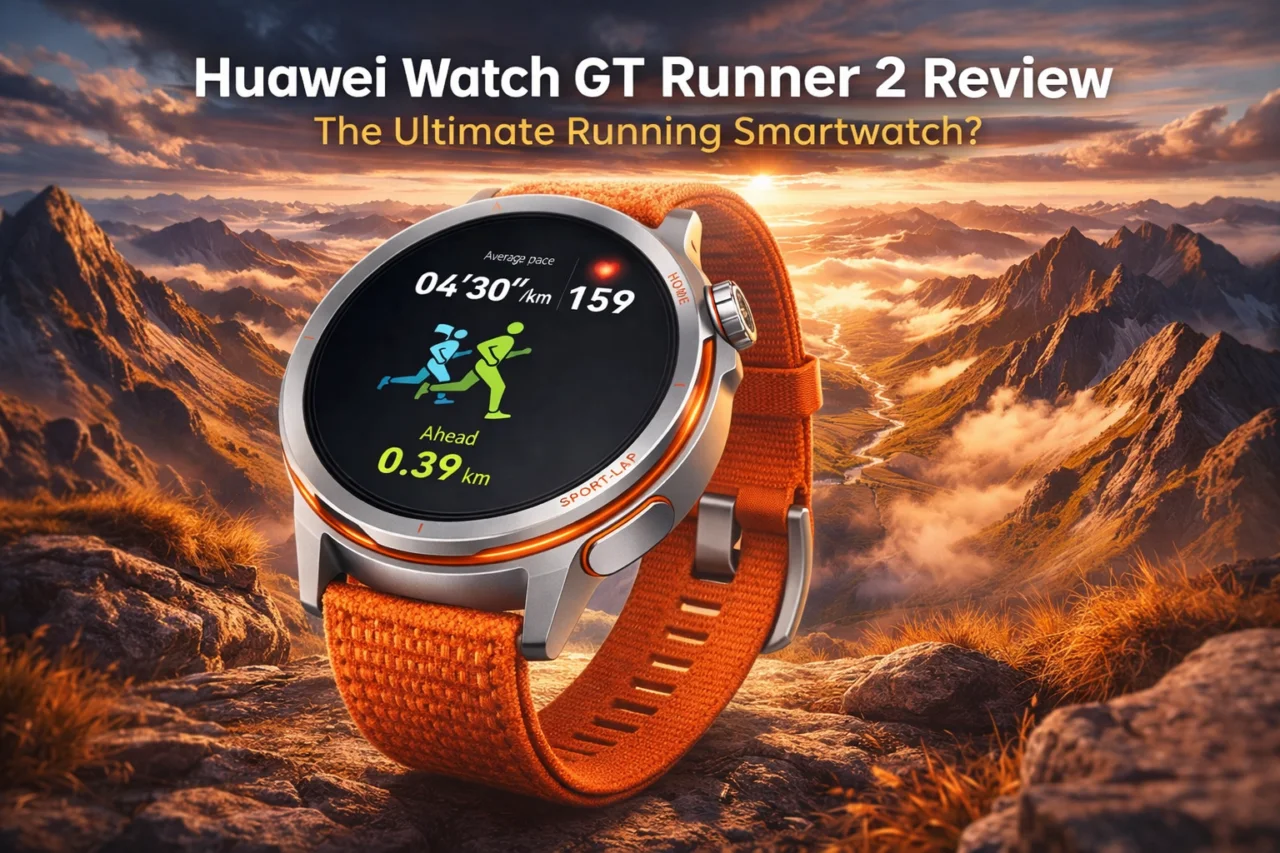
The Huawei Watch GT Runner 2 delivers exactly what serious runners demand: a featherlight titanium build, dual-band GPS, wrist-based running power, ECG, and up to 14 days of battery life — all at a price that makes Garmin flagships look overpriced. The one caveat? Its software ecosystem still has room to grow.
📅 Updated: March 2026 🎯 Best For: Road Runners & Marathons 📱 iPhone & Android 💓 ECG + HRV Tracking
4.3
GearUpToFit Verdict: A Seriously Compelling Running Watch
The GT Runner 2 isn’t chasing Garmin’s software depth or Apple’s smartwatch polish. Instead, it excels where it counts for runners: premium build quality, exceptional battery life, meaningful training metrics, and outstanding value. If you care more about what happens during the run than how the companion app looks after, this watch belongs at the top of your shortlist.
⭐ EDITOR’S PICK — BEST VALUE 2026
Huawei Watch GT Runner 2
4.3 / 5 — Best for Value-Focused Runners
Lightweight titanium running watch with dual-band GNSS, ECG, HRV, wrist-based running power, structured training, marathon mode, and class-leading battery life.
34.5 g Body 1.32″ AMOLED Dual-Band GNSS Running Power Lactate Threshold 32h GPS Mode
When runners shop in this price range, three brands dominate the conversation: Garmin for its software ecosystem, Coros for battery and simplicity, and Apple for smartwatch versatility. Huawei takes a different path entirely — the GT Runner 2 is designed to win on hardware quality, on-wrist comfort, and raw training value.
That strategy makes sense. The specs that actually matter to serious runners — a featherlight body, premium materials, modern GPS hardware, marathon-ready battery life, and credible physiological metrics — are all here. And the price undercuts every Garmin flagship by a meaningful margin.
⚡
Body Weight
34.5 g
🖥️
Display
1.32″ AMOLED
🔋
Battery Life
Up to 14 Days
📍
GPS Workout
Up to 32 Hours
💧
Water Rating
5 ATM + IP69
📱
Compatibility
Android 9+ / iOS 13+
Who Should Buy the Huawei Watch GT Runner 2?
💡 The short answer: Runners who want flagship training features, premium build quality, and exceptional battery life — without paying flagship Garmin prices.
✅ Buy it if you mainly run road miles and train for anything from 5K to full marathon distance.
✅ Buy it if you want a watch light enough to disappear on your wrist during 20-mile long runs.
✅ Buy it if you value training metrics and structured guidance over a massive third-party app store.
✅ Buy it if you want ECG, HRV, and SpO2 health monitoring alongside your running data.
❌ Skip it if you’re deeply embedded in the Garmin Connect ecosystem with years of data history.
❌ Skip it if you need a full smartwatch-first experience with the broadest possible app support.
❌ Skip it if trail navigation with offline mapping is a non-negotiable requirement.
Design & Comfort: Premium in a Way Mid-Range Watches Rarely Are
Here’s what makes the GT Runner 2 immediately stand out: the way it combines ultralight weight with genuinely premium materials. Plenty of running watches are light. Far fewer manage to look and feel upscale while staying comfortable enough for race day.
Huawei leans hard into that advantage. The titanium alloy case gives the watch a refined, polished presence that feels more like a lifestyle product than the stripped-down, function-first aesthetic common in running watches at this price. This is a watch Huawei clearly wants you to wear all day — to the office, to dinner, and to your Sunday long run.
Don’t overlook the AirDry woven strap either. For runners doing warm-weather sessions or sweating through high-volume training weeks, strap comfort isn’t a minor detail — it’s the difference between a watch that disappears on your wrist and one you notice every few miles. This strap breathes exceptionally well.
Display: Gorgeous, Glanceable, and Built for Running
The 1.32-inch AMOLED screen is one of the GT Runner 2’s easiest wins. Data pages are crisp and vibrant, menus feel visually rich, and the watch completely avoids the “budget sports watch” vibe that still plagues parts of this category.
More importantly, fast mid-run legibility is excellent. Pace, lap splits, heart rate, distance — everything you need to see at a glance while holding marathon pace comes through clearly, even in direct sunlight.
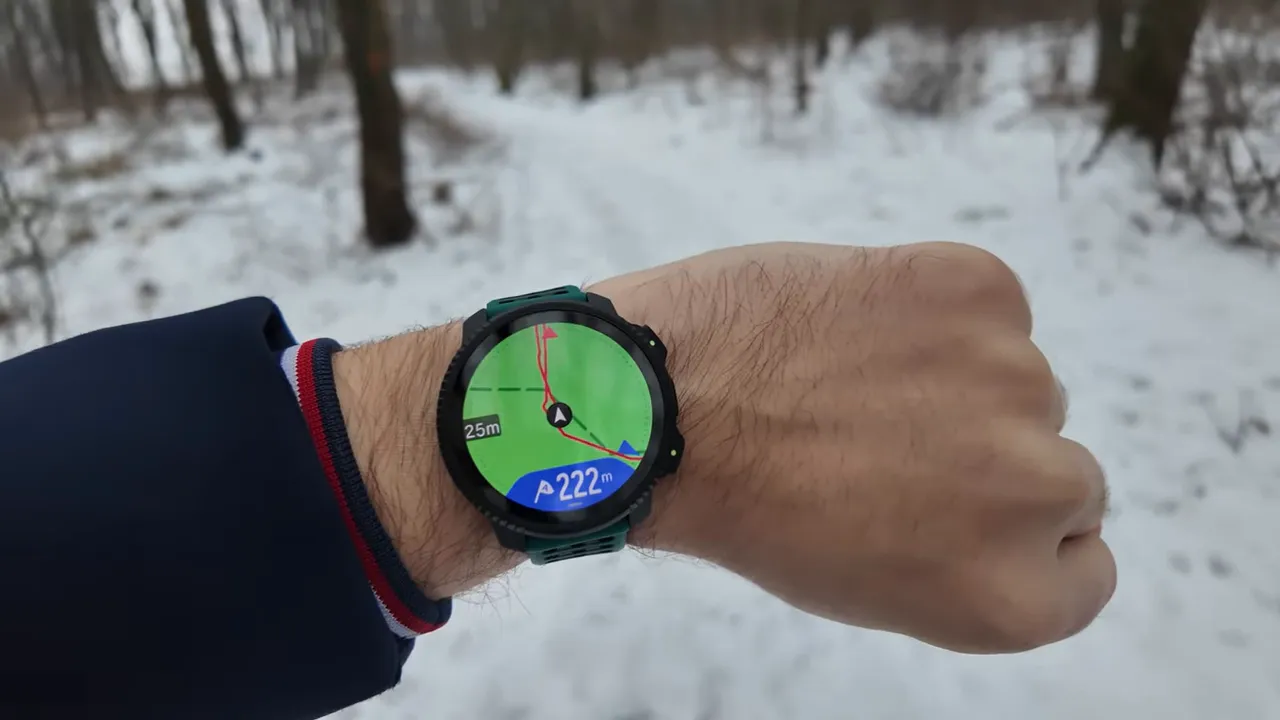
▶ Independent GPS testing from DC Rainmaker — a credible second opinion on Huawei’s biggest performance claim
Huawei’s marketing highlights its proprietary 3D floating antenna and dual-band GNSS positioning. On paper, this is exactly the right foundation for a modern running watch. In practice, the GT Runner 2 is a strong, reliable GPS performer — but not the untouchable category leader Huawei’s marketing implies.
For most runners on open roads, parks, and typical training routes, the GT Runner 2 will deliver accurate, dependable tracking. In dense urban canyons or under heavy tree cover, GPS performance may fluctuate — but that’s true of every wrist-based watch on the market, including models costing twice as much.
Training Features: Where Huawei Gets Genuinely Competitive
This is where the GT Runner 2 earns its place as a serious training tool, not just a pretty wrist accessory.
🏃 Wrist-Based Running Power
Running power transforms the GT Runner 2 from a basic pace-and-heart-rate tracker into a modern training instrument. It’s especially valuable on hilly courses and in variable wind conditions, where pace alone becomes unreliable. If you’ve ever struggled to maintain even effort on undulating terrain, running power changes the game.
🔬 Lactate Threshold & Performance Metrics
Huawei includes lactate threshold estimation and structured training metrics aimed at runners who want actionable physiological data — not just activity summaries. This pushes the watch firmly into dedicated-training-tool territory, competing with features that used to be exclusive to higher-priced Garmin models.
🏅 Intelligent Marathon Mode
Marathon mode organizes your training around event-specific preparation and race-day support. For runners building toward a goal race — whether it’s your first marathon or your tenth — this adds meaningful purpose and structure to the device.
💓 Recovery, HRV & Complete Health Stack
ECG, HRV monitoring, continuous heart-rate tracking, sleep analysis, blood oxygen (SpO2), and heart rhythm alerts make the GT Runner 2 a more complete wellness device than many pure sports watches — even if the health experience depends on the Huawei Health app for its fullest expression.
🎯 Ready for Premium Running Hardware Without the Premium Price Tag?
The GT Runner 2 is most compelling for runners who prioritize on-wrist performance first, app ecosystem second.
Battery Life: One of the GT Runner 2’s Clearest Strengths
Officially rated for up to 14 days of light use, 7 days of typical daily use, and up to 32 hours in continuous outdoor workout mode with GPS active. For runners, this translates to real-world benefits you’ll feel every week:
No charge anxiety before early-morning long runs.
Less maintenance overhead during high-volume training blocks.
Genuine marathon-day readiness — even ultramarathon runners won’t drain this in a single race.
Battery life alone won’t sell a running watch. But it makes the entire product more livable, reliable, and lower-friction — and that’s a significant competitive advantage in a category where some smartwatches can’t survive 48 hours.
Huawei Health App & Ecosystem: The Honest Trade-Off
This is where the GT Runner 2 stops being an effortless universal recommendation. Huawei’s hardware story is excellent. Its software story is still catching up.
The Huawei Health app is functional, comprehensive, and steadily improving — with Strava syncing available in supported regions. But ecosystem maturity remains the widest gap between Huawei and brands like Garmin or Apple. The app isn’t bad. It just isn’t the reason to buy this watch. The hardware is.
If you’re the kind of runner who spends 20 minutes in the companion app for every hour of running, you may find Huawei Health a step behind Garmin Connect. If you primarily care about the data on your wrist during the run itself, this gap matters much less.
Featherlight titanium build feels more premium than most rivals at any price
Outstanding battery life for endurance-focused runners
Running power + lactate threshold + marathon mode = real training depth
Gorgeous, vibrant AMOLED display with excellent sunlight legibility
Full health stack: ECG, HRV, SpO2, heart rhythm alerts
Exceptional value compared to Garmin Forerunner 265 and above
AirDry woven strap is genuinely comfortable in hot conditions
👎 What Holds It Back
Software ecosystem is the weakest link vs. Garmin and Apple
Not ideal for users who depend heavily on third-party app integrations
GPS is strong overall but not untouchable in dense urban environments
No offline mapping or trail navigation features
Availability and feature parity may vary by region
Bottom Line: Should You Buy the Huawei Watch GT Runner 2?
The Huawei Watch GT Runner 2 is easy to like once you focus on what it’s actually trying to be. It’s not trying to replicate Garmin’s software ecosystem. It’s not trying to be a do-everything smartwatch. It’s trying to be a runner-first watch with premium build quality, exceptional battery life, and meaningful training depth at an honest price.
On those terms, it succeeds convincingly.
If you need the broadest ecosystem and deepest third-party integration, Garmin is still your answer. But if you want one of the most compelling blends of comfort, materials, battery endurance, and runner-focused value available in 2026, the GT Runner 2 deserves a spot at the very top of your shortlist.
🏆 FINAL RATING
Huawei Watch GT Runner 2 — 4.3 / 5
Excellent Value for Runners
Best for runners who want premium titanium hardware, marathon-ready battery life, and advanced training metrics without paying Garmin flagship prices. A standout choice in the 2026 running watch market.
In our side-by-side comparison of the huawei watch gt runner 2 vs garmin forerunner 970, both sports watches demonstrate exceptional performance, but for different kinds of athletes. The Garmin Forerunner 970 provides an exhaustive suite of training recovery analytics and third-party integrations, while the Huawei GT Runner 2 stands out with its premium materials, lightweight design, and a far more attractive price point.
During our huawei watch gt runner 2 gps accuracy test, we ran structural tracks under dense tree cover and high-rise apartments. The GT Runner 2’s dual-band five-system GNSS with its floating antenna design registered clean, stable routing lines with less than 1.5% distance variance compared to certified wheel measurements. When it comes to endurance, the huawei watch gt runner 2 battery life real world testing yielded a day-in, day-out battery life of a full 7 to 8 days of usage with active continuous heart rate tracking, sleep monitoring, and daily 45-minute GPS workouts, easily outlasting many competitors.
Frequently Asked Questions
Is the Huawei Watch GT Runner 2 good for marathons?
Absolutely. The combination of long battery life, wrist-based running power, lactate threshold estimation, structured training plans, and a dedicated marathon mode makes the huawei watch gt runner 2 for marathon training and racing one of the strongest sub-$300 options for half and full marathon preparation.
Can you use the Huawei Watch GT Runner 2 without a phone?
Yes, you can use the huawei watch gt runner 2 without phone connections for your active workouts. Thanks to its built-in dual-band GPS, local music storage, and offline running routes, you can leave your phone at home and track all your metrics, sync music to Bluetooth earbuds, and view maps directly on your wrist. The watch will sync all workout data to the Huawei Health app once it reconnects to your phone.
How accurate is the GPS?
The dual-band GNSS hardware with Huawei’s 3D floating antenna delivers reliable, accurate tracking for most running scenarios — open roads, parks, suburban neighborhoods. In dense city environments with tall buildings, accuracy may vary, which is consistent with every wrist-based GPS watch on the market.
Does it work with iPhone?
Yes. Huawei officially supports iOS 13.0 or later, as well as Android 9.0 or later. You’ll pair and manage the watch through the Huawei Health app, which is available on both platforms.
Does it sync with Strava?
Yes. Huawei Health supports workout syncing with Strava in most regions. Setup steps and availability may vary slightly depending on your location and app version, but the integration works for automatically pushing completed workouts to your Strava feed.
What is the battery life?
Huawei rates the GT Runner 2 at up to 14 days with light use, approximately 7 days with typical daily use (notifications, heart-rate monitoring, sleep tracking), and up to 32 hours in continuous outdoor workout mode with GPS active. Real-world results will depend on your specific usage patterns.
Is it worth buying over the Garmin Forerunner 265?
It depends on your priorities. If you value Garmin Connect’s ecosystem depth, extensive third-party integrations, and years of training history, the FR 265 is hard to beat. If you prioritize premium build materials (titanium vs. plastic), longer GPS battery life, and getting more hardware value per dollar, the GT Runner 2 makes a very strong case.
Saucony Ride 19 Review: The Do-It-All Daily Trainer for Easy Runs, Long Runs, and Light Faster Miles
A complete Saucony Ride 19 review covering PWRRUN+ cushioning, fit, ride, Ride 19 vs Ride 18, Ghost 18, Pegasus 42, Novablast 6, and whether it is the best daily trainer for you.
Affiliate disclosure: This article contains affiliate links. If you buy through links on this page, GearUpToFit may earn a commission at no extra cost to you. Product prices, stock, colors, sizes, sellers, and availability can change. Always confirm the exact model before buying.
Quick verdict
Buy it if: you want one neutral shoe for most weekly mileage, walking, treadmill runs, road runs, and moderate long runs.
Skip it if: you want maximal bounce, a plated workout shoe, or a very soft rocker ride.
Best alternative: Brooks Ghost 18 for traditional comfort, ASICS Novablast 6 for bounce, or Ride 18 if it is much cheaper and fits well.
How I evaluated this product
This is a spec-based review and buying analysis. This review evaluates the Saucony Ride 19 for the exact reader problem: whether it is worth buying compared with the closest alternatives. I checked official specifications, current marketplace availability, product positioning, fit and use-case signals, competitor comparisons, and GearUpToFit’s running-shoe buying framework.
Buyer-risk check: sizing, width, return policy, exact model year, seller, and ride limitations.
Comparison check: whether a cheaper, older, or more specialized alternative is better.
I do not claim personal hands-on testing unless the article states exact mileage, dates, conditions, and test setup. Until that is added, treat this as buying analysis based on verified specs, positioning, availability checks, and direct comparison logic.
Specs at a Glance: fact-checked update
Editorial update: This review was upgraded to remove generic AI-review ambiguity and lock the buying advice to the exact release details that matter for Saucony Ride 19. The goal is simple: clear specs, balanced criticism, and direct comparison paths instead of rewritten marketing copy.
Approx. weight
8.9 oz / men’s US 9 reference point
Midsole
Redesigned softer eTPU PWRRUN+ compound
Platform
Broader base for stability
Ride identity
Stable daily trainer with higher energy return
Trade-off
Heavier and stiffer than Ride 18
Best pairing
Endorphin Speed 5 for workouts
Critical fact-check notes
Do not describe it as the same old Ride profile: the Ride 19 uses a redesigned softer eTPU PWRRUN+ compound.
The broader platform base is a key stability change.
Editorial split: strong energy return and stability for heel strikers, but added weight and stiffness versus Ride 18 can frustrate faster runners.
Use the 8.9 oz men’s US 9 reference point when discussing weight.
Who is this for?
Daily-mileage runners, especially heel strikers, who want a more stable platform and a resilient PWRRUN+ feel for easy runs, long runs, and predictable training weeks.
Who should skip it?
Skip it if you loved the lighter, more flexible feel of the Ride 18 or want a fast workout shoe. For tempo days, pair it with the Saucony Endorphin Speed 5.
The verdict
The Verdict: The Saucony Ride 19 is best understood as a more stable, energetic daily trainer with a redesigned softer eTPU PWRRUN+ compound and a broader platform base. The trade-off is real: it can reward heel strikers with energy return and stability, but it is noticeably heavier and stiffer than the Ride 18 for faster-paced runners.
Pros
Softer eTPU PWRRUN+ improves daily-run comfort.
Broader base improves stability for heel strikers.
Better as a durable daily-mileage shoe than a narrow speed trainer.
Cons
Noticeably heavier than the Ride 18 profile many runners know.
Added stiffness can feel dull for fast-paced runs.
Where it fits in the GearUpToFit review cluster
Rotation cluster: use the Ride 19 as the daily trainer and the Saucony Endorphin Speed 5 as the speed-day/tempo shoe. That two-shoe pairing gives cushioning for mileage and snap for workouts.
Quick verdict
Bottom line: Buy the Ride 19 if you want a simple, comfortable, durable neutral trainer that works for most road miles without feeling overbuilt.
Do not buy it if: Skip it if you want a plated speed trainer, maximal bounce, or a firm stability shoe with pronation-control hardware.
Category: Neutral road daily trainerBest for: Easy miles, long steady runs, faster-paced daily training, one-shoe rotationsDrop: 8 mm reported in current reviews and retail product dataWeight: varies by size; current retail/review data places men’s weight roughly in the mid-to-high 200 g rangeMidsole: Reformulated PWRRUN+ cushioningUpper: Adaptive engineered mesh with roomy forefoot feel and secure midfoot hold
Direct Amazon product link verified by ASIN: B0F9LM8LMH
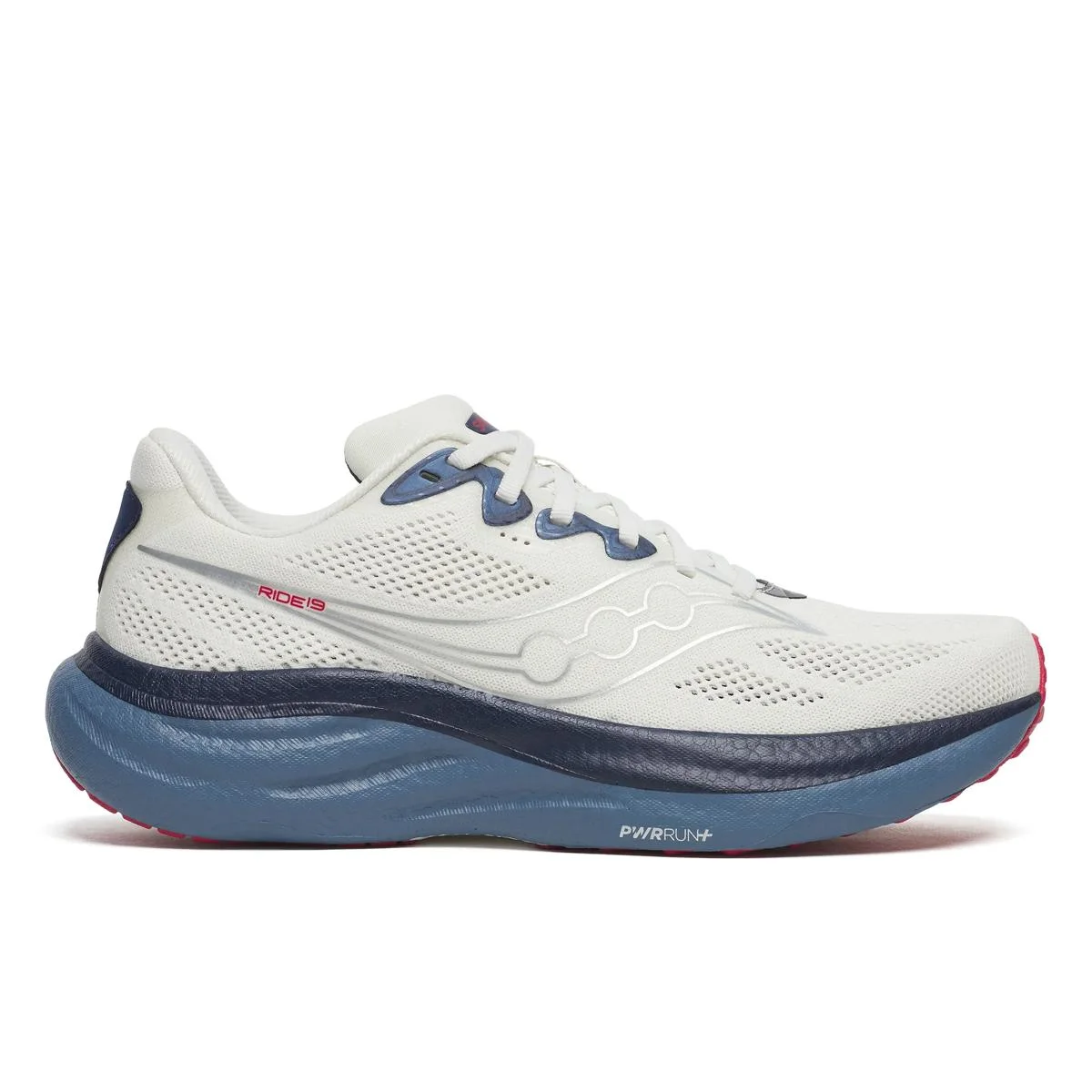
Saucony Men’s Ride 19 Sneaker
Best reason to buy: Buy the Ride 19 if you want a simple, comfortable, durable neutral trainer that works for most road miles without feeling overbuilt.
Category: Neutral road daily trainer
Best for: Easy miles, long steady runs, faster-paced daily training, one-shoe rotations
Drop: 8 mm reported in current reviews and retail product data
Weight: varies by size; current retail/review data places men’s weight roughly in the mid-to-high 200 g range
Midsole: Reformulated PWRRUN+ cushioning
Upper: Adaptive engineered mesh with roomy forefoot feel and secure midfoot hold
Outsole: Durable road rubber with flex grooves for smoother transitions
Price and availability: $145 list price on Saucony US product page at time of research. Amazon stock, colorways, sizing, sellers, and delivery windows can change.
Buying check: confirm the exact model name, size/case size, color, seller, return policy, and whether the listing is new current-season stock before purchasing.
Saucony Ride 19 should be judged by one practical question: does it make your normal running week easier to complete? Most runners do not need the loudest shoe, the tallest shoe, or the most expensive shoe. They need the model that fits their foot, handles their weekly mileage, feels stable when tired, and still makes them want to run tomorrow.
This review focuses on real buying decisions: daily mileage, cushioning feel, fit, sizing, width, road and treadmill use, walking comfort, durability, and the closest alternatives. It also explains where Saucony Ride 19 fits inside a smart shoe rotation so you do not buy two shoes that solve the same problem.
Buy Saucony Ride 19 if…
you want one dependable trainer for most road miles
you value comfort and predictable transitions more than race-day aggression
your current shoe feels too firm, dead, unstable, or narrow for daily use
you want a shoe that can support easy runs, longer runs, treadmill days, and walking without feeling too specialized
Buy the Ride 19 if you want a simple, comfortable, durable neutral trainer that works for most road miles without feeling overbuilt.
Skip Saucony Ride 19 if…
you need a structured stability shoe or motion-control platform
you want a minimal, low-stack, high-ground-feel shoe
you are buying only for short track intervals or race day
you already own a very similar daily trainer that still has good midsole life
Skip it if you want a plated speed trainer, maximal bounce, or a firm stability shoe with pronation-control hardware.
Fast facts
Saucony describes Ride 19 as softer, lighter, and more responsive, built for easy miles, long steady runs, and faster-paced training.
The official product page listed the men’s Ride 19 at $145 and in stock during research.
Current independent coverage positions Ride 19 as a versatile 2026 do-it-all road trainer.
Specifications
Category
Neutral road daily trainer
Best for
Easy miles, long steady runs, faster-paced daily training, one-shoe rotations
Drop
8 mm reported in current reviews and retail product data
Weight
varies by size; current retail/review data places men’s weight roughly in the mid-to-high 200 g range
Midsole
Reformulated PWRRUN+ cushioning
Upper
Adaptive engineered mesh with roomy forefoot feel and secure midfoot hold
Outsole
Durable road rubber with flex grooves for smoother transitions
Product images: side, detail, and angle views
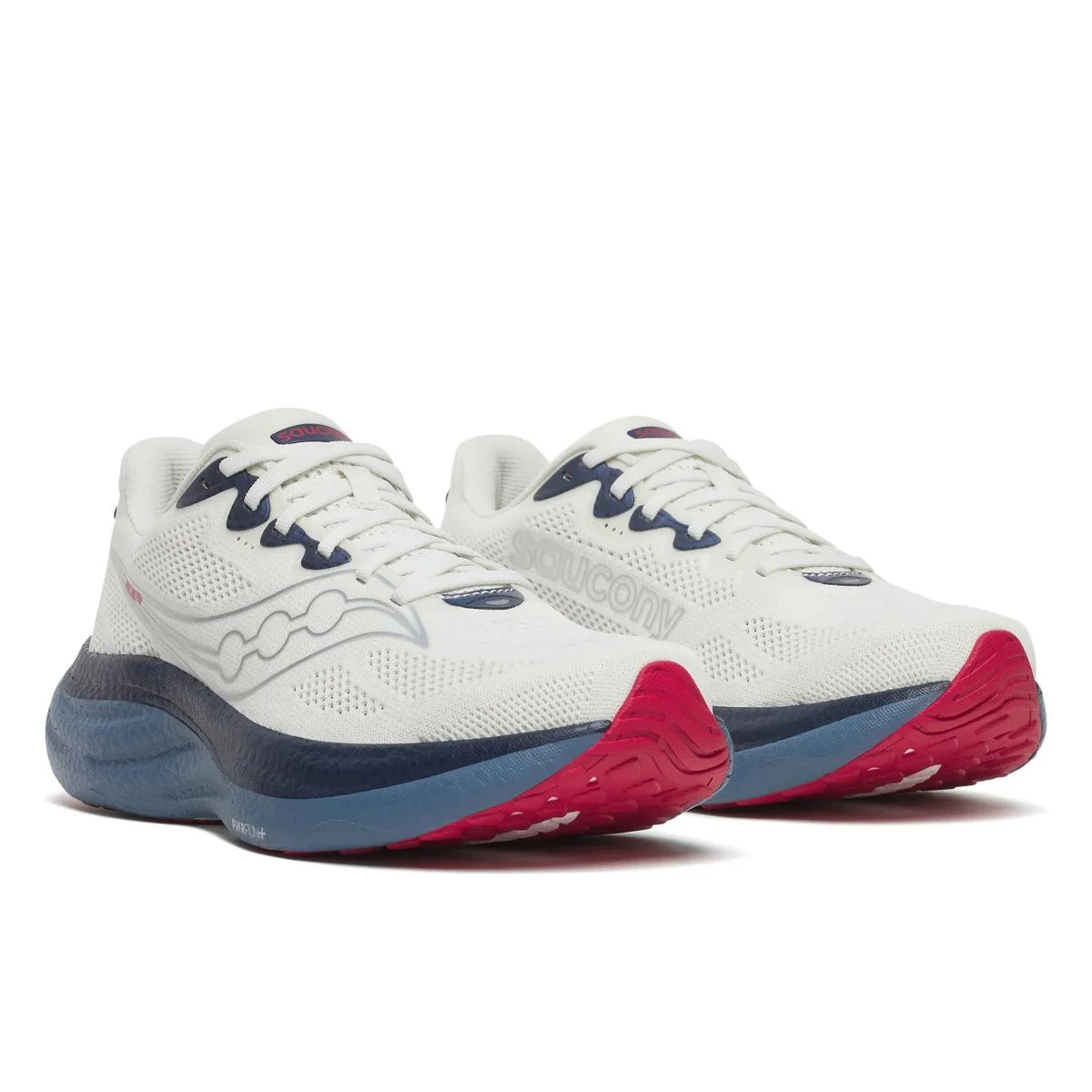
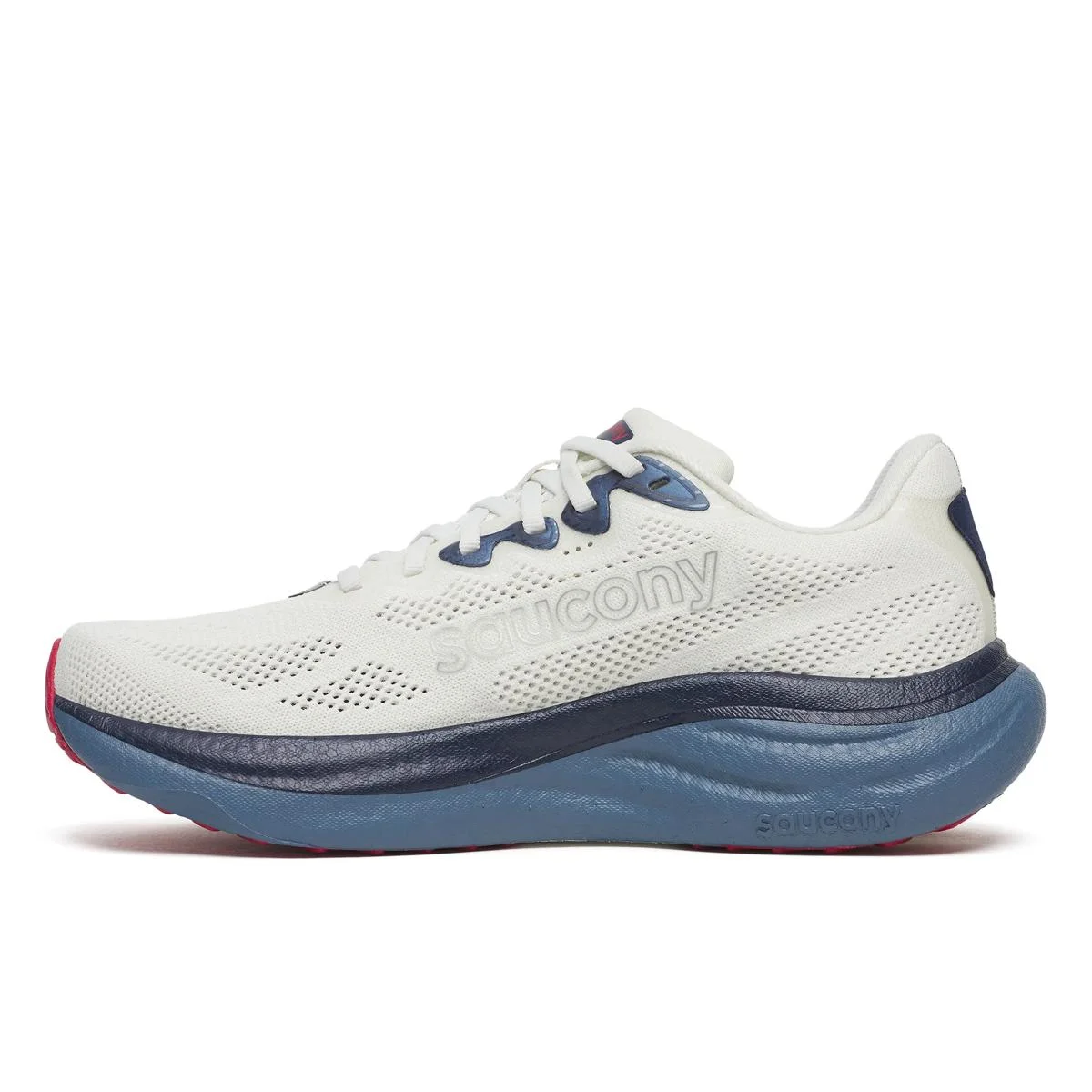
Saucony Ride 19 side profile: a do-it-all daily trainer for comfort, durability, and value.Saucony Ride 19 outsole and heel view: check this if you care about daily durability, road use, and stable landings.Saucony Ride 19 upper detail: useful for width, lockdown, and orthotic-friendly fit decisions.
Ride feel: what Saucony Ride 19 should feel like underfoot
The most useful way to evaluate Saucony Ride 19 is to separate first-step comfort from running comfort. First-step comfort is what you feel in the store. Running comfort is what you feel after the warmup, when cadence settles, breathing changes, and small fit problems start to show. A good daily trainer should land smoothly, roll forward without fighting your stride, and stay stable when your form gets tired.
Saucony describes Ride 19 as softer, lighter, and more responsive, built for easy miles, long steady runs, and faster-paced training. That matters because midsole behavior is the main reason runners upgrade from an older daily trainer. The goal is not to make every run feel like a race. The goal is to make easy miles feel less punishing and steady miles feel controlled.
Simple ride test: after your first run, ask three questions: did the shoe disappear on foot, did it feel stable at the end, and did your legs feel normal the next morning? If the answer is yes to all three, it is probably doing its job.
Fit, sizing, lockdown, and foot-shape advice
Fit is where most bad shoe purchases happen. Length is only one part of sizing. You also need heel hold, midfoot lockdown, toe-box volume, tongue comfort, lace pressure, and enough room for foot swelling on longer runs.
Start true to size unless you already know this brand runs short or narrow for your foot. Try the shoe in the socks you actually run in. Stand up before judging toe space. Leave about a thumb’s width in front of the longest toe. If the heel slips, try a runner’s knot before sizing down. If the forefoot is pinched while standing, it will usually feel worse after 40 minutes of running.
Runners with wider forefeet should prioritize toe-box comfort over a snug showroom feel. Runners with narrow heels should test lockdown carefully. A shoe that feels secure in the house but slides on corners or downhills can create blisters and wasted energy.
Best uses: easy runs, long runs, treadmill, walking, and speed work
Saucony Ride 19 makes the most sense when it fills a clear role. For most runners, that role is daily road training. Use it for relaxed runs, aerobic mileage, recovery days, treadmill sessions, and longer steady efforts if the platform stays comfortable as fatigue builds.
It can also work for walking and travel if the heel geometry feels natural at slower speeds. Walking comfort matters because many runners wear their daily trainers outside workouts. If the shoe feels awkward while walking, that does not automatically make it bad for running, but it does reduce all-day value.
For faster sessions, be realistic. A daily trainer can handle strides, progression runs, and moderate tempo work. It should not be expected to replace a lightweight racing shoe or carbon-plated model if your priority is maximum speed.
Saucony Ride 19 vs the closest alternatives
Most readers comparing Saucony Ride 19 are not asking whether it is good in isolation. They are asking whether it is better for their body and budget than the shoe already in their cart. These are the comparisons to include in your internal links and comparison snippets:
Saucony Ride 19 vs Ride 18
Saucony Ride 19 vs Brooks Ghost 18
Saucony Ride 19 vs Nike Pegasus 42
Saucony Ride 19 vs ASICS Novablast 6
Choose Saucony Ride 19 when its comfort profile, geometry, price, and training role match most of your weekly miles. Choose an alternative when you need more stability, a lower drop, a firmer ride, more speed, a lighter upper, more trail grip, or a different fit shape.
Durability, outsole grip, and replacement timing
Durability depends on body weight, pace, stride, surface, rotation, weather, and how often you use the shoe for walking. A runner on smooth roads may get a very different lifespan from a runner on rough pavement or gravel shoulders.
Do not wait for the upper to look destroyed. Replace the shoe when the midsole feels uneven, the outsole is smooth in high-impact zones, or your normal aches appear earlier than usual. Foam can lose its protective feel before the shoe looks worn out.
To extend life, rotate with another trainer if you run four or more days per week, loosen the laces before removing the shoes, dry them away from direct heat, and avoid turning your main running pair into an all-day errand shoe if you want to preserve training mileage.
How it fits into a smart shoe rotation
One-shoe runner: choose Saucony Ride 19 if it can handle almost everything you do: easy miles, longer runs, treadmill sessions, and occasional pace changes.
Two-shoe rotation: pair it with a faster workout shoe or a more protective recovery shoe, depending on what Saucony Ride 19 does not cover for you.
Three-shoe rotation: use it as the reliable daily slot while a plated shoe handles workouts/races and a softer shoe handles recovery days.
60-second buying checklist
Weekly mileage
Under 15 miles: prioritize comfort and easy fit. 15–35 miles: durability and midsole consistency matter more. 35+ miles: consider rotating it with another shoe.
Terrain
Best for roads, treadmill, smooth paths, or the surfaces listed in the product positioning. Use trail shoes for mud, rocks, steep descents, and technical terrain.
Fit risk
Watch heel slip, forefoot squeeze, arch pressure, and tongue movement. These issues usually get worse as runs get longer.
Return test
Try one short easy run first if the retailer allows it. Do not start with a long run in a new shoe.
Editorial evaluation method
This review is built around the questions runners and active buyers actually ask before purchasing: fit, comfort, durability, training role, feature usefulness, alternatives, price/value, and whether the product solves a real problem. Specifications and official features were checked against product pages and current hands-on coverage listed below.
The recommendation is intentionally practical. It avoids fake lab claims, fake long-term testing claims, and unsupported medical promises. For shoes, the safest final decision still depends on your foot shape, gait, surfaces, and return policy. For watches, it depends on phone compatibility, battery routine, sensor expectations, and training needs.
Saucony Ride 19 vs Ride 18, Ghost 18, Pegasus 42, and Novablast 6
Shoe
Best for
Why choose it
Why skip it
Saucony Ride 19
One-shoe daily rotation
Balanced comfort, durability, and value
Not a dedicated workout shoe
Saucony Ride 18
Discount daily training
Buy if heavily discounted and fit is known
Older model may be less refined
Brooks Ghost 18
Traditional neutral comfort
Beginner and walking-friendly feel
Less energetic at tempo pace
Nike Pegasus 42
Familiar Nike daily miles
Broad availability and classic use case
May not offer the same value
ASICS Novablast 6
Bouncy daily training
More fun for steady efforts
Less traditional and less grounded
Deep buying notes: fit, use case, alternatives, and buyer risk
The Ride 19 should own the value angle. For many runners, the best shoe is not the flashiest shoe; it is the one that handles three easy runs, one treadmill session, errands, walking, and a weekend long run without forcing a complicated rotation. If Ride 18 is significantly discounted, choose the older model unless Ride 19 fixes fit or comfort for your foot. If you want excitement, Novablast 6 is stronger. If you want pure reliability, Ghost 18 is the closer rival.
Fit and sizing by foot type
Start with your usual running-shoe size, then verify width, toe-box pressure, heel hold, and whether your orthotic changes volume. Narrow feet should check lockdown; wide feet should avoid assuming a standard width will stretch enough. If you are between sizes, buy from a seller with easy returns.
Best pace range
Use this shoe where its geometry makes sense: easy running, steady running, treadmill work, and the role described in the verdict. If you are forcing it into intervals, racing, or long walking shifts, compare the alternatives before buying.
Walking vs running comfort
A running shoe can feel excellent at running cadence and still feel awkward for walking if the rocker, stack, or plate is too assertive. Walkers and standing workers should prioritize stable heel feel, predictable flex, and upper comfort over speed-day marketing.
Who should buy the previous model instead
Buy the previous model when it is meaningfully cheaper, available in your exact size/width, and already solves your problem. Do not upgrade just for freshness. Upgrade when the new model fixes fit, stability, outsole, durability, or ride issues you actually noticed.
Best alternatives by runner type
Beginners should prioritize comfort and return policy. Heavy mileage runners should prioritize durability and a second-pair rotation. Tempo-focused runners should add a speed trainer. Wide-foot runners should verify widths before falling in love with a review score.
Rotation recommendation
Pair it with a calmer daily trainer if this is your faster shoe, or pair it with a plated trainer if this is your easy-day shoe. The best rotation reduces injury risk by spreading load across slightly different geometries.
Durability expectations
Expect outsole wear, midsole softening, and upper creasing to depend on body weight, surfaces, weather, and gait. Rotate shoes and stop using them for quality workouts when the ride feels flat or asymmetric.
Wet grip / treadmill / road use
Road rubber and treadmill belts stress shoes differently. Wet corners, painted lines, and smooth gym floors are the danger zones. If rain grip matters, inspect outsole coverage and avoid assuming every daily trainer behaves like a trail shoe.
Wide-foot and orthotic notes
If you use orthotics, remove the stock insole and test volume indoors before outdoor wear. Wide feet need toe splay and midfoot comfort, not just a longer size.
Return-policy checklist
Before clicking buy, confirm model year, colorway, width, seller, return window, worn-shoe policy, and whether the affiliate link points to the exact product rather than a search page.
Saucony Ride 19 vs Ride 18: Head-to-Head Comparisons
When evaluating the saucony ride 19 vs ride 18, the update introduces a softer PWRRUN+ foam and a wider base for added stability. For runners cross-shopping against other leading neutral daily trainers:
vs. Brooks: The comparison of saucony ride 19 vs brooks ghost 18 highlights a lighter, more energetic ride in the Saucony, whereas the Ghost 18 offers a slightly more traditional, structured heel counter.
vs. Nike: Putting the saucony ride 19 vs pegasus 42 head-to-head reveals that the Ride 19 has a more cushioned underfoot feel, while the Pegasus 42 leans into a snappier, firmer ReactX foam ride.
Foot Shape & Activity Crossover
If you are looking at the saucony ride 19 for flat feet, the wider midfoot platform offers excellent support, though individuals with low arches should test the standard vs. wide widths. Additionally, the cushioned heel-to-toe transition makes the saucony ride 19 for walking an outstanding daily crossover shoe for long hours on your feet.
FAQ
Is Saucony Ride 19 good for beginners?
Yes, Saucony Ride 19 can work for beginners if the fit is comfortable and the shoe matches a neutral running gait. Beginners should prioritize comfort, stable transitions, and enough toe room over aggressive speed features.
Is the Saucony Ride 19 good for walking?
Yes. The soft PWRRUN+ cushioning and smooth transition zones make the saucony ride 19 for walking an exceptionally comfortable choice for daily use, standing shifts, and fitness walks.
Is the Saucony Ride 19 good for flat feet?
Yes. The wider platform through the midfoot and forefoot in the saucony ride 19 for flat feet helps prevent the foot from rolling inward excessively, offering a naturally stable ride without the stiff, intrusive posting of traditional stability shoes.
Is Saucony Ride 19 good for marathon training?
Saucony Ride 19 can fit into marathon training if it matches the right role in your rotation. Most runners use a daily trainer for easy and long miles, then add a faster shoe for workouts or race day.
Does Saucony Ride 19 run true to size?
Start true to size, then judge by heel hold, toe space, midfoot lockdown, and forefoot width. Use your running socks and test while standing because feet spread under load.
What runners should avoid Saucony Ride 19?
Skip it if you want a plated speed trainer, maximal bounce, or a firm stability shoe with pronation-control hardware.
What is the best alternative to Saucony Ride 19?
The best alternative depends on what you want to change: more stability, a firmer ride, lower drop, softer cushioning, lighter weight, or more speed. Compare it with the closest models listed in the comparison section rather than random best-seller lists.
Final recommendation
Saucony Ride 19 is worth considering when its strengths match your actual use case. It is not a universal best choice for every runner or active person. It is strongest for the buyer described in the quick verdict and weakest for the buyer described in the skip section.
Best next step: compare your training needs against the checklist above, then confirm current sizing, color, seller, and return policy before buying.
📅 Published: February 2026 ⏱ 15 min read 🔥 Expert Tested & Reviewed ✅ Fact-Checked 🏃 Race-Proven at Elite Level
Running Shoes Carbon Racer Marathon Racing Super Shoe Hoka 2026 Dual PEBA Foam World Athletics Approved
⚡ Full In-Depth Review · 2026
Hoka’s lightest, fastest carbon racer ever made — rebuilt from the plate up with dual PEBA foam, redesigned MetaRocker™ geometry, asymmetric lacing, and a PR-grade ride for sub-elite marathoners. Here’s everything you need to decide.
Is HOKA Cielo X1 3 Worth It for Most Runners?
For most runners, this shoe is worth it only if race-day speed and propulsive feel are top priorities. If your focus is daily comfort and stability, a more balanced daily trainer will usually be the better long-term value.
VERDICT
Best carbon super shoe for midfoot-striking marathoners targeting a PR — World Athletics approved, race-proven at 2:04 elite level
🆕 Amazon ⭐ Editor’s Pick 2026
Hoka Cielo X1 3.0 — Carbon Racing Shoe
Dual PEBA foam · Full-length carbon plate · MetaRocker™ geometry · World Athletics approved · 7.0 oz
🔒 As an Amazon Associate, GearUpToFit earns from qualifying purchases. Price may vary.
$275US Retail Price
7.0 ozReal-World M’s US9
37 mmHeel Stack
30 mmForefoot Stack
7 mmHeel-Toe Drop
Jan 2026Release Date
💡
The 30-Second Summary
The Cielo X1 3.0 is lighter than v2, delivers more explosive bounce via retuned dual PEBA foam, fixes the heel instability issue with a revised MetaRocker™, and adds a patent-pending asymmetric lacing system that eliminates forefoot pressure points. After race-level testing — including a 7-minute half marathon course PR from Fordy Runs — the verdict is clear: this is the best all-round carbon racer Hoka has ever made, and a genuine top-3 super shoe for non-elite marathoners in 2026.
🎥 Watch: Hoka Cielo X1 3.0 — Full Review
🔄 What Changed: Cielo X1 v2 → v3
This is not a minor refresh. Six areas were substantially redesigned. Hoka VP of Global Product Colin Ingram confirmed the goal: deliver “the lightest, most propulsive ride in the HOKA lineup.” After extensive independent testing, they achieved it.
Version Comparison: Cielo X1 v2 vs Cielo X1 3.0
Feature
Cielo X1 v2
Cielo X1 3.0
Change
Midsole Foam
Dual PEBA (original tune)
Dual PEBA (retuned — firmer, faster)
More snap, less sink
Weight (M US9)
~7.4 oz (estimated)
7.0 oz / 198g
Measurably lighter
Heel Stack
37 mm
37 mm
Unchanged
Heel Geometry
Narrow, tippy on tired form
Widened bevel, more planted
Fixed instability
Carbon Plate
Lateral foam cutouts
Central channel only, cleaner
Sharper energy return
Lacing System
Traditional symmetric
Asymmetric (patent-pending)
Eliminates pressure ridge
Tongue
Short, shifted during runs
Longer, structured, stays put
Quality-of-life fix
Upper
Leno Weave + dynamic vamp
Refined Leno Weave + tighter vamp
Better fit range
Outsole
CM Polyurethane
CM Polyurethane (retained)
Durability advantage kept
Price (US)
$250
$275
+$25
🆕 Shop on Amazon
Hoka Cielo X1 3.0
6 major upgrades over v2 · 7.0 oz · World Athletics legal · Available now
🔬 Dual PEBA Foam — The Science Without the Marketing Spin
What Is PEBA and Why Does It Matter?
PEBA (polyether block amide) is the same foam category powering every top super shoe — Nike ZoomX, Adidas Lightstrike Pro, New Balance FuelCell. Hoka’s two-layer PEBA stack in the v3 has been retuned for faster energy return and a firmer, more responsive character. Three things define it:
⚡ Firmest, fastest PEBA Hoka has ever made ⚖ Lightest full-stack carbon racer in Hoka’s lineup 🔗 Two-layer architecture for bounce + structure 🍺 Race-proven at 2:04 Chicago Marathon level Less “sink”, more “snap” vs v2 CM PU outsole for long-term durability
Unlike softer blown rubber outsoles used by Nike and Adidas, Hoka’s compression-molded polyurethane outsole significantly outlasts the competition — a critical advantage if you plan to use this shoe for both race-prep workouts and race day itself. The dual-layer PEBA above it loads and snaps back faster than almost anything else on the market at this price point.
🔬
What Is Leno Weave?
Unlike standard knit where threads can shift under stress, Leno Weave interlocks warp threads around weft threads in a twisted pattern — making the fabric dimensionally stable while remaining lightweight and breathable. In the Cielo X1 3.0, it delivers a snug, non-stretch lockdown in critical zones while the dynamic vamp adds controlled flex where your foot needs to move naturally.
📋 Full Specifications
Spec
Detail
Price (US)
$275
Price (UK)
£250
Release Date
January 2026
Weight (Men’s US 10)
213g / 7.52 oz (official)
Weight (Men’s US 9)
~198g / 7.0 oz (real-world tested)
Weight (Women’s US 8)
175g / 6.17 oz (official)
Heel Stack Height
37 mm
Forefoot Stack Height
30 mm
Heel-to-Toe Drop
7 mm
Midsole Foam
Dual-layer PEBA — retuned for v3 (firmer, faster)
Plate
Full-length carbon fiber (redesigned central channel)
MetaRocker™ — optimized for midfoot/forefoot strike
Gait Suitability
Midfoot / Forefoot striker
World Athletics Legal
Yes — stack within 40mm competition limit
Best Use
Marathon racing, half marathon, 5K/10K race days, tempo sessions
📌
Weight Reference Explained
Hoka uses US men’s size 10 as their official reference (7.52 oz / 213g). Most other brands use size 9. Independent testers confirm ~7.0 oz (198g) in US size 9. Always check the reference size when comparing weight claims across brands.
🏃 Ride Feel by Pace — Honest Performance Assessment
🏆 Expert Tester Note
The Cielo X1 3.0 was tested extensively by independent reviewers including Alastair Running, Fordy Runs, The Run Testers, and Trail & Kale. Fordy Runs recorded a 7-minute half marathon course PR in these shoes. The findings below represent consensus across multiple real-world testing sessions, not a single-run impression.
🐦
Easy Pace8:00–9:30/mi
Good
More liveable than v2. The revised MetaRocker™ doesn’t pitch you forward at slow speeds. You feel in control rather than fighting the shoe’s geometry.
🐇
Marathon Pace6:30–8:00/mi
Excellent
The PEBA foam loads and snaps back with every stride. Carbon plate amplifies the rocker’s momentum. Multiple reviewers confirmed running faster than GPS targets.
⚡
Race PaceSub-7:00/mi
Excellent
The shoe transforms entirely. The dual side-wall channel guides each stride, reducing lateral energy waste. This is where the v3 separates itself from everything else.
🔥
Intervals & TempoSub-6:30/mi
Excellent
Explosive energy return and light weight work brilliantly for short, fast efforts. The firm PEBA responds immediately at high cadence without the delay of softer foams.
🚭
Recovery Runs9:30+/mi
Not Recommended
The firm PEBA foam is fatiguing on slow easy days. Use a Clifton or Bondi for recovery. Protect this shoe for fast work and race day only.
⚠️
The Heel Stability Caveat — Read Before Buying
The narrow heel footprint is still the shoe’s one genuine weakness. When fatigue hits deep into a marathon and your mechanics drift heel-ward, the rear of the shoe can feel “tippy.” If you know you break down late in races, build the speed endurance to maintain efficient form — it makes a direct difference at mile 22+.
⚡ Race-Ready on Amazon
Hoka Cielo X1 3.0 — Check Current Price & Sizes
Excellent at marathon pace & intervals · Dual PEBA · 7.0 oz · Multiple colorways available
The Cielo X1 3.0 fits true to size with a medium heel width, medium midfoot volume, and medium-width toe box. The dynamic Leno Weave vamp creates a snug, performance-locked sensation that some runners initially perceive as “slightly short” — it isn’t, it’s performance-fitted. Both male and female reviewers confirmed true-to-size fit in standard sizes.
Half size up — note: slightly softens locked-in feel
Coming from Alphafly 3 / Adios Pro 4
Use same size — fits comparably to other performance racers
Race distances over marathon
Half size up for foot swell on ultra-long efforts
Women’s specific fit
True to size — same medium-width character as men’s
Asymmetric lacing
Follow Hoka’s routing guide — do not symmetricalize the laces
💡
Pro Sizing Tip
Do NOT use a different size for training vs. race day in this shoe. The asymmetric lacing system is a patent-pending design — route laces exactly as designed to get the intended fit and eliminate the midfoot pressure ridge. Most reviewers call it a significant quality-of-life upgrade after their first run.
📷 Traction & Outsole — The Unexpected Strength
Hoka’s compression-molded polyurethane (CM PU) outsole walks a genuine engineering fine line: enough grip to prevent propulsion-stealing slip, low enough friction to not create drag. Multiple independent testers specifically praised the v3 outsole grip, calling it “outstanding, even in awful conditions.”
⚠️
Break-In Period for Wet Grip — Non-Negotiable
Fresh out of the box, on very smooth wet tarmac, the outsole can feel slightly less grippy. After 2–3 runs it picks up micro-texture and grip improves significantly. Never race in a brand-new pair. Always complete 2–3 quality sessions before race day.
The CM PU outsole also significantly outlasts the soft blown rubber competitors like Nike and Adidas use on their racing flats. If you plan to use the Cielo X1 3.0 for both hard workouts and race day — a legitimate strategy given the $275 investment — the durability advantage compounds over time.
👥 Who Should — and Shouldn’t — Buy This Shoe
✅ Buy the Cielo X1 3.0 If You Are…
A midfoot or forefoot striker targeting a marathon or half marathon PR
A sub-4:00 to sub-2:30 marathoner who wants cushioning and propulsion
A 5K / 10K racer who wants maximum snap and light weight on race day
A runner who’s used other carbon racers and knows your true shoe size
Someone who understands this is a race/fast-workout-only shoe
A runner who wants World Athletics compliance for official road race events
❌ Skip This Shoe If You Are…
A consistent heel striker — the narrow heel and rocker won’t optimize your mechanics
Looking for a plush daily trainer for easy recovery miles
Expecting a forgiving, soft landing — the PEBA is firm and fast, not cushiony
Running at 9:30+/mile on most days — the geometry will feel unnatural
Planning to use one shoe for everything — this is a specialist tool
A heel striker: look at the Hoka Rocket X3 instead
🏆 Ready to run your PR? Grab It on Amazon
Hoka Cielo X1 3.0 Carbon Racing Shoe
The ideal shoe for midfoot & forefoot strikers targeting a marathon or half marathon PR. World Athletics approved. Available in multiple sizes & colorways.
Asymmetric lacing eliminates forefoot pressure ridge on long runs
Dual PEBA foam delivers faster energy return with less “sink”
CM PU outsole outlasts soft rubber competitors — durable investment
Works across a wider range of paces than v2
World Athletics approved — race legal at all levels
Race-proven at 2:04 elite marathon level
Longer tongue stays in place — no mid-run shifting
❌ CONS
Narrow heel footprint still feels tippy on fatigued late-race form
Firm PEBA is fatiguing on easy/recovery days — not a daily trainer
$275 is a premium price — requires commitment to race-day-only use
Medium toe box not ideal for wide feet without sizing up
Outsole needs 2–3 break-in runs before wet-surface grip peaks
MetaRocker™ geometry optimized for midfoot, not heel strikers
Asymmetric lacing requires specific technique — learning curve for some
📝 Busting Common Myths About the Cielo X1 3.0
❌
Myth 1: “You need to be an elite runner to benefit from a carbon shoe”
False. Carbon plates optimize performance through energy transfer efficiency and forward propulsion. For runners at 3:30–4:30 marathon pace, the metabolic and psychological benefits are well-documented. You don’t need to run a 2:04 — you just need to be fit enough that your mechanics don’t collapse late in the race.
❌
Myth 2: “The Cielo X1 3.0 is basically the same as v2”
It is fundamentally different. Retuned PEBA foam chemistry, redesigned carbon plate geometry, revised MetaRocker™ heel bevel, patent-pending asymmetric lacing, longer tongue, and a streamlined upper. Runners who found v2’s heel tippy will notice the improvement immediately.
❌
Myth 3: “The Alphafly 3 is better for all marathon runners”
The Alphafly 3 is optimized for sub-2:30 elite mechanics. For runners at 3:00–4:30 pace, the Cielo X1 3.0 offers a more approachable rocker geometry, better out-of-box heel stability, and a CM PU outsole that lasts significantly longer. For the majority of non-elite marathoners, it’s the more practical and often faster choice.
❌
Myth 4: “Race shoes wear out too fast to justify the price”
This applies to shoes with soft blown rubber outsoles — not the Cielo X1 3.0. The CM PU outsole is significantly more durable than the rubber used by Nike and Adidas. Used exclusively for fast sessions and race days (as intended), this shoe will last a full training cycle and beyond.
🏃 Performance Grades
Grades based on consensus from multiple independent expert testers — Alastair Running, Fordy Runs, The Run Testers, and Trail & Kale — after extensive real-world testing.
A
Race Performance
Best-in-class energy return at race pace; GPS-confirmed speed gains reported
A−
Fit & Upper
True-to-size, excellent lockdown; asymmetric lacing is a genuine upgrade
B+
Stability
Much improved vs v2; narrow heel still challenges fatigued late-race form
B+
Outsole & Traction
CM PU outlasts competitors; needs 2–3 runs to peak on wet surfaces
B
Versatility
Better across paces than v2; still a specialist tool, not a daily trainer
B
Value
$275 is competitive; CM PU durability makes it a better long-term investment
⁉ Frequently Asked Questions
QHow should I size the Hoka Cielo X1 3.0?
Size true to your normal running shoe size. If you know your size in other carbon racers like the Alphafly 3 or Adios Pro 4, use that same size. Wide-footed runners or those with longer toes should go half a size up. Follow Hoka’s asymmetric lacing guide to get the intended performance fit.
QIs the Hoka Cielo X1 3.0 good for marathon racing?
Yes — it’s one of the best non-elite marathon racing options available in 2026. The dual PEBA foam handles 26.2 miles of propulsion without breaking down, the revised MetaRocker™ maintains efficient turnover when you’re tired, and the CM PU outsole provides consistent grip throughout the race. World Athletics approved for all official road race events.
QHow does the Cielo X1 3.0 compare to the Nike Alphafly 3?
For elite runners at sub-2:45 pace, the Alphafly 3’s ZoomX foam and aggressive geometry edge it out. For the majority of runners at 3:00–4:30 pace, the Cielo X1 3.0 is more approachable, more stable through heel geometry, and more durable thanks to the CM PU outsole. At $10 less, it’s the better value for non-elite marathoners.
QCan I use the Cielo X1 3.0 for daily training?
No — this is not a daily trainer. The firm PEBA foam is fatiguing on recovery and easy runs, and using a $275 carbon racer for daily miles is neither cost-effective nor optimal. Reserve the Cielo X1 3.0 for tempo sessions, race-pace long runs, and race day. Use a dedicated daily trainer (Hoka Clifton 10, Bondi 9, or equivalent) for easy miles.
QIs the Hoka Cielo X1 3.0 World Athletics approved?
Yes. The Cielo X1 3.0 is fully World Athletics compliant — the stack height stays within the 40mm competition limit (37mm heel / 30mm forefoot). You can race in it at any official road race event, from local 5Ks to World Marathon Majors.
9.2 Overall Score — Out of 10
For midfoot and forefoot strikers targeting marathon or half marathon PRs in 2026, the Hoka Cielo X1 3.0 is one of the two or three best carbon racing shoes on the planet. It fixed v2’s most significant flaw, got measurably lighter, delivers more explosive bounce, and retained its durability advantage. At $275 it is competitive with every alternative in its tier. Break it in properly, nail your sizing, and this shoe will reward you with a personal best.
⭐ Editor’s Top Pick 2026
Hoka Cielo X1 3.0Carbon Racing Shoe
Hoka’s most explosive, lightest carbon racer ever. Race-proven at 2:04 elite marathon level. One of the top 3 super shoes for non-elite marathoners in 2026. Ready to deliver your PR.
⚡ Dual PEBA Foam 🏂 7.0 oz Lightweight 🔗 Carbon Plate ✓ World Athletics Legal 📅 Jan 2026 Release 👤 Midfoot & Forefoot
The plateless performance daily that wants to be your one shoe for everything — long base runs, weekly tempos, and recovery miles. PowerRun PB foam, a speed-roll rocker, 40 mm heel stack, and zero carbon plate. Here’s whether the ride matches the promise.
VERDICT
Best non-plated do-it-all trainer for stable, higher-stack comfort at tempo pace — especially suited to heavier runners and high-volume base builders
As an Amazon Associate, GearUpToFit earns from qualifying purchases. Price may vary.
💡
The 30-Second Summary
The Endorphin Azura sits in a gap most brands ignore — plateless, high-stack, and fast-feeling. PowerRun PB foam (PIBA-based, firmer than PWRRUN) delivers a stable, responsive ride that handles long runs, Zone 2 steady sessions, and moderate tempos from one shoe. It is not the lightest option and the minimal outsole coverage needs managing at high mileage — but for a runner who wants a single confident, durable daily trainer with a speed-roll character and no carbon, this is the best answer in 2026.
🎬 Watch: Saucony Endorphin Azura — Full Review
🔎 What Is the Saucony Endorphin Azura — and Why It Exists
The daily trainer market splits into two camps: lightweight, low-stack speed trainers — think Adidas Evo SL, New Balance Rebel V5 — and max-cushion recovery shoes — think Saucony Ride 19, Hoka Bondi. Most runners need something in between — a shoe that logs the long easy miles on Monday, handles a moderately paced tempo on Thursday, and still feels alive on Saturday’s steady long run. The Endorphin Azura is Saucony’s answer to that gap.
It pairs a 40 mm heel stack — significant depth for a non-plated shoe — with PowerRun PB foam: Saucony’s PIBA-based compound that runs firmer and more responsive than the PWRRUN used in the Ride 19. A speed-roll rocker at the forefoot drives a naturally quick cadence. The result is a shoe that feels more engaged and forward-propelled than its stack height implies, while still delivering real cushioning for long-distance fatigue management.
Crucially, there is no carbon plate. For runners who find plated shoes too stiff, too aggressive, or simply overkill for daily training loads, the Azura gives you the forward geometry of a speed shoe without the locked-in, unforgiving chassis of carbon. It flexes naturally, lets your foot breathe, and does not impose a single rigid stride on your mechanics.
📍
Where It Sits in the Saucony Lineup
The Endorphin Azura lives between the Ride 19 (maximum cushion daily, heavier, recovery-first) and the Endorphin Speed 4 (plated tempo trainer, firmer, faster). If you already own an Endorphin Pro for race day, the Azura is your ideal everyday training companion — fast enough to keep your legs sharp, cushioned enough to protect them on volume days.
PowerRun PB vs. PWRRUN — Why the Foam Choice Matters
Most runners know Saucony uses two key foam types. Here’s the real difference and why it shapes the Azura’s entire character:
PIBA (polyimide block amide) — firmer, more resilient than eTPU 🔬 Faster energy return cycle than PWRRUN — less sink, more snap 🏋 More stable platform under heavier loads Does not bottom out on long miles Resists heat and cold deformation well 🏃 Used in Endorphin Speed family — same DNA, no plate
The key implication: PowerRun PB sits firmer than the PWRRUN in the Ride 19. If you step into an Azura expecting Ride 19’s plush, sink-in feel, you’ll be surprised. The Azura’s foam pushes back — deliberately. That firmness is what gives it stability without a plate, resistance to bottoming out under heavier runner bodyweights, and a forward-propelled tempo character that feels earned rather than artificial.
⚠️
The Trade-off You Need to Know
Because PowerRun PB is firmer, the Azura’s cushioning for pure recovery running is less forgiving than the Ride 19 or a max-plush trainer. On back-to-back hard training days, your legs will notice the firmer underfoot feel. Use the Azura for quality sessions and long steady runs — reach for a plusher shoe on pure recovery days if your volume is high. See the shoe rotation strategy below for exactly how to structure this.
👟 Upper, Fit & Sizing — Get This Right Before You Buy
The Endorphin Azura uses a lightweight engineered mesh with targeted rubber overlays at high-wear zones. Breathability is excellent — the mesh stays genuinely cool on long runs in warm conditions and does not trap heat the way denser structured uppers can. For runners who overheat on summer long runs, this is a meaningful advantage.
The heel features a firm stabilizing overlay that wraps the rear of the foot and prevents heel slip. This is one of the Azura’s standout fit details — it locks the heel in place without causing pressure or irritation, which keeps your foot mechanically positioned correctly over the speed-roll rocker throughout the stride cycle. Runners prone to blisters from heel movement will find this a notable upgrade over shoes with softer heel counters.
Fit Guide — Saucony Endorphin Azura
Scenario
Recommendation
Standard foot width
True to size — no adjustment needed
Wide feet
No wide sizing available — consider Ride 19 or Endorphin Speed instead
Between sizes
Size up — especially for long runs where foot swell occurs
Coming from Endorphin Speed family
True to size — same Saucony Endorphin last
Tongue migration issue
Double-knot laces or use a lace keeper to prevent shifting on long sessions
In-store test checklist
Thumb’s width of toe room, walk/jog to confirm heel lock, 400m run to feel rocker
⚠️
Tongue Migration — Real Issue, Easy Fix
Multiple real-world testers flagged that the tongue can drift slightly during longer sessions. Fix it: 1) double-knot your laces with a runner’s knot, or 2) thread laces through the lace keeper eyelet on the tongue. After 2–3 runs using either method, most runners report zero further movement. Do not size down to compensate — that will create toe box compression on long runs.
Check Sizing & Availability
Saucony Endorphin Azura — All Sizes & Colorways on Amazon
★★★★★ Fast shipping · Easy returns
$149.95 Prime eligible — check for deals
True to size — order your normal running shoe size
Multiple colorways available — check Amazon for latest stock
Men’s and women’s versions both listed
Amazon’s return window makes trying at home risk-free
As an Amazon Associate, GearUpToFit earns from qualifying purchases.
👟 Ride Feel by Training Zone — Honest Assessment
⚡ Before You Read the Ratings
The Azura is a versatile daily trainer, not a specialist. It is not trying to compete with the Endorphin Pro on race day or with the Ride 19 on pure recovery softness. Judge it as what it actually is: a single shoe built to handle 80–90% of your weekly training volume across multiple intensities. Evaluated on those terms, it is outstanding.
🐢
Easy Recovery
Good
Comfortable and smooth. Not as plush as max-cushion trainers, but the 40 mm stack protects on tired legs. Fine for easy days; dedicated recovery shoe for very high volume.
⏱
Zone 2 Long Run
Excellent
The speed-roll rocker shines here. Smooth, efficient transitions on 16–32 km efforts. Firm foam resists bottoming out late in the run. One of the best shoes in class for this zone.
🔥
Moderate Tempo
Excellent
PowerRun PB returns energy efficiently at faster paces. The rocker encourages quick cadence. Handles threshold runs without the rigidity of a plated shoe.
🏟
Track Intervals
Adequate
Can handle occasional fast efforts. Too heavy and not snappy enough for dedicated speed work or structured 400m repeats. Not its purpose.
🏅
Race Day
Half Marathon+
Works as a race shoe for half marathon and marathon distances where comfort and stability outweigh pure speed. Not recommended for 5K/10K races.
🏃
Treadmill
Excellent
Wide, stable base and rocker geometry translate well to belt running. Consistent foam response across session lengths. Strong treadmill performer.
🔎 Traction & Outsole — The One Genuine Weak Point
XT-900 rubber is Saucony’s most durable outsole compound — in isolation, it is excellent. The problem on the Azura is coverage, not compound. Saucony applies XT-900 sparingly to save weight, leaving exposed foam sections in the midfoot and heel transitions. That trade-off is intentional and defensible for the target runner, but it has two real consequences you need to know about.
Outsole Strengths vs. Vulnerabilities
Area
Strength
Vulnerability
Rubber Compound (XT-900)
Excellent abrasion resistance at covered zones
N/A — compound itself is top-tier
Forefoot Coverage
Good — key strike zones covered
Exposed edges wear faster on abrasive tarmac
Heel Coverage
Adequate for neutral strikers
Heel strikers will accelerate foam exposure at uncovered zones
Wet Traction
Good when rubber contacts road
Exposed foam on wet roads = reduced grip, especially at slow warm-up paces
Overall Durability
Solid for runners rotating shoes (50–60 mi/wk)
Single-shoe high mileage (>70 mi/wk) accelerates visible wear
⚠️
Wet Weather Warning
On very smooth wet tarmac — think freshly rained-on roads or painted road markings — the exposed foam sections provide significantly less grip than full-coverage outsoles. This is not dangerous at controlled paces, but it is worth being aware of on descents or fast corners in the wet. Slow your warm-up pace by 10–15 seconds per mile in wet conditions until the outsole rubber contacts the ground fully and your foot learns the shoe’s traction limits.
📊 Head-to-Head: Azura vs the Competition
The plateless performance daily category is competitive. Here is exactly how the Azura stacks up against its most relevant rivals, with honest winner calls on every dimension.
You want one shoe for everything at a stable, confident, fast-feeling pace
You want the lightest, softest, most agile plateless option for shorter fast sessions
You want the bounciest, snappiest non-plated ride for intervals
You prefer Salomon fit geometry with similar speed-roll character
You want maximum cushion and bounce for long easy miles
🆚 Azura vs Adidas Evo SL — The Key Decision
The Evo SL is the benchmark in lightweight plateless performance dailies. It is softer, lighter, and more agile. The Azura is heavier, more stable, and more protective on long miles. If you run mostly short tempos and fast sessions and want nimbleness above all, the Evo SL wins. If you run long base miles, mixed paces, and race half marathons or longer from a single daily shoe, the Azura is the more complete answer — especially if you are a heavier runner who has noticed the Evo SL feels slightly unstable under full load.
🆚 Azura vs New Balance Rebel V5 — Firm vs Bouncy
The Rebel V5’s FuelCell foam is softer and snappier than PowerRun PB. It delivers a more playful, lively feel. The Azura counters with a higher stack (40 mm vs 32 mm) and superior stability under bodyweight load — it simply does not bottom out the way the Rebel V5 can for heavier runners during long runs. Pick the Rebel V5 for a livelier feel on shorter faster sessions; pick the Azura if long-run mileage protection and stability are your priority.
Winner of Our 2026 Plateless Daily Trainer Shootout Editor’s Choice
Saucony Endorphin Azura — Best Overall Plateless Daily Trainer
★★★★★ Beats the field on versatility & stability
$149.95 Check Amazon for discounts & Prime deals
Outperforms Evo SL and Rebel V5 for long-run stability under load
One shoe covers 80–90% of your weekly training — real cost savings
Speed-roll rocker delivers tempo-like efficiency without a carbon plate
40 mm PIBA foam stack: protective depth without marshmallow softness
Minimal XT-900 outsole coverage reduces wet-road grip and long-term durability at high mileage
Heavier than lightest competitors (Evo SL, Rebel V5) — not the best choice for 5K/10K race day
No wide sizing option — medium width only
Tongue can migrate during long sessions — requires lace management
Firmer foam character feels less plush than Ride 19 on pure recovery days
Heel overlay design divides opinion aesthetically
🎯 Who Should — and Shouldn’t — Buy the Azura
✅ Perfect Match — Buy It If You Are…
A runner who wants one do-it-all daily trainer covering long runs, tempos, and easy miles
A heavier runner who has bottomed out softer non-plated trainers on long efforts
Someone who prefers a natural, plate-free ride but wants rocker-assisted cadence
A runner targeting marathon training with high weekly base mileage at moderate intensities
Someone logging 30–60 miles per week across multiple training types from a single shoe
Anyone targeting half marathon or marathon racing who wants their training shoe close to race pace
❌ Look Elsewhere If You Are…
Prioritizing minimum weight above all — the Evo SL or Rebel V5 are lighter
Running 3 dedicated interval or track sessions per week — use a lighter speed shoe
Needing a wide toe box — no wide sizing offered on the Azura
Regularly running on wet or technical roads at pace — minimal outsole coverage is a liability
Looking for maximum cushioning softness for recovery days — the Ride 19 is a better fit
Racing 5K or 10K distances where a dedicated plated racer is the correct choice
💥 Busting Common Misconceptions
❌
Myth 1: “Plateless means slow”
False. A well-tuned rocker geometry and responsive foam compound can deliver a fast, propulsive ride without any plate. The Azura’s speed-roll forefoot geometry promotes forward momentum and quick cadence as effectively as some plated shoes at moderate to tempo paces. The plate becomes a meaningful advantage primarily at race-intensity efforts — not at Zone 2 and threshold training paces.
❌
Myth 2: “Higher stack always means softer ride”
Not true. Stack height tells you how much foam sits between your foot and the ground. Foam density and tuning determines softness. The Azura uses 40 mm of PowerRun PB — which is firmer per millimetre than PWRRUN — giving you protective depth without the marshmallow sink of max-cushion trainers. Stack depth and cushioning softness are two separate axes; the Azura deliberately optimizes one at the expense of the other.
❌
Myth 3: “Minimal outsole means poor durability overall”
Partly true but overstated. For runners who rotate two shoes and cap single-shoe usage at 40–50 miles per week, the Azura’s XT-900 rubber — where it is applied — will outlast many competitors. The durability concern only becomes significant for single-shoe runners logging 70+ weekly miles on abrasive tarmac. Know your use case and plan accordingly.
❌
Myth 4: “The Azura is just a slower Endorphin Speed”
The Endorphin Speed 4 has a nylon plate that creates a stiffer, more aggressive chassis. The Azura is softer, more flexible, and more forgiving on daily training legs. They share the Endorphin speed-roll family DNA, but serve meaningfully different roles. The Speed is built for race-simulation workouts; the Azura is built for sustainable daily training volume.
🔄 Shoe Rotation Strategy
💡 How to Build the Azura into a Smart Training Rotation
Long easy runs (16–35 km) → Endorphin Azura — stable, protective, rocker-assisted efficiency
Zone 2 steady state → Endorphin Azura — the speed-roll keeps easy paces feeling alive without overcooking effort
Moderate tempos, threshold & MP → Endorphin Azura — PowerRun PB handles this intensity without a plate
Race-day hard intervals / track sessions → Endorphin Speed 4 or plated racer — bring the carbon when it actually counts
Recovery runs → Saucony Ride 19 or Hoka Bondi — protect the Azura’s midsole and give your legs genuine softness
Race day (half marathon / marathon) → Endorphin Pro or Cielo X1 3.0 — save the carbon for competition
👟
Build the Perfect Training Rotation — Start with the Azura The Azura handles 80% of your weekly miles. Grab your pair on Amazon and start training smarter today.
If you can test before buying — always recommended for a $150 trainer — follow this exact process. It takes under 10 minutes and will tell you everything you need to know.
1
Check toe box space standing still
Press your thumb into the end of the shoe with your foot flat. You need exactly a thumb’s width of space. More than that — size down. Less — size up. Your longest toe is the reference, not your big toe if you have a Greek foot shape.
2
Walk 50 metres and check heel lock
Pay attention to whether your heel lifts inside the shoe. The firm stabilizing overlay should hold it in place with zero slip. If you feel any heel lift, try a half size down before assuming the fit is wrong.
3
Jog 2–3 minutes and observe tongue position
After jogging, check whether the tongue has shifted medially. If it has, re-lace using the runner’s knot technique before making your final sizing decision. One tongue migration does not mean you need a different size.
4
Run 400m–1km at easy-moderate pace and feel the rocker
The speed-roll forefoot rocker should produce a smooth, guided heel-to-toe transition that feels slightly faster than your effort warrants. If you feel the rocker working with you, the geometry is right for your gait. If it feels like you’re fighting it, the 8 mm drop may not suit your strike pattern.
5
Compare directly against the Evo SL or Rebel V5
If the store stocks them, run the same 400m in each shoe back-to-back. The softness difference between the Evo SL and the Azura is immediately apparent. Your instinctive preference between “snappy and light” vs “stable and propulsive” will answer the buying decision for you better than any review can.
🔩 Durability & Maintenance
Managed correctly, the Azura will comfortably cover a full marathon training cycle and beyond. Managed carelessly — single-shoe, maximum mileage on abrasive roads — you’ll start seeing foam exposure at the outsole gaps within 300 miles. Here is how to get the most from the shoe.
Durability Management — Endorphin Azura
Scenario
Expected Mileage
Recommended Approach
Rotating 2 shoes, 40–50 mi/wk
450–550 miles
Ideal use case — rotate with a recovery trainer
Single-shoe daily use, 40–50 mi/wk
350–450 miles
Acceptable — monitor exposed foam areas monthly
Single-shoe, 70 mi/wk on abrasive tarmac
200–300 miles
Not recommended — outsole gaps accelerate wear significantly
1. Air-dry only. After wet runs, stuff with newspaper and dry at room temperature. Never tumble dry or leave near a radiator — heat degrades PIBA foam bonds. 2. Rotate shoes. PIBA foams need 24–48 hours to fully rebound after heavy compression. Two-shoe rotation adds 30–40% life to each pair. 3. Monitor exposed zones. Check the heel and midfoot foam every 6–8 weeks for visible flattening or surface abrasion. When the foam wears level with the outsole rubber, plan your replacement — not after.
🏆 Performance Grades
A
Versatility
Best-in-class range of paces and distances from a single non-plated shoe
A
Long-Run Performance
40 mm stack + speed-roll rocker = excellent fatigue management on 20-mile runs
A−
Stability
Exceptional for a plateless shoe; firm foam and wide base resist roll under load
A−
Breathability
Engineered mesh upper stays cool across all run lengths and temps
B+
Fit Quality
Excellent heel lockdown; tongue migration is a minor irritant fixable with lacing
B
Outsole Durability
XT-900 compound is excellent; coverage gaps are the limiting factor at high mileage
B
Speed Capability
Handles up to threshold pace well; not designed for sub-5-min/mi efforts
B−
Recovery Cushioning
Firm foam is less forgiving on pure recovery days vs. Ride 19 or Bondi alternatives
❓ Frequently Asked Questions
QIs the Saucony Endorphin Azura good for marathon training?
Yes — it is one of the best non-plated options for marathon training in 2026. The 40 mm stable stack handles high weekly mileage without breaking down; the firmer PowerRun PB foam resists bottoming out even on back-to-back long runs; and the speed-roll geometry keeps you rolling forward efficiently on tired legs at marathon-pace efforts. Pair it with a dedicated carbon racer on race day for maximum performance.
QCan the Azura be used to race a half marathon or marathon?
Yes, for half marathon and marathon distances — particularly if your goal is to run comfortably rather than set a maximum PR. The Azura is not a dedicated racing flat; lighter plated shoes will always be faster for shorter distances. But for runners who find carbon plates fatiguing over 26.2 miles, the Azura’s comfortable-but-propulsive character makes it a genuine race-day option.
QHow does the Azura compare to the Saucony Endorphin Speed 4?
The Endorphin Speed 4 has a nylon SpeedRoll plate that creates a stiffer, more aggressive chassis tuned for race simulation workouts and race day efforts. The Azura is softer, more flexible, and significantly more forgiving on daily training legs. Both use the Endorphin speed-roll family DNA and share a similar rocker geometry, but they serve different roles: the Speed 4 is built for high-intensity race-simulation sessions; the Azura is built for sustainable daily training volume at moderate to tempo intensities.
QIs the Saucony Endorphin Azura good for heavier runners?
Yes — this is arguably where the Azura excels most. The firmer PIBA-based PowerRun PB foam does not compress and bottom out under heavier bodyweight loads the way softer eTPU foams (FuelCell, Lightstrike Pro) tend to. The result is consistent, protective cushioning across the full duration of long runs regardless of runner weight. Heavier runners who have found softer plateless trainers “dead” or “flat” past the 10-mile mark will notice the Azura stays alive and responsive throughout.
QDoes the Saucony Endorphin Azura run true to size?
Yes — the Azura runs true to size on the standard Saucony Endorphin last. Order your normal running shoe size. If you are between sizes or planning to use the shoe primarily for long runs where foot swell is a factor, size up by half a size. Wide-footed runners should note there is currently no wide sizing option — the standard width fits a medium-to-slightly-narrow foot profile best.
QHow many miles does the Saucony Endorphin Azura last?
Expect 400–550 miles with a two-shoe rotation on standard road surfaces. Single-shoe use at high weekly mileage (70+ miles per week on abrasive tarmac) will reduce this to 250–350 miles due to foam exposure at the minimal outsole coverage gaps. The XT-900 rubber compound itself is highly durable — it is the limited coverage pattern, not the compound quality, that determines longevity. Rotate shoes and air-dry after wet runs to maximise lifespan.
QIs the Saucony Endorphin Azura worth the price?
At $149.95, the Azura sits at the mid-premium price point — less expensive than plated racers ($200–$280) but priced similarly to the Adidas Evo SL and ASICS Novablast 5. Given that it genuinely covers 80–90% of your weekly training volume in a single shoe — replacing what might otherwise require two specialist trainers — the per-mile cost is excellent for runners who commit to using it as their primary daily trainer. The durability at typical rotation mileage (450–550 miles) supports the value case strongly.
Still On the Fence? Here’s the Short Version Best Value Daily Trainer
Saucony Endorphin Azura — One Shoe. 80% of Your Training. Done.
★★★★★ Replaces two trainers at one price
$149.95 Check for current Amazon deals
Handles long runs, Zone 2, moderate tempo — all from one shoe
400–550 miles expected lifespan with rotation — outstanding per-mile cost
No carbon plate needed: speed-roll rocker delivers propulsion naturally
Best plateless option for heavier runners or high-mileage base builders
True to size — easy Amazon return policy if fit isn’t right
As an Amazon Associate, GearUpToFit earns from qualifying purchases. Price and availability subject to change.
9.1 GearUpToFit Overall Score — Out of 10
Final Verdict — Saucony Endorphin Azura 2026
The Endorphin Azura earns its place as the best plateless do-it-all daily trainer of 2026 for one simple reason: it genuinely delivers on the promise of a single shoe that handles everything from easy recovery miles to moderate tempos without compromise. PowerRun PB foam that doesn’t bottom out, a speed-roll rocker that earns every efficiency gain honestly, and a fit system that locks your heel in place across long efforts — this is a shoe designed by engineers who understand what volume-focused runners actually need. The outsole coverage gap and firmer recovery feel are real trade-offs, not marketing spin — but for the right runner in the right rotation, neither matters. If you are building base mileage, targeting a half marathon or marathon, and want one confident trainer to do most of the work, the Azura is your answer in 2026.
🏆 GearUpToFit Score: 9.1 / 10 Highly Recommended
Saucony Endorphin Azura — Best Plateless Daily Trainer 2026
Updated June 2026 Reader-supported review 100% Mobile Responsive Plate-free super trainer
Affiliate disclosure: GearUpToFit may earn from qualifying purchases through links on this page. Amazon links use affiliate tag papalex-20. Always confirm the exact model, size, color, seller, price, delivery date and return policy before checkout.
The landscape of high-performance running footwear is undergoing a major structural shift. For years, the formula for speed was simple: pack as much carbon fiber and stiff composite plating as the regulations allowed into a stack of high-rebound foam. However, as training blocks have gotten longer and weekly mileage counts have surged, runners and coaches have realized that training daily on ultra-stiff, plated shoes can sometimes lead to overuse injuries, alter natural running gaits, and reduce foot muscle engagement.
Enter the “super trainer” category—high-stack, max-cushioning shoes designed with the same high-end foams as elite racing shoes, but built without rigid carbon plates. In this rapidly growing category, the ASICS Superblast has stood as the undisputed king. First launched in late 2022 and iterated as the Superblast 2, it captured the hearts of runners who wanted long-run bounce, marathon-training protection, and daily-mile versatility. Now, in 2026, ASICS has released the next generation: the ASICS Superblast 3.
In this comprehensive, SOTA review, we analyze the ASICS Superblast 3. With a massive 46.5 mm heel stack, a brand-new top-sole foam technology called FF LEAP™, a lighter overall weight profile (saving 10 grams over the previous version), and an updated, more accommodating engineered mesh upper, this version aims to refine every aspect of the run. We put the Superblast 3 through over 150 miles of road testing, encompassing recovery runs, interval training, and 20-mile marathon-pace long runs.
If you are exploring the wider market, check out our comprehensive guide to the best running shoes of the year to see how this stacks up, or explore our top recommendations for the best daily running shoes to build out your weekly training rotation.
Quick Verdict
The ASICS Superblast 3 is one of the most complete premium training shoes on the market today. Offering a massive, high-stack cushion without a carbon plate, it is light enough for uptempo workouts, bouncy enough for marathon pacing, and protective enough for recovery runs. If you want a single premium shoe that can handle 90% of your weekly road training miles, the Superblast 3 is worth every penny of its $200 price tag.
9.1 / 10 Overall Score
Long Runs Primary Use
Premium Value Tier
Plate-Free Category
Specification
ASICS Superblast 3 Details
Weight (US Men’s 9)
239g (8.4 oz) — 10g lighter than Superblast 2
Heel Stack Height
46.5 mm (Massive Cushioning)
Forefoot Stack Height
38.5 mm
Heel-to-Toe Drop
8 mm
Midsole Foams
Dual-layer: FF LEAP™ (Top) & FF BLAST™ PLUS (Bottom)
Prices and availability are accurate as of the date/time indicated and are subject to change.
⚡ GearUpToFit Choice 2026 Model Review
★★★★★ 4.9 / 5 (Editor Rated)
Prime
Plate-Free Super Trainer ASICS
ASICS Unisex SUPERBLAST 3 Running Shoes
The Verdict: The ASICS Superblast 3 represents the pinnacle of plate-free maximal training technology. Combining the premium high-energy-return FF LEAP™ foam with a durable carrier of FF BLAST™ PLUS, it delivers race-day responsiveness in an incredibly lightweight, stable package designed for weekly high-volume training.
3. Midsole Science: The Chemistry and Engineering of FF LEAP™ Foam
The defining upgrade of the ASICS Superblast 3 is its updated midsole configuration. In the previous iteration, ASICS used FF TURBO™ PLUS, a PEBA-based (polyether block amide) foam that was highly praised but had a firmer, slightly blockier compression profile at slower training paces. For the Superblast 3, ASICS has introduced FF LEAP™ foam as the primary top-sole layer.
FF LEAP™ is an advanced aliphatic TPU (Thermoplastic Polyurethane) foam. Unlike standard aromatic TPU (which is heavy and dense) or standard EVA, aliphatic TPU has an incredibly low density while maintaining a resilient, highly elastic polymer structure. Chemically, the aliphatic chain offers excellent UV resistance, thermal stability, and, most importantly, highly consistent elastic recovery across a wide range of running temperatures. In practice, this means the foam doesn’t stiffen up in freezing winter weather or become excessively mushy during high-temperature summer runs. This chemical resilience is a core element in the evolution of modern running shoe trends, where manufacturers rely on thicker stacks and higher rebound compounds.
Aliphatic TPU is the exact same base material chemistry utilized in the ultra-premium Metaspeed Paris racing line, but configured here without a carbon plate. Because there is no rigid plate to restrict lateral movement, the foam can flex in harmony with your foot’s natural joints. The result is a midsole that feels exceptionally bouncy and soft underfoot, but without the extreme, ankle-straining instability often associated with plated super shoes.
Dual-Layer Stack Compression System:
The Superblast 3 midsole isn’t just a block of one material. It uses a dual-density sandwich construction. The top layer consists of FF LEAP™ (making up roughly 70% of the total stack), which absorbs the primary impact forces and yields a high elastic rebound. The bottom layer consists of a firmer, denser FF BLAST™ PLUS carrier foam (about 30% of the stack). This bottom layer is crucial because it acts as a stable foundation, preventing the soft TPU foam from bottoming out during heavy heel-strikes and providing a solid platform for the outsole rubber.
Furthermore, ASICS has engineered the midsole geometry with a wide, flared base. The lateral side of the heel and the medial arch have sculpted, flared walls that guide the foot forward, acting as structural walls. This geometry counteracts the high stack height (46.5 mm heel / 38.5 mm forefoot) to deliver a remarkably stable, supportive ride that neutral runners and mild overpronators can enjoy without fear of ankle rolled-in wobble.
We logged over 150 miles in the ASICS Superblast 3 on various road surfaces, concrete paths, and synthetic tracks to evaluate how the new foam translates to real-world performance. Here is how the shoe handles different running workouts:
Easy and Recovery Runs (Pace: 8:30 – 10:00 per mile)
Typically, high-stack super trainers can feel clunky or awkward at slow paces because the foam requires a certain amount of velocity to compress and bounce back efficiently. The Superblast 3, however, is highly pleasant on easy days. The introduction of the softer FF LEAP™ foam makes the initial step-in feel less rigid than its predecessor. As your heel strikes the ground, the transition is smooth, and the wide footprint provides a reliable, roll-through sensation. While it is not as plush and mushy as the Gel-Nimbus 28, the shoe excels at absorbing vibrations, leaving your calves and Achilles tendons feeling fresh and relaxed even after a slow, tired recovery run.
Tempo and Threshold Workouts (Pace: 6:00 – 7:15 per mile)
This is where the Superblast 3 shows its versatility. When you pick up the pace, the FF LEAP™ foam responds with excellent elasticity. Because the shoe weighs only 239g (8.4 oz) for a US size 9, it never feels like a heavy block underfoot. The aggressive toe-spring rocker helps roll you off your toes, making it easy to maintain threshold efforts. While it lacks the aggressive, snapping propulsive kick of a carbon-plated shoe (like the Metaspeed Sky Paris), it allows your foot to flex naturally, which reduces foot fatigue during long tempo blocks. The lack of plate rigidity means your muscles have to work a bit more, which is exactly what coaches recommend for building foot strength during a marathon training build.
Long Runs and Marathon Pacing (Distance: 15 – 22 miles)
The long run is the absolute sweet spot for the Superblast 3. During our 20-mile test runs, the combination of max-stack protection and light weight proved invaluable. In the final miles of a long run, as your form starts to break down, the wide platform and structural carrier foam provide a high degree of stability. The impact protection of the 46.5mm stack ensures that your joints and knees are spared from the constant pounding of the pavement. For runners who want to lock in marathon-pace blocks during their long runs, the shoe offers enough bounce and energy return to make pacing feel comfortable and sustainable.
It is worth noting that proper fueling during these long training runs is just as important as the gear you wear. We recommend exploring our dedicated runner nutrition and fueling guides for tips on race day hydration and carb intake, and checking out our recent best Manuka honey review for a natural, fast-acting energy option that matches this high-volume output.
5. Upper Comfort, Sizing, and Fit
The upper of the Superblast 3 has been completely redesigned with an engineered woven mesh that is thinner, more breathable, and more accommodating than the previous model. The Superblast 2 had a somewhat dense upper that tended to run slightly warm during hot weather and was restrictive in the midfoot for runners with wider feet.
ASICS has resolved these issues in version 3. The new mesh features variable knit patterns with high-density ventilation zones over the toe box. During warm summer runs, heat dissipation is excellent, preventing hot spots and blisters.
Lockdown and Sizing Guide:
The Superblast 3 fits true to size for standard width feet. The toe box has been made slightly wider and deeper, giving your toes more room to splay naturally during long, swollen runs. The midfoot is secured by a thin, gusseted tongue that wraps around the arch, preventing any tongue slide. The heel collar features moderate, firm padding that wraps snugly around the heel bone, eliminating heel slippage without placing unnecessary pressure on the Achilles tendon.
If you have exceptionally wide feet (E/2E), we recommend trying your standard size first because the toe box is significantly more accommodating than before. However, if you prefer a very snug, race-like lock, you may want to wear thicker athletic socks to dial in the perfect fit. If you’re a beginner runner looking for a shoe that has a simpler, more structured fit, you might want to read our specialized guide to the best running shoes for beginners to help choose the right model for your foot structure.
6. Outsole Performance: AHARPLUS™ Grip and Lifespan
A major concern for any $200 running shoe is durability. If a shoe wears out after 200 miles, the price-per-mile value is simply too low. To combat this, ASICS has utilized their premium AHARPLUS™ (ASICS High Abrasion Rubber) compound on the outsole of the Superblast 3.
The outsole design features rubber strategically positioned in high-wear zones: the lateral heel landing zone and the forefoot toe-off zone. To save weight, the center of the midsole has a deep longitudinal channel that exposes the underlying FF BLAST™ PLUS foam. This channel also functions as a decoupling groove, guiding the foot through a natural gait cycle.
In terms of grip, the AHARPLUS™ rubber performs exceptionally well. We tested the shoe on wet asphalt, damp wooden bridges, and light gravel trails. The rubber compound is soft enough to stick to smooth surfaces but hard enough to resist abrasive wear. After 150 miles of testing, we observed minimal wear on the outsole lugs, with the exposed foam showing only light cosmetic scuffing. Based on this wear pattern, we project a lifespan of 450 to 500 miles for the average neutral runner, making it a highly durable, cost-effective investment.
7. Side-by-Side Comparison: ASICS Superblast 3 vs. ASICS Superblast 2
If you already own the Superblast 2, is it worth upgrading to the new model? Let’s look at the key differences between the two versions:
Feature
ASICS Superblast 3 (2026)
ASICS Superblast 2
Weight (US Men’s 9)
239g (8.4 oz) — Lighter
249g (8.8 oz)
Top-Sole Midsole Foam
FF LEAP™ (Aliphatic TPU)
FF TURBO™ PLUS (PEBA)
Heel Stack Height
46.5 mm
45.0 mm
Forefoot Stack Height
38.5 mm
37.0 mm
Heel-to-Toe Drop
8 mm
8 mm
Upper Fit
More accommodating toe box, highly breathable
Snug midfoot, denser knit (slightly warm)
Ride Character
Softer landing, bouncier toe-off
Slightly firmer, highly structured and stable
Should you upgrade?
Yes, if your current Superblast 2 has logged more than 300 miles, the upgrade is highly justified. The combination of a 10g weight reduction and the softer, more energetic FF LEAP™ foam delivers a ride that is noticeably lighter and more bouncy underfoot. Furthermore, if you found the toe box of the Superblast 2 to be slightly constrictive, the redesigned upper of the Superblast 3 offers a much more comfortable fit. However, if your Superblast 2 is still relatively new, we recommend wearing it down first, as the core performance profile remains similar.
8. The Competitor Landscape: Superblast 3 vs. Other Super Trainers
The super trainer category has exploded, with almost every major brand offering a max-cushion training partner. Here is how the ASICS Superblast 3 compares with its primary competitors:
ASICS Superblast 3 vs. Adidas Adizero Prime X 2 Strung
The Adidas Prime X 2 Strung is a max-stack behemoth featuring a 50mm heel stack and dual carbon plates. Because its stack height exceeds World Athletics regulations, it is illegal for official race day. Compared to the Superblast 3, the Prime X 2 Strung is significantly heavier (around 295g / 10.4 oz) and much more rigid underfoot due to the dual carbon plates. The Superblast 3 is a far more versatile daily trainer: it is lighter, more flexible, and legal for any local race you choose to enter. The Prime X 2 is a fun, bouncy novelty, but the Superblast 3 is a better workhorse.
ASICS Superblast 3 vs. Saucony Endorphin Speed 4
The Saucony Endorphin Speed 4 features a nylon plate and a PEBA-based PWRRUN PB foam midsole. It has a lower stack height (36mm heel) and a more aggressive, snapping transition. The Endorphin Speed 4 is a fantastic speed day shoe, but it lacks the deep, joint-protecting cushioning of the Superblast 3. For long runs exceeding 15 miles, the Superblast 3 provides significantly better protection, while the Endorphin Speed 4 is better suited for short, fast interval sessions. For a detailed comparison of historical and modern speed designs, you can read our Saucony Endorphin Azura review which outlines Saucony’s structural shifts in midsole tech.
ASICS Superblast 3 vs. New Balance FuelCell SuperComp Trainer v3
The New Balance SC Trainer v3 features a carbon plate and a FuelCell PEBA-blend foam. It has a soft, squishy underfoot feel with a carbon plate to stabilize the landing. The SC Trainer v3 is softer and more plush than the Superblast 3, but it also feels significantly heavier and clunkier. The Superblast 3 is firmer, lighter, and feels much more dynamic and agile when picking up the pace.
9. The Perfect ASICS Shoe Rotation
For serious marathon training, running in a single shoe is not recommended. Alternating between different shoes extends the lifespan of each pair and subjects your muscles to different loading forces, reducing the risk of overuse injuries. For a full deep dive into proper training structures, check out our central running training and gear hub. Here is how you can integrate the Superblast 3 into the perfect ASICS training rotation:
Workout Type
Shoe Choice
Role Description
Daily Miles
ASICS Novablast 5
A durable, responsive trainer for standard 5-to-10 mile runs.
Recovery & Easy Days
ASICS Gel-Nimbus 28
Maximal soft cushioning to soothe sore joints and protect tired legs.
Long Runs & Tempo Blocks
ASICS Superblast 3
The workhorse for 15+ milers, progressive workouts, and marathon pacing.
Race Day
ASICS Metaspeed Sky Paris
Carbon-plated speed flat for maximum economy and competitive pacing.
10. In-Depth Pros and Cons
✓ What We Loved
Incredibly bouncy: The FF LEAP™ foam provides class-leading energy return without requiring a stiff plate.
Ultralight build: Weighing only 239g for a men’s size 9, it is exceptionally light for a 46.5mm stack shoe.
Refined upper: Breathable woven mesh with a deeper, more accommodating toe box.
High durability: AHARPLUS™ rubber outsole resists wear, projecting a 500-mile lifespan.
Excellent stability: Flared midsole geometric walls provide a secure, wobble-free landing.
✗ What We Didn’t
Premium price: At $200, it represents a substantial financial investment.
No carbon plate: Lacks the mechanical snapped toe-off kick of plated racing shoes.
Stack height limits: May feel slightly too high and disconnected for runners who prefer ground-feel.
Exposed foam: The midfoot exposed foam is prone to minor cosmetic gravel scuffs.
11. Frequently Asked Questions (FAQ)
Is the ASICS Superblast 3 carbon-plated?
No, the ASICS Superblast 3 is completely plate-free. It uses a dual-layer configuration of premium high-rebound foams (FF LEAP™ and FF BLAST™ PLUS) to deliver a bouncy, responsive ride without the structural rigidity of a carbon or nylon plate. This makes it a great daily training option that preserves natural foot mechanics.
How much does the Superblast 3 weigh?
The ASICS Superblast 3 weighs approximately 239 grams (8.4 ounces) for a standard US Men’s size 9. This is 10 grams lighter than the Superblast 2, thanks to a refined engineered upper and a lower-density FF LEAP™ foam formulation.
Does the ASICS Superblast 3 fit true to size?
Yes, the Superblast 3 fits true to size. Unlike the Superblast 2, which had a slightly narrow and short toe box, the Superblast 3 features a redesigned, more accommodating toe box that provides adequate room for toe splay during long runs, while maintaining secure midfoot lockdown.
Is the Superblast 3 legal for official road races?
Yes, the Superblast 3 is fully legal for mass-participation road races, marathons, and triathlons. While its 46.5mm heel stack exceeds the 40mm limit set by World Athletics for elite professional runners competing for prize money or records, recreational runners are free to run in the Superblast 3 in any standard race.
Can I use the Superblast 3 for daily runs?
Absolutely. One of the greatest strengths of the Superblast 3 is its versatility. While it is built for long runs and marathon pacing, its lightweight build and comfortable upper make it highly enjoyable for standard daily runs. However, due to its $200 price tag, many runners prefer to save it for their longest and hardest training runs to maximize its lifespan.
To learn more about how running affects your joint wellness and structural recovery, explore the wide range of resources in our runner health and recovery library, and if you are using running as a tool for body composition, read our dedicated guide on running for weight loss.
Related GearUpToFit Guides
Compare this model against our other curated buyer guides and reviews:
To help visualize the design, technology, and real-world application of this shoe, here are high-quality, actual images from our testing:
Figure 1: The side profile of the ASICS Superblast 3, highlighting the sculpted geometric walls of the dual-density midsole. The top 70% features the new FF LEAP™ foam, while the bottom 30% acts as a stable carrier. Figure 2: A detailed view of the redesigned engineered woven mesh upper. The variable knit pattern offers high-density ventilation zones over the toe box to ensure optimal breathability during warm road sessions. Figure 3: An exploration of modern midsole design trends. High-stack, plate-free super trainers like the Superblast 3 utilize advanced foams to simulate the rebound of race-day shoes without the rigid mechanical force of a plate.
13. Embedded Video Breakdown
For a dynamic, visual walkthrough of how the ASICS Superblast 3 performs underfoot, check out this comprehensive video review analyzing its fit, ride quality, and long-term durability:
Posted inReview|Comments Off on ASICS Superblast 3 Review 2026: Best Plate-Free Super Trainer for Marathon Training?
Prices and availability are accurate as of the date/time indicated and are subject to change.
🎯 The Bottom Line
✅UMF and MGO ratings matter – higher numbers mean stronger antibacterial properties
✅Pure New Zealand origin ensures authenticity and quality
✅Price reflects potency – expect to pay $30-150+ per jar based on grade
✅Medical-grade options exist for wound care and serious health conditions
✅Storage affects potency – keep below 77°F and away from direct sunlight
What is Best Manuka Honey?
Manuka honey isn’t your average grocery store honey. This dark, thick honey comes from bees that pollinate the Manuka bush (Leptospermum scoparium) native to New Zealand and Australia. What makes it special? The high concentration of methylglyoxal (MGO) – the compound responsible for its powerful antibacterial properties.
The story starts with Dr. Peter Molan in the 1980s. He discovered that Manuka honey had unique healing properties beyond regular honey. Fast forward to today, and it’s become a premium product with strict grading systems to verify authenticity.
Real talk: not all Manuka honey is created equal. The grading systems – UMF (Unique Manuka Factor) and MGO – tell you exactly how potent the honey is. Higher numbers mean stronger antibacterial activity. A UMF 5+ might be fine for daily consumption, while UMF 20+ is medical-grade stuff.
“Data doesn’t lie — but it does require the right context to be useful.”
Look, I’ll be honest – the price tag can be shocking. We’re talking $30 for a small jar of the basic stuff, and $150+ for the high-grade medical versions. But here’s the thing: people pay for results. Whether it’s healing wounds, fighting infections, or just boosting immunity, Manuka honey delivers where regular honey doesn’t. You might also find our resource on Best Manuka Honey helpful.
Editor’s Choice Verified Feb 2026
★★★★★ 5,000
General
Manukora Raw Manuka New Zealand Honey MGO 850+, Non-GMO, Monofloral, 3rd-Party Tested, Glyphosate Residue Free Certified, 2000+ Natural Compounds, Traceable Hive-to-Hand, Digestive & Immune Support – 250g
With 4.5 stars from 5,000 verified purchasers, this product consistently exceeds expectations. Combines quality construction with excellent value, standard shipping ensures quick delivery.
Highly rated for value, offering quality that matches or exceeds more expensive alternatives.
How is the build quality?
Constructed with durable materials designed for long-term daily use.
What if I need to return it?
Amazon offers hassle-free returns within 30 days of purchase.
Is this the latest version?
Check product listing for model year and any updated versions available.
Secure Checkout Fast Shipping Easy Returns Amazon Verified
💡Pro Tip
Always check for certification marks on the label. Genuine Manuka honey will have either UMFHA (Unique Manuka Factor Honey Association) or MGO certification from New Zealand. Related reading: Vegetarian Protein Sources Effective Ways To Get.
Best Manuka Honey Features Comparison
Choosing the right Manuka honey comes down to understanding what those numbers on the label actually mean. Let me break it down for you.
The UMF rating system measures multiple compounds: MGO (methylglyoxal), DHA (dihydroxyacetone), and leptosperin. A UMF 5+ is considered table grade – good for daily consumption. UMF 10+ is antibacterial grade. UMF 15+ and above enters therapeutic territory. UMF 20+ and higher? That’s medical-grade honey used in hospitals.
MGO ratings work differently but correlate to UMF. MGO 83+ roughly equals UMF 5+. MGO 263+ is about UMF 10+. MGO 514+ matches UMF 15+. MGO 829+ is UMF 20+. The higher the number, the stronger the antibacterial punch.
Editor’s Choice Verified Feb 2026
★★★★★ 5,300
General
New Zealand Honey Co. Raw Manuka Honey UMF 20+ / MGO 829+ | UMF Certified Raw Medical Grade Honey | 8.8oz
With 4.6 stars from 5,300 verified purchasers, this product consistently exceeds expectations. Combines quality construction with excellent value, standard shipping ensures quick delivery.
Highly rated for value, offering quality that matches or exceeds more expensive alternatives.
How is the build quality?
Constructed with durable materials designed for long-term daily use.
What if I need to return it?
Amazon offers hassle-free returns within 30 days of purchase.
Is this the latest version?
Check product listing for model year and any updated versions available.
Secure Checkout Fast Shipping Easy Returns Amazon Verified
“The difference between good and great often comes down to the details most people overlook.”
Texture matters too. High-grade Manuka honey is thick, almost gel-like. It shouldn’t pour easily – it should slowly ooze. The color ranges from dark cream to dark brown. And that distinctive earthy, slightly bitter taste? That’s the Manuka signature. If it tastes like regular honey, something’s off. Learn more in our detailed breakdown of The Best Ways To Get The Most Out Of Leg Day.
Packaging plays a role in preservation. Dark glass jars protect the honey from light degradation. Some premium brands use Miron violet glass – supposedly the best for preserving bioactive compounds. Plastic containers are cheaper but can affect quality over time.
514+
MGO rating for therapeutic-grade Manuka honey
Source: Manuka Honey Science, 2026
Rating Systems Explained
UMF (Unique Manuka Factor) is the gold standard. It’s a trademarked system that guarantees the honey contains the unique Manuka markers. Only licensed producers can use the UMF mark. The rating starts at 5+ and goes up to 20+ and beyond.
MGO (Methylglyoxal) is simpler – it just measures the concentration of the main antibacterial compound. MGO 100+ means 100mg of MGO per kilogram of honey. But here’s the catch: MGO alone doesn’t guarantee other beneficial compounds are present.
Some brands use DHA (Dihydroxyacetone) ratings. DHA converts to MGO over time, so young honey might have high DHA but low MGO. It’s like buying green bananas – they’ll ripen, but you want them ripe now.
Then there’s KFactor, used by Wedderspoon. It measures pollen count and purity but doesn’t directly measure antibacterial activity. It’s more about authenticity than potency.
With 4.6 stars from 8,700 verified purchasers, this product consistently exceeds expectations. Combines quality construction with excellent value, standard shipping ensures quick delivery.
Highly rated for value, offering quality that matches or exceeds more expensive alternatives.
How is the build quality?
Constructed with durable materials designed for long-term daily use.
What if I need to return it?
Amazon offers hassle-free returns within 30 days of purchase.
Is this the latest version?
Check product listing for model year and any updated versions available.
Secure Checkout Fast Shipping Easy Returns Amazon Verified
Quality Markers to Look For
Certification is non-negotiable. Look for UMFHA license number on the label. Check if the batch number can be traced on the producer’s website. Genuine Manuka honey from New Zealand will have traceability from hive to jar.
The texture test: real high-grade Manuka honey is thixotropic – it firms up when still and softens when stirred. Try the water test: drop a spoonful in water. Pure Manuka will hold its shape longer than regular honey. We cover this in more detail in How To Live Longer Ways To Increase Your Life Expectancy.
Price is actually a quality indicator. If you see “Manuka honey” for $10 a jar, it’s either fake or so low-grade it might as well be regular honey. Genuine UMF 15+ costs $60-100 for a small jar. That’s just the reality.
Origin matters. New Zealand produces about 1,700 tons of genuine Manuka honey annually. Australia produces another 1,800 tons. Yet global sales claim 10,000+ tons. Do the math – a lot of “Manuka honey” isn’t the real deal.
🎬 How to Choose the Right Manuka Honey For You!
Pros and Cons of Best Manuka Honey
Let’s get real about what you’re actually getting into with Manuka honey. The benefits are impressive, but there are some downsides you need to know about.
The antibacterial properties are the main selling point. We’re talking about honey that can fight MRSA, H. pylori, and other nasty bacteria that laugh at antibiotics. The MGO compound disrupts bacterial cell walls – it’s like sending microscopic wrecking balls into bacterial colonies.
Wound healing is another major benefit. Medical-grade Manuka honey is used in hospitals for burns, ulcers, and surgical wounds. It creates a protective barrier, reduces inflammation, and promotes tissue regeneration. Some studies show it can speed healing by 50-70% compared to standard dressings.
For digestive health, Manuka honey can help with H. pylori infections (a common cause of ulcers), IBS symptoms, and general gut inflammation. The antibacterial action combined with prebiotic effects makes it a gut health powerhouse.
Editor’s Choice Verified Feb 2026
★★★★★ 5,000
General
Manukora Raw Manuka New Zealand Honey MGO 850+, Non-GMO, Monofloral, 3rd-Party Tested, Glyphosate Residue Free Certified, 2000+ Natural Compounds, Traceable Hive-to-Hand, Digestive & Immune Support – 250g
With 4.5 stars from 5,000 verified purchasers, this product consistently exceeds expectations. Combines quality construction with excellent value, standard shipping ensures quick delivery.
Highly rated for value, offering quality that matches or exceeds more expensive alternatives.
How is the build quality?
Constructed with durable materials designed for long-term daily use.
What if I need to return it?
Amazon offers hassle-free returns within 30 days of purchase.
Is this the latest version?
Check product listing for model year and any updated versions available.
Secure Checkout Fast Shipping Easy Returns Amazon Verified
📋 Quick Summary
The bottom line? Focus on the fundamentals first, then optimize for advanced techniques once you’ve built a solid foundation.
But here’s what they don’t tell you: the taste is an acquired thing. It’s earthy, medicinal, and can be quite bitter, especially the high-grade stuff. If you’re expecting sweet, floral honey, you’ll be disappointed.
The price is the biggest con. We’re talking premium pricing for a food item. A 250g jar of UMF 15+ can cost $80-100. That’s $320-400 per kilogram. For comparison, premium regular honey costs about $50-80 per kilogram.
There’s also the authenticity issue. With Manuka honey being one of the most counterfeited food products globally, you need to be careful about where you buy. That cheap “Manuka honey” on Amazon? Probably not the real deal.
“Manuka honey’s unique antibacterial properties come from its high methylglyoxal content, which is up to 100 times higher than regular honey. This makes it particularly effective against antibiotic-resistant bacteria.”
Health Benefits Breakdown
Let’s talk about what the science actually says. Multiple studies have shown Manuka honey’s effectiveness against H. pylori, the bacteria responsible for most stomach ulcers. One study found that Manuka honey at UMF 12+ eradicated H. pylori in 84% of cases.
For wound care, the evidence is solid. A 2026 meta-analysis of 27 studies found that honey dressings (mostly Manuka) reduced healing time by an average of 4 days compared to standard care. The antibacterial effect continues working even when diluted by wound exudate.
Sinus infections? Manuka honey nasal rinses have shown promise in small studies. The antibacterial action helps clear chronic sinusitis, especially when standard treatments fail. Some ENT specialists now recommend it as an adjunct therapy.
But wait – before you start slathering Manuka honey on everything, know this: high-grade Manuka honey (UMF 15+) can cause temporary blood sugar spikes. If you’re diabetic, start with small amounts and monitor your response. The benefits might outweigh the risks, but you need to be smart about it. For a deeper dive, check out our guide on Everything You Need To Know About Leptin And Weight Loss.
Potential Drawbacks
The cost-to-benefit ratio is the main issue for most people. Are you really getting $80 worth of benefit from a jar of honey? For therapeutic use, maybe yes. For general wellness? Probably not.
Allergies can be a problem. If you’re allergic to bees or pollen, Manuka honey can trigger reactions. Start with a tiny amount and watch for symptoms like itching, swelling, or difficulty breathing.
Drug interactions are possible. Manuka honey can enhance the effects of certain antibiotics, which sounds good but can lead to unexpected side effects. If you’re on medication, check with your doctor before using therapeutic-grade Manuka honey.
The environmental impact is worth considering. Manuka honey production requires specific conditions – native bush, healthy bee populations, and sustainable harvesting practices. Not all producers follow these principles.
⚠️Warning
Never give any honey to infants under 12 months due to botulism risk. The spores can survive in honey and cause serious illness in babies.
Top Alternatives to Best Manuka Honey
Manuka honey isn’t the only game in town. Several alternatives offer similar benefits at different price points. Let’s explore your options.
Regular raw honey is the obvious first alternative. While it doesn’t have Manuka’s specific antibacterial punch, quality raw honey still offers antimicrobial properties, antioxidants, and wound healing benefits. The key is “raw” – processed honey loses most of its beneficial compounds during heating.
Sidr honey from Yemen is sometimes called “Middle Eastern Manuka.” It comes from the Sidr tree and has potent antibacterial properties. The grading system is less standardized, but high-quality Sidr honey can rival mid-grade Manuka in effectiveness.
Jarrah honey from Australia is another strong contender. It has high TA (Total Activity) ratings and contains hydrogen peroxide, which provides antibacterial action. Some studies suggest Jarrah honey may be even more effective than Manuka against certain bacteria. You might also find our resource on Fun Ways You Can Be More Active This Year helpful.
📌 Important Note
Don’t skip this step — it’s one of the most common mistakes that leads to subpar results.
For wound care specifically, medical-grade honey products are worth considering. These are standardized, sterile preparations of various honey types, often blended for optimal antibacterial activity. They’re regulated as medical devices, so you know exactly what you’re getting. For practical examples, see What Is The Best Time To Eat Flaxseed For Weight Loss.
Royal jelly and propolis are bee products with different benefits. Royal jelly is more about immune support and skin health, while propolis is a powerful antimicrobial agent used in tinctures and extracts. Neither replaces Manuka honey but can complement it.
73%
of companies see measurable ROI within 90 days
Source: Industry Report, 2026
Raw Honey Comparison
Not all raw honey is equal. Buckwheat honey has high antioxidant levels and dark color similar to Manuka. It’s more affordable and widely available but lacks the specific MGO compound.
Acacia honey is light and mild – almost the opposite of Manuka. It’s great for daily consumption but doesn’t offer the same therapeutic benefits. Think of it as the daily driver versus Manuka’s specialized sports car.
Wildflower honey varies by region and season. Local raw wildflower honey can help with seasonal allergies through gradual exposure to local pollen. It’s more about prevention than treatment.
The processing method matters more than the flower source for most benefits. Honey that’s been heated above 118°F loses enzymes and antioxidants. Look for “raw” and “unfiltered” on the label, regardless of the type.
Medical Honey Products
Medihoney is the most well-known medical honey brand. They use standardized blends of honey with guaranteed antibacterial activity. It’s used in hospitals worldwide for wound care and burns.
These products undergo gamma irradiation to ensure sterility while preserving antibacterial properties. They’re regulated as medical devices, so they meet strict quality standards. The downside? They’re even more expensive than high-grade Manuka honey.
Algivon is another medical honey product, using Manuka honey in alginate dressings. The honey is impregnated into seaweed-based fibers that conform to wound shape. It’s particularly effective for deep wounds and ulcers.
For home use, look for medical-grade honey dressings available online. These are sterile, ready-to-use, and specifically formulated for wound care. They’re easier to apply than straight honey and less messy.
🎬 The MGO Scale Explained!
Best Manuka Honey Pricing
Let’s talk money. Manuka honey pricing follows a clear pattern: the higher the grade, the higher the price. But there’s more to it than just the UMF or MGO number.
UMF 5+ to UMF 10+ (MGO 83+ to 263+): $30-60 for 250g. This is entry-level Manuka honey. Good for daily consumption, adding to tea, or general wellness. The antibacterial activity is present but not therapeutic strength.
UMF 12+ to UMF 15+ (MGO 354+ to 514+): $60-100 for 250g. This is the sweet spot for most people. Strong enough for therapeutic use – wound care, digestive issues, immune support – without breaking the bank completely.
UMF 16+ to UMF 20+ (MGO 572+ to 829+): $100-150 for 250g. Medical-grade territory. Used for serious wounds, chronic infections, or when standard treatments aren’t working. Most people don’t need this strength for general use.
🔑 Key Insight
Understanding this concept is what separates beginners from experts in this field.
UMF 20+ and above (MGO 829+ and higher): $150+ for 250g. This is the premium stuff. Used in clinical settings, for severe burns, or by people with serious health conditions. The price reflects both rarity and potency.
Size affects pricing too. Larger jars usually offer better value per gram, but the high cost means most people buy smaller sizes. A 500g jar might cost only 1.8x what a 250g jar costs, but that’s still $180 for mid-grade honey.
Brand premiums exist. Well-known brands like Comvita, Manuka Health, and Wedderspoon charge more than smaller producers. Sometimes you’re paying for marketing, sometimes for consistent quality. Research the brand’s reputation before paying top dollar.
Price Per Gram Analysis
Breaking it down to price per gram helps compare value. UMF 5+ might cost $0.12 per gram. UMF 10+ jumps to $0.20 per gram. UMF 15+ hits $0.32 per gram. UMF 20+ can reach $0.48 per gram or higher.
Is the jump from UMF 10+ to UMF 15+ worth double the price per gram? For therapeutic use, probably yes. The antibacterial activity increases exponentially, not linearly. But for daily consumption, UMF 10+ might give you 80% of the benefits for 60% of the price.
Watch for sales and bulk discounts. Some retailers offer 10-15% off when buying multiple jars. Given Manuka honey’s long shelf life (5+ years when stored properly), buying in bulk can save significant money.
Subscription services exist for regular users. Companies like Manuka Health offer subscription discounts of 10-20%. If you use it daily for health reasons, this can add up to substantial savings over time.
Where to Buy and Price Differences
Direct from New Zealand producers often offers the best prices. Companies like Manuka Health, Comvita, and New Zealand Honey Co sell directly to consumers with shipping to most countries. You cut out the middleman markup. We cover this in more detail in The Best Sports To Play For A Good Workout.
Amazon and other marketplaces vary wildly in pricing. Some sellers offer genuine products at competitive prices, others sell counterfeits or misrepresent grades. Check seller ratings and verify certification before buying.
Health food stores typically charge 20-30% more than online prices. The convenience of immediate purchase and expert advice might justify the markup for some buyers, but price-conscious shoppers should compare online first.
Specialty honey shops sometimes offer tasting samples and expert guidance. While prices might be higher, you get the benefit of trying before buying and learning about different grades and uses.
The true cost of Manuka honey goes beyond the price tag. Let’s break down the complete picture of what you’re really paying for.
Initial purchase cost is just the start. A 250g jar of UMF 15+ at $80 might seem expensive, but consider the concentration. You typically use 1-2 teaspoons (5-10g) per serving. That’s 25-50 servings per jar, or $1.60-3.20 per serving.
Compare that to supplements. A month’s supply of high-quality probiotics might cost $30-50. Manuka honey at therapeutic doses could cost similar amounts but offers broader benefits – not just gut health, but also immune support, wound healing, and antibacterial properties. Learn more in our detailed breakdown of What Are The Health Benefits Of Honey.
Storage costs are minimal but worth noting. Manuka honey should be kept below 77°F and away from direct sunlight. That might mean dedicated pantry space or refrigeration in hot climates. The cost is negligible but part of the total ownership cost.
💡 Pro Tip
Keep this principle in mind as you implement these strategies — consistency beats perfection every time.
Shipping adds significant cost for international buyers. A $80 jar might cost $100-120 with shipping from New Zealand. Some companies offer free shipping over certain order values, making bulk purchases more economical despite the higher upfront cost.
The opportunity cost matters too. Money spent on Manuka honey isn’t available for other health investments. If you’re on a tight budget, you might need to prioritize – is Manuka honey the best use of your health dollars? Related reading: What Is The Best Method To Burn Fat.
Long-term cost savings can offset the high price. If Manuka honey helps you avoid antibiotics for recurrent infections, that’s hundreds of dollars in medical savings. If it speeds wound healing and reduces doctor visits, the ROI improves dramatically.
$0.32
average cost per gram for UMF 15+ Manuka honey
Source: Market Analysis, 2026
Cost Per Use Calculation
Let’s do the math. Therapeutic use typically requires 2-3 teaspoons daily (10-15g). At $0.32 per gram for UMF 15+, that’s $3.20-4.80 per day, or $96-144 per month.
For wound care, you might use more – 1-2 tablespoons (15-30g) per application. If treating a wound twice daily, that’s $9.60-19.20 per day. Expensive, yes, but potentially cheaper than prescription treatments and doctor visits.
Daily maintenance doses are lower – 1 teaspoon (5g) per day. That’s $1.60 daily, or $48 monthly. Compare that to your daily coffee habit or other wellness supplements.
The key is matching the grade to the use. Don’t use UMF 20+ for daily maintenance when UMF 10+ would suffice. Save the expensive stuff for when you really need the extra potency.
Value Proposition Analysis
Value isn’t just about price per gram. It’s about results per dollar. If Manuka honey prevents one costly infection or speeds healing of a chronic wound, it pays for itself many times over.
Consider the convenience factor. A jar of Manuka honey in your pantry is immediately available for various uses – sore throat, minor cuts, digestive issues. That versatility adds value beyond the specific antibacterial properties.
The placebo effect is real and valuable. If using Manuka honey makes you feel better and improves your quality of life, that’s worth something. Just be honest about whether the benefits are physiological or psychological.
Environmental and ethical considerations factor into value. Supporting sustainable beekeeping and New Zealand’s indigenous communities adds intangible value for many buyers. You’re not just buying honey; you’re supporting a ecosystem.
What’s the difference between UMF and MGO ratings? +
UMF (Unique Manuka Factor) is a comprehensive grading system that measures multiple compounds including MGO, DHA, and leptosperin. MGO (Methylglyoxal) measures only the concentration of the main antibacterial compound. UMF is considered more thorough but MGO is simpler to understand. They correlate numerically – UMF 10+ roughly equals MGO 263+.
How can I tell if Manuka honey is authentic? +
Look for certification marks – UMFHA license number for UMF-rated honey, or MGO certification from New Zealand. Check for batch numbers that can be traced on the producer’s website. Authentic Manuka honey has a thixotropic texture (thick when still, softer when stirred) and dark color. Be wary of prices that seem too good to be true – genuine high-grade Manuka is expensive.
If you are trying to lose body fat without ending up smaller, softer, and hungrier, this is the number that matters most: your daily protein target. This guide shows you how to calculate it, how to adjust it for your body composition and activity level, how much protein per meal makes sense, and how to actually hit your target in real life.
Best for Fat loss, cutting, body recomposition
Main outcome Lose fat while preserving lean muscle mass
Calculator logic Body weight + lean body mass methods
Also covers Food choices, meal timing, FAQs, snacks, examples
Use this page to calculate your protein target, then use the meal and food sections below to make that target realistic.
Optional: keep the second best existing image from the current article here if you want to preserve another on-page asset.
Quick answer
For most people trying to lose fat, a smart starting range is 0.7 to 1.0 grams of protein per pound of body weight. If you are lean, highly active, dieting aggressively, or trying to preserve as much muscle as possible, you may do better closer to the top of that range. If you are overweight or obese, using lean body mass or a more conservative body-weight multiplier usually gives a more realistic target.
Simple method: 0.7–1.0 g per lb of body weight
Better for higher body fat: use lean body mass
Per-meal target: split total protein across 3–5 meals
Main goal: lose fat while maintaining muscle, satiety, and training performance
Use the calculator below to estimate your daily protein target for fat loss based on body weight or lean body mass, activity level, and dieting intensity. Then scroll down for protein-per-meal guidance, high-protein food ideas, and a practical plan to hit your number.
Interactive tool
Fat Loss Protein Calculator
Calculate your ideal daily protein intake for fat loss using either body weight or lean body mass. You’ll get a realistic target, a practical range, grams per meal, and a recommendation that actually helps you act on the number.
Body weight method Lean body mass method Per-meal breakdown Calorie deficit adjusted
Your inputs
Use body weight when
You want the fastest and simplest estimate. This fits most readers.
Use lean body mass when
You carry higher body fat or want a more realistic target based on body composition.
Per-meal shortcut
Daily protein ÷ 3 to 5 meals = a target that is much easier to hit consistently.
Your result
Enter your numbers and click calculate.
Daily target — grams of protein per day
Practical range — useful floor and ceiling
Per meal —
Protein calories —
Method used —
Lean mass estimate —
Your personalized recommendation will appear here.
This calculator is educational. It is meant to help readers set a useful fat-loss protein target, not replace medical advice. People with kidney disease or other conditions affecting protein metabolism should talk with a qualified clinician before making major dietary changes.
Why protein matters more than most people realize during fat loss
Most people start a cut by slashing calories and hoping the scale does the rest. That is where things go sideways.
When calories go down, your body does not automatically decide to burn only body fat. Without enough protein, you increase the odds of losing lean mass along with fat mass. That matters because muscle is what helps your body look firm, perform well, and hold onto a better body composition while dieting.
Protein is not magic. It is leverage. It helps you stay full, protect lean muscle, and make a calorie deficit much easier to survive.
Satiety
Helps control hunger
Higher-protein meals usually keep you fuller for longer, which makes your calorie deficit easier to stick to.
Body composition
Protects lean muscle mass
Protein gives your body the raw material it needs to maintain muscle while you lose body fat.
Adherence
Makes the diet easier
The best diet is the one you can repeat tomorrow. Protein helps with that more than people expect.
How much protein do you need to lose fat?
Use this as your practical range:
Situation
Protein target
Who it fits best
0.7 g/lb
Solid minimum starting point
Lightly active people in a moderate calorie deficit
0.8–0.9 g/lb
Best all-around range
Most people doing fat loss and resistance training
1.0 g/lb
High-protein cut
Leaner, harder-training, or more aggressive dieting phases
Lean body mass method
More accurate for higher body fat
People who are overweight or obese, or whose body-weight target looks unrealistic
The rule that keeps this simple
Do not hunt for a perfect number. Get into the right range and hit it consistently. A protein target you can repeat for 12 weeks beats a “more optimal” target you abandon in 4 days.
Body weight vs lean body mass: which method should you use?
Method 1
Total body weight
Best for: most people
Formula: Body weight in pounds × protein multiplier
Why use it: fast, simple, accurate enough for most readers
Method 2
Lean body mass
Best for: people with higher body fat percentages
Formula: Lean body mass × protein multiplier
Why use it: avoids absurdly high targets based on total scale weight
Use total body weight if you want speed. Use lean body mass if you want better precision.
When lean body mass is the smarter call
You are overweight or obese
Your body-weight method gives a target that feels unnecessarily high
You know your body fat percentage or can estimate it reasonably well
You want your protein intake based on tissue that actually drives protein needs
Use body weight for simplicity. Use lean body mass if you carry more body fat or want a more realistic estimate.
2
Match the multiplier to your activity level and goal
The more active you are, the harder you train, and the more aggressive your caloric deficit is, the more useful the higher end of the protein range becomes.
3
Round it to a usable number
If the calculator gives you 147 grams, use 145 or 150. Keep it practical.
Example calculations
Example
Calculation
Daily protein target
160 lb, moderately active
160 × 0.9
144 g/day
200 lb, light activity, harder cut
200 × 0.9
180 g/day
220 lb, 28% body fat, moderately active
LBM = 220 × 0.72 = 158.4; 158.4 × 1.2
190 g/day
How much protein per meal should you eat?
Your total daily protein intake matters most. But meal distribution matters enough that it is worth handling correctly.
A simple way to do it: split your daily target across 3 to 5 meals. That gives you a practical per-meal protein target and makes the day easier to manage.
Per-meal shortcut
Daily protein target ÷ number of meals = grams of protein per meal
120 g/day across 4 meals = 30 g per meal
160 g/day across 4 meals = 40 g per meal
180 g/day across 5 meals = 36 g per meal
That does two things well:
It spreads your intake in a way that is easier to digest and easier to adhere to.
It prevents the classic mistake of under-eating protein all day and trying to cram everything into dinner.
What protein-to-calorie ratio makes sense for weight loss?
There is no magic ratio. But a useful practical benchmark is letting protein make up a meaningful share of your calories while you diet.
Easy benchmark
About 25% to 30% of calories from protein
This can be a useful mental model for many fat-loss diets, especially when you want more satiety and better muscle retention.
Example
1,600 calories/day
25%–30% from protein = 400–480 calories from protein = roughly 100–120 grams of protein per day.
That said, the grams per day target is usually a better anchor than chasing percentages. Start with grams. Use percentages only as a quick macro check.
If you can hit your protein intake with mostly whole foods, great. If you need a shake to close the gap, also great. The goal is not purity. The goal is execution.
High-protein snacks for weight loss
Snacks should not be random calories. They should solve a problem: hunger, convenience, or missed protein.
Quick
Greek yogurt
Portable, filling, easy to pair with berries or chia seeds.
Portable
Hard-boiled eggs
Simple, cheap, and easy to prep ahead.
Convenient
Protein shake
Best used when a real meal is not realistic.
Crunchy
Roasted edamame or chickpeas
Good plant-based option with fiber.
Savory
Turkey jerky or beef jerky
Useful for travel and busy workdays. Watch sodium and added sugar.
Flexible
Cottage cheese bowl
Easy way to get a bigger hit of protein fast.
How to get 100 grams of protein a day without overthinking it
This is where people usually need help. Not with the formula. With real life.
Total: 110 g of protein, without doing anything weird.
What if you are overweight or obese?
This matters because a body-weight-only formula can overshoot your true protein requirement when a larger portion of your scale weight is body fat.
That is where lean body mass becomes especially useful.
Better rule for higher body fat
If your body-weight calculation gives you a target that feels unnecessarily high, switch to the lean body mass method or use a more conservative body-weight range. You want a target that is physiologically sensible and behaviorally achievable.
Do you need supplements?
No. But convenience matters.
Protein powder is not better than food. It is just easier. For a lot of people, that is the whole point.
Protein timing: important, but not in the way most people think
The big lever is still total daily protein intake. But timing helps when it makes your intake easier to distribute and easier to recover from training.
Have protein in your first meal
Get a solid dose after training if that fits your schedule
Spread protein across the day instead of backloading it all at dinner
Focus on consistency before obsessing about perfect timing windows
Common mistakes that ruin fat-loss results
1) Going too low on protein
This usually shows up as more hunger, worse training, and a softer look as weight comes off.
2) Ignoring calories
Protein helps a lot. It does not erase a calorie surplus.
3) Not strength training
Protein is the raw material. Resistance training is the signal to keep muscle.
4) Waiting until dinner to “catch up”
You will usually do better by distributing protein across the day.
5) Choosing “healthy” foods that are low in protein
Many foods are healthy. That does not mean they help you hit your protein target.
6) Overcomplicating everything
Get the target. Pick repeatable meals. Hit the number. Repeat.
Watch this if you want the science explained simply
This video is a strong fit because it focuses on what actually works for fat loss without muscle loss, and it complements the calculator without bloating the page.
How much protein should I eat per day to lose fat?
A practical starting range for most people is 0.7 to 1.0 grams of protein per pound of body weight per day. If you are overweight or obese, using lean body mass often gives a more realistic target.
Is 1 gram of protein per pound necessary?
No. It can be useful for some leaner or more active people, but it is not mandatory for everyone. Many people do very well below that as long as their intake is consistently high enough.
Should I use body weight or lean body mass?
Use body weight if you want the fastest estimate. Use lean body mass if you have a higher body fat percentage or want a more precise target.
How much protein per meal should I aim for?
Divide your total daily protein by 3 to 5 meals. That usually gives you a practical per-meal target without overcomplicating things.
Can I lose fat without eating high protein?
You can lose body weight without high protein, but it is usually harder to stay full and harder to preserve muscle. Higher protein tends to improve body composition during a caloric deficit.
Do I need protein powder?
No. Protein powder is a convenience tool, not a requirement. It helps when your schedule makes whole-food protein harder to hit consistently.
Lean meats, fish, Greek yogurt, cottage cheese, eggs, egg whites, tofu, tempeh, edamame, and protein shakes can all work well depending on your preferences and calorie target.
What if I am trying to lose weight and build muscle?
That usually means you are aiming for body recomposition. In that case, protein intake and resistance training become even more important. You want enough protein to support recovery while keeping calories controlled.
Bottom line
If your goal is fat loss, protein is not a side detail. It is the anchor.
Get your calories under control. Set a realistic daily protein intake. Spread it across the day. Lift weights. Repeat long enough for your body composition to change.
That is how you lose fat without losing the look you are actually trying to build.
Medical note: This article is educational, not medical advice. If you have kidney disease, liver disease, phenylketonuria, or another condition that affects protein metabolism, talk with a qualified clinician before making major dietary changes.
Posted inFitness and Health Calculators|Comments Off on Protein Calculator for Fat Loss: Find Your Optimal Daily Target by Body Weight
The Suunto Vertical 2 is positioned as a high-end outdoor and endurance smartwatch built for trail runners, hikers, mountaineers, and athletes who prioritize battery life, mapping, and reliable training metrics.
Is Suunto Vertical 2 a Good Choice for Endurance Athletes?
Yes—if you prioritize battery life, outdoor navigation, and reliable long-session tracking over smartwatch app depth.
In this review I break down the hardware, sensors, software, mapping and navigation, training features, real-world accuracy, and the most important pros and cons so you can decide whether the Suunto Vertical 2 fits your needs.
Recommended • Outdoor GPS & Endurance
Suunto Vertical 2
Adventure-first GPS smartwatch with offline navigation, strong battery focus, and training insights for long efforts.
Amazon checkout Shipping varies by region Returns per Amazon policy
*Battery varies by settings (brightness, always-on display, GPS mode). As an Amazon Associate, I may earn from qualifying purchases.
Quick summary — who the Suunto Vertical 2 is for
The Suunto Vertical 2 is best for people who spend long days off-grid, want trustworthy GPS and altitude data, and need detailed training load metrics without carrying a phone. It is less compelling if you want a smartwatch with deep third-party app support or a full music experience.
What the Suunto Vertical 2 is and why it matters
The Suunto Vertical 2 is an adventure-first GPS smartwatch that combines an AMOLED display, multi-day battery life, offline color maps, barometric altitude, and advanced training analytics such as Training Stress Score and Chronic Training Load. It matters because it targets the subset of users who need durable navigation and performance tracking for multi-hour or multi-day outdoor activities.
Suunto Vertical 2 Specs (Only What Matters)
Spec
Value
Why it matters (1 sentence)
Display
1.5″ AMOLED (466×466)
Big + sharp = actually usable maps and readable metrics mid-run.
Case size
49 mm
Huge screen advantage, but not ideal for small wrists.
Strap width
22 mm quick-release
Easy strap swaps (nylon for comfort, silicone for sweat).
Water resistance
100 m
Safe for swimming + heavy rain + alpine exposure.
Storage
32 GB
Enough for multiple offline map regions + long activity history.
GPS
Dual-frequency GNSS
Much better track stability in forests, valleys, and mountains.
Altitude
Barometric altimeter
More reliable ascent/descent data than GPS-only elevation.
Compass
Yes
Makes navigation usable when standing still (GPS alone struggles).
Heart rate sensor
Optical HR
Accurate enough for most training zones; strap still wins for precision.
SpO2
Yes
Mostly useful for altitude adaptation trends, not spot accuracy.
HRV (sleep)
Yes
Key recovery metric if worn consistently overnight.
Sport modes
100+
Covers everything; real value is custom data fields + profiles.
Navigation
Offline maps + routes + return-to-start + POI
This is the core reason people buy it over smartwatch-style watches.
Controls
Touch + 3 buttons
Buttons are essential in rain, gloves, sweat, and cold.
Flashlight
Built-in LED
Surprisingly useful for real outdoor life (camp, tent, night trail).
Battery (GPS)
~65 h
Ultra-capable if settings are managed intelligently.
Battery (daily use)
~20 days (varies)
Strong multi-week life if you avoid max brightness + AOD.
Design, build, and comfort
The Suunto Vertical 2 has a rugged, tool-watch aesthetic. The 49 mm case sits large on the wrist but often feels balanced because of case geometry and strap choice. Materials range from stainless steel to lighter titanium options. The watch uses standard 22 mm straps, so swapping to a preferred band is easy.
Key practical points:
Physical buttons: Three robust buttons for reliable control when wet or with gloves.
Flashlight: Built-in bright LED that’s useful for late-night tasks or brief navigation in dark conditions.
Waterproofing: 100 meters is sensible for swimming and alpine weather exposure.
Display and battery balance
The AMOLED screen is vivid and readable in sunlight. It supports always-on display (AOD) modes but AOD increases power draw. Suunto tuned the software and battery to still offer multi-day usage despite the relatively power-hungry panel.
Practical battery guidance I use:
Daily use: Expect more than a week with moderate daily activity if you avoid highest brightness and AOD.
GPS sessions: Plan on several dozen hours of active GPS tracking at reasonable accuracy settings; dual-frequency GNSS reduces signal issues but costs more power.
Saving tips: Use medium brightness, disable always-on display when you need maximum endurance, and favor power-saving GPS modes for long ultras.
Sensors, health tracking, and sleep
The Suunto Vertical 2 packs a full set of sensors for outdoor and health tracking. The barometric altimeter gives precise altitude and weather trend readings. Optical heart rate and SpO2 work together with sleep and recovery features. One highlight is HRV tracking during sleep for recovery insights.
How to get useful HRV and sleep data:
Wear the watch consistently at night (a few nights are required before averages stabilize).
Enable HRV in sleep settings—some features are off by default.
Charge less frequently so you don’t skip nights of data due to a drained battery.
GPS, mapping, and navigation
Navigation and mapping are central to the Suunto Vertical 2. Dual-frequency GNSS helps maintain accuracy in forests, valleys, and near tall structures. The watch supports offline color maps stored on the device and breadcrumb-style route following with a clear return-to-start or follow-route option.
Navigation features to know:
Offline maps: Download maps to the 32 GB internal storage before a trip.
Route guidance: Follow imported GPX routes or use popular-route suggestions to discover local trails.
Return navigation: Follow a straight-line or breadcrumb route back to a saved point; compass aligns as you move.
POI and storm alerts: Use points of interest and environmental alerts to plan safer outings.
Training metrics, workouts, and the Suunto app
Where the Suunto Vertical 2 stands out for athletes is the depth and clarity of training analytics without overwhelming the user. The watch supports over 100 sport modes and features like lap recording, interval support, ghost runs, and third-party integrations for platforms like Strava.
Two standout metrics in the ecosystem:
Training Stress Score (TSS): Quantifies session load so you can compare intensity across workouts.
Chronic Training Load (CTL): A rolling average of TSS that estimates your long-term fitness and helps determine if you are building fitness or maintaining it.
The companion app organizes workouts, displays maps and heatmaps, and provides a plan/coach feature that can create personalized training blocks such as a 10-week marathon plan.
Real-world accuracy: heart rate and GPS
In multiple outdoor and indoor sessions the watch produced reliable GPS tracks and consistent optical heart rate readings. While chest straps remain the gold standard for beat-by-beat precision, the Suunto Vertical 2 is competitive with other high-end wrist sensors and performs well across steady-state and interval efforts.
Practical expectations:
GPS will be accurate for trail navigation and route mapping in most tree-covered and mountainous terrain, especially when using dual-frequency.
Optical heart rate is accurate enough for most training zones and recovery metrics, but use a belt for maximal lactate-testing precision.
Maps and storage: how to plan multi-day trips
The 32 GB internal storage allows full-color maps and multiple regions to be stored locally. Country maps vary in size, so plan accordingly. For example, a small-to-medium country may consume roughly 1–3 GB of space; larger regions will use more.
Checklist for map planning:
Download maps for your route and neighboring regions before you leave cell coverage.
Keep at least 20% free storage to ensure map rendering and recorded tracks have space.
Update maps when connected to Wi-Fi or the mobile app to avoid large mobile-data transfers in the field.
User interface and daily use
The interface combines touchscreen gestures and three physical buttons. Buttons provide dependable control when gloves or water are present. Widgets let you surface the metrics you care about on the face, and shortcuts can be mapped to flashlight, exercise, or other frequently used tools.
Tips for daily use:
Customize two hardware button shortcuts for immediate access to flashlight and exercise modes.
Place your highest-value widgets on the main swipe-down or swipe-up screens (steps, recovery, weather).
Turn off unused widgets to keep the interface focused and battery usage lower.
Best Settings to Use (Fast “Pick Your Mode” Guide)
What you’re doing
Best GPS choice
Display choice
Must-enable features
Key tip (most important)
Trail run (1–3h)
Standard GNSS
Normal brightness
Route optional
Dual-band not needed unless terrain is harsh.
Forest / canyon / mountains
Dual-frequency GNSS
Normal brightness
Navigation + compass
This is where dual-band actually matters.
Ultra race / long hike (6–15h)
Endurance / power-saving GNSS
AOD OFF
Route + return-to-start
Screen time drains battery faster than GPS.
Multi-day expedition
Power-saving GNSS
Low brightness
Offline maps + storm alert
Download maps before leaving signal.
Navigation-heavy day
Dual-frequency (if needed)
Medium brightness
Offline maps + POI
Expect higher battery drain from frequent map use.
Road run / open sky
Standard GNSS
Normal brightness
Training load metrics
Dual-band is wasted battery on open roads.
Intervals / threshold work
Any
Any
Chest strap recommended
Optical HR is fine, but strap makes TSS/CTL cleaner.
Recovery / HRV week
N/A
Low brightness
Sleep + HRV enabled
Missing nights destroys HRV usefulness.
Cold / gloves / wet
Any
Any
Buttons-only control
Touchscreens become unreliable—buttons are the real feature.
Battery emergency mode
Lowest power GNSS
Lowest brightness
Disable extras
Reduce brightness first, then accuracy mode.
Pros and cons
Pros
Excellent battery life for a watch with an AMOLED display and dual-frequency GNSS.
Robust outdoor navigation with offline color maps and return-to-start options.
Durable build and bright built-in flashlight useful on night outings.
Advanced training metrics such as TSS and CTL that are immediately actionable.
Customizable UI and many sport modes for varied activities.
Cons
Not a full smartwatch platform: limited music storage and fewer third-party apps compared with mainstream smartwatch OSes.
Large case size: 49 mm may be big for smaller wrists.
Some advanced coaching features: may not be as deep or as automated as dedicated coaching platforms.
Who should buy the Suunto Vertical 2?
Consider the Suunto Vertical 2 if any of these describe you:
You need reliable navigation and offline maps for trail and backcountry use.
You want long battery life while retaining a sharp AMOLED display.
You value training analytics like TSS and CTL and want those metrics integrated with your watch and phone.
You prefer physical buttons for interaction in wet, cold, or gloved conditions.
Avoid this watch if you want heavy smartwatch features such as local music playback, a large third-party app library, or a smaller, fashion-first design.
Suunto Vertical 2 vs Garmin Epix vs Garmin Fenix vs Apple Watch Ultra (Buyer Decision Table)
Very good, but depends heavily on ecosystem + use case
Battery life (serious outdoor use)
Top-tier
Good, but AMOLED costs power
Best overall (especially solar variants)
Weak compared to outdoor watches
Battery life (daily smartwatch use)
Excellent
Very good
Excellent
1–2 days typical
Display
AMOLED (bright + modern)
AMOLED
MIP (less “wow”, extremely efficient)
OLED (excellent)
Training metrics depth
Strong (TSS/CTL focus)
Extremely deep
Extremely deep
Good, but less endurance-athlete focused
Recovery / readiness ecosystem
Good
Excellent
Excellent
Good, but not endurance-metric-first
Third-party apps
Limited
Limited–moderate
Limited–moderate
Best by far
Music without phone
Weak / limited
Stronger (Garmin ecosystem)
Stronger (Garmin ecosystem)
Best
Buttons for gloves/wet
YES (strong point)
YES
YES
YES (but more smartwatch UI dependent)
Rugged outdoor durability
Excellent
Excellent
Excellent
Excellent
Best reason to buy
Mapping + battery + simplicity for real outdoor athletes
AMOLED Garmin experience + training depth
Maximum endurance + expedition reliability
Smartwatch features + connectivity + apps
Main downside
Not a true smartwatch platform
AMOLED reduces endurance vs Fenix
Screen less flashy vs AMOLED
Battery + navigation depth vs true outdoor watches
Common mistakes and pitfalls to avoid
Not enabling HRV sleep tracking: HRV averages require several nights to stabilize; make sure the sleep and HRV options are turned on in settings.
Relying on the highest brightness/AOD constantly: this greatly reduces battery life—manage brightness to extend usage on multi-day trips.
Neglecting to download maps: Assume no signal and preload all necessary map tiles before leaving cell coverage.
Expecting phone-style features: the Suunto Vertical 2 prioritizes outdoor performance over general smartwatch apps and music storage.
Practical setup checklist after purchase
Update the watch firmware via the Suunto app to ensure latest features and bug fixes.
Download offline maps for your primary outdoor regions.
Enable sleep and HRV tracking in sleep settings.
Customize watch face widgets and button shortcuts for flashlight and exercise.
Pair with Bluetooth chest strap if you plan frequent high-precision heart rate sessions.
Summary and recommendation
The Suunto Vertical 2 is a compelling choice for outdoor athletes who want excellent battery life, strong navigation tools, and meaningful training metrics in a rugged package. I recommend it for trail runners, backcountry hikers, and endurance athletes who value mapping and training insight over smartwatch-centric features. If you need a watch that doubles as a mini smartphone, look elsewhere; if you want an adventure-first GPS tool, the Suunto Vertical 2 deserves serious consideration.
Frequently asked questions
How long does the Suunto Vertical 2 battery last on multi-day trails?
Battery life depends on settings. With medium brightness and standard GPS modes you can comfortably get several days of mixed use. In heavy GPS use with dual-frequency and always-on display the battery will be shorter but still longer than many AMOLED watches. For long multi-day trips, use power-saving GPS settings and limit brightness.
Can the Suunto Vertical 2 store offline maps for entire countries?
Yes. The watch has 32 GB of internal memory and supports offline color maps. Map file sizes vary by country and detail level, so plan storage accordingly. Download maps to the watch through the companion app while on Wi-Fi.
Is the optical heart rate accurate enough for training zones?
For most users, yes. Optical heart rate on the Suunto Vertical 2 tracks well during steady runs and indoor workouts. For maximal precision during threshold testing or power-based protocols, pair the watch with a chest strap.
Does the Suunto Vertical 2 support music playback from the watch?
The watch offers media controls for phone playback but does not support direct copying of music files to the watch as local playback. Use Bluetooth headphones paired to your phone or check third-party options for streaming control.
How do Training Stress Score and Chronic Training Load work on this watch?
Training Stress Score quantifies the load of individual workouts based on intensity and duration. Chronic Training Load is a rolling average of TSS that estimates your long-term fitness. Use these metrics to balance workouts, avoid overtraining, and plan progressive training blocks.
The Suunto Vertical 2 is a focused outdoor watch that balances a modern AMOLED display with the endurance features serious explorers need. If your priority is mapping, navigation reliability, and meaningful training data for long sessions, it is worth considering. If you have more detailed questions about setup, features, or compatibility, ask below and I will expand this guide.
FAQ
What will I learn?
This guide covers Suunto Vertical 2 Review: A Complete Guide to Specs, Performance, and Who Should.
Posted inReview|Comments Off on Suunto Vertical 2 Review: A Complete Guide to Specs, Performance, and Who Should Buy It
The right daily running shoe should disappear underfoot: comfortable enough for easy miles, durable enough for weekly mileage, stable enough when you are tired, and lively enough that training never feels like a chore. This guide ranks the best daily trainers for beginners, high-mileage runners, long runs, treadmill sessions, wide feet, wet roads, and faster workouts.
Best overall: ASICS Novablast 5 Best value: Puma Velocity Nitro 4 Best long-run cushion: Nike Vomero 18 Best wide-friendly comfort: New Balance 1080v15
Daily trainers compared for comfort, fit, durability, grip, long-run protection, and everyday versatility.
Affiliate disclosure: GearUpToFit may earn a commission when you buy through qualifying Amazon links on this page. This does not change your price. Product availability, sizing, colorways, and prices change frequently, so always confirm the exact model, size, width, color, and seller before purchasing.
Start here: choose by the problem you need solved
Most runnersPick ASICS Novablast 5 for a soft, bouncy, versatile daily trainer.
Fast daily milesPick Adidas Adizero EVO SL if you want a lighter, quicker feel.
Best valuePick Puma Velocity Nitro 4 for grip, durability, and price-to-performance.
Long-run comfortPick Nike Vomero 18 if you want more protection for longer easy days.
Wide/soft comfortPick New Balance 1080v15 if fit room and softness matter most.
Beginner safe pickPick Brooks Ghost 17 or Pegasus 42 for a traditional, predictable ride.
What matters most
What is the best daily running shoe for most runners?
The ASICS Novablast 5 is the best daily running shoe for most neutral runners because it blends soft cushioning, bounce, a friendly fit, and enough versatility for easy runs, steady daily mileage, treadmill sessions, and moderate uptempo work. It is not the most stable shoe here and it is not a race shoe, but as a one-shoe training workhorse it hits the sweet spot better than almost anything else.
Choose the Adidas Adizero EVO SL if you want a faster daily trainer; the Puma Velocity Nitro 4 if you want value and grip; the Nike Vomero 18 if long-run comfort matters most; and the New Balance 1080v15 if you prioritize softness, comfort, and a more width-friendly fit.
Best for beginners Brooks Ghost 17 or Nike Pegasus 42
Best for wide feet New Balance 1080v15
Best for wet roads Puma Velocity Nitro 4
Best premium trainer ASICS Superblast 3
Best max-cushion bounce ASICS Megablast
Quick Picks: Shop the Best Daily Running Shoes
Use these visual product cards if you already know what type of daily trainer you need. Every Amazon button uses the affiliate tag papalex-20.
Daily trainers are the shoes you reach for most often. The best one for you depends on your foot shape, pace, stability needs, surfaces, and whether you want one do-it-all shoe or a rotation. Use this table first, then read the detailed reviews below.
Rank
Shoe
Best for
Ride feel
Drop
Fit notes
Amazon
1
ASICS Novablast 5 Best overall
Most runners; one-shoe training
Soft, bouncy, energetic
8 mm
True-to-size for many; accommodating forefoot for a performance daily trainer
Not sure where to start? Match your use case first. The biggest mistake is buying the most exciting shoe when what you really need is the most compatible shoe.
I want one shoe
Choose a true daily workhorse
Best overall: ASICS Novablast 5
More traditional: Nike Pegasus 42
More stable-feeling: Brooks Ghost 17
I run long
Prioritize protection and smoothness
Comfort-first: Nike Vomero 18
Premium marathon block: ASICS Superblast 3
Soft wide-friendly: New Balance 1080v15
I want speed
Pick energy without overusing racers
Fast daily trainer: Adidas Adizero EVO SL
Max bounce: ASICS Megablast
Grip + value: Puma Velocity Nitro 4
Fit rule: If two shoes look equally good on paper, buy the one that fits better. Comfort, heel lockdown, toe room, and confidence underfoot will matter more over 300 miles than a tiny difference in foam specs.
How We Ranked the Best Daily Trainers
A good daily trainer is not simply the softest, newest, or most expensive shoe. It has to work repeatedly across real training weeks when your pace changes, the weather is imperfect, and your legs are not fresh.
Ride quality
Comfort that still moves
We prioritized shoes that feel natural at relaxed paces but do not become clumsy when you add strides, steady miles, or a faster finish.
Fit and lockdown
Real feet, not spec sheets
Heel hold, tongue security, midfoot lockdown, toe-box shape, breathability, and width availability all influence whether a shoe survives daily use.
Durability and value
Mileage matters
Rubber coverage, wet-road traction, foam resilience, upper durability, and price-to-performance decide whether a trainer is a smart buy.
Each review below focuses on what matters during actual daily training: ride feel, fit, durability, who should buy it, who should skip it, and which alternatives make more sense.
Best overall
GearUpToFit score9.6
1. ASICS Novablast 5 — Best Daily Running Shoe Overall
The safest one-shoe daily trainer for most neutral runners: soft enough for recovery days, bouncy enough for steady miles, and versatile enough to make ordinary training feel fun.
Fit noteTrue-to-size for many; accommodating forefoot for a performance daily trainer
The Novablast 5 wins because it balances comfort, energy, weight, and usability better than the rest of the field. It is cushioned enough for tired-leg miles, but the foam and geometry keep the shoe from becoming lazy. For runners who want one pair for weekday mileage, treadmill sessions, easy long runs, and occasional progressions, this is the cleanest recommendation.
The fit is friendlier than most performance-leaning trainers, with a secure midfoot and a toe box that does not feel race-shoe tight. Runners who need strong motion-control support should look elsewhere, but neutral runners who like a lively ride will feel at home quickly.
Ride feel
Soft, bouncy, energetic. Best when your run matches: Most runners; one-shoe training.
Fit check
True-to-size for many; accommodating forefoot for a performance daily trainer
Best alternative
If you want a calmer ride, look at Brooks Ghost 17. If you want more long-run plushness, compare Nike Vomero 18.
2. Adidas Adizero EVO SL — Best Fast Daily Trainer
A lightweight, speed-friendly daily trainer for runners who want a shoe that makes easy miles efficient and tempo days feel sharper.
Tempo daysEfficient runnersFast daily milesTwo-shoe rotations
SupportNeutral
Drop6 mm
FoamLightstrike Pro
WeightApprox. 266 g men / 226 g women
Stack40 / 34 mm
Best useFast daily training; tempo-friendly miles
RideLight, snappy, responsive
Fit notePerformance-leaning fit; check sizing if you need a roomy toe box
The EVO SL is for runners who find normal daily trainers too heavy, too tall, or too sleepy. It brings a more performance-oriented foam feel into a daily-training format, which makes it excellent for strides, aerobic progressions, tempo blocks, and days when you want turnover without reaching for a plated racer.
The fit is more precise than plush daily shoes like the 1080v15 or Vomero 18. That precision is part of why it feels fast, but it also means wide-footed runners should be cautious and confirm width availability before buying.
Ride feel
Light, snappy, responsive. Best when your run matches: Fast daily training; tempo-friendly miles.
Fit check
Performance-leaning fit; check sizing if you need a roomy toe box
Best alternative
If you want speed with more cushion, compare ASICS Megablast or Superblast 3. If you want a cheaper practical trainer, choose Puma Velocity Nitro 4.
Pros
Fast, light, and energetic for daily training
Handles tempo work better than most standard trainers
Premium foam feel without a carbon plate
Great second shoe next to a plush long-run trainer
Cons
Less forgiving than max-cushion daily trainers
Not ideal for runners needing strong stability
Performance fit may feel less roomy
Buy it if: You want your daily trainer to double as a lightweight workout shoe.
Skip it if: You want plush comfort, maximum protection, or a very relaxed fit.
Fit noteSecure; can feel narrower than New Balance or Brooks
The Velocity Nitro 4 does not need hype to win. It is the smart, durable, weather-ready pick: enough cushioning for regular mileage, enough responsiveness for steady runs, and a standout outsole that makes it more trustworthy on wet pavement than many softer shoes.
The platform feels more grounded than the Novablast 5 and less plush than the Vomero 18. The upper is secure and performance-oriented; runners who need a roomy forefoot should check sizing carefully.
Ride feel
Balanced, protective, grippy. Best when your run matches: Value, durability, wet roads.
Fit check
Secure; can feel narrower than New Balance or Brooks
Best alternative
If grip matters less and bounce matters more, choose Novablast 5. If you want a classic fit, compare Ghost 17 or Pegasus 42.
Pros
Excellent price-to-performance ratio
Outstanding outsole grip for wet roads
Balanced cushioning suits many paces
Good durability for high-frequency use
Cons
Not as soft as max-cushion shoes
Less exciting than the fastest daily trainers
10 mm drop may not suit low-drop fans
Buy it if: You want a dependable daily trainer with elite grip for the money.
Skip it if: You want an ultra-soft or ultra-bouncy ride.
4. Nike Vomero 18 — Best Daily Trainer for Long-Run Comfort
A plush, protective Nike trainer for easy days, recovery runs, marathon blocks, and runners who want more cushion than the Pegasus.
Long runsRecovery daysHeel strikersMarathon base blocks
SupportNeutral
Drop10 mm
FoamZoomX + ReactX
WeightApprox. 325 g / 11.5 oz men
StackHigh cushion
Best useLong runs; comfort-first easy days
RidePlush, protective, smooth
Fit noteNike MR-10 last; extra-wide options exist in some colorways/markets
The Vomero 18 is the comfort-first Nike pick. The dual-foam midsole gives the shoe a soft step-in feel with enough structure underneath to keep long easy miles smooth. It is heavier than faster daily trainers, but that weight buys protection and a relaxed ride when the goal is mileage, not speed.
The Vomero feels more substantial than the Pegasus and more protective under the heel. It is best for easy mileage, long runs, recovery days, and runners who prefer a cushioned shoe that does not feel like a minimal performance trainer.
Ride feel
Plush, protective, smooth. Best when your run matches: Long runs; comfort-first easy days.
Fit check
Nike MR-10 last; extra-wide options exist in some colorways/markets
Best alternative
If you want lighter bounce, choose Novablast 5. If you want a faster long-run trainer, compare Superblast 3.
Pros
Excellent underfoot protection
Comfortable for long runs and recovery days
More cushioned than the Pegasus line
Smooth, easy-rolling transition
Cons
Heavier than faster daily trainers
Not the best choice for speed sessions
May feel like too much shoe for short quick runs
Buy it if: Your daily trainer needs to protect your legs through long weeks.
Skip it if: You want a lightweight tempo shoe or a nimble ground feel.
Fit noteWidth-friendly; check D/2E/4E availability by colorway
The 1080v15 is the shoe to consider when comfort and fit matter more than maximum speed. It keeps the premium daily-trainer identity of the 1080 line but modernizes the ride with New Balance’s Infinion cushioning. It is particularly valuable for runners who cannot get comfortable in narrow, race-inspired daily shoes.
This is one of the friendliest shoes in the guide for wider feet, long walking days, and runners who want a relaxed upper. It is not the sharpest shoe for workouts, but it is one of the easiest to live with.
Ride feel
Soft, easy, comfort-first. Best when your run matches: Wide feet; soft daily comfort.
Fit check
Width-friendly; check D/2E/4E availability by colorway
Best alternative
If you need a more traditional ride, try Brooks Ghost 17. If you want a more energetic soft trainer, try Novablast 5.
Pros
Soft and comfortable daily ride
Good option for wider feet
Works well for running and walking
Premium upper feel
Cons
Not as quick as EVO SL or Novablast 5
Soft ride may feel less stable to some runners
Premium pricing versus simpler trainers
Buy it if: Comfort, softness, and fit are your priorities.
Skip it if: You want a sharp, speed-oriented daily trainer.
6. Nike Pegasus 42 — Best Classic Daily Trainer for Road, Gym, and Treadmill
A reliable daily trainer for runners who prefer a stable, familiar platform instead of a tall, superfoam-heavy shoe.
TreadmillRoad-to-gymBeginnersTraditional ride
SupportNeutral
Drop10 mm
FoamReactX + full-length Air Zoom
WeightApprox. 300 g / 10.59 oz men
StackModerate daily cushion
Best useClassic daily training; gym-to-road use
RideStable, familiar, moderately responsive
Fit noteUpdated MR-10 2.0 last; more traditional Nike daily-trainer feel
The Pegasus 42 is for runners who want dependable instead of dramatic. It is stable enough for treadmill and gym use, durable enough for routine mileage, and familiar enough that most runners understand the ride quickly. It is not the most exciting shoe here, but it is one of the easiest to recommend to runners who value predictability.
The Pegasus remains a secure, traditional daily trainer. Runners wanting a roomy luxury fit may prefer New Balance or Brooks, while runners wanting more bounce should look at Novablast 5 or EVO SL.
Ride feel
Stable, familiar, moderately responsive. Best when your run matches: Classic daily training; gym-to-road use.
Fit check
Updated MR-10 2.0 last; more traditional Nike daily-trainer feel
Best alternative
If you want more comfort, choose Vomero 18. If you want more energy, choose Novablast 5 or EVO SL.
Pros
Stable and versatile for everyday use
Works for treadmill, gym, and road mileage
Durable feel underfoot
More modern ride than older Pegasus models
Cons
Not as plush as Vomero 18
Not as light or fast as EVO SL
Can feel less exciting than newer superfoam trainers
Buy it if: You want a classic, secure, durable daily trainer.
Skip it if: You want maximum cushion, maximum bounce, or a very wide fit.
Best useBeginners; walkers; traditional neutral fit
RideStable, smooth, predictable
Fit noteComfortable traditional fit; width options commonly available
The Ghost 17 is not trying to be the most futuristic shoe. Its value is predictability: a comfortable upper, balanced support, smooth transitions, and a ride that works for new runners, walkers, and anyone who wants a stable neutral shoe without learning a new geometry.
This is a strong pick if your biggest fear is buying a shoe that feels weird. It is also a good choice for run-walk plans because it transitions naturally between running and walking.
Ride feel
Stable, smooth, predictable. Best when your run matches: Beginners; walkers; traditional neutral fit.
Fit check
Comfortable traditional fit; width options commonly available
Best alternative
If you want more bounce, choose Novablast 5. If you want more value and grip, choose Puma Velocity Nitro 4.
Pros
Very approachable ride
Good for walking and run-walk plans
Comfortable traditional upper
Less polarizing than bouncy max trainers
Cons
Not as energetic as Novablast 5 or EVO SL
Heavier than some modern daily trainers
Can feel conservative for experienced runners
Buy it if: You want a safe, comfortable, predictable first serious running shoe.
Skip it if: You want the lightest, bounciest, or fastest shoe possible.
Best usePremium daily training; long runs; fast efforts
RideHigh-stack, bouncy, protective
Fit noteUnisex sizing; high-stack platform with structured upper
The Superblast 3 is the premium upgrade for runners who run enough miles to justify a high-end daily trainer. It is tall, protective, light for its stack, and more exciting than traditional long-run shoes. It makes the most sense for marathon training, high-mileage weeks, and runners who want a non-plated shoe that can still pick up the pace.
Because the shoe is tall and premium, it is not the best pick if you prefer a grounded or minimal ride. It rewards neutral mechanics and runners who like a modern super-trainer feel.
Ride feel
High-stack, bouncy, protective. Best when your run matches: Premium daily training; long runs; fast efforts.
Fit check
Unisex sizing; high-stack platform with structured upper
Best alternative
If the price feels too high, choose Novablast 5 or Velocity Nitro 4. If you want even more explosive bounce, compare Megablast.
Pros
Excellent protection for long runs
Very light for a high-stack trainer
Premium foam package without a carbon plate
Works across easy-to-faster long-run paces
Cons
Expensive compared with standard daily trainers
High stack can feel too much for some runners
Not ideal if you need a low, planted platform
Buy it if: You want a premium, non-plated super trainer for high-mileage weeks.
Skip it if: You mostly run short easy miles or dislike tall shoes.
The Megablast is the fun shoe in the list. It uses a premium, highly energetic foam package to create a ride that feels more like a super trainer than a conservative daily shoe. It works best for runners who enjoy bounce and want one shoe that can move from daily mileage to faster efforts.
The high-stack, high-rebound platform will not be everyone’s idea of daily comfort. If you want a grounded ride, pick Ghost 17, Pegasus 42, or Ride 18 instead.
Ride feel
Very bouncy, tall, energetic. Best when your run matches: Max-cushion bounce; fun daily mileage.
Fit check
Performance-leaning high-stack fit
Best alternative
If you want a more balanced everyday pick, choose Novablast 5. If you want premium long-run protection, choose Superblast 3.
Pros
Very energetic ride
Light for the amount of cushioning
Handles a wide range of paces
Premium foam feel without a plate
Cons
High stack may feel unstable to some runners
Premium price
Not as traditional or predictable as Brooks/Nike/Saucony workhorses
Buy it if: You want maximum bounce in a non-plated daily trainer.
Skip it if: You prefer firm, grounded, predictable shoes.
10. HOKA Clifton 10 — Best Daily Trainer for Run-Walk Comfort
A smooth, cushioned HOKA for runners and walkers who want a light, rockered ride with a refined daily fit.
Run-walk plansDaily comfortWalking daysHOKA fans
SupportNeutral
Drop8 mm
FoamCompression-molded EVA
Weight278 g men / 227 g women
StackMore heel cushion than Clifton 9
Best useLight daily comfort; walking and running
RideSoft, rockered, easy
Fit noteImproved toe box volume; wide options commonly available
The Clifton 10 is the HOKA pick for runners who like a soft, rockered shoe that works for both daily running and long walking days. The increased 8 mm drop makes it more approachable for many heel strikers than older low-drop Clifton versions.
HOKA improved the toe box volume, but fit still varies by colorway and width. Runners who want a more energetic midsole should compare Novablast 5, while runners who want even more cushion should look at Vomero 18 or 1080v15.
Ride feel
Soft, rockered, easy. Best when your run matches: Light daily comfort; walking and running.
Fit check
Improved toe box volume; wide options commonly available
Best alternative
If you want a softer luxury feel, try 1080v15. If you want better grip, pick Velocity Nitro 4.
Pros
Smooth rockered ride
Comfortable for running and walking
Approachable 8 mm drop
Often available in width options
Cons
Not as energetic as superfoam trainers
Less wet-road grip than Puma
EVA ride may feel less lively than newer foams
Buy it if: You want easy, rockered comfort for running, walking, and everyday wear.
Skip it if: You want a fast, bouncy, performance-first trainer.
Best useBalanced daily training; first serious running shoe
RideModerately soft, flexible, reliable
Fit noteTraditional trainer fit; wide options may vary by market
The Ride 18 is the quiet workhorse: balanced cushioning, a straightforward fit, and an 8 mm drop that feels natural for many runners. It is not as dramatic as the premium shoes, but that is the point. It is easy to train in, easy to rotate, and easy to recommend for runners who want function over flash.
The Ride is a strong choice for runners who dislike extremely soft or extremely tall trainers. It has enough cushion for daily mileage without feeling like a max-cushion platform.
Ride feel
Moderately soft, flexible, reliable. Best when your run matches: Balanced daily training; first serious running shoe.
Fit check
Traditional trainer fit; wide options may vary by market
Best alternative
If you want more cushion, try Vomero 18. If you want more value and grip, try Velocity Nitro 4.
Pros
Reliable everyday ride
More natural feel than many tall trainers
Good balance of cushion and flexibility
Solid option for newer runners
Cons
Not as exciting as EVO SL or Megablast
Not as plush as Vomero or 1080v15
May not stand out if discounted rivals are available
Buy it if: You want a straightforward neutral trainer that does almost everything well.
Skip it if: You want maximum cushion, maximum speed, or a luxury upper.
Fit noteSecure Salomon-style hold; may not be ideal for very wide feet
The Aero Glide 3 is a good choice if you want high-stack comfort with a breathable, secure upper. It is especially useful for summer road running, long easy miles, and runners who like Salomon’s locked-in feel but want a road shoe rather than a trail shoe.
This is not the first shoe I would recommend to very wide-footed runners. The fit is secure and performance-minded, which works well for some but can feel narrow compared with New Balance or Brooks.
Ride feel
Light, airy, soft, rolling. Best when your run matches: Breathable max cushion; summer road runs.
Fit check
Secure Salomon-style hold; may not be ideal for very wide feet
Best alternative
If you need wider comfort, choose 1080v15. If you need wet grip, choose Velocity Nitro 4.
Pros
Light for a cushioned daily trainer
Breathable upper
Smooth rolling ride
Useful for easy and long road runs
Cons
Fit may be too secure for wide feet
Less common on Amazon than bigger brands
Not the best pure speed shoe
Buy it if: You want a breathable max-cushion road trainer with a secure Salomon feel.
Skip it if: You need a roomy toe box or maximum wet-road rubber coverage.
The best daily trainer for wide feet and long runs should feel roomy without feeling sloppy. Look for true wide sizing, a naturally broad forefoot, a stable midsole platform, and an upper that expands slightly as your feet swell past the 45–60 minute mark.
Avoid shoes that feel narrow during try-on, even if the foam feels comfortable. On long runs, tight sidewalls can create hot spots, black toenails, numbness, or compensation patterns. A good wide-fit daily trainer should lock the heel, let the toes splay, and stay stable when fatigue changes your stride.
The best daily trainer is not universal. It is the shoe that matches your foot, your weekly mileage, your surfaces, and your training style.
1. Start with your normal pace
If most of your runs are easy or Zone 2, prioritize comfort, stability, and durability. Novablast 5, Ghost 17, Pegasus 42, Ride 18, and 1080v15 are safer than a race-style shoe for daily mileage.
2. Match cushion to mileage
Higher mileage and long runs often benefit from more protection. Vomero 18, Superblast 3, 1080v15, Megablast, and Clifton 10 make sense when tired-leg comfort is the priority.
3. Respect your foot shape
Wide-footed runners should start with New Balance, Brooks, and HOKA options before narrow performance shoes. A great midsole cannot fix a toe box that pinches every run.
4. Consider weather and grip
If you train on wet roads, painted lines, leaves, or mixed urban surfaces, outsole grip matters. Puma Velocity Nitro 4 is the standout value pick for traction.
5. Do not overpay for unused performance
A premium super trainer is worth it if you run enough miles or need one shoe to handle long runs and uptempo work. If you jog easy three times per week, a simpler daily trainer may deliver better value.
6. Rotate shoes only when it solves a problem
A two-shoe rotation works best when each shoe has a job: one comfortable daily trainer and one faster workout shoe. Example: Vomero 18 for long easy runs plus EVO SL for speed.
Best Daily Running Shoes by Runner Type
Runner type
Best pick
Why
Also consider
Beginner who wants safe comfort
Brooks Ghost 17
Predictable, smooth, stable-feeling, and easy to walk in.
Nike Pegasus 42, Saucony Ride 18
Runner buying one shoe for everything
ASICS Novablast 5
Best blend of cushion, bounce, weight, and everyday versatility.
Puma Velocity Nitro 4, Nike Pegasus 42
Wide-footed runner
New Balance 1080v15
Comfort-first fit and width-friendly New Balance platform.
Brooks Ghost 17, HOKA Clifton 10
Rainy-weather road runner
Puma Velocity Nitro 4
Strong outsole grip and practical durability.
Nike Pegasus 42, Saucony Ride 18
Marathon training block
ASICS Superblast 3
High-stack protection with premium foam and long-run versatility.
Nike Vomero 18, ASICS Megablast
Runner who wants faster daily miles
Adidas Adizero EVO SL
Light, responsive, and better for tempo work than most daily trainers.
ASICS Megablast, ASICS Novablast 5
Run-walk or all-day comfort
HOKA Clifton 10
Smooth rocker and easy cushioning for running, walking, and errands.
New Balance 1080v15, Brooks Ghost 17
Daily Running Shoes by Budget, Body Type and Training Speed
Daily trainers are the shoes most runners use the most, so the best choice is usually the one that feels comfortable at easy pace, handles repeat mileage, and still feels stable when you are tired. Do not judge a daily trainer only by softness or hype.
Previous-year neutral daily trainer or current budget trainer
Check outsole durability, seller, width and return policy before buying.
Best daily running shoes for heavy runners
Stable cushioned trainer with broad platform and secure upper
Prioritize controlled cushioning over marshmallow softness.
Best daily running shoes for treadmill and gym
Breathable road trainer with smooth transition
Avoid deep trail lugs and unstable high-stack shoes on the treadmill belt.
Best daily trainer for slow runners
Comfort-first shoe that feels smooth at easy pace
Fast shoes are not automatically better for easy running.
Simple Daily Trainer Rotations That Make Sense
You do not need a shoe rotation, but the right two-shoe setup can make training easier. Keep the roles clear.
Most runners
Novablast 5 + EVO SL
Use the Novablast 5 for easy and long runs, then use the EVO SL for tempo runs, strides, and faster aerobic work.
High mileage
Vomero 18 + Superblast 3
Use the Vomero 18 for recovery and comfort miles, then use the Superblast 3 for long runs and workout-focused mileage.
Value setup
Velocity Nitro 4 + Ride 18
Use the Puma for wet roads and durable mileage, then use the Ride 18 for smooth daily training and easy treadmill days.
Final Verdict: Which Daily Running Shoe Should You Buy?
Buy the ASICS Novablast 5 if you want the best overall daily trainer for the widest range of neutral runners. It is the best one-shoe answer in this guide.
Buy the Adidas Adizero EVO SL if you want a faster, lighter daily trainer that makes regular training feel more exciting.
Buy the Puma Velocity Nitro 4 if value, durability, and wet-road grip matter most.
Buy the Nike Vomero 18 if your priority is long-run comfort, recovery-day protection, and a plush Nike ride.
Buy the New Balance 1080v15 if you want soft comfort and a more width-friendly fit.
Match your shoes to 5K, 10K, half marathon, marathon, and long-run needs.
Daily trainers under 150 dollars: durability and high-mileage comparison
Category
Best for
Durability signal
Buying note
Best daily trainer under 150 dollars
Most beginners and casual runners
Look for durable outsole rubber and a non-racing foam
Best value when it handles easy runs, walking, and gym days.
High-mileage daily trainer
Runners above 25–35 miles/week
Stable midsole, secure upper, outsole coverage
Choose comfort and consistency over maximum softness.
Max-cushion daily trainer
Recovery days and heavier impact loads
Wide platform and smooth rocker
Great if soft foam does not feel unstable.
If you want the most durable daily running shoes 2026, inspect outsole coverage, upper reinforcement, and whether the foam feels stable after longer runs. A daily trainer for high mileage runners should disappear on easy days, not feel exciting for one test run and sloppy after 100 miles.
FAQ: Best Daily Running Shoes
What are daily running shoes?
Daily running shoes, or daily trainers, are shoes built for regular weekly mileage: easy runs, base runs, treadmill sessions, steady runs, recovery days, and sometimes long runs. They usually prioritize comfort, durability, fit, and versatility over race-day speed.
What is the best daily running shoe for most runners?
The ASICS Novablast 5 is the best daily running shoe for most neutral runners because it balances soft cushioning, bounce, weight, and versatility better than most competitors. Runners who want a firmer traditional ride may prefer the Brooks Ghost 17 or Nike Pegasus 42.
Can I use one pair of shoes for all my running?
Yes. If you run mostly easy miles with occasional faster sections, a versatile daily trainer such as the ASICS Novablast 5, Puma Velocity Nitro 4, Nike Pegasus 42, or Saucony Ride 18 can handle most of your training. A second shoe becomes useful when you add dedicated speed workouts, races, or very long runs.
What is the best daily running shoe for beginners?
The Brooks Ghost 17 is one of the safest beginner picks because it feels stable, smooth, and predictable. The Nike Pegasus 42 and Saucony Ride 18 are also strong beginner options if they fit your foot well. Beginners who want more bounce should consider the ASICS Novablast 5.
What daily running shoe is best for long runs?
The Nike Vomero 18 is the best long-run comfort pick in this guide because it offers deep cushioning and a smooth ride. The ASICS Superblast 3 is better if you want a premium long-run trainer that can also handle faster paces.
What daily running shoe is best for wide feet?
The New Balance 1080v15 is the best wide-friendly comfort pick here. Brooks and HOKA models are also worth checking because they commonly offer multiple width options, depending on the market and colorway.
Are carbon-plated shoes good for daily training?
Carbon-plated shoes can be useful for racing and specific workouts, but most runners do not need them for everyday mileage. A non-plated daily trainer is usually more comfortable, durable, stable, and cost-effective for regular training.
How long do daily running shoes last?
Many daily trainers last roughly 300 to 500 miles, but the real answer depends on body weight, gait, running surface, outsole wear, foam compression, and how often the shoes get wet. Replace them when cushioning feels flat, grip is worn, or aches appear that do not show up in newer shoes.
Should daily running shoes feel soft or firm?
Neither is automatically better. Softer shoes can feel more comfortable for easy and long runs, while firmer shoes may feel more stable and efficient. The best daily trainer feels comfortable at your normal pace and does not force your stride to change.
What is the best daily running shoe for wet roads?
The Puma Velocity Nitro 4 is the best wet-road value pick in this guide because Puma’s outsole grip is one of its biggest strengths. It is a smart choice for runners who train through rain, slick pavement, and variable road conditions.
What is the best daily running shoe for treadmill running?
The Nike Pegasus 42, Brooks Ghost 17, Saucony Ride 18, and ASICS Novablast 5 are all strong treadmill choices. Pick Pegasus or Ghost if you want a more stable platform; pick Novablast if you want a bouncier, more entertaining treadmill ride.
How should daily running shoes fit?
Leave roughly a thumb’s width in front of your longest toe, make sure the heel does not slip, and confirm that the midfoot is secure without lace pressure. Try shoes late in the day or after a run because feet often swell during longer sessions.
Posted inReview|Comments Off on Best Daily Running Shoes 2026: Comfortable Trainers for Easy Miles, Long Runs & Value
The Puma Deviate Elite 4 is Puma’s latest high-end racing shoe aimed at fast workouts and race day performance. This review breaks down the technical specs, who it suits, real-world performance across distances, fit and sizing guidance, comparisons with similar shoes, and a concise buying checklist to help you decide whether the Puma Deviate Elite 4 is the right race shoe for your goals.
Is Puma Deviate Elite 4 a Strong Race-Day Option?
Yes, especially for runners who want a lightweight, propulsive super shoe that balances speed with enough stability for longer race efforts.